贸易顺差

Search documents
关税战打的就是中国?白宫:中国情况特殊,美国有这四大目标
Sou Hu Cai Jing· 2025-05-06 12:27
然而,事情并没有像美国预想的那样发展。中国进行反制之后,美国的超市物价开始飞涨,民众也是怨声载道。特朗 普原本还想扮演"俄乌调停人"的角色,可是在5月2日突然就改口说让俄乌自己去谈,然后转头就把尼米兹号航母开到 了中国附近海域。这时间线看起来太巧合了,2月关税战开始,到了5月就甩掉乌克兰这个包袱,想要腾出精力全力来 对付中国。 说中国"偷技术"这种说法根本站不住脚。就拿华为来说,华为的5G专利在全球都是排名第一的,还有大疆无人机,它 在美国市场的占有率能达到80%。而且美国越是打压,中国的技术突破反而越快。所谓中国商品"低价倾销"美国,这 更是一个笑话。中国商品在欧美即便涨价20%,美国人依旧会抢购。至于汇率问题,美国的说法就更荒唐了。2023年 美联储加息七次,美元的波动给全球都带来了不良影响,现在却反过来咬人民币"操纵汇率"。 特朗普上台之后不久就开始针对中国采取行动了。在5月5日之前,美国在关税方面层层加码,关税从最初的10%一路 飙升到145%,这一举措太狠了。面对美国的这种做法,中国也毫不示弱,当即以同等力度进行回击。 早在2月1日的时候,美国就开始对中国加征10%的关税,这使得平均税率提高到了29 ...

我对贸易战的看法:对美对中都好
集思录· 2025-04-21 14:53
1)中国出口到美国的企业,最大的基本都是外资或台资,以前有排名,前二十内资企业不到 30%,现在不公布了,苹果公司一年出口到美国400亿-500亿美元,算是中国产品,国内能 分到多少利润?这种只长骨头不长肉的GDP有屁用,日本从五十年代起步,30年时间工资赶 上发达国家水平,我们改开有四十多年了吧,打工人十二小时打螺丝只混个温饱。该改一改 发展模式了。 我以前在一家外贸公司工作过一段时间,这家公司规模在江苏应该排前三,见过自家产品在 国外的售价,和老外的采购聊天,他们说在中国采购1块钱的商品,回国后如果卖不到2.5 元,就会亏本。 欧美国家的零售业和国内不同,是高度垄断的行业,不要说外国人,就是本国人想开个小卖 部比登天还难,所以说中国人矿+跨国巨头的经济模式,该走到尽头了。 国内加50%关税没公布前,我就推测不会谈判。 现在,美国单独对付中国,有的人认为,中美会谈判,找到妥协点,中国吃个大亏忍过去, 但我与前几天的想法一样,中国任然不会谈判。 2)贸易战打击最大的不是中国,而是跨国公司,苹果就不说了,象百得公司,美国最大的工 具公司,全部产品委托国内企业生产,一块钱的产品,卖到美国至少2.5元,国内企业挣0 ...

亚洲多国欲以“油气抵关税”:拟购美国能源化解贸易逆差
智通财经网· 2025-04-21 07:15
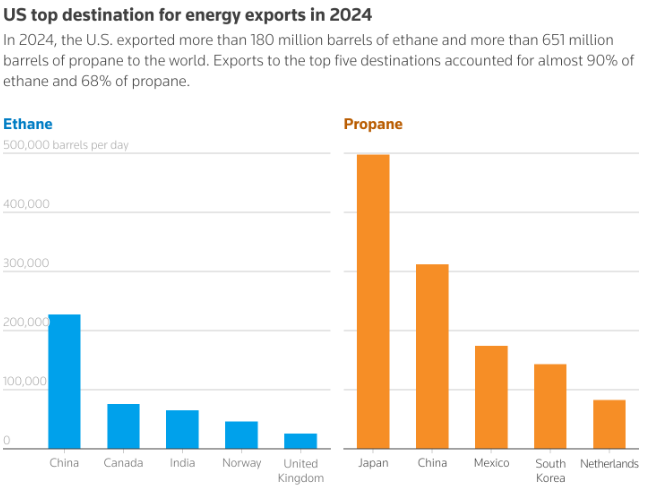
Group 1: Trade Surplus and Energy Imports - Several Asian countries are seeking to purchase more US oil and gas to reduce their trade surplus with the US, especially in light of potential new import tariffs by Trump [1] - Countries including Indonesia, Pakistan, India, and Thailand are planning to increase their imports of US oil and gas [1] Group 2: Indonesia's Import Plans - Indonesia plans to propose increasing imports of US crude oil and liquefied petroleum gas (LPG) by approximately $10 billion as part of tariff negotiations [2] Group 3: Pakistan's First-Time Imports - Pakistan is considering its first imports of US crude oil, aiming to offset the trade imbalance that has led to increased US tariffs, with an estimated purchase of around $1 billion [5] Group 4: India's Tax Adjustments - India is contemplating the removal of import taxes on US LNG to boost purchases and reduce its trade surplus, which is a key factor in Trump's trade negotiations [8] - GAIL India Ltd plans to acquire up to 26% of a US LNG project and sign a 15-year gas import agreement [8] Group 5: Thailand's LNG and Ethane Plans - Thailand intends to import more US LNG and ethane over the next five years, with existing plans to import 1 million tons of LNG annually starting next year, valued at $500 million [9] - Additionally, Thailand plans to sign a contract for over 1 million tons of US LNG and import 40,000 tons of US ethane valued at $10 million in the next four years [9] Group 6: Alaska LNG Project - Trump is encouraging Japan, South Korea, and Taiwan to participate in the $44 billion Alaska LNG export project, which aims to transport gas from Alaska to these countries [10] - An Alaska delegation has been promoting the project in Japan, with potential interest from Mitsubishi Group in investing [11]
One scholar GDP即将结束
HTSC· 2025-04-17 03:25
Economic Growth - In Q1, China's GDP grew by 5.4%, exceeding Bloomberg's consensus estimate of 5.0%[3] - Nominal GDP growth was recorded at 4.6%, consistent with Q4 of the previous year[3] - Trade surplus contributed 2.2 percentage points to nominal GDP growth, up from 1.9 percentage points in Q4[3] Industrial Performance - Industrial value-added growth in March rebounded to 7.7%, up from 5.9% in January-February, surpassing expectations[8] - For Q1, industrial value-added growth was 6.5%, an increase from 6.2% in December[8] - Key sectors like railway, shipbuilding, and electrical machinery maintained double-digit growth rates[8] Consumer Activity - Retail sales growth in Q1 reached 4.6%, up from 3.7% in December, driven by policies like "trade-in for new"[10] - In March, retail sales growth accelerated to 5.9%, higher than the expected 4.2%[10] - Online retail sales in March increased to 6.9%, reflecting a recovery in consumer spending[11] Investment Trends - Fixed asset investment growth in Q1 was 4.2%, faster than the 3.2% recorded for the entire year of 2024[12] - Infrastructure investment surged by 11.5% in Q1, with March growth rising to 12.6%[13] - Real estate investment saw a decline of 10% in March, but the rate of decline improved slightly compared to earlier months[14] Employment and Risks - The urban unemployment rate in March slightly decreased to 5.2%, consistent with the previous year's level[15] - Risks include potential escalation of global trade tensions and a downturn in the real estate cycle affecting domestic demand[5][17]
日本成贸易谈判首选,美国会开出哪些条件?
Hua Er Jie Jian Wen· 2025-04-14 10:06
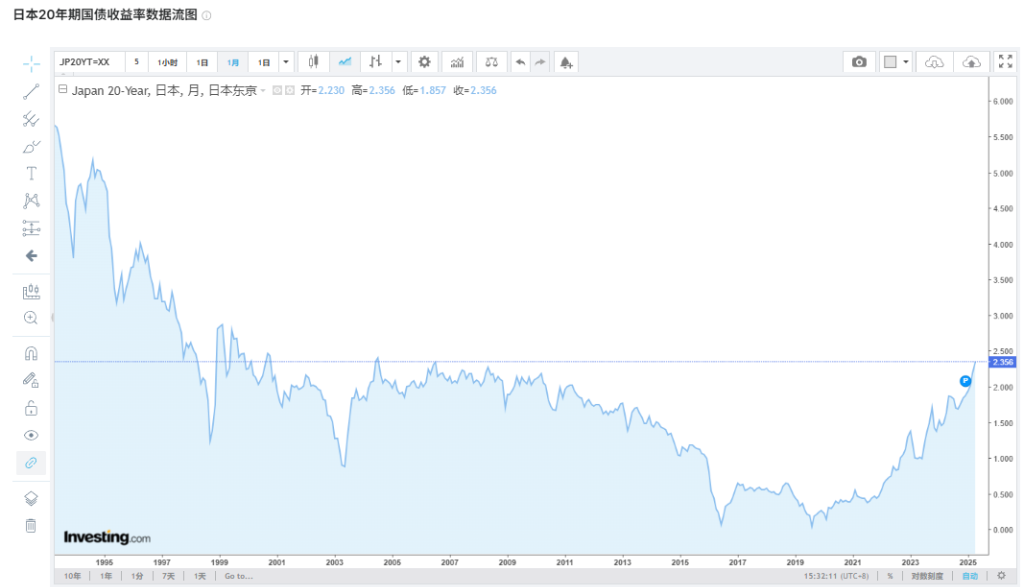
Core Viewpoint - The United States has initiated substantive trade negotiations with Japan, aiming to establish Japan as a model case for agreements with other countries following the recent tariff delay announcement [1][2]. Group 1: U.S.-Japan Trade Negotiations - Japan is the first country to engage in substantial trade negotiations with the U.S. after the tariff delay, indicating a strategic choice by the U.S. [1][2]. - The U.S. intends to use Japan as a template for future agreements with other nations, highlighting the importance of this negotiation [2]. Group 2: Potential U.S. Demands on Japan - The U.S. may push Japan to set explicit trade surplus targets, which could force Japan to reduce exports and increase imports, impacting its trade balance [3]. - Other potential demands include pushing for yen appreciation, which could harm Japanese export-oriented companies and hinder economic recovery [3]. - The U.S. might also request Japan to extend the maturity of its U.S. Treasury holdings, limiting Japan's foreign exchange reserve flexibility [3]. Group 3: Japanese Government's Stance - Japanese Prime Minister Kishida emphasized the importance of not compromising too quickly for a deal, advocating for a careful approach to negotiations [4]. - The potential U.S. demands could significantly impact Japan's financial markets, with warnings of a rapid depreciation of the dollar and a substantial appreciation of the yen [4]. Group 4: Impact on Japanese Economy and Bond Market - A stronger yen could reduce the competitiveness of Japanese exports, adversely affecting manufacturing firms that rely heavily on exports [5]. - Increased fiscal spending, as suggested by the U.S., would require Japan to issue more government bonds, exacerbating supply pressures in the bond market [5]. - The Japanese long-term bond market is already showing signs of instability, with recent spikes in yields indicating market volatility [5]. Group 5: Global Market Implications - Nomura warns of a global bond market imbalance and tightening liquidity risks, which could lead to broader credit contractions [7]. - The recent fluctuations in global stock markets and the widening of high-yield bond spreads indicate ongoing credit tightening [7].
疯王与关税
雪球· 2025-04-13 04:07
Group 1 - The article discusses the basic principles of trade, emphasizing that trade surplus is a means while trade deficit is an end goal, ultimately for spending money [2] - It highlights that in international trade, the U.S. has maintained a trade deficit for decades, which is unsustainable in the long run [7][10] - The article points out that the U.S. dollar's status as the world's reserve currency allows the country to print money and maintain a trade deficit, but this creates a looming risk if the dollar's credibility is questioned [8][10] Group 2 - The article argues that the U.S. faces two major problems: the credibility of the dollar is under scrutiny, and the manufacturing sector is being pressured by global competition, particularly from China [10][13] - It suggests that the current administration's contradictory policies aim to maintain the dollar's international status while also seeking a trade surplus, which is inherently impossible [15] - The article emphasizes that high tariffs may increase trade friction costs but will not necessarily lead to the intended outcomes due to issues like transshipment and smuggling [18][19] Group 3 - The article discusses the implications of rising U.S. Treasury yields, noting that a sudden increase could lead to higher borrowing costs for companies and potentially trigger widespread bankruptcies [26][27] - It warns that a significant drop in Treasury prices could undermine the dollar's credibility, leading to a feedback loop where countries start selling off U.S. debt [29][30] - The article concludes that investors should focus on valuation rather than being swayed by political rhetoric, as the complexities of the global economy are far more significant than any single political figure [20][21]

印度“讨好”特朗普:拟取消天然气关税、下调农产品进口税
Hua Er Jie Jian Wen· 2025-03-28 12:17
Core Viewpoint - India is considering the cancellation of import taxes on U.S. liquefied natural gas (LNG) and reducing tariffs on U.S. agricultural products to address trade imbalances and avoid potential trade sanctions from the Trump administration [1][2]. Group 1: LNG Import Tax - India is contemplating the removal of a 2.5% basic customs duty and a 0.25% social welfare tax on U.S. LNG imports to enhance procurement and reduce trade surplus with the U.S. [2][3] - The Indian government aims to increase energy imports from the U.S. from $10 billion to $25 billion, with a target of achieving $500 billion in bilateral trade by 2030 [2][3]. Group 2: Agricultural Tariffs - India is also considering lowering tariffs on U.S. agricultural products, including pecans, pulses, and non-GMO soybeans, in response to U.S. requests [4]. - The potential reduction in agricultural tariffs may create opportunities for U.S. exporters, although it could negatively impact India's domestic agricultural sector, which is politically sensitive [4].

2025年,高贸易顺差能否延续?——“反脆弱”系列专题之二
申万宏源宏观· 2025-03-26 16:01
Trade Surplus Trends - China's trade surplus remains high, primarily due to the shift from processing trade to general trade, which has reduced import dependency [1][7][8] - From 2013 to 2015, despite a decline in export growth from 7.8% to -2.9%, the trade surplus increased by $192.94 billion [1][7] - The proportion of general trade surplus rose from 24.5% to 73.1% over the past decade, while processing trade fell from 60.4% to 10.4% [1][8] Industry Structure - Trade surpluses are concentrated in consumer goods and capital goods, with significant surpluses in textiles, electrical machinery, and automobiles [1][13][14] - The average surplus for textiles and clothing since 2017 has been $339 billion, showing stability [1][13] - Capital goods such as transportation equipment and electrical devices have seen surpluses increase by 6.7, 2.9, and 3.0 times since the first trade war [1][14] Country Structure - The largest trade surplus is with "Belt and Road" countries, followed by the United States, with the former primarily involving general trade and the latter processing trade [2][24] - As of June 2023, the surplus with "Belt and Road" countries surpassed that with the U.S. for the first time, accounting for 39.0% and 38.5% of total surplus, respectively [2][24] Formation of High Trade Surplus - Consumer goods maintain high surpluses due to self-sufficiency and price advantages, particularly in textiles where China produces 26% of global cotton [3][43] - The automotive sector benefits from technological advancements and cost advantages, with new energy vehicle exports increasing by 355.5% since 2018 [3][54] - In capital goods, the high surplus is driven by reduced processing trade imports and enhanced export competitiveness, with a notable decline in imports of electromechanical products [3][65] Future Surplus Prospects - Industries expected to maintain high surpluses include consumer goods like automobiles and mobile phones, as well as capital goods such as electrical equipment [5][93] - The transition from processing trade to general trade is a key factor in the expanding trade surplus, supported by industrial upgrades and price advantages [5][87] - The automotive sector's import dependency has significantly decreased, with a notable increase in export growth, indicating a strong competitive position [5][93]

2025年1-2月外贸数据点评:外贸回落,高顺差维持
Shanghai Securities· 2025-03-12 10:11
Trade Data Summary - In January-February 2025, China's total goods trade value was 6.54 trillion RMB, a year-on-year decrease of 1.2%[8] - Exports amounted to 3.88 trillion RMB, growing by 3.4%, while imports fell to 2.66 trillion RMB, down by 7.3%[8] - The trade surplus reached 1,226.06 billion RMB (170.52 billion USD), maintaining a high level despite the decline in trade volume[19] Export and Import Trends - Exports to the EU and the US saw significant declines, while exports to Japan increased slightly[9] - Major export products, except for mobile phones, experienced a downturn, particularly labor-intensive goods and automotive exports[14] - Import growth was weaker overall, with declines in most major imported goods except for soybeans and crude oil[18] Policy and Economic Outlook - The external trade environment is impacted by rising uncertainties, including increased tariffs from the US[4] - Domestic policies are expected to focus on boosting consumption and investment to expand domestic demand and support economic recovery[24] - The report highlights the importance of China's manufacturing position in the global economy, which contributes to the sustained trade surplus[4] Risks and Considerations - Potential risks include worsening geopolitical events, changes in international financial conditions, and unexpected shifts in US-China policies[25]
中国对美出口增长放缓,1~2月增2.3%
日经中文网· 2025-03-10 02:49
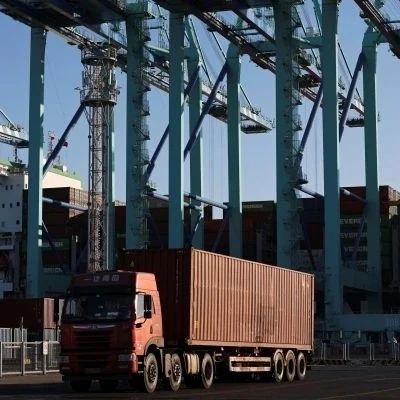
中国1~2月的整体出口为5399亿美元,同比增长2.3%。自2024年4月以来保持正增长。进口为3694亿美 元,同比减少8.4%。出口减去进口后的贸易顺差为1705亿美元。 中国对美出口增长放缓(2月,天津港,REUTERS) 中国的对美出口自2024年5月以来保持正增长。2024年12月增长16%。2025年1~2月放缓…… 中国海关总署3月7日发布的1~2月贸易统计(以美元计价)数据显示,对美国出口为755亿美元,同比 增长2.3%。与2024年12月相比增长放缓。美国2月4日对从中国进口的商品加征10%关税引起的紧急出口 被认为已告一段落。 由于美国总统特朗普在上任前提到提高对华关税,出现了抢先出口的紧急需求。 对美出口自2024年5月以来保持正增长。2024年10月以后,实现8%以上的高增长,2024年12月同比增长 16%。 日本经济新闻(中文版:日经中文网)盐崎健太郎 北京报道 版权声明:日本经济新闻社版权所有,未经授权不得转载或部分复制,违者必究。 日经中文网 https://cn.nikkei.com ...