具身智能

Search documents
星宇股份(601799):业绩稳步增长,再谱产业新章
CMS· 2026-03-23 06:10
Investment Rating - The report maintains a "Strong Buy" investment rating for the company [3][6]. Core Insights - The company achieved a total revenue of 15.26 billion yuan in 2025, representing a year-on-year growth of 15.1%. The net profit attributable to shareholders reached 1.62 billion yuan, up 15.3% year-on-year, while the net profit excluding non-recurring items was 1.58 billion yuan, reflecting a growth of 16.3% [1][6]. - The company is expanding its production capacity and accelerating its global layout, with a focus on smart automotive electronics and visual systems. It plans to build six factories to meet future demand, aiming for an annual production capacity of approximately 10 million automotive lighting assemblies [6][6]. - The company is also enhancing its international strategy, with overseas revenue reaching 630 million yuan, a year-on-year increase of 27.1%. It is planning to issue overseas shares (H shares) and list on the Hong Kong Stock Exchange to diversify its financing channels [6][6]. Financial Data and Valuation - The company’s total revenue is projected to grow from 13.25 billion yuan in 2024 to 25.85 billion yuan in 2028, with year-on-year growth rates of 29%, 15%, 22%, 16%, and 19% respectively [2][25]. - The net profit attributable to shareholders is expected to increase from 1.41 billion yuan in 2024 to 2.76 billion yuan in 2028, with corresponding growth rates of 28%, 15%, 18%, 19%, and 21% [7][26]. - The company’s return on equity (ROE) is projected to rise from 14.6% in 2024 to 17.8% in 2028, indicating improving profitability [26]. Business Performance - The company sold 13.09 million front car lights and 19.04 million rear car lights in 2025, with respective growth rates of 3.0% and 8.8%. The sales of controllers surged by 162.0% [6][6]. - The gross profit margin for 2025 was 19.65%, while the net profit margin was 10.65%. The company experienced a slight increase in expense ratios, with the sales expense ratio at 0.3% and the R&D expense ratio at 5.3% [6][6].

别人都在卷视觉,这家具身公司偏要卷“手感”
量子位· 2026-03-23 04:58
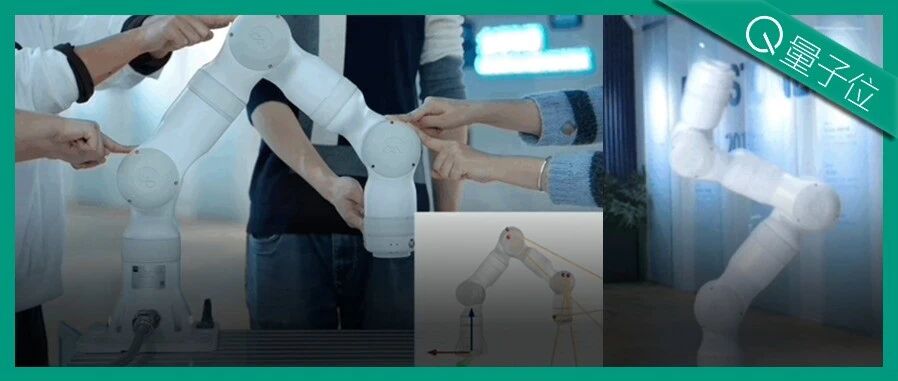
衡宇 发自 凹非寺 量子位 | 公众号 QbitAI "对具身智能来说,力觉比视觉更重要。" 听起来,这句话好像有那么点非主流。放眼当下,大多数具身智能的叙事,视觉几乎是机器人认知世界的第一扇窗。 但源自斯坦福机器人和人工智能实验室的通用机器人独角兽 非夕科技 ,却十年如一日地坚持另一条路径:按照真实操作行为的重要性排序, 力觉能力优先于视觉。 联合创始人兼CEO王世全的解释很直白:"人类在做大多数操作时,并不会一直盯着目标,只用'瞟一眼',剩下的动作主要依赖手感完成,核 心在于实时控制施加的力度,以及与物体的接触关系。" 朋友们,咱天天把具身智能挂在嘴边,但 别光顾着智能,忽视了"具身"啊 。 本质上,具身智能的难点在于如何"在真实世界完成操作",而 力觉正是实现机器人具身交互的核心能力 。 过去十年,非夕将大量精力倾注于自研机械臂本体,尤其专注于提升力控能力,尝试让它具备接近人类手臂的"操作感"。 从最初的Rizon系列7轴机械臂到Moonlight系列力控并联机器人,非夕的自适应机器人已经深入汽车、消费电子、一般工业、食品加工、实验 室、医疗理疗、商用服务等各大领域,源源不断形成富有创新、独特差异化的行 ...

K型分化,如何破局?| 第20届中国投资年会·年度峰会即将启幕
投中网· 2026-03-23 03:53
Core Viewpoint - The article discusses the emergence of a "K-shaped recovery" in the investment industry, highlighting the contrasting experiences of different market participants amid overall growth in investment numbers and fundraising scales, particularly in sectors like AI and commercial aerospace [2][3]. PART.01: Witnessing 20 Years of Evolution - The K-shaped differentiation observed today is a natural result of the industry's evolution over the past 20 years, transitioning from a nascent private equity market dominated by foreign institutions to a robust sector with significant domestic participation and a variety of exit channels [4][5]. PART.02: Global Perspective: Three Variables Behind Differentiation - The formation of the K-shaped curve is influenced by three key variables: 1. **Demographics**: Fundamental changes in population structure are reshaping consumption, employment, and industry logic, moving away from previous "demographic dividends" [8]. 2. **Geopolitics**: The flow and rhythm of global capital have become more unpredictable, with competition and coordination coexisting, making it difficult for market participants to remain insulated [9]. 3. **Technology**: The rapid penetration of AI across various industries is not linear, leading to increased differentiation among market players [10]. PART.03: Investment Frontline: Redefining Methodology Amid Normalized Differentiation - As K-shaped differentiation becomes the norm, investment institutions are redefining their survival strategies, reassessing their methodologies to find certainty amid uncertainty and to position themselves within the differentiation [11][12]. PART.04: Industrial China: Sources of the Upward Curve - The upward branch of the K-shaped curve is largely driven by technological innovation, with sectors such as AI, robotics, high-end manufacturing, and innovative pharmaceuticals reshaping the industrial ecosystem and becoming the main battleground for capital [15]. PART.05: Investment Rankings 2025: Witnessing the Power of Investment in the K-shaped Era - The "Investment Rankings 2025" will be released during the summit, serving as a reflection of the past year's industry dynamics and a testament to the investment power in the K-shaped differentiation era, highlighting institutions and individuals that continue to uphold value and navigate through cycles [17][18].
从黄仁勋家的车库到机器人的超级大脑:对话原力无限CTO王一舟
创业邦· 2026-03-23 03:42
Core Viewpoint - The article discusses the journey and insights of Wang Yizhou, a key figure in the field of embodied intelligence, highlighting his transition from autonomous driving to robotics and the underlying technological methodologies that connect both domains [4][29]. Group 1: Background and Experience - Wang Yizhou was a core founding member and senior engineering manager at NVIDIA's DriveAV department, which is crucial for the company's autonomous driving technology [4][20]. - He has a strong academic background, having studied under Professor Masayoshi Tomizuka at UC Berkeley, where he developed a comprehensive understanding of control systems and robotics [8][10]. - Wang's experience includes significant contributions to the development of autonomous driving software and the establishment of world model interface standards for major automotive projects [23][24]. Group 2: Transition to Embodied Intelligence - After returning to China, Wang Yizhou took on the role of CTO at Yuanli Wuxian, focusing on embodied intelligence, which he views as a more complex extension of autonomous driving technology [4][29]. - The core challenge in both fields remains the same: ensuring AI systems operate reliably in the real physical world [4][29]. - Wang emphasizes the importance of transferring proven methodologies from autonomous driving to the more challenging domain of embodied intelligence [29]. Group 3: Technological Framework - The technological framework at Yuanli Wuxian integrates two main pillars: the embodied brain and AI infrastructure, which are essential for the robot's cognitive and decision-making capabilities [36][41]. - The embodied brain is developed as an end-to-end multimodal model that allows robots to learn complex tasks through various sensory inputs [41]. - The AI infrastructure supports continuous evolution and learning, ensuring that the system can adapt and improve over time [44][46]. Group 4: Industry Trends and Competition - The article notes a shift in the industry focus from hardware to software, particularly the intelligence of the "brain" in robotics, as companies strive to differentiate themselves in a competitive landscape [49][50]. - Wang Yizhou predicts that the future of embodied intelligence will hinge on the ability to create robust, reliable systems that can operate effectively in complex real-world scenarios [51][52]. - The competition will increasingly revolve around who can develop smarter models and more efficient data loops, rather than just the physical robots themselves [50][51].

装备制造行业周报(3月第3周):储能景气度继续向上
Century Securities· 2026-03-23 03:24
Investment Rating - The report does not explicitly state an investment rating for the industry, but it suggests a positive outlook for the energy storage sector and related investment opportunities [3][4]. Core Views - The energy storage sector is experiencing upward momentum, with recent price increases in energy storage cells and systems, indicating strong demand [4]. - The photovoltaic sector is facing pressure with declining prices for polysilicon, attributed to weak downstream demand and cautious procurement strategies [4]. - The new energy vehicle market is expected to gradually recover, with a narrowing year-on-year decline in sales for March, driven by government incentives and rising fuel prices [4]. Summary by Sections Market Overview - The mechanical equipment, automotive, and power equipment indices experienced declines of -6.26%, -4.40%, and -3.06% respectively over the past week, ranking 25th, 16th, and 10th among 31 industries [9][10]. Industry News and Key Company Announcements - The photovoltaic industry is working on new mandatory national standards to enhance safety and competitiveness [20]. - A significant order from SpaceX for photovoltaic equipment is expected to be delivered in May, indicating ongoing interest in the sector [20]. - The energy consumption data for January-February shows a 6.1% year-on-year increase, with notable growth in high-tech and equipment manufacturing sectors [19]. - Companies like 中闽能源 and 金帝股份 are making significant investments in renewable energy projects, indicating a positive trend in the sector [20][22].
装备制造行业周报(3月第3周):储能景气度继续向上-20260323
Century Securities· 2026-03-23 03:09
Investment Rating - The report does not explicitly state an investment rating for the industry, but it suggests a positive outlook for the energy storage sector and related investment opportunities [3][4]. Core Insights - The energy storage sector is experiencing upward momentum, with recent price increases in energy storage cells and systems, indicating strong demand [4]. - The photovoltaic sector is facing price pressures, particularly in polysilicon, due to weak downstream demand, although potential orders from Tesla may provide some support [4]. - The new energy vehicle market is expected to gradually recover, with a narrowing year-on-year decline in sales for March, driven by government incentives and rising fuel prices [4]. Summary by Sections Market Overview - The mechanical equipment, automotive, and power equipment indices experienced declines of -6.26%, -4.40%, and -3.06% respectively, ranking 25th, 16th, and 10th among 31 industries [9][10]. Industry News and Key Company Announcements - The report highlights the ongoing development of mandatory national standards for photovoltaic components, emphasizing safety and quality in the industry [18]. - A significant order from SpaceX for photovoltaic equipment is expected to be delivered in May, indicating potential growth in the sector [18]. - Companies like Yichu Technology and others are making strides in robotics and energy management, showcasing innovation in the industry [18]. - The report notes that the overall electricity consumption in China has increased by 6.1% year-on-year in the first two months of the year, with significant growth in high-tech and equipment manufacturing sectors [19].
星宇股份(601799):单四季度净利润同比增长12%,新订单、新产能、新产品持续突破
Guoxin Securities· 2026-03-23 02:39
Investment Rating - The report maintains an "Outperform" rating for the company [5] Core Insights - The company has experienced a significant transformation in its customer base, shifting from primarily joint venture clients to focusing on domestic brands and new energy vehicles, entering a new growth cycle [8][12] - In Q4 2025, the company reported a net profit of 483 million yuan, a year-on-year increase of 12%, with total revenue reaching 4.547 billion yuan, up 12.89% year-on-year [8][12] - The company has secured 88 new vehicle lighting projects in 2025, achieving mass production for 60 models, indicating strong future growth potential [58] Financial Performance - In 2025, the company achieved total revenue of 15.257 billion yuan, a 15.12% increase year-on-year, and a net profit of 1.624 billion yuan, up 15.32% year-on-year [8][12] - The gross margin for Q4 2025 was 20.03%, showing a year-on-year increase of 0.20 percentage points, while the net margin was 10.62%, slightly down by 0.08 percentage points year-on-year [12] - The company forecasts revenues of 18.501 billion yuan, 22.201 billion yuan, and 26.863 billion yuan for 2026, 2027, and 2028 respectively, with net profits expected to be 2.002 billion yuan, 2.409 billion yuan, and 2.929 billion yuan for the same years [4] Market Position and Strategy - The company is actively expanding its global footprint with new production capacities in Serbia, Mexico, and the USA, enhancing its overseas operations [12] - A strategic partnership with Jiekai Robotics aims to innovate in the field of intelligent robotics, indicating a diversification of business interests [54][56] - The company is focusing on the development of advanced lighting technologies, including DLP, MicroLED, and OLED, to enhance its product offerings [12][40]
地平线机器人-W:关注HSD放量和机器人领域新进展-20260323
HTSC· 2026-03-23 02:35
Investment Rating - The investment rating for the company is maintained as "Buy" with a target price of HKD 12.65 [1][4]. Core Insights - The company reported a revenue of RMB 3.758 billion for 2025, representing a year-on-year growth of 57.7%, exceeding previous forecasts. The adjusted operating loss was RMB 2.37 billion, which was better than the anticipated loss of RMB 2.667 billion. The positive performance is attributed to advancements in IP services and robotics [1][2]. - The net loss attributable to shareholders was RMB 10.469 billion, primarily due to non-cash losses from the fair value changes of financial instruments [1]. - Looking ahead to 2026, the company is expected to enter a rapid growth phase in high-end intelligent driving solutions, with non-automotive business revenues also projected to grow significantly due to the open-sourcing of the HoloBrain large model and the ongoing development of the embodied intelligence ecosystem [1][3]. Summary by Sections Financial Performance - In 2025, automotive product solutions generated revenue of RMB 1.62 billion, a 144% increase, driven by higher shipments of mid-to-high-end driving chips and increased unit value. The company shipped over 4 million automotive-grade chips, with 45% supporting NOA functionality, nearly five times the amount from the previous year [2]. - Non-automotive business, including robotics, achieved revenue of RMB 200 million, surpassing previous estimates of RMB 180 million, mainly due to the rapid application of the Xuri series chips in various robotic fields [2]. 2026 Outlook - The intelligent driving business is expected to grow rapidly, with over 110 models already designated for the HSD high-end driving assistance solution, and an estimated shipment of 400,000 units in 2026. The proportion of mid-to-high-end chips is projected to exceed 55%, driving an increase in average selling price (ASP) [3]. - The company is advancing its embodied intelligence strategy by launching the high-performance computing platform Xuri S600 and open-sourcing the HoloBrain VLA large model, enhancing the RoboOrchard development platform to expand application scenarios [3]. Profit Forecast and Valuation - Revenue forecasts for 2026 and 2027 have been slightly adjusted to RMB 5.626 billion and RMB 7.894 billion, respectively. The 2028 revenue is projected to reach RMB 9.956 billion. The company is assigned a 40% valuation premium, with a target price of HKD 12.65, reflecting progress in chip development and large model research in the robotics sector [4].
会公开征求意见至4月19日
Guoyuan Securities2· 2026-03-23 02:16
Economic Indicators - The 2-year U.S. Treasury yield increased by 11.83 basis points to 3.902%[3] - The 5-year U.S. Treasury yield rose by 13.03 basis points to 4.006%[3] - The 10-year U.S. Treasury yield climbed by 13.23 basis points to 4.380%[3] Market Performance - The Baltic Dry Index closed at 2056.00, down 0.05%[4] - The Nasdaq Index closed at 21647.61, down 2.01%[4] - The Dow Jones Industrial Average closed at 45577.47, down 0.96%[4] - The S&P 500 Index closed at 6506.48, down 1.51%[4] - The Hang Seng Index closed at 25277.32, down 0.88%[4] - The Shanghai Composite Index closed at 3957.05, down 1.24%[4]
至简贾鹏:最快具身独角兽半年融资 20 亿,做 “六边形战士” 才能活
晚点LatePost· 2026-03-23 02:06
Core Insights - The essence of competition in embodied intelligence is the competition of systems [1] - The company aims to create a "hexagonal warrior" that integrates various capabilities, similar to successful players in the autonomous driving sector [3][21] - The belief is that embodied intelligence will become a significant technology direction for human society, with a potential for "dispersed monopoly" in the market [4][22] Company Overview - The company, Zhijian, has raised 2 billion RMB in six months, setting a record for the fastest unicorn in embodied intelligence [2] - Founded in July 2025, Zhijian has completed five rounds of financing with investments from top-tier financial institutions and tech giants like Tencent and Alibaba [2] - The founding team has extensive experience in mass production and has a strong organizational synergy [3] Founder's Background - CEO Jia Peng, born in 1987, previously led autonomous driving technology at Li Auto and was a key member of NVIDIA's autonomous driving team [2][3] - The founding team includes former colleagues from Li Auto, emphasizing their shared experience in the autonomous driving field [3] Market Positioning and Strategy - Zhijian aims to establish a solid infrastructure capability before expanding into various scenarios, focusing on a simple model structure for scalability [4][20] - The company believes that the path to commercializing embodied intelligence will transition from academic research to practical applications by the end of this year or early next year [32] - The focus is on end-to-end tasks that can be standardized and scaled, avoiding high-frequency tasks that traditional robots cannot handle [33] Technology and Development - The company is pursuing a unified model that integrates various capabilities, similar to Tesla's approach with its FSD [27] - Data acquisition strategies include using wearable devices to gather diverse real-world data, emphasizing the importance of real user scenarios [28][29] - The belief is that synthetic data can augment but not replace real-world data, which is crucial for training models effectively [29] Organizational Structure - The company operates with a flat organizational structure, allowing flexibility and rapid decision-making without rigid hierarchies [39] - The team consists of three main partners, each responsible for different aspects of the business, promoting a collaborative environment [37] Future Outlook - The expectation is that by 2026, hardware consistency and reliability will improve significantly, addressing current challenges in the industry [45] - The company aims to achieve a state similar to Tesla in 2020, with robust infrastructure and technology reserves ready to scale [51]