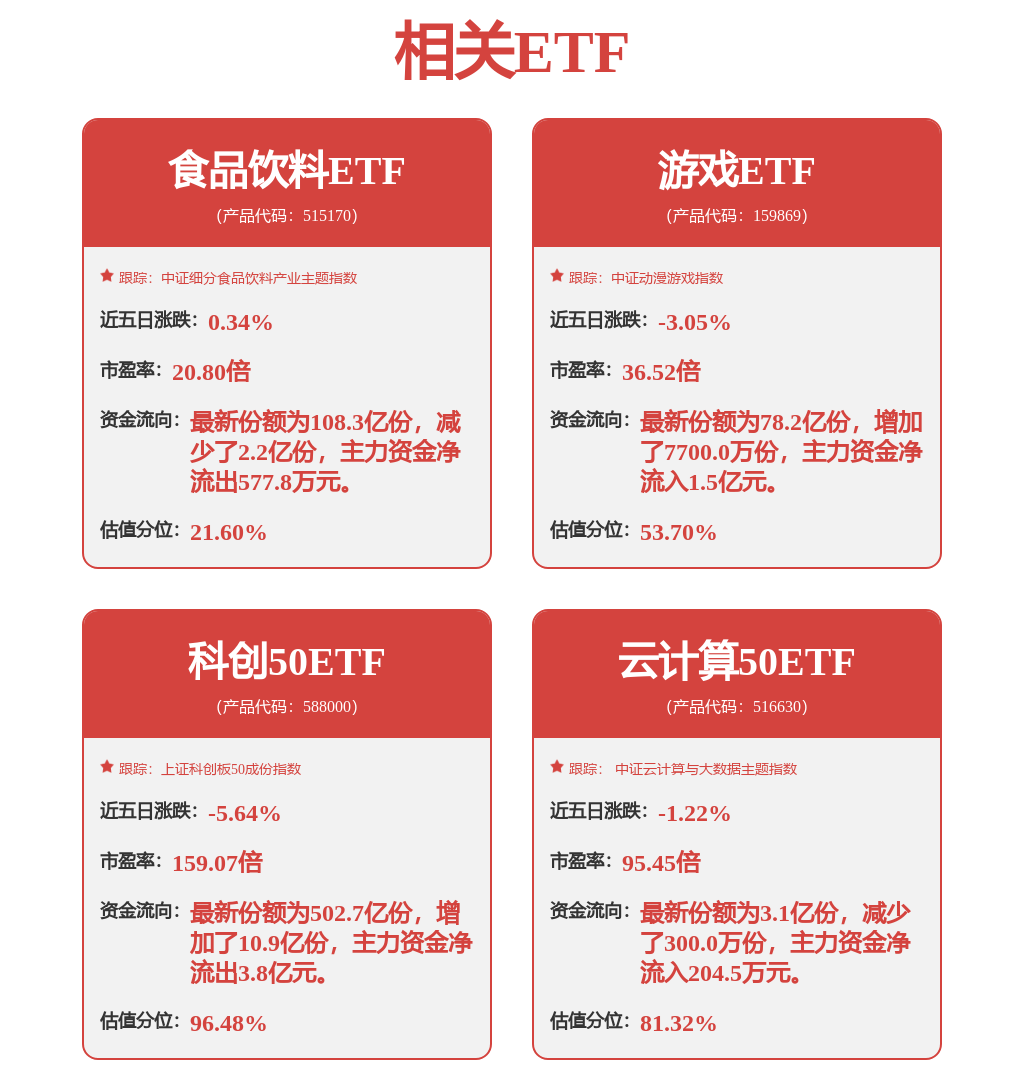
AI产业

Search documents
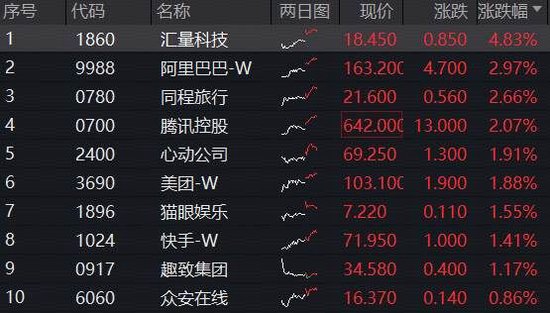
买盘强劲!港股互联网ETF(513770)溢价涨逾1%,连续吸金逾5亿元,阿里巴巴涨超3%
Xin Lang Ji Jin· 2025-11-06 05:24
Core Viewpoint - The Hong Kong stock market experienced a rebound on November 6, with significant gains in leading tech companies, particularly Alibaba and Tencent, indicating a positive market sentiment and potential investment opportunities in the tech sector [1]. Group 1: Market Performance - The Hong Kong stock market saw a notable rebound, with Alibaba-W rising over 3% at one point and closing up 2.97%, while Tencent Holdings increased by over 2% [1]. - The Hong Kong Internet ETF (513770) also showed positive performance, rising 1.38% with a premium rate of 0.45%, reflecting strong buying interest [2]. Group 2: Fund Inflows and Economic Outlook - Recent data from the Shanghai Stock Exchange indicated that the Hong Kong Internet ETF has attracted a net inflow of 507 million yuan over the past five days, showcasing investor confidence [3]. - According to Fangzheng Securities, the current economic fundamentals in China are stable and improving, with continuous policy support boosting market confidence. Additionally, southbound capital is accelerating its inflow into the Hong Kong market, benefiting from the anticipated easing of liquidity conditions due to the Federal Reserve's interest rate cuts [5]. Group 3: Valuation and Investment Opportunities - The analysis suggests that the improvement in fundamentals is expected to drive further market performance in 2026, with AI industry catalysts likely enhancing the return on equity (ROE) for related sectors represented by the Hang Seng Tech Index [5]. - The current price-to-earnings (PE) ratio for the CSI Hong Kong Internet Index is 24.44 times, which is significantly lower than the NASDAQ 100 (36.95 times) and the ChiNext Index (41.11 times), indicating potential undervaluation in the Hong Kong tech sector [5][6]. - The Hong Kong Internet ETF holds major positions in leading companies such as Alibaba, Tencent, and Xiaomi, which collectively account for over 73% of the top ten holdings, emphasizing their dominance in the AI sector [6]. Group 4: ETF Performance and Liquidity - The Hong Kong Internet ETF has a current scale exceeding 11.4 billion yuan, with an average daily trading volume of over 600 million yuan, indicating strong liquidity and support for intraday trading [8].


HBM4单价涨至560美元!存储芯片板块大爆发,香农芯创创新高
2 1 Shi Ji Jing Ji Bao Dao· 2025-11-06 05:09
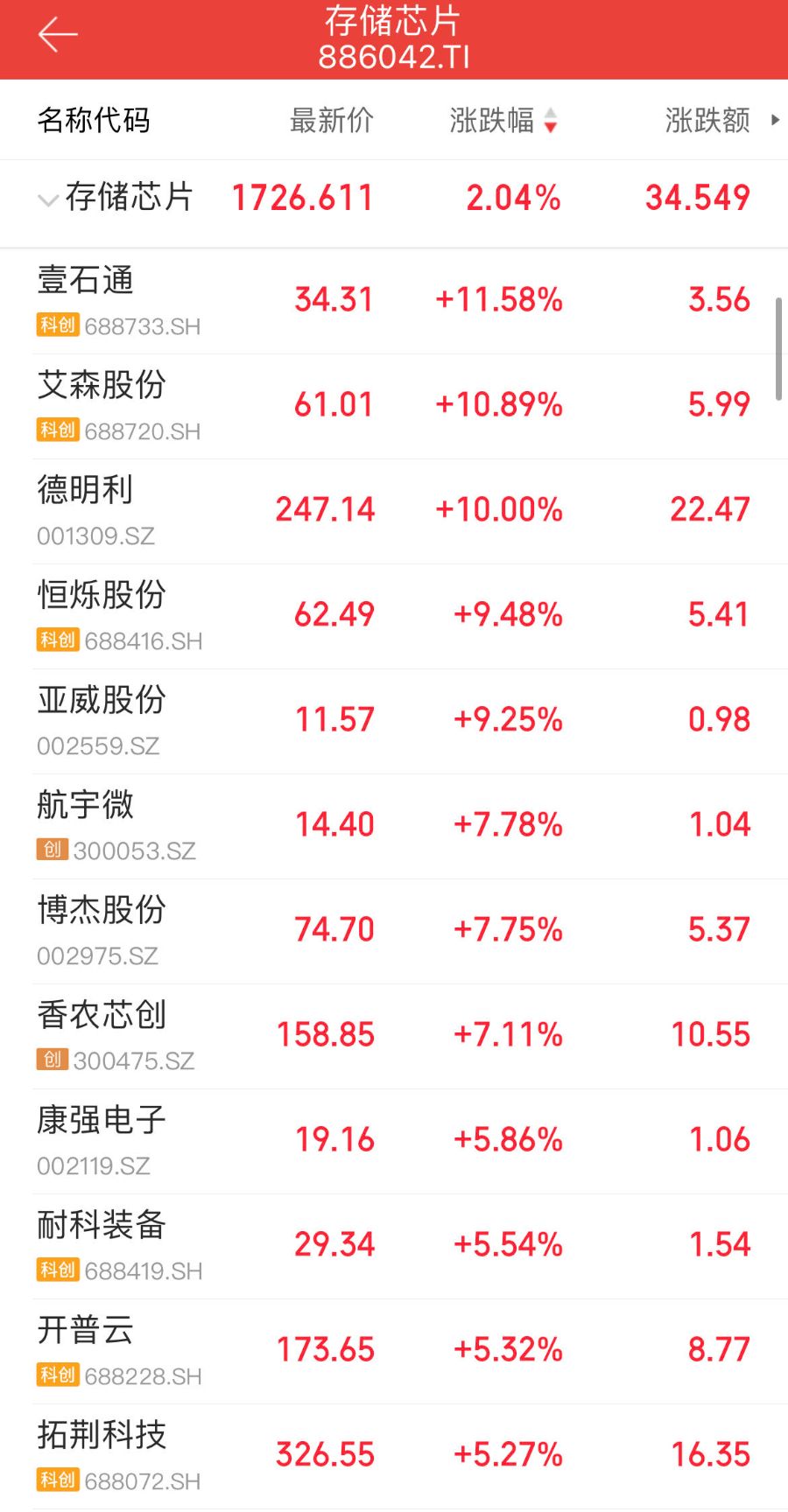
Core Viewpoint - The storage chip sector in A-shares is experiencing a significant rally, driven by rising prices and strong demand from the AI industry, particularly following SK Hynix's announcement of HBM4 pricing, which exceeds market expectations [1][2]. Group 1: Market Performance - As of November 6, A-share storage chip stocks saw substantial gains, with companies like Yishitong (688733.SH) and Aisen Co. (688486.SZ) rising over 10%, and Demingli (001309.SZ) hitting the daily limit [1]. - The price of HBM4 has been confirmed at approximately $560, a more than 50% increase from the current HBM3E price of around $370, surpassing previous industry expectations [1]. Group 2: Price Trends - The storage chip market is witnessing a comprehensive price increase, with DDR5 spot prices soaring by 25% within a week due to major manufacturers like Samsung halting contract quotes [2]. - Analysts predict that the suspension of DDR5 pricing by major manufacturers could lead to a quarterly price increase of 30%-50% [2]. Group 3: Demand Drivers - The surge in storage chip prices is primarily driven by the rapid growth of the AI industry, which has created a massive demand for storage. One AI server requires eight times more DRAM than a standard server [2]. - Companies like OpenAI have indicated a monthly demand for 900,000 wafers, equivalent to 53% of the current global DRAM monthly production capacity, significantly boosting the server memory market [2]. Group 4: Supply Constraints - Structural adjustments in supply are exacerbating the supply-demand imbalance, as major manufacturers like Samsung and SK Hynix shift production towards HBM and DDR5 while phasing out DDR4 lines, leading to severe shortages in DDR4 memory [3]. - The current shortage and price increases across all four major storage categories are unprecedented in the industry, according to the chairman of Adata [3]. Group 5: Financial Performance - Companies in the storage sector are reporting strong financial results, with Jiangbolong achieving a revenue of 6.539 billion yuan in Q3, a year-on-year increase of 54.60%, and a net profit surge of 1994.42% [3]. - Baiwei Storage reported a revenue of 2.663 billion yuan in Q3, marking a 68.06% year-on-year increase, with net profit rising by 563.77% [3]. Group 6: Future Outlook - The storage industry is entering a new upcycle, driven by the increasing demand for memory capacity in large model training and inference, which will further tighten the supply of HBM and DDR5 memory [3]. - The overall demand for AI is expected to remain strong, with projections indicating a 24% year-on-year increase in capital expenditure by major cloud service providers by 2026, which will boost demand for storage chips [4].




电网概念股震荡走强,电网ETF涨超2%
Mei Ri Jing Ji Xin Wen· 2025-11-06 02:39
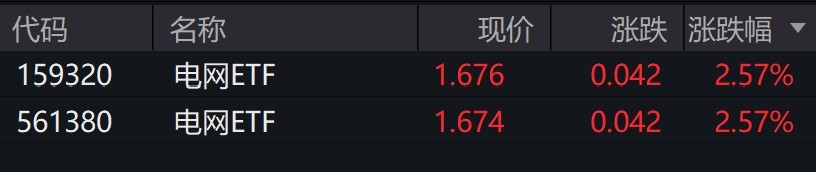
Core Viewpoint - The power grid concept stocks have shown strong fluctuations, with notable increases in share prices for companies such as TBEA, Siyuan Electric, Zhongtian Technology, and Zhejiang Rongtai, driven by a surge in demand for power equipment due to the AI industry's growth and its impact on electricity supply [1][2]. Group 1: Stock Performance - TBEA's stock price increased by over 6%, while Siyuan Electric and Zhongtian Technology rose by more than 5%, and Zhejiang Rongtai saw an increase of over 3% [1]. - The Electric Grid ETF experienced a rise of over 2% [1]. Group 2: Industry Demand - The AI industry's continuous expansion is leading to a global electricity shortage, making power equipment a focal point in the market [2]. - According to EIA forecasts, electricity demand from data centers is expected to increase by over 150% from 2023 to 2030, with AI-driven data centers projected to account for 9% of the total electricity load in the U.S., resulting in a 14 GW installation gap [2].
三季度基金市场数据透视:权益类产品规模逼近6万亿元,指数化投资趋势显著
Hua Xia Shi Bao· 2025-11-05 12:21
Group 1 - The Chinese public fund market is experiencing new development trends, with three main trends identified: strong growth in equity fund scale, an irreversible trend towards index-based investment, and a noticeable concentration effect among leading fund companies [2] - The total scale of equity funds has surpassed 5.8 trillion yuan, with a significant quarter-on-quarter growth of 24.11%, reaching a net asset value of 58,423.26 billion yuan by the end of Q3 2025 [3] - The scale of pure index equity funds has expanded from 40,164.48 billion yuan to 50,724.65 billion yuan, becoming the main driver of growth in the equity fund sector [3] Group 2 - Leading products, particularly broad-based ETFs, have shown significant growth, with the Huatai-PB CSI 300 ETF reaching a scale of 4,255.81 billion yuan, a 13.58% increase from the previous quarter [3] - The concentration of leading fund companies is increasing, with E Fund maintaining its leading position in equity fund scale, surpassing 1 trillion yuan for the first time, while the top four fund companies collectively manage over 3.2 trillion yuan [6] - The share of pure index equity funds in the equity fund category has strengthened, rising from 84.67% to 85.33%, indicating a growing preference for low-cost, transparent index products among investors [7]

生益电子(688183):2025年三季报点评:营收利润超预期,利润率弹性值得期待
Huachuang Securities· 2025-11-05 03:46
Investment Rating - The report maintains a "Strong Buy" rating for the company, with a target price of 140 CNY [2][8]. Core Insights - The company reported revenue of 6.829 billion CNY for the first three quarters of 2025, representing a year-over-year increase of 114.79%. The net profit attributable to shareholders reached 1.115 billion CNY, up 497.61% year-over-year [2]. - In Q3 2025, the company achieved revenue of 3.060 billion CNY, a year-over-year increase of 153.71% and a quarter-over-quarter increase of 39.78%. The net profit for the same period was 584 million CNY, reflecting a year-over-year increase of 545.95% and a quarter-over-quarter increase of 76.84% [2]. - The gross margin for Q3 was 33.93%, up 3.15 percentage points quarter-over-quarter, while the net margin was 19.09%, an increase of 4 percentage points quarter-over-quarter. This improvement is attributed to an enhanced product mix, with expectations for further profitability as high-end products gain a larger share [8]. Financial Performance Summary - The company is projected to achieve total revenue of 10.077 billion CNY in 2025, with a year-over-year growth rate of 115.0%. The net profit is expected to reach 1.661 billion CNY, reflecting a staggering growth rate of 400.3% [4]. - Earnings per share (EPS) are forecasted to be 2.00 CNY in 2025, with a price-to-earnings (P/E) ratio of 54 [4]. - The company’s total assets are projected to grow significantly, reaching 11.911 billion CNY by 2025, with a debt-to-equity ratio of 51.9% [9]. Market Position and Growth Drivers - The company is positioned to benefit from the rapid growth in the AI industry, particularly through its AI server and switch products. The demand for AI servers is expected to increase as major clients like Amazon ramp up their production [8]. - The company is investing heavily in capacity expansion, including a 1.75 billion CNY investment in a new smart manufacturing project for high-layer circuit boards, which is anticipated to enhance its market share in the AI server and switch markets [8]. - The establishment of a production base in Thailand is expected to strengthen relationships with overseas clients and support future growth [8].

机构研判港股2026年前景:基本面“接棒”驱动行情
Zhong Guo Zheng Quan Bao· 2025-11-04 23:27
Core Viewpoint - The outlook for the Hong Kong stock market in 2026 is optimistic, driven by fundamental improvements and the potential for AI industry catalysis to enhance net asset return rates, leading to higher market valuations [1][3][4]. Market Performance - The Hong Kong stock market has shown strong performance in 2025, with major indices reaching new highs, including the Hang Seng Index, which rose by 29.37%, the Hang Seng Tech Index by 30.22%, and the Hang Seng China Enterprises Index by 25.83% as of November 4 [2][3]. - Despite a notable adjustment in April and a recent high in October, the market is currently in a phase of high-level fluctuations, raising questions about its ability to maintain upward momentum into 2026 [2][3]. Fundamental Improvements - Predictions indicate that the revenue growth rate for non-financial Chinese companies listed overseas could reach 4% in 2026, with operating profit growth expected to be 13%, driven by cost reduction, efficiency improvements, and AI applications [3][4]. - Current valuations of the Hong Kong stock market are considered low, particularly in the tech sector, providing ample room for upward movement [3][4]. Capital Inflows - There is a high certainty of incremental capital inflows into the Hong Kong stock market in 2026, with net inflows from southbound funds exceeding 1.27 trillion HKD in 2025, marking a historical high [4][5]. - The inflow of foreign capital is expected to improve, as foreign investors are currently underweight in Chinese equity assets, and signs of a return of foreign capital are emerging [4][5]. Sector Focus - The technology sector is anticipated to be the main focus for the Hong Kong stock market in 2026, benefiting from industry development and policy support, particularly in AI [6][7]. - There is also a recommendation to pay attention to innovative pharmaceuticals and brokerage firms, as the innovative drug sector is transitioning from investment to realization of results, and brokerages are expected to maintain high growth due to ongoing industry consolidation [6][7].
基本面“接棒”驱动行情 看好四类资产配置价值
Zhong Guo Zheng Quan Bao· 2025-11-04 20:17
Core Viewpoint - The outlook for the Hong Kong stock market in 2026 is optimistic, driven by fundamental improvements and the potential for AI industry catalysis, which may enhance the net asset return (ROE) of related sectors, particularly the Hang Seng Technology Index [1][2][3] Market Performance - The Hong Kong stock market rebounded significantly since early 2024, with major indices reaching new highs in 2025. As of November 4, 2023, the Hang Seng Index, Hang Seng Technology Index, and Hang Seng China Enterprises Index have increased by 29.37%, 30.22%, and 25.83% respectively this year [1][2] Market Adjustments - The market experienced notable adjustments in April and October 2023, leading to a high-level consolidation phase. Investors are particularly focused on whether the market can maintain its upward momentum and set new highs in 2026 [2][3] Earnings Growth - Predictions indicate that the revenue growth for non-financial overseas Chinese companies could reach 4% in 2026, with operating profit growth expected to be 13%. This improvement is attributed to cost reduction, efficiency gains, and advancements in AI applications [2][3] Valuation Insights - Current valuations of the Hong Kong stock market are considered low, especially in the technology sector, providing ample room for further upward movement. Historical comparisons suggest significant potential for valuation recovery [3][4] Capital Inflows - There is a high certainty of incremental capital inflows into the Hong Kong market in 2026, with net inflows from southbound funds exceeding 1.27 trillion HKD since 2025, marking a historical high [3][4] Foreign and Domestic Investment - Foreign investment is expected to improve as it is currently underweight in Chinese equity assets. Additionally, domestic institutional investors are increasingly influencing the pricing power in the Hong Kong market, with expectations of continued strong inflows [4][5] Sector Focus - The technology sector, particularly driven by AI advancements, is anticipated to be the main focus for 2026. Other sectors such as innovative pharmaceuticals and brokerage firms are also recommended for investment consideration [5][6] Policy Support - The government is expected to enhance support for the technology sector, particularly in areas like computing infrastructure and AI application development, which may accelerate the growth of the AI industry [6] Investment Strategy - Investors are advised to maintain a focus on growth-oriented technology stocks while also considering value-oriented assets as the market evolves. The potential for a shift towards cyclical stocks is also highlighted as the economic recovery progresses [6]
南向资金逆势买入近百亿港元 港股调整现布局良机
Xin Lang Cai Jing· 2025-11-04 10:13
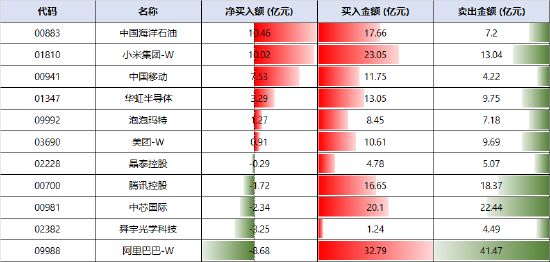
Market Performance - The Hong Kong stock market experienced a decline, with the Hang Seng Index falling by 0.79% to 25,952.40 points, the Hang Seng Tech Index down by 1.76%, and the State-Owned Enterprises Index decreasing by 0.92% [1] - Despite the overall market weakness, there was significant net buying from southbound funds, indicating investor interest [1] Fund Flow - The most favored stocks included China National Offshore Oil Corporation, Xiaomi Group, and China Mobile, which saw net purchases of HKD 1.046 billion, HKD 1.002 billion, and HKD 753 million, respectively [1][2] - Alibaba faced a net sell-off of HKD 868 million, highlighting a shift in investor sentiment towards this stock [1][2] Institutional Outlook - Multiple institutions remain optimistic about the long-term prospects of the Hong Kong stock market, with expectations of volatility due to external factors such as U.S. Federal Reserve interest rate policies and a strong U.S. dollar [3] - The AI sector is anticipated to lead the growth of related technology industries in China, positively impacting both A-shares and Hong Kong stocks [3] IPO Activity - Hong Kong's financial market remains vibrant, with an average daily trading volume exceeding USD 32 billion this year, doubling from the previous year [4] - In the first ten months of the year, Hong Kong recorded 80 IPOs, raising over USD 26 billion, ranking first globally in IPO fundraising [4]



超颖电子2025年11月4日涨停分析:发行市盈率低+营收增长+AI产业机遇
Xin Lang Cai Jing· 2025-11-04 05:57
Core Viewpoint - The stock of Chaoying Electronics (sh603175) reached its daily limit with a price of 75.2 yuan, reflecting a 10.01% increase, driven by low issuance P/E ratio, revenue growth, and opportunities in the AI industry [1][2]. Group 1: Financial Performance - Chaoying Electronics reported an issuance P/E ratio of 28.64, significantly lower than the industry average of 60.52, indicating strong valuation appeal [2]. - The company's revenue grew by 10.71% year-on-year, primarily due to increased demand in the communication and storage sectors, leading to an expansion in business scale [2]. - Total assets increased by 10.74%, with current assets rising by 20.31%, showcasing a trend of business expansion [2]. Group 2: Market Dynamics - The recent surge in AI technology is driving demand for high-end PCBs, with Chaoying Electronics being a leading player in automotive electronic PCBs, which are widely used across various sectors [2]. - The company's main board listing provides liquidity premium, aiding in long-term value discovery, while the commitment to stabilize stock prices through a repurchase clause enhances market confidence [2]. - On November 3, 2025, the company was included in the "Dragon and Tiger List," with a trading volume of 9.56 billion yuan, indicating significant participation from speculative funds, which may have contributed to the stock price increase [2]. Group 3: Technical Analysis - The influx of speculative funds may have led to a breakout above key resistance levels, attracting further attention from investors [2]. - Although technical indicators were not mentioned in the announcement, the capital inflow likely contributed to the stock's strong short-term performance, resulting in the limit-up movement [2].
以纪律和三层框架驾驭波动,华安基金郭利燕的低波“固收+”哲学
2 1 Shi Ji Jing Ji Bao Dao· 2025-11-04 04:53
Core Viewpoint - The "fixed income +" strategy is becoming an important tool for asset allocation in a volatile market environment, focusing on achieving reasonable returns with lower volatility than the market average [1][4]. Group 1: Investment Strategy - The investment framework consists of a three-layer combination system: style structure, industry allocation, and stock selection [5][6]. - The first layer, style structure, involves dynamically balancing technology and non-technology assets based on macro policies and industry conditions [7]. - The second layer focuses on industry allocation, tracking supply and demand changes to capture profit inflection points, particularly favoring left-side positioning [8]. - The third layer emphasizes stock selection, identifying companies with the highest profit elasticity in specific development stages [8]. Group 2: Risk Control - The risk control approach relies on disciplined position management and detailed portfolio management to avoid "fixed income -" scenarios [10][11]. - Position management is designed to prevent increasing exposure during market uptrends, maintaining a ceiling on equity positions around 10% while allowing for a zero equity position in extreme market conditions [12][13]. - Daily liquidity and risk management mechanisms are implemented to smooth portfolio volatility and respect market risks [14]. Group 3: Team Support - The investment practice benefits from a strong platform support within the Huazhong Fund's absolute return investment department, utilizing a "1+N" management model for collaborative decision-making [15][16]. - The team structure allows for complementary expertise across various investment areas, enhancing the overall investment strategy [16]. Group 4: Market Outlook - The market is expected to exhibit structural trends due to the misalignment of economic cycles between China and the U.S., with new economic contributions surpassing real estate over the next five years [19]. - The focus is on sectors like AI, military, and new energy equipment, with an emphasis on domestic manufacturing and opportunities for growth [19]. - The latest quarterly report for the Huazhong Fund shows a balanced industry structure, maintaining a focus on technology growth and cyclical finance [20].