
劳动力市场

Search documents
CPI Offers Lone Fixed Income Catalyst as Government Shutdown Continues
Youtube· 2025-10-17 15:26
Core Viewpoint - The fixed income market is experiencing credit concerns, leading to a decline in yields, particularly in the 10-year Treasury, which is currently below 4%, marking the lowest level in some time [1][2]. Fixed Income Market Analysis - The 10-year Treasury is expected to trade in a rangebound manner, with the current level potentially being the lower end of that range, influenced by psychological factors at the 4% mark [3]. - There is a lack of catalysts in the fixed income market, primarily due to the government shutdown, which has limited the flow of data [5][6]. - The upcoming Consumer Price Index (CPI) report on the 24th is anticipated to be a significant event, as it is one of the few data points available, although its completeness is in question [6][7]. Federal Reserve Commentary - The Federal Reserve appears divided, with differing views among officials regarding interest rate cuts, with expectations leaning towards a cut this month to mitigate potential labor market deterioration [8][9][12]. - Recent commentary from Fed officials suggests a focus on the labor market, with indications of a softening trend based on the ADP report [10][11].
美联储降息路径内部分歧加剧
Jin Tou Wang· 2025-10-17 03:37
Core Viewpoint - The US dollar continues to weaken, with the dollar index reported at 98.182, down 0.17%, as the market anticipates upcoming economic data that may influence dollar fluctuations [1] Group 1: Federal Reserve Insights - The US economy is facing a complex situation with both a weak labor market and inflationary pressures as the Federal Reserve's policy meeting approaches in October 2025 [1] - Several Federal Reserve officials have expressed concerns about the labor market while maintaining a relatively optimistic view on inflation caused by trade tariffs [1] - Waller, a potential successor for the Fed chair, supports gradual rate cuts, while other officials advocate for more aggressive actions, highlighting internal divisions within the Fed regarding future economic paths [1][2] Group 2: Employment Data Concerns - Waller emphasized the reliance on private sources for employment data due to the government shutdown, which has led to inconsistent signals but an overall "clear warning" regarding the labor market [2] - He supports a 25 basis point rate cut at the upcoming Federal Open Market Committee meeting, which would lower the policy rate from the current range of 4.00% to 4.25% [2] Group 3: Dollar Index Technical Analysis - The dollar index has fallen below the key level of 98.714, which has now become a resistance level, with the next important support at 98.238 and a critical level at 98.033 [3] - Since reaching a multi-month high of 99.563 on October 9, the dollar index has been on a downward trend, indicating potential for increased market volatility as it approaches long-term trend indicators [3] - Short-term resistance for the dollar index is identified between 98.55 and 98.60, with significant support levels at 98.15 to 98.20 and 98.00 to 98.05 [3]
美联储还要降息?鲍威尔赌通胀一次性上涨,却遭多方质疑
Jin Shi Shu Ju· 2025-10-16 05:47
美联储主席鲍威尔声称,当前劳动力市场降温、通胀回升,美联储已陷入"无风险路径可选"的困境。若 官员们为抑制通胀而维持高利率,可能会损害劳动力市场;若为支撑劳动力市场而降息,又可能让通胀 更难控制。 目前来看,鲍威尔似乎更愿意在通胀问题上"冒险"。他的理由是,今年夏季招聘大幅放缓后,劳动力市 场面临的风险已显著上升。种种迹象表明,美联储将在本月底的下次会议上,实施今年第二次降息。9 月发布的预测还显示,多数官员认为,在12月今年最后一次会议上,仍有空间再降25个基点。 但有经济学家警告,若劳动力市场未进一步走弱,美联储的降息空间可能仅限于此。若继续大幅降息, 通胀可能会被困在美联储2%的目标之上。 "通胀长期大幅偏离目标,对美联储而言是切实风险。"德意志银行、首席美国经济学家马修·卢泽蒂 (Matthew Luzzetti)表示,"边际宽松政策将导致通胀在更高水平维持更久。" 鲍威尔对通胀的乐观态度,源于他的两个判断:一是特朗普的关税政策仅会导致消费者价格一次性上 涨,而非引发多轮涨价、推升持续性通胀;二是劳动力市场走弱将抑制消费价格涨幅——尤其是在薪资 增长疲软、失业率上升、整体支出放缓的情况下。他的乐观态度 ...
美联储褐皮书:近几周经济活动持平,劳动力需求低迷
Jin Shi Shu Ju· 2025-10-16 00:40
Group 1 - The Federal Reserve's Beige Book indicates that U.S. economic activity has remained largely flat in recent weeks, with overall consumer spending slightly declining [1] - Employment levels are stable, but labor demand is weak, and multiple regions report rising input costs [1][2] - Consumer spending, particularly among middle- and low-income households, has weakened, and manufacturing has been negatively impacted by tariffs [1][2] Group 2 - The labor market has shown signs of weakness over the past six weeks, with employers reporting layoffs and natural attrition to reduce workforce numbers [2] - Wages have increased across all regions, with overall growth described as moderate to average, contrasting with previous months where some regions saw no wage growth [2] - Price pressures are rising due to tariffs, but not all businesses are passing these costs onto consumers, which may help protect consumer spending [2] Group 3 - The Beige Book is unlikely to prevent the Federal Reserve from supporting further interest rate cuts in upcoming meetings, as more policymakers are publicly backing this move [3] - The report aligns with Fed Chair Powell's message that economic conditions have not improved since the last rate cut on September 17 [3] - ING anticipates that the Fed will likely cut rates by 25 basis points in both October and December meetings, even without key data releases [3]
10月15日金大福黄金1230元/克 铂金报631元/克
Jin Tou Wang· 2025-10-15 07:14
Group 1 - The core point of the news is the increase in gold and platinum prices, with gold rising to 1230 CNY per gram and platinum to 631 CNY per gram on October 15, 2025, indicating a positive trend in precious metals [1][2] Group 2 - The gold price increased by 45 CNY per gram from the previous trading day, while the platinum price rose by 13 CNY per gram, reflecting a significant upward movement in both markets [1][2] Group 3 - The Federal Reserve's Collins highlighted that both short-term and long-term inflation indicators are relatively stable, but there are concerns regarding the labor market, which is in a peculiar balance state with low unemployment rates [3] - Collins suggested that a further rate cut of 25 basis points may be appropriate, indicating potential monetary policy adjustments that could impact economic conditions [3]
美联储两大官员发声,为再度降息预热!
Jin Shi Shu Ju· 2025-10-15 00:42
Core Viewpoint - The Federal Reserve should continue to lower interest rates this year to support the labor market while maintaining sufficiently high rates to keep inflation in check [1] Group 1: Interest Rate Outlook - Boston Fed President Susan Collins indicated that further easing, potentially another 25 basis points, may be appropriate, but emphasized the need to avoid premature long-term guidance [2] - The futures market reflects investor expectations for rate cuts at the upcoming Federal Reserve meetings, with a 25 basis point cut anticipated [3] Group 2: Labor Market Insights - Collins noted that it is currently difficult to determine whether the recent slowdown in hiring is due to decreased labor demand or a significant drop in immigration affecting labor supply [1] - To maintain stable unemployment, the economy requires only about 40,000 new jobs per month, compared to approximately 80,000 pre-pandemic [1] Group 3: Economic Projections - Collins expects a slight increase in the unemployment rate this year and early 2026, but anticipates a rebound in hiring as tariffs and economic uncertainties diminish [1] - Fed Governor Michelle Bowman expressed her belief that there will be two more rate cuts by the end of the year, contingent on the labor market and other economic data evolving as expected [3]
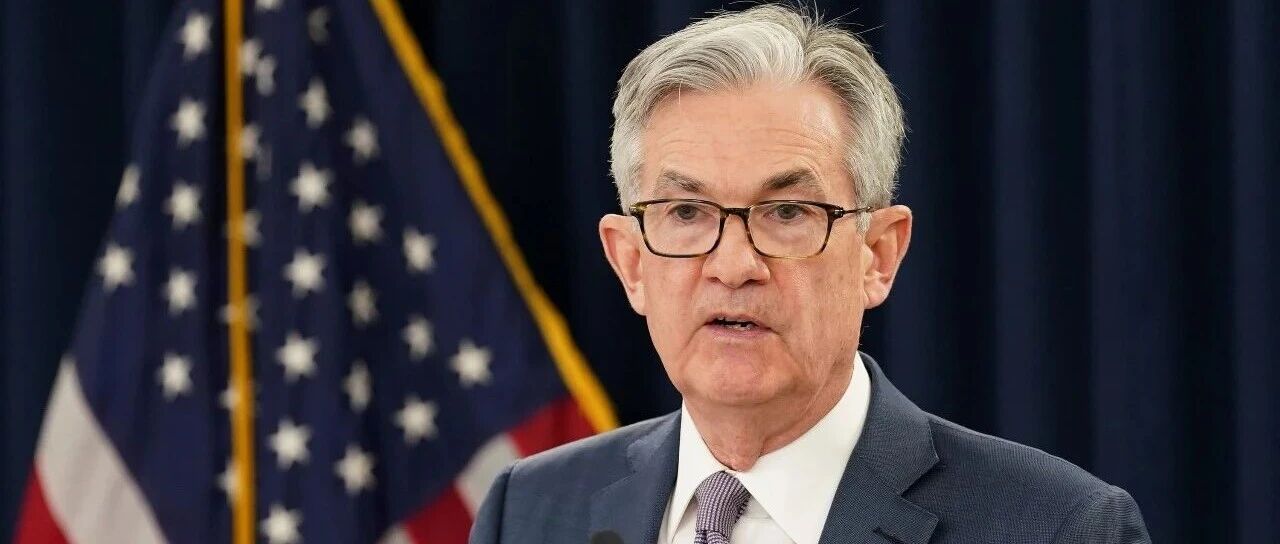
鲍威尔敞开降息大门,或接近停止缩表(附讲稿)
华尔街见闻· 2025-10-14 23:44
Core Views - The Federal Reserve Chairman Jerome Powell indicated a potential interest rate cut this month due to a deteriorating labor market, despite the impact of the government shutdown on economic assessments [1][2][3] - Powell suggested that the Fed may halt its balance sheet reduction in the coming months, as the economic growth trajectory appears slightly stronger than expected [2][6][7] Labor Market and Employment - The labor market shows increasing downside risks, with Powell noting that the balance of risks regarding employment and inflation has shifted, leading to the decision to cut rates in September [3][5][46] - Despite a low unemployment rate in August, wage growth has significantly slowed, partly due to a decrease in immigration and labor force participation [2][46] - Job openings have declined, which may reflect an impending rise in the unemployment rate [5][46][47] Inflation and Economic Indicators - Current data suggests that rising commodity prices are primarily due to tariffs rather than broader inflationary pressures [4][48] - The core Personal Consumption Expenditures (PCE) inflation rate was 2.9% over the past 12 months, slightly up from earlier in the year, with short-term inflation expectations rising while long-term expectations remain aligned with the 2% target [48] Monetary Policy and Balance Sheet Management - Powell emphasized the importance of balancing the dual mandate of employment and inflation, stating that there is no risk-free policy path [5][48] - The Fed's balance sheet, which stood at $6.5 trillion as of October 8, consists mainly of $2.4 trillion in Federal Reserve notes and $3 trillion in reserves [21][22] - The Fed plans to stop reducing its balance sheet when reserves are slightly above what is deemed sufficient, with indications that liquidity is tightening [7][40] Market Stability and Future Outlook - Powell highlighted the need for careful management to avoid a repeat of the 2019 repo market crisis, indicating that the Fed will take cautious measures to maintain market stability [8][10][40] - The Fed's framework for sufficient reserves has proven effective in controlling policy rates and supporting financial stability [38][44] - The Fed is closely monitoring various indicators to inform its decisions regarding the balance sheet and interest rates in light of evolving economic conditions [40][45]

深夜,中概股大跌!美联储,降息大消息!
Zheng Quan Shi Bao· 2025-10-14 15:37
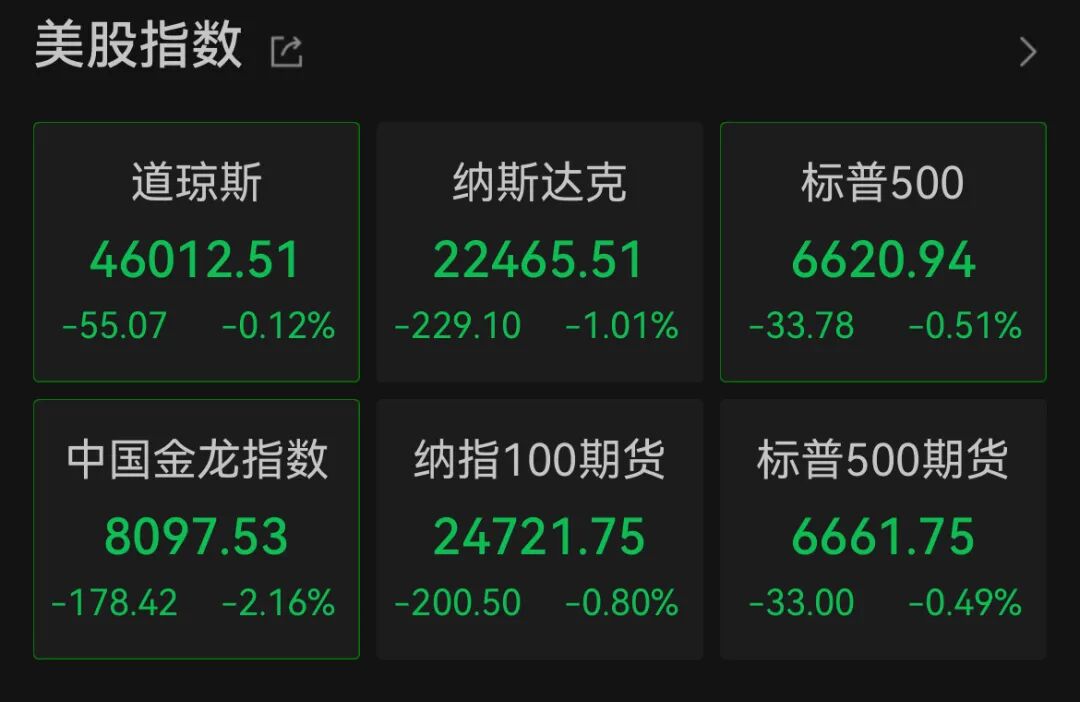
Market Overview - The U.S. stock market opened lower on October 14, with the Dow Jones down 0.12%, Nasdaq down over 1%, and S&P 500 down 0.51% [1] - Technology stocks experienced significant declines, with Nvidia, Broadcom, and Oracle each dropping by 4%, while Tesla, TSMC, and JPMorgan fell over 3% [3] - The Nasdaq Golden Dragon China Index initially dropped over 3% but later saw a slight recovery [4] Company-Specific Developments - Oracle is hosting a global AI conference in Las Vegas from October 14 to 17, where it is expected to launch a new AI database, marking its transition from a traditional software manufacturer to an AI infrastructure provider [3] - Storage stocks opened lower, with SanDisk falling nearly 8%, Western Digital down over 3%, and Seagate Technology down over 2% [3] - Bank stocks showed mixed performance, with Wells Fargo and BlackRock rising over 3%, while Goldman Sachs fell over 4% and JPMorgan dropped over 3% [3] Economic Insights - Federal Reserve Governor Bowman indicated expectations for two more interest rate cuts by the end of the year [6] - John Williams, President of the New York Federal Reserve, expressed concerns about a potential sharp slowdown in the labor market, noting a gradual cooling trend over the past year [6] - Williams highlighted that while the unemployment rate has only slightly increased, job vacancies and turnover rates have decreased significantly [6] - He estimated that tariffs have raised inflation by 0.25 to 0.5 percentage points, but the overall impact is less than previously anticipated [6] - Williams noted that there are no signs of second-round effects from tariffs on inflation, and supply chain indicators are returning to normal levels [7]
敏感时刻,今晚鲍威尔又要登场了,这是他在美联储决议后首度发声
Hua Er Jie Jian Wen· 2025-10-14 08:27
Core Points - Federal Reserve Chair Jerome Powell is set to speak at the National Association for Business Economics, marking his first public appearance since the September FOMC meeting, with investors keenly awaiting insights on interest rate policy direction [1] - The Fed lowered interest rates by 25 basis points to a range of 4.00%-4.25% during the September meeting, with nearly unanimous support, except for new board member Stephen Miran, who advocated for a 50 basis point cut [1] - There is a notable division among Fed officials regarding future rate cuts, with one faction advocating for further reductions this year, while another believes the current stance is sufficiently accommodative, adding uncertainty to future policy paths [1][2] Economic Context - The Fed's dual mandate of achieving maximum employment and price stability is currently challenged by competing concerns, as signs of a cooling labor market suggest potential vulnerabilities in employment, while inflation remains stubbornly above the 2% target for the past five years [2] - Powell's focus on the labor market could indicate room for one or two more rate cuts before year-end, whereas an emphasis on persistent inflation would raise the threshold for further easing, suggesting a pause in rate cuts at the upcoming October meeting [3] Data Challenges - The speech occurs amid a government shutdown that has halted the release of key employment and inflation reports, complicating the Fed's ability to make informed policy decisions [1][3] - Investors currently perceive a 97% probability of another rate cut at the October meeting, according to the CME FedWatch tool, highlighting market expectations despite the lack of new economic data [3]
美联储官员,释放降息大消息
Zhong Guo Ji Jin Bao· 2025-10-11 23:12
Core Viewpoint - The Federal Reserve officials are expressing mixed views on future interest rate cuts, with some advocating for caution due to persistent inflation risks while others are open to further cuts in response to a weakening labor market [2][4][7]. Group 1: Federal Reserve Officials' Perspectives - St. Louis Fed President Alberto Musalem supports further rate cuts as a precaution against a weakening labor market but emphasizes the need to remain vigilant against high inflation [2]. - Fed Governor Michael Barr calls for caution regarding further rate cuts, highlighting the potential for tariffs to contribute to sustained inflation [4][5]. - Fed Governor Christopher Waller identifies the labor market as a significant concern, suggesting that recent employment growth may have turned negative [7][8]. Group 2: Economic Indicators and Predictions - Musalem anticipates a gradual slowdown in the job market but acknowledges the possibility of a more rapid decline, with about 10% of current inflation attributed to tariffs [2]. - Waller notes that while the labor market is weak, economic growth appears robust, with an expected annualized GDP growth rate of nearly 4% for Q3 2025 according to the Atlanta Fed's model [8]. - The probability of a 25 basis point rate cut in October has risen to 98.3%, with a cumulative 50 basis point cut by December at 91.7% [9].