
双循环

Search documents
“内贸版广交会”搭台赋能,不止卖货更要吸睛圈粉
Sou Hu Cai Jing· 2025-07-07 15:16
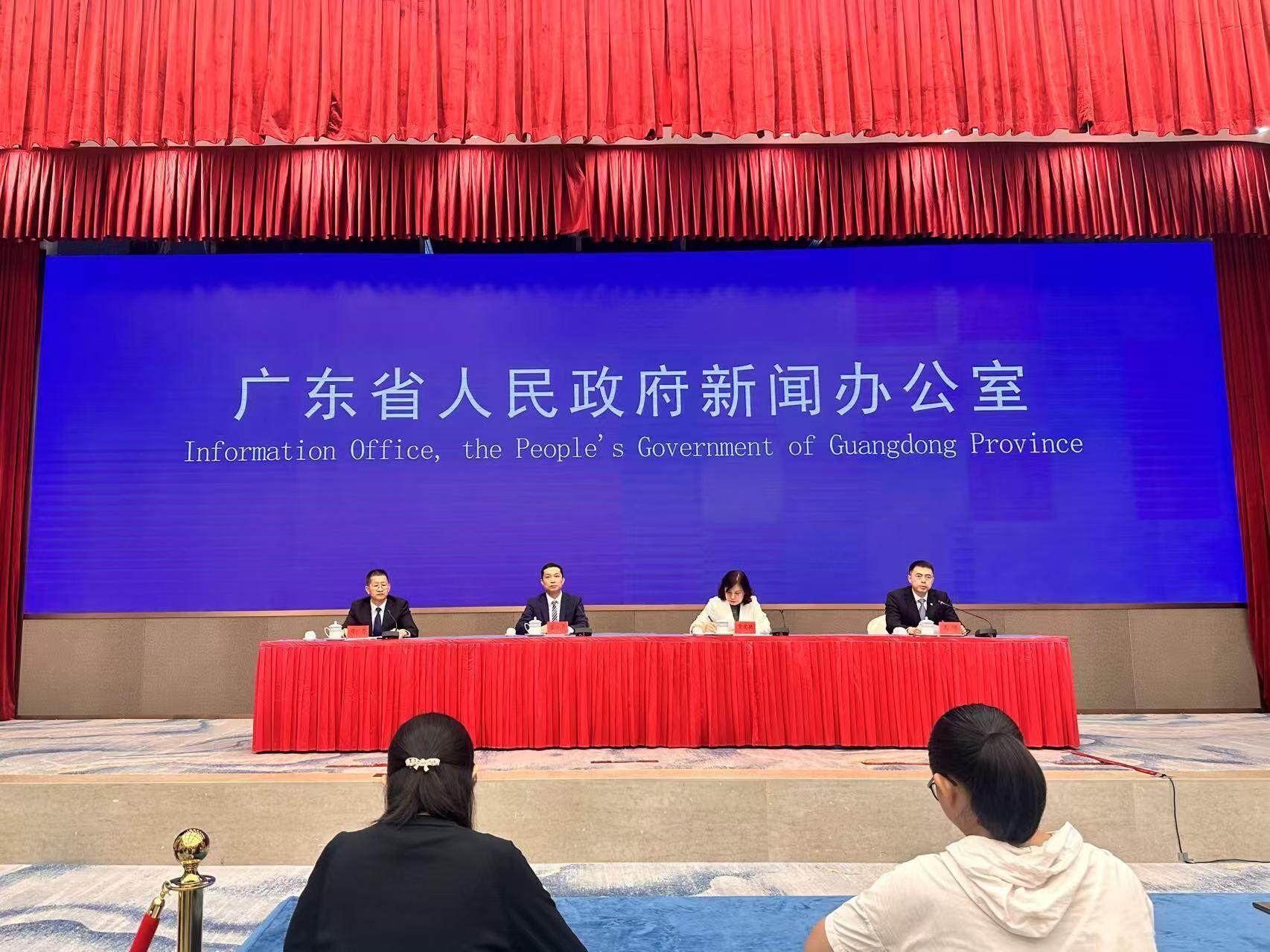
Core Viewpoint - The Guangdong Quality Products Exhibition aims to support local businesses in adapting to changing economic conditions by providing a platform for showcasing consumer products and facilitating domestic market expansion [1][8]. Group 1: Exhibition Overview - The first Guangdong Quality Products Exhibition will be held from September 12 to 14, 2023, at the Guangzhou Canton Fair Exhibition Hall, focusing on consumer goods [1]. - The exhibition will cover an area of 50,000 square meters and will feature five themed pavilions, including consumer electronics, fashion and beauty, toys, food, and home ceramics [3][6]. - The theme of the exhibition is "Guangdong Quality Products · Beautiful Guangdong," highlighting traditional advantageous products from Guangdong [3]. Group 2: Participation and Target Audience - The event will involve 167 industry associations and over 4,000 direct members, inviting leading brands and quality SMEs to participate [3][4]. - Approximately 4,000 merchants will be invited to target customers, including major purchasing giants like Walmart, Alibaba, and JD.com, as well as key professional buyers from Hong Kong, Macau, and ASEAN regions [4][6]. Group 3: Marketing and Engagement Strategies - The exhibition will include a "Guangdong Quality Products · Star Performance Carnival" to attract Gen Z consumers, converting cultural traffic into consumer traffic [6]. - Interactive experiences, such as consumer engagement and prize draws, will be incorporated to enhance the shopping experience and drive traffic from the exhibition to local communities [6][8]. Group 4: Government Support and Objectives - The Guangdong Provincial Department of Commerce will provide full subsidies for qualifying exhibitors' booth fees, focusing on supporting small and medium-sized enterprises [7]. - The primary goal of the exhibition is to secure orders and establish long-term cooperation between exhibitors and buyers, enhancing the effectiveness of participation [7][8].

欧元发力国际化,对人民币有何启示 | 国际
清华金融评论· 2025-07-07 11:37
Core Viewpoint - The article discusses the international status of the euro and the potential for the renminbi (RMB) to increase its international role, particularly in light of recent U.S. tariff policies that have altered the dynamics of global financial markets [2][10][21]. Euro's International Role - The euro's international status has remained stable in recent years, with some progress in areas like "reverse Yankee" bonds due to U.S. tariff policies, which have prompted investors to seek alternative currencies [2][7]. - The "International Role Composite Index" introduced in the Lagarde report measures a currency's role in international bonds, cross-border deposits, global foreign exchange reserves, and international settlements [6]. - The euro's share in official foreign exchange reserves has remained around 20% since 2015, while the RMB's share was 2.2% in 2024, down approximately 0.4 percentage points from 2022 [6][17]. Impact of U.S. Policies - U.S. tariff policies have created opportunities for the euro to enhance its international role by breaking the traditional negative correlation between U.S. stocks and bonds, leading investors to diversify into other currencies [10][11]. - The report emphasizes that for the euro to capitalize on these opportunities, Europe must eliminate internal financial market fragmentation and establish a unified capital market [11] . Challenges from Digital Currencies - The rise of cryptocurrencies poses challenges to the international monetary system, with the U.S. actively developing policies around digital assets that could affect global financial stability [13][14]. - The report calls for Europe to accelerate the development of a digital euro and improve cross-border payment systems to strengthen the euro's international position [14]. Geopolitical Influences - Geopolitical factors are increasingly seen as significant in shaping the international monetary system, with a notable rise in gold's share in foreign exchange reserves attributed to concerns over geopolitical risks [16]. - The report indicates that military power is linked to a currency's international status, suggesting that the euro lags behind the dollar partly due to the latter's geopolitical security backing [17][18]. Recommendations for RMB - The article suggests that China should leverage its economic position to enhance the RMB's international role without compromising financial security, focusing on practical measures rather than a formal internationalization roadmap [20][21]. - It emphasizes the importance of maintaining economic growth to bolster the RMB's international status, as perceptions of slowing growth could diminish its appeal [21].

东方钽业(000962) - 000962东方钽业投资者关系管理信息20250707
2025-07-07 10:36
Group 1: Company Overview and Market Position - Dongfang Tantalum Industry focuses on maintaining competitiveness in the tantalum and niobium market despite demand fluctuations [2][3] - The company aims to enhance its production capabilities and quality through innovation and lean management [3] - In 2024, the company's revenue reached 1.28 billion CNY, with domestic sales accounting for 64% (823 million CNY) and international sales 36% (457 million CNY) [5] Group 2: Raw Material Supply and Risk Management - The company has established a subsidiary in Africa to monitor raw material market trends and mitigate risks [4] - A binding equity acquisition agreement was signed with Minsur in Peru, ensuring effective raw material supply [4] Group 3: Strategic Development and Financial Management - The company prioritizes a "steady operation" strategy, opting for equity financing over bank loans to maintain capital structure flexibility [6][7] - The implementation of fundraising projects will enhance production capacity in various processes, addressing equipment aging and capacity shortages [8] - The focus on domestic market development aims to increase the proportion of domestic sales and build a dual-driven market structure [5][8]

广东援疆拓展两地发展纵深 产业民生结硕果 粤新共绘“同心圆”
Nan Fang Ri Bao Wang Luo Ban· 2025-07-07 08:22
Group 1 - The core viewpoint emphasizes the collaborative efforts between Guangdong and Xinjiang in various sectors, focusing on economic development, cultural integration, and improving living standards for local communities [1][2][3][4][5][6][7][8][9][10] Group 2 - Major industrial projects are being established across Xinjiang, such as a large-scale photovoltaic and energy storage base by Guangdong Energy Group, which covers approximately 22,100 acres with a total investment of about 3.4 billion yuan, generating 1.46 billion kWh annually [2] - The "Yueqi Xingjiang" initiative aims to enhance employment and economic growth by encouraging Guangdong enterprises to invest in Xinjiang, resulting in over 30 signed contracts and 23 actual projects in 2024, with a total operating revenue of 10.5 billion yuan and stable employment for over 20,000 people [2] Group 3 - The "Jiangpin Nanxia, Yuepin Beishang" project facilitates the mutual exchange of regional products, leading to significant sales achievements, such as the sale of 8.46 million yuan worth of wood apricots in just three days [3] - The bilateral trade volume of specialty products between Guangdong and Xinjiang has exceeded 10 billion yuan, showcasing the effectiveness of the initiative in enhancing trade relations [3] Group 4 - Guangdong's medical aid initiatives, such as the "Yuexin Guangmingxing" project, have provided significant healthcare support, including over 2,155 free cataract surgeries and 2,400 free tuberculosis treatments [5][6] - The establishment of the International Eye Center in Xinjiang is expected to serve over 33,000 outpatient visits and 15,000 inpatient cases in 2024, with a high percentage of complex surgeries performed [6] Group 5 - Educational support from Guangdong has led to the establishment of new schools and the introduction of innovative teaching methods, with 1,136 teachers and students sent for educational assistance [7] - The "Yuexin Tongshang Yi Tang Ke" platform promotes educational collaboration, enhancing the quality of education in Xinjiang [7] Group 6 - Cultural initiatives have been implemented to promote traditional arts, such as dragon and lion dance teams, which have gained popularity in local communities [8][9] - The establishment of cultural venues like the "Yue Du Yue You Qu" city reading bar has attracted significant public engagement, hosting numerous reading events [9] Group 7 - The Guangdong aid team has been recognized for its effective support in various sectors, including healthcare and education, contributing to the overall development of Xinjiang [10] - The commitment to building a strong support team and maintaining strict organizational discipline is emphasized as essential for the success of the aid initiatives [10]
趋势研判!2025年中国体育服务行业产业链、产业规模、行业政策、重点企业及发展路径分析:产业规模将达2.78万亿元,行业升级驱动体育产业高质量发展 [图]
Chan Ye Xin Xi Wang· 2025-07-07 01:31
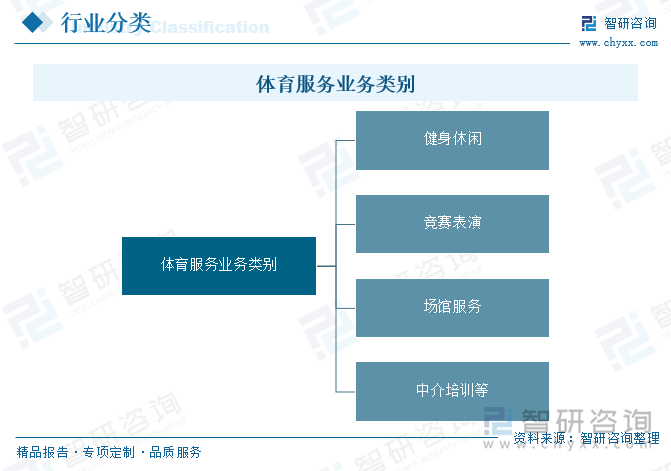
Core Insights - The sports service industry is a crucial part of the sports sector, providing non-material products related to sports through specialized and market-oriented methods [1][3][4] - In 2023, China's sports industry reached a total scale of 3.67 trillion yuan, with the sports service sector accounting for 2.11 trillion yuan, or 57.30% of the total [1][4][7] - The sports service industry is expected to grow significantly, with projections of 2.61 trillion yuan in 2024 (67.02% of the total) and 2.78 trillion yuan in 2025 (68% of the total) [1][7][25] Industry Definition and Business Categories - The sports service industry encompasses a wide range of activities, including fitness and leisure, competition performances, venue services, and intermediary training [3][4] - It aims to meet diverse needs such as health, entertainment, competition, and education [3][4] Current Development Status - The sports service industry has seen rapid growth, with a reported revenue increase of 24.1% year-on-year in the first three quarters of 2024 [7] - The industry is becoming increasingly important within the broader sports sector, reflecting rising consumer spending power [4][7] Industry Chain Structure - The industry chain includes upstream suppliers of sports equipment and venue construction, midstream service providers, and downstream consumers such as event attendees and fitness enthusiasts [9][11] Competitive Landscape - The sports service industry features a diverse competitive landscape with numerous players, including state-owned, private, and foreign enterprises [18] - Key companies include Lisheng Sports, Zhongti Industry, Feifan Lingyue, and Amer Sports, which hold significant market positions [18][20] Development Environment and Policies - National policies promoting sports and fitness have significantly boosted the growth of the sports service industry [15][17] - Recent policies focus on enhancing consumer engagement and supporting high-quality sports events and activities [15][17] Future Development Path - The sports service industry is expected to contribute to high-quality economic development and improved living standards, while also adapting to new market demands and technological advancements [25] - The integration of emerging technologies like AI and virtual reality is anticipated to transform the industry, offering personalized sports products and services [25]


杭州至塔什干全货机首航 通关提速至1小时
Hang Zhou Ri Bao· 2025-07-03 03:00
Group 1 - The launch of the direct cargo flight route from Hangzhou to Tashkent marks Zhejiang Province's first direct cargo route to Central Asia, enhancing logistics efficiency with a customs clearance process reduced to 1 hour [1] - The route operates twice a week, taking only 6 hours to reach Tashkent, with a maximum payload of approximately 50 tons, facilitating the export of daily goods and clothing from Zhejiang and the import of fresh fruits from Uzbekistan [1] - The opening of this route optimizes the global supply chain and injects new momentum into regional economic cooperation under the Belt and Road Initiative [1] Group 2 - Zhejiang Airport Group is enhancing its "72-hour global reach" air cargo network, operating a total of 53 international cargo routes covering three continents [2] - Plans for the second half of the year include increasing flights to Europe and America and exploring intercontinental cargo routes, aiming for an international cargo level exceeding 30% for the year [2]
武汉 择高而立、向上而行 在支点建设中走在前列
Ren Min Ri Bao· 2025-06-30 21:52
Core Viewpoint - Wuhan is actively transforming its advantages in science, education, transportation, and ecology into development momentum, aiming to become a strategic hub in central China [1] Group 1: Innovation and Talent - Wuhan has achieved a world record of 71.36 Tesla in pulsed magnetic fields at the National Pulsed Magnetic Field Science Center, surpassing the previous record of 64 Tesla set in 2018 [2] - The city is home to 141,000 university students and 81 academicians, highlighting its strong talent pool [2] - Wuhan plans to establish its first batch of industrial innovation joint laboratories in 2024, aiming to tackle key technologies and develop major innovative products within three years [2][3] Group 2: Transportation Hub - Yangluo Port is the leading container throughput port in the middle and upper reaches of the Yangtze River, with a throughput of 2.381 million TEUs in 2024, a 3.5% increase year-on-year [4] - The China-Europe Railway Express (Wuhan) has launched its second starting station at Yangluo Port, enhancing connectivity to Europe [4] - Wuhan's GDP is projected to exceed 2.1 trillion yuan in 2024, with a foreign trade volume surpassing 400 billion yuan, reflecting its growing role as a dual-circulation hub [5] Group 3: Ecological Development - The water quality of the Yangtze River in Wuhan has maintained a stable Class II standard for five consecutive years, contributing to ecological restoration efforts [6] - The ecological restoration of abandoned mines in Jiangxia District has led to a 12% increase in vegetation coverage and the establishment of a popular tourist destination [6] - Wuhan is promoting the application of the ecosystem production value (GEP) accounting system to quantify ecological value [6][7] Group 4: Cultural and Tourism Integration - Wuhan is developing a world-class cultural tourism destination centered around iconic sites like the Yellow Crane Tower, with over 130,000 visitors during the recent holiday [8] - The East Lake Ecological Tourist Area aims to create a world-class resort, having received 13.3 million visitors from January to May 2024 [8] - The city is leveraging its cultural heritage and innovative projects to enhance its international image as a vibrant and technologically advanced city [9]
制度创新与开放高地:海南自贸港政策体系的建构逻辑与实践路径
Qi Huo Ri Bao Wang· 2025-06-30 00:39
Core Insights - Hainan Free Trade Port serves as a significant national strategy for deepening reform and opening up, transitioning from a "testing ground" to a "Chinese-style free trade port" with a comprehensive policy framework centered on "zero tariffs, low tax rates, and simplified tax systems" [2][4] - The establishment of Hainan's "three zones and one center" strategy reflects a deep integration of national strategy and regional characteristics, emphasizing systematic policy innovation across multiple sectors [3][4] Policy Framework - The policy framework of Hainan Free Trade Port is built around "freedom and convenience," covering trade, investment, finance, taxation, talent, and data, creating a competitive institutional environment [5] - The "zero tariff" policy significantly reduces operational costs for enterprises, with the import price index in Hainan being approximately 18.7% lower than that of the mainland as of 2023 [6][7] - The foreign investment negative list for Hainan is the shortest in the country, with only 27 items, promoting greater openness in sectors like healthcare and education [8][9] Economic Impact - Hainan's GDP reached 793.57 billion yuan in 2024, a substantial increase from 553.24 billion yuan in 2020, with the tertiary sector contributing 60.6% to the economy [18] - The introduction of the duty-free shopping policy has led to a 43% month-on-month increase in duty-free sales following the increase in shopping limits [19] Innovation and Development - Hainan Free Trade Port has generated a knowledge spillover effect, with the number of invention patents per ten thousand people reaching 10.1 by February 2025, exceeding the "14th Five-Year Plan" target [20] - The establishment of the Hainan International Energy Trading Center has facilitated significant trading volumes, exceeding 500 billion yuan in 2023, and is exploring energy contracts denominated in RMB [21] Challenges and Recommendations - Hainan faces challenges such as a limited local market size and high logistics costs, which are 30% to 40% higher than the mainland [24] - The talent structure in Hainan shows a low proportion of high-level talent, which significantly impacts the R&D efficiency of high-tech enterprises [25] - Recommendations include enhancing customs efficiency through a "smart customs" platform and expanding financial sector openness [29]
黑龙江哈尔滨获批空港型国家物流枢纽
Zhong Guo Chan Ye Jing Ji Xin Xi Wang· 2025-06-29 22:34
Group 1 - The National Development and Reform Commission has included Harbin's airport-type national logistics hub in the 2025 construction list, marking a significant breakthrough in logistics hub development for Harbin [1] - The hub is expected to play a crucial role in promoting the comprehensive revitalization of Northeast China, deepening China-Russia economic cooperation, and constructing a new development pattern of "dual circulation" [1][3] - The logistics hub will be developed under a model that involves government planning, state-owned enterprise leadership, and collaboration among various stakeholders, forming a "1+10" enterprise alliance [2] Group 2 - The logistics hub covers an area of 2.1774 million square meters and includes nine major areas such as international transfer and cargo handling zones, facilitating complementary functions and regional industrial integration [2] - In 2024, Harbin Taiping International Airport achieved a cargo and mail throughput of 140,700 tons, a year-on-year increase of 7.2%, and opened 16 international cargo routes [2] - The hub is a key node for China’s "China-Mongolia-Russia Economic Corridor," with 93% of Northeast China's cargo and mail throughput to Russia, and a comprehensive logistics network covering 28 countries and regions [3] Group 3 - The hub aims to enhance international air cargo, cross-border e-commerce customs clearance, and international mail exchange functions, creating a "tri-hub" system with land and air logistics [3] - The construction of the logistics hub is part of a broader strategy to improve infrastructure and transportation systems in the airport economic zone, aiming for a cargo throughput of over 240,000 tons within 3 to 5 years [4] - Harbin is set to leverage the hub's economic impact to promote industrial transformation, optimize urban functions, and deepen opening-up efforts, supporting the establishment of an international logistics center in Northeast Asia [4]
亚洲银行家2025中国未来金融峰会举办
Zhong Zheng Wang· 2025-06-27 06:51
Group 1 - The 2025 China Future Finance Summit focused on reshaping global order and accelerating smart finance, addressing topics such as global trade impacts, AI in finance, big data-driven operations, customer experience enhancement, and resilience building in financial institutions [1] - The current global economic landscape is undergoing profound adjustments, with the Chinese financial industry at a critical transformation phase, necessitating accelerated digital transformation and globalization in the banking sector [1] - The global economy has entered an era where macroeconomic resilience relies more on policy agility and institutional trust, leading to a reshaping of trade and finance [1] Group 2 - The EU-China cooperation can deepen in capital markets, with Chinese capital aiding Europe's green transition, emphasizing the need for dialogue to build trust and promote sustainable financial development [2] - China's service consumption potential is significant but remains lower than that of countries like the US, with challenges in demand strength and supply quality, necessitating income increases for low- and middle-income groups and optimized service supply [2] - China needs to deepen reforms and open up, accelerate technological progress, and strengthen cooperation with partners like Europe to address global economic governance challenges [2] Group 3 - The discussion on "Financial Transformation in the Age of AI" highlighted that large language models are shifting financial AI from internal data-driven approaches to external data training, enhancing information processing capabilities while exposing security risks like deep forgery and data pollution [3] - A mechanism of "centralized model control + scenario-based fine-tuning" is needed to balance data privacy and model effectiveness in cross-border finance, alongside strengthening internal AI ethics education and sharing model results among multiple institutions [3]