反内卷

Search documents
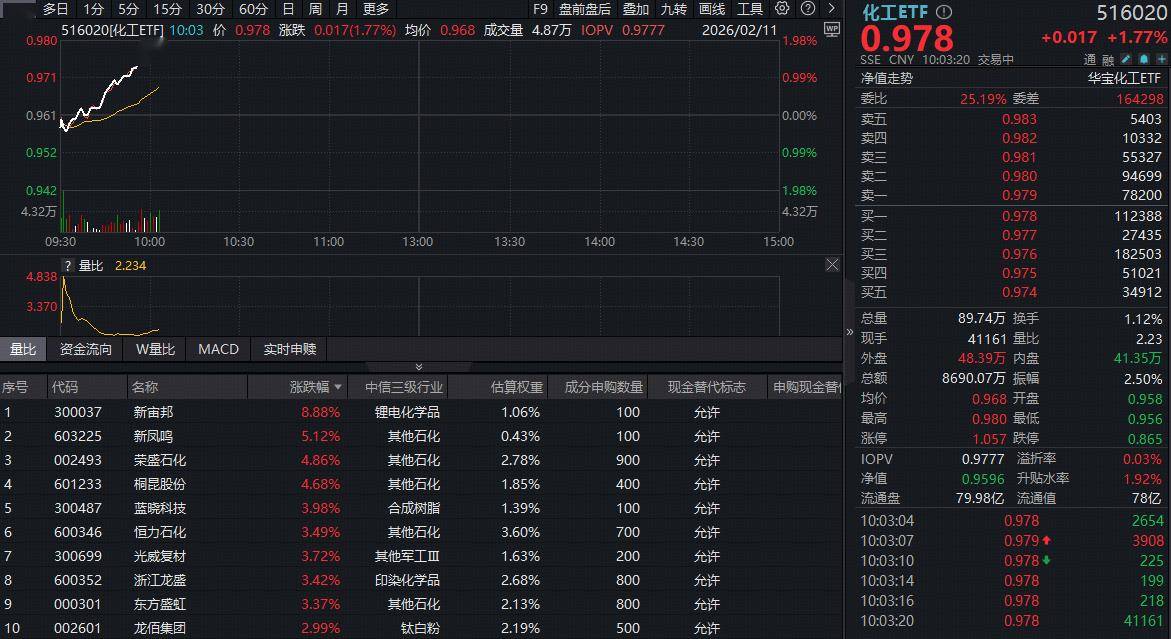
化工重拾升势!化工ETF(516020)迅速反弹涨近2%
Mei Ri Jing Ji Xin Wen· 2026-02-11 02:48
Group 1 - The A-share market showed mixed performance on February 11, with the chemical sector rebounding after a brief correction, supported by over 740 million yuan of net inflow into the chemical ETF (516020) during the last 10 trading days [1] - According to GF Securities, the chemical industry typically follows a five-year cycle characterized by phases of "profit upturn - capacity expansion - profit bottoming - capacity clearance/demand expectation improvement," and the current environment is favorable for the chemical sector as capital expenditure growth turns negative and domestic demand expands [1] - Guohai Securities suggests that the trend of reducing competition in the chemical industry may lead to a significant slowdown in global capacity expansion, which could enhance the potential dividend yield for Chinese chemical companies, transforming them from cash-consuming entities to cash-generating ones [1] Group 2 - The chemical ETF (516020) and its linked fund (012537) track the CSI segmented chemical industry theme index, with nearly 50% of its holdings concentrated in large-cap leading stocks such as Wanhua Chemical and Salt Lake Industry, while the other 50% covers leading stocks in sub-sectors like phosphate fertilizers, fluorochemicals, and nitrogen fertilizers [2]
ETF盘中资讯|外资巨头频频唱多!化工板块开盘猛拉,化工ETF(516020)涨近2%!景气拐点或至?
Sou Hu Cai Jing· 2026-02-11 02:38
Group 1 - The chemical sector is experiencing a rebound, with the chemical ETF (516020) showing a significant increase of 1.77% as of the report, peaking at a 1.98% rise during the trading session [1][2] - Key stocks in the sector include New Chemical Materials, which surged over 8%, and other notable gainers such as New Fengming, Rongsheng Petrochemical, and Tongkun Co., all showing increases of over 4% [1][2] - Recent reports from major foreign investment firms, including UBS and Morgan Stanley, have upgraded their outlook on the Chinese chemical industry, predicting a new upward cycle from 2026 to 2028 due to multiple positive factors [1][3] Group 2 - Guohai Securities suggests that the re-evaluation of the Chinese chemical industry could lead to a significant slowdown in global capacity expansion, potentially transforming the industry from a cash-consuming entity to a cash-generating one [3] - The chemical ETF (516020) tracks the CSI sub-sector chemical industry index, covering popular themes such as AI computing power, de-involution, robotics, and new energy [3]


外资巨头频频唱多!化工板块开盘猛拉,化工ETF(516020)涨近2%!景气拐点或至?
Xin Lang Cai Jing· 2026-02-11 02:15
Group 1 - The chemical sector continues to rebound, with the Chemical ETF (516020) showing a maximum intraday increase of 1.98% and a current increase of 1.77% as of the report [1][7] - Key stocks in the petrochemical and lithium battery sectors have seen significant gains, with New Zhou Bang rising over 8%, Xin Feng Ming increasing over 5%, and several others like Rongsheng Petrochemical and Tongkun Co. rising over 4% [1][7] - Recent reports from major foreign investment firms, including UBS and Morgan Stanley, are optimistic about the Chinese chemical industry, predicting a new upward cycle from 2026 to 2028 due to multiple positive factors [1][9] Group 2 - Guohai Securities suggests that the re-evaluation of the Chinese chemical industry could lead to a significant slowdown in global chemical capacity expansion, enhancing potential dividend yields and transforming the industry from a cash-consuming entity to a cash-generating one [3][9] - The Chemical ETF (516020) tracks the CSI sub-sector chemical industry theme index, covering popular themes such as AI computing power, anti-involution, robotics, and new energy, making it an efficient way to invest in the sector [3][9]
华泰证券:1月化工行业整体价差环比扩大,26年有望迎景气回暖
Sou Hu Cai Jing· 2026-02-11 00:11
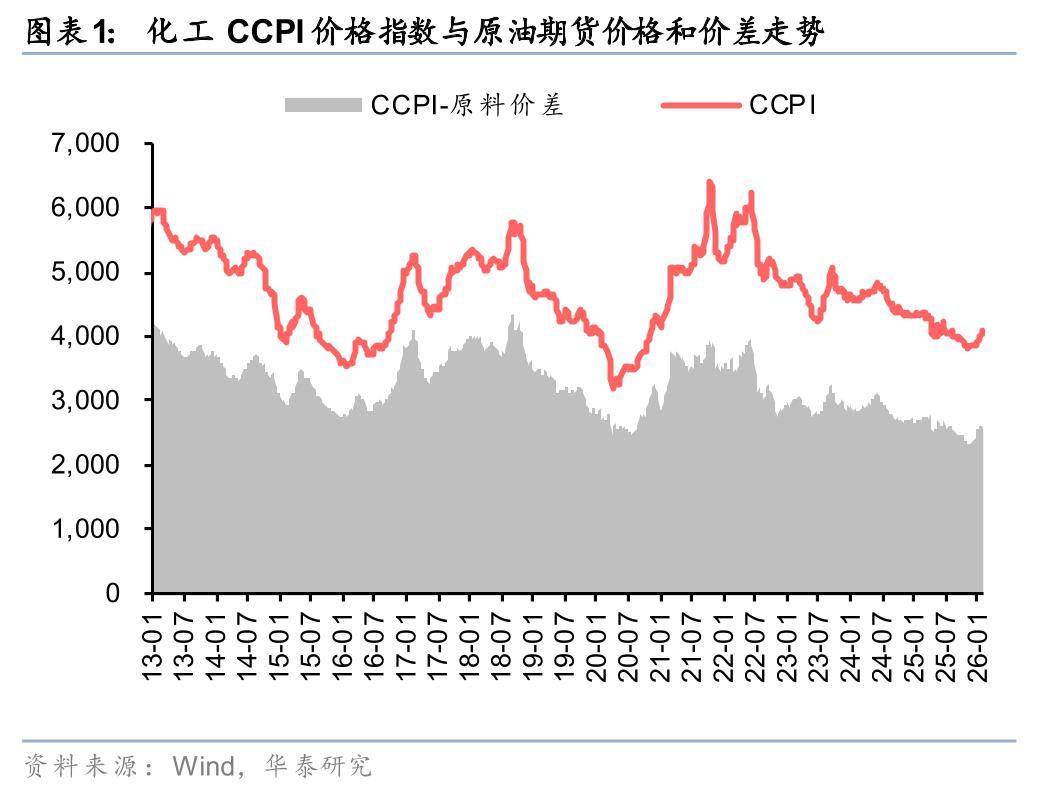
Group 1 - The overall price spread in the chemical industry expanded in January, with the CCPI-raw material price spread reaching 2631, which is in the 15th percentile since 2012, up from 2500 at the end of 2025, driven by geopolitical conflicts affecting oil prices and rising resource prices [1][6] - The industry is expected to see a recovery in 2026, supported by improved profitability in bulk chemicals as supply-side adjustments accelerate under the "anti-involution" policy, and demand growth from emerging markets in Asia, Africa, and Latin America [1][4] Group 2 - The January PMI was reported at 49.3, indicating a slowdown in capital expenditure growth in the chemical industry, which has been declining since June 2025, suggesting a potential supply-side turning point [2][18] - The demand for chemical products is shifting from real estate to consumer goods, infrastructure, and emerging technologies, with domestic chemical products benefiting from global cost advantages [2][9] Group 3 - Oil prices have been supported by expectations of lithium battery storage growth, rising crude oil prices, and winter heating demand, leading to price increases in certain chemical products [3][35] - However, some products experienced price declines due to supplier price adjustments, maintenance recoveries, and reduced acceptance of high prices by downstream consumers [3][35] Group 4 - The chemical industry is approaching a turning point in capital expenditure, with significant declines since June 2025, and the "anti-involution" policy expected to facilitate supply-side adjustments [4][18] - The recovery in demand and exports, particularly to Asia and Africa, is anticipated to support the gradual recovery of bulk chemicals [4][34] Group 5 - The January oil price increase was influenced by geopolitical tensions in Venezuela and Iran, with WTI and Brent crude prices rising by 13.57% and 16.17% respectively compared to the end of December [21][6] - The outlook for oil prices suggests a potential bottoming out and recovery in 2026, driven by demand recovery and global inventory replenishment [21][34] Group 6 - The chemical industry is expected to benefit from high dividend assets as capital expenditure declines, with companies likely to increase their willingness and ability to distribute dividends [34][34] - The phosphate resource sector is projected to maintain high profitability for at least three years, attracting investor interest [34][34]

于无声处听惊雷——从2025年统计数据看中国未来
泽平宏观· 2026-02-10 16:00
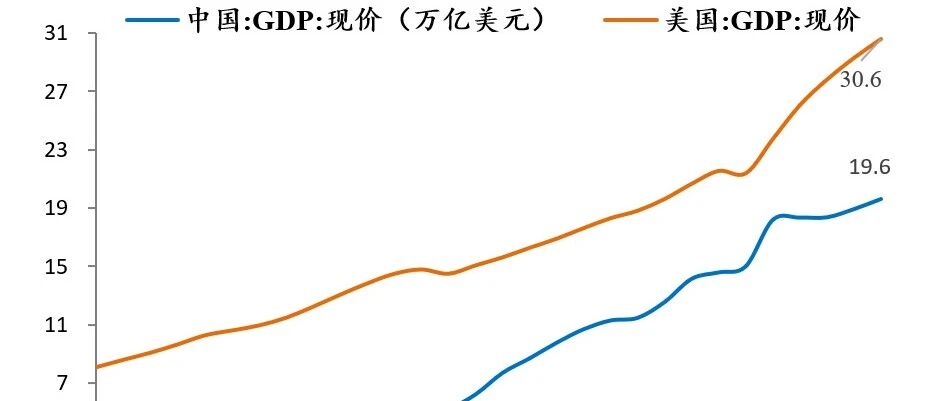
Core Viewpoints - China's economy is undergoing significant changes, with GDP approaching that of the largest economy globally and contributing over 30% to global economic growth in recent years [2][4][5] - The rise of AI and the competition for computing power are reshaping industries, necessitating breakthroughs in energy technology to meet future demands [2][21] Economic Growth and Structure - By 2025, China's GDP is projected to reach 140.2 trillion yuan (approximately 19.6 trillion USD), accounting for about 17% of the global economy, with a growth rate of 5% [4][5] - China's per capita GDP is expected to be 13,970 USD by 2025, nearing the high-income country threshold [9] - The contribution of the tertiary sector to GDP has reached a new high, with significant growth in modern service industries [9][15] Consumption Trends - Final consumption expenditure is projected to contribute 52% to GDP growth in 2025, indicating a shift towards consumer-driven growth [10][16] - The consumption market is expanding, with a focus on service and interest-based consumption, reflecting changing consumer preferences [15][19] - Policies aimed at boosting consumption are evolving from single-item incentives to comprehensive strategies that enhance income expectations and consumer environments [16][47] Infrastructure and Technology - China has a robust infrastructure, with the largest energy infrastructure globally and a rapidly growing digital economy, positioning itself as a leader in AI computing power [21][22] - The manufacturing sector remains dominant, with a projected industrial value added of 41.7 trillion yuan by 2025, maintaining its status as the world's largest manufacturing economy [22][23] Real Estate Market - The real estate sector is experiencing a bifurcation, with policies aimed at stabilizing the market and promoting urban renewal [29][30] - The urbanization rate is expected to reach 67.89% by 2025, indicating ongoing growth potential in urban development [31] Talent and Innovation - The demographic dividend is shifting towards a talent and engineering dividend, with a focus on innovation and high-quality development [34][35] - R&D investment is increasing, with a projected ratio of R&D expenditure to GDP reaching 2.8% by 2025, surpassing the OECD average [25] Policy Measures - Fiscal policies are becoming more proactive, with an emphasis on expanding domestic demand and optimizing economic structure through targeted investments [44][45] - Monetary policy is adopting a dual approach of overall easing and structural tools to support innovation and consumption [48][49]
2026年中国商业地产迎四大趋势:反内卷、轻资产、出海升温、AI 驱动
Bei Jing Shang Bao· 2026-02-10 14:25
Core Insights - The report highlights four major trends in China's commercial real estate industry for 2026: "anti-involution," "light asset," "increased overseas expansion," and "AI-driven" development [1][2] Group 1: Industry Trends - The commercial real estate sector is experiencing increased differentiation, with a reduction in new investments and a shift towards light asset models becoming mainstream [1] - The government will intensify efforts to combat involution, particularly addressing unfair competition caused by e-commerce platform monopolies, with new regulations effective from February 1, 2026 [1] - The light asset model, initially applied in hotel properties, has now expanded to various commercial formats and IP content operations, reflecting a cautious investment trend among industry players [1] Group 2: Overseas Expansion and AI Integration - The trend of brands going overseas is expected to continue, with a shift from "brand export" to "ecosystem export," enhancing the global influence of Chinese commercial brands [2] - AI technology will increasingly drive commercial innovation, penetrating all aspects of business operations, from cost control to management decision-making, leading to a fundamental shift in industry development logic [2]
正负极 + 隔膜 锂电材料整合潮再升级
高工锂电· 2026-02-10 12:56
Group 1 - The core viewpoint of the article highlights a shift in the expansion strategy of the lithium battery materials sector from new capacity construction to mergers and acquisitions (M&A) and asset restructuring due to price wars and capacity redundancy [2][12] - Two significant restructuring efforts in the separator segment have been initiated since December 2025, with both the anode and cathode sectors announcing "acquisition + capital increase" or controlling stake acquisition plans [2] - Enjie Co., Ltd. announced plans to acquire 100% equity of Qingdao Zhongke Hualian through a share issuance and raise supporting funds, with the announcement made on November 30, 2025 [2][3] Group 2 - Fospower Technology disclosed its plan to acquire 100% equity of Jinli Co. for approximately 5.08 billion yuan, with the transaction approved by the Shenzhen Stock Exchange's M&A review committee [4][5] - Rongbai Technology announced on December 12, 2015, its intention to acquire a portion of Guizhou Xinren's equity for 342 million yuan and increase capital by 140 million yuan, resulting in a 93.2% stake in Guizhou Xinren [6] - Guizhou Xinren currently has an annual production capacity of 60,000 tons of lithium iron phosphate and possesses rapid expansion potential [7] Group 3 - In the anode sector, Binhai Energy plans to acquire 51% equity of Xingtai Xuyang New Energy Technology Co. for 18.44 million yuan, which is related to resolving industry competition and expanding the anode material R&D base [8] - China Baoan announced its intention to lead the substantive merger and restructuring of the Shanshan Group and its wholly-owned subsidiary Ningbo Pengze, having paid a due diligence deposit of 50 million yuan [9] Group 4 - In the copper foil segment, Defu Technology disclosed plans to acquire 100% equity of Luxembourg-based CFL for 1.74 billion euros, with the target company's value stated at 2.15 billion euros [10] - Nord Shares announced plans to sell 70% equity of its wholly-owned subsidiary Jiangsu Lianxin for 70 million yuan to optimize its asset structure [11] Group 5 - The increase in M&A activity is linked to expectations of industry consolidation amid a backdrop of "anti-involution" [12] - In August 2025, key dry separator companies reached a consensus on price discipline, scientific capacity release, and a pause on capacity expansion during a closed-door meeting in Shenzhen [13] - The domestic production of lithium iron phosphate exceeded 2.5 million tons from January to October 2025, with a year-on-year growth rate exceeding 50%, although high growth coexists with low profitability [13] Group 6 - In the electrolyte chain, the common approach to enhancing concentration this year has been through large annual procurement and supply guarantee agreements rather than M&A [14] - Tianqi Materials announced a procurement contract with Guoxuan High-Tech for a total of 870,000 tons for the years 2026-2028, along with a supply guarantee framework agreement with Zhongchuang Xinhang for 725,000 tons [14]

16.5亿专利费换行业清净:光伏“反内卷”进入深水区,龙头企业带头付费和解
Di Yi Cai Jing· 2026-02-10 11:49
Core Viewpoint - The patent disputes between Aiko Solar and TCL Zhonghuan's subsidiary Maxeon have concluded, signaling a shift in the photovoltaic industry towards ending internal competition and fostering healthy development [1][3]. Group 1: Patent Licensing Agreement - Aiko Solar and Maxeon signed a patent licensing agreement worth a total of 1.65 billion yuan, with 250 million yuan to be paid in 2026 and the remainder to be paid in installments from 2027 to 2030 [2]. - Aiko Solar will receive approximately 1,000 past and future patents related to BC batteries and components, with no sales limits imposed on Aiko's BC components and batteries by Maxeon [2][3]. - The agreement allows both companies to terminate all pending or potential patent disputes, enabling Aiko Solar to focus on business development and technological innovation [2]. Group 2: Industry Implications - The resolution of patent disputes is expected to eliminate uncertainties that previously affected overseas customers' purchasing decisions regarding ABC components [3]. - Following the agreement, Aiko Solar plans to increase prices for its battery and component products and will charge downstream customers a royalty fee of 0.02 yuan per watt [3]. - The collaboration is seen as a way to promote healthy competition in the photovoltaic industry and to shift the market dynamics towards a more regulated and law-abiding environment [2][3]. Group 3: Industry Trends - The trend of major companies ending patent disputes is viewed as a positive response to the industry's "anti-involution" movement, indicating a shift towards healthier and more orderly development [3][4]. - The Ministry of Industry and Information Technology has emphasized the importance of strengthening intellectual property protection and curbing infringement behaviors as part of the industry's governance efforts [5]. - The industry is currently undergoing a deep adjustment period, with significant challenges remaining in balancing supply and demand, necessitating coordinated efforts to improve market conditions [5].


宏观经济信用观察(二零二五年年报):增长目标顺利实现 结构转型持续深化
联合资信评估· 2026-02-10 10:25
Economic Performance - In 2025, China's GDP reached 140.19 trillion yuan, growing by 5.0% year-on-year, achieving the annual growth target[10] - The quarterly GDP growth rate showed a decline from 5.4% in Q4 2024 to 4.5% in Q4 2025, primarily due to high base effects and policy timing[10] - Consumption contributed 2.6 percentage points to GDP growth, with a contribution rate of 52%, up from 47% in 2024[11] Investment Trends - Total fixed asset investment was 48.52 trillion yuan, down 3.8% year-on-year, with infrastructure and real estate investments declining significantly[20] - Manufacturing investment grew by only 0.6%, indicating a slowdown in growth momentum[20] - Infrastructure investment (excluding electricity) decreased by 2.2%, reflecting deeper local government debt issues[21] Export and Import Dynamics - Total goods trade reached 6.35 trillion USD, a 3.2% increase, with exports at 3.77 trillion USD, growing by 5.5%[27] - High-tech product exports rose by 13.2%, contributing 2.4 percentage points to overall export growth[27] - The diversification of export markets has strengthened, with ASEAN becoming the largest export market for three consecutive years[27] Price and Employment - CPI remained flat year-on-year, while PPI decreased by 2.6%, indicating low inflation and ongoing deflationary pressures[30][31] - The average urban unemployment rate was 5.2%, slightly below the target of 5.5%, with seasonal fluctuations observed throughout the year[42] Credit and Financing - Social financing increased by 35.6 trillion yuan, with a year-on-year growth of 8.3%[45] - Government bond financing rose by 2.5 trillion yuan, while household loans decreased by 2.3 trillion yuan, indicating a shift in financing dynamics[45]
铝 | 氧化铝:亏损面加大,价格有望否极泰来
中金有色研究· 2026-02-10 09:02
Industry Overview - As of January 2026, China's metallurgical-grade alumina production decreased by 1.8% month-on-month and 2.6% year-on-year, with a total capacity of 110.32 million tons, reflecting a slight contraction in supply [1] - The industry faces significant losses, with 62.85 million tons of production capacity (64.9%) operating at a complete cost loss and 23.05 million tons (23.8%) at a cash cost loss, indicating a widening loss margin compared to December 2025 [1] Commentary - The expanding loss margin in the alumina industry suggests that supply contraction may stimulate a price rebound. Although the industry currently maintains a supply surplus, the high percentage of loss-making capacity indicates that prolonged losses could lead to production shutdowns, which would drive prices up. Short-term supply contraction is evident as maintenance capacity has started to increase, reaching 1.5 million tons (1.6%) in the last week of January 2026 [2] - The trend of "anti-involution" in the alumina industry is expected to reshape the market dynamics, focusing on stricter management and optimized project layouts. This includes rigorous compliance checks and monitoring of existing projects, as well as ensuring new projects meet national regulatory requirements to prevent chaotic investments, which may suppress future supply and reshape the supply-demand balance [2] Guinea's Impact - Guinea significantly influences global bauxite supply, accounting for 40.6% of global production and 74.3% of China's imported bauxite in 2025. The potential changes in mining policies following the new president's inauguration in 2026 could disrupt the global bauxite supply landscape, potentially leading to a price reversal [3]