
新型政策性金融工具

Search documents
短贷助推信贷改善——6月金融数据点评(申万宏观·赵伟团队)
申万宏源宏观· 2025-07-15 14:13
Core Viewpoint - The improvement in credit is primarily driven by the rapid growth of short-term loans from enterprises, with a monthly year-on-year increase of 490 billion [3][46] - In June, total new credit reached 2.24 trillion, with a year-on-year increase of 110 billion, where enterprise loans increased by 1.4 trillion, mainly from short-term loans [3][46] - The cautious attitude of enterprises towards long-term investments is reflected in the decline of the PMI production expectation index from 53.3 to 52.0 [3][46] Credit and Loan Data - In June, new loans to residents amounted to 597.6 billion, showing a mild improvement, primarily from operational loans rather than consumption or housing needs [3][13] - The increase in household loans was 1.17 trillion in the first half of the year, with operational loans contributing 923.9 billion [3][13] - The BCI employment outlook index was at 49.1, indicating a challenging employment environment affecting consumer loans [3][13] Social Financing and Government Bonds - The year-on-year increase in social financing expanded, mainly due to net financing from government bonds, with a total increase of 4.7 trillion in the first half of the year [4][47] - Government bond net financing contributed 4.3 trillion to the social financing increase, but the rapid improvement phase may be coming to an end [4][47] - Future social financing growth may stabilize as government bond financing levels remain high [4][47] Monetary Policy Outlook - The People's Bank of China indicated that the effects of monetary policy will take time to manifest, with new policy tools expected to stimulate credit growth and stabilize the economy in the second half of the year [4][22] - The implementation of monetary policy will be adjusted based on domestic and international economic conditions [4][22] M1 and M2 Growth - In June, new credit totaled 2.24 trillion, with a year-on-year increase of 110 billion, primarily from the enterprise sector [5][48] - M2 increased by 0.4 percentage points to 8.3%, while M1 rose by 2.3 percentage points to 4.6% [5][49] - The structure of deposits showed an increase in household deposits by 2.47 trillion and enterprise deposits by 1.78 trillion, while fiscal deposits decreased [5][49]


6月金融数据解读:企业“跷跷板”效应弱化,带动信贷超季节性回升
Guoxin Securities· 2025-07-15 09:27
Group 1: Financial Data Overview - In June, China's new social financing (社融) reached 4.20 trillion yuan, exceeding the expected 3.71 trillion yuan[2] - New RMB loans amounted to 2.24 trillion yuan, surpassing the forecast of 1.84 trillion yuan[2] - M2 growth year-on-year was 8.3%, slightly above the expected 8.1%[2] Group 2: Private Sector Dynamics - The willingness of the private sector (both enterprises and households) to expand balance sheets has improved, with social financing growth rising to 8.9% year-on-year[5][9] - In June, social financing increased by 900.8 billion yuan compared to the same month last year, with government contributions at 56.3% and credit contributions at 31.6%[5][9] - New loans for enterprises rebounded to historical median levels, with non-financial enterprise loans increasing by 1.77 trillion yuan, a year-on-year increase of 1.4 trillion yuan[11] Group 3: Household Loan Trends - New household loans rose to 597.6 billion yuan, reflecting an increase of 26.7 billion yuan year-on-year, indicating improved household willingness to expand[12] - Short-term household loans increased by 262.1 billion yuan, while medium to long-term loans rose by 335.3 billion yuan, showing resilience in consumer spending[12] Group 4: Government Financing Impact - Government financing continued to dominate new social financing, with an increase of 1.35 trillion yuan in government debt financing, up 503.2 billion yuan year-on-year[17] - The "seesaw effect" between government financing and enterprise loans has weakened, leading to improved enterprise loan growth[11][20] Group 5: Monetary Indicators - Total deposits increased by 3.21 trillion yuan, with M2 growth rebounding to 8.3%[22] - M1 growth rate rose by 2.3 percentage points to 4.6%, indicating enhanced actual currency circulation[23][24]
利率专题:下半年,利率债供给节奏再审视
Tianfeng Securities· 2025-07-10 13:17
1. Report Industry Investment Rating No relevant content provided. 2. Core Viewpoints of the Report The report analyzes the current issuance progress of interest - rate bonds in 2025, predicts the issuance rhythm in the second half of the year, and evaluates its impact. It is expected that the central bank will use various tools to maintain the stability of the capital market, and the overall impact of the issuance of special refinancing bonds on the capital market is controllable [2][3][5]. 3. Summary According to Relevant Catalogs 3.1 Current Issuance Progress - **Treasury Bonds**: As of July 7, 2025, the cumulative net issuance of treasury bonds was 32955 billion yuan, with a progress of 53.5%, the fastest in the same period in the past five years. The issuance scale of major - term coupon - bearing treasury bonds increased year - on - year. The issuance progress of special treasury bonds exceeded half, with the first issuance peak in May [10][16]. - **Local Bonds**: The issuance rhythm of local bonds in the first half of the year was faster than that in 2024 but slower than that in 2022 - 2023. General bonds showed the characteristics of "accelerating from January to March, slow issuance from April to May, and accelerating again in the last week of June". The issuance of special bonds was relatively even, and the progress slightly exceeded that of the same period in 2024. The issuance of special refinancing bonds was concentrated in the first quarter and gradually ended in the second quarter. The issuance of special new special bonds exceeded half, with a large volume in the second quarter [23][32]. - **Policy - Financial Bonds**: Since 2020, the issuance scale of policy - financial bonds has basically remained in the range of 5 - 6 trillion yuan. As of June 30, 2025, the cumulative issuance of policy - financial bonds was 34968 billion yuan, with a cumulative issuance progress of 58%, generally higher than the same - period level in the past five years [36]. 3.2 Issuance Rhythm in the Second Half of the Year - **Treasury Bonds**: The net issuance scale in the second half of the year remains relatively high. The issuance of ordinary treasury bonds may be more evenly distributed monthly, with a slower rhythm but a high net issuance scale. For special treasury bonds, as of July 7, 2025, there were still 10 bonds to be issued, with a remaining quota of 6220 billion yuan, and the average issuance scale per bond was about 622 billion yuan. August - September may be the peak issuance months [40][44]. - **Local Bonds**: In the case of new local bonds, two scenarios are considered. In both scenarios, the third quarter may see a supply peak. If 2 trillion yuan of debt - resolution quota for next year is advanced to this year's fourth quarter, the supply pressure in October may increase significantly, and the pressure in November - December will decrease. The issuance of policy - financial bonds is expected to maintain a balanced rhythm, with the total issuance amount remaining in the range of 5 - 6 trillion yuan, and the rhythm tends to be front - loaded [3][4][48]. - **Policy - Financial Bonds**: The total issuance amount is expected to remain in the range of 5 - 6 trillion yuan since 2020. The rhythm tends to be front - loaded, estimated by referring to the average issuance in the same period from 2020 - 2024 [72]. 3.3 Impact Assessment It is expected that the central bank will use various tools to maintain the stability of the capital market. If there is a reserve requirement ratio cut, the third quarter may be a good observation period. If not, the central bank may increase the investment of outright reverse repurchases and MLF or restart treasury bond trading operations. Referring to the situation in the fourth quarter of 2024, if special refinancing bonds are issued in advance in the fourth quarter of this year, the overall impact is expected to be controllable [5][77].
前高后低,伺机而动
Xin Da Qi Huo· 2025-07-04 08:31
1. Report Industry Investment Rating No relevant content provided. 2. Core Views of the Report - The domestic economy is expected to be high in the first half and low in the second half. Policy support is in place, but domestic demand remains weak. The GDP growth target of around 5% for 2025 is expected to be achieved with relative ease [9][10]. - Fiscal policy will mainly rely on existing measures with limited incremental input, while monetary policy will continue with reserve requirement ratio cuts and interest rate cuts. Additional fiscal policies may be launched under special circumstances [2]. - There are three major external disturbances in the second half of the year: tariff negotiations, the OBBB Act, and the timing of the Fed's interest rate cuts [2]. - The outlook for major asset classes varies. Stocks are expected to have a bottom - line support with small - cap stocks outperforming; bond yields are expected to reach new lows; the RMB exchange rate is expected to appreciate following the US dollar index; and commodities' performance will depend on event and policy rhythms [2]. 3. Summary by Directory 3.1 Domestic Economy: Policy Support, Weak Domestic Demand - **Economic Overall Trend**: The economy is expected to be high in the first half and low in the second half. To counter the impact of exports, policies are targeted at consumption, infrastructure, and manufacturing. In the first half, with pre - emptive policy implementation, consumption, infrastructure, and manufacturing showed good growth, and the GDP growth rate in Q1 was 5.4%, with Q2 expected to be above 5%. In the second half, exports are likely to decline, and the probability of additional policies is low [9][10]. - **Consumption**: The increase in social retail sales is mainly supported by policies. After excluding the impact of the "trade - in" policy, the overall consumption has not improved significantly compared to 2024. Income expectations remain poor, and employment expectations are lower than income expectations. The consumption in Q3 is expected to maintain relatively high - speed growth, while there will be significant downward pressure in Q4 [11][16][17]. - **Real Estate**: The real estate market has basically reached the bottom, and the probability of a further sharp decline in the second half is low. However, the driving force for recovery is insufficient, and it is expected to continue to operate at the bottom, with a slight upward trend under optimistic expectations [19][21]. - **Infrastructure**: Infrastructure is expected to remain at a high level. The main sources of funds are two - fold policy funds and local government special bonds. In Q3, infrastructure will still have strong support, and it may decline in Q4 but remain at a high level overall. The new policy - based financial instruments may be introduced in September or October [34][35]. - **Exports**: Exports were high in the first half but are likely to decline in the second half due to factors such as over - drawn demand and the downward risk of the US economy [37][38]. - **Manufacturing**: Manufacturing is highly dependent on policy support. With the implementation of the equipment renewal policy, most of the funds have been allocated, and manufacturing is expected to remain at a high level at least in Q3 [40]. 3.2 Policy: Limited Fiscal Policy, Increased Monetary Policy - **Fiscal Policy**: The fiscal policy will mainly rely on existing measures with limited incremental input. The probability of introducing incremental fiscal policies is low unless there is a significant external shock. Key meetings in the second half of the year need to be monitored [42][43]. - **Monetary Policy**: Monetary policy will continue with reserve requirement ratio cuts and interest rate cuts. Based on historical experience and the current high real - interest - rate level, it is reasonable to expect an interest rate cut of 20bp this year [44][46]. 3.3 Three Major External Disturbances in the Second Half of the Year - **Tariff Negotiation Disturbance**: The outcomes of the US tariff negotiations on July 9 and the China - US tariff negotiations on August 12 will basically determine the export trend in the second half of the year [48]. - **OBBB Act Disturbance**: The OBBB Act will have an impact on the US economy and indirectly affect the domestic economy. The Senate version of the bill will increase the US debt, and if temporary measures are made permanent, the debt increase will be even greater. The bill may lead to a steeper yield curve and higher 10 - year US Treasury yields [49][51]. - **Fed Policy Rate Changes**: The first interest rate cut is expected to occur in September or later. The number of expected interest rate cuts within the year may be slightly overestimated considering the US economic resilience and Powell's style [54]. 3.4 Outlook for Major Asset Classes in the Second Half of the Year - **Stocks**: Stocks have a bottom - line support. Although they will face fundamental pressure, the Fed's interest rate cuts and domestic monetary policy will provide support. Small - cap stocks are expected to outperform [55]. - **Bonds**: Bond yields are expected to reach new lows. The bond market will be supported by the economic trend, and with lower supply pressure and a high probability of interest rate cuts, bond yields are expected to decline [58]. - **RMB Exchange Rate**: The US dollar index is expected to decline, and the RMB will appreciate following the US dollar index, which will help ease the pressure on export enterprises [60]. - **Commodities**: The performance of commodities will depend on event and policy rhythms. External tariff negotiations and domestic policy implementation schedules will affect commodity prices. Gold is expected to strengthen with support from the US debt issue and the approaching Fed interest rate cuts [63][64].
8000亿“两重”项目清单全部下达,下半年稳投资如何发力
Di Yi Cai Jing· 2025-07-03 13:58
Core Viewpoint - Major projects are playing a stabilizing role in investment growth, with infrastructure investment expected to accelerate due to the expansion of special bond issuance and faster project implementation [1][4][9]. Infrastructure Investment - Infrastructure construction investment growth is projected to expand to 6% for the year, continuing to support economic stability [1][10]. - The National Development and Reform Commission (NDRC) has allocated over 300 billion yuan to support the third batch of "Two Major" construction projects for 2025, completing the annual plan of 800 billion yuan [2][5]. Project Progress and Funding - As of May, fixed asset investment in transportation reached 1.2 trillion yuan, while water conservancy investment was 408.97 billion yuan [4][6]. - The government is implementing fiscal and monetary policies to ensure sufficient funding for major projects, including the early issuance of special bonds and long-term treasury bonds [6][7]. Economic Impact - Major projects are crucial for stabilizing economic operations, optimizing industrial structures, and enhancing public services in urban areas [4][5]. - From January to May, investment in projects with planned total investments of over 100 million yuan grew by 6.5%, outpacing overall investment growth [4][9]. Policy Support - The government is focusing on expanding effective investment through various financial tools and encouraging private investment in high-quality projects [10][11]. - New policy-oriented financial tools are being established to support infrastructure, technology innovation, and consumption [8][9].
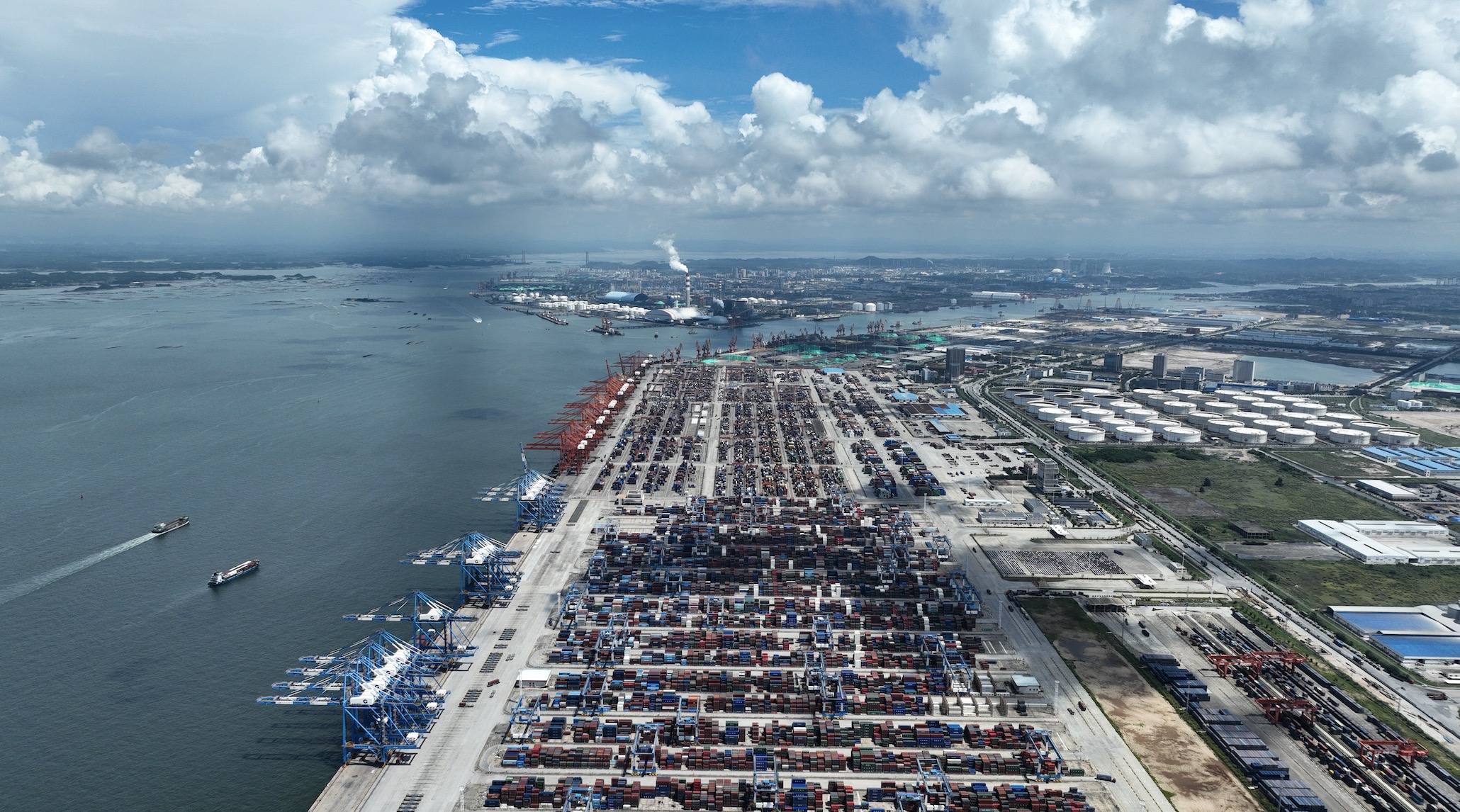
8000亿“两重”项目清单全部下达!
第一财经· 2025-07-03 02:39
Core Viewpoint - The article discusses the allocation of over 300 billion yuan to support the third batch of "two heavy" construction projects in 2025, with a total of 800 billion yuan for the year, aimed at stabilizing economic growth and enhancing infrastructure investment [1][3]. Group 1: Investment and Project Allocation - The National Development and Reform Commission (NDRC) has arranged 800 billion yuan to support 1,459 projects in 2025, focusing on critical areas such as ecological restoration, major transportation infrastructure, and urban underground networks [3][4]. - In the first five months of the year, fixed asset investment in transportation reached 1.2 trillion yuan, while water conservancy construction investment was 408.97 billion yuan, indicating a strong push in infrastructure development [1][9]. Group 2: Policy Support and Financial Mechanisms - The government is implementing fiscal and monetary policies to ensure sufficient funding for major projects, including the early issuance of special bonds and new policy financial tools [1][10]. - The NDRC emphasizes the importance of "two heavy" projects in addressing long-standing issues that require central government intervention, focusing on areas like technological self-reliance and ecological security [4][5]. Group 3: Economic Impact and Future Outlook - Major projects are expected to play a crucial role in stabilizing economic operations, optimizing industrial structures, and enhancing public services in urban areas [5][8]. - Institutions predict that the growth rate of broad infrastructure investment could reach around 9% in 2025, continuing to support economic stability [1].

★新型政策性金融工具前瞻:稳外贸促投资 PSL或重启扩张
Zheng Quan Shi Bao· 2025-07-03 01:56
Core Viewpoint - The Chinese government is implementing a series of proactive macroeconomic policies to stabilize the market and expectations, with a focus on introducing new policy financial tools to address structural issues in various sectors [1][2]. Group 1: Financial Policy Measures - Since the Central Political Bureau meeting on April 25, a package of financial policies has been rapidly released to support market stability and expectations, including interest rate cuts and new structural monetary policy tools [1][2]. - The effectiveness of these policies is being observed, but experts suggest that new policy financial tools are still necessary to address ongoing structural contradictions in certain areas [1][2]. Group 2: New Policy Financial Tools - The new policy financial tools are expected to provide targeted support for key areas such as foreign trade, technological innovation, and consumption [2][3]. - In 2022, three policy financial institutions created and deployed approximately 740 billion yuan in policy and developmental financial tools, leading to a total credit limit of over 3.5 trillion yuan for supported projects [1]. Group 3: Support for Foreign Trade and Investment - Experts anticipate that new policy financial tools may include mechanisms similar to export buyer credit to support foreign trade enterprises and mitigate external demand fluctuations [3]. - The National Development and Reform Commission has indicated that these new tools will address capital shortages for project construction, potentially reviving and optimizing existing policy financial tools [3]. Group 4: Role of PSL and Fiscal Support - The People's Bank of China (PBOC) is expected to restart and expand the Pledged Supplementary Lending (PSL) program to provide long-term low-cost funding to policy banks [4][5]. - Fiscal support, such as interest subsidies, is deemed crucial for the effectiveness of new policy financial tools, as seen in previous initiatives where the central government provided significant interest subsidies to reduce project funding costs [4][5].
时报观察丨更有力度增量财政政策值得期待
证券时报· 2025-07-03 00:15
Core Viewpoint - The Ministry of Finance has demonstrated its capability to introduce incremental policies in response to changing circumstances, particularly through tax incentives to encourage foreign investment in China [1][2]. Group 1: Fiscal Policy and Bond Issuance - The Minister of Finance, Lan Fang'an, emphasized the importance of issuing and utilizing ultra-long-term special bonds and special bonds as part of the 2024 central budget report, indicating strong support for stabilizing growth initiatives [1]. - The issuance schedule for ultra-long-term special bonds has been adjusted, with four bonds being issued earlier than planned, reflecting the central government's commitment to enhancing domestic demand and stabilizing growth [1]. - The issuance of special bonds reached a record high in June, indicating a shift in focus from debt replacement to expanding domestic demand and stabilizing growth in the second half of the year [1]. Group 2: Future Bond Issuance and Policy Tools - There remains over 2 trillion yuan in special bond quotas and 745 billion yuan in ultra-long-term special bond quotas available for issuance in the second half of the year, with expectations for concentrated issuance in the third quarter [2]. - The establishment of new policy financial tools by the National Development and Reform Commission is in preparation, which is expected to further support project construction and boost infrastructure investment in conjunction with special bonds [2]. - The Ministry of Finance's recent tax incentives for foreign investment indicate a proactive approach to policy adjustments, with expectations for more robust fiscal measures to be introduced to stabilize employment, enterprises, markets, and expectations [2].

更有力度增量财政政策值得期待
Zheng Quan Shi Bao· 2025-07-02 18:40
Group 1 - The Ministry of Finance emphasizes the importance of early issuance and utilization of ultra-long-term special government bonds and special bonds to support economic growth initiatives [1] - The issuance schedule for four ultra-long-term special government bonds has been advanced by 7 to 14 days, indicating a proactive approach to boost local consumption through the "old-for-new" policy [1] - Since June, the issuance pace of special bonds and ultra-long-term special government bonds has accelerated, with special bond issuance reaching a record high for the year [1] Group 2 - There remains over 2 trillion yuan in special bond quotas and 745 billion yuan in ultra-long-term special government bond quotas available for issuance in the second half of the year [2] - The establishment of new policy financial tools by the National Development and Reform Commission is in preparation, which is expected to further support project construction and boost infrastructure investment [2] - The Ministry of Finance is capable of introducing timely incremental policies in response to changing circumstances, with expectations for more robust fiscal measures to stabilize employment, enterprises, markets, and expectations [2]
6月物流景气指数环比回升
Zheng Quan Shi Bao Wang· 2025-07-02 05:05
Core Viewpoint - The logistics industry in China shows signs of recovery with an increase in the logistics prosperity index to 50.8% in June 2025, indicating a slight month-on-month improvement despite challenges posed by extreme weather conditions and operational pressures [1] Logistics Business Volume and Service Prices - In June, the business volume index and logistics service price index increased by 0.2 and 0.3 percentage points respectively, with the business volume index remaining in the expansion zone for four consecutive months [2] - The recovery in business volume is attributed to improved demand in the eastern region and a reduction in external shocks to the supply chain [2] - The central and western regions outperformed the national average with business volume indices of 51% and 52.8%, while the eastern region's index was below the national level but showed a significant month-on-month increase [2] - Various sectors, including road transport, rail transport, air transport, and express delivery, reported business volume indices in the prosperity zone, driven by online shopping and seasonal demand for fresh produce [2] Service Prices and Profitability Challenges - Service prices in several sectors, including rail, road, water, air transport, and express delivery, saw increases of 0.2 to 0.4 percentage points [3] - Despite the rise in service prices, the industry faces ongoing competitive pressures and operational challenges, leading to sustained pressure on profitability and cash flow [3] - The main business cost index rose by 0.3 percentage points in June, with indices for rail, air transport, and express delivery exceeding 55% [3] - The cash turnover rate index fell by 0.4 percentage points to 50.5%, and the main business profit index decreased for the second consecutive month [3] Logistics Investment Trends - Logistics infrastructure investment showed stable growth, with the fixed asset investment completion index rising by 0.3 percentage points in June [4] - All sectors, except warehousing, maintained a recovery trend, with key projects in transportation logistics hubs progressing smoothly [4] - The business activity expectation index remained above 55% for four consecutive months, indicating positive market expectations [4] Policy and Financial Support - New policy financial tools are being developed to support various sectors, including traditional infrastructure, technology innovation, consumption, and foreign trade [5] - The support for foreign trade may include funding for export-oriented enterprises, cross-border e-commerce platforms, and related logistics infrastructure [5] - These financial tools are expected to provide sustained momentum for high-quality economic development [5]