
长期主义

Search documents
豪华不止于车 责任深耕于心:捷豹路虎十五载价值践行之路
Mei Ri Jing Ji Xin Wen· 2025-12-24 13:46
Core Insights - Jaguar Land Rover (JLR) has maintained a long-term strategy in the competitive Chinese luxury car market, focusing on the luxury SUV segment priced above 700,000 yuan, while other brands engage in price wars [1] - The company emphasizes brand rejuvenation and product strength through models like the Land Rover Defender OCTA and the new Range Rover Sport SV, alongside unique customer engagement activities [1][6] - JLR's commitment to social responsibility and community engagement is evident through initiatives like the Youth Dream Fund, which has supported over 700,000 Chinese youth [4] Group 1: Market Positioning and Strategy - JLR has positioned itself as a leader in the luxury SUV market, leveraging its 15 years of experience in China to navigate market fluctuations and consumer trends [1][3] - The company has achieved significant recognition, ranking among the top foreign enterprises in Shanghai for tax contributions and revenue, reflecting its strong commercial value [3] - JLR's strategic focus on long-term value over short-term gains has allowed it to maintain resilience in a challenging market environment [6] Group 2: Product and Service Innovation - The brand has prioritized product differentiation, with the Range Rover series and the Defender leading in their respective segments, showcasing a commitment to luxury and performance [6][8] - JLR is enhancing customer experience through digital transformation, creating a customer-centric lifecycle operation system that improves service from purchase to maintenance [8] - The company is actively pursuing electric vehicle development through a new joint venture model, with plans for the Freelander model and new brand initiatives set for 2026 [8] Group 3: Social Responsibility and Community Engagement - JLR's long-term commitment to social responsibility is demonstrated through its partnership with the Soong Ching Ling Foundation, focusing on education and cultural exchange [4] - The brand aims to create a positive societal impact, believing that true luxury encompasses social contributions and value creation [3][4] - JLR's dual focus on commercial success and social responsibility sets a benchmark for luxury brands in the local market [4][6]


科氪 | 清洁家电的混战之下,戴森的立身之道
3 6 Ke· 2025-12-24 04:51
Core Insights - The Chinese cleaning appliance market is experiencing intense competition, with 2025 expected to be a pivotal year for market reshuffling due to evolving consumer cleaning concepts, advancements in smart technology, and government subsidies [1] - Dyson emphasizes a long-term commitment to innovation and core technology development, which is integral to its identity and helps maintain its competitive edge in the market [3] Market Dynamics - The rise of domestic brands and rapid product iterations are reshaping consumer expectations, which now include features like obstacle avoidance, self-cleaning capabilities, battery life, and noise levels [1] - Dyson's approach focuses on understanding market needs rather than merely increasing product specifications, allowing it to innovate at its own pace [1] Product Development - Dyson recently launched the Dyson True Ai cleaning robot, which integrates 20 years of technological development in robotic cleaning, showcasing its commitment to solving real-world cleaning challenges [5] - The robot features a wet mopping function tailored to Chinese consumers' cleaning habits, addressing the common issue of water stains on hard floors [6] Technological Innovation - The Dyson True Ai cleaning robot can intelligently identify over 200 household objects and precisely locate stains, ensuring effective cleaning without the risk of "dirtying" surfaces [8] - The robot's base station is designed for both functionality and aesthetics, featuring a multi-cyclone separation system that automatically empties the dust bin and dispenses cleaning solution accurately [8] Strategic Vision - Dyson aims to create a connected ecosystem among its devices, allowing for seamless integration into users' lifestyles and enhancing convenience through automation [10] - The company's differentiation strategy focuses on addressing overlooked cleaning challenges rather than simply adding features, reflecting a deep understanding of cleaning's essence and a commitment to innovation [12]

中小房企,开始打翻身仗
3 6 Ke· 2025-12-24 02:37
Core Insights - The article highlights the resilience and growth of small and medium-sized real estate companies in lower-tier cities, despite the general industry trend of larger firms focusing on high-tier cities [1][6]. Group 1: Market Opportunities - There are still opportunities in the improvement market within lower-tier cities, as larger firms have lost interest in these areas, leading to a potential gap for smaller firms to fill [1][5]. - The conditions for land transfer have become more favorable, with local governments showing a friendlier attitude towards real estate companies, allowing for pre-negotiation of conditions before land acquisition [2]. - The supply chain for real estate has become less competitive due to the withdrawal of larger firms, providing smaller companies access to high-quality suppliers that were previously hard to engage [4]. Group 2: Product Differentiation - The market in lower-tier cities is characterized by a structural imbalance, where there is an oversupply of ordinary housing but a lack of quality products, indicating a demand for differentiated offerings [7][11]. - Companies are encouraged to innovate their products to escape homogeneous competition, as demonstrated by a firm that transformed a low-density plot into unique row villas, addressing market saturation in conventional products [10][11]. - Addressing specific pain points, such as parking space issues, can create unique selling propositions, as seen with a company that redesigned parking spaces to enhance usability and appeal to customers [13][15]. Group 3: Building Core Competencies - Leadership involvement in product development is crucial, with executives taking direct responsibility for product quality to ensure alignment with market needs [17]. - Establishing a strong supply chain is essential for operational success, with companies encouraged to internalize external capabilities by forming long-term partnerships with top suppliers [18][20]. - A long-term approach to business, focusing on building a strong reputation and market presence, is vital for survival and success in lower-tier markets, as evidenced by firms achieving significant market shares through sustained efforts [23][24].
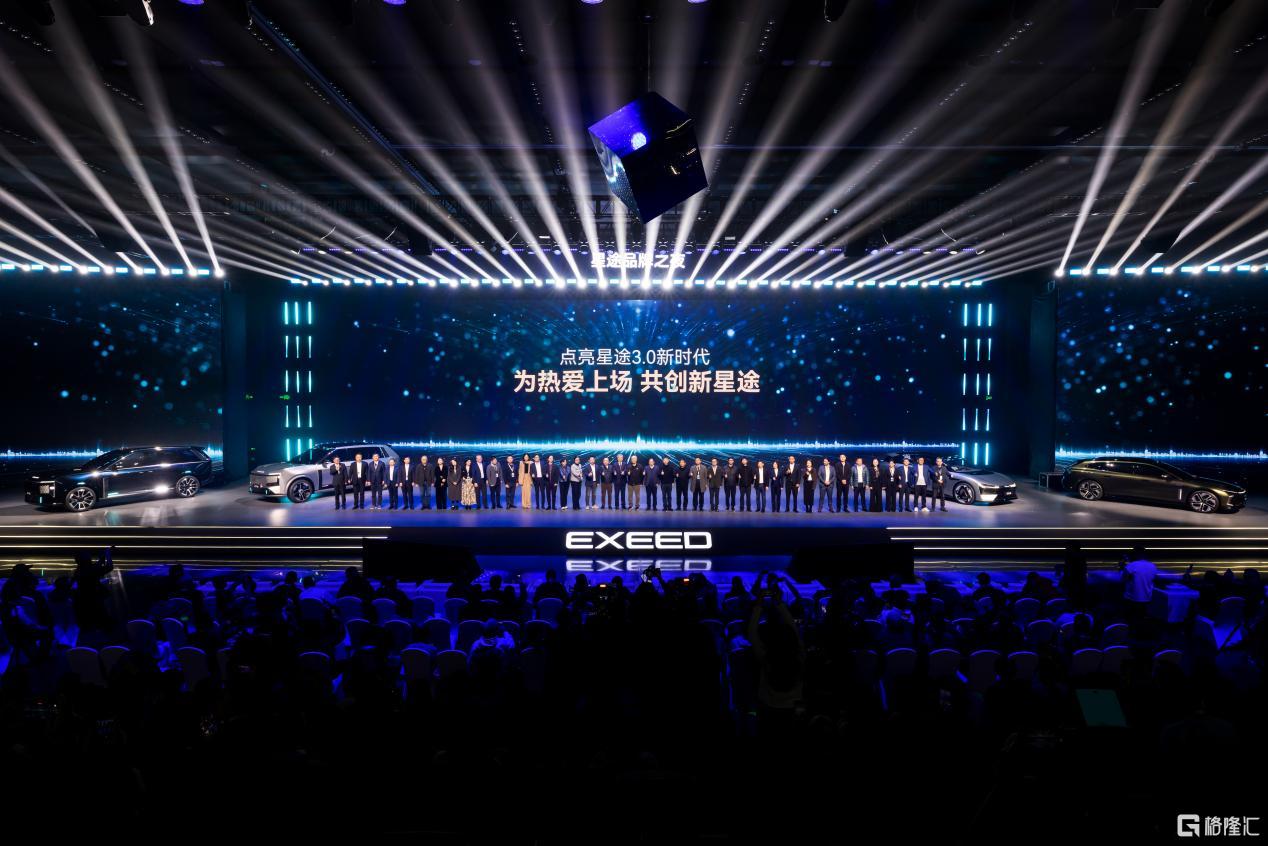
4大焕新实力重构性能豪华,星途品牌之夜开启中国汽车豪华新征程
Ge Long Hui· 2025-12-24 02:24
Core Viewpoint - The launch of the "Starway 3.0 Era" marks a significant advancement for the Exeed brand, focusing on new technologies, designs, products, and journeys to establish a luxury automotive brand that resonates with the global market [2][10]. Group 1: Brand Vision and Mission - Chery aims to define a global luxury brand in the era of new energy and intelligent vehicles, emphasizing originality and a unique brand identity that resonates with the younger generation [3]. - The brand's mission is to create a luxury experience that deeply connects with users' lifestyles and values, focusing on product excellence, cultural depth, and user relationships [3][6]. Group 2: Strategic Development - Exeed has transitioned from "scale manufacturing" to "value creation," achieving global recognition with over 70 quality accolades and 54 safety evaluations [6]. - The brand has established a presence in over 30 major global markets, with an average overseas price exceeding 400,000, achieving top sales in several European markets [6]. Group 3: Technological Innovations - The brand emphasizes advanced safety features, including a robust body structure and innovative seating technology, aiming to exceed global safety standards [8]. - Exeed is introducing cutting-edge intelligent driving solutions and high-efficiency powertrains, including a hybrid engine with the highest thermal efficiency in the industry [8]. Group 4: Design Philosophy - The design approach integrates global talent and cultural insights to create timeless automotive art, focusing on aesthetic depth and emotional resonance [9]. Group 5: Product Strategy - The ES and ET series will form a strong product matrix, with the ES7 GT and ES8 showcasing performance and innovative design, while the ET8 and ET9 emphasize luxury and spaciousness [12]. Group 6: Future Aspirations - Exeed has launched the "EXEED Le Mans Plan," aiming to participate in top-tier automotive competitions, using racing as a testing ground for performance and innovation [14]. - The brand's commitment to long-term innovation and performance excellence is reflected in its strategic direction and collaborative efforts with partners [16][17].
产业投资除了耐心还需用心——成都高新区培育千亿级基金集群调查
Jing Ji Ri Bao· 2025-12-23 22:09
Core Viewpoint - Government investment funds are crucial tools for supporting industrial development and innovation, with a focus on long-term value creation rather than short-term profits [1][2]. Group 1: Investment Strategies and Outcomes - Chengdu High-tech Zone has established a large-scale industrial fund cluster to effectively connect capital with advantageous projects, injecting continuous momentum for regional high-quality development [1][2]. - A notable investment by Chengdu State-owned Assets in Haiguang Information has yielded over 100 billion yuan in floating profits, demonstrating the successful integration of strategic value and financial returns [2][3]. - The local investment strategy emphasizes long-term commitment, with the establishment of over 160 funds totaling more than 340 billion yuan, making it a core area for venture capital in Central and Western China [2][3]. Group 2: Ecosystem Development - Chengdu High-tech Zone has created a comprehensive industrial support service system covering various stages from funding to mergers and acquisitions, aiming to enhance capital efficiency and project alignment [4][5]. - The establishment of the first government-funded angel investment fund in 2012 has laid the groundwork for subsequent investments, with the fund now managing nearly 400 million yuan [4][5]. - The region has developed a robust early-stage capital support system with over 200 billion yuan in fund size, supporting more than 200 projects [8][9]. Group 3: Capital and Project Synergy - The collaboration between government and private capital is essential for revitalizing industries and attracting talent, with a focus on building a sustainable investment ecosystem [3][11]. - The introduction of policies allowing for significant flexibility in investment returns and losses has encouraged more aggressive investment strategies in early-stage projects [11][12]. - Chengdu High-tech Zone's initiatives, such as regular investment roadshows, have successfully connected numerous projects with funding, enhancing visibility and financing opportunities for early-stage ventures [13][14].
昔日“牛基”今何在?
券商中国· 2025-12-23 09:03
Core Viewpoint - The article discusses the performance of actively managed equity funds in the context of the A-share market, highlighting the emergence of new "bull funds" and the fading glory of past top-performing funds, emphasizing the need for a shift from short-term performance to long-term investment strategies [1][11]. Group 1: Performance of Active Equity Funds - As of December 22, the Shanghai Composite Index has increased by 12.67% in 2024, with an annual increase of 16.87%, indicating a likely two-year consecutive rise in annual K-line [1]. - Nearly 40 actively managed equity funds have doubled their annual returns, with Yongying Technology Smart Selection A achieving approximately 219% annual return, marking it as the first "double fund" since 2008 [1]. - Historical analysis shows that only 5 out of 30 top-performing funds from previous bull markets have maintained strong performance, while 25 have returned to mediocre status [2]. Group 2: Reasons for Declining Performance of Former "Bull Funds" - Many former "bull funds" have lost their luster due to excessive scale growth, which reduces investment flexibility and increases transaction costs, making it harder to achieve excess returns [5][6]. - Over-reliance on a single star fund manager has led to significant performance drops when key personnel leave or fail to adapt to market changes [6]. - Short holding periods and frequent style shifts have hindered many funds from accumulating long-term returns, as they chase short-term trends without a stable investment framework [7]. Group 3: Structural Changes in the Fund Industry - The public fund industry is undergoing a structural transformation, moving from a "star-making" model focused on short-term rankings to a "systematic approach" that emphasizes value investing and stable returns [8][12]. - Successful long-term funds often have stable research teams and strong risk control capabilities, which help them navigate market downturns effectively [8][9]. - Companies are increasingly adopting innovative investment models and enhancing their research capabilities to adapt to market changes, indicating a shift towards a more collaborative and systematic investment approach [9]. Group 4: Long-term Investment Philosophy - The fate of past "bull funds" reflects the evolution of the A-share market and the investment philosophy of the industry, highlighting the importance of a stable investment strategy over reliance on individual fund managers [11]. - Investors are encouraged to focus on funds with clear investment philosophies, stable teams, and proven cross-cycle capabilities, rather than chasing annual performance champions [12].

全棉时代研发全棉水刺无纺布引领产业升级20年纪实
Zhong Guo Zhi Liang Xin Wen Wang· 2025-12-23 06:43
Core Viewpoint - The article highlights the 20th anniversary of the all-cotton spunlace non-woven fabric developed by Weijian Medical, which addresses a global medical issue and signifies a significant upgrade in both the medical and consumer goods sectors, showcasing China's manufacturing innovation and long-term commitment [1] Group 1: Innovation and Development - The inception of the all-cotton spunlace non-woven fabric was driven by a personal experience of the founder, who faced post-surgical infection due to cotton remnants, leading to a commitment to create a material free of such risks [2] - The development process involved overcoming significant technical challenges, including the integration of multiple manufacturing processes, resulting in a patented technology that allows for the production of a clean, soft, and lint-free fabric within 2-3 hours, a major improvement over traditional methods [3] Group 2: Market Expansion and Brand Creation - Initial market entry faced challenges due to a lack of industry standards, leading to a three-year period without orders until a breakthrough occurred with a hygiene product brand seeking new materials, marking the beginning of commercial success [4] - The establishment of the "Cotton Era" brand in 2009 allowed the company to transition from medical to consumer products, launching various items such as cotton soft towels and sanitary napkins, ultimately serving over 67 million families and creating a market worth over 10 billion yuan for facial towels [5] Group 3: Sustainable Practices in Healthcare - The all-cotton spunlace non-woven fabric has been pivotal in upgrading medical dressings and protective products, with the introduction of industry standards and innovations in protective clothing, enhancing comfort and safety for healthcare workers [6] - Recent advancements include the use of this fabric in surgical masks and a comprehensive upgrade of operating room consumables to biodegradable products, improving both environmental sustainability and user experience in medical settings [6] Group 4: Corporate Philosophy and Long-term Vision - The company emphasizes a commitment to quality over profit, brand over speed, and social value over corporate value, reflecting a philosophy of altruism and long-termism in its operations [7]
储能出海:必须去的远方,待坚守的漫长
Zhong Guo Hua Gong Bao· 2025-12-23 02:37
Core Insights - China's dominance in the energy storage market is highlighted, with a 90% share in energy storage batteries and a 70% share in energy storage systems globally, indicating a significant leadership position [1] - The overseas energy storage market is lucrative, with Chinese companies increasingly focusing on international expansion to tap into higher profit margins [1] Group 1: Market Dynamics - Major Chinese energy storage companies are actively signing overseas contracts, with significant orders reported: over 40GWh from "wind and solar" companies, over 60GWh from "power electronics" firms, and over 130GWh from "battery" enterprises [2] - Notable contracts include CATL with 49.65GWh, EVE Energy with 4.7GWh, and Trina Storage with 14.23GWh, showcasing the scale of international engagement [2] Group 2: Strategic Approaches - Long-term strategies are emphasized as essential for successful international operations, with companies focusing on product innovation and global supply chain development [3] - Safety and economic value are identified as core considerations for energy storage products, with companies like CATL prioritizing these aspects in their product development [3] Group 3: Future Trends - The future of energy storage is expected to see increased market share for sodium batteries, particularly in extreme temperature applications, as companies explore new technologies [4] - Solid-state batteries are viewed as needing further development to enhance energy density and performance in high-temperature environments, indicating ongoing innovation challenges in the sector [4]


静水流深:茅台“不变”中的战略定力
Zhong Guo Jing Ji Wang· 2025-12-23 00:02
Core Viewpoint - The article emphasizes that despite the fluctuations in the liquor market, Kweichow Moutai (600519) remains strategically focused on quality and long-term value, adapting to the evolving industry landscape while maintaining its core principles [1][8]. Group 1: Market Dynamics - The price of Moutai liquor has been volatile, with the retail price of Feitian Moutai reported at 1827 yuan per bottle, reflecting an increase in both price and sales [2]. - The liquor industry is undergoing a deep adjustment phase, characterized by high channel inventory, price discrepancies, and slowing growth, which presents challenges for many liquor companies [2]. - Moutai's management acknowledges the existence of challenges but emphasizes the importance of recognizing structural opportunities while maintaining brand value [2]. Group 2: Supply and Demand Management - Moutai has maintained normal shipments of 500ml Feitian Moutai, while reducing allocations for certain non-standard products by 30%-50% [3]. - The company is focused on adapting supply to meet demand, ensuring that product releases are based on market conditions rather than blanket decisions [3]. Group 3: Innovation and Consumer Engagement - Moutai's approach to innovation is strategic, aiming to enhance real consumption and cultural heritage rather than pursuing innovation for its own sake [4]. - The company is building a brand ecosystem that resonates with younger consumers through immersive experiences and digital engagement, transitioning from merely selling liquor to promoting a lifestyle [4]. - Moutai is also addressing digital challenges by collaborating with e-commerce platforms to enhance consumer access and ensure product authenticity [4]. Group 4: Cultural and Ecological Commitment - Moutai is reinforcing its cultural identity by integrating traditional craftsmanship with modern aesthetics, promoting Chinese liquor culture through innovative products [5]. - The company is committed to ecological sustainability, implementing a "green development" strategy that focuses on environmental protection and sustainable practices [6]. Group 5: Long-term Strategic Vision - Moutai's stability is rooted in its deep systemic capabilities, including ecological protection, production capacity, and talent development [6][7]. - The company is actively enhancing its talent pool through partnerships with educational institutions, ensuring a blend of traditional brewing techniques and modern innovation [7]. - Moutai's consistent approach aligns with national strategies to boost domestic demand, positioning the company to respond effectively to market fluctuations [7][8].

破解科创投融资瓶颈的上海实践
Di Yi Cai Jing· 2025-12-22 12:01
Core Insights - Shanghai's government venture capital (GVC) plays a crucial role in supporting innovation and addressing financing bottlenecks in the tech sector, particularly in hard technology fields like semiconductors and AI [1][2][8] Group 1: Scale and Impact - By the end of 2024, Shanghai's government-guided fund reached a total scale of 201.5 billion yuan, ranking third nationally, with an average fund size of 3.2 billion yuan, placing it second in the country [2] - The substantial size of government capital instills confidence in social capital, activating the market ecosystem and encouraging more private investment [2] Group 2: Operational Structure - Shanghai's GVC has historically focused on indirect investments through mother funds, effectively leveraging social capital participation and risk-sharing mechanisms [3] - Recently, there has been a strategic shift towards direct investments, with the number and scale of directly managed funds closely matching those of participating funds, indicating a balanced approach to market guidance and direct project involvement [3] Group 3: Spatial Layout - The GVC resources in Shanghai exhibit a "leading dragon, multiple blooms" pattern, with the Pudong New Area leading in both the number and scale of guiding funds [4][5] - Other districts like Jiading and Songjiang also show significant government venture capital activity, contributing to a collaborative regional innovation ecosystem [5] Group 4: Guidance and Demonstration - Government venture capital emphasizes early-stage investments, with 23.6% of direct investments in seed, angel, and A-round funding in 2024, and 38% in indirect investments, showcasing a commitment to nurturing the initial stages of innovation [6] - The extension of fund durations, such as the Pudong Innovation Investment Fund's extension to 12 years, reflects a long-term investment strategy aimed at supporting foundational technology innovation [7] Group 5: Challenges - Internal mechanisms and external ecological constraints pose challenges to the effectiveness of Shanghai's GVC, including balancing public asset preservation with high-risk investment requirements [8][9] - The tightening of IPO approvals has increased exit difficulties for venture capital, impacting the overall investment cycle [9] Group 6: Innovation and Future Directions - To enhance its effectiveness, Shanghai's GVC must focus on improving governance mechanisms, promoting successful investment cases, and establishing efficient platforms for government-market collaboration [10][11] - Addressing exit bottlenecks through the development of acquisition funds and exploring new exit channels will be crucial for sustaining the venture capital ecosystem [11]