
生物制造

Search documents
对话嘉必优董秘:锚定30万亿美元生物制造,一家中国企业的变与不变
Jing Ji Guan Cha Wang· 2025-12-18 11:47
Core Insights - The article emphasizes the strategic importance of biomanufacturing, which is projected to create a $30 trillion market, comparable to the significance of chip manufacturing [3] - Biomanufacturing is not merely a replacement for traditional chemical processes but a transformative engine that redefines the underlying logic of industries, impacting the entire supply chain from raw materials to end products [3][4] Company Overview - Jia Bi You has been proactive in the biomanufacturing sector, establishing a robust business model that has evolved significantly since its listing on the STAR Market six years ago [4] - The company reported a revenue increase from 312 million yuan in 2019 to 555 million yuan in 2024, achieving a compound annual growth rate of 12.2% [4] Market Positioning - The implementation of new national standards for infant formula in February 2023 has created a favorable market environment for Jia Bi You, allowing it to efficiently release production capacity [10] - The expiration of DSM's core patents has enabled Jia Bi You to penetrate international markets and establish stable partnerships with major companies like Nestlé and Danone [12] Strategic Growth - Jia Bi You's revenue structure has diversified, with the human nutrition segment's share decreasing from over 95% to around 80%, while the health sector now contributes nearly 20% [13] - The company maintains a high R&D investment rate of 8%-10%, which has supported its innovation and technological advancements [15] Technological Innovation - The company has developed a comprehensive technology system based on synthetic biology, which includes bioinformatics, AI, and other interdisciplinary fields [15][16] - Jia Bi You aims to leverage AI to enhance its research and application processes, creating a specialized biological database to optimize product development and personalized nutrition solutions [18][19] International Expansion - Jia Bi You's international revenue share has increased from less than 10% to nearly 40%, with products now available in over 30 countries [24] - The company adopts a flexible internationalization strategy, focusing on technology cooperation and customized supply rather than aggressive expansion [25] ESG Commitment - Jia Bi You places significant emphasis on ESG practices, having initiated social responsibility reports since 2019 and implementing sustainable practices such as replacing coal boilers with natural gas [27][28] - The company has received recognition for its ESG efforts, highlighting its commitment to environmental, social, and governance standards [30] Future Opportunities - The upcoming "15th Five-Year Plan" presents multiple opportunities for Jia Bi You, including favorable policies for biomanufacturing and increased demand for infant nutrition products [33][34] - The company believes that its internal capabilities and technological advancements will be the primary drivers of growth, rather than external trends [35]



德勤:预计2026年港股将发行约160只新股,融资额不少于3000亿港元
Bei Jing Shang Bao· 2025-12-18 10:59
Core Insights - Deloitte's report indicates a steady growth in the number of IPOs and financing amounts in the A-share market for 2026, with an expected 114 companies going public and raising 129.6 billion yuan [1] - The Hong Kong IPO market is projected to see around 160 new listings in 2026, with total financing expected to exceed 300 billion HKD [2] A-Share Market Summary - In 2025, the A-share market is expected to have 114 new listings, raising a total of 129.6 billion yuan, which represents a 14% increase in the number of IPOs and a 94% increase in financing compared to 2024 [1] - The top five IPOs in 2025 are projected to raise a total of 39.4 billion yuan, a significant increase of 260% from the previous year's 10.9 billion yuan [1] - Companies in priority sectors such as AI, new energy, high-end manufacturing, commercial aerospace, quantum technology, and biomanufacturing are expected to have a competitive advantage in the A-share market [1] Hong Kong Market Summary - For 2025, Hong Kong is anticipated to have 114 new IPOs, raising approximately 286.3 billion HKD, marking a 63% increase in the number of IPOs and a 227% increase in financing compared to the previous year [1] - The Hong Kong Stock Exchange is expected to lead global exchanges in total IPO financing for 2025 [1] - In 2026, the Hong Kong market is projected to have around 160 new listings, with at least 7 of them expected to raise over 10 billion HKD each, including leading mainland enterprises [2] - The focus will also be on "A+H" stock applicants, as well as sectors like technology, media, telecommunications, healthcare, consumer goods, and international companies [2]
千余款“黑科技”闪耀鹏城,引领全球药械创新浪潮
Nan Fang Du Shi Bao· 2025-12-18 10:35
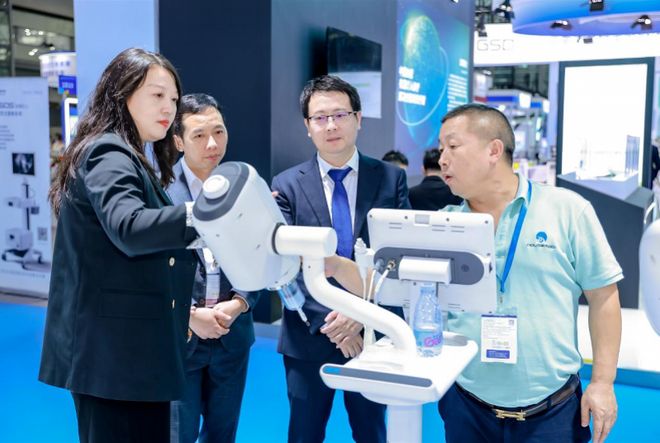
Core Insights - The 2025 Shenzhen International High-Performance Medical Device and Innovative Pharmaceutical Exhibition showcases the future of healthcare technology, highlighting advancements in surgical robotics, brain-computer interfaces, and innovative pharmaceuticals [1][3] Group 1: Exhibition Overview - Over 300 companies and institutions participated in the exhibition, covering an area of 30,000 square meters and presenting over 1,000 products that define the future of the medical device and pharmaceutical industry [3][5] - The exhibition emphasizes the acceleration of healthcare technology towards more intelligent, precise, and integrated solutions [3][5] Group 2: Key Innovations - Notable innovations include the intelligent autonomous experimental platform by Crystal Technology, the Class I new drug "Xinglitin" by Xinlitai, and the fully automated cell morphology analyzer by Mindray Medical, showcasing a range of advancements from AI-driven drug development to high-end medical devices [5][12] - Surgical robots have evolved from single-procedure tools to comprehensive intelligent surgical platforms that cover multiple departments and integrate various modalities, marking a revolutionary change in the surgical field [5][7] Group 3: Brain-Computer Interface Developments - Brain-computer interface products are gaining attention, with companies like Qiangnao Technology showcasing smart bionic hands and feet that translate neural and muscle signals into movement, demonstrating the potential for enhanced health interventions [9][11] - Weiling Medical presented a full-implantable brain-computer interface system and other core technologies, indicating a strong focus on high-end implantable solutions [9][11] Group 4: Diagnostic Innovations - The in vitro diagnostic sector is advancing towards multi-disciplinary approaches, with companies like New Industry Biology and Yihuilong presenting fully automated laboratory solutions that significantly enhance testing efficiency and quality [11][12] - The collaboration between pharmaceuticals and medical devices is becoming a crucial trend, exemplified by the Hezhi® proton therapy system from CGN Medical, which applies nuclear technology to improve cancer treatment outcomes [11][12] Group 5: Industry Ecosystem and Collaboration - The exhibition also highlighted the entire industry chain of medical device design and manufacturing, showcasing a wide range of resources and solutions for research and production [12][14] - The integration of academia and industry was evident, with institutions like the Chinese University of Hong Kong (Shenzhen) presenting numerous medical devices and clinical applications, reflecting the latest achievements in medical research and technology innovation [14]
深圳创新药械不断加速 重点布局四大新兴赛道
2 1 Shi Ji Jing Ji Bao Dao· 2025-12-18 10:05
Market Overview - The Chinese medical equipment market is projected to reach 1.35 trillion yuan in 2024, with an average growth rate exceeding 12% over the past decade, making it the second-largest market globally [2][6] - Shenzhen's pharmaceutical and medical device industry is expected to achieve a production value of 157.6 billion yuan in 2024, with medical devices alone surpassing 102.8 billion yuan, maintaining its position as the leading region in China for ten consecutive years [3] Industry Innovation - China is increasingly focusing on quality improvements in its medical equipment sector, with one-third of global medical equipment patents originating from the country, indicating a strengthening of domestic innovation capabilities [2][6] - Shenzhen has nurtured 35 listed companies in the pharmaceutical and medical device sectors, along with over 1,000 enterprises above designated size, showcasing a robust industrial ecosystem [3] Recent Developments - Notable recent collaborations include a 47 billion HKD (approximately 5.99 billion USD) partnership between Crystal Technology and DoveTree for AI drug development, marking a significant milestone in the commercialization of AI in pharmaceuticals [4] - Health元's innovative drug, Marpacisavir capsules, has received approval for market launch, representing a breakthrough in flu treatment with a unique mechanism requiring only one oral dose [5] Future Directions - Shenzhen aims to focus on four emerging sectors: cell and gene therapy, biomanufacturing, AI in pharmaceuticals, and health consumer products, to enhance its competitive edge in the medical equipment industry [6][7] - The establishment of an "AI + Biomanufacturing Public Service Platform" is set to accelerate the R&D cycle for biomanufacturing companies, significantly reducing development time from years to months [7]
“双向奔赴”,领跑新质蛋白新赛道
Xin Hua Ri Bao· 2025-12-17 23:52
Core Viewpoint - The collaboration between China National Investment Corporation's subsidiary and Dongsheng Biotechnology marks a significant step in the new protein industry, integrating technology research and industrial application, and injecting strong momentum into the bio-manufacturing sector through central-local cooperation [1] Group 1: Bio-Manufacturing Overview - Bio-manufacturing is defined as the conversion of biological science and technology discoveries into actual products, processes, systems, and services, creating new manufacturing models and economic forms across various industries [2] - The bio-manufacturing industry in China has reached a scale of 1.6 trillion yuan, influencing downstream industries worth 10 trillion yuan, with projections to expand to 3 trillion yuan by 2030 [2] - New protein, a key component of bio-manufacturing, refers to edible proteins produced without traditional livestock or fishery methods, utilizing advanced biotechnologies for efficient production [2] Group 2: Strategic Recommendations - To seize opportunities in the new protein sector, it is recommended to establish interdisciplinary research platforms that integrate synthetic biology, fermentation engineering, and food science, facilitating shared research outcomes and accelerating technology application [3] - A complete industrial chain should be constructed, promoting deep integration of production, education, research, and application to shorten the distance from innovation to market [3] Group 3: Investment and Development - The "14th Five-Year Plan" emphasizes the need to strategically position future industries, with bio-manufacturing identified as a new economic growth point [4] - Dongsheng Biotechnology, a leading enterprise in the field, holds a 60% market share domestically and has established a mature production, learning, and research system [4] - The recent agreement allows for the direct use of existing fermentation facilities and the expansion of production capacity, facilitating the rapid industrialization of new protein [5] Group 4: Industry Insights - The global bio-manufacturing industry is still in its early stages, characterized by large platforms supporting technological innovation and small teams driving breakthroughs in synthetic biology [6] - The entry of state-owned enterprises into bio-manufacturing is timely, with significant investments exceeding 100 billion yuan and total market capitalization of invested companies surpassing 1 trillion yuan [6][7] - The collaboration aims to create a virtuous cycle of innovation, production, and market integration, enhancing the overall capacity and capabilities of Dongsheng Biotechnology [7]
第十四届全国政协委员尹艳林: “十五五”规划建议指引产业体系建设再上台阶
Zheng Quan Shi Bao Wang· 2025-12-17 23:39
Core Viewpoint - The article discusses the insights of Yin Yanlin, a member of the 14th National Committee of the Chinese People's Political Consultative Conference, regarding the "15th Five-Year Plan" and its implications for the development of China's industrial system [1][2] Group 1: Achievements and Challenges - During the "14th Five-Year Plan" period, China made significant achievements in industrial development, including the formation of a complete industrial system and steady progress in new productivity, while addressing some critical issues in the industrial chain [1] - However, there remains considerable room for improvement in technological innovation capabilities and the upgrading of industrial structures within China's industrial system [1] Group 2: Strategic Directions of the 15th Five-Year Plan - The "15th Five-Year Plan" is positioned as a critical period for achieving socialist modernization, with goals such as significant improvements in high-quality development and enhanced quality of life for the people [1] - The plan emphasizes the exploration of diverse technological routes, typical application scenarios, feasible business models, and market regulatory frameworks to promote new economic growth points in areas like quantum technology, biomanufacturing, hydrogen energy, nuclear fusion, brain-computer interfaces, embodied intelligence, and 6G mobile communication [1] Group 3: Focus on Traditional Industries - Yin Yanlin asserts that the focus of economic development should remain on the real economy, with traditional industries serving as the foundation of China's industrial system [2] - The transformation and upgrading of traditional industries through new technologies can create new productivity, highlighting the importance of maintaining this sector [2] Group 4: Future Development Principles - The future development of industries should adhere to the principle of combining effective markets with proactive government involvement, ensuring that market forces primarily guide industrial development and resource allocation while the government plays a role in creating a conducive environment [2]
听,高质量发展新脉动|强大国内市场构筑发展新格局
Xin Hua Wang· 2025-12-17 08:32
Group 1 - The core viewpoint emphasizes the importance of a strong domestic market as a strategic foundation for China's modernization, with the central economic work conference prioritizing "domestic demand-led growth" as the top task for the upcoming year [1] - Over the past four years, despite various challenges, China's economy has maintained an average growth rate of 5.5%, with domestic demand contributing 86.4% to this growth, highlighting the critical role of a robust domestic market [1] - China's large population and complete industrial system position it as the world's largest and most potential consumer market, with a per capita GDP exceeding $10,000 [3] Group 2 - The government has implemented special actions to boost consumption, including a vehicle trade-in policy that has led to over 10 million applications for subsidies, reflecting the vibrant activity in the consumer market [6] - In the first eleven months of the year, retail sales of consumer goods increased by 4% year-on-year, with service retail sales growing at a faster rate of 5.4%, indicating a shift towards service-oriented consumption [8] - The ice and snow industry in China is projected to exceed 1 trillion yuan, showcasing the potential for growth in this sector and the importance of balancing supply and demand [13] Group 3 - Recent policies aim to enhance the adaptability of supply and demand in consumer goods, promoting a virtuous cycle between consumption and investment, which is expected to improve the efficiency of the domestic market [17] - The focus on expanding employment and increasing household income is crucial for driving demand, while technological innovation is essential for upgrading industries and creating new demand [14] - The commitment to transforming the advantages of a large-scale market into competitive advantages will continuously release the growth potential of the Chinese economy [19]

谭天伟院士揭秘生物制造:30万亿美元未来产业的三大挑战和趋势
合成生物学与绿色生物制造· 2025-12-17 07:49
Core Viewpoint - The article emphasizes that China is poised to play a significant role in the future of biomanufacturing, which is expected to create an economic value exceeding $30 trillion by 2050, marking it as a core driver of the next industrial revolution [2][7]. Summary by Sections What is Biomanufacturing? - Biomanufacturing transforms living organisms, such as microorganisms and cells, into "smart factories" that produce various substances needed by humans. This process marks a fundamental shift from traditional manufacturing, which relies on fossil resources, to using renewable resources like sugar, straw, and carbon dioxide [2][3]. Importance of Biomanufacturing - Biomanufacturing is crucial for achieving carbon neutrality as it significantly reduces carbon emissions by utilizing renewable resources instead of fossil fuels. It allows for a broader range of raw materials and a greener manufacturing process, making factories resemble ecosystems [3]. - The potential for programmable manufacturing is immense, as scientists can design microorganisms to produce specific molecules, akin to writing code, thus unlocking vast possibilities [3]. Impact on Daily Life - In the food sector, cell-cultured meat and new food ingredients like microbial proteins are becoming mainstream. - The fashion industry is seeing innovations such as bio-silk from bacteria and biodegradable textiles from algae and fungi. - In construction, "bio-bricks" made from fungal mycelium can self-repair and absorb carbon dioxide, potentially transforming buildings into "green life forms." - Transportation is advancing with the production of aviation fuel from carbon dioxide, and biomanufacturing is also contributing to greener lubricants and tire rubbers. - In healthcare, biomanufacturing can streamline drug synthesis, enabling personalized medicine and potentially allowing hospitals to "print" drugs and organs [4]. Challenges and Future Trends - Biomanufacturing faces challenges such as the need for improved foundational capabilities in gene editing and enzyme engineering, difficulties in scaling from lab to industrial production, and the lack of a comprehensive policy and standards framework [5]. - Future trends include the integration of artificial intelligence in biomanufacturing, enabling rapid strain improvement, carbon cycling in manufacturing processes, and cross-industry collaborations that will create new industrial ecosystems [6]. Opportunities for China - China has advantages in fermentation capacity, industrial scale, and engineering experience. The government is actively promoting biomanufacturing as a new growth engine, positioning the country to take a leading role in this transformative industry [7].

《中国对外开放报告2025》发布会暨学术研讨会圆满召开
Sou Hu Cai Jing· 2025-12-17 07:45
Core Insights - The report highlights a significant transformation in China's foreign openness, shifting from market-driven to rule-driven approaches, emphasizing the establishment of a new open economic system centered on institutional openness [6] Group 1: Trade Developments - China's total goods trade is projected to reach 43.8 trillion yuan in 2024, accounting for approximately 12.5% of global trade, showcasing resilience despite global economic challenges [7] - The trade structure is continuously optimizing, with an increasing proportion of high-tech and high-value-added product exports [7] - China is enhancing its trade system's resilience through various measures, including deepening regional economic cooperation and promoting green and low-carbon trade transitions [7] Group 2: Service Trade - China has become a global leader in service trade but faces internal and external pressures, including geopolitical factors and regulatory barriers [8] - The report identifies service trade as a key area for future breakthroughs in China's openness, necessitating institutional innovations to align with international standards [8] Group 3: Financial Opening - China is cautiously advancing financial sector openness, capital account liberalization, and the internationalization of the yuan, achieving notable progress [9] - The yuan has become the world's third-largest payment currency and the second-largest trade financing currency, with its functions steadily enhancing [9] - Challenges include balancing efficiency and security amid rising financial protectionism and uncertainties in the international monetary system [9] Group 4: International Technology Cooperation - The global technology cooperation landscape is facing fragmentation and politicization, prompting China to restructure its international technology cooperation framework [10] - There is a shift from a single global innovation network to a focus on regional collaboration and self-sufficiency in key areas [10] Group 5: Foreign Investment - China's foreign investment structure is evolving, characterized by regionalization, greening, and high-end features [11] - The report introduces the "China Foreign Investment Uncertainty Index (IPU)," indicating multifaceted risks in foreign investments, particularly in strategic sectors like AI and biotechnology [11] Group 6: Future Outlook - The report concludes that China is undergoing a profound historical transformation in its foreign openness, aiming to establish a new cooperation framework centered on institutional openness [12] - Key strategies include aligning with international trade rules, enhancing resource allocation capabilities, and strengthening risk prevention systems [12]

穿越周期的早期投资:从赛道思维到认知红利|甲子引力
Sou Hu Cai Jing· 2025-12-16 10:45
Core Insights - The article discusses the shift from "track thinking" to "cognitive dividends" in early-stage investment, emphasizing the need for investors to develop a deep understanding of people, cycles, and non-consensus views in a crowded market [1][2]. Group 1: Investment Strategies - Investors are moving away from simply betting on popular sectors and are focusing on building their own cognitive models and project radars to identify unique opportunities [1][2]. - The importance of maintaining a "feel" for the market and establishing positive feedback loops during industry downturns is highlighted as key to capturing the next big opportunity [1][2]. Group 2: Key Investment Areas - Major investment themes identified include AI applications, AI-driven consumer electronics, embodied intelligence, and energy systems related to AI [8][9]. - The focus on AI hardware and AI for Science is emphasized, with a recognition of the rapid evolution of sectors like quantum technology and biomanufacturing [9][10]. Group 3: Cognitive Differentiation - Investors are encouraged to develop unique cognitive perspectives that differentiate their investment decisions, even when consensus exists around certain sectors [12][21]. - Examples of successful investments based on unique cognitive insights include early support for companies that later gained significant market traction, despite initial skepticism from the broader investment community [14][15]. Group 4: Project Sourcing and Influence - The role of personal influence and brand visibility in attracting quality projects is discussed, with a focus on how public engagement can enhance investment opportunities [25][26]. - The importance of continuous learning and sharing insights through platforms like podcasts and articles is noted as a way to build a network of potential investment opportunities [27][28]. Group 5: Future Outlook - The consensus among investors is to continue focusing heavily on AI-related investments, with specific attention to foundational AI technologies and applications [32][33].