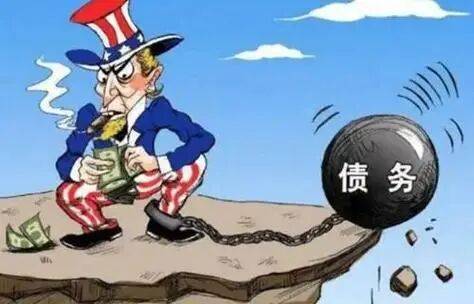
美元霸权

Search documents
不以人民币结算?必和必拓的铁矿石中国不收了!美元霸权遭遇挑战
Sou Hu Cai Jing· 2025-10-03 22:27
Core Viewpoint - The recent notification from China Mineral Resources Group has significantly challenged the global iron ore trade, particularly the dominance of the US dollar in settlement systems [1][3]. Group 1: Market Dynamics - In late September, China Mineral Resources Group issued a notice to domestic steel companies, which has caused a major upheaval in international trade [3]. - China, as the world's largest iron ore importer, is leveraging its market position to assert pricing power, moving away from the traditional dominance of major suppliers like BHP, Rio Tinto, and Vale [5][12]. - The establishment of China Mineral Resources Group in 2022 has centralized procurement for domestic steel mills, allowing for unified negotiations and a shift in the previous market dynamics [5][6]. Group 2: Currency Settlement Shift - The primary issue raised by China is not the iron ore itself but the currency used for settlement, with a clear intention to reduce reliance on the US dollar and promote the use of the Chinese yuan [8][10]. - China has been gradually increasing the use of yuan in iron ore transactions, with successful settlements already completed in early 2025, indicating a growing acceptance among enterprises [8][10]. - The transition to yuan settlement represents a broader transformation in the trading system, enhancing China's influence throughout the entire transaction process [8][10]. Group 3: Implications for Global Trade - The dominance of the US dollar as a global reserve currency is facing unprecedented challenges, with the dollar's future uncertain amid a declining index and re-evaluation of commodity prices [10][12]. - If iron ore transactions shift to yuan, it could mitigate financial losses from dollar exchange rate fluctuations and gradually detach commodity pricing from the dollar framework [10][12]. - The Chinese market is crucial for suppliers like BHP, which must recognize that losing access to this market could have dire consequences, as alternatives are available for China [12][15]. Group 4: Future Outlook - The ongoing "settlement game" between yuan and dollar is indicative of a significant update in global trade rules, akin to the transition from feature phones to smartphones [15][17]. - Should yuan settlement gain traction in iron ore, it could pave the way for similar practices in other commodities like copper, coal, oil, and natural gas [15][17]. - This strategic move by China signals a shift in global power dynamics, with the yuan becoming increasingly attractive as a settlement currency, reflecting real changes in global influence [18].


美国恐怕再也难站起来了,原因有几个:美国的国债,美国人依靠贪婪这杆杠一直高消费,美国靠霸权发家致富,但是强盗终究会被消灭
Sou Hu Cai Jing· 2025-10-03 14:16
Group 1 - The core issue facing the U.S. economy is its soaring national debt, projected to exceed $36 trillion by 2025, with interest payments alone expected to surpass $1 trillion this year, exceeding the defense budget [3][5] - The decline of the U.S. dollar's dominance in global transactions is evident, with countries like Brazil and China opting for local currencies for oil settlements, leading to a drop in the dollar's share of global foreign exchange reserves from over 70% two decades ago to below 60% now [3][5] - The increasing reliance on foreign and non-primary dealers for U.S. Treasury auctions indicates a loss of confidence among domestic investors, as evidenced by the indirect bidding ratio soaring to 72.9% in December [5] Group 2 - The U.S. military budget is projected to approach $1 trillion, while maintaining 750 overseas bases incurs an annual cost of $55 billion, raising concerns about the sustainability of such expenditures [5] - Domestic social tensions are rising, exemplified by significant labor strikes demanding higher wages, contrasting with the financial gains seen in capital markets, highlighting a growing divide between different socioeconomic classes [7] - The structural issues of high debt and interest rates are permeating into American households, with credit card debt expected to exceed $1.13 trillion by Q4 2024, reflecting a broader trend of high consumption and debt levels [9][11]

特朗普动武的秘密!中国与委内瑞拉石油生意,人民币撼动美元
Sou Hu Cai Jing· 2025-10-03 04:17
Core Viewpoint - The article discusses the potential motivations behind Trump's military posturing towards Venezuela, suggesting that it is not solely about oil but rather a response to perceived threats from China's increasing influence in the region [1][3]. Group 1: U.S. Military Actions - The U.S. military has shown significant activity near Venezuela, with reports of warships and submarines being deployed, indicating a readiness for potential conflict [1]. - Despite the military buildup, no actual military action has been taken, raising questions about the U.S. government's strategy and timing [1]. Group 2: Historical Context - U.S. efforts to undermine the Venezuelan government have been ongoing for over 20 years, involving various tactics such as coups and military interventions, driven by interests from both political parties [3]. Group 3: China-Venezuela Relations - China has been deeply involved in Venezuela's oil sector, providing funding, technology, and infrastructure, which has significantly enhanced Venezuela's oil production capabilities [5]. - Recent developments include China's establishment of an oil drilling platform in Lake Maracaibo, marking a deeper involvement in Venezuela's oil extraction [7]. Group 4: Economic Implications - The potential shift to using the Chinese yuan for oil transactions by Venezuela could challenge the dominance of the U.S. dollar in global oil markets, posing a significant threat to U.S. economic interests [8]. - The growing economic ties between China and other Latin American countries, such as Brazil, further complicate the geopolitical landscape and could lead to a shift in regional alliances [8]. Group 5: Political Strategy - Trump's military posturing serves multiple purposes: demonstrating strength to domestic audiences, applying pressure on Venezuela, and leveraging the situation in ongoing trade negotiations with China [8][10]. - Despite aggressive rhetoric, there are indications that Trump is cautious about engaging in direct military conflict, reflecting the complexities of international relations [10].

经济热点问答|美联邦政府“停摆”如何影响全球市场
Xin Hua She· 2025-10-02 09:50
Core Points - The U.S. federal government has entered a shutdown, which is expected to negatively impact the U.S. economy and create ripple effects in global markets, affecting trade and financial stability [1] Impact on International Trade - Customs will remain open, but many technical staff will be on unpaid leave, leading to delays in documentation and inspections, particularly affecting perishable goods and pharmaceuticals [2] - The last shutdown caused a 15% to 20% increase in cargo dwell time at major ports like Los Angeles and Long Beach [2] - Trade merchants will face difficulties in obtaining import and export licenses due to insufficient personnel, halting new certifications and approvals [2] - The potential for irreversible job cuts during the shutdown could weaken U.S. consumer demand, impacting European exports, especially for German industrial firms [2] - Economic data releases will be delayed or canceled, creating uncertainty for foreign businesses operating in the U.S. market [2] Impact on Financial Markets - The shutdown signals systemic dysfunction and political instability, increasing investor risk aversion and leading to a rise in prices for safe-haven assets like gold [3] - Historical data shows that shutdowns typically lead to a significant increase in the Chicago Board Options Exchange Volatility Index, indicating heightened market volatility [3] - Companies directly or indirectly associated with the U.S. government are likely to see their stock prices pressured [3] - The current high valuations in global asset markets leave little room for error, making the shutdown a negative event that could suppress global market risk appetite [3] - Prolonged shutdowns could lead to further declines in the U.S. dollar index and increased volatility in dollar-denominated assets, affecting global markets [3] Impact on Confidence in the U.S. - The shutdown reveals flaws in the U.S. governance system, undermining confidence in the U.S. economic management capabilities, which could have long-term implications for the global economic order [4] - Standard & Poor's Global indicates that while a short-term shutdown may not affect the U.S. sovereign credit rating, each week of shutdown could reduce GDP by 0.1% to 0.2% [4] - Concerns about U.S. government credibility and fiscal health are heightened due to the shutdown [4] Impact on Europe - The shutdown is expected to have a nonlinear impact on the European economy, with potential GDP losses of €4 billion for a two-week shutdown and €16 billion for an eight-week shutdown [5] - The situation exacerbates existing global economic uncertainties, with potential for significant economic repercussions if the shutdown continues [5]
绷不住的先是美国!中美经济较量:中国产能硬到美元霸权顶不住
Sou Hu Cai Jing· 2025-10-02 06:26
Group 1 - The global focus is on the economic competition between China and the US, with countries adapting their strategies accordingly [1] - Southeast Asia is receiving orders from the US supply chain while simultaneously relying on China for over 60% of electronic components [1] - Europe claims to seek alternative sources, but Chinese small appliances still dominate the market due to quality issues with substitutes [1] - Middle Eastern oil traders maintain a steady supply to China, recognizing its reliability as a customer [1] Group 2 - China is expanding its market presence in emerging economies, with a significant share of air conditioners and washing machines in Africa coming from Chinese manufacturers [3] - Domestic consumption in China is thriving, driven by initiatives like "old-for-new" appliance exchanges and the popularity of new energy vehicles [3] Group 3 - The decline of US manufacturing, from nearly 50% of global value added post-WWII to about 8.5% today, has led to increased reliance on imports for even high-end materials [5] - The US's strategy of offshoring low-end manufacturing while focusing on high-tech has backfired, revealing a lack of capable alternatives [5] - The US dollar's dominance is weakening, with countries increasingly opting for local currencies in trade, reducing reliance on the dollar [5] Group 4 - The interdependence between the US and China is evident, as US industries cannot easily detach from Chinese supply chains for critical components [6] - American consumers face challenges in accessing quality goods, with rising prices and limited availability of products [7] Group 5 - Efforts to bring manufacturing back to the US have faced significant delays and cost issues, with local production often being more expensive than imports from China [8] - The outcome of the economic tug-of-war will likely hinge on the US's acknowledgment of the irreplaceability of the Chinese supply chain [8]
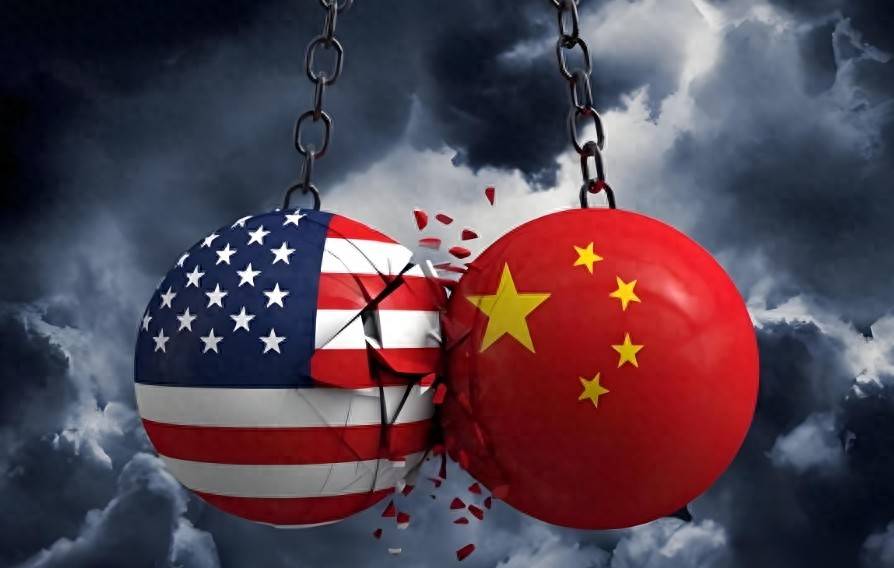
美国靠美元当 “世界霸王”,印钱想让中国百姓买单?42国联手破局
Sou Hu Cai Jing· 2025-09-30 12:56
Core Viewpoint - The trend of de-dollarization is accelerating as emerging economies like China and Russia rise, with 42 countries working to reduce their dependence on the US dollar and promote their own digital currencies [1][19][27] Group 1: Historical Context of the Dollar's Dominance - The US dollar became the dominant global currency due to historical events, particularly during the two World Wars, which shifted the economic center to the US [3] - The Bretton Woods system established the dollar's link to gold, making it the sole reserve currency and embedding it in global trade and finance [5] - The dollar's detachment from gold in 1971 did not diminish its dominance, as the US established the petrodollar system through strategic agreements with Saudi Arabia [7][9] Group 2: Economic Policies and Global Impact - The US has leveraged its dollar dominance to attract global capital and implement quantitative easing, which stimulates its economy but can create asset bubbles in other countries [11][14] - The influx of "hot money" into emerging markets can lead to economic volatility when these funds withdraw, particularly during US economic recoveries [14][16] - Historical financial crises have shown how the US benefits from its dollar dominance while other nations suffer economic downturns [16][17] Group 3: The Shift Towards De-dollarization - Increasing awareness of the risks associated with dollar dependence has led many countries to pursue de-dollarization, exploring alternative currency systems and digital currencies [19][21][25] - Countries like Russia, Iran, and Brazil are accelerating the development of their digital currencies to reduce reliance on the dollar [21] - Efforts to establish non-dollar trade mechanisms, such as the trade settlement system between European countries and Iran, challenge US sanctions and promote alternative trade routes [21][23] Group 4: Future Implications - The move towards de-dollarization signifies a potential shift in global economic power and may lead to significant changes in the international financial system [25] - The increasing use of currencies other than the dollar in global trade, particularly in oil transactions, indicates a challenge to the dollar's status as the sole reserve currency [23][25] - The collaboration of 42 countries to develop digital currencies reflects a growing trend towards financial independence from the US dollar [27]
美元霸权动摇?欧洲降息8次竟不敌美国1次,资金正疯狂转向!
Sou Hu Cai Jing· 2025-09-30 07:25
Group 1 - The European Central Bank (ECB) has cut interest rates eight times this year, bringing the rate down to 2%, while the U.S. Federal Reserve has not initiated rate cuts, indicating a complex economic landscape [1][3] - The inflation rate in the Eurozone has fallen below the ECB's target of 2%, providing ample room for further rate cuts, contrasting with the persistent inflation issues faced by the U.S. due to excessive liquidity from previous quantitative easing [3][8] - The interconnectedness of the U.S. and European economies is significant, with a correlation of 70%-80%, meaning U.S. economic fluctuations directly impact European markets [3][8] Group 2 - The U.S. consumer market accounts for 20%-30% of global consumption, and trends in U.S. consumer behavior often lead global demand changes, exemplified by the influence of companies like Tesla and Apple on their respective industries [3][7] - The Federal Reserve's monetary policy has a strong spillover effect globally, with a 1% increase in U.S. interest rates potentially reducing GDP by 0.5% in developed economies and 0.8% in emerging markets over three years [3][8] Group 3 - The ongoing impact of the Federal Reserve's quantitative easing since the COVID-19 pandemic has significantly benefited global economies, including China, which reported a trade surplus of $980 billion in 2023 [7] - The global economy is highly integrated, and any downturn in the U.S. economy is likely to affect other economies through trade, investment, and financial channels, as historical data suggests that over 90% of economies struggle during U.S. recessions [8][10] Group 4 - Recent data indicates a slight slowdown in the U.S. labor market, with non-farm payrolls increasing by 150,000 in August, below market expectations, and a small rise in the unemployment rate to 3.9% [10][13] - A decline in U.S. consumer spending by 1% could lead to a 0.5% reduction in global trade volume, highlighting the interconnectedness of the global economy [10][13] Group 5 - The current global economic situation is precarious, with the ECB's rate cuts reflecting reduced inflation pressures, yet the U.S. economy remains central to the global economic framework [13] - Investors should closely monitor U.S. employment, consumer confidence, and inflation data, as these indicators will influence the Federal Reserve's monetary policy and global market risk appetite [13]
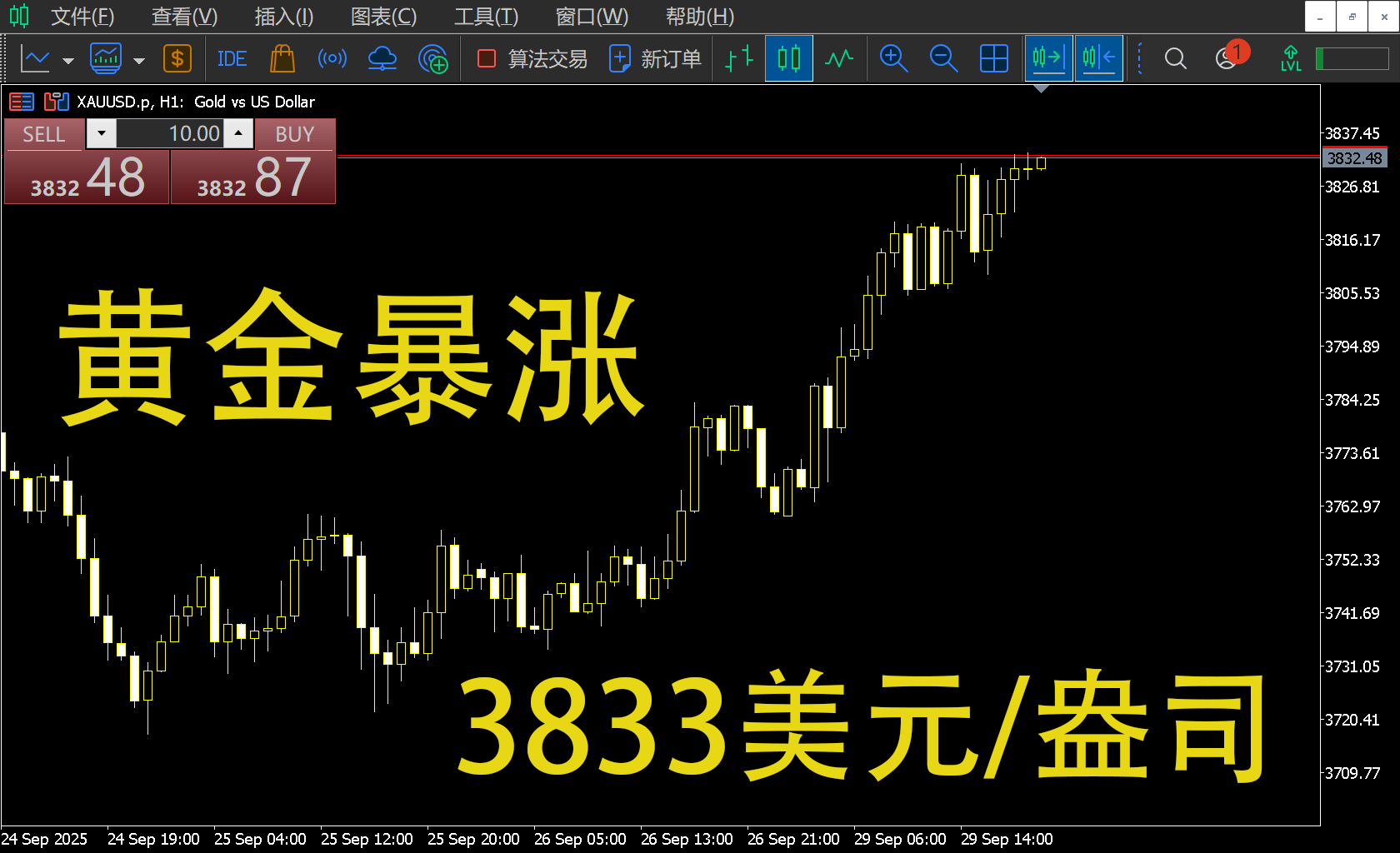
香港第一金PPLI:影响现货黄金再创历史新高3833美元 暴涨的底层逻辑
Sou Hu Cai Jing· 2025-09-30 04:43
现在在来看黄金当下的长周期涨幅对去对比早期的三条长周期蛮牛,是不是明显有点手腕跟大腿比了?你看我们自己的央妈都连续第十个月增持黄金了,加 上香港黄金交易所最近也发布了新闻稿,要在香港拟建黄金储存库,计划在未来的三年储存2000吨为目标,以此同时美联储也已经开始进入降息周期了,这 个降息周期原则上不会这次降了25个基点,下个季度就加回25个基点。现在甚至下一轮议息已经提前被市场高亢有望到会提升降息50个基点。所以啊,黄金 是会站稳3500-3800美元/盎司区间继续北上,还是回调3800美元/盎司下方展开新的一轮空头开始南下,看完第一金陈生分析后琢磨琢磨。 香港第一金PPLI平台市场部负责人陈生温馨提示任何投资均有风险,以上黄金涨跌逻辑分析仅供参考,不作投资建议! 香港第一金现货黄金暴涨 那么第三头黄金蛮牛,就是从2018年到现在2025年的上半年,国际金价从回落到1100美元每盎司附近开始猛涨,一直涨到直接突破3000美元每盎司上方,撩 起这轮黄金多头火苗的依然还是非美国莫属了,自老特上任美国总统后,从2018年开始上演了美国对全球发起的贸易战,关税战,导致全球国家经济及货币 宽松,变相也让其国家对美元体系的 ...
东盟黄金存中国?3800美元金价背后,人民币正在悄悄“换道超车”
Sou Hu Cai Jing· 2025-09-29 07:22
Core Insights - Gold, once considered an outdated asset, has surged from $1,800 during the Russia-Ukraine conflict to $3,800, indicating a significant shift in the global financial order [1] - China is emerging as a "custodian of foreign sovereign gold," with Southeast Asian countries storing their gold in China, which could reshape international settlement systems [1][3] Group 1: Historical Context - The Bretton Woods system established the dollar's dominance through a fixed gold exchange rate, but the U.S. later abandoned this, leading to the oil-dollar system [3] - The decline of U.S. influence in the Middle East is weakening the oil-dollar system, prompting alternative arrangements [3] Group 2: China's Strategy - China is withdrawing from the U.S.-dominated SWIFT system and promoting its own CIPS (Cross-Border Interbank Payment System), facilitating international transactions in yuan [5] - The IMF ranks the yuan as the third-largest financing and payment currency globally, indicating a shift away from U.S. control [5] Group 3: Future Implications - The dual strategy of gold custody and CIPS development positions China to create a new credit system based on tangible assets, enhancing its global financial influence [7] - The rise in gold prices reflects central banks' increasing purchases in preparation for a new monetary order, suggesting that gold will play a crucial role in future negotiations [7] Group 4: Investment Perspective - Investors should diversify their assets beyond the dollar, considering yuan, gold, and quality assets as viable options [9] - Historical shifts in monetary systems, such as the collapse of Bretton Woods, have led to significant wealth creation, indicating potential opportunities in the current transformation [9]
中国再抛257亿美债,美国“大动脉”被切,逼出2个接盘国
Sou Hu Cai Jing· 2025-09-28 06:20
Group 1 - The current U.S. national debt has reached $37.2 trillion, exceeding the entire annual GDP of the U.S. by 20%, with a deficit rate surpassing 15% [3] - China has reduced its holdings of U.S. Treasury bonds by $25.7 billion, bringing its total to $730.7 billion, the lowest level since 2008 [3][5] - Japan and the UK have increased their holdings of U.S. Treasury bonds, with Japan's holdings rising to $1.15 trillion and the UK's to $899.3 billion, marking a historical high [5][13] Group 2 - China has been selling U.S. Treasury bonds to purchase gold, with the People's Bank of China increasing its gold reserves to 7.402 million ounces, marking the tenth consecutive month of increases [7] - The proportion of gold in China's foreign exchange reserves is only 7.6%, significantly lower than the world average of 15% and much lower than developed countries like the U.S. and Germany [9] - There is a global trend among central banks to increase gold reserves, with a reported increase of 166 tons in Q2 of this year, indicating a shift in foreign exchange strategies to mitigate risks associated with the U.S. dollar [11]