贸易保护主义

Search documents
独家专访拉米:美国实质上已退出WTO 全球化路在何方?
2 1 Shi Ji Jing Ji Bao Dao· 2025-12-08 09:51
Group 1: WTO and Global Trade Dynamics - The WTO Appellate Body has been "inactive" for nearly six years due to the U.S. obstructing the appointment of members since 2017, leading to its official "shutdown" in December 2019 [1] - Pascal Lamy, former WTO Director-General, suggests that the WTO must adapt to new realities and continue to operate even without U.S. participation, as the U.S. has effectively withdrawn from the organization [1] - Lamy emphasizes the need for a platform to address the North-South tensions regarding climate change and trade, advocating for international trade and labor division to benefit the environment [3][4] Group 2: Environmental Concerns and Trade - Lamy identifies two main issues: the lack of enforceable regulations despite global agreements like the Paris Agreement, and the U.S.'s non-cooperation, which hampers international efforts [3] - He proposes that the world must pursue both open trade and environmental protection simultaneously, highlighting the complexity of balancing these objectives [4] - The rise of preventive trade protectionism, driven by public health and environmental concerns, is noted, with examples like carbon pricing mechanisms in China and Europe [6] Group 3: China's Role in Globalization - China's import and export value is projected to reach 43.85 trillion RMB in 2024, marking a 5% year-on-year increase, with exports growing by 7.1% and imports by 2.3% [7] - Lamy asserts that China will play a crucial role in the next phase of globalization, needing to balance its macroeconomic adjustments while expanding into emerging markets [7] - Companies are urged to enhance their strategic flexibility and adaptability in response to geopolitical and technological changes [7][8] Group 4: Digital Trade and Governance - Digital technology is reshaping global trade, lowering transaction costs and facilitating service trade growth, but differing data governance regulations create new barriers [8] - Establishing an international digital governance framework is critical for sustainable global trade development [8] - Lamy calls for reforms within the WTO to address systemic contradictions, such as the imbalance of power between members and the secretariat, which affects decision-making efficiency [8][9]
独家专访拉米:美国实质上已退出WTO,全球化路在何方?
2 1 Shi Ji Jing Ji Bao Dao· 2025-12-08 09:45
Core Viewpoint - The World Trade Organization (WTO) appellate body has been "inactive" for nearly six years due to the United States' unilateral and protectionist measures, which have undermined the organization's principles and obstructed the appointment of appellate body members [2][3] Group 1: WTO's Current Situation - The WTO appellate body officially ceased operations on December 11, 2019, after over 20 years of functioning [2] - Pascal Lamy, former WTO Director-General, suggests that the WTO must adapt to new realities and continue to operate even without U.S. participation [2][3] - Lamy warns that avoiding large-scale wars and environmental degradation should be prioritized in the coming years, as 90% of the global population is affected by these crises [2] Group 2: Climate Change and Trade - Lamy emphasizes the need for a friendly trade environment to protect against the harmful effects of environmental degradation while utilizing Earth's resources more effectively [3][4] - There is a lack of consensus between developed and developing countries on addressing climate change, necessitating a platform to resolve North-South tensions [3] - Existing global agreements lack enforceable regulations, leading to fragmented actions that could escalate trade frictions [3][4] Group 3: Global Trade Regulations - Some global regulations have pointed the way to resolving trade disputes, but trade protectionism remains a significant barrier [4] - Lamy notes that developed countries often adopt avoidance strategies regarding climate issues, while some developing countries resist discussions that could lead to negotiations within the WTO [4][5] - A proposed comprehensive forum on climate change and trade could facilitate discussions based on expertise and openness, rather than formal negotiations [5] Group 4: The Future of Global Trade - Lamy argues that the world must pursue open trade, environmental protection, and domestic economic development simultaneously, especially for developing countries [5][6] - The transition from "fast globalization" to "slow globalization" is underway, with international trade still growing but at a slower pace [6] - The new normal of the multilateral trade system is characterized by trade weaponization, U.S. protectionism, and the rise of preventive trade measures due to public health and environmental concerns [6][7] Group 5: China's Role in Global Trade - China's total import and export value is projected to reach 43.85 trillion yuan in 2024, a 5% increase year-on-year, with exports growing by 7.1% and imports by 2.3% [7] - As a major player in global trade, China must balance its macroeconomic rebalancing with the need to explore emerging markets and optimize trade structures [7][8] Group 6: Digitalization and Trade - Digitalization is reshaping global trade dynamics by lowering transaction costs and facilitating service trade growth [8] - However, significant differences in data governance and regulatory frameworks across countries create new barriers for service trade [8] Group 7: Reforming the WTO - The WTO faces a systemic contradiction as the U.S. participates in decision-making while having withdrawn from its constraints [9] - Lamy calls for reforms to improve the WTO's structure and efficiency to better address complex new issues [9] - A rebalancing of power between members and the secretariat is necessary to enhance decision-making efficiency within the WTO [9]
美媒:高关税迫使美国港口推迟升级
Huan Qiu Shi Bao· 2025-12-07 22:51
美国港务局协会今年上半年统计发现,目前没有任何一家美国国内制造商在生产码头集装箱起重机。行 业调查显示,今后10年间美国计划采购151台码头起重机,其中约80%从中国采购。美国港务局协会会 长戴维斯表示,美国起重机制造业已经"消失了几十年",对中国起重机征收高关税绝不会"像施魔法般 重振"美国起重机制造业。 《华尔街日报》直言,美国政府官员担心美方在港口设备方面过于依赖中国。近几十年来,中国已在造 船、集装箱和港口起重机制造等海事工业制造业领域占据主导地位。若停止从中国进口,美国一时很难 获得替代货源,同时,培育并提升本土制造能力也非易事。 美国港务局协会表示,除中国之外目前世界上只有少数几家公司生产可供国际采购的港口集装箱起重 机。包括芬兰科尼起重机、日本三井工程造船和瑞士利勃海尔。但美国港口运营商表示,这些起重机的 成本比中国产起重机至少高出15%,而且这些公司加起来的产能也无法满足美国每年约20台新起重机的 需求。虽然美国政府一直在推动建立本土起重机制造业,但美国航运业官员表示,建立一个国内产业需 数年时间,而且美国制造的起重机成本将高于亚洲和欧洲制造的起重机。(甄翔) 【环球时报综合报道】美国政府对中 ...
美国制造业创新低,特朗普的“救命方案”曝光,反而坑了自己
Sou Hu Cai Jing· 2025-12-07 13:43
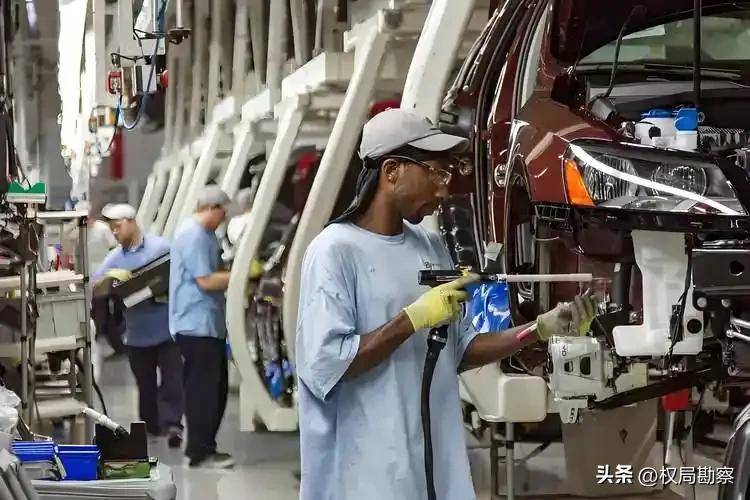
Core Viewpoint - The continuous decline in the U.S. manufacturing sector, as indicated by the PMI, reflects deeper contradictions in its industrial policy amidst a sluggish global economic recovery [1][4][31] Group 1: Manufacturing Sector Performance - The November manufacturing PMI fell from 48.7 in October to 48.2, below the market expectation of 49, indicating a significant acceleration in contraction [5] - The PMI has remained below the critical threshold of 50 for nine consecutive months, suggesting that the weakness in U.S. manufacturing is not a short-term fluctuation [5] - Among the five sub-indices that make up the PMI, four key indicators—new orders, employment, and inventory—are in contraction territory, indicating pressure across the entire manufacturing chain [7] Group 2: Industry Challenges - Only four out of numerous surveyed industries reported growth, while eleven industries are in contraction, highlighting a general decline in industry sentiment [9] - High-value-added sectors like chips, aircraft, engines, and automobiles, which traditionally have strong resilience, are facing erosion of their advantages due to declining orders and rising raw material prices [11] - The uncertainty stemming from current tariff policies is seen as a significant factor affecting market confidence, more so than the tariffs themselves [14] Group 3: Tariff Policy Implications - The ongoing tariff pressures, initiated by the Trump administration, are viewed as a core factor in the manufacturing sector's struggles [12] - Tariff measures have led to increased raw material costs and have disrupted global supply chains, which are critical for U.S. high-end manufacturing [18] - The U.S. government is reportedly preparing alternative tariff strategies, which may still face legal challenges, indicating ongoing instability in trade policy [23][25] Group 4: Future Outlook - The manufacturing sector's revival is contingent upon moving away from protectionist policies and re-engaging with a multilateral trade system to create a stable trade environment [31] - The potential consequences of failing to address tariff-related issues could lead to significant financial losses and further complications in international trade agreements [27]

美贸易代表又出狂言:加拿大、墨西哥不能成为中国等国的出口中心
Sou Hu Cai Jing· 2025-12-06 05:10
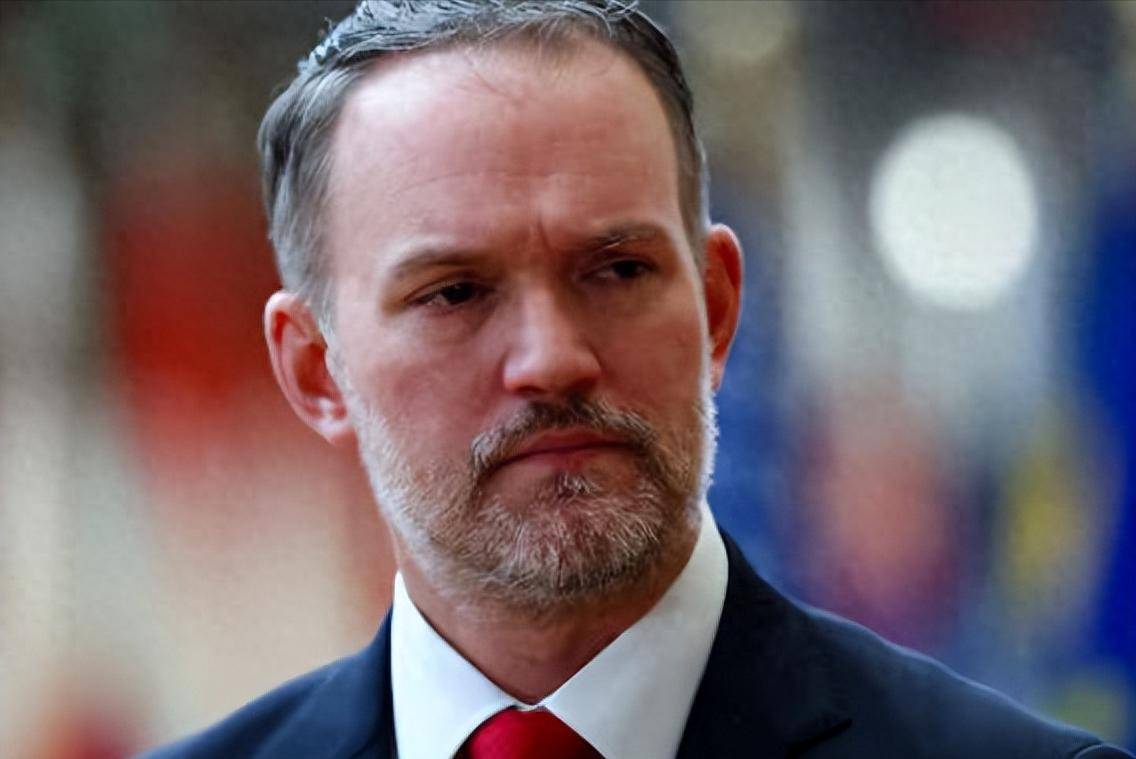
Core Viewpoint - The U.S. Trade Representative, Jamison Greer, has made controversial statements urging Canada and Mexico not to become export centers for countries like China, Vietnam, and Indonesia, indicating a desire for U.S. control over their trade policies [1][5]. Group 1: U.S.-Canada-Mexico Trade Relations - Greer criticized Canada and Mexico for their tariffs on foreign cars, suggesting that the USMCA (United States-Mexico-Canada Agreement) has issues, yet acknowledged that both countries are significant export markets for the U.S. [3][5]. - There are indications that Trump may consider withdrawing from the USMCA, despite its stipulations requiring member countries to maintain the agreement until 2036 [5][9]. - Greer proposed the idea of negotiating separately with Canada and Mexico, arguing that their economic relationships with the U.S. are distinct, which contradicts the original intent of the trilateral agreement [7]. Group 2: Global Trade Dynamics - Greer’s comments reflect a unilateral approach to trade, attempting to dictate terms to Canada and Mexico while downplaying their economic independence and needs [12]. - The interconnectedness of global supply chains makes it impractical for the U.S. to enforce a complete decoupling from China, as this could adversely affect American businesses as well [3][12]. - Canada and Mexico are actively seeking to diversify their trade relationships, as evidenced by Mexico's efforts to upgrade its free trade agreement with the EU to reduce reliance on the U.S. market [10][12].
未清偿22.92万元债务 亚邦股份参股公司被申请破产清算
Zhong Guo Jing Ying Bao· 2025-12-05 08:09
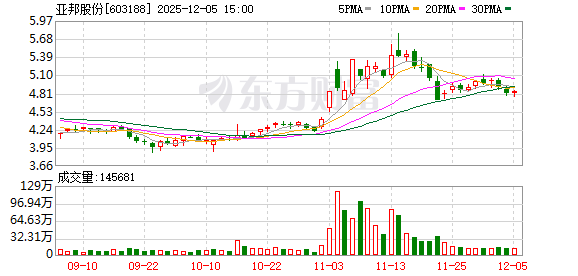
Group 1 - The core point of the news is that Yabang Co., Ltd. (603188.SH) announced that its 15% stake in Jiangsu Renxin Environmental Technology Co., Ltd. is undergoing bankruptcy liquidation as per the court's decision [2][3] - The bankruptcy application was filed by a creditor, Chuangnan Chengzhi Chemical Equipment Sales Co., Ltd., due to Renxin Environmental's inability to repay its debts, which meets the criteria for bankruptcy liquidation under the Enterprise Bankruptcy Law [3] - Yabang Co., Ltd. has provided guarantees for Renxin Environmental's financing lease business and has compensated a total of 86.76 million yuan for overdue payments [2][4] Group 2 - Renxin Environmental was established in January 2015 with a registered capital of 100 million yuan, focusing on environmental technology research and the processing of waste acids [3] - The bankruptcy management will be handled by Jiangsu Gushenmin Law Firm, with the first creditors' meeting scheduled for January 16, 2026 [3] - Yabang Co., Ltd. has initiated a recovery lawsuit against Renxin Environmental to reclaim the compensated amount, but the outcome remains uncertain as the case is still under court review [4] Group 3 - Yabang Co., Ltd. has faced significant financial challenges since 2018, primarily due to production halts in its main production area caused by safety and environmental issues, leading to declining sales and increased operational pressure [6][7] - The company reported a cumulative loss of 276.4 million yuan over six years from 2019 to 2024, with annual revenues showing a downward trend during this period [7] - However, there has been a slight recovery in 2025, with a reported revenue of 572 million yuan in the third quarter, marking a year-on-year increase of 3.87% and a return to profitability with a net profit of 20.63 million yuan [8]

受美政策影响 韩国汽车出口量5年来或将首次下滑
Yang Shi Xin Wen· 2025-12-05 07:34
近日有消息称,受美国关税政策等因素影响,今年韩国汽车全年出口量预计将出现5年来首次下滑。 消息称,出口下滑主要由于韩国最大汽车出口市场——对美国的出口减少导致。今年1至10月,韩国对 美汽车出口为约110.75万辆,同比减少7.9%。业内担忧美国关税政策及贸易保护主义长期化,对韩国汽 车出口构成更大压力。 韩国汽车移动产业协会预测,今年韩国汽车出口量在271万至272万辆之间,较去年278.26万辆减少约 2.3%至2.6%。 (文章来源:央视新闻) ...
2025-2027年全球经济展望报告:10大核心关切问题解析
Sou Hu Cai Jing· 2025-12-05 06:52
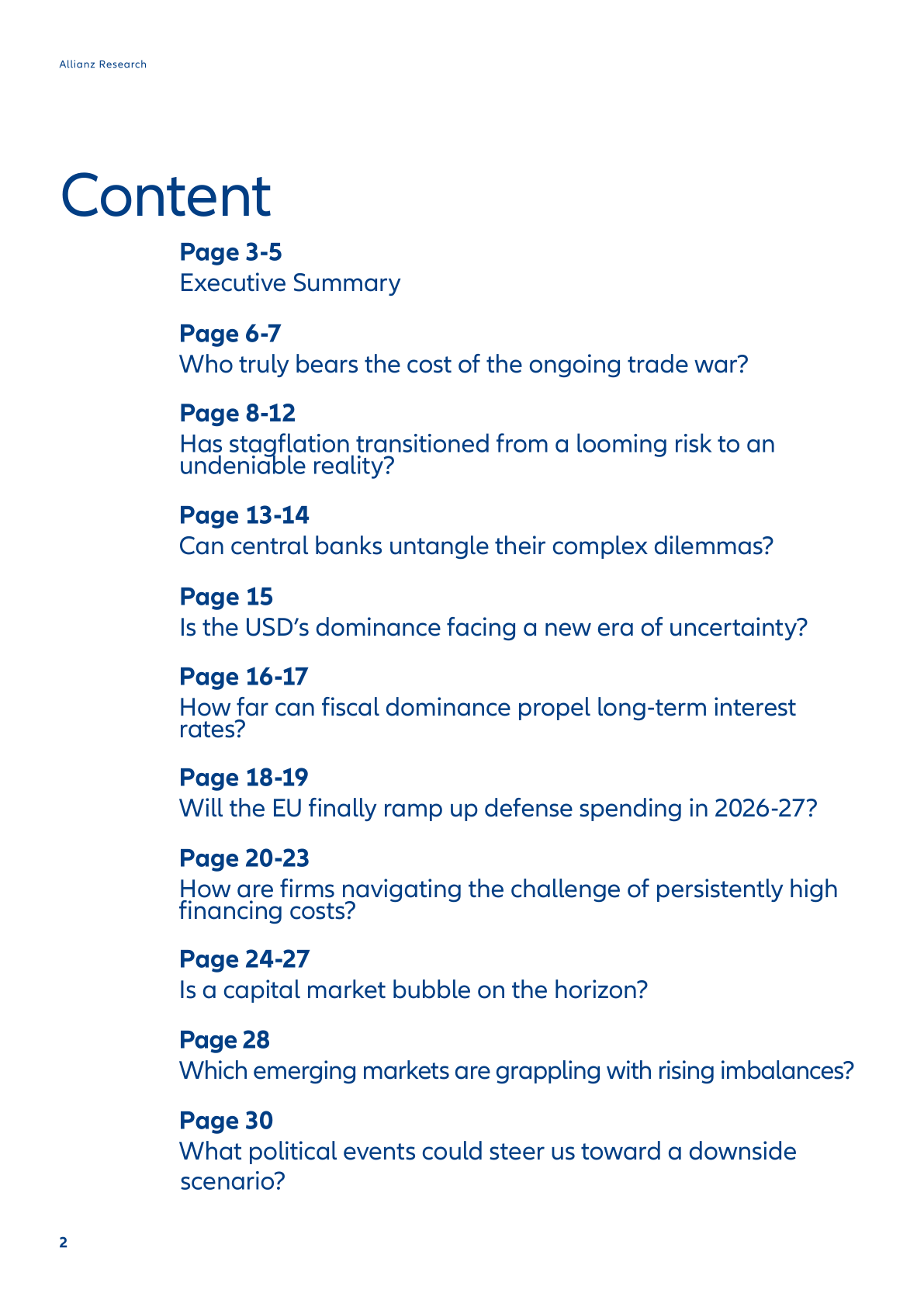
Economic Outlook - The global economy is entering a mild stagflation phase, with growth expected at 2.7% in 2025 and inflation at 3.9% [1] - Major economies like the US and UK are experiencing inflation rates above targets, while the Eurozone is gradually returning to normal [1] - Global trade growth is projected to slow from 2% in 2025 to 0.6% in 2026, with significant impacts on GDP for exporting countries [5] Central Bank Policies - Central banks are facing challenges of weak growth, persistent inflation, and rising fiscal deficits, leading to a divergence in monetary policies [7] - The Federal Reserve is expected to cut rates to a terminal range of 3.25-3.50% by mid-2026, while the European Central Bank will maintain stable rates [7] - The Bank of Japan is anticipated to continue raising rates towards 1.0% due to high core inflation [7] Trade and Investment - The ongoing trade war is primarily impacting exporters, with US consumers facing inflation increases of 0.6 percentage points by mid-2026 [5] - Foreign Direct Investment (FDI) pledges in the US could reach 6% of GDP by 2026-2028, indicating significant costs for source countries [5] - The EU's "Rearm Europe Plan" allocates EUR800 billion over four years for military procurement, but production constraints may hinder rapid capacity increases [11] Corporate Financing - Companies are adapting to high financing costs by enhancing operational efficiency, renegotiating contracts, and exploring alternative financing sources [12] - Despite lower policy rates, corporate loan demand remains muted in the Eurozone, while the US sees an increase in corporate loans [12] - A peak in global business insolvencies is expected in 2027, with increases of 6% and 4% in 2025 and 2026, respectively [13] Emerging Markets - Emerging markets are experiencing rising imbalances, with some countries facing debt and current account deficit risks [15] - Asian exporters are gaining market shares in the US, but the economic outlook is turning grim, leading to accelerated policy rate cuts in many emerging markets [15] - The Chinese economy is expected to slow down into 2026 due to contracting exports and soft domestic demand [15] Risks and Uncertainties - Heightened protectionism poses a 45% probability of leading to a global trade recession, negatively impacting growth and inflation [16] - A potential de-dollarization shock could push the EUR/USD above 1.25, with a 35% probability [16] - Geopolitical tensions, including conflicts involving NATO and Russia, as well as China and Taiwan, present significant risks to the economic outlook [16]
阿曼非石油出口逆势持续增长,超过50亿里亚尔
Shang Wu Bu Wang Zhan· 2025-12-05 03:36
《阿曼日报》11月28日报道,国家统计信息中心发布的数据显示,尽管自2025年4月以来阿曼受到 全球贸易保护主义政策升级,关税加征的影响,但今年阿曼非石油出口量仍持续增长。阿曼非石油出口 量及其占阿曼出口总额的比重均较上年有所增长。截至2025年第三季度末,阿曼非石油出口总额超过50 亿阿曼里亚尔,而去年同期为45亿里亚尔,增幅达10.3%。非石油出口占出口总额的比例从2024年9月 底的26%(总额为199亿里亚尔)上升到2025年9月底的29%(总额为172亿里亚尔)。 本年度非石油出口增长主要得益于化工及相关行业出口额的显著提升,截至2025年第三季度末,化 工行业出口总额达6.58亿阿曼里亚尔,增幅达14.5%。机械及电气设备出口额增幅高达150%,达到4.6亿 阿曼里亚尔。 (原标题:阿曼非石油出口逆势持续增长,超过50亿里亚尔) ...
最后一刻改变主意,欧盟还是决定向美国低头让步,欧媒:很耻辱
Sou Hu Cai Jing· 2025-12-04 06:37
Group 1: Trade Policies and Tariffs - After Trump's administration, the U.S. trade policy became more aggressive, particularly regarding the trade deficit with the EU, leading to a rapid assessment of additional tariffs on EU steel products [1] - The U.S. imposed a 50% tariff on steel in March, significantly reducing German factory orders and disrupting supply chains [5] - On March 26, the U.S. announced a 25% tariff on EU automobiles, severely impacting brands like Mercedes and BMW, which account for about 20% of their global sales [3] Group 2: EU's Response and Negotiations - The EU planned to impose €1.8 billion in tariffs on U.S. agricultural and tech products as a countermeasure, but negotiations led to a temporary suspension of tariffs [5] - In July, the EU agreed to delay countermeasures and sought to negotiate a framework agreement with the U.S., which included a 15% base tariff on most EU goods [8][12] - The EU's concessions were seen as a reluctant choice under pressure from U.S. tariffs, revealing its structural dependencies, such as 60% of energy imports from the U.S. [15] Group 3: Economic Impact and Future Outlook - The agreement led to a gradual recovery of EU exports, but the automotive sector continued to face challenges, with German manufacturers experiencing a decline in U.S. sales [13][17] - The U.S. tariffs raised costs for European companies, particularly in the automotive industry, which is expected to face ongoing sales difficulties [17] - The EU's concessions did not resolve the underlying trade disputes and instead opened new areas of contention, particularly in digital sovereignty [19][21]