AI芯片

Search documents
国产最强AI芯片可能已上市,美国慌了,批准英伟达H200卖给中国
Xin Lang Cai Jing· 2025-12-11 21:16
Core Viewpoint - The U.S. has suddenly approved the sale of NVIDIA's high-end AI chip H200 to China, contrasting sharply with previous restrictions on the less capable H20, likely due to advancements in China's AI chip production and deployment [1][9]. Group 1: U.S. Policy Change - The approval of H200 indicates a significant shift in U.S. policy, possibly in response to China's advancements in AI chip technology [1][9]. - The previous restrictions on H20, which had only a fraction of H200's performance, highlight the rapid developments in China's AI capabilities [9]. Group 2: Competitive Landscape - Chinese chip companies claim to have developed AI chips that can rival NVIDIA's A100, suggesting that the gap between domestic and foreign technology is narrowing [3][7]. - Other U.S. chip manufacturers, such as AMD and Intel, are also developing AI chips, but they face challenges due to NVIDIA's established ecosystem [3]. Group 3: NVIDIA's Market Position - NVIDIA's dominance in the AI chip market has allowed it to increase prices, achieving a profit margin of 55.8%, with some chips priced higher than a Tesla Model Y [5]. - Despite complaints from AI companies about high prices, NVIDIA remains unyielding, while companies like Google and Facebook are taking steps to develop alternatives [5]. Group 4: Alternative Approaches - Google has successfully developed its TPU chips, which can compete with NVIDIA's offerings, and plans to further integrate these into its AI models [5][7]. - The development of advanced algorithms may reduce reliance on high-performance chips, opening new avenues for domestic AI models to utilize local chip capabilities effectively [7].


摩尔线程:一场火爆的、“脱离地心引力的”估值实验
财富FORTUNE· 2025-12-11 13:05
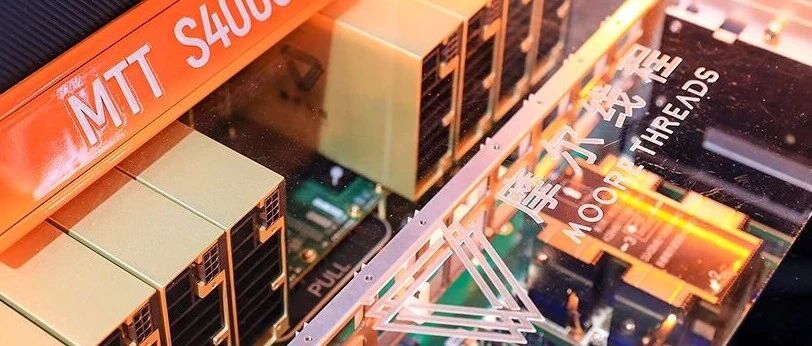
Core Viewpoint - The article discusses the remarkable market performance of Moer Thread, the first domestic GPU company listed on the Sci-Tech Innovation Board, highlighting its rapid valuation increase and the implications for the A-share market and investment strategies [1][3]. Group 1: Market Performance - Moer Thread's stock price surpassed 900 yuan within five days of its listing, making it the third highest-priced stock in A-shares, with a market capitalization exceeding 440 billion yuan, reflecting a 56% increase since its debut [1]. - On its first trading day, the stock price surged over four times, reaching a market cap of 282.3 billion yuan, with the highest profit for investors from a single share approaching 280,000 yuan [3]. Group 2: Valuation Metrics - The company's current dynamic price-to-sales ratio is close to 300 times, significantly higher than its domestic peers like Haiguang Information at approximately 41 times and Cambricon at about 99 times [3][5]. - Despite rapid revenue growth from 46 million yuan in 2022 to an estimated 785 million yuan in the first three quarters of 2025, the company still reported a loss of 724 million yuan during the same period [5][6]. Group 3: Business Model and Challenges - Moer Thread focuses on a "full-function GPU" concept, covering AI computing, graphics rendering, and scientific computing, which is strategically valuable amid geopolitical constraints on high-end GPU imports [4][5]. - The company faces high customer concentration, with over 80% of sales coming from its top five clients, indicating a reliance on a few major customers for revenue [6]. Group 4: Market Context and Future Outlook - The article draws parallels with past A-share listings, suggesting that Moer Thread's current valuation may be overly optimistic, potentially leading to a valuation correction if future performance does not meet expectations [7]. - The evolving market dynamics indicate a shift from traditional valuation metrics to assessments based on strategic positioning and technological scarcity, reflecting a broader trend in capital markets [8].

EDA龙头,营收狂飙38%
半导体芯闻· 2025-12-11 10:11
Group 1 - Synopsys, the leading global EDA software provider, reported strong earnings driven by robust demand for AI and HPC, with Q4 revenue increasing by 37.8% year-over-year to $2.26 billion, slightly above market expectations of $2.25 billion [2] - Adjusted earnings per share for Q4 were $2.90, lower than $3.40 in the same quarter of 2024 but exceeding Wall Street's estimate of $2.78 [2] - The Design Automation segment, responsible for semiconductor design software, saw a revenue growth of 65%, rising from $1.12 billion in Q4 2024 to $1.85 billion, accounting for 80% of total revenue, indicating sustained demand for EDA tools driven by AI chip design [2] Group 2 - For Q1 of the 2026 fiscal year, Synopsys forecasts revenue between $2.36 billion and $2.42 billion, with the midpoint exceeding Wall Street's expectation of $2.38 billion, and adjusted earnings per share projected between $3.52 and $3.58, also above the average estimate of $3.36 [3] - Major tech companies are accelerating investments in self-developed AI chips to reduce operational costs, relying on EDA software to streamline complex IC design processes, which is driving strong order momentum for Synopsys [3] - NVIDIA announced a $2 billion investment in Synopsys to collaborate on accelerating computing and AI engineering innovations, attracting significant industry attention [3]


40亿,中科创星先导创业投资基金完成终关
FOFWEEKLY· 2025-12-11 10:00
Group 1 - The core viewpoint of the article highlights the successful final closing of the Zhongke Chuangxing Pioneer Venture Capital Fund, which has reached a total scale of 4.08 billion yuan [1] - The new limited partners (LPs) include a diverse range of institutions such as Taibao Capital Changhang Mother Fund, Haidian District Zhongguancun Science City Technology Growth Fund, Ant Group, and others, indicating a multi-faceted collaboration structure [1] - The fund has made 46 investments in less than six months, focusing on sectors like AI chips, quantum technology, and gene editing, showcasing a strong emphasis on early-stage investments [1] Group 2 - The fund's investment strategy is characterized by "investing early and investing small," with over 90% of the initial projects being in the early technology development stage [1] - A significant portion of the projects, 32 out of 46, directly originates from research institutions and universities, effectively activating intellectual resources [1]

英伟达狂扫台积电80万片晶圆!2026年AI芯片大战一触即发
Sou Hu Cai Jing· 2025-12-11 08:38
Core Insights - TSMC's advanced packaging capacity is fully booked, with NVIDIA accounting for over half of the orders, indicating strong demand for semiconductor manufacturing [1] - NVIDIA has reserved 800,000 to 850,000 wafers for 2026, significantly outpacing competitors like Broadcom and AMD [1][3] Group 1: NVIDIA's Capacity Reservation - NVIDIA's large-scale capacity reservation is primarily to meet the growing production demands for the Blackwell Ultra chip and to prepare for the next-generation Rubin architecture [3] - Current orders do not include potential demand from the Chinese market for the H200 AI chip, suggesting that NVIDIA's capacity needs may increase further [3] Group 2: TSMC's Response to Demand - TSMC is actively expanding its advanced packaging facilities, planning to build eight wafer fabs at the AP7 plant and introducing two new packaging factories in Arizona, expected to start mass production in 2028 [3] - Due to limited capacity, TSMC has decided to outsource some processes of its CoWoS advanced packaging to companies like ASE and SPIL in Taiwan [3] Group 3: Industry Alternatives and Technology - The outsourcing decision has prompted some companies to consider alternative solutions, with Intel's EMIB technology gaining attention as a viable option [3] - EMIB offers advantages in area and cost, allowing for highly customized packaging layouts, but for GPU suppliers like NVIDIA and AMD, TSMC's CoWoS remains the preferred solution due to its bandwidth, transmission speed, and low latency requirements [3]

机构预测:中国云厂商有望积极采购英伟达H200芯片
Nan Fang Du Shi Bao· 2025-12-11 03:53
Group 1 - The H200 chip from Nvidia is expected to attract Chinese cloud vendors for procurement after its sales restrictions are lifted, despite its performance being lower than the current Blackwell series chips [2] - The H200 chip shows a significant performance improvement over the H20 chip, with a peak theoretical computing power of 1979 TFLOPS compared to H20's 148 TFLOPS, and it features 141 GB of HBM3e memory versus H20's 96 GB of HBM3 [2] - The procurement of the H200 chip will depend on formal policies, and cloud vendors are likely to test domestic AI chips to mitigate risks [3] Group 2 - The entry of the H200 chip into the Chinese market may intensify competition in the high-end chip sector, with local companies focusing on performance, compliance, and cost-effectiveness to strengthen their market position [4] - If Nvidia's H200 and AMD's MI325 can be exported to China, they could capture about 30% of the high-end AI chip market by 2026, while domestic ASIC chips are expected to hold 20% [5] - The overall supply of high-end AI chips in China is projected to grow by over 60% by 2026 [5]
英伟达又搞小动作,防着中国?
Guan Cha Zhe Wang· 2025-12-11 02:54
Core Viewpoint - The article discusses NVIDIA's development of a location verification technology for its AI chips amid ongoing U.S. export restrictions on semiconductor technology to China, highlighting the geopolitical tensions and the company's response to concerns about chip smuggling [1][4]. Group 1: NVIDIA's Technology Development - NVIDIA is reportedly testing a location verification technology that can determine the country in which its chips are operating, aimed at preventing AI chips from being smuggled to countries affected by export bans [1]. - The technology will initially be available as an optional software for customers and will utilize NVIDIA's GPU capabilities for operation [1]. - The first implementation of this technology will be on the new Blackwell chips, with discussions ongoing for earlier generations [1]. Group 2: U.S. Export Restrictions and Geopolitical Context - The U.S. government has intensified export restrictions on semiconductor technology to China, citing national security concerns and the need to prevent AI chips from being smuggled into banned countries [4]. - NVIDIA's products are under scrutiny due to potential security vulnerabilities and monopoly risks, leading to investigations by Chinese authorities [4][5]. Group 3: Industry Response and Market Dynamics - In response to U.S. restrictions, Chinese companies are accelerating the development of their own AI chips to capture market share previously dominated by NVIDIA [5]. - Major Chinese tech firms, including Huawei, Alibaba, Tencent, and ByteDance, are increasing investments in chip research and development to enhance their supply chain autonomy [5]. - The Chinese government has expressed strong opposition to U.S. actions, arguing that such measures hinder global semiconductor industry development and ultimately harm the U.S. itself [5].
谷歌TPU进军Meta数据中心,芯片ETF(159995.SZ)下跌0.52%,成分股走势分化
Mei Ri Jing Ji Xin Wen· 2025-12-11 02:49
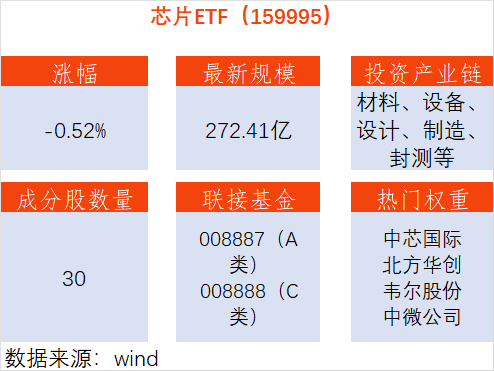
Group 1 - The A-share market showed mixed performance on December 11, with the Shanghai Composite Index down by 0.15%, while sectors like non-ferrous metals, electric equipment, and defense industries saw gains [1] - The chip technology stocks exhibited divergence, with the chip ETF (159995.SZ) declining by 0.52%. Notable gainers included Huahai Qingke up by 5.39%, Lanke Technology up by 3.14%, and Tuojing Technology up by 1.75%, while Beijing Junzheng and Haiguang Information fell by 3.48% and 2.89% respectively [1] Group 2 - Google is promoting its TPU deployment solutions to Meta and large financial institutions, with Meta planning to invest billions by 2027 to use TPUs in its data centers and renting Google chips from Google Cloud next year [3] - Analysts from ShenGang Securities predict that this business could generate billions in annual revenue for Google, suggesting to pay attention to leading companies in the optical module and PCB sectors, as well as those likely to benefit from the rise of custom AI chips [3] - The chip ETF (159995) tracks the National Chip Index, comprising 30 leading companies in the A-share chip industry, including SMIC, Cambricon, Changdian Technology, and Northern Huachuang [3]


北方华创(002371):国产替代持续加速,平台化发展效果显著
China Post Securities· 2025-12-11 02:36
Investment Rating - The report maintains a "Buy" rating for the company, indicating an expected relative price increase of over 20% compared to the benchmark index within the next six months [10][15]. Core Insights - The company is positioned to benefit from the accelerating trend of domestic substitution in the semiconductor equipment market, with significant growth expected in the coming years. It is projected that equipment spending in mainland China will reach $94 billion between 2026 and 2028 [3][4]. - The global demand for semiconductor equipment is expected to rise, driven by the regionalization of wafer fabs and the surge in AI chip requirements, with global spending on 300mm wafer fab equipment projected to exceed $100 billion for the first time in 2025 [4][6]. - The company is a leading platform player in the domestic semiconductor equipment market, with a comprehensive product range covering critical processes such as etching, film deposition, and ion implantation. This positions the company to benefit from downstream expansion and domestic substitution processes [9]. Financial Projections - Revenue projections for the company are as follows: CNY 39.83 billion in 2025, CNY 50.26 billion in 2026, and CNY 61.33 billion in 2027, with corresponding net profits of CNY 6.13 billion, CNY 8.38 billion, and CNY 11.12 billion respectively [10][13]. - The company is expected to maintain a strong growth trajectory, with revenue growth rates of 33.5% in 2025, 26.2% in 2026, and 22.0% in 2027 [14]. Market Position and Strategy - The company is expected to continue increasing its market share in the domestic semiconductor equipment sector, which is projected to grow significantly, with mainland China potentially becoming the largest semiconductor wafer foundry center globally by 2030 [9]. - The company has announced a stock option incentive plan aimed at enhancing its long-term incentive mechanisms, which is expected to improve talent attraction and team stability [9].

存储爆火,AI Capex应用材料终能雄起了?
3 6 Ke· 2025-12-10 12:16
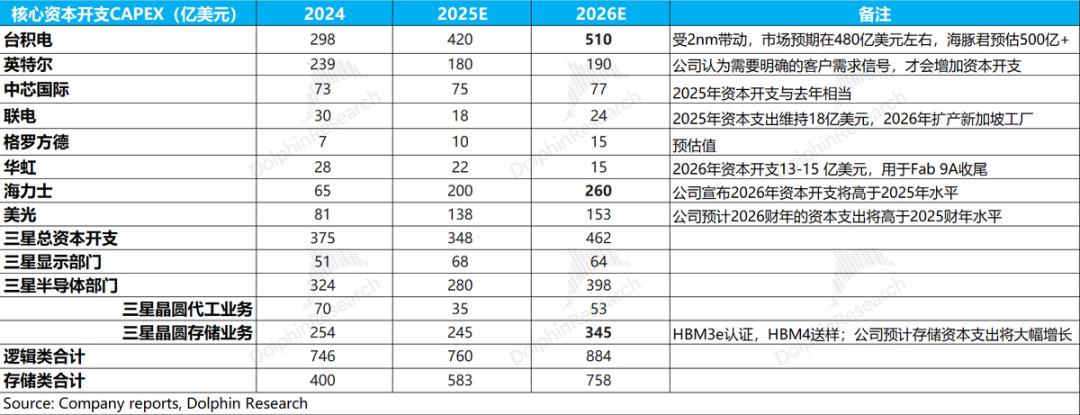
在应用材料的半导体设备业务中,逻辑类业务是公司最大的收入来源,当前逻辑类收入:存储类收入大致是2:1的关系。虽然近期存储类的资本开支明显 增加,能给公司的相关业绩带来提振,但公司业绩的最大影响项仍然是逻辑类市场。 在中国消费电子国补退坡和存储涨价的共同影响下,终端厂商对于明年的预期都相对谨慎。结合各家晶圆制造厂的资本开支预期来看,明年逻辑类市场的 增量仍将主要来自于台积电,三星和英伟达的代工业务资本开支仍然保守。当前台积电3nm产能对应AI芯片的需求,依然还是不够的,台积电将继续保持 扩产的节奏。 这也导致了应用材料AMAT在明年的增长在不同领域冷热两重天:存储类需求会贡献相对确定性的增量,逻辑类的预期相对偏弱(主要来自台积电,而扩 产主要是2nm升级中High NA EUV拿货),难以形成经营面的全面提升。 海豚君在应用材料AMAT的上篇深度分析中,主要是梳理了公司的主要产品,以及在各细分设备赛道的地位。而在这篇中,将主要结合半导体制造厂资本 开支情况,来对应用材料AMAT进行业绩预期和价值估算。 由于应用材料公司从事于半导体设备领域,位于半导体产业链的最上游。公司的客户主要都是晶圆制造厂,涵盖逻辑类(台积 ...