就业市场

Search documents
美联储7月会议纪要藏玄机:鸽派阵营是否已悄悄壮大?
Jin Shi Shu Ju· 2025-08-20 11:34
在纪要公布前,芝商所(CME)的美联储观察工具显示,美联储将政策利率从当前4.25%-4.50%区间下 调25个基点的概率为85%。 美联储上月决定维持利率不变,引发两位高层官员的反对——他们希望降息以防范就业市场进一步疲 软。北京时间周四凌晨公布的这场为期两天会议的纪要可能会显示他们的担忧是否已引起其他政策制定 者的共鸣,这或许会强化下月可能开始降息的预期。 7月29日至30日联邦公开市场委员会(FOMC)会议结束后不到48小时,劳工部数据似乎印证了美联储 负责监管的副主席鲍曼和理事沃勒的担忧。 当时的数据显示,7月新增就业远低于预期,失业率小幅上升,劳动参与率降至2022年末以来最低。更 令人不安的是,前两个月的就业增长数据遭历史性下修,抹去了5月和6月逾25万个原本被认为已创造的 岗位,严重动摇了"就业市场仍强劲"的主流说法。这一事件令美国总统特朗普极为愤怒,他随后解雇了 劳工统计局局长。 然而,此后的数据给另一阵营提供了依据——该阵营更担忧特朗普激进的关税政策可能重燃通胀,因此 反对迅速降息。7月核心消费者通胀年率超预期;随后生产者价格也意外大幅上涨。 "7月FOMC会议纪要将更细致地展现委员会内部的 ...
【环球财经】市场等待杰克逊霍尔会议打破僵局 鲍威尔表态或更为谨慎
Sou Hu Cai Jing· 2025-08-19 13:29
Group 1 - Global market sentiment is cautious as investors await signals from Federal Reserve Chairman Jerome Powell at the Jackson Hole annual meeting from August 21 to 23 [1][2] - Economists suggest Powell may adopt a more cautious tone this year compared to last year, where he explicitly mentioned the reasons for potential rate cuts [1][2] - The likelihood of a 25 basis point rate cut by the Federal Reserve next month is over 80%, according to the interest rate futures market [2] Group 2 - Investors are also looking forward to the release of the Federal Reserve's July meeting minutes for additional policy clues [3] - Current inflation levels in the U.S. remain above the established target, with some opinions attributing this to one-time factors rather than a long-term trend [3] - The Federal Open Market Committee (FOMC) is expected to have differing views on the possibility of a rate cut in September, with a consensus leaning towards a 25 basis point cut rather than a 50 basis point cut [3]
“现在读AI博士已经太晚了”
3 6 Ke· 2025-08-19 08:55
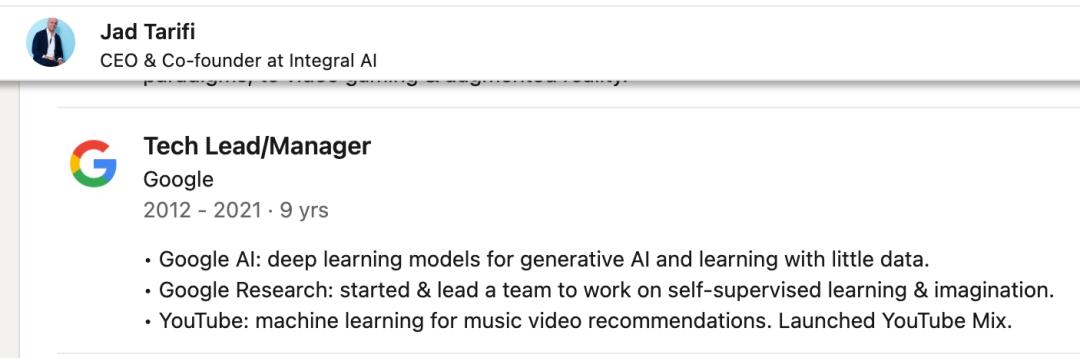
谷歌生成式AI团队创始成员竟然劝退AI博士? Jad Tarifi,这位在谷歌待了近十年、参与创立了谷歌第一个生成式AI团队的大佬,最近直接开炮: 别为了赶AI这波热潮去读博士了,等你毕业,AI本身都可能被解决了。 要知道,现在Meta这样的科技巨头为了抢AI人才,签约奖金都开到了几亿美元的天价。 在这种疯狂的人才争夺战中,Tarifi的这番话简直就是一盆冷水。 网友们对Tarifi的观点反应两极分化,有人认为他是过河拆桥,也有人觉得他说的是大实话。 "五年博士读完,AI都进化到哪儿了" Tarifi可不是随便说说的,从他的亲身经历就能看出来。这位2012年从佛罗里达大学拿到AI博士学位的大牛,毕业就加入了谷歌。 后来他创办了自己的公司Integral AI,致力于开发基础世界模型。 他的观点非常出人意料:"AI本身会在你读完博士之前就消失。甚至像AI应用于机器人这样的事情到时候都会被解决。" 在他看来,博士学位是只有"怪人"才应该去读的东西,因为这意味着要"牺牲五年的生命和承受大量痛苦"。 除非你对这个领域痴迷,否则我不认为任何人应该去读博士。 Tarifi说得斩钉截铁。他认为在当今世界发展如此之快的情况下 ...


杰克逊霍尔全球央行年会前瞻
Nan Hua Qi Huo· 2025-08-19 06:12
Report Industry Investment Rating - No information provided in the report Core Viewpoints of the Report - The Jackson Hole Global Central Bank Annual Meeting will be a "watershed" for the Fed's policy direction. The market should focus on three key signals: labor market judgment, inflation risk statements, and emphasis on policy flexibility [2][36] - Powell's speech at the meeting is likely to maintain a "neutral to hawkish" stance, emphasizing "inflation resilience" and "policy flexibility" to guide the market to reduce bets on "consecutive rate cuts" [3] - The Fed's core goal of "balancing inflation and growth" remains unchanged. The game between the lagged impact of tariffs and economic downside risks will be the main line of future monetary policy [3] Summary by Directory Introduction: Policy Weathervane Significance of the Jackson Hole Annual Meeting - The Jackson Hole Annual Meeting is a key platform for the Fed to release major policy signals. The policy statements at this meeting often set the tone for subsequent monetary policies [4][7] Current Economic Background and Complexity of the Fed's Policy Environment Macro - economic and Policy Pressure Intertwined - The US economy shows multiple contradictory features. Inflation pressure is structurally differentiated, with core CPI showing more resilience. The labor market is cooling but still has some strength, and external policy pressure has increased significantly [8][11][13] - As of August 19, the market's probability of a 25 - basis - point rate cut in September has reached 90%, and some institutions have even raised the probability of a 50 - basis - point rate cut [13] Fed's Internal Disagreement - The dovish camp is concerned about economic downside risks and employment market slowdown, advocating for near - term rate cuts. The hawkish camp emphasizes labor market resilience and inflation rebound risks, advocating maintaining high interest rates [14] Key Economic Data Analysis July US CPI Data - July CPI showed "overall stability and strong core." Energy prices declined, food prices were stable, while core services inflation was strong. Different commodity items were affected differently by tariffs and demand [15] July US PPI Data - July PPI showed an unexpected increase, mainly driven by services. The increase in PPI may not fully reflect fundamental inflation pressure, but it indicates potential upward risks for future CPI [22][23] Root Causes of the July CPI and PPI Divergence - The divergence between CPI and PPI reflects the complexity of inflation transmission, including a 1 - 3 - month time lag in cost transfer and possible statistical differences [25] Possible Scenarios of Powell's Speech and Policy Signal Analysis - Scenario 1: Absence from the meeting. This is a "passive neutral" strategy to avoid market volatility and leave policy decisions to economic data before the September meeting [27] - Scenario 2: Deliver a "non - substantial" speech. This is to maintain policy options' openness and postpone the final decision to the September meeting [28] - Scenario 3: Moderately release rate - cut signals. This requires further deterioration of employment data and significant escalation of external pressure from the Trump administration [28] Market Expectations and Future Monetary Policy Outlook Short - term Market Expectations and Risks - Market expectations of the number of rate cuts this year are around 3 times, but this is at risk of adjustment. US economic downside risks are accumulating, making short - term policy expectations more complex [34] Medium - to - Long - term Monetary Policy Path - The lagged impact of tariffs will be a key constraint on the Fed's policy in the next 1 - 2 years. In Q4 2025, inflation pressure may intensify, and in 2026, inflation is likely to fall, opening up room for significant rate cuts [34] Conclusion: Core Observation Points of the Jackson Hole Annual Meeting - The meeting will be a "watershed" for the Fed's policy. The market should focus on labor market judgment, inflation risk statements, and policy flexibility [36]
鸽鹰派角力9月降息悬念陡增 伦敦金现多空拉锯
Jin Tou Wang· 2025-08-19 02:34
摘要今日周二(8月19日)亚盘时段,伦敦金目前交投于3339.10美元附近,截至发稿,伦敦金最新报 3333.03美元/盎司,涨幅0.02%,最高上探3339.10美元/盎司,最低触及3325.89美元/盎司。目前来看, 伦敦金短线偏向震荡走势。 今日周二(8月19日)亚盘时段,伦敦金目前交投于3339.10美元附近,截至发稿,伦敦金最新报3333.03 美元/盎司,涨幅0.02%,最高上探3339.10美元/盎司,最低触及3325.89美元/盎司。目前来看,伦敦金短 线偏向震荡走势。 【要闻速递】 美联储正着力应对一项分歧显著的难题,当下市场已普遍预期下月将降息25个基点,而美国总统特朗普 亦力促主席鲍威尔下调利率。 美联储官员始终紧盯关税对通胀的潜在效应。然而,近期消费者价格指数与生产者价格指数的数据表 明,因7月服务通胀意外攀升,关税的影响似乎微乎其微。鉴于服务业在美国经济体中占据主导地位, 而商品仅占GDP的11%,此现象引发部分官员警觉。芝加哥联储主席古尔斯比上周发出警示:若后续报 告持续显示服务通胀上扬,将成为重大隐患。 其他多位地方联储主席对通胀的忧虑更为深切,包括堪萨斯城的杰夫·施密德、克利夫 ...
最后一次参会 鲍威尔会在全球央行年会上说什么
Sou Hu Cai Jing· 2025-08-18 17:00
Group 1 - The core viewpoint of the articles revolves around the anticipation of a potential interest rate cut by the Federal Reserve, particularly following weak employment data in July, which has heightened market expectations for a rate reduction in September [1][2][3] - The two-year U.S. Treasury yield has seen a significant decline, dropping to approximately 3.75%, which is just above its lowest levels in recent months, indicating a market shift towards aggressive rate cut bets [1][3] - Federal Reserve Chairman Jerome Powell is expected to align with market expectations during his speech at the Jackson Hole conference, with a strong likelihood of at least a 25 basis point cut in September, as market participants are betting on a 85% chance of this outcome [3][4] Group 2 - The upcoming employment report on September 5 will play a crucial role in determining the Fed's decision, with expectations that a weak report would support a 25 basis point cut [4] - Powell's tenure has been marked by a pragmatic approach to monetary policy, often waiting for clearer economic signals before making decisions, which has been evident in his past speeches at the Jackson Hole conference [5][6] - Despite external pressures, Powell has maintained a cautious stance, emphasizing the need to observe the impact of tariffs on inflation before making policy adjustments, which has led to a delayed response in the Fed's rate-cutting cycle [7]
全球紧盯!杰克逊霍尔年会倒计时,鲍威尔讲话或聚焦五大主题
智通财经网· 2025-08-18 07:49
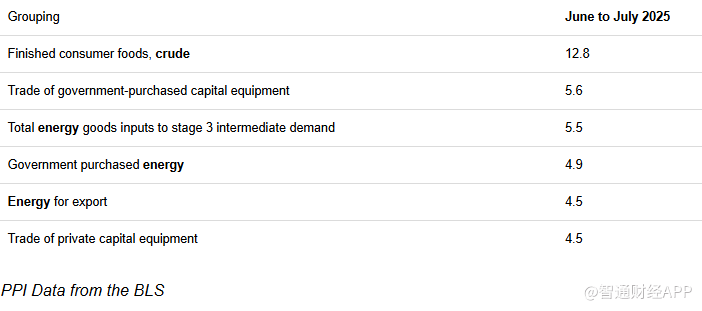
Grouping 1 - The Jackson Hole Global Central Bank Conference in 2025 will focus on the labor market amidst transformation, with Fed Chair Jerome Powell likely addressing inflation, rising producer prices, and a weak job market [1] - The Producer Price Index (PPI) rose by 0.9% month-over-month in July, with service prices increasing by 1.1%, marking the largest increase since March 2022 [1][2] - Companies like Nike and Adidas are raising prices to offset additional tariff-related costs, indicating a trend among large retailers to pass on costs to consumers [4] Grouping 2 - The Consumer Price Index (CPI) increased by 0.2% month-over-month in July, with a year-over-year increase of 2.7%, driven by rising energy service prices [5] - The energy sector has seen significant price fluctuations, with companies like Talen Energy and Vistra Energy experiencing substantial year-to-date price increases [5] - The employment market remains weak, with only 73,000 non-farm jobs added in July, and adjustments to previous employment data leading to concerns about future job reports [8][9] Grouping 3 - Powell may discuss the impact of artificial intelligence on the labor market, as major tech companies have made significant layoffs while investing heavily in AI [12] - The market anticipates a 90% probability of a 25 basis point rate cut by the Fed in September, which could benefit small-cap stocks most affected by tariffs [13]
债市“抢跑”押注美联储9月降息,更有甚者豪赌去年场景将重演
Jin Shi Shu Ju· 2025-08-18 03:11
AI播客:换个方式听新闻 下载mp3 去年怀俄明州的"惊喜" 这样的背景使得杰克逊霍尔会议备受关注。三年前,鲍威尔曾警告称抗击通胀将给家庭和企业带来"痛 苦",此番言论推高了短期美债收益率。 在去年的研讨会上,他则暗示美联储已准备好从二十年来的高点下调借贷成本。由于这番言论证实了此 前押注降息的交易员们的判断,两年期美债收益率当日应声大跌。当年9月,美联储实施了一系列降息 中的首次行动,并采取了50个基点的大幅降息。 音频由扣子空间生成 随着美联储主席鲍威尔将有机会就经济发表看法,债券交易员关于美联储准备降息的巨大押注,将在本 周迎来关键时刻。 鲍威尔将于本周五在怀俄明州杰克逊霍尔举行的央行年度会议上发表演讲,这为美债市场开启了一个成 败在此一举的关键阶段。市场认为,下个月降息25个基点几乎是板上钉钉,并且在年底前至少还会再降 息一次。近年来,他曾利用这一场合发表过足以搅动市场的政策声明,而这一次的背景可能同样至关重 要。 交易员们相信,疲软的就业市场已为这位美联储主席采取更鸽派的基调打开了大门,尽管出人意料的热 门通胀数据让一些经济学家有所犹豫。 目前,投资者预计鲍威尔不会颠覆市场对下个月降息的押注,但可能 ...
最惨就业季,CS学霸GPA 3.98,投2500份简历仅10次面试,AI吞噬入门级岗位
3 6 Ke· 2025-08-18 02:12
Core Insights - The job market for new graduates, particularly in computer science, is increasingly challenging due to the rise of AI and a preference for "plug-and-play" employees, leading to a significant reduction in entry-level positions [5][9][11] Group 1: Employment Challenges - Kenneth Kang, a computer science graduate with a near-perfect GPA, applied for over 2500 jobs but only received 10 interview opportunities, highlighting the harsh reality faced by many graduates [3][9] - The overall employment landscape is grim, with California's unemployment rate rising to 5.5%, the highest in the U.S., driven by a weak tech sector and a surplus of job seekers [6][8] - The tech industry has seen a more than 50% decrease in hiring for entry-level positions since 2019, with the proportion of new graduates in large tech companies dropping from 15% to 7% [9][12] Group 2: Impact of AI on Job Market - AI is automating entry-level tasks, further diminishing the availability of these positions and creating a skills gap as companies seek more experienced candidates [5][11] - The number of entry-level job postings in traditional sectors decreased by approximately 15% last year, and the conversion rate from internships to full-time positions has also declined [11][12] - AI has been identified as a major factor in job market contraction, with over 10,000 AI-related positions cut in the first seven months of 2025 [12] Group 3: Future Implications - The reduction of entry-level roles may lead to a talent pipeline disruption, affecting the future leadership and skill development within companies [11][12] - Experts express concern that companies focusing solely on immediate efficiency may overlook the long-term value of nurturing future talent [12][14] - There is a call for societal support in reskilling individuals to adapt to the changing job landscape influenced by AI [13][14]
KVB:全球瞩目鲍威尔周五重磅演讲,华尔街9月降息梦或生变数
Sou Hu Cai Jing· 2025-08-18 01:30
尽管如此,鲍威尔在即将到来的杰克逊霍尔会议上,似乎并不打算轻易给出明确的政策转向信号。部分原因在于,市场对于9月降息的预期并非毫无争议。 一方面,尽管整体通胀率有所回落,但仍未稳定降至美联储设定的2%目标之下,特别是近期关税措施对进口商品价格的抬升作用,正逐步显现,为通胀前 景增添了不确定性。另一方面,经济学家们正就近期就业市场表现展开激烈辩论:就业增长放缓,究竟是反映了企业对劳动力需求的减弱,还是劳动力供应 端的限制所致?若问题根源在于后者,那么进一步降息非但不能有效提振就业,反而可能加剧通胀压力,违背美联储的双重使命——促进就业最大化与保持 价格稳定。 牛津经济研究院的副首席美国经济学家迈克尔·皮尔斯,在其最新发布的研究报告中指出:"关税政策的影响正以不均衡的方式渗透至经济各个层面,预计在 未来几个月内,将继续推高通胀水平。对于政策制定者而言,从更为持久的通胀压力中剥离出由关税引起的暂时性波动,将是一项极具挑战性的任务。"基 于这一判断,皮尔斯认为,除非有确凿证据显示经济活动显著放缓,特别是8月份的就业报告出现大幅下滑,否则美联储可能会选择按兵不动,至少维持利 率不变直至12月份的会议。 杰克逊霍尔央行会 ...