绿色能源

Search documents
Why Silver Beat Gold and the S&P in 2025—And What Comes Next
Yahoo Finance· 2025-12-01 16:44
Group 1 - Silver has gained approximately 95% year-to-date, significantly outperforming gold's 60% rise and the broader S&P 500 returns, driven by aggressive industrial demand, shrinking global inventories, and shifts in monetary policy [2] - The iShares Silver Trust (NYSEARCA: SLV) has become the primary vehicle for equity investors to participate in the silver rally, closing around $51 at the end of November [3] - A cooling system failure at a data center caused a ten-hour trading halt on the Comex silver futures market, highlighting the fragility of the global silver market [4] Group 2 - The demand for silver is increasing due to its use in efficient solar technologies and global green energy production, supported by a favorable Federal Reserve and new government designations for critical minerals [4] - During the trading halt, spot prices for silver spiked to a record $56.72 per ounce, indicating a critically short supply of deliverable silver [5] - The disconnect between paper markets and physical markets was highlighted, showing the value of holding assets tied to physical metal, especially when liquidity dries up [6]
因势而动,精耕个券 - 2026年转债策略展望
2025-12-01 16:03
Summary of the Conference Call on Convertible Bond Strategy for 2026 Industry Overview - The conference call focuses on the convertible bond market in China, particularly the performance and outlook for 2026, influenced by macroeconomic factors and policy changes [1][3][8]. Key Points and Arguments Market Performance and Characteristics - The convertible bond market showed strong performance in 2025, with a cumulative increase of approximately 16.5% by the end of November [3]. - High-rated large-cap convertible bonds saw a rapid decline in scale due to tightened refinancing policies since 2024, particularly affecting bank convertible bonds [3][6]. - The rapid increase in ETF scale, reaching 620.682 billion, accounted for 12.5% of the convertible bond market, growing over 50% since the beginning of the year [1][5]. - The valuation of convertible bonds is increasingly aligned with the stock market, indicating a shift towards equity-like characteristics [1][3]. Future Supply and Demand Dynamics - Supply pressure in the convertible bond market is expected to persist into 2026, with a significant reduction in issuance anticipated due to strong redemption and delisting pressures [1][6][10]. - Despite the anticipated supply challenges, there is a strong willingness among major shareholders to issue new bonds due to lower financing costs [6][10]. - The demand for fixed-income products is expected to support valuations, preventing significant declines despite the shrinking supply [7][10]. Economic Outlook - The outlook for the A-share market in 2026 is optimistic, driven by expectations of economic recovery, structural adjustments, and policy reforms [8][9]. - Low-risk interest rates are likely to encourage a shift of savings and long-term capital into the equity market, enhancing the attractiveness of equity assets [9]. Investment Strategies for 2026 - Investment strategies should focus on two main opportunities: low-priced convertible bonds as a stabilizing asset and flexible equity-linked convertible bonds [11][14]. - Specific sectors to watch include technology growth (AI, humanoid robots), green energy (energy storage, hydrogen), and defensive positions in banking and public utilities [3][18]. - The strategy should involve active selection of bonds that are less likely to trigger strong redemption and those with a solid underlying stock logic [12][20]. Risks and Considerations - The potential for strong redemption events remains high, necessitating caution with high-priced and high-premium bonds that may trigger such actions [12][20]. - The shrinking scale of the convertible bond market may lead to capital inflows into the stock market, which could compress time value [2][10]. Conclusion - The convertible bond market in 2026 is expected to maintain high valuations supported by favorable policies and low-interest rates, despite challenges in supply and potential strong redemption pressures [10][14]. - A balanced approach with a focus on both defensive and flexible investment strategies will be crucial for navigating the market dynamics in the coming year [11][14].
从人人喊打,到万元一吨抢破头:“身价飞升”的地沟油,为何成了香饽饽?
3 6 Ke· 2025-12-01 08:50
Core Viewpoint - The transformation of "gutter oil" from a notorious food safety hazard to a highly sought-after resource for sustainable aviation fuel illustrates a dramatic shift in perception and market dynamics, driven by global demand for eco-friendly energy sources [1][3][30]. Group 1: Historical Context - Ten years ago, gutter oil was infamous for its health risks, including cancer-causing substances and food poisoning, leading to widespread public fear and government crackdowns on its production and sale [1][3][5]. - The 2011 major gutter oil scandal involved a vast criminal network across 14 provinces in China, with over 99.2 million yuan involved, highlighting the severity of the issue [5][13]. Group 2: Current Market Dynamics - In 2023, China exported nearly 2 million tons of gutter oil, accounting for over half of the country's waste cooking oil production, marking a historical high [3][18]. - The demand for gutter oil has surged, particularly in Europe and the United States, with the U.S. importing 718,000 tons in 2023, and projections indicating a continued increase in imports [3][18][20]. Group 3: Price Trends - The price of gutter oil has risen significantly, reaching an average of 6,525 yuan per ton by August 2025, a 24% increase year-on-year, with peak prices exceeding 10,000 yuan per ton [5][18]. Group 4: Transformation into Sustainable Resource - The shift began with the use of gutter oil in sustainable aviation fuel (SAF), which utilizes waste cooking oil to produce a low-carbon alternative for aviation, thus creating a new market for what was once considered waste [17][20]. - The global aviation industry has increasingly adopted SAF, with over 40 airlines using it, and a projected need for millions of tons annually to meet carbon neutrality goals [17][18]. Group 5: Future Implications - The competition for gutter oil has intensified, with countries recognizing its strategic importance in the energy transition, leading to the establishment of numerous biofuel plants in Europe and the U.S. [23][25]. - China is also ramping up its production capabilities for SAF, with several factories set to begin operations, indicating a shift towards domestic utilization of gutter oil for higher-value products [25][27]. Group 6: Geopolitical Considerations - The global demand for gutter oil has led to geopolitical tensions, with Western countries wary of China's potential profits from this resource, resulting in trade barriers and anti-dumping measures [28][30]. - The future of gutter oil as a commodity will depend on balancing domestic needs with export opportunities, as well as navigating international trade dynamics [28][30].

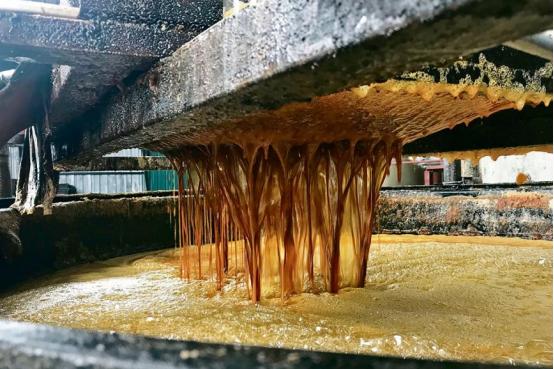
银价再创新高 多股触及涨停!
Sou Hu Cai Jing· 2025-12-01 07:07
Core Viewpoint - The silver market is experiencing significant price increases, driven by dovish comments from Federal Reserve officials and strong demand in industrial sectors, particularly in green energy and AI, leading to a bullish outlook for precious metals [1][2]. Group 1: Market Performance - As of December 1, silver spot prices surpassed $57 per ounce, with COMEX silver breaking through $58 per ounce for the first time [1]. - The main contract for silver on the Shanghai Futures Exchange rose over 7%, reaching 13,475 yuan per kilogram, marking a new high [1]. - Several A-shares related to silver, such as Hunan Silver and Xingye Silver, hit their daily limit up, although some later experienced price corrections [1]. Group 2: Fundamental Analysis - The recent rise in silver prices has increased activity in the precious metals sector, with cost pressures in industrial applications like photovoltaics and electronics becoming apparent [2]. - The long-term support for silver prices remains strong due to persistent supply-demand gaps and increasing demand from green energy and AI sectors, alongside expectations of loose monetary policy [2]. - The combination of monetary easing and industrial demand is driving silver prices, with a significant portion of demand (over 60%) coming from the industrial sector [2]. Group 3: Future Outlook - Short-term silver prices may experience fluctuations, but the medium to long-term outlook remains positive, driven by the ongoing energy transition and potential for further price increases if interest rate cuts materialize [2]. - Investors are advised to approach the market rationally, taking advantage of structural opportunities while being mindful of potential risks such as inflation, economic downturns, and geopolitical changes [2].


世界制造业2026年如何发展
Guo Ji Jin Rong Bao· 2025-12-01 02:12
Global Manufacturing Industry Overview - In 2026, the global manufacturing sector is expected to exhibit a combination of structural differentiation and resilience, with overall growth projected to remain low, but significant disparities in growth across different sectors and regions [2] - The acceleration of technological iteration and structural transformation, driven by the fourth industrial revolution focusing on AI, industrial internet, and green energy, will push manufacturing towards smart, service-oriented, and low-carbon evolution [2][3] - Global supply chain restructuring and cost pressures will arise from geopolitical conflicts, trade protectionism, and carbon neutrality goals, leading companies to reassess their supply chain layouts [2][3] Investment Trends - Foreign Direct Investment (FDI) in global manufacturing is expected to see a slight rebound, but with increasing regional and sectoral differentiation, primarily driven by policy incentives and expansion in technology-intensive fields rather than a broad recovery [3] - Investment in strategic emerging industries will continue to increase as governments and companies aim to capture future industry leadership in areas like AI and quantum computing [3] - Traditional industries such as steel and cement will face contraction and consolidation due to environmental policy pressures, leading to capacity exits [3] Trade Dynamics - Global manufacturing trade will face dual challenges of total contraction and structural differentiation, with growth expected to be below 1% [4] - Trade protectionism will continue to impact the sector, with potential expansions in tariffs and export controls raising compliance costs for exporting companies [4] - Emerging trade networks, particularly South-South trade, will become growth highlights, while technology trade barriers will reshape competitive rules [4] Regional Economic Conditions - The EU is expected to maintain a moderate recovery, but with weakened growth momentum due to structural issues [5] - BRICS nations will show significant regional differentiation, with some economies leveraging structural advantages for growth while others face transformation challenges [6] - ASEAN economies will rely on labor dividends and regional cooperation for moderate growth, but disparities among member countries will widen [7] Major Economies - The US manufacturing sector is projected to continue its strong recovery, supported by government policies and market demand, although it faces challenges from high inflation and geopolitical tensions [9][10] - Germany's industrial sector is expected to maintain steady growth, bolstered by its core position in global supply chains and strong export capabilities, despite facing transformation pressures [11] - Japan's manufacturing is anticipated to experience moderate recovery, driven by digital economy expansion and government investments in strategic technologies, although it is constrained by demographic challenges [12] - South Korea is likely to sustain its position as a global manufacturing hub, particularly in semiconductors and electric vehicles, but must navigate risks related to market volatility and domestic consumption [13]
2025年12月01日:期货市场交易指引-20251201
Chang Jiang Qi Huo· 2025-12-01 01:42
Report Industry Investment Ratings - **Macro Finance**: Index futures are favored in the medium to long term, with a strategy of buying on dips; treasury bonds are expected to trade sideways [1][5]. - **Black Building Materials**: Coking coal and rebar are recommended for range trading; glass is advised to be observed without chasing high prices [1][7][8]. - **Non - ferrous Metals**: Copper is suitable for short - term range trading; aluminum suggests reducing long positions at high levels after a rebound; nickel advises waiting and watching or shorting on rallies; tin is for range trading; gold is for range trading; silver recommends holding long positions and being cautious about new positions; lithium carbonate is expected to be in a relatively strong sideways trend [1][11][14]. - **Energy Chemicals**: PVC, caustic soda, soda ash, styrene, rubber, urea, and methanol are for range trading; polyolefins are expected to be in a weak sideways trend [1][19][21]. - **Cotton Textile Industry Chain**: Cotton and cotton yarn are expected to trade sideways; PTA is for range - bound trading; apples are expected to be in a slightly strong sideways trend; jujubes are expected to be in a weak sideways trend [1][27][29]. - **Agricultural and Livestock**: Pigs in the near - term are in a weak adjustment at low levels, and caution is advised when chasing high prices in the far - term; eggs' price increase is restricted; corn suggests hedging on rallies; soybean meal is mainly for range trading; oils are expected to stop falling and rebound, with a strategy of buying on dips [1][31][35]. Core Views The report provides trading suggestions for various futures products based on their current market conditions, supply - demand fundamentals, and macro - economic factors. It analyzes each product's situation in detail, including factors such as production, consumption, inventory, and policy, and offers corresponding investment strategies [1]. Summaries by Category Macro Finance - **Index Futures**: China's November official manufacturing PMI rebounded, and the external environment improved. However, the market's main line rotates quickly, so index futures may trade sideways. In the medium to long term, they are favored, and a strategy of buying on dips is recommended [5]. - **Treasury Bonds**: After continuous callbacks, the yields of 10 - year and 30 - year active bonds have basically retreated to the level before the announcement of treasury bond trading operations. The market may focus on the actual scale of the central bank's treasury bond trading operations at the end of the month. Treasury bonds are expected to trade sideways [5]. Black Building Materials - **Coking Coal**: The coal mine market is in a continuous price - cut trend, with weak demand. Market participants are generally in a wait - and - see state. It is recommended for range trading [8]. - **Rebar**: The futures price of rebar strengthened last Friday. In the short term, it is in a policy vacuum period. The supply and demand contradiction is not significant, and the price increase and decrease drivers are both weak. It is recommended for range trading [8]. - **Glass**: The suspension of production rumors caused the futures price to rebound, but the social inventory pressure of glass is huge, and the demand is gradually weakening at the end of the year. It is not advisable to chase high prices for the near - term contract, and it is necessary to wait for the peak - forming signal [10]. Non - ferrous Metals - **Copper**: The safety situation in the Democratic Republic of the Congo is complex and severe. The market consumption has shown a good momentum recently, and the social inventory has decreased. The long - term demand for copper is still optimistic, but in the short term, it is necessary to be vigilant against the suppression of consumption by high copper prices and the pressure brought by changes in the Fed's policy expectations. It is recommended for short - term range trading [11]. - **Aluminum**: The prices of bauxite in Shanxi and Henan are temporarily stable. The supply of imported ore is expected to increase in December, and the price may be under pressure. The demand is gradually entering the off - season. It is recommended to reduce long positions at high levels after a rebound [12]. - **Nickel**: The price of nickel ore remains firm, and the supply of nickel ore may be relatively loose. The refined nickel is in a surplus pattern, and the price of nickel iron has limited upward space. It is recommended to wait and watch or short on rallies moderately [15]. - **Tin**: The domestic refined tin production increased in October, and the consumption of the semiconductor industry is expected to continue to recover. The supply of tin ore is tight, and the downstream consumption is weak. It is necessary to pay attention to the supply resumption and downstream demand [15]. - **Silver and Gold**: Fed officials' dovish speeches have increased the market's expectation of interest rate cuts. Precious metals prices have rebounded. It is recommended to hold long positions in silver and be cautious about new positions, and to conduct range trading in gold [17]. - **Lithium Carbonate**: The supply is in a tight balance, and the downstream demand is strong. It is necessary to pay attention to the progress of the mining license in Yichun and the resumption of production of the Ningde lithium mine. It is expected to be in a relatively strong sideways trend [19]. Energy Chemicals - **PVC**: The cost is in a low - profit state, the supply is high, the demand is weak, and the export support may weaken. The overall supply and demand is still weak, but it has a low valuation. It is expected to be in a weak sideways trend [19]. - **Caustic Soda**: The alumina end has high production and high inventory, compressing profits. The supply of caustic soda is high in winter. It is recommended to wait and watch [21]. - **Soda Ash**: The spot trading is stable, and the upstream has a strong mentality of holding prices. The supply is expected to shrink, and the cost support is strong. It is recommended to wait and watch [27]. - **Styrene**: The overseas blending logic is difficult to change the weak fundamentals in the short term. It is mainly in a sideways trend, and it is necessary to pay attention to the price of pure benzene in January and the change of the crude oil pricing center [21]. - **Rubber**: The supply is expected to increase in the peak - season, and the terminal demand improvement is weak. However, there may be speculation about the shortage of delivery products. It is recommended for range trading [22]. - **Urea**: The daily output has increased, the agricultural fertilizer demand is gradually weakening, and the demand from compound fertilizer enterprises has increased. The inventory is in a state of high production and high inventory. It is expected to be in a sideways trend [23]. - **Methanol**: The domestic supply has recovered, the demand from the methanol - to - olefins industry has increased slightly, and the traditional downstream demand is weak. The port inventory has decreased significantly. It is expected to be in a sideways trend [24]. - **Polyolefins**: The inventory has continued to decline, mainly due to downstream replenishment at low prices. The demand is in a state where the peak season has ended, and the upward pressure is large. PE is expected to trade sideways in the range, and PP is expected to be in a weak sideways trend [25]. Cotton Textile Industry Chain - **Cotton and Cotton Yarn**: The global cotton supply and demand data is relatively loose, but the recent strong yarn price has driven the rebound of cotton. It is expected to trade sideways [27]. - **PTA**: The international oil price has fallen, and the PTA price is in a low - level sideways trend. The supply and demand is in a state of inventory reduction. It is recommended to pay attention to the range of 4500 - 4800 [27]. - **Apples**: The trading of late - Fuji apples on the ground and in storage is coming to an end. The price is expected to be in a slightly strong sideways trend [29]. - **Jujubes**: The acquisition progress of gray jujubes in Xinjiang is about 40% - 50%, and the enterprise acquisition enthusiasm is average. The price is expected to be in a weak sideways trend [29]. Agricultural and Livestock - **Pigs**: In the short term, the supply pressure still exists, and the demand increase is not obvious. In the medium to long term, the production capacity reduction has accelerated but is still above the equilibrium level. It is recommended to short on rallies in the near - term and be cautious about bullish in the far - term [32]. - **Eggs**: In the short term, the spot price fluctuates slightly, and the futures price trades in a range. In the medium term, the supply - demand relationship has marginally improved. In the long term, the production capacity clearance still takes time. It is necessary to pay attention to external factors [34]. - **Corn**: In the short term, the market supply slowdown supports the spot price rebound, but the terminal demand recovery is limited. In the medium to long term, the cost has strong support, but the supply - demand pattern is relatively loose. It is recommended to hedge on rallies [34]. - **Soybean Meal**: The U.S. soybean price is supported at 1120 cents, and the domestic supply from November to January is abundant. It is mainly for range trading, and spot enterprises can fix prices at low points for the November - January basis [35]. - **Oils**: In the short term, the three major oils are expected to stop falling and rebound, but the rebound height is limited. In the long term, it is necessary to pay attention to potential positive factors. It is recommended to buy on dips and focus on Malaysian palm oil high - frequency data [40].
高端访谈丨冰岛总统:中国的发展flag,总能“超额完成”!
Yang Shi Xin Wen Ke Hu Duan· 2025-11-30 14:35
Group 1 - The Icelandic President, Guðni Th. Jóhannesson, praised China's achievements in poverty alleviation, gender equality, and green energy development, stating these accomplishments demonstrate the possibility of change [3] - The President highlighted two interconnected crises facing the world: the climate emergency and inequality, noting that China has made significant progress in both areas [3] - The President acknowledged the difficulty of poverty alleviation, especially for a small country, but emphasized that China has successfully lifted hundreds of millions out of poverty [3] - China has made substantial advancements in clean energy, particularly in solar and wind energy, showcasing its ability to address global challenges while managing domestic issues [3] - The President expressed confidence that China's ambitious goals are consistently met or even exceeded [3]

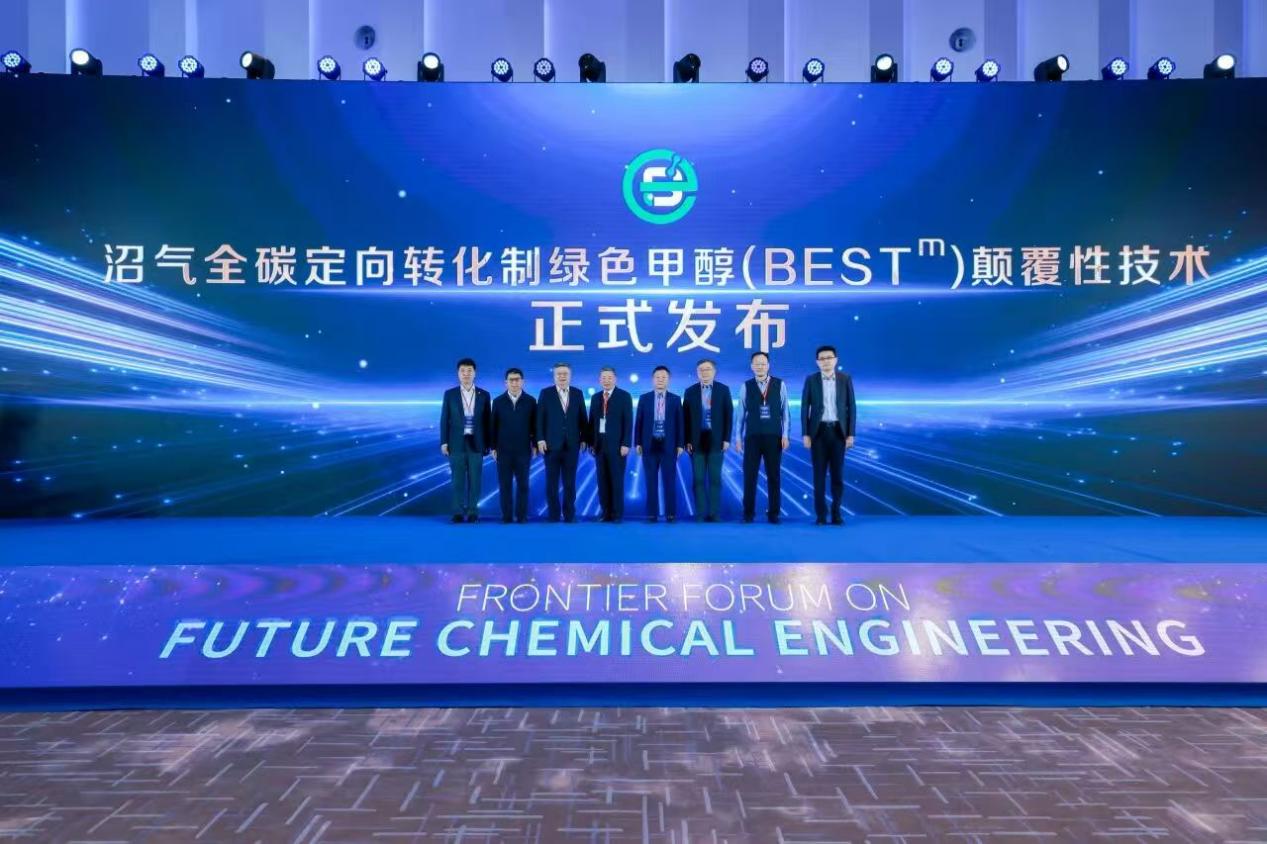
首届“未来化工前沿论坛”在沪举行 复洁科技联合发布沼气制绿色甲醇颠覆性技术
Zheng Quan Shi Bao Wang· 2025-11-30 13:40
Core Insights - The "First Future Chemical Frontier Forum (2025 3FCE)" held in Shanghai marks a significant advancement in the construction of a green energy system, supported by various institutions including East China University of Science and Technology and Shanghai Fuke Technology Co., Ltd [1] - The establishment of the "Shanghai Green Fuel Innovation Port International Think Tank" aims to provide strategic consulting and clarify industrial development paths for building a world-class green fuel hub in Shanghai [1] - The release of the "Biogas All-Carbon Directional Conversion to Green Methanol (BESTm) Disruptive Technology" is a key component of Shanghai's 2025 strategic initiative on green fuels, highlighting the potential of green methanol as a marine fuel alternative [2][4] Company Developments - Fuke Technology has shifted its strategic focus from traditional advanced environmental equipment manufacturing to core technologies for energy conservation and carbon reduction, emphasizing three main industry lines: resource utilization of wastewater and sludge, comprehensive carbon reduction services, and green clean energy [4] - The BESTm technology aims to enhance local biogas resource supply and high-value utilization, integrating anaerobic fermentation, biogas purification, gas reforming, and green methanol synthesis into a cohesive process [4] - The company is positioned to leverage recent national policies promoting green hydrogen, ammonia, and methanol, which are critical for the large-scale application of renewable energy [5] Industry Trends - The global shipping and aviation sectors are increasingly focused on emission reduction, with green methanol gaining attention as a viable alternative fuel [2][6] - Shanghai has initiated the construction of a "Green Shipping Corridor" to create a low-carbon logistics chain, aiming to establish a complete industrial ecosystem for green fuel production, storage, and shipping applications [5][6] - By 2030, Shanghai aims to achieve a "dual hundred" target for liquefied natural gas and green methanol fueling capabilities, positioning itself as a leading green fuel service center globally [6]

三大利空集体来袭,A股承压?踏空者或因此避险,散户如何应对
Sou Hu Cai Jing· 2025-11-30 06:31
Group 1: Regulatory Pressures - The regulatory environment has tightened significantly, particularly affecting the real estate and high-pollution chemical sectors, leading to increased pressure on A-shares [3][4] - The Ministry of Housing and Urban-Rural Development has mandated that real estate companies' financing leverage cannot exceed 50%, and has implemented stricter regulations on pre-sale funds [3] - The chemical sector faces heightened environmental regulations, with a requirement for high-pollution companies to complete environmental upgrades by the end of 2026, which is expected to compress profit margins [4] Group 2: Macroeconomic Challenges - Key macroeconomic indicators have shown signs of slowing, with industrial production growth dropping to 4.9% in October 2025, below market expectations [5] - Consumer spending and export figures have also weakened, with retail sales growth at 2.9% and exports declining by 1.1% in October, reflecting a lack of demand [5][6] - The significant contraction in social financing and new loans indicates a lack of vitality in the real economy, further impacting market confidence [6] Group 3: Market Supply and Demand Dynamics - The A-share market is experiencing increased supply pressure due to a resurgence in IPOs, with total IPO financing reaching 1003.59 billion yuan in 2025, which may divert funds from existing stocks [7] - Large-scale lock-up shares are being released, creating potential selling pressure on individual stocks and affecting overall market sentiment [7] - The liquidity in the market is insufficient, as indicated by a slowdown in the growth of narrow money (M1), which reflects reduced economic activity [8] Group 4: External Trade Environment - The external trade environment has become more uncertain due to escalating trade sanctions from the U.S., which have negatively impacted export expectations for Chinese companies [9] - In October 2025, China's export growth turned negative at -1.1%, significantly down from the previous year's growth, indicating challenges in the external market [9] Group 5: Investment Strategies for Retail Investors - Retail investors are advised to avoid high-risk sectors such as traditional real estate and high-pollution chemicals, focusing instead on sectors with government support [10][11] - Emphasis is placed on sectors like technology innovation and green energy, which are aligned with policy directions and expected to perform better [11][12] - Investors should maintain a cautious approach, controlling their positions and avoiding blind bottom-fishing in declining sectors [12][13]

壹快评|换种思路应对“规模性返乡滞乡”
第一财经· 2025-11-30 06:29
Core Viewpoint - The article discusses the recent statement from the Ministry of Agriculture and Rural Affairs regarding the prevention of large-scale return of migrant workers to rural areas, emphasizing the need to promote employment rather than restrict movement [3][4]. Summary by Sections Current Employment Situation - There is pressure on migrant workers' employment due to macroeconomic fluctuations and a slowdown in urbanization, leading to reduced job opportunities in sectors like construction and urban infrastructure [4]. - The increase in surplus rural labor is driven by agricultural mechanization and a peak in college graduates, alongside industrial automation releasing new labor, which intensifies competition for jobs [4]. Potential Solutions - **Skill Training**: Strengthening vocational training for migrant workers to enhance their competitiveness in emerging industries. For instance, Chongqing and Shandong have initiated targeted training programs benefiting over 500 rural laborers, including nearly 400 from impoverished households [5]. - **Employment Services**: Improving employment services, particularly through the use of big data and cloud computing to create efficient job information platforms. An example is the employment assistance system in Xinyu City, Jiangxi, achieving over 98% support for returning workers [5]. - **Rural Employment Opportunities**: Shifting focus to explore local employment potential in rural areas, leveraging opportunities in sectors like specialty agricultural products, rural tourism, and education services. Successful cases include rural tourism in Anji, Henan's instrument manufacturing, and e-commerce in Suining [6]. Conclusion - The potential issue of large-scale return of migrant workers can be seen as an opportunity to promote urban-rural integration and rural revitalization. By preparing in advance and enhancing the skills of rural laborers, it is possible to alleviate urban employment pressure and stimulate local economic development [6].