
中国经济转型

Search documents
经济压力大、人民不赚钱!为何越来越多的人,选择看好中国经济?
Sou Hu Cai Jing· 2025-10-08 13:19
Core Viewpoint - Despite economic pressures and challenges, there is optimism regarding China's economic resilience and potential for recovery in the second half of 2025 [1][3]. Economic Transition - China's economy has undergone significant transformations over the past decades, evolving from an agricultural base to an industrialized and now a high-tech and service-oriented economy [3]. - The current economic transition aims to reduce reliance on real estate and infrastructure, focusing instead on technological innovation and industrial upgrades [9][11]. Government Response - In response to a severe tariff shock in April 2023, the Chinese government acted swiftly to stabilize market confidence, contrasting with the slower response seen in the U.S. [5][7]. - The government's measures included supporting the Hong Kong stock market and implementing policies to stabilize the A-share market, demonstrating flexibility and effectiveness [5][7]. Supply Chain and Global Positioning - China's supply chain is evolving from being the "world's factory" to a "global cooperation link," emphasizing domestic and international market interactions [15]. - Initiatives like the Belt and Road Initiative are enhancing infrastructure, energy cooperation, and cultural exchanges, contributing to China's economic stability and global influence [15]. Financial Policy Adjustments - The Chinese government is shifting financial resources towards technology innovation and emerging industries, moving away from traditional reliance on real estate and infrastructure [22][24]. - Policies will focus on providing low-cost financing options for small and medium enterprises and tech startups, fostering a transition to high-value innovation [24]. Real Estate Market Focus - The government aims to ensure a healthy development of the real estate market by avoiding excessive stimulus and focusing on policies that support housing stability [19][21]. - Emphasis will be placed on affordable housing and policies that assist young and low-income groups in addressing housing challenges [21]. Employment and Skills Development - The economic transition presents both challenges and opportunities for the workforce, with traditional jobs declining while new industries emerge [26][28]. - Individuals are encouraged to adapt by enhancing their skills in emerging fields such as AI, digitalization, and green energy to seize new opportunities [28]. Market Volatility and Investment Strategy - The rebound of the A-share market after a significant drop illustrates the importance of maintaining a calm perspective during market fluctuations [30]. - Investors are advised to develop economic judgment and view market changes from a broader perspective rather than reacting impulsively to short-term volatility [30]. Conclusion on Economic Opportunities - China's current economic transition, while challenging, is also a period of significant opportunity, particularly for those who can adapt and respond to the evolving landscape [33].


2025中国经济挑战大缩水?只剩这两个拦路虎,如何破局?
Sou Hu Cai Jing· 2025-10-06 16:41
Economic Challenges - In 2025, China's economy is at a critical turning point, with significant changes in the landscape of economic challenges compared to the previous year. The previous four major challenges have shifted, with local debt pressure and private investment issues alleviated, while real estate adjustment pressure and weak consumption have become more prominent [1][3] - The Consumer Price Index (CPI) in the first half of 2025 fell by 0.1% year-on-year, with a further decline of 0.4% in August. Additionally, real estate development investment decreased by over 12% year-on-year, indicating that these two issues are the main constraints on economic growth [3][6] Real Estate Market - The real estate market is experiencing a deep adjustment, with real estate development investment down by 12.9%, new construction area down by 19.5%, and completed area down by 17.0% from January to August 2025. Major cities have seen continuous declines in housing prices since April [6][11] - The housing price-to-income ratio remains high, particularly in first-tier cities, with Shenzhen reaching 34.8 times. High housing costs are eroding residents' consumption capacity, further exacerbating the economic situation [8][9] Consumption Trends - Consumption has become a key factor restraining economic growth, with retail sales only increasing by 4.0% in early 2025, significantly lower than the over 8% level seen five years ago. The CPI data indicates ongoing deflationary pressures, with a year-on-year decline of 0.4% in August [15][17] - The low income levels and income expectations are hindering the release of consumption potential. The proportion of labor compensation in initial income distribution is low, and the increase in flexible employment has led to a decline in stable income support for consumption [17]
经济压力大、人民不赚钱!为何还有人看好中国经济?原因让人意外
Sou Hu Cai Jing· 2025-10-05 08:47
Core Viewpoint - The article discusses the current economic situation in China and the unnecessary anxiety surrounding it, emphasizing that while there are challenges, the underlying strength of the Chinese economy remains intact [3][13][20]. Economic Performance - There is a perception that China's economic momentum is weakening, especially when compared to the United States, which appears to be performing better [3][10]. - The article argues that focusing solely on short-term fluctuations, such as quarterly growth rates, can lead to undue panic [5][18]. Comparison with the US Economy - The US stock market has experienced declines due to internal contradictions and high valuations, with concerns about inflation and potential government shutdowns affecting investor confidence [7][10][12]. - Despite positive economic indicators like a 3.8% annualized GDP growth in Q2, these have raised fears about sustained inflation, complicating monetary policy [10]. China's Economic Transition - China's economy is undergoing a transformation, which may involve some short-term pain, akin to shifting from sprinting to long-distance running [13][15]. - The vast domestic demand from China's 1.4 billion population serves as a stabilizing force for the economy [15][20]. Policy and Resilience - The Chinese government has a range of policy tools available to stabilize the economy and address employment and industry upgrades [15][16]. - The ability of the economy to self-correct and move forward is highlighted as a crucial factor, with the current challenges viewed as part of a normal economic cycle [18][20]. Public Confidence - Public confidence is linked to the government's ability to address real issues effectively, fostering a sense of security even amidst challenges [20]. - The article suggests that the current economic discussions may be seen in hindsight as a necessary phase for solidifying foundations and preparing for future growth [20].

国际资本深度参与中国公司再融资凸显信心
Zheng Quan Ri Bao· 2025-09-21 15:24
Group 1 - Leading photovoltaic company GCL-Poly announced a strategic investment of approximately $700 million from international investment firm Wujin Capital, backed by a Middle Eastern sovereign fund [1] - Weimob Group also secured a $200 million subscription from Wujin Capital shortly after GCL-Poly's announcement, indicating a trend of international capital targeting Chinese industry leaders [1] - The participation of international capital in refinancing through methods like private placements and rights issues reflects a long-term investment perspective, emphasizing confidence in the fundamentals and growth potential of Chinese companies [1] Group 2 - The continuously optimized foreign investment policy environment in China supports international capital's participation in domestic company refinancing [2] - Recent policies, including the "Management Measures for Strategic Investment by Foreign Investors in Listed Companies," encourage long-term and value investments from foreign capital [2] - The State Administration of Foreign Exchange has issued guidelines to enhance the convenience of cross-border investment and financing, further facilitating foreign investment in China [2][3] Group 3 - The rapid development of China's technological innovation is reshaping international capital's perception of the Chinese economy, moving beyond the view of China as merely a "world factory" [4] - China's R&D investment is projected to exceed 3.6 trillion yuan in 2024, a 48% increase from 2020, with a research intensity surpassing the average of EU countries [4] - The number of high-tech enterprises in China has increased by 83% since 2020, indicating a robust growth in innovation capabilities [4] Group 4 - Significant achievements in various fields such as quantum technology and life sciences have positioned China as a global leader in innovation, with the country ranking 10th in comprehensive innovation capability by 2024 [4] - The pharmaceutical sector has seen substantial growth, with nearly $66 billion in licensing deals for innovative drugs in the first half of 2025, showcasing the potential for revenue generation [5] - In the humanoid robotics sector, over 83 projects have been disclosed in the first half of 2025, with contract amounts totaling nearly 330 million yuan, indicating a strong market demand and performance [5] Group 5 - International capital is transitioning from being mere financial investors to strategic partners, actively engaging in governance, technology collaboration, and market expansion for Chinese companies [5] - As China's capital market continues to open up, international capital is expected to increasingly invest in innovative technology firms, sharing in the growth and development benefits [5]



工业消费双疲软,透视8月经济数据,财政政策该背锅?
Sou Hu Cai Jing· 2025-09-18 10:49
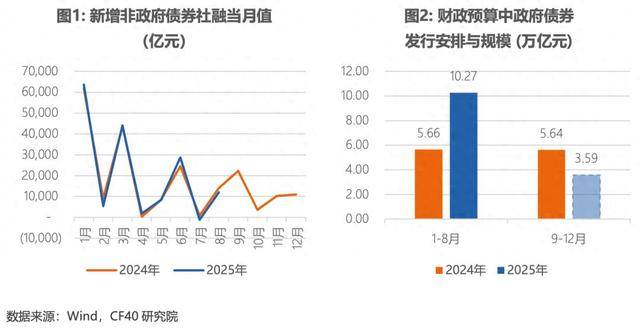
Economic Overview - The economic data released in August 2025 indicates a significant fluctuation in China's economy, with many key indicators showing weak growth [1] - Various sectors, including manufacturing, consumer spending, and real estate investment, are facing challenges, leading to a prolonged downward trend [3] Manufacturing Sector - The growth rate of industrial enterprises' added value slowed to 5.2%, which is considered unimpressive [3] - Manufacturing investment has weakened due to conservative approaches following recent "anti-involution" policies aimed at industrial transformation [9] Consumer Spending - Social retail sales increased by only 3.4%, reflecting a decline in consumer enthusiasm and business activity [3][4] - The Consumer Price Index (CPI) has shown a downward trend, indicating cautious behavior among buyers and sellers [4] Real Estate Market - Real estate investment has significantly declined, with both development investment and transaction volumes dropping for several months [5][11] - The government's previous bond issuance efforts have not been sufficient to maintain market confidence, leading to increased liquidity pressure in the second half of the year [11] Government Response - The government recognizes the need for substantial adjustments, including increasing fiscal support and lowering loan thresholds to stimulate demand [12] - There is a call for timely and decisive incremental policies to restore confidence and activate capital flow in the economy [13] Financial Environment - External trade friction has negatively impacted domestic credit demand, with both enterprises and individuals showing reduced willingness to take loans [9] - The government is encouraged to relax the use of special bonds to address corporate debt issues and alleviate market liquidity pressure [14]
分析师:中国股市上升的逻辑是可持续的 年内A股股指还会走出新高
Xin Lang Cai Jing· 2025-09-17 00:12
Core Viewpoint - The logic behind the rise of the Chinese stock market is sustainable, and the A-share index is expected to reach new highs within the year [1] Group 1: Economic Factors - The acceleration of China's economic transformation and increased visibility are crucial prerequisites for valuation reassessment [1] - The decline in risk-free returns lowers the opportunity cost of the stock market, leading to a surge in asset management demand and the influx of new capital into the market [1] - Economic policies and capital market reforms play a key role in influencing stock market valuations [1] Group 2: Global and Domestic Influences - The anticipated global liquidity easing, along with China's "anti-involution" measures and incremental economic support initiatives, is expected to further boost the market [1]
会员金选丨教授公开课:关税博弈 多维影响与战略前瞻
第一财经· 2025-09-15 08:25
Core Viewpoint - The world is undergoing significant changes, including a technological revolution, geopolitical restructuring, and domestic policy optimization, leading to unprecedented challenges for the global economic and trade order [1]. Group 1: Event Overview - A public lecture will be held on September 25, focusing on the logic, impact, and China's response to tariff negotiations [2]. - The lecture will cover topics such as Trump's tariff policies, global risks during his term, and the transformation of the Chinese economy under these risks [4]. Group 2: Speaker Profile - Professor Zhu Ning is a finance professor at Shanghai Jiao Tong University and has held various prestigious academic positions, including at Tsinghua University and the University of California [8]. - Zhu Ning has extensive experience in the finance industry, having served as an executive at Lehman Brothers and Nomura Securities, and has published over 20 high-level academic papers in top international journals [9]. Group 3: Course Details - The public lecture is organized by Yicai Media in collaboration with Shanghai Jiao Tong University, aiming to address pressing topics of concern for businesses [10].

高毅、景林、宁泉、睿郡……“底牌”曝光
Shang Hai Zheng Quan Bao· 2025-09-03 00:19
随着上市公司半年报披露落下帷幕,百亿级私募重仓标的也悉数曝光。私募排排网统计数据显示,共有31家百亿级私募旗下产品出现在上市公司二季度末 前十大流通股东名单中,合计持股市值超600亿元。从加仓动向来看,百亿级私募不仅进一步加码科技、创新药等中国经济转型的新方向,还逐步布局房 地产、建筑材料等反映中国经济基本面积极变化的行业。 在业内人士看来,稳增长政策持续发力、新兴产业加速发展、居民消费需求逐步修复的过程中,市场的结构性行情有望从科技、创新药、新消费等领域扩 散至顺周期板块。 重仓科技与医药 私募排排网数据显示,截至8月31日,31家百亿级私募旗下产品出现在28个申万一级行业中的175家A股上市公司二季度末前十大流通股东名单中,合计持 股市值达658.29亿元。其中,百亿级私募二季度新进上市公司32家,增持29家,对91家上市公司保持持股数量不变,另外对23家进行了减持。 从行业分布来看,截至二季度末,百亿级私募持仓主要集中在电子、医药生物、计算机、机械设备和基础化工等五大行业,涉及上市公司数量依次为28 家、20家、17家、15家和15家。与此同时,电子、医药生物等板块也是百亿级私募二季度加仓的主要方向。 ...
谋划长远,破卷立新——华泰证券2025年秋季投资峰会在沪举办
Xin Lang Zheng Quan· 2025-08-28 08:10
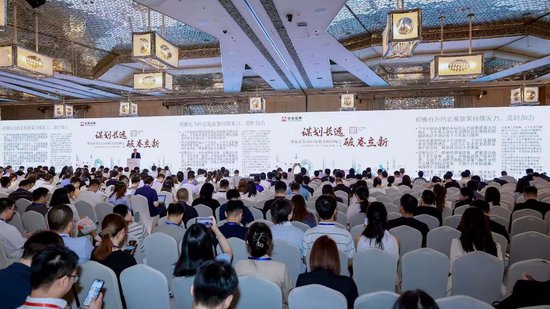
Group 1: Conference Overview - The Huatai Securities 2025 Autumn Investment Summit was held in Shanghai from August 27 to 28, focusing on global macro and market outlook for the second half of 2025 [1] - The summit included a main forum and 10 industry sub-forums, discussing opportunities in growth areas such as digital assets, Hong Kong market allocation, AI+, new consumption 3.0, and innovative pharmaceuticals [1] Group 2: Economic Insights - Liang Hong, Chairman of Huatai Securities' Institutional Business Committee, noted that the US-China rivalry has entered a relatively stable phase, leading to a more diversified global asset allocation trend [3] - Domestic policies are promoting economic stabilization and market confidence, with a focus on transitioning to a consumption-driven growth model [3] - The upcoming 20th Central Committee's Fourth Plenary Session and the "14th Five-Year Plan" will serve as important policy windows for observing China's next five years [3] Group 3: Market Predictions - Huatai Securities' Chief Macro Economist Yi Han expects continued diverse fiscal policies in the fourth quarter, with improved liquidity for residents, government, and markets [5] - The impact of US tariffs on global economic growth is currently manageable, with a weaker dollar providing a buffer for global growth [5] - The focus for the upcoming quarter will be on whether corporate performance can keep pace with market recovery, with significant attention on the "14th Five-Year Plan" and potential US interest rate cuts [6] Group 4: Asset Allocation Strategies - Lin Xiaoming, Chief of Financial Engineering at Huatai Securities, emphasized the need for cautious asset allocation as the US stock market enters a downward trend after two years of growth [7] - The current A-share market is in an upward cycle, presenting a relatively optimistic outlook [7] - Recommendations include observing commodity markets, particularly gold, and being cautious with copper prices as global economic conditions shift [7] Group 5: Sector and Market Opportunities - He Kang, Chief Strategist at Huatai Securities, suggested that the current market is driven by both liquidity and fundamental factors, with expectations for a turning point in ROE in the fourth quarter [8] - There are opportunities for left-side positioning in the consumer sector, driven by underlying economic cycles and foreign capital inflows [8] - The importance of the Hong Kong market is increasing, with specific advantages in sectors like internet, software, new consumption, and innovative pharmaceuticals [9]

股票策略私募业绩领跑,绩优者进攻瞄准三大方向
Sou Hu Cai Jing· 2025-08-18 00:20
Core Viewpoint - Leading private equity firms are heavily investing in the technology and innovative pharmaceutical sectors, while also selectively increasing their positions in non-bank financial assets as the market outlook improves [1] Group 1: Investment Trends - Several top-performing private equity firms are focusing on sectors with strong performance, particularly technology and innovative pharmaceuticals [1] - There is an increasing trend of capital inflow into the market, driven by expectations of interest rate cuts by the Federal Reserve and the visible effects of China's economic transformation [1] Group 2: Sector Opportunities - The semiconductor and innovative pharmaceutical industries are highlighted as having strong earnings certainty, making them attractive investment targets [1] - Non-bank financial sectors, such as brokerage and insurance, are also seen as structural opportunities benefiting from ample liquidity in the market [1]