
互联互通机制

Search documents
北上资金累计成交额突破197万亿元
Zheng Quan Shi Bao Wang· 2025-11-28 15:40
Core Insights - The northbound capital trading has remained active since the launch of the interconnectivity mechanism, with cumulative trading volume surpassing 197 trillion yuan for the first time [1] Group 1 - On November 28, the daily trading volume of the Shanghai-Hong Kong Stock Connect reached 186.35 billion yuan [1] - The cumulative trading volume since the launch of the interconnectivity mechanism has reached 197.17 trillion yuan, marking a significant milestone [1]
四季度ETF资金流向大揭秘
Guo Ji Jin Rong Bao· 2025-11-28 11:55
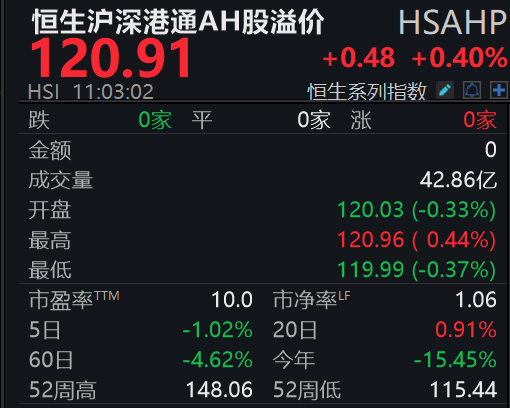
Core Viewpoint - Despite recent fluctuations in the Hong Kong stock market, it continues to attract southbound capital inflows, with A-shares also maintaining strong appeal [1] Group 1: Market Performance - Since the beginning of the fourth quarter, both A-shares and Hong Kong stocks have experienced a decline, with major indices showing significant drops. As of November 27, the Shanghai Composite Index fell by 0.19%, the STAR 50 Index dropped by 12.34%, and the ChiNext Index decreased by 3.29%. In the Hong Kong market, the Hang Seng Tech Index plummeted by 14.06%, while the Hang Seng Index fell by 3.29% [6] - Despite the fourth-quarter pullback, both A-shares and Hong Kong stocks have recorded substantial gains for the year. As of November 27, the Hang Seng Index and Hang Seng Tech Index rose by 29.34% and 25.29% respectively, while the Shanghai Composite Index increased by 15.62% and the STAR 50 Index by 32.54%. The Hong Kong innovative drug sector performed exceptionally well, with related indices showing over 90% growth [6] Group 2: Capital Inflows - There has been a notable trend of capital flowing into ETFs as investors seek opportunities. As of November 27, the top two stock ETFs by net inflow in the fourth quarter were from Guotai Junan Securities and Huabao Securities, with net inflows of 89.51 billion and 59.55 billion respectively. The Huaxia STAR 50 ETF also saw a net inflow of 51.65 billion, ranking third [6][7] - In terms of year-to-date net inflows, various themes such as securities, chemicals, robotics, and banking have been popular, with eight stock ETFs exceeding 10 billion in net inflows. Additionally, 11 cross-border ETFs related to the Hang Seng Tech or Hong Kong Stock Connect have also attracted significant capital, each exceeding 10 billion in net inflows [7] Group 3: AH Share Premium - The AH share premium index has been declining, currently around 120. Historically, A-shares of "A+H" companies have traded at a premium, but now some Hong Kong stocks are outperforming their A-share counterparts. For instance, as of November 28, the Hong Kong-listed NIO's stock price was 472 HKD per share, compared to 373.2 CNY for its A-share [9] - The continuous inflow of southbound capital is influencing the pricing power of Hong Kong stocks, with expectations that the AH premium will return to a more reasonable range as the interconnectivity mechanism improves [10] Group 4: Long-term Outlook - The long-term return outlook for A-shares is positive, with an expected annualized return of 7.7% over the next 10 to 15 years, based on three main drivers: economic resilience, ongoing shareholder return policies, and improved corporate governance [12]

外资增配聚焦中国核心资产 A50ETF广发助力做多中国
Mei Ri Jing Ji Xin Wen· 2025-11-27 08:38
Group 1 - Multiple institutions have released investment strategy outlook reports for A-shares in 2026, indicating optimism for the performance of quality Chinese assets in the coming year [1] - Major foreign institutions such as JPMorgan, BNP Paribas, and Merrill Lynch have increased their allocation to A-shares, reflecting a consensus on the good investment value of A-shares amid a reshaping global asset allocation landscape [1] - China's economy has shown resilience, with a growth rate of 5.2% in the first three quarters of this year, and the export growth of high value-added products has been significant [1] Group 2 - The CSI A50 Index, launched in 2024, selects 50 leading companies across various industries, representing both new economy and traditional sectors, with a total market capitalization exceeding 20 trillion yuan [2] - The index covers 30 secondary and 50 tertiary industries, including traditional finance and consumption, as well as new economy sectors like renewable energy and semiconductors, reflecting a balanced industry structure [2] - The CSI A50 Index incorporates ESG evaluation and connectivity mechanisms to reduce major negative risk events and enhance investment accessibility for foreign capital [2] Group 3 - The CSI A50 Index has demonstrated stronger profitability, with a cumulative increase of over 73% in the past ten years, significantly outperforming other indices such as the SSE 50 and CSI 300 [3] - The historical annualized volatility of the CSI A50 Index is 20.72%, lower than that of the SSE 50, CSI 300, and CSI All Share Index, indicating a more stable return profile [3] - To facilitate investment in core leading A-share companies, Guangfa Fund is launching the Guangfa CSI A50 ETF, which closely tracks the CSI A50 Index, providing an efficient tool for asset allocation [3]
致同林晓玲:“A+H”呈现四大新特征,南向资金将驱动溢价收窄
Xin Lang Cai Jing· 2025-11-26 09:33
Core Viewpoint - The article discusses the increasing trend of companies going public in Hong Kong through the "A+H" listing model, highlighting its strategic advantages and the current market dynamics driving this trend [1][2]. Group 1: A+H Listing Opportunities - The total amount raised through IPOs in Hong Kong has exceeded 200 billion HKD this year, making it the leading global exchange for IPO fundraising [1]. - Notable A-share companies such as CATL, Hengrui Medicine, and Haitian Flavoring have joined the Hong Kong Stock Exchange, becoming key players in the "A+H" listing model [1]. - The "A+H" model serves not only as a financing tool but also as a strategic configuration that allows companies to mitigate single market risks and enhance their governance structures [1]. Group 2: New Characteristics of A+H Listings - A-share premium continues to exist due to the unique investor structure and liquidity characteristics of the A-share market, reflecting mainland investors' risk preferences and market sentiment [2]. - The influx of southbound capital from mainland China is narrowing the price gap between A-shares and H-shares, providing new investment opportunities [2]. - The deepening of the mutual market access mechanism is expected to expand beyond stocks to include bonds and funds, creating a broader cross-border investment ecosystem [2]. - The introduction of a dual-counter trading model in Hong Kong allows investors to trade the same stock in either RMB or HKD, effectively hedging against exchange rate risks and enhancing market attractiveness [2]. Group 3: Future Trends in Hong Kong IPOs - Future IPO trends in Hong Kong are expected to focus on the TMT (Technology, Media, and Telecommunications) and new economy sectors, driven by the lowering of the 18C threshold and favorable macroeconomic conditions [2].
创新实业正式登陆港交所;大悦城地产申请撤销股份上市地位丨港交所早参
Mei Ri Jing Ji Xin Wen· 2025-11-24 17:41
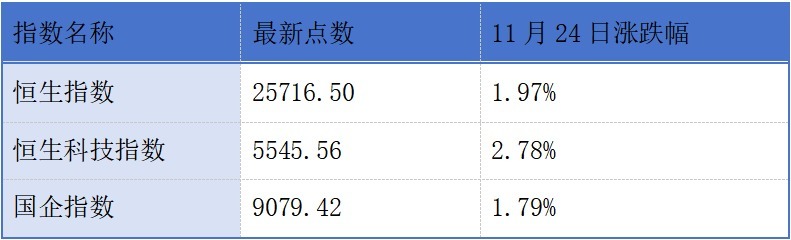
Group 1: Company Listings and Developments - Innovation Industries officially listed on the Hong Kong Stock Exchange on November 24, closing at HKD 14.59 per share, a rise of 32.76%, focusing on upstream aluminum industry with plans to use funds for overseas capacity expansion and green energy projects [1] - Sany Heavy Industry and Cambridge Technology have been added to the Hong Kong Stock Connect, enhancing cross-border investment opportunities for mainland investors [2] - Joy City Property announced plans to withdraw its listing status on the Hong Kong Stock Exchange, aiming to streamline operations and improve decision-making efficiency in response to industry challenges [3] - JD Industrial has passed the listing hearing on the Hong Kong Stock Exchange, potentially becoming the sixth company under JD Group to go public, which could enhance its financing channels and support the digitalization of the industrial supply chain [4] Group 2: Market Performance - The Hang Seng Index closed at 25,716.50, with a gain of 1.97% on November 24 [5] - The Hang Seng Tech Index reached 5,545.56, increasing by 2.78% [5] - The National Enterprises Index stood at 9,079.42, up by 1.79% [5]

北上资金累计成交额突破196万亿元
Zheng Quan Shi Bao Wang· 2025-11-21 14:57
Core Insights - The northbound capital flow has remained active since the launch of the interconnection mechanism, with cumulative trading volume exceeding 196 trillion yuan for the first time [1] Trading Activity - On November 21, the trading volume of the Shanghai-Hong Kong Stock Connect reached 233.4 billion yuan [1] - The cumulative trading volume since the launch of the interconnection mechanism has reached 196.14 trillion yuan, marking a significant milestone [1]
香港交易所董事总经理徐经纬:港交所作为“超级联系人”,致力于“立足中国,连接世界”
Xin Lang Cai Jing· 2025-11-21 09:33
Core Viewpoint - The Hong Kong Stock Exchange (HKEX) aims to serve as a "super connector" between China and the global market, emphasizing its role in facilitating international financial connections [1] Group 1: Development of HKEX - HKEX has established a network connecting China with the Middle East and global markets through eight offices located in major financial hubs including London, New York, and Riyadh [1] - The mutual market access mechanism has evolved over the past 11 years, expanding from stocks to bonds, ETFs, and derivatives, covering over 4,400 related stocks from mainland China [1] Group 2: Financial Performance - Over the past decade, HKEX has raised a total of $300 billion through IPOs, maintaining its position as a global leader in this area [1] Group 3: Future Initiatives - HKEX plans to support hard tech companies, particularly in AI and semiconductors, through the special listing mechanism (Chapter 18C) [1] - The CoreClimate platform will be leveraged to promote low-carbon economy and ESG development, enhancing the vitality and competitiveness of Hong Kong as an international financial center [1]

北上资金累计成交额突破195万亿元
Zheng Quan Shi Bao Wang· 2025-11-17 01:21
Core Insights - The northbound capital trading has remained active since the launch of the interconnection mechanism, with cumulative trading volume exceeding 195 trillion yuan for the first time [1] Trading Activity - On November 14, the trading volume of the Shanghai-Hong Kong Stock Connect reached 209.82 billion yuan [1] - The cumulative trading volume since the launch of the interconnection mechanism has reached 195.09 trillion yuan, marking a significant milestone [1]
解码南向资金首破“5万亿”!背后两大趋势:港股定价权增强、正循环效应显现!
证券时报· 2025-11-13 07:52
Core Viewpoint - The Hong Kong stock market has reached a new milestone with significant inflows of southbound capital, indicating a transformation in market liquidity and activity, driven by strategic allocations from mainland investors seeking undervalued assets and high-quality stocks [2][4]. Group 1: Southbound Capital Inflows - On November 10, southbound capital through the Stock Connect net inflow reached 6.654 billion HKD, bringing the year-to-date net purchase amount to over 1.3 trillion HKD, and the cumulative net inflow since the launch of Stock Connect surpassed 5 trillion HKD [2][4]. - The major indices in the Hong Kong market, including the Hang Seng Index, Hang Seng Tech Index, and Hang Seng China Enterprises Index, have all seen year-to-date increases of over 30%, positioning them among the top performers globally [4]. - In 2023, southbound capital showed a significant acceleration in inflows, with 57 trading days recording net inflows exceeding 10 billion HKD, primarily concentrated in the first half of the year [4][5]. Group 2: Factors Driving Inflows - The increase in southbound capital is driven by five main factors: valuation discounts compared to A-shares, ongoing demand for tech leaders and high-dividend assets in a declining domestic interest rate environment, optimized connectivity mechanisms, inherent demand from long-term domestic funds, and enhanced liquidity expectations due to global interest rate cuts [5][6]. - The phenomenon of "asset scarcity" is also noted, where abundant capital is seeking quality assets, leading to increased southbound capital inflows as domestic funds look for effective allocation opportunities [6]. Group 3: Pricing Power and Market Dynamics - The continuous inflow of southbound capital has improved liquidity in the Hong Kong market and enhanced the pricing power of mainland funds, which accounted for approximately 34.64% of the market's trading volume in 2024 [8]. - As of now, the market value held by southbound capital is about 6.21 trillion HKD, representing 12.93% of the total market capitalization [8]. - Insurance and public funds constitute over 40% of the southbound capital, with public funds showing a compound annual growth rate of 23.5% in their holdings from 2020 to 2025 [8][9]. Group 4: Valuation and Future Outlook - The Hong Kong stock market remains attractive in terms of valuation compared to global markets, with the forward P/E ratio of the Hang Seng Tech Index at 20.4, lower than its five-year average and significantly below the Nasdaq's 30.9 [12]. - The influx of mainland capital and the listing of more unique enterprises in Hong Kong are expected to create a positive feedback loop, enhancing liquidity and profitability in the market [11]. - Despite the high gains in 2023, the Hong Kong market's valuation still presents a compelling case for further investment from mainland funds [12].

香港交易所(0388.HK)三季报透视:溢利增45% ADT翻倍 溢价有望重估
Ge Long Hui· 2025-11-13 04:33
Core Insights - The Hong Kong Stock Exchange (HKEX) reported significant growth in revenue and net profit for the first nine months of 2025, with total revenue and other income reaching HKD 21.9 billion, a year-on-year increase of 37% [1] - The exchange's EBITDA was HKD 17.2 billion, reflecting a 48% year-on-year growth, with an EBITDA margin of 79%, up 5 percentage points from the previous year [1] - The IPO market in Hong Kong showed remarkable strength, with total fundraising amounting to HKD 188.3 billion, more than three times the amount raised in the same period of 2024, marking the strongest performance in nine months since 2021 [2] Financial Performance - For 9M25, the breakdown of revenue from various business segments included trading fees and system usage fees at HKD 7.8 billion (+57%), clearing and settlement fees at HKD 5.3 billion (+66%), and listing fees at HKD 1.3 billion (+17%) [1] - The average daily trading volume in the cash market reached HKD 256.4 billion, a 126% increase year-on-year, with southbound trading (Hong Kong Stock Connect) averaging HKD 125.9 billion (+229%) [1] Market Activity - The derivatives market also saw growth, with an average daily contract volume of 1.7 million contracts, up 11% year-on-year, and the LME's average daily trading volume reaching 700,000 lots (+3%) [2] - The northbound trading of bonds recorded an average daily trading volume of RMB 41.7 billion, a decrease of 5% year-on-year, while the average daily settlement amount for the swap connect reached RMB 21.7 billion, an increase of 61% [1][2] Investment Income - The net investment income for 9M25 was HKD 3.9 billion, a 4% increase year-on-year, with the company's own investment income declining by 8% to HKD 1.3 billion due to external investment performance [2] Strategic Outlook - The company has raised its target price to HKD 550, maintaining a "buy" rating, citing strong fundamental support for its current valuation and the ongoing growth in core business areas [3] - The exchange is expected to benefit from strategic initiatives aimed at optimizing market structure and enhancing product diversity, which will strengthen its long-term competitiveness [3]