
债务上限

Search documents
美国非农打压降息预期,有色存在回调风险
Guo Mao Qi Huo· 2025-07-07 08:29
1. Report Industry Investment Rating - No specific industry investment rating is provided in the report. 2. Core Viewpoints of the Report - The US non - farm payroll data has dampened the Fed's interest - rate cut expectations, and there is a risk of correction in the non - ferrous metals market, especially for copper, zinc, nickel, and stainless steel [1][9][87][205]. - For copper, due to factors such as improved non - farm data, eased overseas squeeze - out risks, and high prices suppressing downstream demand, copper prices face downward pressure [9]. - For zinc, the long - term bearish logic remains unchanged, and it can be considered as a short - position variety in the non - ferrous metals sector [87]. - For nickel and stainless steel, prices are expected to fluctuate widely. Factors include changes in macro - policies, raw material prices, and inventory levels [205][206]. 3. Summary by Directory 3.1 Non - Ferrous Metal Price Monitoring - **Price Data**: Provided the closing prices, daily, weekly, and annual price changes of various non - ferrous metals such as the US dollar index, exchange rate CNH, and multiple metal varieties. For example, the US dollar index was at 97.0, with a daily decline of 0.13%, a weekly decline of 0.28%, and an annual decline of 10.59% [6]. 3.2 Copper (CU) - **Influencing Factors**: - **Macro**: Negative factors include strong US non - farm data, Trump's signing of the "Great Beauty" bill, and tariff threats [9]. - **Raw Material**: Positive factors are a slight increase in copper concentrate spot processing fees and an increase in domestic copper ore port inventories [9]. - **Smelting**: Slightly bearish, with smelters using spot copper ore having continuous losses, and those using long - term contracts seeing reduced profits [9]. - **Demand**: Negative, as the arrival of the off - season and high copper prices have led to a significant decline in domestic copper product operating rates [9]. - **Inventory**: Negative, with global copper visible inventories increasing and the LME spot premium compressing [9]. - **Investment View**: Bearish, with copper prices at risk of correction [9]. - **Trading Strategy**: Short - term correction risk for unilateral trading; long copper and short zinc for arbitrage [9]. 3.3 Zinc (ZN) - **Influencing Factors**: - **Macro**: Neutral, including factors such as Trump signing a budget bill, strong US non - farm data, and China's plan to regulate the photovoltaic industry [87]. - **Raw Material**: Neutral, with domestic processing fees unchanged, import processing fees slightly increased, and short - term supply remaining relatively loose [87]. - **Smelting**: Bearish, as July sees a combination of maintenance, resumption, and new production, with monthly output expected to increase [87]. - **Demand**: Neutral, with the off - season and tariff uncertainties affecting demand [87]. - **Inventory**: Neutral, with social inventories continuously increasing [87]. - **Investment View**: Bearish, suitable as a short - position variety in the non - ferrous metals sector [87]. - **Trading Strategy**: Wait for unilateral trading; long copper and short zinc for arbitrage [87]. 3.4 Nickel - Stainless Steel (NI - SS) - **Influencing Factors**: - **Macro**: Neutral, with the US non - farm data affecting interest - rate cut expectations, and Trump's tariff policies and domestic "anti - involution" policies causing market sentiment to fluctuate [205][206]. - **Raw Material**: Neutral, with a slight decrease in the premium of Indonesian domestic trade pyrometallurgical nickel ore, an increase in smelter inventories, and a seasonal increase in Philippine shipments [205]. - **Smelting**: Slightly bearish, with high - level pure nickel production, weakening demand, and supply pressure on ferronickel [205]. - **Demand**: Bearish, with stainless steel in the off - season, weak spot transactions, and uncertain new - energy demand [205]. - **Inventory**: Neutral, with inventory levels remaining stable [205]. - **Investment View**: Prices are expected to fluctuate widely, with attention to factors such as policy changes and cost fluctuations [205]. - **Trading Strategy**: Short - sell on rallies for unilateral trading; wait for arbitrage [205][206].
海外周报20250706:6月超预期非农令市场降息预期延后至9月-20250706
Soochow Securities· 2025-07-06 14:34
Employment Data - In June, the U.S. added 147,000 non-farm jobs, exceeding expectations of 106,000, with the previous month's value revised from 139,000 to 144,000[3] - The unemployment rate fell to 4.12%, better than the expected 4.3% and down from the previous 4.24%[3] - The labor force participation rate was 62.28%, slightly below the expected 62.4%[3] Wage Growth - Hourly wages increased by 0.22% month-on-month, lower than the expected 0.3%[3] - Year-on-year wage growth was 3.71%, close to the expected 3.8%[3] Market Reactions - The strong employment data led to a significant reduction in July rate cut expectations, with a 73.2% probability of a September rate cut now anticipated[5] - The 10-year U.S. Treasury yield rose by 6.89 basis points to 4.346% due to improved economic data and reduced rate cut expectations[4] Legislative Impact - The "One Big Beautiful Bill" (OBBB) was signed into law, increasing the debt ceiling by $5 trillion to $41 trillion, which is expected to add $4.1 trillion to the total deficit over the next decade[5] - The market had anticipated the implications of OBBB, suggesting a "buy the rumor, sell the news" scenario[5] Economic Outlook - The ISM Services PMI rose to 50.8, indicating expansion, while the Manufacturing PMI recorded 49, slightly above expectations[4] - The Atlanta Fed's GDPNow model predicts a 2.6% growth for Q2 2025, while the New York Fed's Nowcast model estimates 1.56% growth for the same period[4]
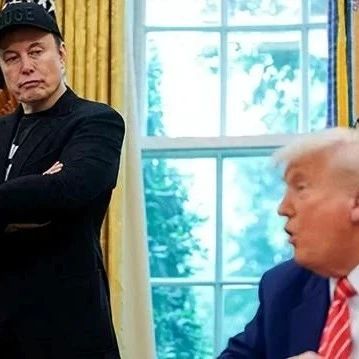
马斯克回应对特朗普“由爱转恨”原因
Zhong Guo Ji Jin Bao· 2025-07-06 10:41
Core Viewpoint - Elon Musk has changed his attitude towards Donald Trump due to concerns over the increasing U.S. budget deficit, which he believes could lead to national bankruptcy [1] Group 1: Budget Deficit Concerns - Musk criticized Trump's signing of the "Great American Act," which he believes will increase the budget deficit from $2 trillion to $2.5 trillion, exacerbating the financial situation [1] - He stated that the deficit increase would lead to "strategic damage" to the U.S. economy, potentially destroying millions of jobs and putting the country on a path of "debt servitude" [1] Group 2: Government Efficiency and Spending Cuts - Musk had previously promised to cut $2 trillion in government spending but later reduced this target to $1 trillion, achieving only a 17.5% reduction, equating to $175 billion, during his 130 days in office [1] - The "Great American Act" is seen as a fulfillment of Trump's campaign promises, extending tax cuts and increasing the debt ceiling by $5 trillion [1] Group 3: Formation of a New Political Party - Following the signing of the act, Musk established a new political party called the "American Party," aiming to secure seats in Congress to influence key votes on controversial legislation [2]
马斯克回应对特朗普“由爱转恨”原因
中国基金报· 2025-07-06 09:48
Core Viewpoint - Elon Musk has significantly changed his attitude towards Donald Trump, criticizing the increasing U.S. budget deficit projected to reach $2.5 trillion, which he believes could lead to national bankruptcy [1]. Group 1: Budget Deficit and Economic Impact - Musk criticized Trump's "Big and Beautiful Act," which he believes will exacerbate the budget deficit, increasing it from $2 trillion during Biden's presidency to $2.5 trillion [1]. - He expressed concern that the act would lead to "strategic damage" to the U.S. economy, potentially destroying millions of jobs and putting the country on a path of "debt servitude" [1]. - Musk's efficiency department, which aimed to cut $2 trillion from the national budget, only managed to save 17.5% of fiscal spending, amounting to $175 billion, in 130 days [1]. Group 2: Political Developments - Following the signing of the act by Trump, Musk established a new political party called the "American Party," aiming to secure seats in Congress to influence key votes on controversial legislation [2].

特朗普政策迎来第一阶段“答卷”
HTSC· 2025-07-06 08:35
1. Report Industry Investment Rating No information provided regarding the report industry investment rating. 2. Core View of the Report The report indicates that recent Trump policies have made progress in areas such as finance, deregulation, and tariffs. The market has started to price in the medium - term "Goldilocks" scenario, bypassing short - term mild stagflation. There is a path from the current short - term mild stagflation (economic decline and inflation rise) to the "Goldilocks" scenario, and the probability of this scenario has increased with the advancement of recent policy combinations. However, the stability of this path remains to be confirmed [7]. 3. Summary according to Related Content Impact of the "Big and Beautiful" Act - **Deficit Impact**: By 2035, the act will increase national debt issuance by $4.1 trillion. The fiscal deficit rates from 2026 - 2029 may all be above 7%, with the peak in 2028. Compared with not implementing the act, the deficit rates in 2026 and 2027 will increase by over 1 percentage point, which will have a certain stimulating effect on economic growth in the next two years [2]. - **Distribution Aspect**: Tax cuts are mainly TCJA extensions, tax - free deductions for tips and overtime pay, and an increase in the deduction limit for state and local taxes, showing regressive characteristics. Expenditure cuts focus on reducing welfare such as Medicaid and SNAP, reducing student loans, and canceling clean - energy tax incentives, which have a greater impact on low - income groups. The final act may cause the income of the bottom fifth of the population to decline by 2.9% (about $700), while the income of the top 1% will increase by 1.9% (about $30,000) [2][3]. - **Debt Ceiling**: The federal debt ceiling is raised by $5 trillion, the largest increase in history. This avoids the debt - ceiling issue before next year's mid - term elections and provides room for fiscal expansion in the next 2 - 3 years. It also affects the fiscal strength in the second half of this year compared to the first half. Additionally, the rapid replenishment of the TGA account may temporarily affect liquidity [3]. - **Clause Deletion**: Deleting the previous "Capital Tax" Clause 899 reduces the uncertainty for foreign investors, and the market may have already priced it in [4]. - **Industry Aspect**: In the United States, sectors such as semiconductors, defense, aerospace, and traditional energy are expected to benefit, while subsidies for the new - energy, electric - vehicle, and medical industries will be reduced, which is a negative factor. In terms of overall economic impact, the profitability of the consumer sector may be affected by tariffs. In the short term, focus on interest - sensitive growth sectors, and in the medium term, focus on fiscal - related pro - cyclical sectors [4]. Tariff Policy Concerns - **Tariff Rate Setting**: The US will start sending letters to countries as early as Friday to set new tariff rates before July 9, which will be implemented from August 1. Negotiations with key countries such as Europe and Japan may continue, and the new tariffs may postpone the negotiations until August 1, with the possibility of further postponement [5]. - **Tariff Rate Ranges**: The approximate tariff rate ranges for different countries are: about 10% for allied countries, about 20% for friendly countries, and over 30% for competing countries (referring to the 40% tariff on Vietnam's trans - shipped goods). Trump's claimed 60% - 70% tariff may have a punitive nature. The market's reaction to tariffs may continue to show a blunted characteristic, with expected disturbances but limited amplitude [5]. - **US - Vietnam Agreement**: The US will impose at least a 20% tariff on Vietnamese products and a 40% tariff on goods from other countries trans - shipped through Vietnam. This further strengthens the prediction of tariff rate ranges. The direct impact on China is limited, and the US's intention to promote Vietnam's industrial chain localization through origin - related regulations can be hedged by China's strong industrial chain advantages in capital goods and raw materials, but the demonstrative effect is worthy of vigilance [6]. Outlook on the US Economic Scenario - **Short - term Situation**: In the short term, the US economy is in a state of mild stagflation with economic decline and inflation rise. However, there is a path to the "Goldilocks" scenario. The probability of this scenario has increased with the advancement of recent policies, and appropriate trading can be considered [7]. - **Stability Uncertainty**: The stability of this path needs to be confirmed. The key for the US economy not to enter a recession is that financial conditions should not tighten rapidly, which requires the stability of the US stock and bond markets. The specific impact of tariffs remains to be seen after the consumption of excess inventory. If inflation or corporate profitability deviates from expectations, market trading may shift again [8]. - **Long - term Outlook**: In the long run, the reconstruction of the global trade, financial, and geopolitical order is a more fundamental factor beyond economic growth rates [9].
“大而美”法案获通过,特朗普赢得重大经济政策胜利!
美股研究社· 2025-07-04 11:47
Core Viewpoint - The article discusses the passage of a significant tax reform bill by the U.S. Congress, which is expected to provide funding for President Trump's domestic agenda while potentially resulting in millions of Americans losing health insurance [3][4]. Legislative Outcome - The bill passed in the House of Representatives with a narrow margin of 218 to 214 votes, marking a significant victory for President Trump [4][6]. - The legislation aims to fund immigration policies, make the 2017 tax cuts permanent, and fulfill new tax incentives promised during Trump's 2024 campaign [4][6]. Financial Implications - According to the Congressional Budget Office (CBO), the bill will increase the U.S. debt by $3.4 trillion, adding to the existing $36.2 trillion debt [5]. - The bill is projected to reduce tax revenue by $4.5 trillion over the next decade while cutting $1.1 trillion in spending, primarily affecting Medicaid, which covers 71 million low-income Americans [12]. - The changes in Medicaid are expected to result in nearly 12 million people losing their insurance [12]. Economic Impact - The bill is designed to lower taxes for all income levels and stimulate economic growth, with Republican leaders claiming it will benefit everyone [9]. - However, analysis indicates that the wealthiest Americans will benefit the most, while low-income individuals may see a decrease in actual income due to cuts in safety net programs exceeding tax benefits [14]. Debt and Credit Rating Concerns - The legislation raises the debt ceiling by $5 trillion, temporarily avoiding default risks, but concerns remain about the long-term economic stimulus effects and rising borrowing costs [16]. - Moody's has already downgraded the U.S. credit rating due to debt issues, and some foreign investors are expressing concerns about the attractiveness of U.S. Treasury bonds following this bill [15]. Political Dynamics - The bill is expected to become a significant topic in the 2026 midterm elections, with Democrats aiming to regain control of at least one chamber of Congress [19]. - Republican leaders argue that the tax cuts will boost the economy before the elections, while many Americans are worried about the bill's costs and its impact on low-income populations [19].

巨富金业:特朗普将签署“大而美”法案-万亿减税落地
Sou Hu Cai Jing· 2025-07-04 09:58
当地时间7月4日美国独立日当天,总统特朗普将签署备受争议的"大而美"税收与支出法案,标志着其任内最重大的经济政策胜利。该法案以微 弱优势通过国会两院表决,核心条款包括延长企业和个人减税措施、削减社会福利支出并提高债务上限。尽管法案被批评加剧贫富分化和财政 赤字,但市场对短期经济刺激的预期推动美股高开,美元指数升至97附近,而黄金价格则因美债收益率攀升和美元走强承压,现货黄金在3330 美元/盎司附近震荡。 一、法案核心内容与通过历程 "大而美"法案是特朗普2025年重返白宫后推动的标志性立法,其核心目标是通过减税和财政支出调整刺激经济。法案主要内容包括: 无限期延长企业税减免:将企业所得税最高税率维持在21%,并取消替代性最低税,预计未来十年为企业节省4.5万亿美元。 个人税调整:提高遗产税和赠予税免税额,加班费和小费收入免税,但医疗补助和食物援助计划(SNAP)的资格要求被收紧,预计削减近1.5 万亿美元社会福利支出。 债务扩张:联邦债务上限提高5万亿美元,未来十年赤字预计增加3.3万亿美元,美国国债规模将突破40万亿美元。 参议院于7月1日以51:50的微弱优势通过,副总统万斯投下关键一票;众议院于3日以 ...

美财长:或会在初期通过发行短债来满足融资需求
news flash· 2025-07-03 21:31
Core Viewpoint - The U.S. Treasury Secretary indicated that financing needs may rise following the implementation of the Republican tax and spending legislation, leading to potential short-term debt issuance to meet these needs [1] Group 1 - The U.S. Treasury may issue more short-term Treasury bonds to replenish the general account after the debt ceiling is lifted [1] - The new legislation helps to alleviate previous constraints imposed by the debt ceiling, allowing for increased debt issuance [1] - The initial strategy will likely focus on short-term debt issuance to address immediate financing requirements [1]
深夜!暴涨、熔断,发生了什么?
券商中国· 2025-07-03 15:30
Core Viewpoint - The U.S. stock market is experiencing a significant rally, driven by a series of better-than-expected macroeconomic data, alleviating concerns about an economic slowdown [2][11]. Economic Data Summary - The U.S. non-farm payrolls for June showed an increase of 147,000, significantly above expectations, while the unemployment rate unexpectedly dropped to 4.1% [11]. - The ISM non-manufacturing index for June reported at 50.8, slightly above the expected 50.5, indicating continued growth in the services sector [12]. - Industrial orders in May increased by 8.2%, marking the largest monthly gain since 2014, with non-defense orders rising by 7.5% [13]. Trade Negotiations Summary - U.S. Treasury Secretary Janet Yellen met with EU negotiators, expressing hope for a principle trade agreement before the upcoming deadline [16]. - Yellen warned that if trade negotiations do not progress, tariffs may revert to previous levels [17]. - The market remains focused on the U.S. Congress's deliberations regarding President Trump's comprehensive tax and spending plan, with a procedural vote passing in the House [21][22]. Stock Market Performance Summary - Major U.S. stock indices, including the Nasdaq and S&P 500, reached all-time highs, with the Nasdaq up 0.97% and the S&P 500 up 0.81% [7]. - Solar stocks showed strong performance, with Sunrun rising over 18% and First Solar increasing over 8% [8]. - Notably, the stock of Brain Rejuvenation Technology surged over 170% in a single day, marking a year-to-date increase of 21,300% [10].

美国财长贝森特:美国债务的需求旺盛。国内外对美国国债的需求都很大。2年期国债显示隔夜利率太高了。债务管理过程“有条不紊”。晚些时候就不用担心(债务上限)“X日”问题。美联储委员会在判断上“似乎有点偏离”。
news flash· 2025-07-03 11:24
Core Viewpoint - The demand for U.S. Treasury securities is strong both domestically and internationally [1] Group 1: Demand for U.S. Debt - There is significant demand for U.S. Treasury securities from both domestic and international investors [1] - The 2-year Treasury indicates that overnight rates are too high [1] Group 2: Debt Management - The debt management process is described as "orderly" [1] - Concerns regarding the debt ceiling issue are expected to diminish later [1] Group 3: Federal Reserve Commentary - The Federal Reserve Committee appears to be somewhat "off track" in its judgments [1]