
市场分化

Search documents
侃股:绩差股与绩优股分化愈发明显
Bei Jing Shang Bao· 2025-08-20 12:02
Group 1 - The current A-share market is characterized by a significant divergence between high-performing stocks and underperforming stocks, with high-performing stocks reaching new highs while underperforming stocks are increasingly abandoned by investors [1][2] - High-performing stocks have gained recognition due to their robust operational strategies, continuous innovation, and strong financial health, reflecting optimistic market expectations for their future growth potential [1][2] - The strong performance of high-performing stocks is supported by their core competitiveness, shareholder return strategies such as dividends and buybacks, and increased market focus on quality companies following the full implementation of the registration system [1][2] Group 2 - Underperforming stocks have faced a "cooling" trend due to poor management, deteriorating financial conditions, and bleak industry prospects, leading to a significant decline in their stock prices [2] - The market has increasingly abandoned underperforming stocks as they lack the momentum and potential for sustained earnings growth, making it difficult for them to innovate or transform in a competitive environment [2] - The divergence between high-performing and underperforming stocks reflects a rational market return and value discovery, with investors becoming more focused on intrinsic value and long-term growth potential [2][3]
市场强势,指数突破3674点
Sou Hu Cai Jing· 2025-08-18 07:37
Group 1 - The market has shown strong performance, with indices breaking through 3674 points, indicating bullish characteristics and a recovery in market confidence and liquidity [1] - The core drivers of the current market rally are identified as "policy and liquidity," with a noticeable increase in market trading volume [1] - There is a divergence in market performance, with sectors like pharmaceuticals and military showing significant gains, while some cyclical and consumer industries remain at the bottom [1] Group 2 - Investors are advised to maintain a focus on their capabilities and seek value in companies, particularly those with strong mid-year performance and industry positioning [1] - The non-bank sector has outperformed the market, with funds flowing out of banks and some institutions reallocating to insurance and brokerage firms [1] - A recommendation is made to keep a medium to high position of 50-70% in the market and to prepare for potential stock purchases during market fluctuations [1]


7月70城仅6城新房价格上涨,上海涨幅领跑全国
Feng Huang Wang· 2025-08-15 08:33
Group 1 - The overall housing prices in July continued to show a downward trend, with 6 cities experiencing a month-on-month increase in new home prices, while 60 cities saw a decline [1] - The market is characterized by a divergence between core cities stabilizing and non-core areas continuing to adjust, with first-tier cities and some strong second-tier cities gradually restoring confidence through policy optimization and a hot land market [1][2] - The new home price index for 70 cities in July showed a month-on-month decline of 0.3%, with first-tier cities experiencing a reduced decline of 0.2% and second-tier cities seeing an expanded decline of 0.4% [1] Group 2 - The second-hand housing market is under more pressure, with a month-on-month decline of 0.6% in the price index for 70 cities, and first-tier cities experiencing a decline of 1.0% [2] - Only Taiyuan saw a slight increase in second-hand home prices by 0.2%, while cities like Wuhan and Beijing experienced significant declines [2] - Recent policies aimed at stabilizing market expectations have been introduced, with a focus on maintaining policy continuity and flexibility, and local governments implementing measures to stimulate demand [3] Group 3 - The core goal of real estate policy remains to stabilize the market and prevent further declines, with short-term policies expected to focus on urban village and dilapidated housing renovations [3] - The emphasis on urban renewal is expected to accelerate the implementation of supporting policies in the second half of the year [3]
市场分化加剧,刚需盘销售速度变慢|最新网签数据
Sou Hu Cai Jing· 2025-08-13 16:17
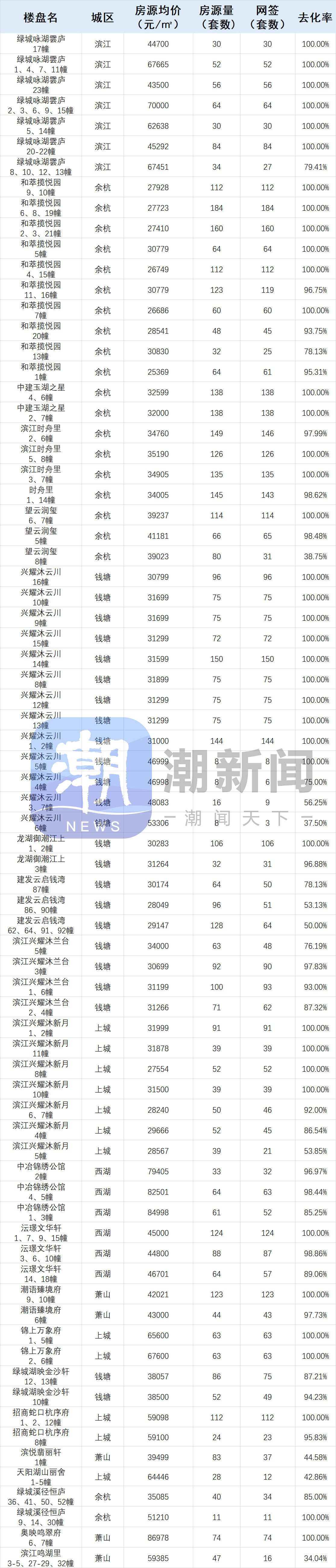
Core Insights - The real estate market is experiencing a divergence, with high-end properties in prime locations selling quickly while affordable housing is seeing slower sales [1][6][8] Market Performance - High-end properties such as "绿城咏湖雲庐" and "奥映鸣翠府" have achieved full sales, with some projects reporting a 100% sales rate [2][6] - In contrast, properties in suburban areas, like "望云润玺," are facing challenges, with only 31 out of 80 units sold in the latest round, indicating a significant drop in demand [6][8] Pricing Strategies - Developers are adjusting their pricing strategies in response to the sluggish demand in the affordable housing segment, with some properties being offered below the previous price limits [6][8] - For instance, "沐新月" reduced its average price from over 30,000 yuan/m² to around 28,000 yuan/m², resulting in improved sales rates [6] Buyer Behavior - There is a noticeable difference in buyer preferences, with larger units in high-end developments being sold first, while smaller units in affordable projects are more popular [8] - The demand for specific unit types varies significantly between different locations, reflecting the diverse needs of buyers [8] Future Market Trends - The influx of unlimited-price properties is expected to lead to more pronounced market segmentation, not only between different districts but also within the same district and even among different unit types within the same project [8]
杭州土拍再燃战火!伟星28%高溢价抢地,楼市回暖信号来了?
Sou Hu Cai Jing· 2025-08-01 05:40
Group 1 - The recent land auction in Hangzhou saw a residential plot in Gongshu District sold at a premium of 28.13%, indicating a renewed confidence among real estate companies in core areas [1] - Weixing Real Estate, a representative of Zhejiang-based firms, actively participated in the auction, likely targeting the demand in Hangzhou's first-time buyer market [1] - The land acquisition in Hangzhou is seen as a strategic move for Weixing, which has already made several purchases in the region this year, indicating a coordinated development approach [1] Group 2 - Policy relaxation in May has led to a noticeable increase in land auction premiums, particularly in first-tier cities, while third and fourth-tier cities continue to face challenges [3] - The competition for land in second-tier cities like Chengdu and Wuhan is intensifying, with companies like Jianfa and Greentown aggressively bidding, resulting in record high floor prices [3] - Smaller real estate firms are adopting differentiated strategies to secure land, focusing on "precise land acquisition" to avoid direct competition with larger firms [4] Group 3 - The high premium land parcels are testing the operational capabilities of real estate companies, with financing ability becoming crucial [4] - There is a growing emphasis on the "safety" of investments, as core city locations, despite their high costs, offer quicker sales and lower risks, making them attractive to developers [4] - The recent land auction signals a partial recovery in the real estate market, but companies must remain vigilant about market differentiation risks [6]

突然!超100亿,“跑了”
Zhong Guo Ji Jin Bao· 2025-08-01 05:33
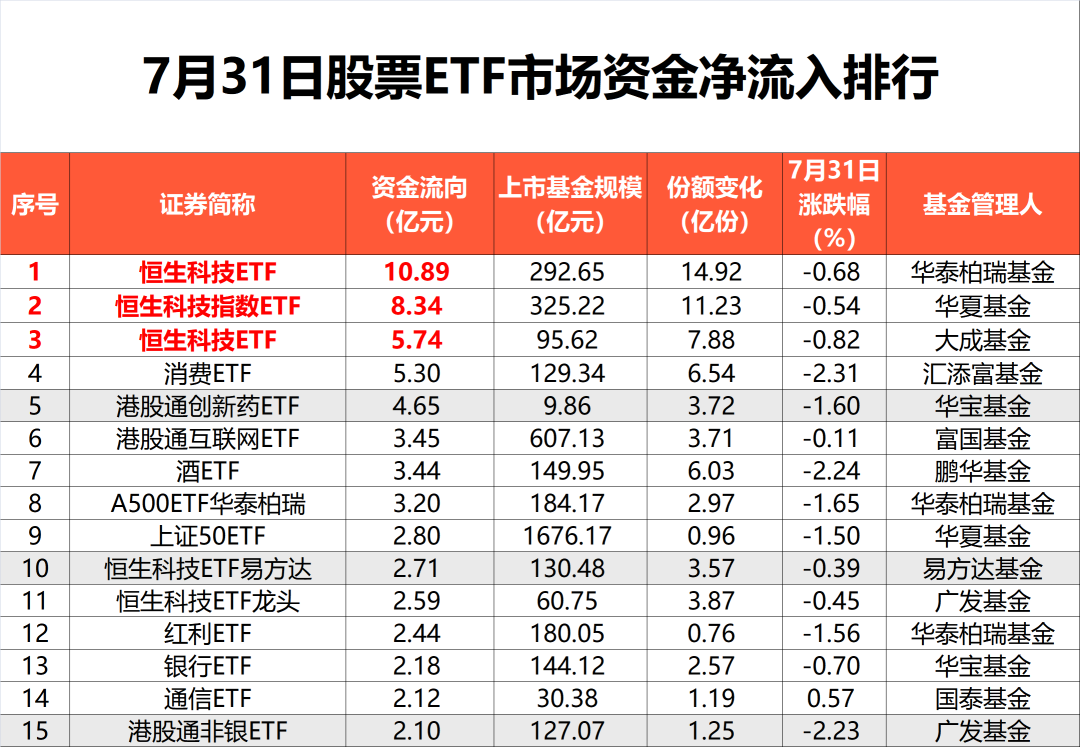
Group 1 - The core point of the article highlights a significant net outflow of over 10 billion yuan from the stock ETF market on the last trading day of July, coinciding with a drop in the A-share market where all three major indices fell by more than 1% [1][2][3] - In July, the stock market experienced substantial gains, leading to profit-taking by investors, which contributed to the net outflow from stock ETFs [2][8] - The total scale of the stock ETF market reached 3.77 trillion yuan, with a reduction of 6.628 billion units in total shares on the day of the market decline [3][4] Group 2 - The net inflow of funds was observed in the Hang Seng Technology Index, which saw a net inflow of 3.305 billion yuan, indicating a preference for this index amidst the overall market downturn [4][5] - Major fund companies, such as E Fund and Huaxia Fund, reported significant net inflows in their ETFs, particularly in the Hang Seng Technology ETFs, despite the overall market decline [7][8] - The outflow of funds was predominantly from broad-based ETFs, with the ChiNext ETF and the Sci-Tech 50 ETF experiencing the largest net outflows of 1.956 billion yuan and 1.765 billion yuan, respectively [9][10] Group 3 - Looking ahead to August, several institutions express optimism for continued upward movement in the A-share market, supported by improving fundamentals and liquidity conditions [12] - The upcoming earnings reports are expected to show marginal improvements in sectors such as technology, consumption, and midstream manufacturing, which may further support market performance [12]
读研报 | 公募基金二季报中的“高”与“低”
中泰证券资管· 2025-07-29 11:33
Core Insights - The article discusses the recent changes in public fund holdings as revealed in the Q2 2025 reports, highlighting significant trends in market differentiation and sector allocations [2] Group 1: High and Low Phenomena - Active equity funds have reached a record high allocation to Hong Kong stocks, with the proportion of holdings in the Hong Kong Stock Connect reaching 19.91% in Q2 2025, up from 19.10% in Q1 2025 [3] - The healthcare sector in Hong Kong saw a 6.01 percentage point increase in market value allocation, while the financial sector increased by 2.26 percentage points [3][4] Group 2: Low Allocation to Specific Sectors - Active funds have a notably low allocation to liquor stocks, with the proportion of holdings in the food and beverage sector at 6.8% in Q2 2025. Excluding liquor-themed funds, the allocation to liquor stocks dropped from 11.7% in Q1 2021 to 2% in Q2 2025 [5] - This decline mirrors a previous trend from 2012, where the allocation to liquor stocks fell from 18.9% to 2.5% due to regulatory and safety concerns [5] Group 3: Bank Stocks Allocation - The proportion of active equity funds holding bank stocks increased to 4.88% in Q2 2025, indicating a rise in both quantity and price. However, the under-allocation remains significant, being the largest among 31 sectors [7] - In contrast, fixed income plus funds showed a 6.3% overweight in the banking sector, highlighting a divergence in sector allocation strategies [7] Group 4: Valuation Trends - Public fund heavyweights are currently at historical low valuation levels, with median P/E ratios of 22.9x and 26.8x for the top 100 and top 400 stocks, respectively, compared to the overall A-share median P/E ratio of 0.55x and 0.64x [8] - This valuation trend indicates a significant shift from a premium to a discount relative to the broader market since early 2021 [8][9] Group 5: Concentration of Holdings - The concentration of holdings in active equity funds continues to decline, with the proportion of heavyweights accounting for 55.52% of total equity assets, down 0.56 percentage points from the previous quarter [9] - The number of heavyweights held by funds increased to 2,694, reflecting a broader selection of stocks in response to market volatility [9][10]

42%↑!百强房企上半年拿地情况公布
证券时报· 2025-07-01 15:17
Core Viewpoint - The investment enthusiasm of real estate companies has rebounded in the first half of the year, with significant increases in land acquisition and sales among top firms, indicating a potential shift in market dynamics [1][3][4]. Group 1: Land Acquisition Trends - In the first half of the year, the top 100 real estate companies' land acquisition amount increased by 42% year-on-year, with 9 companies surpassing 20 billion yuan in land purchases [2][3]. - The total new land reserves for the top 100 companies amounted to 11,594 billion yuan, with a new land acquisition amount of 5,968 billion yuan and a construction area of 5,162 million square meters, reflecting a year-on-year increase of 23.2%, 42%, and 3.4% respectively [3]. - The competitive landscape for quality land in core cities has intensified, leading to a significant increase in land transfer fees across 300 cities, with an average premium rate exceeding 10% [7][8]. Group 2: Market Dynamics and Company Performance - The top 10 sales companies accounted for 73% of the new sales volume among the top 100 sales companies, indicating a strengthening dominance of leading firms in the market [4]. - Despite the positive trends, 64% of the top 100 sales companies did not engage in land investment, suggesting a continued decline in market participation [5]. - The focus of land acquisition is increasingly concentrated in the top 20 cities, which accounted for over 65% of the national land transfer fees [7][8]. Group 3: Future Outlook - Looking ahead to the second half of the year, the industry is expected to prioritize inventory reduction and optimization, with most companies maintaining a cautious investment strategy [8]. - The market is anticipated to further differentiate, with state-owned enterprises likely to continue dominating the land market, particularly in core areas of first- and second-tier cities [8].



逼近历史新低!美股“广度”在崩溃
Hua Er Jie Jian Wen· 2025-07-01 07:46
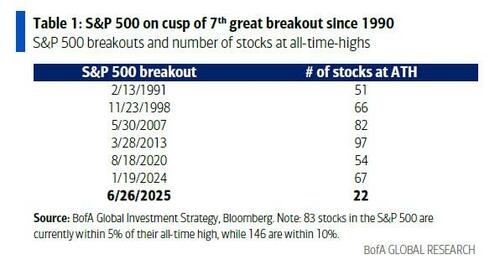
Core Insights - The S&P 500 index has reached a historical high of 6000 points, but the market breadth is among the worst on record, with only 22 stocks hitting all-time highs [1][2] - This current number of stocks at all-time highs is significantly lower than previous major breakthroughs, indicating a narrow market rally [1][2] - The concentration of gains in the S&P 500 is heavily driven by technology stocks, with the top ten companies accounting for 38% of the index's market capitalization and 30% of its profits, both record highs [4][6] Market Breadth Analysis - The recent S&P 500 breakout is characterized by extreme narrowness, with analysts noting it as one of the most concentrated rallies in decades [2][6] - Historical data shows that the number of stocks reaching all-time highs during significant market breakthroughs has been declining, with only 22 stocks currently compared to much higher numbers in previous years [2][6] Sector Performance - Technology stocks continue to dominate the market, reflecting a heavy reliance on a few major players, particularly the "Magnificent Seven" tech stocks, which have a decisive impact on index performance [4][6] - The Russell 2000 index, which represents smaller companies, is down approximately 11% from its historical peak, contrasting sharply with the strong performance of large-cap stocks [6] Future Market Outlook - Despite a strong technical momentum, the outlook for the S&P 500 over the next 12 months is relatively conservative, with expectations of a 5% increase to 6500 points [7] - Historical trends indicate that July is typically a strong month for the S&P 500, but there are concerns about potential market corrections following recent gains [7]

施罗德:环球股市风险偏好改善 尤其看好美国与欧洲的金融板块
Zhi Tong Cai Jing· 2025-06-20 06:13
Group 1 - The core viewpoint is that the recent 90-day suspension of mutual tariffs between China and the U.S. is expected to reduce the risks of trade disruptions and rising unemployment, leading to a lowered probability of economic recession [1] - The investment stance reflects high geopolitical uncertainty, with the theme of "market differentiation" becoming a dominant trend this year [1] - The company has reduced concentrated allocations in U.S. equities and shifted towards a more geographically diversified asset allocation strategy, favoring European markets and increasing holdings in Japanese and emerging market assets [1] Group 2 - Outside the U.S., inflationary pressures are relatively mild, leading to a preference for German government bonds while being bearish on U.S. government bonds [2] - Gold is recommended as a core tool for diversifying asset allocation [2] - The outlook for the energy sector remains cautious to negative due to continuous supply growth, and there is a cautious stance on the U.S. credit market, particularly high-yield bonds [2]