慢牛行情

Search documents
杨德龙:2026年做好大类资产配置至关重要
Xin Lang Cai Jing· 2026-01-27 03:08
Group 1 - Current international gold prices are at historical highs, and a short-term pullback is considered normal. If risk aversion decreases, some funds may exit the gold market to seek other asset allocation directions [1][8] - Compared to overvalued US stocks, A-shares and Hong Kong stocks remain undervalued in the global capital market. The CSI 300 index has a price-to-earnings ratio of only 15 times, which is below historical averages, indicating significant room for growth [1][8] - Recent technological breakthroughs in China, particularly in large models, semiconductor chips, and big data, have enhanced global capital confidence in Chinese technological innovation, reversing some pessimistic expectations about the Chinese economy [1][8] Group 2 - Since 2025, market expectations for economic recovery have increased, leading to a shift towards equity assets, which has significantly boosted the stock market. This trend is expected to continue into 2026, attracting more investors [2][9] - Approximately 50 trillion RMB of fixed deposits will mature in 2026, with previous rates around 3% now dropping to about 1%. This situation compels funds to reconsider their allocation between low-interest deposits and potentially more lucrative equity or bond markets [2][9] - In 2025, new fund sales in China exceeded 1 trillion units, with over half being equity funds, contrasting sharply with the previous year dominated by fixed-income funds, indicating a growing interest in equity asset allocation [2][9] Group 3 - The current market is characterized as a slow bull market rather than a fast bull market, suggesting that investors should maintain a stable stock-bond allocation ratio and hold positions for several years without frequent adjustments [3][10] - Equity funds are more volatile and suitable for risk-tolerant investors, while bond funds, although generally stable, can still experience fluctuations due to interest rate changes and liquidity issues [3][10] - The performance of different asset classes is showing significant divergence, with the real estate market experiencing a downturn, leading to a shift in investment strategies towards quality stocks and funds as the primary vehicles for wealth growth [4][11] Group 4 - The slow bull market provides a unique opportunity for investors to choose industries, stocks, and funds, allowing them to share in market growth without the pressure of rapid fluctuations [5][12] - Investors are advised to align their portfolios with the economic transformation and focus on sectors that align with national development strategies, avoiding industries that are gradually being phased out [6][12] - Continuous learning and improving financial literacy are essential for investors to navigate the stock market effectively, as the quality of individual stocks can vary significantly [6][12]
非银金融25Q4重仓持股分析及板块最新观点:非银板块获增配、高景气延续,保持推荐-20260126
CMS· 2026-01-26 11:32
Investment Rating - The report maintains a "Recommend" rating for the non-bank financial sector, indicating a positive outlook for investment in this area [1][8]. Core Insights - The non-bank financial sector is experiencing a continued high level of activity, with significant increases in holdings in both the brokerage and insurance segments. The brokerage sector's holdings increased to 0.99%, while the insurance sector saw a substantial rise to 2.04% [1][7]. - The overall fund net asset value reached 36.8 trillion yuan, reflecting a year-on-year growth of 14% and a quarter-on-quarter increase of 2% [12]. - The brokerage sector is expected to benefit from improved market conditions, with a projected net profit increase of 26% year-on-year for Q4 2025 [19][20]. - The insurance sector is poised for strong performance in 2026, driven by favorable market conditions and a significant increase in new policy premiums [22][23]. Summary by Sections Public Fund Market Size - As of Q4 2025, the total net asset value of public funds was 36.8 trillion yuan, with a year-on-year increase of 14% and a quarter-on-quarter increase of 2% [12]. - The non-monetary fund size reached 21.7 trillion yuan, growing 16% year-on-year [12]. Non-Bank Sector Holdings Analysis Brokerage Sector - The brokerage sector's holdings increased to 0.99%, up 0.1 percentage points from the previous quarter, with a total of 7.71 billion shares held, reflecting a 17.9% quarter-on-quarter increase [20]. - Major brokerages such as CITIC Securities and Guotai Junan saw significant increases in their holdings, with respective increases of 0.14 and 0.07 percentage points [20][21]. Insurance Sector - The insurance sector's holdings rose to 2.04%, a significant increase of 0.97 percentage points from the previous quarter, exceeding the benchmark allocation [23]. - Key players like Ping An and China Life experienced notable increases in their holdings, with Ping An's allocation rising by 0.68 percentage points [23]. Investment Recommendations - The report suggests focusing on key stocks within the brokerage sector, including Guotai Junan, CITIC Securities, and Huatai Securities, as well as major insurance companies like Ping An and China Life [8].



野村中国首席经济学家陆挺:政策呵护慢牛行情
Jin Rong Jie· 2026-01-26 08:03
Group 1 - The core viewpoint is that the current stock market performance is commendable, with policies effectively supporting a slow bull market while preventing extreme volatility [1] - The current market differs from the 2015 "crazy bull" as the policies are designed to maintain a balanced approach, avoiding both overheating and sharp declines [1] - The effectiveness of policies is highlighted by the fact that IPO financing has not increased despite the stock market's rise, indicating a cautious approach to market expansion [1] Group 2 - The focus of fiscal policy will be central this year, with structural monetary policy serving as a supplementary measure, and an increase in policy support is expected after the March meetings [2] - There is limited room for interest rate cuts, estimated at around 0.1 percentage points in the second quarter, reflecting a cautious monetary stance [2] - The balance between new and old economic sectors is crucial for sustainable growth, emphasizing the importance of both new economic development and traditional sectors like real estate and consumption [2]
天哪!太疯狂了吧
Sou Hu Cai Jing· 2026-01-26 06:01
Group 1: Gold Price Dynamics - The international gold price has surged significantly, increasing by 17% this year, from $4,331 per ounce to nearly $5,100 per ounce, which translates to approximately $180 per gram or 1,250 RMB per gram [1] - Domestic gold prices, based on the Shanghai Futures Exchange, are currently around 1,150 RMB per gram, which is about 100 RMB cheaper than international prices, reflecting the stronger consumer nature of domestic gold [2] - The retail price of gold jewelry from major brands like Chow Tai Fook has exceeded 1,540 RMB per gram, indicating a substantial markup due to processing costs, which highlights the consumption aspect over investment [3] Group 2: Investment Opportunities - In an upward market cycle, individual stocks can exhibit greater elasticity compared to the underlying commodity, as profits can be amplified through leverage, leading to potentially significant stock price increases [4] - The current bullish trend in commodities suggests that investing in individual stocks and ETFs may yield substantial returns, as earnings growth can be magnified by low price-to-earnings ratios [4]
类权益周报:蓄势待发-20260125
HUAXI Securities· 2026-01-25 13:20
Group 1 - The equity market experienced a volatile upward trend from January 19 to 23, 2026, with the Wande All A closing at 6893.11, up 1.81% from January 16, and the China Convertible Bond Index rising 2.92 during the same period [1][9] - The market has entered a narrow fluctuation range since January 13, with a net outflow of 265.9 billion yuan from stock ETFs from January 19 to 22, indicating a "slow bull" market sentiment [1][16] - The implied volatility has returned to a low level, suggesting a nurturing environment for a rebound, with the market attempting to break out of the fluctuation state [1][21] Group 2 - The strategy suggests maintaining a "slow bull" mindset, as the market attempts to break out of the narrow fluctuation range and return to an upward trend [2] - Historical analysis of 64 cases of upward breakouts from narrow fluctuation ranges since 2005 shows that such breakouts typically lead to a sustained upward trend [2][42] - The analysis of 48 instances of volume peaks since 2005 indicates that while upward trends continue after volume peaks, the pace of increase slows down, often leading to prolonged periods of fluctuation before resuming upward trends [2][45] Group 3 - In the convertible bond market, the valuation indicators are showing a decline in their timing significance, with the absolute price median and valuation center remaining at historically high levels [3][29] - The valuation center for convertible bonds at various price points remains high, with the 80 yuan parity corresponding to a valuation center of 54.44%, and the 100 yuan parity at 41.12% [3][29] - The market for convertible bonds is seeing renewed inflows, particularly in the context of strong underlying stocks, with a significant reduction in the number of convertible bonds priced below 130 yuan [3][61]
专家:政策呵护牛市,适度“降温”举措确有必要
Di Yi Cai Jing· 2026-01-25 06:48
Market Overview - The A-share market has continued its upward trend since the beginning of 2026, with the Shanghai Composite Index breaking through significant psychological levels [2][3] - As of January 22, 2026, the Shanghai Composite Index closed at 4136.16 points, reflecting a 0.33% increase, with a total trading volume of 3.12 trillion yuan [3] Policy Support - The current market rally is characterized by a cautious approach from policymakers, aiming to prevent both overheating and sharp declines in the market [2][6] - The effectiveness of policies has been highlighted, with a focus on maintaining a stable market environment through careful regulatory measures [5][6] Economic Impact - There is a belief that the stock market can stimulate economic growth, although the extent of this impact may be limited [9][10] - The economic growth forecast for 2026 suggests a "front low, back high" pattern, with improvements expected in the latter half of the year due to lower base effects and increased policy support [11] Monetary Policy - Recent monetary policies have been described as accommodative, but not as extensive as those implemented during previous market rallies [7][12] - The focus for 2026 is expected to be on fiscal policy, with structural monetary policies serving as supplementary measures [13]


野村陆挺:政策呵护牛市,适度“降温”举措确有必要
第一财经· 2026-01-25 06:18
Core Viewpoint - The current A-share market is experiencing a "slow bull" trend, which is different from the "crazy bull" of 2015, with policies aimed at nurturing the market while preventing overheating and significant downturns [3][4][7]. Market Performance - Since the beginning of 2026, the Shanghai Composite Index (SSE) has risen from 4000 to 4136.16 points, with a 0.33% increase as of January 22, and a total trading volume of 3.12 trillion yuan [5]. - The SSE has increased from approximately 2700 points in the "924" market rally, reaching 3500 points in July and 3800 points by the end of last year [5]. Policy Effectiveness - The current market policies are described as moderately loose, with effective measures taken by financial regulatory bodies to stabilize the market while being cautious [6][8]. - Since July and August of the previous year, policies have been more conservative to prevent a repeat of the 2015 bubble [7]. Financing and Market Cooling - There has been a moderate recovery in IPOs, but the number of new stock issuances has not surged significantly [9]. - It is deemed necessary to cool down the market to prevent overheating and to ensure alignment between the stock market and economic fundamentals [9]. Economic Growth Predictions - The stock market is expected to have a limited but positive impact on economic growth, with a consensus that the economy will not perform poorly in the second half of the year [11]. - Economic growth in 2026 is predicted to follow a "front low, back high" pattern due to base effects, with potential improvements in the third and fourth quarters if policies continue to support the economy [12][13]. Policy Focus - The core of this year's policy is expected to be on fiscal measures, with structural monetary policies serving as supplementary tools [14].

野村陆挺:政策呵护牛市 适度“降温”举措确有必要
Di Yi Cai Jing· 2026-01-25 04:28
Core Viewpoint - The current A-share market is experiencing a "slow bull" trend, which is different from the "crazy bull" of 2015, with policies aimed at nurturing the market while preventing overheating and significant downturns [1][4]. Market Performance - Since the beginning of 2026, the Shanghai Composite Index (SHCI) has risen from around 2700 points to 4136.16 points, marking a 0.33% increase as of January 22, with a total trading volume of 3.12 trillion yuan [2][3]. - The market has shown signs of cooling, with major exchanges raising margin requirements and a decrease in trading volume, indicating a need to prevent overheating [1][6]. Policy Measures - The effectiveness of policies in this slow bull market is evident, with a cautious approach taken since mid-2022 to avoid a repeat of the 2015 bubble [4][5]. - Recent monetary policies have been described as accommodative but less aggressive compared to previous significant adjustments, indicating a more measured approach to market support [5][6]. Economic Outlook - The stock market is expected to have a limited but positive impact on economic growth, with a consensus that the economy will improve in the latter half of the year due to a favorable stock market [7][9]. - Economic growth is predicted to follow a "front low, back high" pattern in 2026, influenced by base effects and potential policy support in the second half of the year [8][9].
野村陆挺:政策呵护牛市,适度“降温”举措确有必要
Di Yi Cai Jing· 2026-01-25 04:28
"过去一年半,我们经济政策中最成功的举措就是让股市活跃起来了。" 近期,市场出现一些降温迹象:三大交易所集体上调融资保证金比例,该举措被认为是为两融市场降 温;盘面上,A股出现缩量震荡,前期的部分热门概念股亦下挫。 "市场是否有必要降温?我认为有必要。"陆挺对第一财经表示,要防止市场出现过热迹象,也要关注股 市与经济基本面是否出现背离。 政策呵护意图明显 2026年开年以来,A股市场延续上行趋势,沪指接连突破重要整数关口。如何看待这一轮市场行情,与 以往比较,这次的"慢牛"有何不同? "过去一年半,我们经济政策中最成功的举措就是让股市活跃起来了,多数公司的股价涨上来了。"野村 中国首席经济学家陆挺在近期的媒体会上表示。 陆挺认为,不同于2015年的"疯牛",此轮行情中,政策举措体现出了对牛市的呵护。呵护具体表现在两 方面:既要防止行情走向"疯牛",也要防止市场出现暴跌。 结合融资端情况,陆挺提到,去年,IPO出现适度回暖,但并未出现新股发行数量的快速大幅上升。 他同时认为,一定程度上,为市场"降温"是必要的,要防止市场出现过热迹象,也要关注股市跟经济基 本面是否出现背离。陆挺还提到,在牛市行情中,还需关注股市 ...
光伏、贵金属、锂电池涨幅居前,高手看好这些主线!
Mei Ri Jing Ji Xin Wen· 2026-01-23 08:39
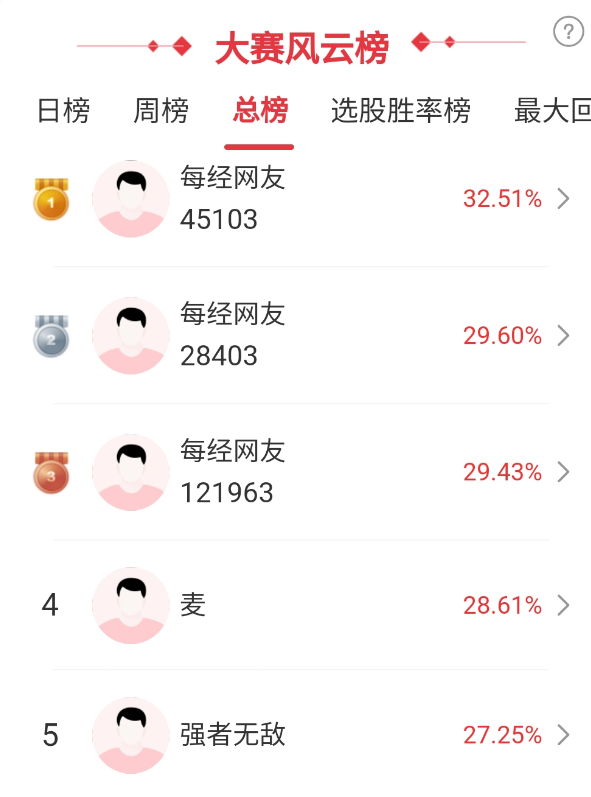
每经编辑|吴永久 周五,A股行情较好,121只个股涨停,光伏、商业航天、贵金属、锂电池等板块涨幅居前。截至收盘,沪指涨0.33%,收报4136.16点。上证50和沪深300 指数回调。沪深京三市成交额达到31184亿元,较周四放量4017亿元。 由每日经济新闻App举办的掘金大赛第82期比赛于1月19日开始,目前开赛5天,多位选手跑步入场。比赛报名时间为1月17日到1月30日,比赛时间为1月 19日到1月30日。大赛为模拟炒股,模拟资金50万元。每期比赛结束,正收益就获现金奖励!报名就拿福利!冲刺月度积分王大奖! 每期比赛的税前现金奖励为:第1名奖励688元,第2~4名奖励188元/人,第5~10名奖励88元/人,其余正收益选手均分500元正收益奖。月度积分王的税前 现金奖励为:第1名奖励888元,第2~4名奖励288元/人,第5~10名奖励188元/人,第11~30名奖励68元/人,第31~100名奖励18元/人。 报名方式: 首先下载每日经济新闻App,然后打开每日经济新闻App,点击页面最下方的"私人订制",点击主页上的"掘金大赛",点击"免费参赛",然后输入参赛昵 称,就能报名了。需要注意的是,只有在 ...