新型基础设施建设

Search documents
如何理解“将大规模AI算力搬上太空”
Zheng Quan Ri Bao· 2025-11-28 17:13
Core Insights - Beijing plans to construct and operate large-scale centralized data centers with over 1 GW power capacity in low Earth orbit, aiming to integrate commercial space and artificial intelligence, thus creating a new industry chain of "reusable rockets + computing constellations + data applications" [1] Group 1 - The shift in infrastructure layout is moving from "supporting" to "leading," emphasizing that new infrastructure like space computing constellations and integrated networks should create demand rather than just respond to it [1] - The establishment of an orbital data center and a computing network that spans space and ground is intended to lay the groundwork for advancements in artificial intelligence, space computing, and integrated applications [1] - The proactive advancement of new infrastructure construction is crucial for maintaining competitive advantage globally and enhancing the resilience and upgrading of the industrial chain [1] Group 2 - A strategic mindset of "calculating the big picture, long-term benefits, and overall accounts" is essential for advancing new infrastructure projects, which typically involve large investments and long return cycles [2] - Focus should be on efficient and autonomous development, optimizing spatial layouts to avoid redundancy while fostering a coordinated computing network across space and ground [2] - Continuous exploration of applications in space computing, integrated operations, and AI is necessary to generate new industries, business models, and enhance the overall utility of the infrastructure [2]
如何理解“适度超前”?“新型基础设施”将这么建
Ren Min Ri Bao Hai Wai Ban· 2025-11-27 00:23
Core Viewpoint - The article emphasizes the importance of "appropriate advanced construction" of new infrastructure during the 14th and 15th Five-Year Plans in China, highlighting its role in supporting high-quality development and addressing structural contradictions in existing infrastructure [1][2][3]. Group 1: New Infrastructure Development - New infrastructure includes information, integration, and innovation facilities that support digital economy development and traditional infrastructure upgrades [2][3]. - The 15th Five-Year Plan explicitly mentions "appropriate advanced" construction of new infrastructure, marking a significant shift in policy direction [2][3]. - The construction of new infrastructure is seen as essential for promoting new urbanization and achieving common prosperity [3][4]. Group 2: Implementation Principles - The principle of "appropriate advanced" construction requires balancing supply and demand, current and long-term needs, and efficiency and quality [5][6]. - The government is expected to lead the investment in new infrastructure to enhance public services and address existing gaps [3][4][5]. - The focus should be on integrating traditional and new infrastructure while ensuring that development aligns with economic and social needs [5][6]. Group 3: Market Opportunities - Companies are increasingly interested in the opportunities presented by new infrastructure, particularly in areas like computing and digital solutions [7][8]. - The development of advanced computing infrastructure is seen as a key area for growth, with companies aiming to leverage this for competitive advantage [7][8]. - The construction of clean energy facilities, such as nuclear power plants, is highlighted as a critical component of new infrastructure development [8]. Group 4: Collaborative Efforts - Successful implementation of new infrastructure requires collaboration among government, society, and the market to stimulate private investment and innovation [9]. - Encouraging enterprises to take the lead in research and development is crucial for integrating new infrastructure with industry needs [9].
适度超前,“新基建”这么建(这些新提法,写入“十五五”规划建议②)
Ren Min Ri Bao Hai Wai Ban· 2025-11-26 23:09
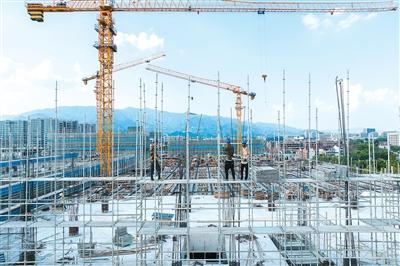
Group 1: Infrastructure Development - The construction project of the East Trading Area in Jinhua City, Zhejiang Province, has been included in the National Development and Reform Commission's emergency infrastructure project library, which will enhance the city's supply capacity and improve the logistics hub system in the Yangtze River Delta region [2] - The supergravity centrifuge simulation and experimental device in Hangzhou, Zhejiang Province, is a major national scientific infrastructure that creates a supergravity field for critical experiments [4] - Wuhu City in Anhui Province is accelerating the construction of computing power infrastructure, leveraging its position within one of the top ten data center clusters in China and the national "East Data West Computing" project [6] Group 2: New Infrastructure Initiatives - The "14th Five-Year Plan" emphasizes the acceleration of new infrastructure construction, while the "15th Five-Year Plan" introduces the concept of "appropriate advance" in infrastructure development [7] - New infrastructure includes advancements in information, integration, and innovation, which are crucial for the development of the digital economy and the transformation of traditional industries [7][8] - The government aims to enhance public services and promote common prosperity through new infrastructure, which is seen as a vital measure to stimulate domestic demand [9] Group 3: Strategic Planning and Implementation - The construction of new infrastructure requires careful planning and orderly implementation, balancing supply and demand, and addressing structural contradictions in existing infrastructure [10][11] - "Appropriate advance" in infrastructure development reflects the need to match infrastructure with economic and social development levels while ensuring it leads and supports future growth [11] - The government, society, and market must collaborate to effectively implement new infrastructure projects, encouraging private investment and innovation [14]

ETF甄选 | 三大指数震荡走弱,建材、地产、银行等相关ETF逆势走强
Sou Hu Cai Jing· 2025-11-20 08:39
Market Overview - The market experienced a downward trend with all three major indices closing lower: Shanghai Composite Index down 0.40%, Shenzhen Component Index down 0.76%, and ChiNext Index down 1.12% [1] Sector Performance - Energy metals, cement building materials, and banking sectors showed positive performance, while beauty care, batteries, and shipbuilding sectors faced declines [1] ETF Performance - Related ETFs in the building materials, real estate, and banking sectors performed well, likely influenced by relevant news [2] Cement Industry Insights - The cement industry is at a critical stage of policy execution and governance improvement, with clear anti-involution policy directions. The Cement Association is promoting the implementation of technical standards to limit overproduction. Domestic demand for cement is weak, but overseas markets are performing strongly, with companies like Huaxin Cement seeing significant year-on-year increases in gross profit per ton [2] - The "14th Five-Year Plan" suggests building a modern infrastructure system and emphasizes the need for new infrastructure construction, which is expected to boost related industries in the fourth quarter [2] Real Estate Sector Outlook - The "14th Five-Year Plan" indicates a positive stance on future real estate optimization policies, opening up space for recovery in the real estate sector. Confidence in the recovery of the real estate industry is noted, particularly for companies with strong liquidity and product capabilities [3] - New national standards for residential projects are expected to enhance the quality of new housing, leading to ongoing replacement and renewal demand as housing ages [3] Banking Sector Analysis - Long-term capital from insurance funds, state-owned enterprises, and public funds show strong motivation to increase allocations in the banking sector. The banking sector's fundamentals continue to stabilize, with a focus on high dividend strategies and low valuation opportunities [4] - The continuation of a moderately loose monetary policy and the emphasis on maintaining reasonable interest rate relationships are expected to enhance the banking sector's operational stability and adaptability to high-quality economic development [4]
扩内需亟待发力,关注服务消费和新基建投资机会
China Post Securities· 2025-11-17 12:24
Economic Outlook - The difficulty of achieving the annual economic growth target has decreased, reducing the necessity for macro policy intensification within the year[1] - Expanding domestic demand remains crucial for stabilizing the economy, with service consumption expected to be a core driver of consumption growth[1] Consumption Trends - In October, the weighted year-on-year growth rate of investment, retail, and exports was -4.29%, indicating a decline in demand momentum[10] - Retail sales growth continued to weaken, with a year-on-year increase of 2.9% in October, down 0.1 percentage points from the previous month[13] - Service consumption is outpacing goods consumption, with education, culture, and entertainment services growing by 10.4% and transportation and communication services by 7.73% in September[22] Investment Insights - Fixed asset investment showed a cumulative year-on-year decline of 1.7% from January to October, with real estate investment down by 14.7%[25] - Infrastructure investment has turned negative for the first time this year, with a cumulative year-on-year decline of 0.1%[25] - New infrastructure investment opportunities are highlighted, particularly in information communication networks and major technological infrastructure[26] Policy Recommendations - The central bank is expected to maintain a loose monetary policy to support credit growth for the upcoming year[35] - Policies should focus on stabilizing the real estate market to facilitate a smooth industry transition, which is critical for short-term economic growth[34]
新基建开路 “十五五”抢先机 “适度超前”拓展增长空间
2 1 Shi Ji Jing Ji Bao Dao· 2025-11-04 23:24
Core Viewpoint - The development of new-type infrastructure is essential for achieving significant breakthroughs in the new quality productivity during the "15th Five-Year Plan" period, as highlighted in the Central Committee's suggestions for the national economic and social development plan [1][5]. Group 1: New-Type Infrastructure Construction - The "15th Five-Year Plan" emphasizes "appropriately ahead" construction of new-type infrastructure, including information communication networks, national integrated computing networks, and major scientific and technological infrastructure [1][2]. - The "14th Five-Year Plan" also called for accelerating the construction of new-type infrastructure, but the "15th Five-Year Plan" specifically mentions "appropriately ahead" deployment [2][3]. - Experts believe that "appropriately ahead" aligns with the urgent need for transitioning domestic economic development stages and upgrading growth momentum [5][6]. Group 2: Strategic Emerging Industries - The suggestions focus on building emerging pillar industries and accelerating the development of strategic emerging industry clusters such as new energy and low-altitude economy [1][9]. - Future industrial development heavily relies on the support of new-type infrastructure, particularly in computing and communication [1][9]. - The government aims to drive industrial upgrades through new infrastructure while managing debt risks, indicating a shift in fiscal policy towards digitalization, intelligence, and green sectors [6][9]. Group 3: Integration of Technology and Economy - The "15th Five-Year Plan" aims to promote deep integration of technological innovation and industrial innovation, as well as the integration of the real economy and digital economy [7]. - The plan outlines four key tasks: optimizing traditional industries, nurturing emerging industries, promoting high-quality service development, and constructing a modern infrastructure system [7][8]. - The focus on modern infrastructure is intended to provide a solid foundation for high-quality development across various industries, ensuring efficient operation of advanced manufacturing and modern service sectors [8][9]. Group 4: Implementation Strategies - "Appropriately ahead" requires identifying directions, controlling rhythms, and maintaining determination in new-type infrastructure investments, which are large-scale and long-term [9]. - The plan emphasizes dynamic planning, flexible design, and phased implementation to balance foresight and practicality [9]. - The government aims to avoid blind expansion and resource waste by ensuring that infrastructure development aligns with industrial needs, technological trends, and economic capacity [9].
十五五规划强调巩固建筑产业全球竞争力,适度超前建设新基建:——申万宏源建筑周报(20251027-20251031)-20251102
Shenwan Hongyuan Securities· 2025-11-02 06:41
Investment Rating - The report suggests a cautious outlook on the construction industry, recommending state-owned enterprises such as China Chemical, China Railway, and China Railway Construction, while also highlighting private companies like Zhizhi New Materials and Honglu Steel Structure as potential investment opportunities [3][12][14]. Core Insights - The construction industry is currently experiencing weak overall demand, but regional investments may gain momentum as national strategies are implemented [3][12]. - The report emphasizes the importance of modernizing infrastructure and upgrading key industries to enhance global competitiveness [3][10]. - Significant growth has been observed in specific sub-sectors, particularly in private infrastructure companies, which have shown substantial year-to-date gains [3][6]. Industry Performance - The SW Construction Decoration Index decreased by 1.49%, underperforming compared to major indices such as the Shanghai Composite Index, which increased by 0.11% [4][6]. - The best-performing sub-sectors for the week included Professional Engineering (+2.08%) and Decorative Curtain Walls (+1.39%) [4][6]. - Year-to-date, the private infrastructure sector has seen a remarkable increase of 67.91%, with individual companies like Chengbang Co. and Dongyi Risheng achieving gains of 182.55% and 182.38%, respectively [3][6]. Key Company Updates - Sichuan Road and Bridge reported a revenue increase of 1.95% and a net profit increase of 11.04% for the first three quarters of 2025 [12][14]. - Jianfa Hecheng experienced a revenue growth of 10.55% and a net profit increase of 21.2% during the same period [13][14]. - Notable changes in other companies include Xinjiang Jiaojian with a revenue increase of 38.58% and a net profit increase of 147.73% [14]. Market Trends - The report highlights the government's focus on constructing a modern industrial system and enhancing the competitiveness of key industries, including construction [10][11]. - The Ministry of Housing and Urban-Rural Development reported that 24,300 urban old residential communities were newly started or renovated from January to September 2025 [11][12]. - The report notes that the construction sector's fixed asset investment reached 2.6 trillion yuan in the first three quarters of 2025, reflecting a year-on-year decline of 4.17% [11].




东兴证券:适度超前建设新型基础设施 商业航天将加速发展
智通财经网· 2025-10-31 08:29
Core Insights - The report from Dongxing Securities emphasizes the acceleration of China's aerospace industry and the development of satellite internet as key components of the modern industrial system outlined in the 14th Five-Year Plan [1][2] Group 1: Satellite Internet Development - As of October 2025, China Star Network has launched a total of 93 satellites this year, including experimental satellites [2] - The successful first flights of the Zhuque-3 and Tianlong-3 rockets are expected to establish them as the main launch vehicles for domestic satellite internet, leading to significant advancements in 2026 [2][1] Group 2: Infrastructure and Market Expansion - The transition from large-scale investment to efficient development in communication and computing networks indicates a shift in national infrastructure strategy, with ongoing expansion in related markets such as base station equipment and data centers [3][4] - By mid-2025, the number of 5G base stations in China reached 4.549 million, with a net increase of 298,000 from the previous year, although the growth rate has slowed compared to the previous year [4] Group 3: Quantum Technology and 6G Development - The report highlights the early-stage development of quantum technology and 6G as new economic growth points, with a focus on creating a high-tech industrial ecosystem [5][6] - The global 6G development timeline includes the start of technical standardization in 2025, with the first standards expected to be frozen by 2029 and commercial deployment by 2030 [7]

三和管桩业绩大增286.23%彰显强韧性,管桩龙头迎价值重估新机遇
Zheng Quan Shi Bao Wang· 2025-10-29 09:52
Core Viewpoint - The company is poised to benefit from the new wave of demand for prestressed concrete piles driven by national infrastructure policies, showcasing strong growth potential as a leading player in the industry [1]. Group 1: Performance and Profitability - In the first three quarters of 2025, the company achieved a revenue of 4.483 billion yuan, a year-on-year increase of 3.87% [2]. - The net profit attributable to shareholders reached 80.477 million yuan, a staggering year-on-year increase of 286.23%, surpassing the annual target set earlier [2]. - The net profit excluding non-recurring gains was 57.287 million yuan, reflecting an impressive year-on-year growth of 8652.55%, indicating a significant improvement in core business profitability [2]. - In the third quarter, despite industry pressures, the company still reported a net profit of 14.033 million yuan, with a 12.70% year-on-year growth in net profit excluding non-recurring items [2]. Group 2: Cash Flow and Asset Structure - Although the operating cash flow for the first three quarters was negative, it improved by 23.87% year-on-year, indicating effective cash management [3]. - Total assets grew to 6.936 billion yuan, with shareholders' equity reaching 2.804 billion yuan, a 1.77% increase from the end of the previous year, maintaining a robust asset structure [3]. Group 3: Industry Outlook and Policy Support - The "14th Five-Year Plan" emphasizes strengthening major infrastructure construction, which will benefit the company as a leading player in the precast pile industry [4]. - The company has established production bases in key regions such as Guangdong, Jiangsu, and Hubei, allowing it to seize market opportunities amid regional economic development [4]. Group 4: Research and Development - In the first three quarters of 2025, the company invested 36.899 million yuan in R&D, a year-on-year increase of 8.89%, enhancing product performance and production processes [5]. - The company's focus on energy-saving and intelligent production line upgrades aligns with the green manufacturing policies, reinforcing its leading position in the industry [5]. Group 5: Growth Potential - The recent release of the "14th Five-Year Plan" suggests accelerated construction of new energy systems and high-quality development of clean energy, which will open new market opportunities for the precast pile industry [6]. - The development of new technologies, such as artificial intelligence, is expected to further drive demand for precast pile products [6]. - With the acceleration of national infrastructure policies and continuous internal management optimization, the company's growth momentum is expected to strengthen, providing solid investment value for long-term investors [6].

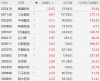
A股异动丨算力概念股集体上涨,康盛股份涨停,工业富联触及涨停
Ge Long Hui A P P· 2025-10-29 02:58
Group 1 - The A-share market saw a collective rise in computing power concept stocks, with Kangsheng Co. hitting the daily limit, and Industrial Fulian approaching the limit as well [1] - The Central Committee of the Communist Party of China released suggestions for the 15th Five-Year Plan, emphasizing the need for advanced construction of new infrastructure, including information communication networks and integrated computing power networks [1] - Nvidia announced plans to ship 20 million Blackwell and Rubin graphics processors, projecting a business scale of $500 billion over the next six quarters [1] Group 2 - Kangsheng Co. experienced a price increase of 10.02%, with a total market value of 53.64 billion and a year-to-date increase of 93.44% [2] - Industrial Fulian's stock rose by 6.91%, with a market capitalization of 1,570.8 billion and a year-to-date increase of 275.12% [2] - Zhongdian Xinlong saw a 4.51% increase, with a market value of 26.806 billion and a year-to-date increase of 130.83% [2]