波浪理论

Search documents
黄金走势推演与后市机会分析(2025.9.28)
Sou Hu Cai Jing· 2025-09-28 10:10
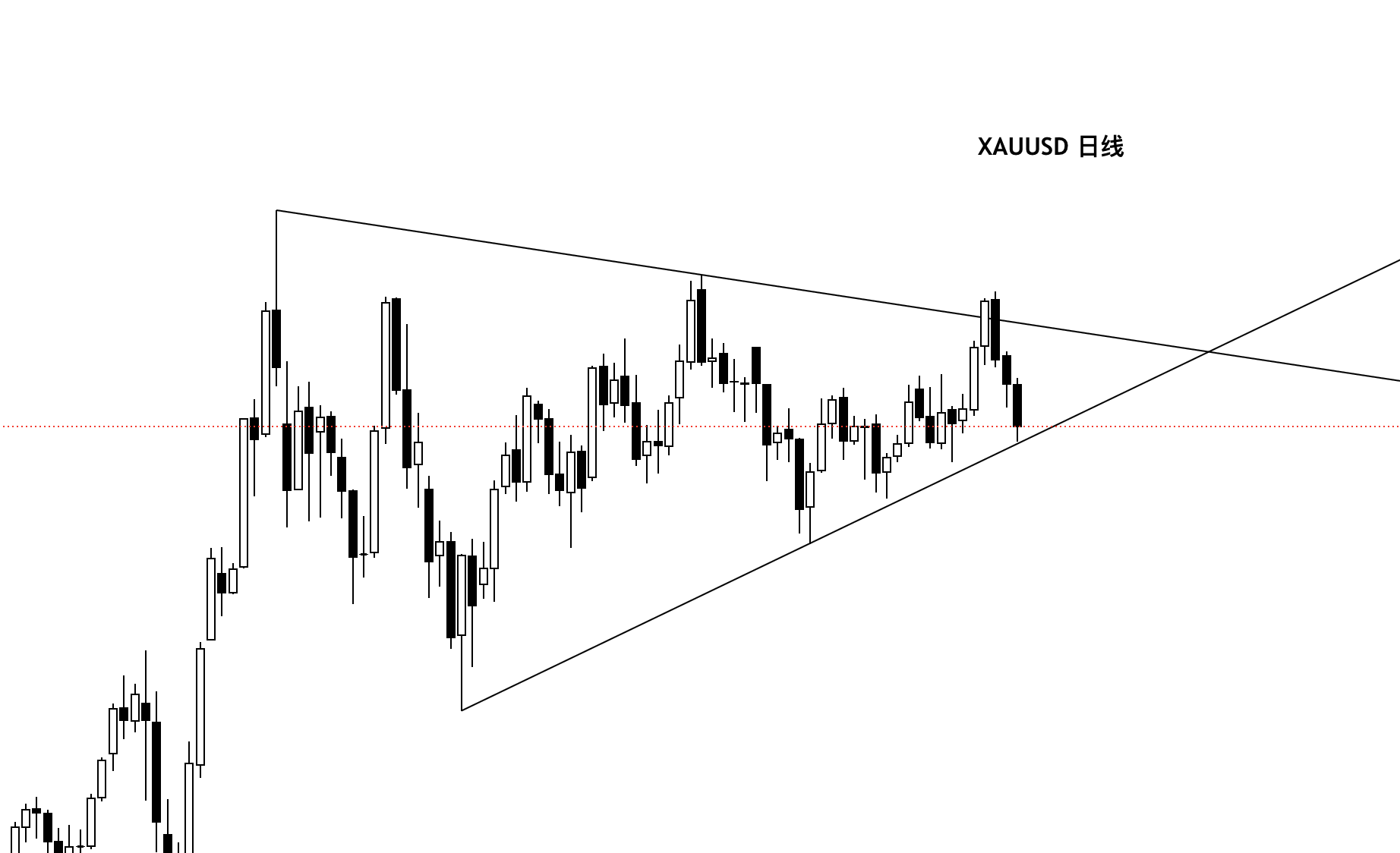
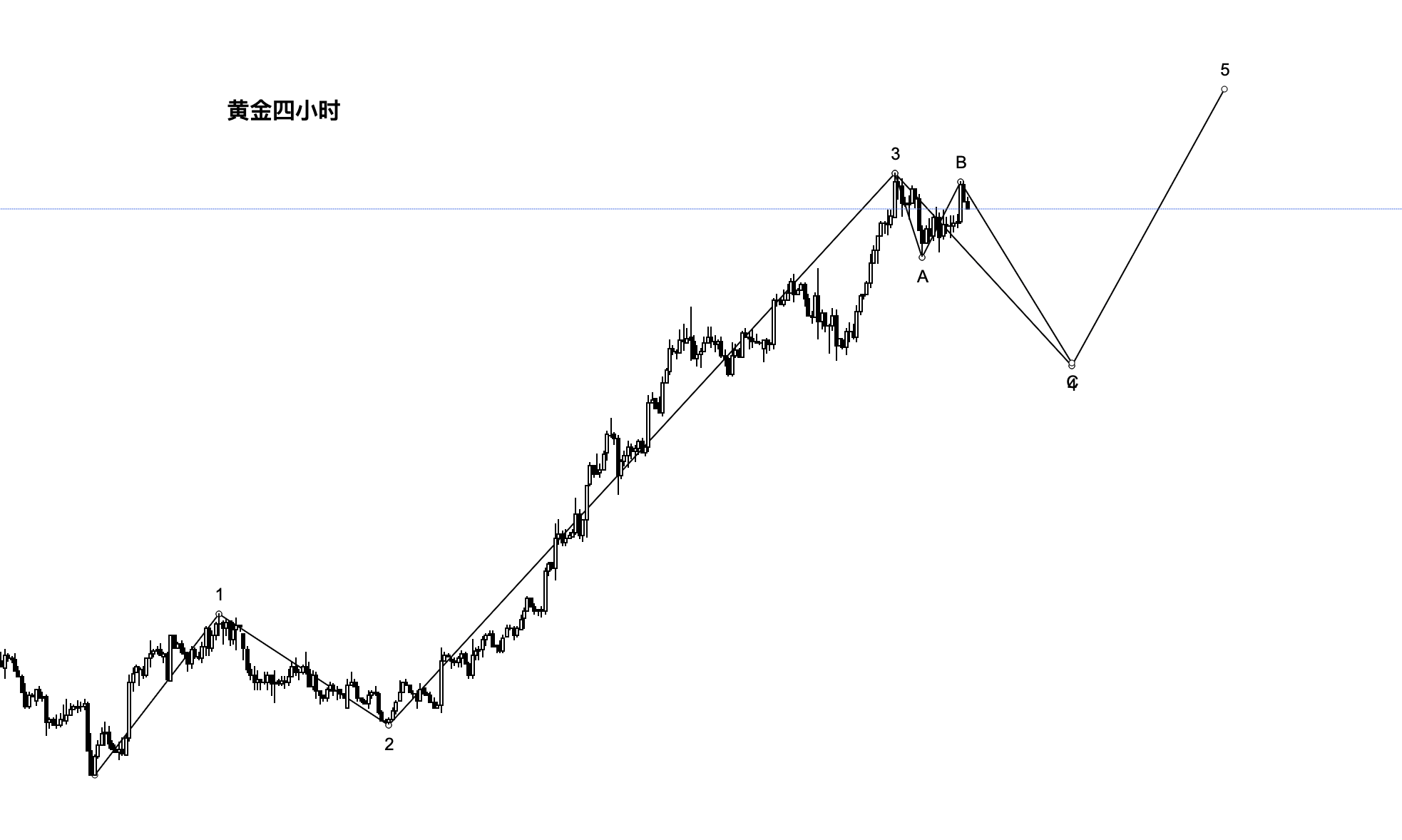
Core Viewpoint - The gold market has shown strong upward momentum, with a new high of 3791 reached on Tuesday, followed by a slight adjustment and subsequent recovery towards the end of the week, resulting in a six-week consecutive increase in prices [1]. Group 1: Fundamental Analysis - The market is expected to be tense next week due to central bank dynamics, seasonal factors, and the risk of a U.S. government shutdown, with a focus on the Federal Reserve's policy path and global economic data [2]. - Multiple Federal Reserve officials are scheduled to speak next week, discussing economic outlook and monetary policy direction, amidst a divergence between the Fed's "dot plot" indicating only a 25 basis point rate cut by 2026 and market expectations of three rate cuts [3]. - The probability of a U.S. government shutdown is at 66%, which could delay the release of key economic reports, including the non-farm payrolls and CPI, increasing uncertainty in policy decisions [4]. Group 2: Technical Analysis - The gold market has shown a clear upward trend, with the current movement being part of a larger five-wave structure that began at 3268, with the third wave currently in progress [6]. - Two potential scenarios for next week's gold price movement are outlined: 1. If gold remains below 3791, it may continue to adjust, with key support levels at 3722 and 3717 needing to be monitored for confirmation of a downward adjustment [7][10]. 2. If gold breaks above 3791, it would indicate a continuation of the upward trend, necessitating a reassessment of the current wave structure [13].

国泰海通|固收:从五浪到M顶调整:技术分析视角下的本轮回调
国泰海通证券研究· 2025-09-11 14:05
Core Viewpoint - The bond market is likely transitioning from a completed "five-wave" pattern to an adjustment wave, with historical data suggesting that the decline from the peak could be around 30%-35% of the previous gains [1][4]. Summary by Sections Wave Theory - Wave theory, proposed by Ralph Nelson Elliott, suggests that market price fluctuations follow a cyclical pattern similar to natural tides, exhibiting identifiable patterns and cycles [2]. Historical Review of Bond Market Waves - From early 2023 to early 2025, the bond market has completed a "five-wave" sequence: 1. **First Wave (March 2023 - August 2023)**: The end of redemption pressures led to a strong bond market amid weak economic expectations and asset scarcity. 2. **Second Wave (August 2023 - October 2023)**: Post-unexpected interest rate cuts, profit-taking sentiments emerged alongside local government bond supply pressures, causing market fluctuations. 3. **Third Wave (October 2023 - September 2024)**: Weak risk assets and expectations of lower interest rates fueled speculative sentiment in the bond market, despite central bank warnings about interest rate risks. 4. **Fourth Wave (Late September 2024 - October 2024)**: Multiple policies were implemented, leading to a rapid stock market rise, which pressured bond market sentiment. 5. **Fifth Wave (November 2024 - January 2025)**: Expectations of interest rate cuts and weak economic conditions drove interest rates down again [3]. Adjustment Wave Analysis - The bond market's adjustment wave began in February-March 2025, characterized by tightening liquidity and weakening institutional sentiment. Although there was a slight recovery, it did not surpass previous highs. The current bond market has formed an "M-top" pattern, with historical comparisons indicating that the first and second declines after reaching the peak typically reflect a drop of 30%-35% of prior gains [4].

国泰海通 · 晨报0912|固收、煤炭、电新
国泰海通证券研究· 2025-09-11 14:05
Group 1: Technical Analysis of Bond Market - The bond market has completed a "five-wave" cycle and is now transitioning into an adjustment phase, characterized by an "M-top" formation [5][6] - The first wave (March to August 2023) saw a strong bond market due to the end of redemption pressures and weak economic expectations, while the second wave (August to October 2023) experienced a pullback due to profit-taking and local debt supply pressures [5] - Historical comparisons indicate that the decline following the "M-top" formation typically ranges from 30% to 35% of the previous gains [6] Group 2: Global Power Supply and Coal Industry - The global electricity demand is expected to grow at a rate of 4.4% in 2024, significantly outpacing the global GDP growth of 2.9%, driven by industrial electrification, AI-driven data center expansion, and extreme weather impacts [11][12] - Structural bottlenecks in the power supply have not been effectively addressed, leading to a disconnect between electricity generation and availability despite advancements in renewable energy [12] - Coal power remains a critical component of the global energy system, with the U.S. expected to see a 15% increase in coal-fired power generation in 2025, marking a shift in energy development strategies in developed countries [13] Group 3: Solid-State Battery Investment Opportunities - Solid-state batteries are anticipated to become a key focus in high-performance battery development due to their safety and energy density advantages, with significant market potential in consumer batteries and electric vehicles [18] - The Chinese government is investing approximately 6 billion yuan to support solid-state battery research, indicating strong policy backing for this technology [18] - The transition from semi-solid to solid-state battery technology is expected to accelerate, with major automotive and battery companies planning to demonstrate solid-state battery applications by 2027 [20]

做白银曾一夜亏3000万,如今已实现财富自由!
Sou Hu Cai Jing· 2025-08-30 04:46
Core Insights - The article highlights the investment philosophy and experiences of Le Fengjie, a seasoned asset manager and investor in China, emphasizing the importance of understanding market psychology and personal behavior in trading [1][3][18]. Investment Philosophy - Le Fengjie summarizes his investment philosophy with three key sayings: "Act without thinking is blind," "Thinking without acting is cowardice," and "Endless pursuit leads to greed," which encapsulate common cognitive and behavioral pitfalls faced by investors [2][3]. - The first saying warns against impulsive trading without a clear plan, while the second addresses the fear of execution despite having a solid strategy, and the third cautions against holding onto positions out of greed, risking potential losses [3]. Investment Journey - Le Fengjie began his investment career in 1992 with a modest capital of 7,000 yuan, quickly achieving significant returns, but faced major setbacks, including a loss of 30 million yuan in a single night due to market volatility [6][8]. - His experiences, particularly during the "327 National Debt" incident in 1995, shaped his understanding of market unpredictability and the necessity of a disciplined trading mindset [6][7]. Investment Methodology - Le Fengjie has developed a comprehensive investment methodology that includes trend analysis, technical analysis, and strategic selection of trading instruments [9][11]. - He emphasizes the importance of trend judgment based on wave theory and technical indicators, advocating for a dynamic approach to analysis that adapts to market changes [12][13]. Key Trading Principles - In terms of trading principles, Le Fengjie focuses on selecting instruments with clear trends and sufficient liquidity, managing positions with precision, and avoiding over-leveraging [14]. - He advises against frequent trading and emphasizes the need for a disciplined approach to stop-loss strategies and emotional control during trading [15][20]. Common Causes of Losses - Le Fengjie identifies five primary reasons for investor losses, including reverse operations after missing opportunities, stubbornness against market trends, and the reluctance to cut losses [15][16]. - He suggests establishing a mental stop-loss threshold to prevent emotional trading and encourages maintaining a practical trading routine to enhance decision-making [17]. Human Psychology in Trading - The article underscores the significance of overcoming human psychological barriers, such as greed and fear, which can lead to poor trading decisions [18][19]. - Le Fengjie believes that successful trading relies more on emotional control and understanding human behavior than on complex trading strategies [18].

化工ETF(159870)盘中净申购超16亿份,回调或是良机
Xin Lang Cai Jing· 2025-08-27 07:12
Group 1 - The core viewpoint indicates that the chemical sector is experiencing a pullback after a period of continuous gains, with significant capital inflow into the chemical ETF, which has seen net subscriptions of 1.608 billion shares over the past 12 days [1] - The chemical ETF closely tracks the CSI Sub-Industry Chemical Theme Index, which is composed of seven sub-indices reflecting the overall performance of major and liquid listed companies in related sub-industries [1] - The top ten weighted stocks in the CSI Sub-Industry Chemical Theme Index account for 43.54% of the index, with notable companies including Wanhua Chemical, Yilong Co., and Juhua Co. [2] Group 2 - The chemical ETF has a current price of 0.68 yuan, indicating its market performance amidst the sector's fluctuations [1] - The market is anticipating a potential ABC wave correction in the near future, with a projected timeframe of approximately 2.5 to 3 days for this adjustment [1]
经过两次变轨,沪指加速,上方关键阻力在4000点!
Sou Hu Cai Jing· 2025-08-24 13:48
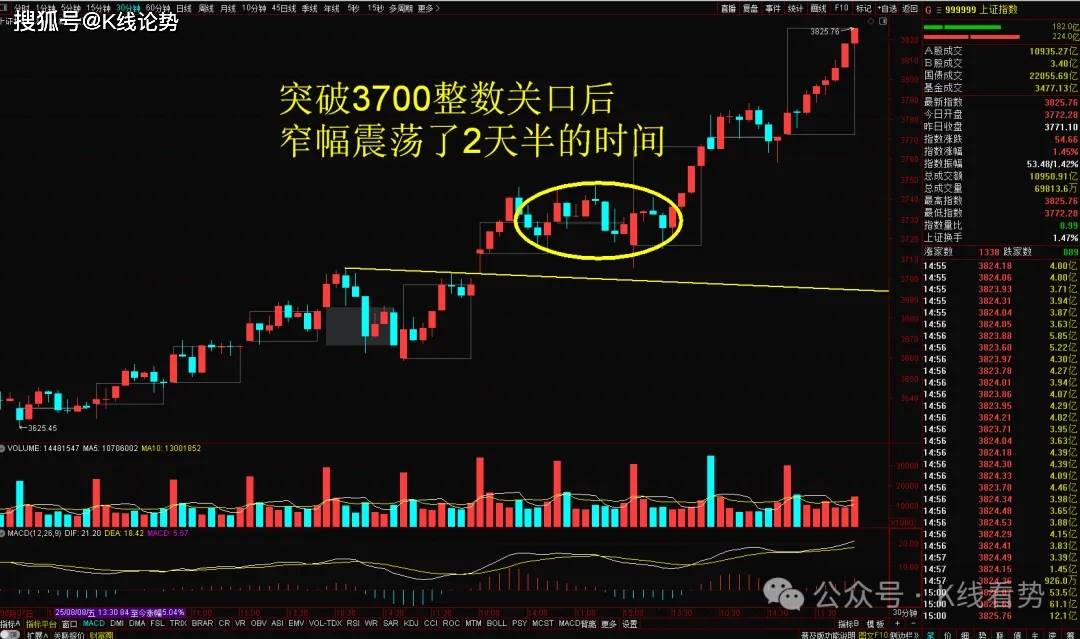
Core Viewpoint - The market has shown unexpected strength, with the Shanghai Composite Index quickly rebounding after a brief adjustment at the 3700-point level, indicating a strong upward momentum in the current market phase [1]. Group 1: Market Performance - The Shanghai Composite Index has undergone two significant trend changes, with the first occurring after breaking the key resistance at 3400 points, which opened up upward potential and set a target of 3650 points [3]. - After reaching 3630 points, the index adjusted to 3550 points before resuming its upward trend, breaking through 3650 points and continuing to rise [6]. - The second trend change occurred after surpassing the 3700-point mark, with the index experiencing a brief consolidation before accelerating again [6]. Group 2: Technical Analysis - The current market movement is characterized as being in the third wave of the Elliott Wave Theory, which is typically the strongest phase of a market cycle [10]. - The index is approaching the upper resistance level of the upward channel, with a critical resistance point identified at the 4000-point level, which aligns with historical highs [8]. Group 3: Future Outlook - There is caution advised regarding potential larger adjustments following rapid upward movements, especially after the anticipated interest rate cuts from the Federal Reserve in September [8]. - The market's strong performance is attributed to technical factors rather than fundamental ones, suggesting a focus on trading strategies and timing for investors [12].
各行其道,行稳致远
Guotou Securities· 2025-08-16 13:19
- The report mentions the "Four-Wheel Drive Model" as a quantitative model used for analyzing trading opportunities across various sectors[17] - The model identifies potential trading signals based on sector-specific metrics and ETF benchmarks, such as the CSI 931409 (China Securities Shanghai-Shenzhen Innovative Medicine Index) and CSI 931071 (China Securities Artificial Intelligence Index)[17] - The model highlights short-term rebound opportunities in sectors like banking, innovative medicine, and artificial intelligence, based on technical indicators such as low-level stabilization signals and moving average alignments[17]
现货黄金:3371防守已破,CPI或成多头点火器
Sou Hu Cai Jing· 2025-08-11 14:16
Core Viewpoint - The article discusses the current state of the gold market, highlighting the critical support level of 3371 that has been breached, and the implications of upcoming CPI data and Federal Reserve interest rate decisions on gold prices [1] Group 1: Market Dynamics - The breach of the 3371 support level indicates a potential shift in market sentiment towards gold, with increased volatility expected [1] - The anticipation of a Federal Reserve interest rate cut is driving a "buy the rumor" market behavior, suggesting that traders are positioning themselves ahead of potential price movements [1] - The slowdown in central bank gold purchases is leading to a change in pricing power within the gold market, which may affect future price trends [1] Group 2: Technical Analysis - The article emphasizes the importance of technical analysis, particularly wave theory, to predict potential risks of further price breakdowns in the gold market [1] - The depth of the current pullback and the strength of any subsequent breakouts are expected to increase, indicating a more volatile trading environment [1]
基于浮动频率傅里叶变换视角解析技术分析的数学本质及趋势判断
ZHONGTAI SECURITIES· 2025-08-07 13:05
Quantitative Models and Construction Methods - **Model Name**: Floating Frequency Fourier Transform Model **Construction Idea**: The model aims to overcome the limitations of traditional Fourier analysis by introducing floating frequencies, which adapt to real-world market dynamics such as macroeconomic changes and capital structure shifts[64][65][66] **Construction Process**: 1. **Filtering**: Use Butterworth filter to remove high-frequency noise and retain trend data. The filter is applied to the logarithmic weekly closing prices of the Shanghai Composite Index, with cutoff frequency set at 0.1 and sampling frequency at 1.0[65][67] 2. **Frequency and Amplitude Selection**: Perform discrete fast Fourier transform on filtered data to extract amplitude and phase information. Key frequencies are identified based on amplitude peaks, e.g., 94.1 weeks, 80.5 weeks, and 62.6 weeks[75][78] 3. **Waveform Reconstruction**: Combine selected frequencies and amplitudes to reconstruct the market trend curve. The reconstructed curve includes direct current components and sinusoidal terms with specific frequencies and initial phases[68][78] **Evaluation**: The floating frequency approach improves prediction accuracy by preserving real-world frequency characteristics and reducing extrapolation errors[64][65][66] - **Model Name**: Dual Optimization Floating Frequency Fourier Transform Model **Construction Idea**: Enhance the floating frequency Fourier transform by optimizing both amplitude and frequency to better fit market trends and improve prediction accuracy[85][86][87] **Construction Process**: 1. **Inner Optimization**: Use non-linear least squares to optimize amplitude values (sin and cos terms) for given initial frequency values. Frequencies are combined with the top two amplitudes from Fourier transform results to form a fitting curve[87][88] 2. **Outer Optimization**: Apply particle swarm optimization to determine the best floating frequencies (e.g., 39.02 weeks, 19.17 weeks, and 8.13 weeks). Training data spans 10 years (2014-2024), and the model is validated using 2024-2025 data[87][88][100] **Evaluation**: The dual optimization method significantly improves trend accuracy compared to simple floating frequency models, especially in capturing major market movements[85][86][100] Model Backtesting Results - **Floating Frequency Fourier Transform Model**: - Key frequencies: 94.1 weeks, 80.5 weeks, 62.6 weeks[78][80][81] - Observed discrepancies in certain periods, e.g., 2014-2015 and 2017-2019, indicating limitations in amplitude selection methods[81] - **Dual Optimization Floating Frequency Fourier Transform Model**: - Optimized frequencies: 39.02 weeks, 19.17 weeks, 8.13 weeks[100] - Improved accuracy in major trend predictions, e.g., capturing relative highs in September 2021[100] - Future predictions: Long-term upward trend from 2024 to 2027, with key oscillations in August 2025 and August 2026[102][103] Quantitative Factors and Construction Methods - **Factor Name**: Harmonic Sine Wave Factor **Construction Idea**: Simulate price movements using harmonic sine waves to replicate Elliott Wave patterns[39][42] **Construction Process**: - Formula: $y(n) = 4*sin(0.00125n)+2*sin(0.01n)+1*sin(0.04n)+0.5*sin(0.16n)$ - Variables: $n$ represents time, $y(n)$ represents price index - Frequency structure: Base frequency 0.00125, harmonic frequencies follow $2^k$ relationship (k=-3,0,2,4) - Amplitude decay: Coefficients follow $2^{-m}$ rule (m=-1,0,1,2)[39][42] **Evaluation**: Successfully replicates 5-3 wave patterns described in Elliott Wave theory, providing a mathematical basis for wave analysis[39][42] - **Factor Name**: Pletcher Fibonacci Wave Factor **Construction Idea**: Introduce quasi-periodic characteristics by incorporating non-harmonic frequencies into wave simulation[50][51] **Construction Process**: - Formula: $y(n) = 4*sin(0.00125n)+sin(0.01n)+1/2*sin(0.04n)+1/4*sin(0.17n)+1/8*sin(0.72n)+1/16*sin(0.305n)$ - Frequency relationships: Some frequencies maintain harmonic relationships (e.g., 0.00125, 0.01, 0.04), while others exhibit non-harmonic relationships (e.g., 0.17, 0.72, 0.305)[50][51] **Evaluation**: Captures floating frequency characteristics and quasi-periodic behavior, aligning with real-world market dynamics[50][51] Factor Backtesting Results - **Harmonic Sine Wave Factor**: - Successfully replicates Elliott Wave patterns, including 5-3 wave structures[39][42] - **Pletcher Fibonacci Wave Factor**: - Demonstrates quasi-periodic behavior, reflecting floating frequency characteristics in market data[50][51]

黄金走势推演与后市机会分析(2025.7.27)
Sou Hu Cai Jing· 2025-07-27 07:59
Group 1: Fundamental Analysis - Gold prices experienced fluctuations, with a strong dollar and progress in US-EU trade negotiations impacting demand for safe-haven assets, leading to a decline in gold prices [2] - Central bank buying provided support for gold, while hedge funds increased their bullish bets on gold to the highest level since April, with net long positions rising by 19% to 170,868 contracts [2] - The ongoing trade war initiated by the Trump administration has contributed to a 27% increase in gold prices this year [2] Group 2: US-EU Trade Negotiations - The European Commission indicated that a trade agreement with the US is imminent, although EU member states have approved counter-tariffs on US goods in case negotiations fail [3] - President Trump stated that he would meet with the EU on Sunday, estimating a 50% chance of reaching an agreement, which faces about 20 "sticking points" [3] Group 3: Federal Reserve Dynamics - Market expectations suggest that stable labor market data will support the Federal Reserve in maintaining interest rates between 4.25% and 4.50% in the upcoming meeting [4] - President Trump pressured the Federal Reserve for significant rate cuts during a surprise visit, emphasizing that the US should have the lowest interest rates [4] - Former Fed officials expressed support for a rate cut, while some analysts viewed Trump's visit as a political maneuver to increase pressure on the Fed [4] Group 4: Geopolitical Situations - In the Israel-Palestine conflict, Hamas officials reported positive progress in negotiations for a ceasefire, indicating readiness to finalize an agreement [5] - Turkey's foreign minister expressed optimism about coordinating a summit between Russia and Ukraine, suggesting a potential transitional resolution to the conflict [5] Group 5: Market Outlook - Upcoming events, including the Federal Reserve's decision, non-farm payroll data, and trade talks between China and the US, are expected to influence market trends in the second half of the year [6] - The technical analysis indicates that gold is likely entering a downward phase, with a focus on the triangular consolidation pattern and potential breakout directions [7][11]