流动性紧缩

Search documents
涨幅超过黄金 英国白银市场现轧空走势
Xin Hua Wang· 2025-10-13 14:08
Group 1 - The core viewpoint of the articles highlights the significant surge in silver prices driven by a historic short squeeze in the London market, with prices reaching their highest levels in decades and a year-to-date increase of over 70%, surpassing gold's performance [1] - On October 13, the spot silver price rose nearly 3%, approaching $52 per ounce, exceeding the previous week's intraday high, amid concerns over liquidity in the London market [1] - The decline in physical silver inventory in London to multi-year lows has triggered liquidity tightening, contributing to the price surge [1] Group 2 - Goldman Sachs analysts have warned investors to be cautious regarding the recent spike in silver prices, suggesting that while silver may continue to rise in the medium term, it carries greater volatility and downside risk compared to gold in the short term [3] - The report emphasizes that silver lacks the institutional and economic support that gold possesses, as it is not included in the International Monetary Fund's reserve framework and does not have significant holdings in modern central bank portfolios [3] - Analysts argue that central banks prioritize managing value over weight, indicating that even if gold prices rise, policymakers are unlikely to seek cheaper alternatives like silver due to the absence of central bank buying support for silver prices [3]


贵金属分析:白银-降息也支撑投资流入,但风险高于黄金-Precious Analyst_ Silver_ Rate Cuts Also Support Investment Flows But Riskier Than Gold
2025-10-13 01:24
Summary of the Conference Call on Silver Market Dynamics Industry Overview - The discussion centers around the silver market, particularly in relation to its price movements and investment dynamics compared to gold [1][5][17]. Key Points and Arguments 1. **Price Movements**: Silver closed above $50 per ounce for the first time, with expectations for further price increases in the medium term due to private investment flows similar to those lifting gold prices amid Federal Reserve rate cuts [1][5][17]. 2. **Volatility and Risk**: In the near term, silver is expected to experience significantly more volatility and downside price risk compared to gold, primarily due to its smaller and less liquid market [1][5][33]. 3. **Investment Demand**: Investment demand is identified as the main driver of silver prices, with estimates suggesting that 1,000 tonnes of inflows can lift silver prices by approximately 1.6% [6][7]. 4. **Market Liquidity**: The silver market is roughly nine times smaller than the gold market, which amplifies price movements and makes it more susceptible to sharp corrections [20][21]. 5. **Recent Rally**: A liquidity squeeze has contributed to a 35% rally in silver prices since August 26, driven by low inventories in London and increased ETF demand [23][32]. 6. **Central Bank Influence**: Unlike gold, silver lacks structural support from central bank purchases, which has historically kept the gold-silver price ratio within a range of 45-80 until gold decoupled in 2022 [14][18]. 7. **ETF Inflows**: The return of ETF inflows, alongside Fed rate cuts, is expected to support silver prices, although any temporary pullback in these flows could lead to disproportionate corrections [33][45]. 8. **Industrial Demand**: While silver benefits from industrial demand, particularly in solar panel production, this source of demand is limited as growth in solar is decelerating and manufacturers are using less silver per gigawatt [46]. Additional Important Insights - **Market Imbalance**: The current tightness in the London silver market is expected to normalize as higher prices incentivize metal to flow back from the US and other regions [32][28]. - **Tariff Concerns**: Concerns over potential US tariffs have previously drawn silver to the US, impacting the availability in London [23][42]. - **Historical Context**: The volatility of silver prices has historical precedents, with notable market squeezes in the past, such as the Hunt brothers' cornering of the market in the late 1970s [34][36][37]. This summary encapsulates the critical insights from the conference call regarding the silver market, highlighting its dynamics, risks, and potential future trends.
阿根廷流动性紧缩,总统米莱与顶级银行发生冲突
Sou Hu Cai Jing· 2025-08-20 18:07
Core Viewpoint - The newly implemented liquidity measures aimed at curbing the peso sell-off have intensified tensions between President Milei and the banking sector, threatening the profitability of banks [1] Group 1: Regulatory Changes - New regulations require financial institutions to meet reserve requirements on a daily basis instead of monthly, which is seen as inefficient and costly by bankers [1] Group 2: Industry Response - Major financial institutions are preparing a document with operational reform proposals to be submitted to the central bank [1]
阿根廷新流动性措施致米莱与大型银行关系紧张
Xin Hua Cai Jing· 2025-08-20 14:18
Group 1 - Argentina has implemented new liquidity measures to curb the sell-off of the peso, leading to tensions between President Milei and the banking sector [1] - The new regulations require banks to meet reserve requirements daily instead of monthly, which is seen as inefficient and costly by bankers [1] - The tensions began at the end of July when the government decided to issue local currency debt to withdraw pesos from the market, aiming to suppress the demand for dollars [1] Group 2 - The peso depreciated over 12% in July, marking its worst performance since President Milei took office in December 2023 [1] - This move has resulted in liquidity tightening, pushing real interest rates into double digits [1] - Subsequently, the central bank ordered banks to meet reserve targets daily and raised some reserve ratios, forcing banks to compete for pesos in a tight liquidity environment, which has increased financing costs [1]
两大“抽水机”将同时开启!2019年式的市场风暴恐正酝酿
Jin Shi Shu Ju· 2025-08-12 00:34
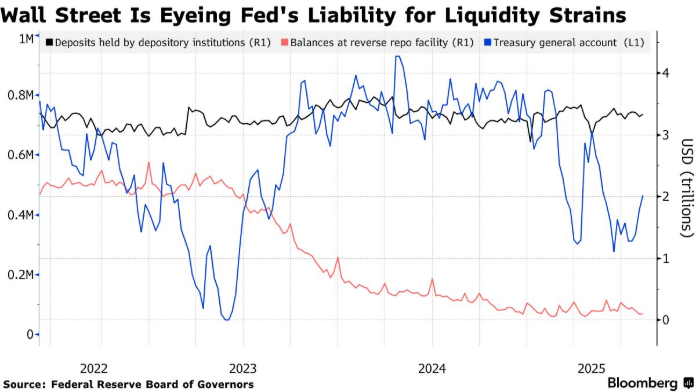
Group 1 - The U.S. Treasury is increasing the supply of short-term government securities to rebuild its cash reserves, raising concerns about potential liquidity tightening in the financing market [1] - Approximately $328 billion of short-term government securities have been issued since the debt ceiling was raised, which is drawing funds from the financial system [1] - The Treasury General Account (TGA) is expected to increase from about $490 billion to $860 billion by mid-September, potentially causing bank reserves to drop below $3 trillion for the first time since the pandemic [1] Group 2 - Federal Reserve Governor Waller indicated that the Fed could reduce bank reserves to around $2.7 trillion without disrupting the overnight financing market [4] - The usage of the Fed's overnight reverse repurchase (RRP) tool, a key measure of excess liquidity, has been declining, making bank reserves increasingly critical for financing market functionality [4] - Following a spike at the end of July, the balance of the RRP tool has been on a downward trend, with estimates suggesting it could approach zero by the end of August [4] Group 3 - As the RRP tool nears depletion, the increase in Treasury cash balances will directly consume bank reserves, raising the likelihood of a liquidity crunch similar to the one experienced in 2019 [5]
流动性紧缩冲击来袭?分析师预警:美债发行“抽走”资金,9月恐成市场压力临界点
Zhi Tong Cai Jing· 2025-08-11 23:59
Group 1 - The U.S. Treasury has issued approximately $328 billion in short-term government bonds to replenish cash reserves since the debt ceiling was raised, leading to concerns about potential liquidity constraints in the financing market [1] - Bank reserves remain ample at around $3.33 trillion, providing necessary buffers for the financing market, but this situation may change in late September as the Treasury's total account is expected to increase from about $490 billion to $860 billion [1] - The decrease in available reserves is projected to bring the bank reserve balance below $3 trillion for the first time since the pandemic, which may require increased attention to daily changes in overnight market conditions [1] Group 2 - Federal Reserve Governor Waller is reportedly a candidate for the next Fed Chair, suggesting that the Fed could reduce bank reserves to about $2.7 trillion, which is significant for assessing the impact on overnight funding markets [2] - The usage of the Fed's overnight reverse repurchase agreement (RRP) tool has been declining, indicating a reduction in excess liquidity, with estimates suggesting that RRP usage could drop to zero by the end of August [2] - The increase in Treasury cash balances is expected to lead to a decrease in bank reserves, raising the likelihood of funding stress in the market [2]
A 股风格转换的历史复盘与回测分析
Yin He Zheng Quan· 2025-07-16 11:54
Historical Review of Size and Style Rotation - From 2008 to 2010, small-cap stocks outperformed due to significant economic stimulus and abundant liquidity, with small-cap stocks being more sensitive to funding[6] - Between 2011 and 2013, large-cap stocks gained favor as economic growth pressures increased, highlighting their defensive attributes[8] - The period from 2013 to 2015 saw a resurgence of small-cap stocks driven by the rise of new industries and increased M&A activity, with leverage funds entering the market[9] - From 2016 to 2021, large-cap stocks dominated as supply-side reforms improved profitability for leading companies, while M&A activity cooled[10] - In the 2021 to 2023 period, small-cap stocks regained strength due to changes in funding structure and the rise of new industries like AI[12] Growth vs. Value Style Rotation - From 2011 to 2014, value stocks outperformed as the economy shifted from stimulus-driven growth to self-sustained growth, with GDP growth declining[15] - In 2015, growth stocks saw a rebound due to the rise of the internet and new industries, despite ongoing economic pressures[19] - The period from July 2016 to October 2018 favored value stocks as traditional industries improved amid tightening liquidity[21] - From November 2018 to July 2021, growth stocks outperformed due to the rise of new industries and favorable liquidity conditions[23] - From August 2021 to August 2024, value stocks are expected to dominate due to tightening global liquidity and geopolitical uncertainties[25] Key Indicators and Future Outlook - The historical analysis indicates that size and style rotations are influenced by fundamental factors, liquidity, valuation, and policy[27] - The correct prediction rate for small-cap outperformance since 2005 is 69%, while for growth vs. value since 2011 is 77%[2] - In the first half of 2025, small-cap stocks outperformed with a 7.54% increase in the CSI 1000 index compared to a 1.37% increase in the CSI 300 index[2] - The outlook for the second half of 2025 suggests a potential shift towards large-cap stocks due to institutional investor preferences and external uncertainties[2]
日本成贸易谈判首选,美国会开出哪些条件?
Hua Er Jie Jian Wen· 2025-04-14 10:06
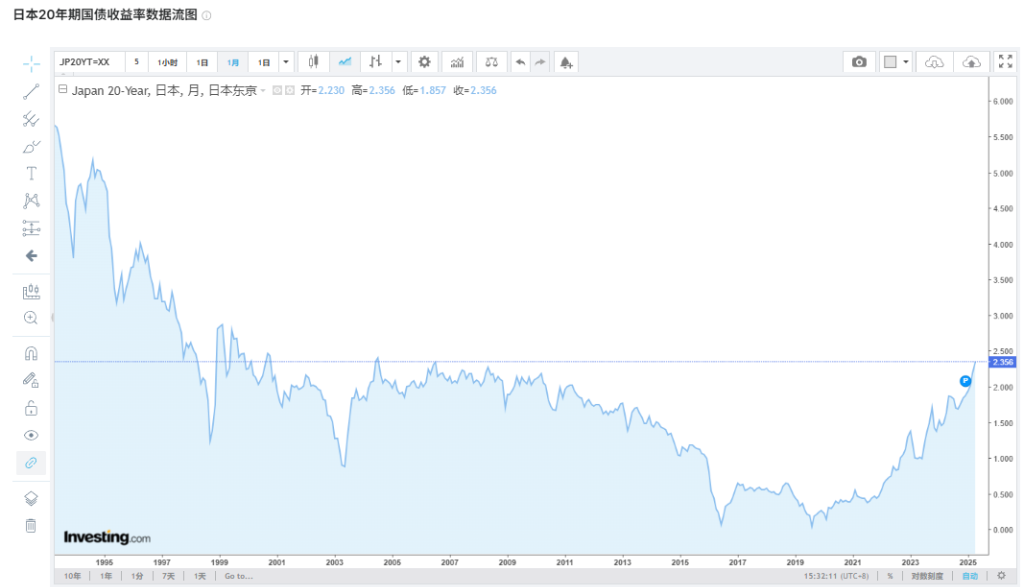
Core Viewpoint - The United States has initiated substantive trade negotiations with Japan, aiming to establish Japan as a model case for agreements with other countries following the recent tariff delay announcement [1][2]. Group 1: U.S.-Japan Trade Negotiations - Japan is the first country to engage in substantial trade negotiations with the U.S. after the tariff delay, indicating a strategic choice by the U.S. [1][2]. - The U.S. intends to use Japan as a template for future agreements with other nations, highlighting the importance of this negotiation [2]. Group 2: Potential U.S. Demands on Japan - The U.S. may push Japan to set explicit trade surplus targets, which could force Japan to reduce exports and increase imports, impacting its trade balance [3]. - Other potential demands include pushing for yen appreciation, which could harm Japanese export-oriented companies and hinder economic recovery [3]. - The U.S. might also request Japan to extend the maturity of its U.S. Treasury holdings, limiting Japan's foreign exchange reserve flexibility [3]. Group 3: Japanese Government's Stance - Japanese Prime Minister Kishida emphasized the importance of not compromising too quickly for a deal, advocating for a careful approach to negotiations [4]. - The potential U.S. demands could significantly impact Japan's financial markets, with warnings of a rapid depreciation of the dollar and a substantial appreciation of the yen [4]. Group 4: Impact on Japanese Economy and Bond Market - A stronger yen could reduce the competitiveness of Japanese exports, adversely affecting manufacturing firms that rely heavily on exports [5]. - Increased fiscal spending, as suggested by the U.S., would require Japan to issue more government bonds, exacerbating supply pressures in the bond market [5]. - The Japanese long-term bond market is already showing signs of instability, with recent spikes in yields indicating market volatility [5]. Group 5: Global Market Implications - Nomura warns of a global bond market imbalance and tightening liquidity risks, which could lead to broader credit contractions [7]. - The recent fluctuations in global stock markets and the widening of high-yield bond spreads indicate ongoing credit tightening [7].
集体飙涨!18万人爆仓
21世纪经济报道· 2025-03-03 02:22
Market Overview - On March 3, cryptocurrencies experienced a sudden surge, with Bitcoin rising over 7.7% and Ethereum increasing by more than 11% [1][2] - Notable price movements included ADA soaring by 63.6% and XRP jumping by 28.1% [1][2] Liquidation Events - Over the past 24 hours, more than 180,000 traders were liquidated, with a total liquidation amount of approximately $828 million [2] - The liquidation breakdown showed significant losses across various time frames, with $830 million liquidated in 24 hours, including $280 million from long positions and $550 million from short positions [3] Regulatory Developments - President Trump announced that XRP, Solana (SOL), and Cardano (ADA) will be included in the U.S. cryptocurrency reserves [5][8] - A new working group was established to assess the feasibility of creating a national digital asset reserve and to develop a regulatory framework for the cryptocurrency industry [6][7] Market Sentiment and Reactions - The recent surge in cryptocurrency prices is seen as a response to the Biden administration's regulatory stance on the crypto industry [7] - Trump's upcoming cryptocurrency summit on March 7 aims to further solidify his support for the crypto sector [10] Historical Context - The cryptocurrency market faced a significant downturn prior to the recent surge, with Bitcoin dropping over 5% on February 26, reaching below $84,000, a nearly 20% decline from its January peak [13][16] - The market's volatility was exacerbated by a major hacking incident at Bybit, which resulted in the loss of over $1.5 billion in assets, triggering panic among investors [16][19]