
生态出海

Search documents
汽车出口领跑,智能机器人出海加速!奇瑞全球化战略多路并进
Nan Fang Du Shi Bao· 2025-12-18 03:34
Core Insights - Chery Group has reported a significant increase in overseas sales, exporting approximately 1.1996 million vehicles in the first 11 months of 2025, marking a year-on-year growth of 14.7% [1][2] - The company has established a strong presence in the global market, covering over 120 countries and regions, and has been recognized as the leading exporter of automobiles in China [1][2] - Chery Group is committed to sustainable development, implementing a multi-level governance structure and actively pursuing carbon neutrality goals [1] Sales Performance - In November 2025, Chery Group sold 272,500 vehicles, with exports accounting for 136,700 units, reflecting a year-on-year increase of 30.3% [2] - Cumulatively, from January to November 2025, the company sold 2.5615 million vehicles, achieving an 11.1% year-on-year growth [2] - The total number of global users has surpassed 18.28 million, with over 5.7 million users located overseas [2] Product Development - Chery Group has launched several new models, including the fifth-generation Tiggo 8 and various electric and hybrid vehicles, enhancing its product lineup to cater to diverse market needs [3] - The company showcased 34 key models across five brands at the 2025 Guangzhou Auto Show, covering mainstream segments such as sedans, SUVs, and off-road vehicles [3] Brand Strategy - Chery Group's globalization strategy has evolved from merely exporting products to a more integrated approach involving brand collaboration and ecosystem development [4] - The company has established a diverse brand matrix, including OMODA, JAECOO, EXEED, CHERY, JETOUR, iCAUR, and LEPAS, to cover various market segments from mass to premium [4] - The launch of the luxury hybrid off-road vehicle, Zongheng G700, in Dubai has received high praise from international media, enhancing the brand's image and value [4] Research and Development - Chery Group has implemented a global R&D system, ensuring products meet stringent local standards and diverse market demands [5] - The company has achieved significant milestones in vehicle reliability, with the Jietu T1 successfully completing the Pan-American Highway challenge [5] - Chery's EXEED brand has received a five-star safety rating from Euro NCAP, with a total of 56 models achieving various five-star safety certifications, leading among Chinese automakers [5] Robotics Development - Chery Group has made notable advancements in the field of intelligent robotics, with its Chery Mocha robots entering over 30 countries [6][7] - The first humanoid robot, Mornine, has received multiple EU certifications, marking a significant achievement in the robotics sector [6] - The company plans to expand its robotics sales strategy from automotive 4S stores to broader public service sectors, aiming for substantial sales growth by 2030 [7]

自动驾驶企业加速出海 重点布局新兴市场
Zhong Guo Jing Ji Wang· 2025-12-18 00:15
萝卜快跑获颁阿布扎比首批全无人驾驶商用牌照、滴滴出行加入阿布扎比智能和自动驾驶汽车产业 集群、文远知行与优步在阿布扎比正式启动L4级纯无人Robotaxi商业化运营……近期,阿联酋首都阿布 扎比迎来中国自动驾驶企业的集中落地。 业内人士认为,随着商业化的不断加快和全球化的持续推进,包括中东和东南亚地区在内的新兴市 场逐渐成为我国自动驾驶企业出海的重点区域。 政策驱动 企业扎堆中东地区 我国自动驾驶企业为何"扎堆"选择中东市场?赛迪顾问汽车产业研究中心资深分析师徐墨娴表 示:"中东地区,以其明确的顶层设计优势和基础设施投入,吸引着企业加速全无人驾驶技术的应用闭 环。" 阿联酋政府发布的《2030人工智能战略》允许全无人驾驶车辆上路,并提出"到2030年,全国25% 的日常交通由智能和无人驾驶承担"。"这一国家层面的政策支持,为萝卜快跑在阿布扎比获得全无人驾 驶Robotaxi商业化运营许可提供了关键保障。"萝卜快跑相关负责人表示。 随着技术方案日趋成熟,商业化进程不断加快,企业开始将目光投向政策更友好、场景差异化更显 著的新兴市场。在这一阶段,除政策与基建优势突出的中东地区外,东南亚市场也凭借庞大的人口基数 和 ...
美豪丽致酒店:依托平台生态势能,打造品牌差异化竞争力
Cai Fu Zai Xian· 2025-12-17 09:15
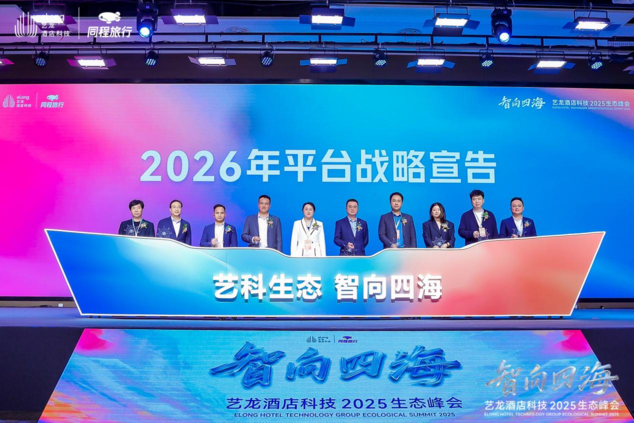
Core Insights - The annual ecological summit held by eLong Hotel Technology showcased its strategic path of "ecologization, digitalization, and globalization" [1] - The summit highlighted the collaborative strength of various professional sectors and brands under eLong Hotel Technology's ecosystem [1] Group 1: Brand Presentation - The summit provided a platform for Meihua Lizi Hotel to engage deeply with industry stakeholders and investors [3] - The "Meihua Lizi Hotel 3.0" product and its "Spring Breeze Ambassador" butler IP system were prominently displayed, attracting investor interest due to their proven "high quality-price ratio" investment model [3] - The all-day open model room of Meihua Lizi Hotel reinforced investor confidence in the brand's implementation capabilities [5] Group 2: Service System - The "Spring Breeze Ambassador" butler IP system was highlighted as a key emotional service symbol, designed to enhance guest repurchase through personalized care and surprise experiences [9] - As of November 2025, training for the "Spring Breeze Ambassador" system has covered over 50 stores, with 13 senior and 23 junior ambassadors selected, demonstrating solid implementation and talent development [10] Group 3: Global Expansion - Meihua Lizi Hotel's internationalization aligns closely with eLong Hotel Technology's "ecological overseas" strategy, with a successful project signed in Kuala Lumpur, Malaysia, expected to open in 2026 [12] - The brand aims to deepen strategic collaboration with the platform, continuously optimize its product and service models, and pursue high-quality growth alongside investors [12]

从“小生态”到“大生态”,艺龙酒店科技驱动产业革新
Di Yi Cai Jing· 2025-12-15 05:21
Core Insights - The core viewpoint of the news is that Yilong Hotel Technology is transitioning from "scale expansion" to "value cultivation" in the hotel industry, emphasizing a strategic path centered on "ecological foundation, digital intelligence empowerment, local revitalization, and overseas expansion" [1] Group 1: Company Overview - Yilong Hotel Technology, established by Tongcheng Travel in 2021, has opened nearly 3,000 hotels and serves over 300 cities in China, with successful operations in eight overseas countries including Malaysia and the UAE as of September 2025 [1] - The company has developed a "water drop" brand matrix covering high-end to light mid-range segments, with brands like Yilong Hotel 2.0 and Meihua Lize 3.0, and has tailored offerings for niche markets [4] Group 2: Ecosystem Development - Yilong Hotel Technology has evolved into an industry ecosystem platform that provides digital solutions and cost optimization services, supported by eight empowerment systems including brand, technology, and supply chain [2] - The company has achieved significant growth in brand incubation, with Aijidong Hotel expanding from 30 to over 400 signed locations in three years, and Meihua Lize Hotel signing over 500 locations in just two years [4] Group 3: Digital Empowerment - The launch of "Digital Empowerment Product 3.0" includes AI-based tools that enhance operational efficiency, such as an AI site selection tool that generates investment reports in seconds, and AI voice assistants that improve service quality [5] - The implementation of these digital solutions has led to a reduction in front desk check-in times by nearly 30 seconds and an increase in RevPAR by 5%-8% year-on-year, transforming digitalization from a cost item to a core profit driver [5] Group 4: Asset Revitalization - In response to the challenges of the stock era in the hotel industry, Yilong Hotel Technology has developed a comprehensive empowerment system for revitalizing aging assets, reducing renovation cycles from months to days [6] - The company offers a complete brand hierarchy for asset renovation, catering to various property conditions and investment budgets, and collaborates with financial institutions to provide support for qualifying projects [6] Group 5: Overseas Expansion Strategy - Yilong Hotel Technology's "ecological overseas expansion" strategy focuses on providing a complete hotel investment and operation solution, addressing localization challenges and supply chain support [7] - The company has made substantial progress in developing an international PMS system and establishing overseas warehouses in Southeast Asia to facilitate efficient logistics for hotel supplies [7][8] - This approach emphasizes a light asset model that fosters deep collaboration with local partners, aiming to build sustainable competitive advantages in overseas markets [8]
蝉联全球第一!出海模式发生转变 中国汽车重塑全球价值链
Yang Shi Xin Wen· 2025-12-05 20:42
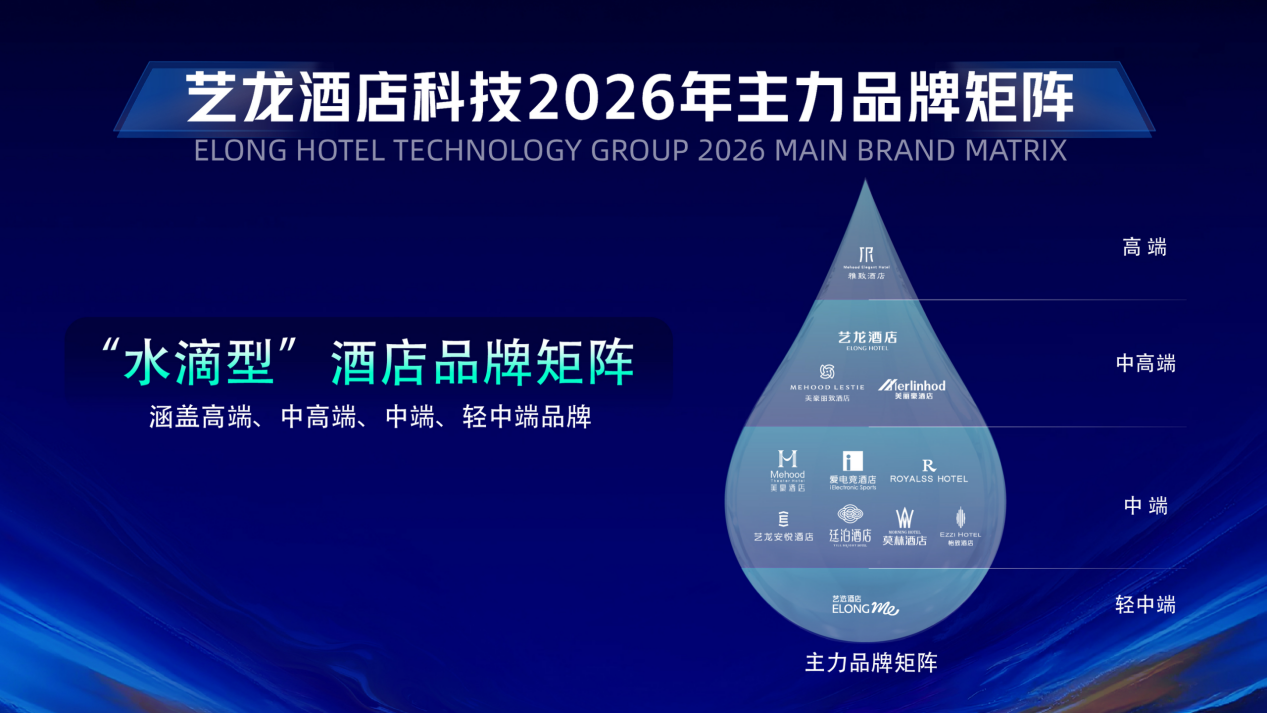
Core Insights - China's automotive exports have become a significant highlight in foreign trade, with an expected export volume of 6.8 million vehicles in 2024, maintaining the global lead [1] - The export strategy is shifting from merely exporting complete vehicles to a more comprehensive approach that includes technology, branding, supply chains, and standards [1] Group 1: Export Growth - In 2023, China is projected to export 6.8 million vehicles, continuing to lead the global market [1] - The company has sold over 2.56 million vehicles from January to November 2023, with more than 1.19 million of those being exports, marking a 14.7% year-on-year increase [4] Group 2: Brand Development - A new brand targeting overseas markets has sold over 690,000 units across 55 major markets as of October [6] - The new brand is positioned as "Born in China, Serving the World," reflecting a global service orientation [6] Group 3: Strategic Partnerships - A Chinese automotive company is collaborating with the world's fourth-largest automotive group to provide smart electric vehicle solutions, leveraging international market access and local operational capabilities [11] - This partnership exemplifies a "borrowed boat" strategy, contrasting with the "build your own boat" approach of earlier exporters [10] Group 4: Ecosystem Development - A Chinese car manufacturer has established a modern production base in Indonesia, aiming to create a complete ecosystem for electric vehicles that includes R&D, manufacturing, supply chain, sales, and services [13] - This "ecosystem export" model has attracted investments and created numerous job opportunities in Indonesia, while also upgrading local supporting industries [15] Group 5: Industry Transformation - The Chinese automotive industry is transitioning from merely selling products to building brands and moving from single-point exports to systemic exports [17] - This transformation represents a shift from "Made in China" to "Created in China," indicating a more mature and confident approach to global competition [17]
韩妆出海的二次跃迁
Xin Lang Cai Jing· 2025-12-03 05:27
Core Insights - The global expansion of South Korean cosmetics has reached a new level, with exports hitting record highs and diversifying into various segments, particularly in emerging markets like North America [1][3] - The shift from a "Korean Wave single product-driven" model to a systematic collaboration of technology, branding, channels, and culture has allowed Korean cosmetics to establish a sustained trend in international markets [1] Group 1: Export Performance - In the first three quarters of 2025, South Korea's cosmetics exports reached $8.52 billion (approximately 606.27 billion RMB), marking a year-on-year increase of 15.4% and setting a record for the same period [1] - The third quarter alone saw exports of $3 billion (approximately 213.48 billion RMB), a 17.6% increase year-on-year, achieving the highest quarterly export figure in history [1] - Korean cosmetics were exported to a record 205 countries and regions, with the U.S. being the largest market at $1.68 billion (approximately 119.46 billion RMB), accounting for 19.7% of total exports [3] Group 2: Product Structure and Innovation - The export structure shows that base makeup accounts for 41.7% of total exports, with a value of $3.55 billion (approximately 252.44 billion RMB), followed by sunscreen and anti-wrinkle products at 25.5% [6] - New Korean beauty brands like TIRTIR and Beauty of Joseon have gained popularity globally, with major retailers like Ulta Beauty and Sephora introducing these brands to their shelves [6] - The innovation in product forms, such as cushion foundations and "no-makeup" looks, has allowed Korean cosmetics to define new usage scenarios and experience standards [7][9] Group 3: Strategic Insights for Chinese Cosmetics - The successful strategy of Korean cosmetics involves shifting from a "shelf product" mentality to a "anchor product" approach, focusing resources on a few core categories to redefine industry standards [21] - Chinese cosmetics brands are encouraged to leverage their understanding of local skin types and aesthetics to create 1-2 "anchor products" that represent "Chinese creation" on a global scale [24] - The competition in global markets is evolving from ingredient-based competition to product definition, necessitating a focus on creating iconic product forms that address global pain points [27] Group 4: Cultural and Aesthetic Framework - The deeper support for Korean cosmetics globalization lies in a complete "Korean aesthetic system," which promotes values like youthfulness and natural beauty through cultural narratives [27] - Different brands contribute to the narrative of "K-Beauty," creating a rich and attractive image of Korean cosmetics as a cultural symbol [27] - For Chinese cosmetics, there is a need to develop a unique "Chinese aesthetic system" that resonates globally, drawing from deep cultural roots while translating them into contemporary design language [30]

致力智能新能源长城汽车11月新能源车型销售4.01万辆 同比增长11.43%
Jin Tou Wang· 2025-12-02 05:09
Core Insights - Great Wall Motors achieved a total vehicle sales of 133,216 units in November, marking a year-on-year increase of 4.57% [2] - The company focused on smart new energy vehicles, selling 40,113 units in November, which is an 11.43% increase year-on-year [2] - Sales of models priced above 200,000 yuan reached 41,155 units, reflecting a significant year-on-year growth of 31.56% [2] - Overseas sales reached 57,309 units, a remarkable increase of 32.70%, setting a new record [2] - Cumulative sales from January to November 2025 reached 1,199,652 units, representing a 9.26% year-on-year growth, achieving the best historical performance for this period [2] Sales Performance - Haval brand sold 75,383 units in November, with a cumulative global sales of 10.11 million units [6] - The new Haval H6L was launched at a promotional price starting from 103,900 yuan, featuring advanced technology and spacious design [6] - The WEY brand saw a significant increase in sales, with 12,763 units sold in November, up 81.14% year-on-year [6] - Tank SUV sales reached 24,135 units, showing a year-on-year growth of 19.55% [7] - ORA brand sold 4,821 units in November, with a cumulative global sales of 549,600 units [7] - Great Wall Pickup sold 16,011 units in November, with a month-on-month increase of 13.65% [7] Global Expansion and Innovation - Great Wall Motors is accelerating its global presence, having delivered 100 new energy vehicles for the COP30 conference and showcasing a mobile hydrogen power generation unit [9] - The company is expanding its product offerings in international markets, including the launch of the WEY brand in Thailand and the Mountain Sea Cannon in Chile [9] - The company aims to enhance its market competitiveness and brand value by focusing on high-quality vehicle production and smart new energy technology [5]

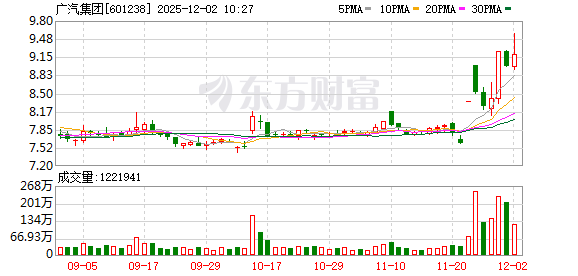
【高端访谈】广汽国际化将从全球布局步入全面精耕细作——访广汽国际总经理卫海岗
Xin Hua Cai Jing· 2025-12-02 02:26
Core Viewpoint - GAC Group is nearing the completion of its internationalization strategy, with a focus on deepening its presence in local markets and enhancing brand influence globally [2][3] Group 1: Internationalization Strategy - Internationalization is the core strategic direction for GAC Group, with GAC International serving as the main vehicle for this initiative [3] - GAC International has three main missions: enhancing global brand influence and overseas sales, constructing a global R&D, production, supply, and service loop, and promoting the transition of Chinese automotive brands from "product export" to "industry integration" and "brand elevation" [3] - In the first ten months of this year, GAC Group's self-owned brand vehicle exports increased by 36% year-on-year, indicating that international markets are becoming a significant growth point [3] Group 2: Market Focus and Expansion - Australia is identified as a key market for GAC International, serving as a benchmark for the Australia-New Zealand and South Pacific regions, and as a hub for building a new energy ecosystem in the Southern Hemisphere [5][6] - GAC International plans to launch three representative models in Australia and aims to introduce over 10 new products within five years, achieving full coverage of powertrains and product categories [6] - The company has established nine sales outlets in major Australian cities, with plans to expand to 100 outlets in the next five years [6] Group 3: Ecosystem Development - GAC International is transitioning from "product export" to "ecosystem export" and "system export," focusing on a collaborative model that includes technology, ecology, and culture [8] - The company has invested over 58 billion yuan in R&D, emphasizing advancements in smart technology, safety, and power [8] - GAC aims to replicate its successful domestic manufacturing practices, such as the "lighthouse factory" model, in international markets like Thailand [8] Group 4: Sustainable Development and Corporate Responsibility - GAC is committed to becoming a leader in integrated energy solutions, promoting global green energy development through a comprehensive energy network [9] - The company adheres to ESG principles and actively participates in social responsibility projects in various countries, aiming to respect local cultures and integrate into local societies [9]

长城汽车:以“慢功夫”锻造“硬实力”
Zheng Quan Ri Bao Zhi Sheng· 2025-11-25 16:39
Core Viewpoint - Great Wall Motors has transformed from a small local factory into a global automotive enterprise through continuous improvement and strategic investments in technology and market expansion [2][3][8]. Company History - Founded in 1984 as a small automotive modification factory in Baoding, Great Wall Motors faced significant challenges in a market dominated by joint ventures and imports [2]. - The company initially struggled with low sales and high debt, selling only six modified vehicles per month in 1990 [2]. - Under the leadership of Chairman Wei Jianjun, the company pivoted to focus on the pickup truck market, launching its first model, the Great Wall Deer, in 1996, which quickly gained domestic and international traction [2][3]. Corporate Development - The company underwent several transformations, including a name change and public listings, which provided essential funding and established a modern corporate governance structure [3]. - Great Wall Motors has grown to employ 82,000 people and sells over one million vehicles annually, with six major brands under its umbrella [3]. Technological Advancements - Great Wall Motors has invested nearly 50 billion yuan in R&D over the past five years, with a projected 10.4 billion yuan for 2024, employing a team of 23,000 engineers [4]. - The company has developed a complete system for the independent research and manufacturing of core components, including a 3.0T V6 engine that breaks the technical monopoly of foreign brands [4][5]. - Great Wall Motors has filed nearly 50,000 patents, with 29,000 granted, including 1,118 patents for new energy vehicles in the first half of the year [6]. Global Expansion Strategy - The company has shifted from a product export model to a comprehensive "ecological export" strategy, establishing a full ecological base in Brazil and expanding manufacturing capabilities in Europe and Southeast Asia [7][8]. - Great Wall Motors has established three major manufacturing bases in Russia, Thailand, and Brazil, with over 1,500 global users and more than 2 million units sold overseas [8].
观车 · 论势 || 全球份额稳定提升,中国汽车持续释放活力
Zhong Guo Qi Che Bao Wang· 2025-11-12 02:53
Group 1 - Global automobile sales reached 8.55 million units in September 2025, marking a 10% year-on-year increase and a 12% month-on-month increase, with China's global market share rising to 38%, up 2 percentage points from the previous year [1] - Major Chinese automakers, including SAIC, BYD, and Geely, reported monthly sales exceeding 300,000 units in October, showing significant year-on-year growth, while new entrants like Leap Motor, Xiaomi, and Xpeng also achieved record sales [1][2] - The Chinese automotive industry is experiencing a robust growth driven by favorable domestic policies, particularly in the new energy vehicle sector, which has led to increased consumer demand and a diverse product offering [2] Group 2 - Chinese automakers have established a comprehensive supply chain and have achieved self-research capabilities in key components such as power batteries and electric control systems, enhancing their competitiveness in the domestic and global markets [2] - Two Chinese companies, BYD and Geely, ranked 6th and 9th respectively among the world's top 10 automakers, reflecting the growing influence of Chinese brands in the global automotive market [3] - Chinese automakers are adapting their products to meet the specific needs of different regional markets, moving away from a one-size-fits-all approach to a more localized product strategy [3][4] Group 3 - The "going out" strategy of Chinese automakers has evolved from simple exports to establishing local production facilities overseas, which helps comply with local regulations and reduces trade barriers [4] - The new model of "ecological going out" emphasizes systematic output, localized research and development, and supply chain collaboration, enhancing the overall competitiveness of Chinese automotive brands in international markets [4] - Future growth in global market share for Chinese automobiles will depend on continued technological innovation, industry collaboration, and the establishment of a comprehensive global service ecosystem [4]
