行业转型

Search documents
老凤祥(600612):收入增速改善盈利稳健 积极顺应趋势推新品
Xin Lang Cai Jing· 2025-11-19 08:27
Group 1 - The company's Q3 2025 revenue reached 14.65 billion, representing a 16.0% year-on-year increase, while the net profit attributable to shareholders was 220 million, down 41.6% [1] - The decline in net profit is primarily attributed to the timing of government subsidies, with a significant portion received in Q2 this year compared to Q3 last year [1] - The company is adapting to changing consumer trends by adjusting its product structure, focusing on differentiation, lightweight, and high-end products in response to high gold prices [1] Group 2 - In Q3 2025, China's gold jewelry demand was 84 tons, a decrease of 18% year-on-year and an increase of 21% quarter-on-quarter, marking the weakest performance for the third quarter since 2007 [1] - The company has launched new product lines, such as the "Shengtang Fenghua" series and the "Golden Lychee" series in collaboration with the film "Chang'an's Lychee," aiming to engage younger consumers through cultural themes [1] - Recent adjustments to the value-added tax policy for gold in China may temporarily hinder short-term demand but are expected to accelerate the industry's shift towards innovation in craftsmanship and design [2] Group 3 - The company is projected to achieve net profits of 1.62 billion and 1.77 billion in 2025 and 2026, respectively, with a current dividend yield of 4%, indicating a certain margin of safety [2] - The company is recognized as a leading state-owned gold jewelry brand with a rich historical background, and it is making steady progress by integrating Chinese culture and contemporary collaborations into its product development [2]

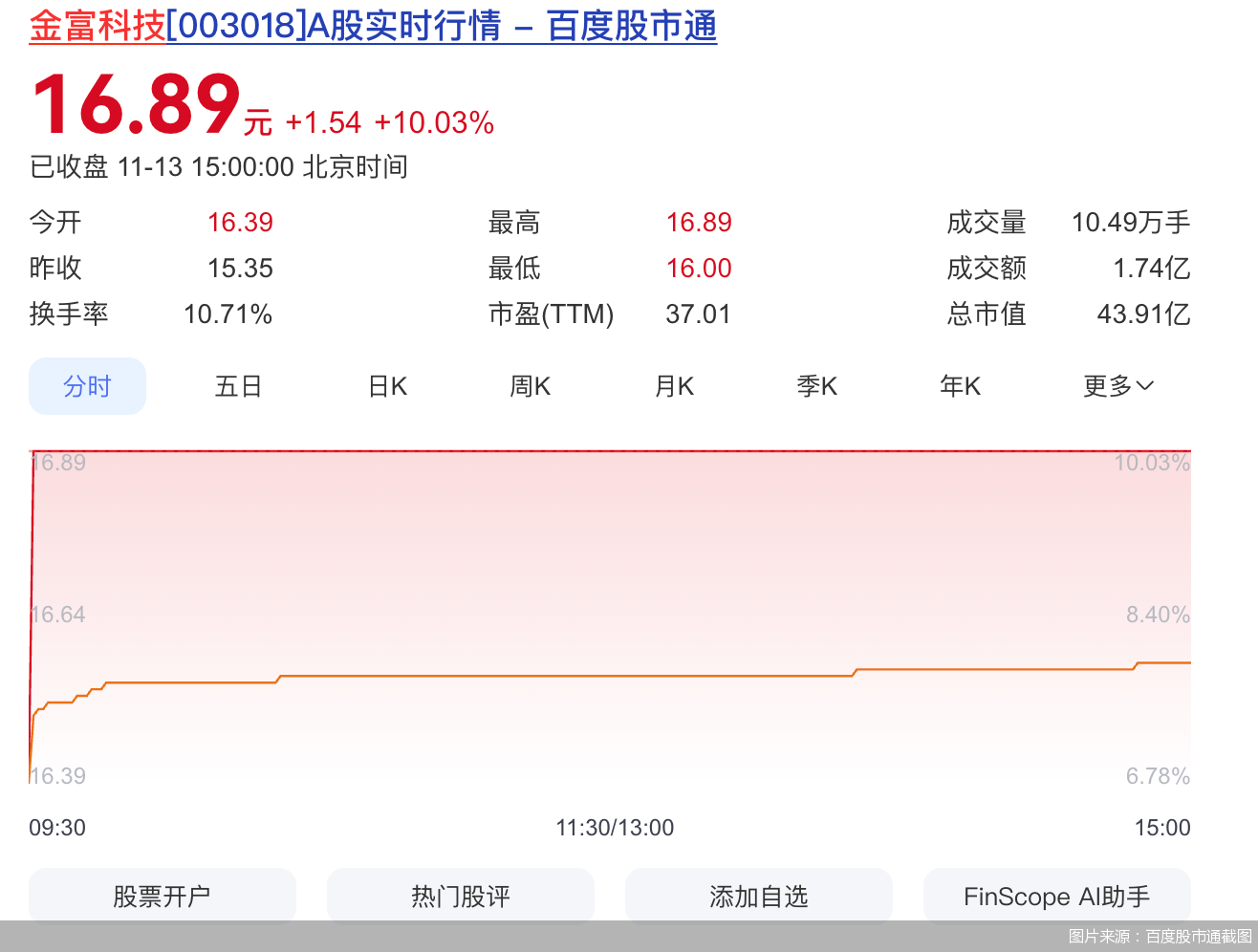
金富科技三连板背后:三季度业绩下滑,营收依赖大客户
Bei Jing Shang Bao· 2025-11-13 13:33
Core Viewpoint - Jinfu Technology's stock price has surged nearly 100% since January 1, despite poor financial performance in the first three quarters of 2025, indicating market optimism about its long-term growth potential and strategic partnerships with major clients like JingTian and Coca-Cola [1][5][6]. Financial Performance - For the first three quarters of 2025, Jinfu Technology reported revenue of approximately 662 million yuan, a year-on-year decline of 9.12%, and a net profit of about 93.44 million yuan, down 19.45% year-on-year [5]. - The decline in performance is attributed to new production bases entering a ramp-up phase, leading to increased depreciation and amortization costs, as well as temporary production disruptions [5]. Market Position and Client Base - Jinfu Technology primarily serves major beverage companies, with its top five clients contributing significantly to its revenue, although the proportion of sales to these clients has decreased [6]. - The company ranks fifth in revenue among eight industry peers, with its revenue of 662 million yuan, while the top competitor, Zijiang Enterprise, reported 7.82 billion yuan [7]. Strategic Initiatives - Jinfu Technology is transitioning from plastic packaging to metal packaging, with plans to invest in new projects and acquire 100% of Xiangzhao Technology to enhance its production capacity for new types of pull-ring caps [8]. - The company has reduced its investment commitments for several projects, indicating a strategic shift in focus towards metal cap production [8]. Industry Trends - The demand for plastic bottle caps is increasing due to the growth in bottled water and beverage consumption, with the bottled water market in China exceeding 100 billion yuan [7]. - The industry is experiencing a shift towards high-end products, driven by health-conscious consumer trends and the demand for lightweight and biodegradable caps [7].


在拐点中寻找新增长:麦肯锡倪以理对话通力大中华区总裁包嘉峰
麦肯锡· 2025-11-12 02:01
Core Insights - KONE has been deeply rooted in the Chinese market for nearly 30 years, establishing the largest manufacturing base and the second-largest R&D center globally in Kunshan. The company is now focusing on service digitalization, urban renewal, and sustainable development as new growth drivers amid a market adjustment phase [2][3]. Group 1: Company History and Market Position - KONE entered China in 1996, with Kunshan being its largest elevator and escalator manufacturing facility and the second-largest R&D center globally. China is KONE's largest single market, benefiting from the rapid urbanization over the past 15-20 years [3][4]. - The company initially focused on new elevator installations, achieving over 20% growth during China's infrastructure boom. However, with a significant decline in new projects post-2021, KONE is shifting its strategy [3][4]. Group 2: Strategic Focus Areas - KONE's strategy now emphasizes three main areas: 1. Digitalization and efficiency in service maintenance, which has become the largest business segment in China [4][5]. 2. Urban renewal, particularly the installation of elevators in old buildings and the modernization of equipment over the next 15-20 years [5]. 3. Sustainable development and the adoption of green technologies, with energy feedback technology expected to save approximately 1200 RMB per elevator annually [5][6]. Group 3: Competitive Landscape and Pricing Challenges - Local brands are aggressively expanding in lower-tier cities, impacting KONE's profit margins. However, KONE maintains a commitment to safety, quality, and compliance, leveraging its local supply chain to compete effectively [7][8]. - KONE employs a dual-brand strategy to cater to different market segments, with its second brand focusing on niche applications such as freight and rural areas [8][9]. Group 4: Global Supply Chain and Market Strategy - KONE's supply chain remains primarily based in China, which is crucial for maintaining competitive production costs. The company has also established manufacturing capabilities in India, Italy, and Mexico to serve nearby markets [9][10]. - Despite geopolitical challenges, KONE's commitment to the Chinese market remains strong, viewing it as a critical hub for innovation and growth [9][10]. Group 5: Digital Transformation and Workforce Development - KONE's digital transformation involves three phases: data collection, predictive maintenance, and AI-assisted operations. The company is also investing in retraining its workforce to adapt to these changes [11][12]. - The company aims to balance its new equipment and service business, moving from an 80:20 ratio to a more sustainable 50:50 structure [10][11]. Group 6: Future Outlook - KONE views China as a priority market, focusing on residential product development and leveraging local insights for global operations. The company believes that despite slowing growth, China remains the center of the global elevator industry [14][15].

券商上调两融业务规模传递三大积极信号
Zheng Quan Ri Bao· 2025-11-03 16:11
Core Viewpoint - The recent increase in the margin financing and securities lending (referred to as "two融") business limit from 150 billion to 250 billion yuan by a major listed brokerage reflects a significant market recovery and enhanced investor trading willingness, indicating a positive shift in market sentiment and strategic positioning by brokerages [1] Group 1: Market Liquidity and Confidence - The expansion of the two融 business serves as a "dual amplifier" for market liquidity and confidence, enhancing overall market activity and injecting more capital into the market [2] - As of October 29, the total balance of the two融 market surpassed 2.5 trillion yuan, reaching a historical high, with a notable increase in new credit accounts opened in September, which rose by 288% year-on-year [2] Group 2: Risk Management and Operational Precision - The current expansion of the two融 business is accompanied by strengthened risk management mechanisms among brokerages, highlighting a trend towards more refined operations within the industry [3] - Some brokerages have increased the financing margin ratio to 100% in response to market conditions, effectively controlling investor leverage and preventing excessive risk accumulation [3] Group 3: Competitive Landscape and Service Ecosystem - The competition in the two融 business is shifting from a "price war" to a "value war," prompting brokerages to enhance customer service and expand market share [4] - Many brokerages are moving beyond low-level competition by improving service offerings, such as developing innovative products and integrating research and asset management resources to create a comprehensive service ecosystem [4] Group 4: Industry Transformation and Market Health - The adjustment of the two融 business scale transcends mere expansion, serving as a window to observe the healthy development of the A-share market and the transformation of the securities industry [5] - The evolution of the two融 business reflects a dual advancement in risk control and service transformation, contributing to a more mature and resilient market environment [5]
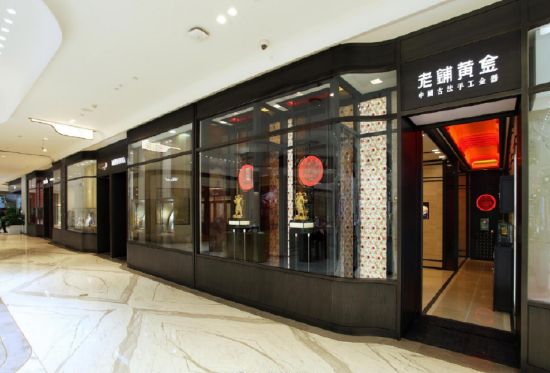
老铺黄金“逆势”涨价最多28%,消费者直呼“受不了”
新浪财经· 2025-10-30 12:12
Core Viewpoint - The article discusses the recent developments of Laopu Gold, including its significant price increases, stock issuance plans, and the implications of fluctuating gold prices on its business strategy and financial health [3][11][19]. Group 1: Stock Issuance and Financial Strategy - Laopu Gold plans to raise HKD 2.7 billion through a new H-share issuance, with 70% of the funds allocated for gold reserves, reflecting an increased focus on stockpiling compared to previous fundraising efforts [3][11]. - The company has faced challenges as its stock price has fallen below the issuance price, creating uncertainty around the success of the fundraising [3][11]. - Laopu Gold's financial reports indicate a rapid depletion of funds from previous financing rounds, with only HKD 10 million remaining from a prior HKD 2.7 billion issuance [11][13]. Group 2: Price Increases and Market Response - Laopu Gold has announced its third price increase of the year, with product prices rising between 18% to over 28%, significantly higher than previous increases of 5% to 13% [4][7][16]. - Consumer reactions have been mixed, with some expressing shock at the steep price hikes, leading to a noticeable decline in foot traffic at stores post-announcement [8][7]. - The company’s pricing strategy appears to be a response to rising international gold prices, which have increased by approximately 60% this year, while Laopu Gold's price increase has been around 50% [8][14]. Group 3: Inventory and Cost Management - Laopu Gold's inventory has surged from RMB 4.1 billion in 2024 to RMB 8.7 billion in the first half of this year, indicating aggressive stockpiling to support growth [13][14]. - The company's gross margin has declined from 42% in 2024 to 38% in the first half of this year due to rising sales costs associated with high inventory replenishment prices [14][19]. - Analysts suggest that Laopu Gold's strategy of increasing prices while gold prices fall reflects a shift in consumer perception, moving from a weight-based valuation to a cultural and identity-based valuation of gold [17][19].

老铺黄金“逆势”涨价最多28%,消费者直呼“受不了”
Xin Lang Cai Jing· 2025-10-30 10:39
Core Viewpoint - The article discusses the recent developments of Laopu Gold, including its significant price increases, stock issuance plans, and the impact of fluctuating gold prices on its business operations and consumer behavior [2][5][12]. Group 1: Stock Issuance and Financial Strategy - Laopu Gold plans to raise HKD 27 billion through the issuance of H-shares, with 70% of the funds allocated for gold reserves, reflecting an increased focus on stockpiling compared to previous fundraising efforts [2][8]. - The company has recently completed a financing round in May, with approximately HKD 1 million remaining from the previous fundraising, indicating rapid utilization of funds [7][8]. - Laopu Gold's financial strategy includes using 10% of the raised funds for store expansion and optimization, while 20% is designated for working capital and general corporate purposes [8]. Group 2: Price Increases and Consumer Reaction - Laopu Gold has announced its third price increase of the year, with product price hikes ranging from 18% to over 28%, significantly higher than previous increases of 5%-13% [5][12]. - Consumer feedback indicates that the recent price hikes have led to a noticeable decline in store traffic and inquiries, as many consumers express discomfort with the rapid price increases [5][12]. - The company's pricing strategy appears to be a response to rising international gold prices, which have increased by approximately 60% this year, while Laopu Gold's price increase has been around 50% [5][9]. Group 3: Inventory and Profitability Concerns - Laopu Gold's inventory balance has surged from CNY 4.1 billion in 2024 to CNY 8.7 billion in the first half of this year, indicating aggressive stockpiling to support growth [8][9]. - The company's gross margin has declined from 42% in 2024 to 38% in the first half of this year due to rising sales costs associated with high inventory replenishment prices [9][10]. - Laopu Gold's short-term borrowings have more than doubled, increasing from CNY 1.37 billion at the end of 2023 to CNY 3.18 billion in mid-2024, raising concerns about liquidity and financial stability [9][10]. Group 4: Market Positioning and Future Outlook - The company's pricing strategy reflects a shift towards a brand positioning that emphasizes cultural identity and value retention rather than direct correlation with gold prices [12][13]. - Analysts suggest that Laopu Gold's approach to pricing and inventory management may indicate a strategic bet on future gold price increases, despite the risks associated with current market volatility [12][14]. - The potential for continued sales growth hinges on consumer perceptions of gold as a valuable asset, with some analysts predicting that if gold prices rise significantly, Laopu Gold's performance could improve dramatically [12][14].
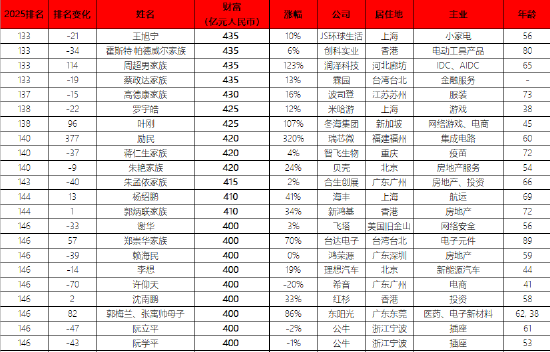
王旭宁以435亿元身家位列《胡润百富榜》第133名,排名下降21名,九阳股份“增利不增收”
Xin Lang Cai Jing· 2025-10-30 10:13
Core Insights - Wang Xuning ranks 133rd on the 2025 Hurun Rich List with a net worth of 43.5 billion RMB, experiencing a wealth increase of 4 billion RMB, or 10%, despite a drop in ranking by 21 places compared to last year [1][2] - JS Global Life, a leader in the small home appliance sector, owns well-known brands such as Shark, Ninja, and Joyoung, focusing on innovative and design-driven products to enhance daily life quality globally [1][2] Financial Performance - In the first three quarters of 2025, Joyoung reported total revenue of 5.585 billion RMB, a year-on-year decrease of 9.66%, while net profit attributable to shareholders was 124 million RMB, an increase of 26.03% [1] - For Q3 2025, total revenue was 1.598 billion RMB, down 10.99% year-on-year, but net profit attributable to shareholders rose to 854,600 RMB, reflecting a significant increase of 101.11% [1] - The company's profitability improved, with gross margin increasing by 2.47% and net margin rising by 49.17% year-on-year, indicating strong operational resilience [1][2] Market Position and Strategy - Wang Xuning and his team are driving dual growth for Joyoung and SharkNinja, reinforcing their leadership in the Chinese small appliance market while injecting new momentum into global household quality of life [2] - The company continues to push for technological innovation and market expansion, suggesting promising growth potential in the future [2]

又一暴利行业跌落神坛!曾利润高达800%的躺赚生意,现也扛不住了
Xin Lang Cai Jing· 2025-10-22 19:15
Core Insights - The restaurant industry has seen a significant increase in competition, with over 5.5 million new registered related enterprises from 2023 to 2024, while 2.566 million have been canceled or revoked, indicating a highly saturated market [3][5][27] - The once lucrative second-hand restaurant equipment recovery industry, which had profit margins reaching 800%, is now facing severe downturns, with many recovery businesses struggling to survive [7][27][30] - The decline in new restaurant openings has led to a surplus of second-hand equipment, causing prices to drop and profit margins to shrink, with some recovery businesses unable to sell their inventory [24][26][27] Industry Overview - The restaurant industry is characterized by low entry barriers, resulting in intense competition and a high failure rate among new entrants [16][19] - The second-hand equipment recovery sector thrived in the past due to a lack of transparency and high demand for quick sales from restaurant owners, allowing recovery businesses to profit significantly [12][15][27] - As competition increases, recovery businesses are now facing challenges in selling equipment, leading to a decrease in sales volume and profitability [24][26][30] Market Dynamics - The ratio of new openings to closures in the restaurant sector is alarming, with one new restaurant opening for every closure, creating a challenging environment for recovery businesses [5][19] - Recovery businesses are now experiencing a shift in their operational model, moving towards more stringent quality checks and customer service enhancements to adapt to the changing market [30][32] - The traditional business model of relying on walk-in customers is becoming obsolete, prompting recovery businesses to explore digital marketing and social media strategies to attract clients [33]

年内23家券商核心高管变动 “80后”走向台前
Zheng Quan Ri Bao· 2025-10-16 15:55
Group 1 - The core viewpoint of the article highlights the frequent changes in senior management within the securities industry, reflecting the need for companies to optimize governance structures and development strategies in response to intensified market competition and accelerated industry transformation [1][2]. - In 2023, 23 securities firms have experienced changes in core executives, including positions such as chairman and general manager, indicating a significant turnover in leadership roles [1]. - Notable retirements among veteran executives due to age, such as the chairman of Zheshang Securities and others from major firms, have contributed to the high turnover rate [1]. Group 2 - Changes in the ownership structure of securities firms often lead to corresponding adjustments in executive positions, with many new executives coming from the firms' new shareholders [2]. - The appointment of new executives from shareholder groups is seen as a strategy to enhance strategic collaboration and resource integration, allowing firms to better leverage shareholder resources for stable development [2]. - The overall trend in the industry shows a younger and more diverse professional background among executives, with a shift towards individuals born in the 1970s and 1980s [3]. Group 3 - The emergence of younger executives with varied professional experiences is indicative of the industry's need for innovation and strategic optimization amid rapid changes [3]. - Younger executives are perceived to be more attuned to internet thinking, technology, and emerging business models, which can help firms capitalize on opportunities in financial technology and digital transformation [3]. - The diverse backgrounds of these executives are expected to bring new management ideas and resources from different sectors, aiding firms in exploring differentiated development paths and building unique competitive advantages [3].

前三季度超两千家离场,保险机构“悔棋”背后的考量
Bei Jing Shang Bao· 2025-10-08 12:00
Core Insights - The insurance industry is undergoing significant restructuring, with a notable increase in the number of branch closures and market exits by insurance intermediaries in the first three quarters of the year [1][3][4] Summary by Sections Branch Closures - In the first three quarters of the year, insurance companies closed 2,436 branches, marking a year-on-year increase of 21.07%. Only 268 new branches were established, resulting in a net decrease of nearly 2,000 branches [1][3] - The closures are primarily concentrated in life insurance companies, particularly in county-level areas and third to fourth-tier cities [4] Market Exits - A total of 163 insurance intermediary institutions exited the market, including 18 insurance agencies and 3 insurance brokerage firms. This number exceeds the total exits from previous years [4][5] - The trend of declining insurance intermediaries has been ongoing for six consecutive years, with the total number dropping to 2,539 by the end of 2024, a decrease of 27 from 2023 [6] Factors Driving Changes - The primary drivers for the closures and exits include the need for cost reduction and efficiency, the rise of digital technology, and regulatory guidance aimed at eliminating inefficient institutions [7][8] - The average operational cost for branches exceeds one million annually, making it difficult for those in lower-tier cities to remain viable [8] Future Outlook - The future layout of insurance institutions is expected to shift towards a combination of functional offline services and intelligent online operations, focusing on specialized scenarios such as experience centers and elder care [10] - The industry is anticipated to prioritize digitalization and refined operations, moving away from geographical coverage to value coverage, emphasizing technology investment and professional agent capabilities [10]