十四五规划

Search documents
中国证监会主席吴清:“十四五”期间新增核准13家外资控股证券基金期货机构来华展业兴业
Bei Jing Shang Bao· 2025-09-22 08:21
会上,中国证监会主席吴清表示,"十四五"期间,新增核准13家外资控股证券基金期货机构来华展业兴 业,外资持有A股市值3.4万亿元,269家企业境外上市,中国资本市场的"朋友圈"越来越大。 北京商报讯(记者郝彦)9月22日,国务院新闻办公室举行"高质量完成'十四五'规划"系列主题新闻发布 会,介绍"十四五"时期金融业发展成就。 ...
滚动更新丨潘功胜、李云泽、吴清、朱鹤新齐聚,发布会要点汇总
Di Yi Cai Jing· 2025-09-22 07:55
Group 1: Financial Achievements During the 14th Five-Year Plan - The average annual growth rate of loans to technology-based small and medium-sized enterprises, inclusive of inclusive micro-loans and green loans, exceeded 20% during the 14th Five-Year Plan [1][2] - As of June, China's banking sector total assets reached nearly 470 trillion yuan, ranking first in the world, with stock and bond market sizes ranking second globally [2] - The banking and insurance sectors provided an additional 170 trillion yuan in funding to the real economy over the past five years, with average growth rates for technology loans, medium to long-term loans in manufacturing, and infrastructure loans at 27.2%, 21.7%, and 10.1% respectively [5] Group 2: Market Developments and Trends - The A-share technology sector now accounts for over 25% of the market capitalization, significantly higher than that of the financial and real estate sectors [7] - The annualized volatility of the Shanghai Composite Index during the 14th Five-Year Plan was 15.9%, a decrease of 2.8 percentage points compared to the previous five-year period [8] - By the end of August, various types of long-term funds held approximately 21.4 trillion yuan of A-share circulating market value, representing a 32% increase from the end of the previous five-year period [10] Group 3: Regulatory and Governance Enhancements - A total of 2,214 administrative penalties were issued during the 14th Five-Year Plan, marking a 58% increase compared to the previous five-year period, with fines totaling 41.4 billion yuan [9] - The financial governance system has been modernized, with significant improvements in regulatory capabilities and risk prevention in the context of expanding foreign exchange openness [12] Group 4: Foreign Exchange and International Standing - Since the beginning of the 14th Five-Year Plan, foreign exchange reserves have remained stable above 3 trillion USD, with the last two years maintaining levels above 3.2 trillion USD [11] - The financial sector has made significant strides in international competitiveness and influence, with a well-established cross-border payment and clearing network for the renminbi [2]
滚动更新|“十四五”期间科技型中小企业贷款年均增速超20%
2 1 Shi Ji Jing Ji Bao Dao· 2025-09-22 07:32
Core Insights - During the "14th Five-Year Plan" period, the average annual growth rate of loans to technology-based small and medium-sized enterprises (SMEs) exceeded 20% [3] Group 1: Financial Contributions to the Real Economy - Over the past five years, the banking and insurance sectors have provided an additional 170 trillion yuan to the real economy through various financing methods, effectively playing a key role in financing channels [2] - The average annual growth rates for loans in key areas are as follows: scientific and technological loans at 27.2%, medium to long-term loans for manufacturing at 21.7%, and infrastructure loans at 10.1% [2] - The balance of inclusive loans for small and micro enterprises reached 36 trillion yuan, which is 2.3 times that of the end of the "13th Five-Year Plan," with interest rates decreasing by 2 percentage points [2] Group 2: Achievements in Financial Services - The financial services to the real economy have significantly improved in quality and efficiency during the "14th Five-Year Plan" period, with average annual growth rates for technology-based SMEs, inclusive small and micro loans, and green loans all exceeding 20% [3] - As of June this year, the total assets of the banking sector in China approached 470 trillion yuan, ranking first in the world, while the stock and bond market sizes ranked second globally [4] - China's foreign exchange reserves have maintained the world's largest position for 20 consecutive years, and the country leads in green finance, inclusive finance, and digital finance [4]
国开行“十四五”以来累计发放超6万亿元基础设施中长期贷款
Xin Hua Wang· 2025-09-22 04:46
Core Insights - The National Development Bank has issued over 6 trillion yuan in medium to long-term loans for infrastructure since the beginning of the "14th Five-Year Plan" period, along with an investment of 425.6 billion yuan from the National Development Bank Infrastructure Investment Fund, increasing the proportion of infrastructure financing balance by 9 percentage points compared to the end of the "13th Five-Year Plan" [1][2] Group 1 - The bank focuses on supporting 102 major projects outlined in the national "14th Five-Year Plan," including significant cross-province and cross-basin projects, as well as projects related to national strategic implementation and key area security capacity building [1] - Customized financial services are provided through differentiated credit policies, with a tailored approach for each project [1] - The bank enhances collaboration between its headquarters and branches, utilizing various financial products and services to strengthen comprehensive financial support [1] Group 2 - Future plans include reinforcing functional positioning, focusing on core responsibilities, and actively supporting the implementation of "two heavy" constructions and the expansion and quality improvement of "two new" policies [2] - The bank aims to continuously improve financial services throughout the entire lifecycle of infrastructure projects and promote innovation in market-oriented investment and financing models [2] - There is an emphasis on tracking major projects for the "15th Five-Year Plan" to support the establishment of a modern infrastructure system [2]
今日看点|潘功胜、李云泽、吴清等将出席国新办发布会,介绍“十四五”时期金融业发展成就
Jing Ji Guan Cha Wang· 2025-09-22 00:49
Group 1 - Key Point 1: The State Council Information Office will hold a press conference on September 22, featuring key figures from the financial sector, including the Governor of the People's Bank of China, to discuss the achievements of the financial industry during the "14th Five-Year Plan" period [2] - Key Point 2: The Loan Prime Rate (LPR) for September will be announced on September 22, covering both one-year and five-year terms [3] - Key Point 3: The Fifth World Biosphere Reserve Congress will take place from September 22 to 25 in Hangzhou, Zhejiang, marking the first time the event is held in Asia, with approximately 4,000 representatives from over 150 countries and regions [3] Group 2 - Key Point 1: On September 22, a total of 22 companies will have their restricted shares unlocked, with a total of 1.203 billion shares released, amounting to a market value of 13.833 billion yuan [4] - Key Point 2: The companies with the largest number of unlocked shares include Xingxing Technology, Huafeng Superfiber, and Chuanfa Longmang, with respective unlock volumes of 600 million shares, 227 million shares, and 125 million shares [4] - Key Point 3: The companies with the highest market value of unlocked shares are Xingxing Technology, Hahong Huaton, and Huafeng Superfiber, with values of 2.67 billion yuan, 2.364 billion yuan, and 1.719 billion yuan respectively [4] Group 3 - Key Point 1: A total of 280 billion yuan in 7-day reverse repos will mature today, following a central bank operation on September 15 with an interest rate of 1.40% [5] - Key Point 2: Economic data releases include the Eurozone's consumer confidence index for September and Canada's industrial product price index for August [6]


中金:“十五五”的潜在政策动态
中金点睛· 2025-09-21 23:54
Core Viewpoint - The "14th Five-Year Plan" marks a critical period for China's financial cycle and economic transformation, shifting from reliance on real estate and traditional infrastructure to a new economic development model focused on innovation, green development, coordination, openness, and sharing [2][4]. Economic Transformation - The economic development model is transitioning to rely more on new economies, with a notable decline in housing prices and a slowdown in credit growth, leading to increased downward pressure on economic growth [2][4]. - The "14th Five-Year Plan" has seen most major indicators completed ahead of schedule, including GDP growth and labor productivity [6][9]. Innovation and Technology - R&D investment has significantly increased, with total R&D expenditure reaching 3.6 trillion yuan in 2024, up 1.2 trillion yuan from the end of the "13th Five-Year Plan" [10]. - The complexity of China's economy has risen, with advancements in key technologies such as integrated circuits and artificial intelligence [12][21]. Green Development - China has made significant strides in green development, with forest coverage exceeding 25% and a notable reduction in PM2.5 levels [21][22]. - The energy structure is rapidly transforming, with non-fossil energy consumption expected to reach around 20% by 2025 [22]. Regional and Urban-Rural Coordination - The "14th Five-Year Plan" emphasizes balanced development between urban and rural areas, with significant improvements in agricultural infrastructure and rural self-development capabilities [27][28]. - Urbanization rates have increased, with the urbanization rate reaching 67% by 2024, ahead of the planned target [28][45]. High-Level Opening Up - China's exports showed resilience, with total exports reaching 3.58 trillion USD in 2024, an increase of nearly 1 trillion USD from the end of the "13th Five-Year Plan" [30][34]. - The negative list for foreign investment has been continuously reduced, with all restrictions in the manufacturing sector eliminated [38][40]. Shared Development - The "14th Five-Year Plan" prioritizes people's well-being, with a focus on reducing income and public service disparities [43][44]. - The average disposable income per capita increased from 32,200 yuan in 2020 to 41,300 yuan in 2024, reflecting a growth rate of approximately 5.8% [44][46].
今日15时将举行重要发布会,央行、证监会等负责人出席
Guan Cha Zhe Wang· 2025-09-21 23:45
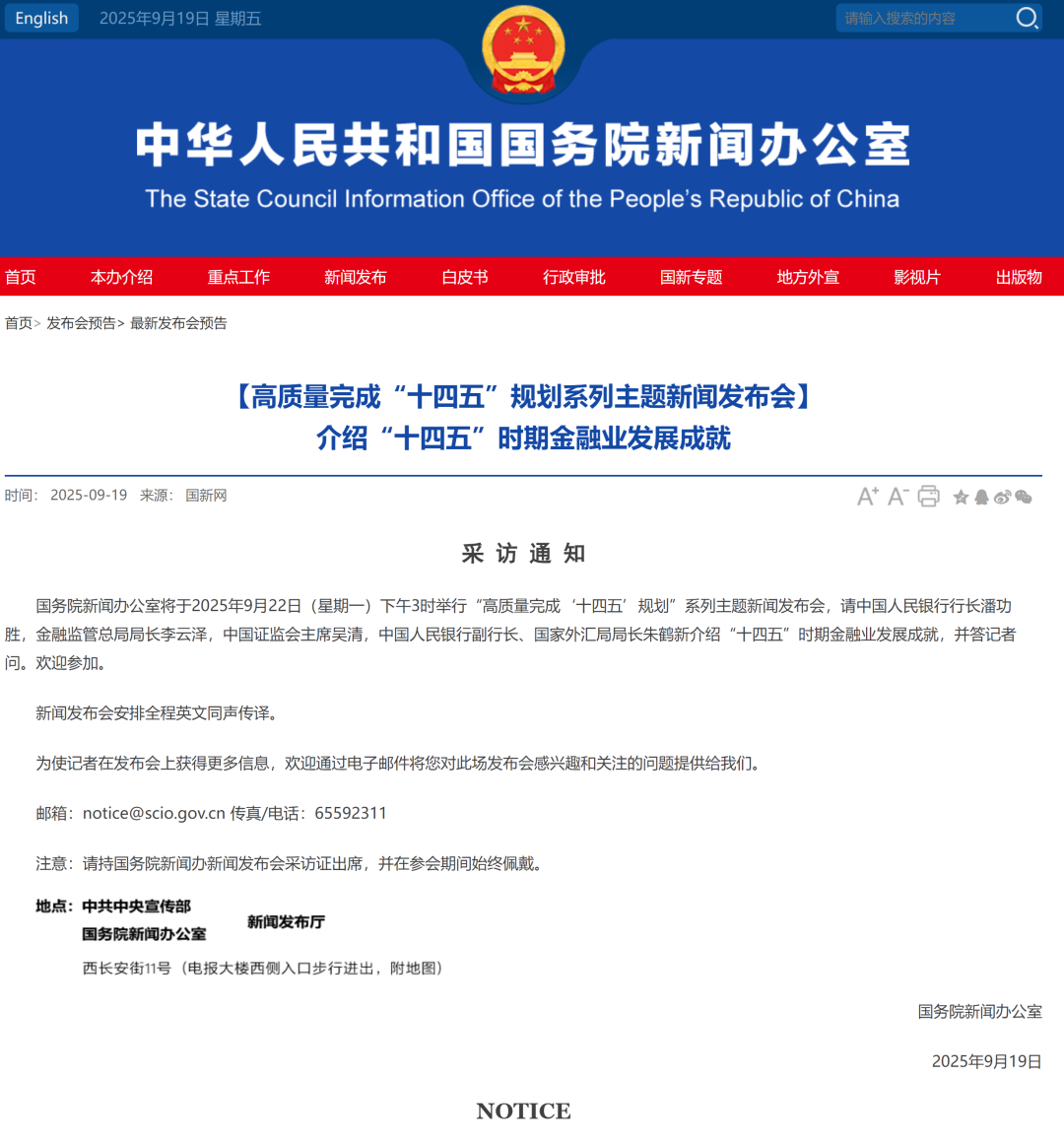
Group 1 - The State Council Information Office will hold a press conference on September 22 at 3 PM to discuss the achievements of the financial industry during the "14th Five-Year Plan" period [1] - Key officials attending the conference include Pan Gongsheng, Governor of the People's Bank of China, Li Yunzhe, Director of the Financial Regulatory Administration, Wu Qing, Chairman of the China Securities Regulatory Commission, and Zhu Hexin, Deputy Governor of the People's Bank of China and Director of the State Administration of Foreign Exchange [1]
粤开宏观:迈向中等发达国家:“十四五”经济回顾与“十五五”经济增长目标测算
Yuekai Securities· 2025-09-21 13:22
Economic Overview - During the "14th Five-Year Plan" (2021-2025), China's nominal GDP is expected to exceed 140 trillion yuan, an increase of over 35 trillion yuan compared to the end of the "13th Five-Year Plan" [3] - The average annual growth rate of real GDP from 2021 to 2024 is projected at 5.5%, while nominal GDP is expected to grow at an average of 6.9% [3] - By the end of the "14th Five-Year Plan," nominal GDP growth is anticipated to be lower than real GDP growth, indicating a need for price level recovery [4] Future Growth Targets - To achieve the goal of reaching a per capita GDP of 27,000 USD by 2035, the average annual nominal GDP growth during the "15th Five-Year Plan" (2026-2030) should be at least 5% [5] - The ideal target for nominal GDP growth could be around 6%, providing a buffer against uncertainties such as exchange rate fluctuations [5] - The average annual growth rate of real GDP should ideally be maintained at approximately 4.8% during the "15th Five-Year Plan" [46] Policy Recommendations - It is suggested to set clear economic growth targets during the "15th Five-Year Plan" to address demand insufficiency and promote supply-demand balance [50] - A comprehensive target system is proposed, including a nominal GDP growth target of 5%, real GDP growth of 4.8%, and a shift in overall price growth from negative to positive [52] - Specific targets for consumption and income growth include a 6.5% annual increase in resident consumption and a 6% increase in resident income [52]
8月固定资产投资累计同比增速下滑,A股指数高位震荡:2025.09.15-2025.09.19日策略周报-20250921
Xiangcai Securities· 2025-09-21 08:12
Core Insights - The A-share market is currently experiencing a "slow bull" trend, supported by new policies and investment strategies, with expectations of a gradual upward movement in September 2025 [7][28]. - Recent macroeconomic data indicates a decline in fixed asset investment and retail sales, which may lead to increased market expectations for favorable policy interventions [6][25]. Market Performance - During the week of September 15-19, 2025, A-share indices showed mixed results, with the Shanghai Composite Index down 1.30% and the ChiNext Index up 2.34%, indicating volatility in the market [3][9]. - The largest weekly fluctuation was observed in the Sci-Tech Innovation Board Index, which had a volatility of 5.95% [9]. Sector Analysis - Among the 31 first-level industries, coal and electric equipment sectors performed well, with weekly gains of 3.51% and 3.07% respectively, while banking and non-ferrous metals sectors saw declines of -4.21% and -4.02% [4][19]. - In the second-level industry analysis, home appliance components and engineering machinery led with weekly gains of 11.35% and 6.10%, while small metals and marine equipment sectors faced significant declines of -7.66% and -6.99% [5][22]. Macroeconomic Data - Fixed asset investment growth continued to decline, with an August year-on-year growth rate of 0.50%, driven by decreases in infrastructure, manufacturing, and real estate investments [6][25]. - Retail sales growth also weakened, with August's year-on-year growth at 3.40%, leading to a cumulative growth rate of 4.60%, the lowest level in 2025 [26][28]. Investment Recommendations - The report suggests focusing on sectors related to anti-involution, technology (especially AI), and environmental protection, as these areas are expected to benefit from ongoing policy support and market trends [7][28].
重磅发布会 下周一15点!潘功胜、李云泽、吴清、朱鹤新将出席
Zheng Quan Shi Bao· 2025-09-19 15:02
Group 1 - The State Council Information Office will hold a press conference on September 22, 2025, at 3 PM to discuss the achievements of the financial industry during the "14th Five-Year Plan" period [1] - Key officials from the People's Bank of China, the Financial Regulatory Administration, and the China Securities Regulatory Commission will present the developments in the financial sector and answer questions from reporters [1]