
AI应用

Search documents
马化腾的元宝10亿红包背后,是买用户习惯,还是为新路径豪赌?
Sou Hu Cai Jing· 2026-02-05 14:26
Core Insights - Tencent's Yuanbao launched a significant "10 billion" Spring Festival campaign, quickly topping the Apple App Store free chart and generating massive social sharing within the WeChat ecosystem [1][3] - However, the campaign faced backlash due to user complaints about disruptive sharing practices, leading to WeChat's intervention to limit Yuanbao's links [3][6] - The campaign's design conflicts with platform rules and user experience, raising concerns about compliance and product effectiveness [6][7] Marketing Strategy - The campaign aims to replicate the success of WeChat's 2014 red envelope strategy, leveraging high traffic during the Spring Festival to drive user engagement [6][8] - Unlike the original WeChat red envelopes, which required users to bind bank cards, Yuanbao's model lacks a strong connection between cash incentives and AI functionality, making user transition difficult [7][8] - The immediate success of the campaign is driven by incentives rather than genuine interest in the AI product, leading to a surge of non-target users and subsequent service instability [8][9] User Engagement and Retention - Yuanbao's growth appears fragile, with previous data showing a significant drop in monthly active users (MAU) after reducing marketing spend, indicating reliance on capital-driven growth [8][9] - In contrast to established e-commerce platforms that have systematic promotional strategies, Yuanbao's approach lacks a long-term user engagement plan [9][10] - The campaign's reliance on cash incentives to attract users to a non-essential product raises questions about its sustainability and long-term competitiveness [10][20] Competitive Landscape - Competitors like ByteDance's Doubao and Alibaba's Qianwen are integrating AI into their ecosystems more effectively, focusing on user needs and seamless service integration [17][19] - Yuanbao's strategy heavily depends on cash rewards, while competitors are leveraging existing ecosystems to enhance user experience without large-scale cash giveaways [19][20] - The challenges faced by Yuanbao reflect broader issues within Tencent's AI strategy, particularly its slow response to market demands and lack of integration within its core social platform [20] Historical Context - Tencent has previously employed similar high-investment strategies in other products, such as Weishi and Tencent Weibo, but these efforts failed to establish lasting user engagement [12][14] - The failure of past initiatives highlights the importance of product differentiation and community building, which Yuanbao currently lacks [13][14] - The lessons from these past experiences suggest that without a compelling product value proposition, short-term user acquisition strategies will not lead to sustainable growth [13][20]



浙文互联,数字营销与数字文化双领军,国内唯一!
Xi Niu Cai Jing· 2026-02-05 13:14
浙文互联子公司浙文天杰、百孚思、派瑞威行等,在各自细分领域都具有强大的竞争力,形成了品牌营销、数字营销、精准营销及内容营销的全链条服务体 系。 下面,我们来看看浙文互联这几年的营业收入情况: 作者:夏日 浙文互联是数字营销老牌企业了,成立超过20年,2004年上市。 让人没有想到的是,浙文互联2026年18个交易日累计涨幅73.84%,多次登上龙虎榜,期间共录得8个涨停板。 这一轮强劲表现,主要得益于AI应用与GEO赛道持续高热。浙文互联自2023年起持续投入AI技术研发,结合其多年数字营销经验,率先推动AI在营销与文 化领域的应用落地。随着2026年AI应用进入加速落地期,浙文互联"AI+营销""AI+文化"的双轮前瞻战略逐步释放价值,带动股价快速攀升。 马斯克宣布开源X平台推荐算法,此举被市场广泛解读为"马斯克布局GEO领域"的重要信号,GEO概念迅速升温,进一步催化了浙文互联相关概念热度,推 动其股价持续走强。 GEO就是生成式引擎优化,是一种随着生成式人工智能兴起而产生的新型营销范式,抢占AI入口的必选项。浙文互联敏锐地抓住了这一趋势,推出了覆盖 国内主流模型的GEO智能体HochiGEO。据悉,该智 ...


微信“大义灭亲”封禁元宝,AI红包战玩不转了?
2 1 Shi Ji Jing Ji Bao Dao· 2026-02-05 12:55
最近腾讯自家上演了一出"大义灭亲"的精彩戏码。 这最近刚火起来的元宝红包,发了三天,就被它的兄弟部门——微信,亲手给掐断了链接!这波操作, 堪称春节档最迷惑的商业大戏。这到底是怎么一回事呢? 2月1日,腾讯元宝正式上线春节红包活动,口号是"瓜分10亿现金",无数红包链接瞬间挤爆了微信群和 朋友圈,元宝APP也迅速冲上了应用商店免费榜榜首。 但狂欢才持续了72个小时,用户们突然发现,点开元宝红包链接,微信会弹出一个警告,说网页包 含"诱导分享"内容,禁止直接打开。 微信随后发了公告,说得很官方:为了打击春节期间的过度营销和诱导分享,维护良好的用户体验,所 以对违规链接进行了处理。简单说就是,元宝的红包活动,因为"利诱"用户分享,踩到了微信生态规则 的"红线"。 诶,等等?这规则难道不是腾讯自己定的吗?怎么打起自己人来了? 这就要说到一个非常微妙的点。这事儿在腾讯内部其实有过讨论。活动开始前,元宝团队是跟法务、公 关等部门通过气的。当时内部的判断是:这个红包是"无门槛领取",用户点开就能拿钱,这属于"普惠 活动",不是"恶意诱导"。 内部觉得没问题,但用户真实的群聊体验是另一回事。当海量的红包链接在短时间内涌入, ...
银行股,资金出手了!
格隆汇APP· 2026-02-05 10:15
Core Viewpoint - A significant market shift is occurring, characterized by a mass exodus of funds from technology and precious metals sectors, with a notable influx into bank stocks as a safe haven amid rising panic and volatility [2][5][21]. Group 1: Market Dynamics - The U.S. tech stocks experienced a sharp decline, with the Nasdaq dropping over 2%, and major companies like Nvidia, Meta, and Tesla falling more than 3%. AMD saw a staggering drop of 17.3%, marking its largest single-day decline in nearly nine years [2][5]. - Panic spread to A-shares and Hong Kong stocks, with sectors like solar energy and oil equipment witnessing significant sell-offs. Precious metals, which had recently rebounded, also faced a sharp decline, with silver futures plummeting nearly 20% in a single day [3][5]. - The market turmoil was triggered by negative news affecting U.S. tech stocks, leading to a valuation bubble burst. Despite AMD's strong performance, its results fell short of the most optimistic analyst expectations, resulting in a drastic stock price drop [5][6]. Group 2: Bank Sector Resilience - In contrast to the broader market, the banking sector saw a rise, with A-share bank stocks collectively increasing by 2.1%. All 42 bank stocks closed in the green, with Xiamen Bank hitting a rare limit-up and several city commercial banks rising over 3% [3][15]. - Southbound funds significantly targeted bank stocks, with a net purchase exceeding 22 billion HKD, focusing on major banks like ICBC, CMB, and CCB as core investment targets [4][20]. - The banking sector is viewed as a "safe haven" due to its strong earnings growth and historically low valuations, making it an attractive option for risk-averse investors [21][22]. Group 3: Earnings and Valuation - Recent earnings reports from several banks indicate robust growth, with Qingdao Bank, Hangzhou Bank, and Shanghai Pudong Development Bank showing significant increases in net profits. For instance, Qingdao Bank reported a net profit of 51.88 billion CNY, a 21.66% year-on-year increase [23][25]. - The banking sector has undergone a six-month correction, leading to a new valuation bottom. The sector's price-to-earnings ratio stands at a low 6.7 times, and the average dividend yield is between 4.87% and 5.2%, making it appealing in a low-interest-rate environment [27][28]. - Institutional interest in bank stocks is rising, with over 370 institutions conducting research on 11 listed banks, indicating a strategic shift towards these stocks amid market volatility [28][29].







马云深夜现身阿里千问项目组,30亿春节请客计划明日启动
Sou Hu Cai Jing· 2026-02-05 10:13
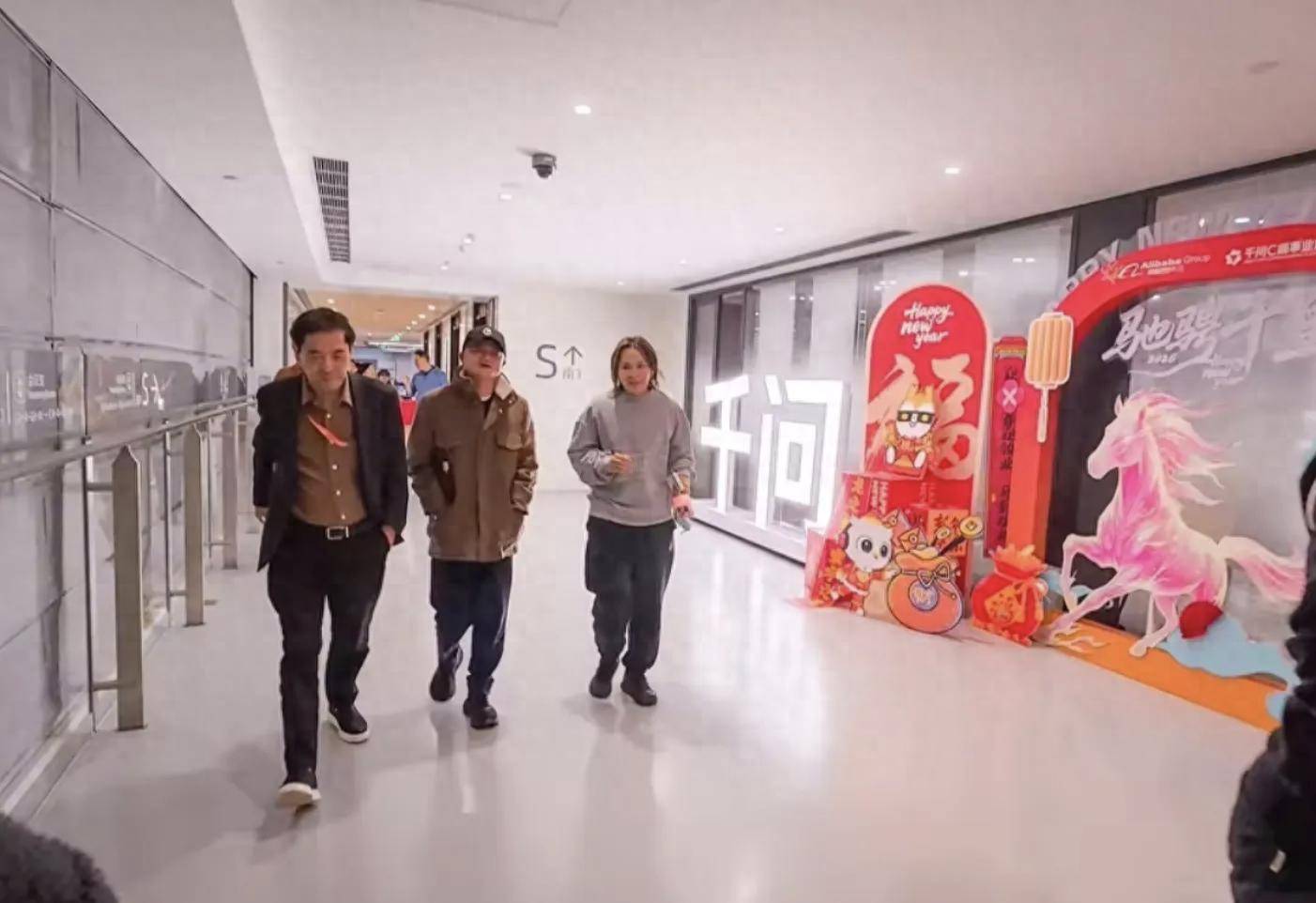
2月4日晚间,据阿里员工社交媒体爆料,阿里巴巴创始人马云现身杭州阿里总部千问春节项目组办公区。现场照片显示,马云头戴棒球帽,在阿里巴巴合伙 人邵晓锋陪同下到访。 此次现身正值千问春节营销关键节点。2月6日,千问将启动30亿元"春节请客计划",以"吃喝玩乐免单不停"为主题,这是阿里历史上春节活动最大规模投 入。同时,千问APP已独家冠名东方、浙江、江苏、河南四家卫视马年春晚。 千问APP内部人士向《科创板日报》透露:"千问希望在今年春节期间,融入到人们真实的生活消费之中。"目前该应用已全面接入淘宝、支付宝、飞猪、高 德等阿里生态场景,测试AI购物功能。 千问C端事业群于2025年12月成立,整合了原智能信息与智能互联业务板块。集团副总裁吴嘉表示,各业务和千问会有共同目标,"未来AI会带来大量新的 生活服务,绝对不只是存量"。 随着春节临近,AI应用竞争持续升温。微信安全中心2月4日发文称将对春节营销违规行为进行打击。 ...

焦点复盘金融权重股午后护盘,沪指缩量震荡收十字星,太空光伏概念大面积退潮
Sou Hu Cai Jing· 2026-02-05 09:20
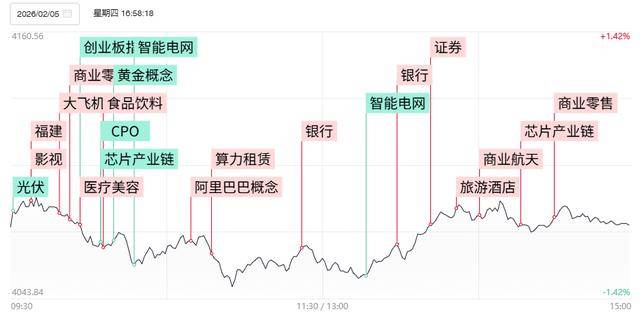
Market Overview - A total of 44 stocks hit the daily limit, while 10 stocks faced limit down, resulting in a sealing rate of 81%. The three major indices narrowed their losses in the afternoon after initially dropping over 1%. The North Securities 50 Index fell over 2%. The total trading volume in the Shanghai and Shenzhen markets was 2.18 trillion yuan, a decrease of 304.8 billion yuan compared to the previous trading day. Over 3,700 stocks in the market declined. Consumer sectors such as film, beauty care, food and beverage, and retail led the gains, while sectors like photovoltaic, precious metals, electric grid equipment, and lithium mining faced declines. By the close, the Shanghai Composite Index fell by 0.64%, the Shenzhen Component Index by 1.44%, and the ChiNext Index by 1.55% [1][3]. Stock Performance Analysis - The advancement rate for consecutive limit-up stocks dropped to 23.08%, with a notable divergence in high-level stocks. Two previously high-profile stocks that achieved four consecutive limit-ups failed to advance further. Recent active funds have continued to gather around high-profile stocks involved in mergers and acquisitions or equity transfers. The stock "Minbao Optoelectronics," a merger and acquisition stock, achieved a significant turnover and maintained its four consecutive limit-ups. Meanwhile, stocks related to equity transfers, such as "Jiamei Packaging" and "Fenglong Co.," showed a weak-to-strong trend and reached historical highs. Despite the recent recovery in the consumer sector, the overall market sentiment remains poor due to the continued shrinkage of trading volume [3][4]. Sector Highlights - The Ministry of Commerce and eight other units recently issued a notice regarding the "2026 'Shopping New Spring' Special Activity Plan," signaling the start of the Spring Festival consumption peak. Benefiting from the release of several new films during the Spring Festival, the film sector has rebounded, with stocks like "Hengdian Film" recovering from previous declines. The retail sector has also seen significant gains, with stocks such as "Hangzhou Jiebai" and "Xinhua Du" hitting the daily limit. The liquor sector has performed well, with "Kweichow Moutai" achieving four consecutive gains, bringing its total market value close to 1.95 trillion yuan. The financial sector has shown strength in the afternoon, reflecting a recovery in some city commercial banks' performance [5][7]. Technology and Cloud Services - Following price increases by major North American cloud service providers like Google and Amazon, domestic cloud service providers are under scrutiny regarding when they will implement price hikes. The emergence of the open-source AI assistant "OpenClaw" has sparked interest among domestic cloud providers, leading to a resurgence in the computing power leasing concept. Stocks such as "Qunxing Toys" and "Erli San" have rebounded significantly. The latest financial report from Infineon, a power semiconductor giant, exceeded expectations, indicating that power semiconductors may become a new growth area under the increasing demand for data center power [6][9]. Investment Trends - In January 2026, the number of new investor accounts reached 4.9158 million, a month-on-month increase of 89% and a year-on-year surge of 213%. The fund market also saw a hot trend, with 546,300 new accounts opened, reflecting increases of 123.8% month-on-month and 168.7% year-on-year. The financial sector showed strong performance in the afternoon, with stocks like "Hualin Securities" hitting the daily limit. Internet financial platforms have outperformed traditional brokerages, with companies like "Tonghuashun" forecasting a more than 50% increase in net profit year-on-year [7][9]. Commercial Space and Aerospace - The U.S. Federal Communications Commission (FCC) has accepted SpaceX's application to build a non-geostationary satellite system, leading to a continued recovery in the commercial space sector. Stocks such as "Shenjian Co." and "Beimo High-Tech" hit the daily limit, while previously popular stocks in the space photovoltaic sector have cooled down. The acceleration of the space photovoltaic concept is closely related to Elon Musk's plans for significant expansion, with several companies issuing clarifications regarding rumors in the industry [8][9].




【券业场】券商卖方研究江湖传来重磅消息,策略分析大佬加盟国泰海通!出任海通国际首席经济学家,分管两大部门
Jin Rong Jie· 2026-02-05 09:15
Group 1 - Zhang Yidong, a prominent strategist, has joined Guotai Junan after leaving his previous position at Industrial Securities, where he served as the co-director of the Economic and Financial Research Institute and Global Chief Strategist [1][2] - His new role at Guotai Junan includes being a member of the Executive Committee of Haitong International Securities and overseeing the stock research and sales trading departments, focusing on cross-border integration of research operations [1] - Zhang has over 20 years of experience in sell-side research, covering A-shares, Hong Kong stocks, and U.S. markets, and has received numerous accolades, including being the first New Fortune Platinum and Diamond Analyst in the total research field [2] Group 2 - Zhang expressed his desire to focus on overseas business and contribute to telling China's financial story to global investors, emphasizing the importance of seizing China's asset pricing power [3] - He believes that the Chinese stock market is entering a historic opportunity comparable to the real estate boom after 1998, driven by the need for high-quality economic development [3][4] - The revitalization of the asset side of the balance sheet is seen as crucial for unlocking economic potential and achieving high-quality development goals by 2035 and 2049 [4] Group 3 - The stock market is viewed as a key engine for economic growth, similar to the role of real estate post-1998, with state-owned enterprises and asset revaluation leading the way [4] - The consensus among local governments is shifting towards asset securitization and leveraging state-owned resources, with the stock market serving as a pivotal mechanism for this transformation [4] - Zhang's recent insights suggest that the Hong Kong stock market is expected to continue its bull run into 2026, driven by improving profitability and liquidity [5]


医药生物行业2月投资策略展望:关注年报业绩催化与创新药械产业链
BOHAI SECURITIES· 2026-02-05 07:48
Industry Overview - The report highlights the recent release of the "Implementation Regulations of the Drug Administration Law of the People's Republic of China" and the issuance of opinions by nine departments to promote high-quality development in the drug retail industry [21][23][25] - The sixth batch of national procurement for high-value medical consumables has been opened for bidding, indicating ongoing efforts to regulate and enhance the medical supply chain [21][22] Industry Data - In December, the Consumer Price Index (CPI) for healthcare was 101.8, with a year-on-year increase of 1.8% and a month-on-month increase of 0.1% [26] - The Producer Price Index (PPI) for pharmaceutical manufacturing was 96.1, showing a year-on-year decrease of 3.9% and a month-on-month decrease of 0.2% [37] - For the entire year of 2025, the cumulative operating income of the pharmaceutical manufacturing industry was 24,870.0 billion, a year-on-year decrease of 1.2%, while the cumulative total profit was 3,490.0 billion, a year-on-year increase of 2.7% [39] Company Announcements - Hengrui Medicine received drug registration approval and had several drugs included in the list of breakthrough therapy designations, indicating a strong pipeline and regulatory progress [62][67] - Zai Lab entered a global strategic cooperation and licensing agreement with AbbVie for the development and commercialization of ZG006, which includes significant upfront and milestone payments [68] - Rongchang Bio signed an exclusive licensing agreement with AbbVie for RC148, a dual-specific antibody drug, which includes substantial upfront and potential milestone payments [69] Market Performance - In January, the Shanghai Composite Index rose by 3.76%, while the Shenzhen Component Index increased by 5.03%. The SW Pharmaceutical and Biological Index rose by 3.14%, with all sub-sectors showing positive growth [74] - The SW Pharmaceutical and Biological Industry's price-to-earnings ratio (TTM) was 50.97, with a valuation premium of 258% relative to the CSI 300 [77] Monthly Strategy - The report suggests focusing on investment opportunities in innovative drugs, CXO, and upstream life sciences, particularly in light of recent developments in brain-computer interfaces and AI applications [84] - The report maintains a "neutral" rating for the industry and recommends a "buy" rating for Hengrui Medicine and an "accumulate" rating for WuXi AppTec [84]


A股收评:沪指跌0.64%,创业板指跌超1.5%,大金融、大消费板块逆势走高,有色金属及光伏产业股走低
Jin Rong Jie· 2026-02-05 07:14
Core Viewpoint - The A-share market experienced a decline in early trading, but major financial sectors such as banks and brokerages provided support, leading to a mixed performance across various sectors, with significant activity in consumer and emerging concepts [1] Market Performance - The three major A-share indices closed lower, with the Shanghai Composite Index down 26.29 points (0.64%) at 4075.92, the Shenzhen Component down 203.56 points (1.44%) at 13952.71, and the ChiNext Index down 51.24 points (1.55%) at 3260.28 [1] - Total market turnover reached 2.19 trillion yuan, with over 3700 stocks declining [1] Sector Highlights - Major financial sectors, including banks and brokerages, showed strong performance, with Xiamen Bank hitting a ceiling price, marking a new high since June 2021, and Chongqing Bank rising over 7% [1] - Consumer sectors, including media, tourism, food and beverage, retail, and healthcare, saw collective gains, with stocks like Haixin Food and Anji Food hitting ceiling prices [1] - New consumption concepts such as the "grain economy" and "pet economy" also experienced upward momentum, reflecting positive market expectations for consumer recovery [1] - AI application concepts rebounded, with stocks in AI animation, marketing, and media rising, including companies like Qunxing Toys and Yaowang Technology hitting ceiling prices [1] - Real estate concepts continued to strengthen, with multiple stocks like Jingtou Development and Huangting International hitting ceiling prices, adding vibrancy to the market [1] Declines in Specific Sectors - The non-ferrous metals, gold, and silver sectors faced significant declines, with stocks like Silver Nonferrous and Hunan Silver hitting their lower limits [2] - The photovoltaic industry chain, including space photovoltaic and equipment, saw a sell-off, with stocks like Junda Co. and Shuangliang Energy hitting their lower limits [2] - The power equipment sector also declined, with companies like Zhongheng Electric and Keshida hitting their lower limits [2] - The semiconductor and storage chip sectors continued to retreat, with stocks like Juguang Technology and Changfei Optical Fiber experiencing significant declines [2] Insights from Analysts - Dongfang Securities noted that the recent rebound after a significant drop indicates a stronger expectation for market stability, suggesting a potential shift towards a "slow bull" market [7] - Tianfeng Securities highlighted that this year's "Spring Festival excitement" may be more sustained due to policy expectations and trends in household investment towards equity assets, with consumer demand expected to release earlier than in previous years [8] - CITIC Securities identified low-orbit communication satellite chains as a key investment hotspot in the commercial aerospace industry, anticipating a transition from technology validation to large-scale industrialization around 2026 [8]

收评:沪指震荡调整跌0.64%,影视、零售等大消费板块逆势走强
Xin Lang Cai Jing· 2026-02-05 07:09
Market Performance - The three major A-share indices collectively declined, with the Shanghai Composite Index down by 0.64%, the Shenzhen Component Index down by 1.44%, and the ChiNext Index down by 1.55% [1] - The North Stock 50 Index fell by 2.03%, and the total trading volume in the Shanghai and Shenzhen markets was 21,943 billion yuan, a decrease of 3,090 billion yuan compared to the previous day [1] - Over 3,700 stocks in the three markets experienced declines [1] Sector Performance - Sectors such as film and theater, beauty care, tourism and hotels, retail, food processing, banking, cultural media, securities, and local stocks in Fujian showed significant gains [1] - Conversely, sectors including precious metals, photovoltaic equipment, non-ferrous metals, cultivated diamonds, power grid equipment, oil and gas extraction and services, CPO, coal mining and processing, and phosphorus chemical industries faced the largest declines [1] Notable Stocks - Consumer stocks related to film, retail, and food and beverage showed volatility and some stocks, such as Hengdian Film and Television and Sanjiang Shopping, reached their daily limit [1] - Local banks performed well, with Xiamen Bank hitting the daily limit and Chongqing Bank and Nanjing Bank leading the gains, as many small and medium-sized banks recently raised deposit rates [1] - Brokerage stocks saw a midday surge, with Hualin Securities achieving a daily limit [1] - Real estate, airport and shipping, and AI application stocks also showed some performance [1] Commodity Prices - International gold and silver prices dropped significantly in the morning, leading to a collective decline in the precious metals sector, with silver and Hunan Silver stocks hitting their daily limit down [1] - The photovoltaic equipment sector could not maintain its previous day's gains and saw stocks like Junda Co. and Shuangliang Energy hit their daily limit down [1]