结构性货币政策工具

Search documents
目前股票回购增持贷款利率约2% 低于上市公司平均股息率水平
Zheng Quan Shi Bao Wang· 2025-05-13 06:55
Group 1 - The People's Bank of China has lowered the interest rate of structural monetary policy tools by 0.25 percentage points, bringing the rate down to 1.5% [1] - Financial institutions are currently offering stock repurchase and increase loans at around 2%, which is below the average dividend yield of listed companies [1] - As of April 2025, listed companies have disclosed plans to apply for stock repurchase and increase loans amounting to over 110 billion yuan, with contracts signed for approximately 200 billion yuan [1] Group 2 - The central bank announced the merger of 500 billion yuan for securities, funds, and insurance company swap facilities with 300 billion yuan for stock repurchase and increase re-loans, totaling 800 billion yuan [2] - The reduction in the interest rate for structural monetary policy tools is expected to stimulate market participants to utilize loans for repurchase and increase, enhancing market capitalization management among listed companies [2] - The combined use of these two capital market tools is aimed at improving convenience and flexibility, better meeting the needs of different market participants, and increasing the efficiency of policy fund utilization [2]





从托举到筑基 一揽子金融政策“对症下药”
Zhong Guo Qing Nian Bao· 2025-05-13 00:39
Core Viewpoint - A comprehensive set of financial policies has been introduced, indicating that the country has sufficient policy reserves and will flexibly adjust according to internal and external conditions to stabilize the market and maintain confidence [1][10]. Policy Implementation - The first interest rate cut and reserve requirement ratio reduction of the year have been implemented, along with the establishment of a service consumption and pension refinancing tool, and reforms in the Sci-Tech Innovation Board and ChiNext [2][3]. - The new financial policies are characterized by rapid implementation, with the interest rate cut announced on May 7 and executed the next day, while the reserve requirement ratio was adjusted shortly thereafter [2][4]. Focus Areas - The policies target five key areas: real estate, stock market, service consumption, technological innovation, and corporate relief, shifting the focus from merely supporting to building a solid foundation for growth [2][3][8]. - The emphasis is on preventing economic downturns while also boosting consumption, stabilizing foreign trade, and supporting technological innovation [3][4]. Structural Monetary Policy Tools - The introduction of structural monetary policy tools aims to enhance the effectiveness of financial support for key sectors, with five out of ten new monetary policies being structural in nature [8][9]. - The new refinancing tools include a focus on service consumption and pension sectors, with a total of 500 billion yuan allocated to stimulate these areas [7][9]. Economic Circulation - The policies aim to improve the circulation between residents and enterprises by lowering financing costs and increasing bank credit supply capabilities [7][8]. - The reduction in the reserve requirement ratio by 0.5 percentage points is expected to provide approximately 1 trillion yuan in long-term liquidity to the market [4][5]. Future Policy Space - There is potential for further policy tools to be introduced if internal and external conditions necessitate, with a focus on enhancing fiscal and monetary policy coordination [10][11]. - The government is expected to accelerate the issuance of special bonds and adjust high-risk debt areas to stimulate local investment [11].
央行创设货币政策新工具 5000亿元支持服务消费重点领域和养老产业
Mei Ri Jing Ji Xin Wen· 2025-05-10 06:32
Core Viewpoint - The People's Bank of China has established a service consumption and elderly re-lending program with a total quota of 500 billion yuan, aimed at boosting financial support for key service sectors and the elderly industry [1][3][5]. Group 1: Policy Details - The service consumption and elderly re-lending program has a quota of 500 billion yuan, an interest rate of 1.5%, a term of 1 year, and can be extended twice, with a maximum usage period of 3 years [1][3]. - The program is available to 26 national financial institutions, including state-owned banks and major city commercial banks, and will be executed until the end of 2027 [3][5]. - Financial institutions can apply for re-lending based on the loans they issue, with the People's Bank of China responsible for verifying the authenticity of the loan information submitted [3][6]. Group 2: Economic Context - The initiative aligns with the directives from the Central Economic Work Conference and the Central Political Bureau meeting, focusing on expanding service consumption supply and boosting demand [3][4]. - The program is part of a broader strategy to enhance domestic demand and stabilize economic recovery, particularly in the service sector [5][6]. Group 3: Market Impact - Analysts believe the new policy tool will invigorate the service consumption and elderly markets, enhancing financial support for these sectors and stimulating domestic consumption potential [2][5]. - The program is seen as an upgrade from the previous 40 billion yuan inclusive elderly re-lending policy established in April 2022, reflecting a significant increase in support [5][6]. Group 4: Future Outlook - By 2028, the goal is to establish a comprehensive elderly financial system, with a diverse range of financial products and services aimed at improving the welfare of residents [6]. - The program is expected to address disparities in public services between urban and rural residents, potentially unlocking further consumption growth [7].
央行下调存款准备金率与利率,释放万亿流动性,推出结构性工具支持经济
Sou Hu Cai Jing· 2025-05-09 23:53
Group 1 - The People's Bank of China announced a package of financial policies aimed at providing more long-term liquidity and lower-cost funding to stabilize market expectations and strengthen financial support for the real economy [1] - The reserve requirement ratio was lowered by 0.5 percentage points, and the policy interest rate was reduced by 0.1 percentage points, with an expected release of approximately 1 trillion yuan in medium to long-term liquidity [1] - The 7-day reverse repurchase rate was decreased from 1.5% to 1.4%, and the Loan Prime Rate (LPR) is expected to decline by 0.1 percentage points [1] Group 2 - New structural monetary policy tools were introduced, including a 0.25 percentage point reduction in the rates for special structural tools and re-lending for agriculture and small enterprises [2] - A new 500 billion yuan re-lending facility for consumption and elderly care was established to guide banks in providing lower-cost credit to these sectors, along with an additional 300 billion yuan for supporting small enterprises and rural economies [2] - A total of 8 trillion yuan in unified policy tools was created to enhance capital market liquidity and stabilize market operations, responding to the need for more proactive macro policies [2]
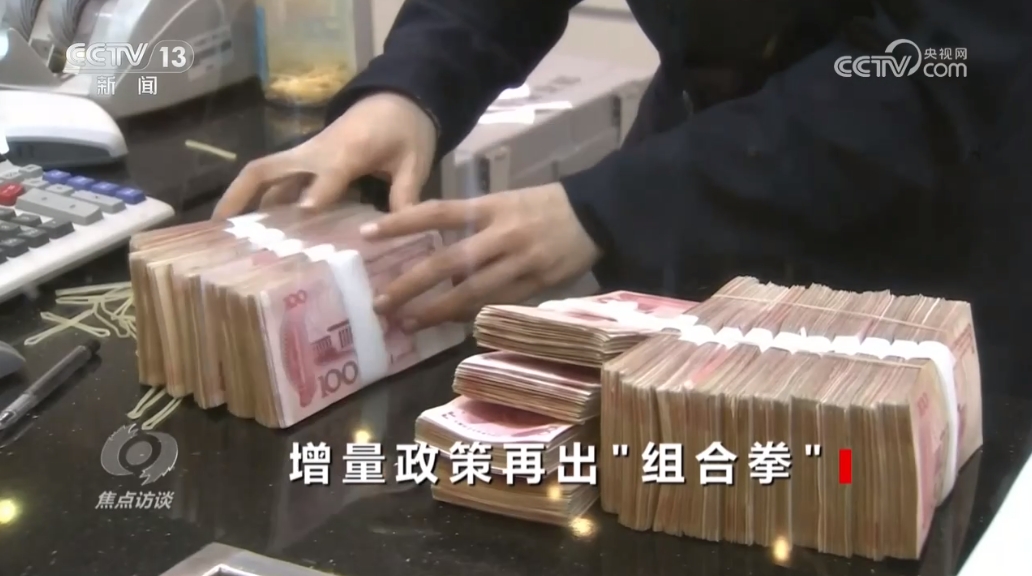
焦点访谈 | 重大利好!金融政策“组合拳”落地,释放强烈信号
Yang Shi Wang· 2025-05-09 13:49
Group 1 - A comprehensive set of financial policies has been introduced to stabilize the market and expectations, including interest rate cuts and reserve requirement ratio reductions [1][3][5] - The People's Bank of China (PBOC) announced a 0.5 percentage point reduction in the reserve requirement ratio, releasing approximately 1 trillion yuan in liquidity to support credit and investment [5][10][15] - The policies aim to address external uncertainties and pressures on economic growth, with a focus on maintaining high-quality development [3][19][25] Group 2 - Price-based policies include a 0.25 percentage point reduction in personal housing provident fund loan rates, potentially saving borrowers around 20 billion yuan in interest payments annually [10][12][15] - Structural policies target specific sectors, with 5,000 billion yuan allocated for service consumption and elderly care loans, aimed at enhancing service quality and boosting employment [15][20][25] - The financial measures are part of a broader strategy to ensure macroeconomic stability and support small and private enterprises, with additional policies expected to be rolled out [24][25] Group 3 - The recent financial reforms also include significant changes to public fund management, focusing on aligning fund managers' performance with investor returns [22] - The government emphasizes the importance of maintaining strategic focus and effectively responding to external challenges through coordinated fiscal, monetary, and industrial policies [19][25] - The overall goal is to inject strong momentum into economic development while addressing market pain points and uncertainties [25]

国债期货周报:债市横盘震荡,择机配置做多-20250509
Rui Da Qi Huo· 2025-05-09 10:09
Report Industry Investment Rating - Not provided in the document Core Viewpoints of the Report - The domestic fundamental side shows a marginal recovery trend, but the recovery foundation needs to be consolidated, and policy expectations continue to increase. The overseas market shows signs of economic cooling, and the Fed's policy still favors anti - inflation. The bond market is in a sideways shock, and the bond bull environment remains unchanged. It is recommended to wait for the short - end to stabilize before making band allocations [92] Summary According to the Table of Contents 1. Market Review - **Contract Performance**: The 30 - year TL2506 contract fell 0.32%, the 10 - year T2506 contract rose 0.06%, the 5 - year TF2506 contract fell 0.01%, and the 2 - year TS2506 contract fell 0.02%. The trading volumes of TS, TF, T, and TL main contracts all decreased, as did their open interests [11][28] - **CTD Bond Performance**: For the 30 - year, 200012.IB fell 0.33 and 210005.IB fell 0.15; for the 10 - year, 220003.IB fell 0.06 and 240025.IB remained unchanged; for the 5 - year, 240014.IB rose 0.03 and 220021.IB rose 0.11; for the 2 - year, 240024.IB rose 0.03 and 220002.IB rose 0.09 [11] 2. News Review and Analysis - **Domestic News**: On May 7, China agreed to have contact with the US, and the Chinese finance minister said China would achieve the 5% growth target in 2025. On May 8, three departments issued a package of financial policies, including a 0.5 - percentage - point reserve requirement ratio cut, a 0.1 - percentage - point policy rate cut, etc. The public fund industry worth over 30 trillion yuan underwent systematic reform [31] - **International News**: On May 8, the Fed kept the federal funds rate unchanged at 4.25% - 4.5%. The number of initial jobless claims in the US for the week ending May 3 was 228,000, lower than expected [32] 3. Chart Analysis - **Spread Changes**: The yield spreads between 10Y - 5Y and 10Y - 1Y bonds widened slightly. The spread between 2 - year and 5 - year main contracts widened slightly, while the spread between 5 - year and 10 - year main contracts narrowed slightly. The inter - period spreads of 10 - year, 30 - year, 2 - year, and 5 - year contracts weakened slightly [40][44][50] - **Main Contract Position Changes**: The net short positions of the top 20 holders in the T main contract decreased slightly [61] - **Interest Rate Changes**: Overnight, 1 - week, 2 - week, and 1 - month Shibor rates all declined. The DR007 weighted average rate rose to around 1.78%, and the money market tightened. The yields of short - term treasury bonds were stronger than long - term ones, with 1 - 7Y yields down 2 - 5bp and 10Y, 30Y yields up 1bp to 1.63% and 1.88% respectively. The yield spreads between US and Chinese 10 - year and 30 - year treasury bonds widened slightly [65][69] - **Central Bank Operations**: The central bank conducted 836.1 billion yuan in reverse repurchases and had 1617.8 billion yuan in reverse repurchase maturities, resulting in a net injection of 781.7 billion yuan. The DR007 weighted average rate fell to around 1.52%, and the money market tightness improved [72] - **Bond Issuance and Maturity**: This week, bond issuance was 1433.8 billion yuan, total repayment was 813.6 billion yuan, and net financing was 620.169 billion yuan [76] - **Market Sentiment**: The central parity rate of the RMB against the US dollar was 7.2095, down 81 basis points this week. The spread between offshore and onshore RMB strengthened. The 10 - year US treasury bond yield rose slightly, the VIX index fell slightly, the 10 - year treasury bond yield in China rose slightly, and the A - share risk premium fell slightly [82][85][89] 4. Market Outlook and Strategy - **Domestic Fundamentals**: The domestic economy shows a marginal recovery, but the recovery foundation needs to be strengthened, and policy expectations will continue to increase [92] - **Overseas Situation**: The US economy shows signs of cooling, and the Fed's policy still favors anti - inflation, with the possibility of delaying the rate - cut time to July [92] - **Strategy**: The bond market is in a sideways shock. Considering the long - term need for a low - interest - rate environment, the bond bull environment remains unchanged. However, beware of the risk of long - end bond price corrections. It is recommended to wait for the short - end to stabilize before making band allocations [92]
解析一揽子金融政策:总量与结构并重稳市场、稳经济
HTSC· 2025-05-09 02:50
Overview - The recent financial policy package aims to stabilize the market and economic expectations through targeted measures[1] - The central bank announced a 50 basis point reserve requirement ratio (RRR) cut, a general interest rate reduction of 10 basis points, and a structural loan interest rate cut of 25 basis points[2] Monetary Policy Measures - The total expansion of structural monetary policy tools is projected to increase the base currency by CNY 1.1 trillion, potentially raising the broad money supply (M2) by CNY 9-10 trillion, which is approximately 2.8%-3.1% of the M2 stock as of March 2023[2] - The RRR cut is expected to release about CNY 1 trillion in liquidity, effective from May 15[5] Structural Policy Focus - Specific structural loans for technology innovation and agricultural support will increase by CNY 3,000 billion each, while loans for service consumption and elderly care will expand by CNY 5,000 billion, totaling CNY 11,000 billion in new structural financial tools[8] - The reduction in public housing fund loan rates by 25 basis points is expected to save residents over CNY 200 billion in interest payments annually[8] Market Stabilization Efforts - The policy aims to enhance capital market liquidity and boost investor confidence, with measures to support insurance funds entering the market and stabilizing stock prices[7] - The government emphasizes the importance of fiscal policy in directly stimulating investment and consumption, especially in response to external trade pressures[4] Risk Considerations - Potential risks include unexpected escalations in US-China trade tensions and further declines in domestic demand, which could necessitate additional monetary and fiscal policy adjustments[9]
“增量政策”序幕拉开——稳市场稳预期新闻发布会学习理解
赵伟宏观探索· 2025-05-08 22:44
Core Viewpoint - The article discusses the recent press conference held by the State Council Information Office on May 7, 2025, which introduced a comprehensive financial policy package aimed at stabilizing the market and expectations. The focus is on the implementation of monetary policies and measures to support various sectors, including real estate, capital markets, and private enterprises [1][10]. Summary by Sections Monetary Policy Measures - The central bank introduced three types of monetary policy measures: quantity-based policies, price-based policies, and structural policies. Quantity-based policies include reserve requirement ratio (RRR) cuts to increase long-term liquidity supply. Price-based policies involve lowering policy interest rates and structural monetary policy tool rates, including public housing loan rates. Structural policies aim to improve existing tools and create new ones to support innovation, consumption, and inclusive finance [2][11]. - A comprehensive RRR cut of 0.5 percentage points is expected to provide approximately 1 trillion yuan in long-term liquidity to the market [7]. - The central bank also lowered the interest rates on structural monetary policy tools by 0.25 percentage points, which is projected to save banks approximately 150-200 million yuan annually in funding costs [4][12]. Financial Support for Real Estate and Capital Markets - The Financial Regulatory Bureau announced eight incremental policies to support real estate, capital markets, and private enterprises. These include accelerating the introduction of financing systems compatible with new real estate development models and expanding the scope of long-term investment trials for insurance funds [3][11]. - The demand side of the real estate market will benefit from a 0.25 percentage point reduction in personal housing provident fund loan rates, which is expected to save residents over 200 million yuan in interest payments annually [6][15]. Support for Private Enterprises and Innovation - The conference emphasized strong financial support for private enterprises and technological innovation. The central bank plans to use tools like innovation re-loans to increase credit support for private enterprises in technology sectors [5][14]. - The Financial Regulatory Bureau proposed a comprehensive policy package to support private enterprise financing and provide precise financial services to entities significantly affected by tariffs [3][14]. Market Stability Initiatives - The policies aim to stabilize and activate capital markets through various measures, including enhancing the collaboration between the central bank and the China Investment Corporation to support stock market index funds and providing sufficient re-loan support [5][14]. - The introduction of a new merger and acquisition loan management approach is intended to facilitate industrial transformation and upgrading [8][14]. Overall Economic Context - The recent monetary policy actions are seen as a response to the stable performance of the real estate and stock markets, with the economy showing resilience, as indicated by a 5.4% year-on-year GDP growth in the first quarter [12][13].

【新华解读】年内首次降息降准,“量增价降”支持实体经济
Xin Hua She· 2025-05-08 15:07
Core Viewpoint - The recent interest rate cut and reserve requirement ratio (RRR) reduction reflect a moderately accommodative monetary policy stance aimed at stabilizing employment, businesses, markets, and expectations [1][2]. Group 1: Interest Rate Cuts - The policy interest rate was lowered by 0.1 percentage points, with the 7-day reverse repurchase rate adjusted from 1.50% to 1.40% [2]. - The loan market quotation rate (LPR) is expected to decrease by approximately 0.1 percentage points, leading to a reduction in financing costs for enterprises and residents [2]. - The average interest rate for newly issued corporate loans was about 3.3% in March, down 0.45 percentage points year-on-year, while the rate for small and micro enterprises was approximately 3.6%, down 0.55 percentage points year-on-year [2]. Group 2: Impact on Housing Loans - The reduction in personal housing provident fund loan rates by 0.25 percentage points is expected to save residents over 20 billion yuan in interest payments annually, supporting housing demand and stabilizing the real estate market [3]. - For a 1 million yuan housing loan over 30 years, total interest payments will decrease by approximately 47,600 yuan [3]. Group 3: Reserve Requirement Ratio Reduction - Starting May 15, the RRR will be lowered by 0.5 percentage points, releasing approximately 1 trillion yuan in long-term liquidity into the financial market [4]. - The reduction in RRR will enhance the lending capacity of financial institutions, particularly in sectors like automotive finance and equipment leasing [4]. Group 4: Structural Monetary Policy Tools - The first comprehensive reduction of structural monetary policy tool rates by 0.25 percentage points will lower the rates to 1.5%, incentivizing banks to increase credit supply to key sectors [6][7]. - The annual savings in bank funding costs due to structural rate cuts are estimated to be between 15 billion to 20 billion yuan [6]. - The quotas for various re-lending tools have been increased, with 800 billion yuan for technological innovation and 3 trillion yuan for agricultural support [6].
这次降准降息,一点都不简单
虎嗅APP· 2025-05-08 10:03
Core Viewpoint - The recent reduction in the reserve requirement ratio (RRR) by 0.5% and the expected decrease in mortgage rates by 0.1% are seen as measures to stabilize the economy and the real estate market, rather than aggressive stimulus actions [4][34][40]. Group 1: Monetary Policy Changes - The RRR cut aims to increase the liquidity in the market, allowing banks to lend more, which can stimulate economic activity [14][15]. - This RRR adjustment is notable as it is the longest interval since the last cut, indicating a careful approach to monetary policy [19][22]. - The reduction in mortgage rates is a reflection of the broader monetary policy aimed at maintaining stability in the housing market [34][40]. Group 2: Real Estate Market Implications - The announcement includes support for a new financial development strategy aligned with the evolving real estate market [33]. - The reduction in the public housing loan interest rate from 2.85% to 2.6% is expected to lower the cost of home purchases for borrowers [35]. - The current mortgage rate of 3.6% and the reduced public loan rate suggest potential for further decreases in housing loan rates, which could stimulate the market [36][40]. Group 3: Structural Financial Support - The introduction of 300 billion yuan for technological innovation and 500 billion yuan for service consumption and elderly care loans indicates a shift towards supporting emerging sectors [54][57]. - An increase of 300 billion yuan in loans for agriculture and small businesses highlights the focus on strengthening the domestic economy [63]. - The reduction of reserve requirements for auto finance companies to 0% demonstrates targeted support for the automotive industry, which is seen as a key growth area [66][69]. Group 4: Broader Economic Context - The overall monetary policy is designed to ensure economic growth and stability, with a focus on gradual adjustments rather than abrupt changes [30][78]. - The measures taken are part of a larger strategy to adapt financial support to the needs of the economy, particularly in light of recent recovery signs [25][60]. - The emphasis on maintaining stability in the real estate market reflects a cautious approach to avoid overheating while still encouraging growth [41][42].