
自动驾驶

Search documents
小马智行-W(2026.HK):获纳入MSCI中国指数 可受惠于被动资金流入
Ge Long Hui· 2026-02-15 02:22
Core Insights - The company is ranked second in China's Level 4 autonomous driving market, holding a 15.4% market share as of the end of 2024, and is the only company to have obtained regulatory approval for autonomous driving services in major cities like Beijing, Shanghai, Guangzhou, and Shenzhen [1] - The market for autonomous driving services in China is projected to grow from approximately $0.7 billion in 2025 to $39.4 billion by 2030 and $183 billion by 2035, indicating exponential growth potential [1] - The company is expected to significantly reduce its net losses in 2025 to between $69 million and $86 million, compared to $275 million in 2024, with a forecasted net loss attributable to shareholders between $126 million and $143 million [1] Group 1 - The company plans to launch its seventh-generation Robotaxi in 2025, achieving a 70% reduction in total costs compared to the previous generation, with savings of 80% in lidar and 68% in autonomous driving computing [2] - The company achieved city-level profitability for its vehicles in Guangzhou in Q3 2025, marking a critical turning point in its commercialization efforts [2] - The fleet size is expected to expand to 1,159 vehicles by Q3 2025, ahead of the target of 1,000 Robotaxis, with plans to exceed 3,000 vehicles by 2026 [2] Group 2 - The company has been included in the MSCI China Index, which will facilitate passive capital inflows [3] - The market anticipates a compound annual growth rate (CAGR) of approximately 70% for revenues from 2025 to 2027, with the current price reflecting a price-to-sales ratio of about 54 times the 2026 forecast [3] - If further regulatory relaxations for autonomous driving are implemented, it could enhance the company's valuation attractiveness [3]
激光雷达成本,降至100美金
半导体行业观察· 2026-02-15 01:37
Core Viewpoint - MicroVision aims to reduce the production cost of its solid-state automotive lidar sensors to below $200, with a long-term goal of reaching $100, which would significantly broaden the application of lidar technology beyond high-end autonomous vehicles to advanced driver-assistance systems (ADAS) [2][3][4] Group 1: Cost Reduction and Market Impact - The current price of mechanical lidar systems ranges from $10,000 to $20,000, down from approximately $80,000, indicating a nearly tenfold decrease in costs [2][5] - The professor from Michigan State University suggests that further cost reductions of one to two orders of magnitude are feasible as demand shifts from fully autonomous vehicles to driver-assistance applications [5][6] - MicroVision's Movia S sensor features a fixed field of view of 180 degrees and can detect objects up to 200 meters away, which is less than the 300 meters typical of mechanical lidar [4][6] Group 2: Design and Integration Challenges - Solid-state lidar systems often have a smaller field of view compared to mechanical systems, necessitating the deployment of multiple sensors to achieve full coverage [5][6] - The integration of multiple sensors increases complexity, requiring precise alignment, calibration, and synchronization to ensure accurate data fusion [5][6] - MicroVision emphasizes that automotive manufacturers are designing complete perception systems rather than purchasing individual sensors, making overall system cost more critical than the cost of a single sensor [6][7] Group 3: Competitive Landscape and Industry Trends - Other companies, including Chinese firms and major suppliers like Luminar and Velodyne, are also targeting long-term cost goals below $500, but MicroVision's commitment to keeping prices below $200 is notable [7][8] - The cautious approach of some competitors reflects the structural challenge of achieving consumer-level pricing, which requires large and predictable demand to justify the necessary production investments [8] Group 4: Performance Evaluation and Future Considerations - There is a need for universally accepted metrics to evaluate the safety improvements provided by specific sensor configurations in ADAS and autonomous driving systems [9] - The focus is shifting from purely performance enhancements to economic benefits, with the potential for lidar prices to stabilize below $200 possibly altering the design decisions of automotive manufacturers [9][10] - If cost is no longer a primary objection, manufacturers must decide whether to forgo lidar based on technical or strategic considerations, which will significantly influence the integration of lidar into vehicle safety systems [9][10]



外媒观察:中国清洁能源与前沿技术领跑全球 生活场景尽显未来感
Huan Qiu Wang· 2026-02-15 01:06
Group 1 - The article highlights the rapid development of China's clean energy sector, contrasting it with the lagging status of the U.S. in low-carbon technologies such as solar energy and electric vehicles [2] - China has a vast solar power station scale and is continuously expanding its ultra-high voltage transmission lines, while exporting high-cost performance solar panels and electric vehicles to countries like South Africa and Brazil, significantly impacting local economic development [2] - In emerging fields like nuclear fusion, autonomous driving, and rare earths, China maintains a fast-paced development rhythm [2] Group 2 - The article compares the policy and development paths of China and the U.S., noting that China has long-term stable support for clean technology development, with its rare earth industry established over sixty years ago, laying the foundation for advanced manufacturing [3] - In contrast, U.S. energy policy is characterized by fluctuations, with current trends showing a tightening of support for renewable energy and increased backing for fossil fuels [3] - China's electric vehicle exports reached $70 billion last year, with products sold to over 150 countries and regions, indicating a strong global market presence [3]
耐世特(1316.HK):綫控转向量产将至
Ge Long Hui· 2026-02-14 13:25
Core Viewpoint - 2026 is projected to be the year of mass production for steer-by-wire (SBW) technology, aligning with the trend of autonomous driving, leading to an industry upgrade. The target price is set at HKD 10.2 based on an 18x PE valuation for 2026, with a buy rating [1]. Group 1: Industry Trends - The steering system in automobiles is transitioning from electric power steering (EPS) to steer-by-wire (SBW), with average selling prices (ASP) increasing from C-EPS at 1,000 yuan to R-EPS at 2,000 yuan, and further to SBW at 4,000 yuan [1]. - Currently, EPS remains the mainstream technology in the industry, with a domestic penetration rate reaching 99% [1]. Group 2: Company Developments - The company has seen a growing number of clients and orders for its steer-by-wire technology, being the exclusive supplier for Tesla's robotaxi and the supplier for the Li Auto L9 Livis, both set for mass production in the first half of the year [1]. - Tesla's Cybercab is a key vehicle for achieving Level 4 autonomous driving, aiming to eliminate human intervention through a combination of pure vision FSD solutions and steer-by-wire chassis [1]. Group 3: Regulatory Environment - The legal status of steer-by-wire technology has been clarified with the release of the national certification standard "Basic Requirements for Automotive Steering Systems," effective from July 1, 2026. This standard emphasizes safety requirements and introduces functional safety terminology and verification methods [3]. - The new regulations remove the mandatory mechanical connection between the steering wheel and the steering system, establishing the legal status of SBW and setting strict safety redundancy and failure response standards [3].
净流入中国股票金额最多,高盛详解MSCI指数节后调整影响
Feng Huang Wang· 2026-02-14 12:19
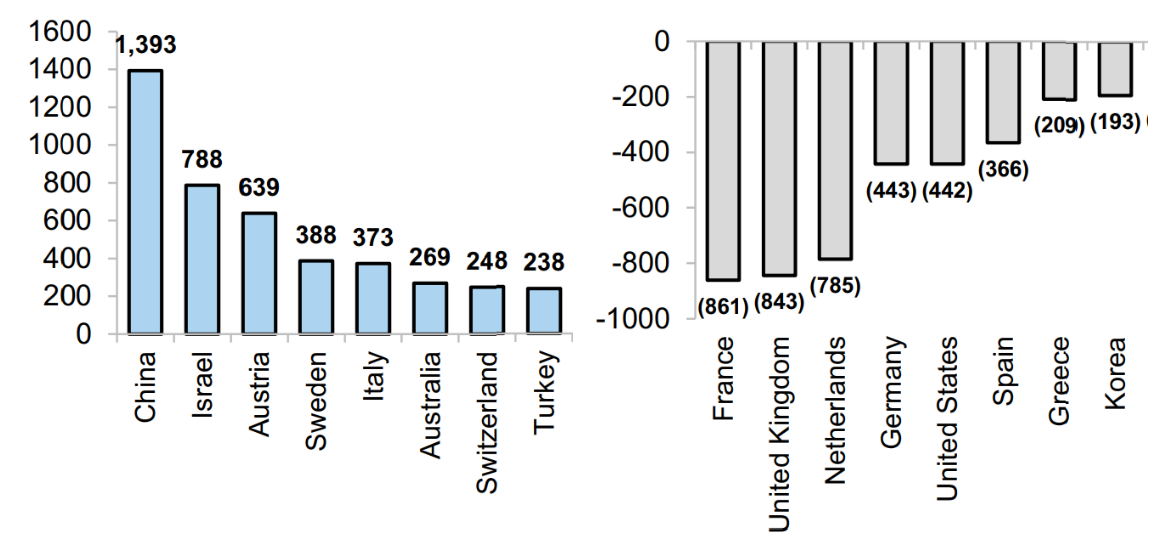
Group 1 - The MSCI index adjustment is expected to trigger over $17 billion in passive trading in the Asia-Pacific and global emerging markets, with a net inflow of approximately $1.6 billion [2] - Chinese stocks are projected to receive about $1.4 billion in net passive fund inflows, the highest among global markets, while France, the UK, and the US markets are expected to see significant outflows [2] - The adjustment reflects a structural reallocation of global funds across regions and industries, with a focus on market capitalization, free float, liquidity, and investability [1][2] Group 2 - The passive fund inflows are concentrated in specific sectors, with notable increases in technology hardware and semiconductors (+$2.2 billion), capital goods (+$930 million), and software and services (+$480 million) in the Asia-Pacific region [4] - In the Chinese market, key beneficiaries include semiconductor-related hardware, AI software, and upstream resources like non-ferrous metals, with companies such as SenseTime, Longi Green Energy, Hesai Technology, and Pony.ai expected to attract at least $200 million in passive inflows [4] - In the US market, companies like Lumentum and Coherent are anticipated to receive nearly $700 million in net inflows due to the index adjustment [5] Group 3 - The adjustments will take effect after the market closes on February 27, with the next quarterly adjustment scheduled for May 12 [6]
【联合发布】商用车周报(2026年2月第2周)
乘联分会· 2026-02-14 08:39
Group 1: Low-altitude Economy and Digital Infrastructure - The Ministry of Industry and Information Technology and four other departments aim to establish a "digital foundation" for the low-altitude economy, targeting a 90% coverage of the national low-altitude public air route communication network by 2027 [4][5] - Key tasks include enhancing 5G network coverage below 300 meters and integrating satellite communication to support logistics and urban governance applications [5] - The low-altitude economy is projected to reach a scale of 3.5 trillion yuan by 2035, with over 200 billion yuan in new investments anticipated [5] Group 2: Electric Vehicle Market and Policy Changes - The establishment of a national unified electricity market is transforming electric vehicles from mere "electric terminals" to "mobile energy storage units," enhancing grid flexibility and creating new revenue models for vehicle owners [6][7] - Canada plans to eliminate the 100% additional tax on Chinese electric vehicles, allowing an annual quota of 49,000 vehicles to enter the market, which will gradually increase to 70,000 [18][21] - The Canadian government will also restart subsidy programs, investing 2.3 billion CAD to assist consumers with new vehicle costs and 1.5 billion CAD for charging infrastructure [21] Group 3: Automotive Industry Developments - FAW Jiefang is expanding its strategic cooperation and local production overseas, including a partnership with Cainiao Group to build a global auto parts e-commerce platform [8][9] - The company has launched its first locally produced LN 4×4 truck in Indonesia, with plans to invest up to 10 billion yuan in wealth management to enhance capital efficiency [9] - Shaanxi Automobile has officially changed its name to Shanxi Tongxi New Energy Vehicle Co., with a shift in control to Xi Heavy Automobile, marking a strategic pivot towards becoming a leader in new energy heavy trucks [10][11] Group 4: Autonomous Driving Collaborations - Autonomous driving companies are shifting from technology development to large-scale deployment through partnerships with automotive and mobility platforms, focusing on markets in China, the US, and the Middle East [12][13] - Notable collaborations include Pony.ai with Toyota for mass production of autonomous vehicles and Baidu's partnership with Uber for commercial operations in Dubai [13] - Waymo is expanding its autonomous taxi services in Nashville and plans to deploy 1,200 self-driving taxis in the Middle East by 2027 [13] Group 5: New Energy Heavy Trucks and Market Trends - The latest product announcements indicate a significant increase in the proportion of new energy heavy trucks, which now account for 40.3% of the market, with a notable rise in battery-swappable models [17] - The shift in purchasing decisions among light commercial vehicle users is moving towards a comprehensive evaluation of total cost of ownership (TCO) rather than just initial purchase price [23][24]

【快讯】每日快讯(2026年2月14日)
乘联分会· 2026-02-14 08:39
Domestic News - The Supreme Court of China clarified that the driver remains the primary responsible party even when using advanced driver-assistance systems, emphasizing that activating such systems does not absolve the driver of their responsibilities [2] - The Ministry of Industry and Information Technology (MIIT) has proposed a new national standard that removes all technical content related to half-width steering wheels, indicating that such designs will not receive official support in the short term [3] - SAIC Motor Corporation announced plans to establish a private equity investment fund with an initial subscription size of 2.5 billion yuan, focusing on solid-state batteries, digital chassis, and AI technologies [4] - Lantu Automotive plans to list approximately 885.38 million H-shares on the Hong Kong Stock Exchange on March 19, 2026, through an introduction method [5] - Zeekr has established a new sales service company in Shenzhen with a registered capital of 10 million yuan, focusing on the sale of new energy vehicles and related components [6] - GAC Trumpchi has launched a global naming campaign for its new rugged off-road vehicle, which is designed for various environments [7] - CATL and Chery Automobile have jointly established a new company with a registered capital of 2 billion yuan, focusing on battery manufacturing and sales [8] - Great Wall Motors' new parts factory in Tianjin is set to begin production in March 2026, with an investment of 1.153 billion yuan and an expected annual output value of approximately 3 billion yuan [9] International News - U.S. tariffs have caused Japanese automakers to lose approximately 137 billion yen (about 1.37 billion USD) in operating profits, significantly impacting their financial performance [11] - Global electric vehicle registrations saw a slight decline of 3% year-on-year in January 2026, totaling around 1.2 million units, attributed to changes in subsidy policies in China and the U.S. [12] - Vietnam's new car sales surged by 90% year-on-year in January 2026, reaching 29,774 units, despite a 30% decline from the previous month [13] - Baidu and Uber are set to launch an autonomous ride-hailing service in Dubai, aiming to support the government's goal of achieving 25% of trips via autonomous vehicles by 2030 [14][15] Commercial Vehicles - Chery's Wuling brand has launched the R08 EV, which has sold over 10,000 units in three months, emphasizing its cost-effectiveness and global market strategy [16] - New regulations for the TIR convention have been implemented to streamline cross-border road transport, enhancing efficiency while tightening compliance requirements [17] - In January 2026, Shenzhen's functional autonomous vehicles completed 2.42 million delivery orders, marking a 29% increase in operational efficiency [18] - XCMG showcased its pure electric dump truck at a green mining exhibition in Southeast Asia, designed for high-intensity operations in challenging environments [19]

小鹏汽车-W(09868):看好VLA2.0能力,即将在26Q1全量推送
GOLDEN SUN SECURITIES· 2026-02-14 08:37
Investment Rating - The report maintains a "Buy" rating for the company [8] Core Insights - The company is expected to launch VLA 2.0 in March 2026, significantly enhancing its autonomous driving capabilities with advanced hardware and software integration [1] - 2026 is projected to be the year of Robotaxi commercialization, with three models expected to be launched, featuring L4 autonomous driving capabilities [2] - The company anticipates strong growth in overseas markets, with a projected delivery of 45,000 units in 2025, representing a 96% year-on-year increase, and expects overseas revenue to exceed 20% in 2026 [3] - 2026 will also mark the mass production of advanced humanoid robots, aimed at commercial applications [4] - The investment recommendation highlights the company's strong product cycle, overseas expansion, advancements in autonomous driving, and emerging business opportunities in robotics and Robotaxi [5] Financial Projections - The company forecasts total vehicle sales of approximately 430,000 units in 2025, increasing to 566,000 units in 2026, and 836,000 units in 2027 [15] - Revenue is projected to reach 75.2 billion RMB in 2025, 103.1 billion RMB in 2026, and 145.5 billion RMB in 2027, with a significant increase in gross profit margins [15] - The non-GAAP net profit margin is expected to improve from -1.2% in 2025 to 2.3% in 2026 and 3.2% in 2027 [7][15] - The company anticipates a total revenue of 100.1 billion RMB from its core business in 2026, with an estimated profit contribution of 2.7 billion RMB from its collaboration with Volkswagen [5] Market Strategy - The company plans to introduce three new models in overseas markets in 2026, focusing on Europe, Southeast Asia, the Middle East, and Latin America [3] - The production strategy includes partnerships with local firms in Europe and Southeast Asia to better meet local demand [3] - The introduction of the Mona SUV series is expected to enhance the company's market presence in the competitive pricing segment while maintaining advanced intelligent driving capabilities [3]
小鹏汽车-W:看好VLA 2.0能力,即将在26Q1全量推送-20260214
GOLDEN SUN SECURITIES· 2026-02-14 08:24
Investment Rating - The report maintains a "Buy" rating for the company [8] Core Insights - The company is set to launch VLA 2.0 in March 2026, significantly enhancing its autonomous driving capabilities with advanced hardware and software integration [1] - 2026 is anticipated to be the year of Robotaxi for the company, with plans to introduce three Robotaxi models equipped with advanced autonomous driving systems [2] - The company is expected to see rapid growth in overseas sales, projecting a delivery volume of 45,000 units in 2025, a 96% year-on-year increase, with expectations to exceed 20% of total revenue from international markets by 2026 [3] - The company plans to mass-produce advanced humanoid robots by the end of 2026, aiming to integrate them into commercial scenarios [4] - The investment recommendation highlights strong product cycles, overseas expansion, advancements in autonomous driving, and emerging business opportunities in robotics and Robotaxi [5] Financial Projections - The company forecasts total vehicle sales of approximately 430,000 units in 2025, increasing to 566,000 units in 2026, and 836,000 units in 2027 [15] - Revenue is projected to reach 75.2 billion RMB in 2025, 103.1 billion RMB in 2026, and 145.5 billion RMB in 2027, with a significant increase in gross profit margins [7][15] - The non-GAAP net profit margin is expected to improve from -1.2% in 2025 to 2.3% in 2026 and 3.2% in 2027 [5][15] - The company anticipates a main business revenue of 100.1 billion RMB in 2026, with a profit contribution from partnerships expected to be around 2.7 billion RMB [5] Market Strategy - The company plans to launch three new models in overseas markets in 2026, focusing on Europe, Southeast Asia, the Middle East, and Latin America [3] - The introduction of the Mona SUV series is expected to cater to the mass market while providing advanced intelligent driving capabilities [3]
大众交通2025年业绩预减,高管变动与业务转型引关注
Jing Ji Guan Cha Wang· 2026-02-14 06:57
Performance Overview - The company announced a profit forecast for 2025, expecting a net profit attributable to shareholders of between 52 million and 76 million yuan, representing a year-on-year decrease of 64.08% to 75.42%, primarily due to changes in the fair value of financial assets and industry adjustments [2] Management Changes - On January 30, 2026, the company elected Zhang Qianting as a representative director of employees; additionally, on February 8, 2026, it announced a change in the signing registered accountants for the 2025 fiscal year, with Yan Shenghui and Xiao Peng taking over [3] Financial Movements - From February 13, 2025, to January 26, 2026, the company reduced its holdings in Guotai Junan and other stocks, with a total transaction amount of 272.25 million yuan, aimed at optimizing its asset structure, which is expected to impact profits and losses by approximately 22.76 million yuan [4] Business Development - According to the company's innovation business plan, it will phase in the scaling of autonomous taxi services and the construction of low-altitude economic stations from 2026 to 2030, including collaboration with Wo Fei Chang Kong to expand eVTOL scenarios [5]
