
高水平对外开放

Search documents
粤开宏观:《“十五五”规划建议》的12大看点:科技自立与扩大内需引领新征程
Yuekai Securities· 2025-10-28 13:57
Economic Environment and Challenges - The "15th Five-Year Plan" emphasizes the coexistence of strategic opportunities and risks, highlighting increased uncertainty in the development environment[3] - External challenges are expected to intensify, with geopolitical tensions and trade barriers affecting China's economic landscape[17] - The plan identifies effective demand insufficiency and the need for new and old kinetic energy conversion as critical issues[19] Development Goals - The plan sets seven major development goals, including achieving significant high-quality development and a notable increase in the resident consumption rate[20] - Aiming for an average nominal GDP growth rate of 5% during the "15th Five-Year Plan" period to reach a per capita GDP of approximately $27,000 by 2035[21] - The target for the resident consumption rate is to increase from 40% to 43%, necessitating a 6.5% annual growth in consumption[22] Industrial and Technological Focus - The establishment of a modern industrial system is prioritized, with a focus on maintaining a reasonable proportion of manufacturing in the economy[25] - The plan emphasizes the importance of technological self-reliance and innovation as a core component of high-quality development[33] - Specific sectors such as new energy, advanced manufacturing, and digital economy are highlighted for rapid development and support[28] Domestic Demand and Investment - Expanding domestic demand is identified as a strategic foundation for modernization, with a focus on enhancing consumer confidence and increasing disposable income[35] - The plan calls for optimizing the investment structure, directing funds towards education, healthcare, and emerging technologies[36] - Reforming the income distribution system is crucial for sustainable consumption growth and fostering a robust middle-income group[38] Governance and Policy Coordination - The plan advocates for improving the macroeconomic governance system and enhancing policy effectiveness through better coordination of fiscal and monetary policies[39] - Emphasis is placed on creating a stable and predictable institutional environment to support market participants[42] - The need for a proactive fiscal policy is highlighted to address short-term fiscal challenges while ensuring long-term sustainability[43]
“十五五”建议稿:哪些新热度?
Minsheng Securities· 2025-10-28 13:19
Group 1: Economic Strategy - The "15th Five-Year Plan" emphasizes "strategic initiative" and "major breakthroughs" in five areas: industry, consumption, technology, finance, and openness[1] - The plan prioritizes traditional industries alongside emerging and future industries, indicating a need to solidify the foundation of traditional manufacturing[1][2] - A significant goal is to increase the resident consumption rate, which currently lags behind major global economies, with a potential increase of 14 percentage points by 2035[2] Group 2: Consumption and Financial Development - The plan aims for an average annual consumption growth rate of over 7% in the next decade, leveraging the gap in consumption rates compared to developed economies[2] - Measures to stimulate consumer willingness include removing unreasonable restrictions on car and housing purchases and optimizing consumption scenarios[3] - The "Financial Power" strategy is highlighted, aiming to enhance pricing power and wealth effects, which could boost consumer confidence and spending[3] Group 3: International Engagement and Risks - The plan calls for a significant elevation in "high-level openness," shifting from basic implementation to proactive expansion, which is crucial for navigating complex international environments[5] - Risks include potential policy shortcomings, unexpected domestic economic changes, and fluctuations in exports[5]
中共中央关于制定国民经济和社会发展第十五个五年规划的建议
国家能源局· 2025-10-28 09:18
Core Viewpoint - The "15th Five-Year Plan" period is crucial for achieving basic socialist modernization, building on the significant achievements of the "14th Five-Year Plan" period, and addressing complex domestic and international challenges [3][4][5]. Group 1: Achievements and Challenges - The "14th Five-Year Plan" period saw major achievements in economic stability, high-quality development, technological innovation, and social governance, despite facing severe challenges such as the pandemic [3]. - The "15th Five-Year Plan" period will focus on consolidating advantages, breaking bottlenecks, and addressing weaknesses to secure strategic initiatives in international competition [4][5]. Group 2: Economic and Social Development Goals - The guiding principles for economic and social development during the "15th Five-Year Plan" include adhering to Marxism, promoting high-quality development, and ensuring that modernization benefits all people [8][9]. - Key goals include achieving significant results in high-quality development, enhancing self-reliance in technology, and improving the quality of life for citizens [11][12][13]. Group 3: Modern Industrial System - The establishment of a modern industrial system is essential, focusing on optimizing traditional industries, fostering emerging industries, and enhancing service sector development [14][15][16]. Group 4: Technological Innovation - Accelerating technological self-reliance and innovation is vital, with an emphasis on original innovation and the integration of technology with industry [17][18][19]. Group 5: Domestic Market Development - Strengthening the domestic market is a strategic priority, with initiatives aimed at boosting consumption, expanding effective investment, and removing barriers to market integration [21][22][23][24]. Group 6: High-Level Socialist Market Economy - Building a high-level socialist market economy involves enhancing the vitality of various economic entities, improving the market allocation of resources, and ensuring sustainable fiscal policies [25][26][27][28]. Group 7: Opening Up and International Cooperation - Expanding high-level openness and cooperation is essential, focusing on trade innovation, investment cooperation, and the Belt and Road Initiative [29][30][31]. Group 8: Agricultural Modernization - Promoting agricultural modernization is crucial for overall modernization, with efforts to enhance agricultural productivity and improve rural living conditions [32][33][34][35]. Group 9: Regional Economic Coordination - Optimizing regional economic layouts and promoting coordinated development across regions are necessary for achieving balanced growth [36][37][38]. Group 10: Cultural Development - Fostering cultural innovation and development is a key aspect of modernization, emphasizing the promotion of socialist core values and cultural industries [39][40][41]. Group 11: Improving People's Livelihoods - Enhancing the quality of life for citizens through employment, income distribution, education, and social welfare is fundamental to achieving common prosperity [42][43][44][45].

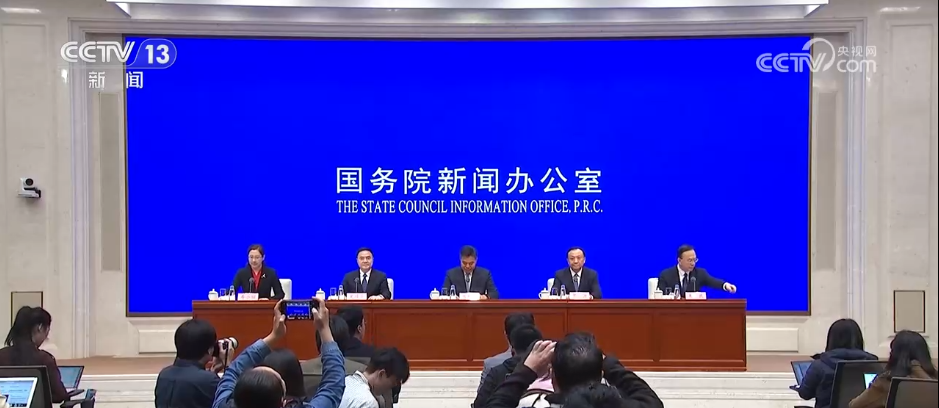
盛秋平副部长出席国新办发布会介绍第八届中国国际进口博览会筹备情况
Shang Wu Bu Wang Zhan· 2025-10-28 08:55
Core Points - The 8th China International Import Expo (CIIE) will be held from November 5 to 10, 2025, in Shanghai, marking a significant economic diplomatic event following the 20th Central Committee's Fourth Plenary Session [2][3] - The expo will feature participation from 155 countries, regions, and international organizations, with 4,108 foreign enterprises exhibiting across an exhibition area exceeding 430,000 square meters, setting a new record [3][4] - The event aims to promote high-level opening-up and expand trade partnerships, showcasing China's commitment to open cooperation and mutual benefits [3][4][5] Group 1: Event Characteristics - The expo will emphasize openness, with initiatives like the "Shared Market · Export to China" brand and participation from six guest countries [4] - It will showcase 461 new products, technologies, and services, positioning China as a global innovation hub [5] - The event will include over 80 supporting activities, such as trade negotiations and investment promotion [3][4] Group 2: Economic Impact - The expo is expected to enhance international cooperation, with 290 Fortune 500 companies participating, reflecting strong global confidence in the Chinese market [6][15] - The event will facilitate trade and investment, with a focus on sectors like low-altitude economy, humanoid robots, and green technology [5][6] - The expo aims to address global uncertainties by providing a stable and predictable business environment for international participants [15][16] Group 3: Local Government Support - Shanghai has implemented comprehensive service measures to ensure the success of the expo, including traffic organization, accommodation, and volunteer services [9][10] - The city has optimized customs and border control processes to facilitate the entry of foreign exhibitors and visitors [19][20] - A series of promotional activities, including the "2025 China International Boutique Consumption Month," will be launched to stimulate local consumption during the expo [7][11][37] Group 4: Forum and Reports - The Hongqiao International Economic Forum will feature discussions on global trade, security, and sustainable development, with the release of the "World Open Report 2025" [22][23] - The report will analyze global openness trends and provide insights into China's role in promoting an open world economy [22][23] Group 5: Future Prospects - The expo is positioned as a platform for enhancing China's international trade capabilities and fostering a dual circulation economic strategy [25][26] - Shanghai aims to strengthen its role as an international consumption center, leveraging the expo to boost local and international trade [36][37]
全文丨中共中央关于制定国民经济和社会发展第十五个五年规划的建议
Xin Hua She· 2025-10-28 08:49
Core Viewpoint - The Central Committee of the Communist Party of China has released the full text of the suggestions for the 15th Five-Year Plan, emphasizing the construction of a new energy system and the promotion of high-quality development in clean energy while ensuring the safe and orderly replacement of fossil energy sources. Energy Sector - Accelerate the construction of a new energy system, continuously increase the proportion of renewable energy supply, and focus on building a strong energy nation [1] - Promote the clean and efficient utilization of fossil energy, upgrade coal-fired power plants, and replace scattered coal usage [1] - Enhance the resilience and complementarity of the power system, develop new energy storage solutions, and accelerate the construction of smart grids and microgrids [1] - Improve the electrification level of end-use energy and promote green and low-carbon energy consumption [1] Economic and Social Development Goals - The 15th Five-Year Plan period is crucial for achieving basic socialist modernization, requiring efforts to consolidate advantages, eliminate bottlenecks, and strengthen weaknesses [2] - The development environment is complex, with both strategic opportunities and risks, necessitating proactive measures to navigate international competition [3] Guiding Principles for Development - Adhere to the principle of people-centered development, ensuring that modernization benefits all citizens [7] - Focus on high-quality development, emphasizing innovation and structural reform to enhance economic vitality [7] - Promote comprehensive deepening of reforms to address systemic barriers to high-quality development [7] - Ensure a balance between development and security, enhancing resilience against various risks [8] Major Development Objectives - Achieve significant results in high-quality development, with economic growth maintained within a reasonable range and increased domestic consumption driving growth [9] - Enhance self-reliance in technology, with improvements in the national innovation system and breakthroughs in key technologies [9] - Advance social civilization and improve the quality of life for citizens, with a focus on employment and income growth [10] - Make substantial progress in building a beautiful China, with a focus on green production and achieving carbon peak goals [10] Modern Industrial System - Establish a modern industrial system with a focus on the real economy, emphasizing intelligent, green, and integrated development [11] - Optimize and upgrade traditional industries while fostering emerging and future industries, such as new energy and advanced manufacturing [12] Infrastructure Development - Strengthen the planning and integration of infrastructure, promoting the construction of new energy infrastructure and modern transportation systems [13] Agricultural Modernization - Focus on agricultural modernization as a key aspect of overall modernization, enhancing production capacity and quality [28] - Promote rural revitalization and improve living conditions in rural areas, ensuring sustainable agricultural development [29]
中共中央关于制定国民经济和社会发展第十五个五年规划的建议
财联社· 2025-10-28 08:45
Core Viewpoint - The "15th Five-Year Plan" period is crucial for achieving basic socialist modernization, building on the significant achievements of the "14th Five-Year Plan" and addressing complex domestic and international challenges [3][4][5]. Group 1: Achievements and Challenges - The "14th Five-Year Plan" saw major accomplishments in economic stability, high-quality development, technological innovation, and social governance despite the severe impact of the pandemic [3]. - The "15th Five-Year Plan" will focus on consolidating advantages, overcoming bottlenecks, and enhancing weaknesses to secure strategic initiatives in international competition [4]. - The development environment is characterized by profound changes, with both strategic opportunities and risks present, necessitating a proactive approach to navigate uncertainties [5][6]. Group 2: Guiding Principles and Goals - The guiding ideology for the "15th Five-Year Plan" emphasizes Marxism, Xi Jinping's thoughts, and the goal of building a modern socialist country while promoting high-quality development and comprehensive reforms [7][8]. - Key goals include achieving significant results in high-quality development, enhancing self-reliance in technology, and improving the overall governance system [10][11]. Group 3: Economic and Social Development - The plan aims for a notable increase in economic growth, productivity, and consumer spending, with a focus on building a unified national market and promoting new industrialization [10][12]. - The emphasis will be on fostering emerging industries, optimizing traditional sectors, and enhancing service industry quality [13][19]. Group 4: Infrastructure and Technological Advancement - A modernized infrastructure system will be developed, focusing on integrating new technologies and enhancing resilience [14]. - The plan prioritizes technological self-reliance, with significant investments in key areas such as semiconductor technology and advanced materials [15][16]. Group 5: Domestic Market and Investment - Strengthening the domestic market is essential, with strategies to boost consumption and effective investment [20][21]. - The plan includes measures to eliminate barriers to market integration and enhance the investment environment for both domestic and foreign entities [22][23]. Group 6: Rural Modernization and Regional Development - Agricultural modernization is a priority, with efforts to improve production capacity and quality while ensuring rural revitalization [29][30]. - The plan promotes regional coordination, aiming to balance development across different areas and enhance infrastructure connectivity [32][33]. Group 7: Cultural and Social Development - Cultural innovation and the promotion of socialist values are highlighted as key components of modernization [35][36]. - The plan aims to improve living standards and social welfare, ensuring that development benefits all citizens [38][39].

“十五五”规划如何承上启下?这几点值得关注 | 《财经》封面
Cai Jing Wang· 2025-10-28 08:09
Core Insights - The "15th Five-Year Plan" (2026-2030) is a strategic roadmap for China's development towards achieving socialist modernization by 2035, emphasizing high-quality development and technological self-reliance [1][2][3] - The plan aims to address challenges such as insufficient domestic demand, structural imbalances, and the need for innovation in key sectors [3][5][9] Economic Development Goals - The primary goals for the "15th Five-Year Plan" include achieving significant results in high-quality development, maintaining reasonable economic growth, and improving residents' consumption rates [2][3] - The plan emphasizes the importance of technological innovation and the integration of technology with industry to drive economic growth [10][11] Industry Focus - The plan prioritizes the construction of a modern industrial system, with a focus on advanced manufacturing and the development of emerging industries such as artificial intelligence, renewable energy, and biotechnology [12][13][14] - Specific tasks include optimizing traditional industries, fostering new industries, and enhancing service sector development [12][14] Domestic Demand Expansion - Expanding domestic demand is a key strategy, with initiatives aimed at boosting consumption, increasing income, and improving living standards [15][17] - The plan outlines measures to enhance the income distribution system and strengthen social security to support consumption growth [19][21] High-Level Opening Up - The "15th Five-Year Plan" aims to deepen high-level opening up, focusing on aligning with international high standards and expanding institutional openness [24][25] - The plan encourages participation in high-standard trade agreements and diversification of foreign trade markets [26][28] Reform and Governance - Economic reforms are central to the "15th Five-Year Plan," with a focus on building a high-level socialist market economy and improving macroeconomic governance [30][31] - Key reform areas include enhancing the regulatory framework, optimizing fiscal relations, and improving budget management [36][37] Conclusion - The "15th Five-Year Plan" represents a critical phase for China's economic and social development, addressing both domestic challenges and external pressures while aiming for sustainable growth and modernization [39]
新产品新技术集中展出 规模再创新高 第八届进博会各项筹备工作基本就绪
Yang Shi Wang· 2025-10-28 06:19
Group 1 - The 8th China International Import Expo (CIIE) will be held from November 5 to 10, with all preparations nearly complete [1][5] - A total of 155 countries, regions, and international organizations will participate, with 4,108 foreign enterprises exhibiting, marking a record high in exhibition scale of over 430,000 square meters [3][5] - The event will feature the Hongqiao International Economic Forum, which will include 33 sub-forums and closed-door meetings, with participation from 8 Nobel Prize winners and over 400 notable guests from politics, business, and academia [3][5] Group 2 - The exhibition area for enterprises has expanded to over 367,000 square meters, with an increase of over 600 exhibitors compared to last year, totaling 290 Fortune 500 and industry-leading companies [5][6] - The expo will introduce new themes and scenarios, focusing on six major exhibition areas including healthcare, automotive, technology equipment, consumer goods, agricultural products, and service trade [6] - Special measures will be implemented to support exhibitors from 37 least developed countries, including free exhibition spaces and tax incentives for product purchases [6] Group 3 - Since its inception in 2018, the previous seven expos have showcased approximately 3,000 new products, technologies, and services, with intended transaction amounts exceeding 500 billion yuan [6] - The CIIE has become a significant platform for China to promote high-level opening-up, with numerous success stories of transforming exhibits into commodities and exhibitors into investors [6]
下一个五年 这两个字更重要
Zhong Guo Xin Wen Wang· 2025-10-28 00:14
Group 1 - The core viewpoint emphasizes that "expanding high-level opening-up" has been elevated in importance within China's 14th Five-Year Plan, reflecting a proactive choice amid geopolitical risks and trade protectionism [1][2] - The opening-up is primarily aimed at promoting China's own development, with a target of reaching a goods trade scale of $6.16 trillion and service trade exceeding $1 trillion by 2024 [2][3] - High-level opening-up has become a strong driving force for China's economic development [3] Group 2 - The nature of opening-up is undergoing a structural transformation, shifting from merely removing barriers to establishing rules [4][5] - China is transitioning from being a follower to a leader in global standards and rules, particularly in fields like artificial intelligence, quantum computing, and advanced manufacturing [5][6] - The next five years will see strategic deployments in three pillars of trade: goods, services, and digital trade [6][7] Group 3 - Emerging fields such as service trade and digital trade are becoming new frontiers for high-level opening-up [7][8] - Technologies like artificial intelligence and digital tools are reshaping traditional trade organization and resource allocation, enhancing certainty and resilience in opening-up [8] Group 4 - China's opening-up strategy is diversifying and is no longer reliant on a single market, with increasing trade with Belt and Road Initiative countries and significant growth in trade with ASEAN following the RCEP agreement [9] - The emphasis on "active" opening-up indicates a shift from compliance-based to a more proactive approach, enhancing foreign investment confidence [9][10] - The total foreign direct investment in China from 2021 to May 2025 is projected to reach 4.7 trillion yuan, surpassing the total during the previous five-year plan [9][10] Group 5 - Investment in China is becoming a necessity for multinational companies, with foreign firms expressing increased confidence in the Chinese market due to the emphasis on opening-up and innovation [10] - China's high-level opening-up not only drives its own development but also plays a stabilizing role in global connectivity, creating a mutually beneficial rule system for broader market access and investment opportunities [10]
加快构建新发展格局,牢牢把握发展主动权
Ren Min Ri Bao· 2025-10-27 22:38
大国经济都是内需为主导,市场是当今世界最稀缺的资源,强大国内市场是中国式现代化的战略依托。 我国产业体系和基础设施体系配套完善,14亿多人口的超大规模市场潜力巨大。面向未来,无论是深入 推进以人为本的新型城镇化、大力实施城市更新行动,还是扎实推进乡村全面振兴、在发展中稳步提升 民生保障水平,都将有力促进投资和消费良性循环,释放巨大内需潜力。 全会提出坚持扩大内需这个战略基点,体现了实施扩大内需战略的连贯性。坚持惠民生和促消费、投资 于物和投资于人紧密结合,促进消费和投资、供给和需求良性互动,旨在增强国内大循环内生动力和可 靠性。纵深推进全国统一大市场建设,打通各种卡点堵点,破除地方保护和市场分割,综合整治"内卷 式"竞争,旨在充分释放我国超大规模市场红利。加快构建高水平社会主义市场经济体制,充分激发各 类经营主体活力,加快完善要素市场化配置体制机制,实现市场有效有序、政府有为有度,必将进一步 增强高质量发展动力。 全会对扩大高水平对外开放作出部署,展现了中国坚持开放合作、互利共赢的信心和决心。今年前三季 度,我国货物贸易进出口同比增长4%,其中出口同比增长7.1%,绘出逆势上扬曲线。尽管单边主义、 保护主义逆 ...