
贸易战

Search documents
这次重磅的中美经贸磋商,将会释放哪些信号?新的转折会到来吗?
Sou Hu Cai Jing· 2025-10-24 05:50
Core Insights - The recent agreement between China and the U.S. to engage in a new round of trade negotiations is a significant positive signal, indicating a willingness to resolve existing conflicts and a sense of urgency to address issues [1][3] Group 1: Trade Negotiations - The agreement suggests that high-level diplomatic or trade officials have already made contact and reached a preliminary consensus, indicating that the situation is unlikely to worsen in the short term [3] - The timing of the negotiations raises questions, particularly regarding President Trump's unpredictable policies that have negatively impacted the U.S. and global economy, especially in the context of the ongoing trade war [4] - If high tariffs are implemented, it could exacerbate inflation in the U.S., as the country relies heavily on Chinese manufacturing, and rising import prices would further increase consumer prices [5][6] Group 2: Key Issues in Negotiations - Two main issues to focus on during the negotiations are: 1. Tariff discussions: Whether there will be talks about canceling or reducing the additional tariffs imposed since the trade war began in 2018, which would be a significant positive development [8] 2. Technology controls: The potential easing of U.S. export restrictions on Chinese technology products, such as chips, and changes in China's rare earth controls, which directly affect the improvement of U.S.-China relations [10] - Resolving these two key issues could facilitate progress on other topics, making it crucial to monitor whether substantial agreements can be reached in the upcoming talks [10]

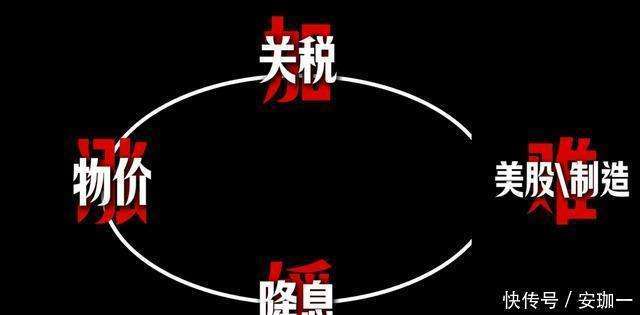
中国已牢牢掐住美国的七寸,无论特朗普怎么加税,结果只有一个
Sou Hu Cai Jing· 2025-10-24 05:35
Group 1 - The article discusses the recent shift in U.S.-China relations, highlighting Trump's initial threat to impose 100% tariffs on China if it continued purchasing Russian oil, which was later softened after market reactions and negotiations [1][3] - The U.S. Treasury Secretary's negotiations with China faced setbacks, leading to a potential delay in tariff implementation if China resumed rare earth exports to the U.S. [1][5] - China's response to U.S. threats included further restrictions on rare earth exports and sanctions on U.S. shipping companies, resulting in significant declines in U.S. stock indices [1][7] Group 2 - The article emphasizes that the U.S. relies on its allies for economic sanctions, and the current geopolitical landscape shows that China has developed a level of self-sufficiency in key industries, reducing its dependency on foreign industrial systems [3][5] - Despite the West's technological advantages, the deindustrialization trend in the West has created vulnerabilities, with the U.S. outsourcing much of its manufacturing to countries like China [5][7] - The article notes that the U.S. has damaged its relationships with allies, making it difficult to unite against China, especially as China imposes stricter regulations on rare earth exports [7][9]

“终止所有与加拿大的谈判”!看电视看到“加拿大反关税广告”,特朗普怒了
Hua Er Jie Jian Wen· 2025-10-24 04:08
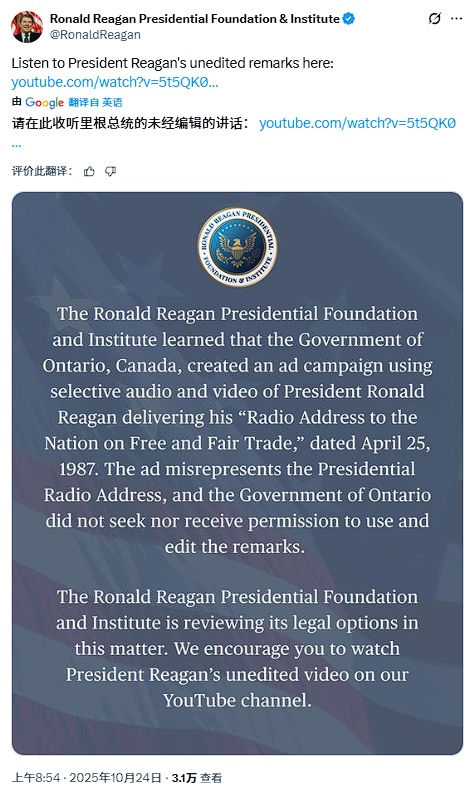
Core Points - President Trump's sudden termination of all trade negotiations with Canada highlights the unpredictability of his trade policy during his second term, adding further strain to the already tense U.S.-Canada economic relationship [1] - The decision was triggered by an advertisement from the Ontario provincial government that misused a speech by former President Reagan criticizing tariffs, which Trump labeled as "fraudulent" [1][2] - The termination of negotiations comes at a critical time, as both countries were discussing potential agreements regarding the steel and aluminum industries, amidst ongoing tariffs imposed by Trump on Canadian goods [1][5] Group 1 - The Ontario government plans to spend $75 million on advertising in the U.S. featuring Reagan's criticism of tariffs, which has drawn the ire of President Trump [2] - Trump's statement emphasized the importance of tariffs for U.S. national security and economic interests, leading to the abrupt end of trade talks with Canada [4] - Economists warn that this situation reflects a key risk in Trump's second term, characterized by endless trade wars and fragile negotiations, contributing to economic uncertainty [5] Group 2 - Canadian Prime Minister Mark Carney indicated that Canada would not allow the U.S. to unfairly access its market if trade negotiations fail, and plans to double exports to countries outside the U.S. [1][5] - Currently, Trump imposes a 35% tariff on Canadian imports, with specific tariffs of 50% on metals and 25% on automobiles, which further complicates trade relations [5][6] - The advertisement controversy and subsequent negotiation termination signify increased uncertainty in the U.S.-Canada trade partnership, casting a shadow over North American economic integration [6]
从被做局到如今一粒不买:中国停购美国大豆背后,局面为何反转?
首席商业评论· 2025-10-24 04:07
Core Viewpoint - The article discusses the severe impact of China's halt in purchasing U.S. soybeans, leading to a crisis for American soybean farmers, despite record-high production levels. This situation is exacerbated by the historical context of U.S.-China trade relations and the strategic shifts in China's agricultural policies [5][7][9]. Group 1: Current Situation of U.S. Soybean Farmers - U.S. soybean production has reached a historical high, yet farmers face a "devastating blow" due to a lack of export orders, particularly from China, which has not placed any orders for the first time in nearly 20 years [5][7]. - In North Dakota, 70% of soybean storage facilities are full, leading to temporary outdoor storage and increased risk of spoilage, with insurance claims exceeding $500 million due to unsold soybeans [6][9]. - The absence of Chinese orders, which typically account for over 50% of U.S. soybean exports, has left farmers in a dire financial situation, struggling to repay loans taken against their crops [9][12]. Group 2: Historical Context and Trade Dynamics - The article outlines the historical shift of China from a soybean exporter to the largest importer, driven by U.S. agricultural policies and the introduction of genetically modified soybeans [14][18]. - The U.S. soybean industry has been heavily reliant on the Chinese market, with average annual imports from China supporting over 200,000 jobs in the Midwest [29][30]. - The trade tensions initiated by the Trump administration, including tariffs on Chinese goods, have led to retaliatory measures from China, significantly reducing U.S. soybean competitiveness [23][30]. Group 3: China's Strategic Response - China has been actively working to reduce its dependency on U.S. soybeans by diversifying its import sources, including increasing purchases from Brazil and Argentina, which offer lower prices and favorable tariffs [25][28]. - The Chinese government has implemented policies to boost domestic soybean production and reduce reliance on imported genetically modified soybeans, with plans to increase planting areas significantly [22][20]. - As of 2025, Brazil has become the largest supplier of soybeans to China, capturing 71.6% of the market share, while U.S. exports have plummeted to 12% [25][28].

国泰君安期货商品研究晨报:能源化工-20251024
Guo Tai Jun An Qi Huo· 2025-10-24 02:21
Report Summary 1. Report Industry Investment Ratings No specific industry investment ratings are provided in the report. 2. Core Views - **PX**: Cost - supported, with a unilateral trend of being oscillatory and slightly strong. PXN is expected to fall, and factories are advised to hedge when the spread is between 240 - 250 US dollars [10]. - **PTA**: Demand is expected to improve marginally, supported by oil prices. The new PTA device of Xin Fengming is planned to start this week [10]. - **MEG**: Reduce short positions. Pay attention to the restart of Zhenhai Refining & Chemical's 800,000 - ton device in November and potential unplanned maintenance of coal - based devices [11]. - **Rubber**: Expected to move in an oscillatory manner [12]. - **Synthetic Rubber**: Supported by macro - sentiment, with a rising central value, but facing fundamental pressure [16][18]. - **Asphalt**: Strengthened by the rebound of crude oil [19]. - **LLDPE**: With a weakening trend due to supply pressure and inventory accumulation [30][31]. - **PP**: Still showing a weak trend, suppressed by factors such as continuous high supply and trade wars [33][34]. - **Caustic Soda**: The far - month valuation is suppressed by the expected reduction of alumina production [38]. - **Pulp**: Expected to move in an oscillatory manner, affected by factors such as high inventory and weak demand [41][44]. - **Glass**: The price of the original sheet remains stable [45]. - **Methanol**: Expected to move in an oscillatory manner, with fundamental pressure and macro - support [48][51][52]. - **Urea**: Supported by macro - factors, with a short - term rebound, but facing medium - term pressure [53][55]. - **Styrene**: Temporarily following the rebound of crude oil, with a short - term oscillatory pattern [56]. - **Soda Ash**: The spot market shows little change, expected to be weakly oscillatory in the short term [59]. - **LPG**: Significantly supported by cost, but with macro - risks [62]. - **Propylene**: Supported by cost, with a short - term rebound from a low level [63]. - **PVC**: With a weakening trend due to high production, high inventory, and weak demand [70]. - **Fuel Oil**: Continuing to rise strongly, and the strong trend will continue. The upward trend of low - sulfur fuel oil is relatively weak, and the spread between high - and low - sulfur in the overseas spot market has significantly shrunk [73]. - **Container Shipping Index (European Line)**: Relatively resistant to decline [75]. 3. Summary by Related Catalogs PX, PTA, MEG - **Market Data**: On October 23, the price of PX in Asia increased, following the rise of crude oil. The load of PTA devices changed, and the overall start - up load of MEG in the Chinese mainland decreased. The polyester load remained stable, and the sales of polyester yarn in Jiangsu and Zhejiang partially increased [5][8][9]. - **Trend and Suggestion**: PX is oscillatory and slightly strong, and factories are advised to hedge PXN spreads. PTA demand is expected to improve, and MEG short positions should be reduced [10][11]. Rubber - **Market Data**: The trading volume of the rubber futures market increased, and the positions decreased. The prices of glue and cup - glue in Thailand increased, and the raw material prices in Yunnan increased slightly. The supply in Hainan decreased due to typhoons, and the raw material supply in Vietnam was limited [13][14][15]. - **Trend**: Expected to move in an oscillatory manner [12]. Synthetic Rubber - **Market Data**: The trading volume of the synthetic rubber futures market increased, and the positions decreased. The inventory of butadiene in East China ports decreased, and the inventory of domestic cis - polybutadiene increased [16][17]. - **Trend**: Supported by macro - sentiment, with a rising central value, but facing fundamental pressure [16][18]. Asphalt - **Market Data**: The asphalt futures prices increased, and the trading volume and positions changed. The refinery start - up rate and inventory rate increased slightly. The domestic asphalt production in November is expected to decrease, and the factory and social inventories decreased [19][29]. - **Trend**: Strengthened by the rebound of crude oil [19]. LLDPE - **Market Data**: The LLDPE futures price increased, and the positions decreased. The domestic PE market price decreased overall, with a slight increase in some varieties over the weekend [30]. - **Trend**: With a weakening trend due to supply pressure and inventory accumulation [30][31]. PP - **Market Data**: The PP futures price increased, and the positions decreased. The domestic PP market price rebounded after a decline, with a downward - moving price center [33][34]. - **Trend**: Still showing a weak trend, suppressed by factors such as continuous high supply and trade wars [33][34]. Caustic Soda - **Market Data**: The price of caustic soda futures and the spot price in Shandong remained stable. The supply pressure of caustic soda is not large, but the far - month valuation is suppressed by the expected reduction of alumina production [37][38]. - **Trend**: The far - month valuation is suppressed [38]. Pulp - **Market Data**: The pulp futures trading volume decreased, and the positions decreased. The domestic and international prices of pulp varieties changed, and the port inventory decreased but remained at a high level. The downstream demand was weak [42][43][44]. - **Trend**: Expected to move in an oscillatory manner [41]. Glass - **Market Data**: The glass futures price increased, and the positions decreased. The domestic float glass market price remained stable, with a slight improvement in overall sales [46]. - **Trend**: The price of the original sheet remains stable [45]. Methanol - **Market Data**: The methanol futures price increased, and the positions decreased. The port inventory increased slightly, with different trends in different regions [49][51]. - **Trend**: Expected to move in an oscillatory manner, with fundamental pressure and macro - support [48][51][52]. Urea - **Market Data**: The urea futures price increased, and the positions decreased. The inventory of urea enterprises increased slightly, and the spot trading improved [53][54][55]. - **Trend**: Supported by macro - factors, with a short - term rebound, but facing medium - term pressure [53][55]. Styrene - **Market Data**: The styrene futures prices changed, and the profit margins of different production methods decreased. The port inventory accumulation expectations of pure benzene and styrene turned into de - stocking expectations [56][57]. - **Trend**: Temporarily following the rebound of crude oil, with a short - term oscillatory pattern [56]. Soda Ash - **Market Data**: The soda ash futures price increased, and the positions increased. The domestic soda ash market was stable, with an increase in supply and weak demand [59]. - **Trend**: The spot market shows little change, expected to be weakly oscillatory in the short term [59]. LPG and Propylene - **Market Data**: The LPG and propylene futures prices increased, and the trading volume and positions changed. The CP prices of propane and butane increased, and there are many PDH and LPG plant maintenance plans [63][67][68]. - **Trend**: LPG is supported by cost but has macro - risks; propylene is supported by cost with a short - term rebound [62][63]. PVC - **Market Data**: The PVC futures price and the spot price remained stable. The production decreased slightly, and the inventory decreased slightly. The market is affected by trade wars, with weak demand and high inventory [70]. - **Trend**: With a weakening trend due to high production, high inventory, and weak demand [70]. Fuel Oil - **Market Data**: The fuel oil futures prices increased significantly, and the trading volume and positions changed. The spot prices of fuel oil in different regions increased [73]. - **Trend**: Continuing to rise strongly, and the strong trend will continue. The upward trend of low - sulfur fuel oil is relatively weak, and the spread between high - and low - sulfur in the overseas spot market has significantly shrunk [73]. Container Shipping Index (European Line) - **Market Data**: The container shipping index (European Line) futures prices changed, and the trading volume and positions changed. The freight rates of European and US - West routes increased [75]. - **Trend**: Relatively resistant to decline [75].
大宗商品专场 - 2025秋季策略会 登高望远 穿云破雾
2025-10-23 15:20
Summary of Key Points from Conference Call Industry Overview - **Commodity Market**: The coal market has shown signs of a mid-term bottom, with expectations for a gradual upward trend, providing support for energy prices. The oil and gas markets continue to exhibit a mid-term downward trend, but the decline may be limited due to coal's stabilizing effect [1][2]. Core Insights and Arguments - **Oil Market Dynamics**: The oil market has entered a loose phase, with a shift to a backwardation structure, indicating increased bearish risks. OPEC+ has increased production significantly, and geopolitical tensions have eased, but sanctions have limited actual supply impacts [3][4][5]. - **Demand Weakness**: Oil demand is relatively weak, with a notable decline in China's gasoline and diesel demand, which has contracted by approximately 3% and 5% year-on-year, respectively. This has led to increased pressure on refined oil inventories in Q4 [7][8]. - **Coal Market Stability**: The supply of thermal coal remains stable, with a reduction in imports and a slowdown in the growth of renewable energy substitutes. Non-electric demand for coal is strong, and there is an upward price risk in Q4, with prices expected to peak around 800 RMB/ton [14][15]. Additional Important Insights - **Geopolitical Risks**: Geopolitical risks have been fully priced into the oil market, presenting opportunities for short positions. The mid-term supply-demand balance remains unclear, with non-OPEC production growth expected to decline [10]. - **U.S. Shale Oil Production**: U.S. shale oil production costs are around $50/barrel, with slight increases expected in production this year. A significant reduction in production may not occur until 2026, indicating ongoing competition between OPEC+ and U.S. producers [6]. - **Refined Oil Inventory Pressure**: There is an increasing pressure on refined oil inventories, with a notable accumulation observed in Q4, driven by seasonal factors and reduced operational rates at refineries [8]. Market Trends and Predictions - **Price Forecasts**: Brent crude oil is projected to find support around $57, while WTI is expected to stabilize near $52. The market is currently at a critical juncture, with potential for further declines limited by geopolitical risk premiums [9][10]. - **Fuel Oil Market**: The fuel oil market is characterized by a strong high-sulfur segment, with geopolitical factors influencing prices. However, the low-sulfur segment faces oversupply issues [11][12]. - **Asphalt Market**: The asphalt market is expected to weaken due to reduced demand from the construction sector, with supply constraints anticipated in Q4 [13]. Conclusion - The commodity markets are experiencing significant shifts, particularly in coal and oil, with geopolitical factors and demand dynamics playing crucial roles. Investors should remain vigilant regarding inventory pressures and potential price movements, particularly in the context of ongoing geopolitical developments and market adjustments.
美国还有杀招,不给稀土就放金融核弹?新加坡劝告中方:别还手
Sou Hu Cai Jing· 2025-10-23 11:26
Core Viewpoint - The trade war between the US and China has escalated beyond simple retaliatory measures, involving core resources and the global financial system, with the US employing high tariffs, technology blockades, and potential financial sanctions to pressure China, while China counters with its rare earth resources [1][12]. Group 1: Tariffs and Economic Impact - The US has threatened to increase tariffs on Chinese goods to 155%, but such threats have become routine and are often met with market indifference, indicating that the real impact may be more political than economic [3]. - The agricultural sector in the US has already suffered losses exceeding $27.5 billion due to tariffs, with American households facing an additional $800 per year in inflation costs [3]. - The potential for further tariff increases could exacerbate these economic pressures, suggesting that the US's aggressive stance may backfire [3]. Group 2: Technology and Manufacturing - The US has restricted exports of aircraft parts to China, aiming to hinder its high-end manufacturing capabilities, but this could also harm US companies like Boeing, which relies heavily on the Chinese market [5]. - China has the option to shift its aircraft orders to domestic manufacturers or European competitors, potentially accelerating its own aviation industry independence [5]. Group 3: Rare Earth Resources - The US and Australia are attempting to develop a rare earth supply chain, but the complexity of processing these materials means that the US is starting from scratch, while China currently dominates the market, supplying 75% of rare earth magnets [5][6]. - Any restrictions on China's rare earth exports could significantly impact US military production, as evidenced by a reduction in F-35 aircraft output [5]. Group 4: Financial Warfare - The term "financial nuclear bomb" has resurfaced, with suggestions that the US could exclude China from the SWIFT financial system, which would have severe repercussions not only for China but also for the US [6][9]. - Historical precedents show that while financial sanctions can be powerful, they often have significant collateral damage, potentially destabilizing the global financial system [6][9]. Group 5: Strategic Responses - Singapore has advised China against a complete decoupling from the US, reflecting concerns about the economic fallout for smaller nations caught in the crossfire [11][12]. - The ongoing trade war has evolved into a strategic contest, where the ability to withstand pressure and maintain stability is crucial for both sides [14][16]. - China's approach focuses on self-reliance in technology, diversifying trade partnerships, and preparing for potential financial isolation, indicating a long-term strategy rather than immediate retaliation [16][17].

瑞达期货集运指数(欧线)期货日报-20251023
Rui Da Qi Huo· 2025-10-23 10:25
Report Industry Investment Rating - Not provided Core View of the Report - Recently, there are a mix of long and short factors. The trade war situation is unclear, the "peace plan" in the Middle East is advancing steadily, improving the expectation of Red Sea re - navigation, and the oversupply pattern is stable. The futures price is expected to fluctuate widely. The current freight rate market is greatly affected by news, and the futures price is expected to fluctuate more sharply. It is recommended that investors be cautious, pay attention to the operation rhythm and risk control, and track geopolitical, capacity and cargo volume data in a timely manner [1] Summary by Relevant Catalogs Futures Market Data - EC main contract closing price is 1793.100, up 18.9; EC second - main contract closing price is up 17.80. The spread of EC2512 - EC2602 is 211.10, up 5.70; the spread of EC2512 - EC2604 is 621.30, up 4.40. EC contract basis is - 652.72, down 4.80. The main contract holding volume is 28914, down 94 [1] Spot Market Data - SCFIS (European Line) (weekly) is 1140.38, up 108.58; SCFIS (US West Line) (weekly) is 863.46, down 14.34. SCFI (composite index) (weekly) is 1310.32, up 149.90. Container ship capacity is 1227.97 (ten thousand TEUs), unchanged. CCFI (composite index) (weekly) is 973.11, down 41.67; CCFI (European Line) (weekly) is 1267.91, down 19.24. The Baltic Dry Index (daily) is 2092.00, up 2.00; the Panamax Freight Index (daily) is 1904.00, down 46.00. The average charter price of Panamax ships is 16692.00, unchanged; the average charter price of Capesize ships is 29809.00, up 1286.00 [1] Industry News - Chinese Minister of Commerce Wang Wentao met with Airbus CEO Guillaume Faury and emphasized continued cooperation. US President Trump mentioned a possible trade agreement with China at the APEC meeting, and the Chinese Foreign Ministry responded. The EU approved the 19th round of sanctions against Russia, including a ban on importing Russian LNG. The strike at Rotterdam Port was extended indefinitely, causing port operations to stagnate and increasing regional supply - chain uncertainty [1] Market Analysis - On Thursday, most futures prices of the container shipping index (European Line) rose. The latest SCFIS European Line settlement freight rate index rose 10.5% week - on - week. The strike at Rotterdam Port and a price increase notice from CMA CGM boosted the futures price. The easing of the trade war and the improvement of the Red Sea re - navigation expectation due to the "peace plan" in the Middle East affected the price. The eurozone's economic data fluctuated, and China's September export data supported the container shipping industry [1] Key Events to Watch - From October 24th, there are a series of important economic data releases, including Japan's September core CPI annual rate, UK's September retail sales monthly rate, and various countries' October manufacturing PMI preliminary values, as well as US September CPI and core CPI annual rates and October consumer confidence index final value [1]
国泰君安期货商品研究晨报:能源化工-20251023
Guo Tai Jun An Qi Huo· 2025-10-23 02:02
1. Report Industry Investment Ratings No industry investment ratings are provided in the report. 2. Core Views of the Report - The report offers daily research and analysis on various energy - chemical futures, including trends, fundamentals, and trading suggestions for each product [2]. - Many products are in a state of short - term shock, with some showing upward or downward trends influenced by factors such as supply - demand, cost, and macro - events [10][18][53]. 3. Summary by Related Catalogs 3.1 PX, PTA, MEG - **PX**: Follows the oil price rebound. In the short - term, it's a shock market. When PXN rises to $250/ton, factories are advised to hedge. There may be a reduction in load later. Supply - demand is slightly tight, and it has cost support [10]. - **PTA**: The demand is expected to improve marginally. It's a unilateral shock market, and short positions are recommended to be reduced. New devices are planned to start this week, and the basis has fallen [10]. - **MEG**: The demand expectation has improved, and there is a short - term rebound. Short positions are recommended to be reduced. Pay attention to the restart of some devices and potential unplanned maintenance of coal - based devices [9][10]. 3.2 Rubber - Rubber is in an oscillating state. The trend strength is neutral. The import volume of natural rubber in September increased, and the main rubber types and source countries showed a significant increase [11][14]. 3.3 Synthetic Rubber - Synthetic rubber is expected to oscillate in the short - term. The trend strength is neutral. The inventory of butadiene in East China ports decreased, while the inventory of domestic butadiene rubber increased slightly. The supply pressure is high, but the valuation is relatively low [16][17][18]. 3.4 Asphalt - Asphalt has risen rapidly due to geopolitical stimulation. The trend strength is relatively strong. The domestic asphalt production in November is expected to decrease, and both factory and social inventories have decreased [19][29]. 3.5 LLDPE - LLDPE shows a weak trend. The trend strength is weak. The market price fluctuates slightly, and the market is in a negative feedback stage. Supply pressure will increase, and inventory pressure is high [30][31]. 3.6 PP - PP still shows a weak trend. The trend strength is weak. The market price fluctuates in a narrow range. Trade wars, high supply, and falling oil prices suppress the market price [34][35]. 3.7 Caustic Soda - The far - month valuation of caustic soda is suppressed. The trend strength is neutral. The supply pressure is not significant in October, but the valuation is always restricted by the expected reduction of alumina production [38][39]. 3.8 Pulp - Pulp is in an oscillating state. The trend strength is neutral. The futures market is strong, while the spot market is stagnant. The supply is loose, and the demand is weak. The price of white cardboard may rise [42][44][45]. 3.9 Glass - The price of glass raw sheets is stable. The trend strength is neutral. The market price is slightly weak, and the trading is light. Downstream procurement enthusiasm is not high [46][47]. 3.10 Methanol - Methanol is under oscillating pressure. The trend strength is neutral. The port inventory has increased slightly. The supply pressure is high, but the valuation is relatively low, and it is affected by macro - events [50][53][54]. 3.11 Urea - Urea is expected to oscillate in the short - term. The trend strength is neutral. The enterprise inventory has increased slightly. The supply pressure is large, the valuation is high, and the domestic demand is weak [55][57][58]. 3.12 Styrene - Styrene continues to have a negative feedback in the short - term. The trend strength is neutral. The short - term is in an oscillating state. The port inventory is expected to change from accumulation to reduction, and the downstream demand is not optimistic [59][60]. 3.13 Soda Ash - The spot market of soda ash has little change. The trend strength is weak. The supply is increasing, and the downstream demand is average. It is expected to oscillate weakly in the short - term [63][64]. 3.14 LPG and Propylene - For LPG, the market valuation is being repaired, but macro - risks still exist. For propylene, it is supported by cost and is expected to oscillate at a low level in the short - term. The trend strength of both is neutral [67][70]. 3.15 PVC - PVC shows a weak trend. The trend strength is weak. The market price is stable, and the supply - demand situation has not improved. It is affected by trade wars, with low - level procurement mentality being weak and cost declining [74]. 3.16 Fuel Oil and Low - Sulfur Fuel Oil - Fuel oil follows the rise of crude oil, with increased market fluctuations. Low - sulfur fuel oil has strengthened in the short - term, and the price difference between high - and low - sulfur in the foreign spot market has rebounded slightly. The trend strength of both is neutral [77]. 3.17 Container Shipping Index (European Line) - The container shipping index (European line) is relatively resistant to decline. The shipping prices of European and US - West routes have increased to varying degrees, and the market shows certain resilience [79].
福建省青山纸业股份有限公司 关于2025年半年度业绩说明会召开情况的公告
Zhong Guo Zheng Quan Bao - Zhong Zheng Wang· 2025-10-23 00:53
Core Viewpoint - The company held a half-year performance briefing on October 22, 2025, to communicate with investors and address their concerns regarding the company's operational performance and strategic initiatives [1][2]. Summary by Sections Meeting Overview - The performance briefing was announced on October 15, 2025, and took place on October 22, 2025, from 13:00 to 14:00 at the Shanghai Stock Exchange Roadshow Center [1][2]. Key Investor Questions and Company Responses - **Trade War Mitigation**: The company addressed how it is managing uncertainties related to trade wars, referring investors to the "Management Discussion and Analysis" section of its periodic reports for detailed measures [3]. - **Subsidiary Supply Chain**: The subsidiary, Hengbao Tong Malaysia, has been supplying products to FABRINET, indicating ongoing collaboration [3]. - **800G Optical Module Development**: The 800G optical module is currently in the sample testing phase, with no involvement in the development of 1.6T optical modules at this time [3]. - **Investor Communication Concerns**: The company acknowledged delays in responding to investor inquiries on the Shanghai Stock Exchange interaction platform and committed to improving communication [4][5]. - **Major Shareholder's Share Reduction**: The company confirmed that the recent share reduction by a major shareholder was compliant with regulations and did not involve any illegal actions [5]. - **Special Food Production Line Profitability**: The special food production line under subsidiary Water Fairy Pharmaceutical is progressing slowly due to multiple factors, with further details available in periodic reports [5]. Additional Information - Investors can access detailed information about the performance briefing through the Shanghai Stock Exchange Roadshow Center and the company's designated disclosure media [3]. - The company expressed gratitude to investors for their support and suggestions during the briefing [6].
