
耐心资本

Search documents
专访加华资本创始人宋向前:解码中国「耐心资本」的生长密码
36氪· 2025-10-27 13:31
Core Viewpoint - The essence of capital is to serve the real economy and create genuine value, rather than merely engaging in speculative financial games [3][6][10]. Group 1: Investment Philosophy - The investment philosophy emphasizes long-term value creation over short-term returns, focusing on sectors that contribute to real GDP and stable employment [10][11]. - The approach is characterized by a commitment to "necessity, frequency, and livelihood," targeting essential consumer goods that are resilient to economic fluctuations [15][18]. - The investment strategy is described as "less but better," prioritizing deep industry knowledge and long-term partnerships over a broad investment portfolio [15][18]. Group 2: Market Dynamics - The current market environment is marked by a shift from rapid growth driven by capital influx to a focus on operational efficiency and product innovation [20][21]. - The imbalance in resource allocation has led to a decline in the manufacturing and consumer sectors, while financial and internet sectors have thrived, creating a vicious cycle that weakens the real economy [9][10]. - The financial industry has strayed from its original purpose of serving the real economy, leading to increased volatility and a lack of sustainable growth [7][8]. Group 3: Future Outlook - The future of the Chinese consumer market is seen as promising, with expectations for the emergence of globally influential consumer brands driven by economic transformation and rising middle-income groups [26][27]. - The company aims to continue its role as a supportive partner for businesses, focusing on empowering industries and fostering sustainable growth [26][27]. - The belief in the importance of patience and long-term commitment in investment is highlighted as a key to navigating market cycles and achieving lasting success [23][27].


刚刚,吴清发声:更好支持创新资本形成
母基金研究中心· 2025-10-27 11:15
Core Viewpoint - The 2025 Financial Street Forum emphasizes the theme of "global financial development under innovation, transformation, and reshaping," highlighting the need for a new financial service model that integrates direct and indirect financing, and supports long-term capital investment in hard technology [1][2]. Group 1: Regulatory Insights - The head of the Financial Regulatory Bureau, Li Yunzhe, advocates for a new financial service model that balances various financing aspects, including direct and indirect financing, and aligns financing terms with industrial development [1]. - China Securities Regulatory Commission (CSRC) Chairman Wu Qing's speech provides significant benefits for the VC/PE sector, particularly in enhancing exit channels for private equity investments [2][3]. Group 2: Private Equity and Venture Capital - Wu Qing's remarks address the critical exit challenges faced by the private equity industry, especially as funds established during the 2015-2016 "Double Innovation" wave approach their exit phase [3]. - The emphasis on new industries and business models necessitates larger and more flexible capital investments, affirming the vital role of private equity funds in supporting innovation [5]. Group 3: Long-term and Patient Capital - The concept of "patient capital" is highlighted as essential for supporting long-term investments in technology innovation, which often involves high risks and long cycles [6][7]. - The need for a robust mechanism to encourage innovation and tolerate failures is crucial for developing patient capital, which is necessary for the success of early-stage investments in technology [7]. Group 4: Policy Support and Industry Development - Since 2024, there has been a notable increase in policy support for the venture capital industry, with various government measures aimed at enhancing the investment environment and encouraging long-term capital participation [9]. - The government has outlined several initiatives to promote venture capital, including the establishment of a national venture capital guidance fund expected to attract significant social capital [9]. Group 5: Future Outlook - The ongoing reforms and supportive policies are expected to further enhance the venture capital landscape, fostering a cycle of early, small, long-term, and hard technology investments [8][9]. - The upcoming capital and industry matchmaking event in Fujian aims to leverage financial resources to support technological and industrial innovation, aligning with national modernization goals [10].

吴清最新发声,信息量巨大!
Zheng Quan Ri Bao Wang· 2025-10-27 11:04
Core Points - The China Securities Regulatory Commission (CSRC) emphasizes the importance of risk prevention, strong regulation, and promoting high-quality development in the capital market [1][4] - The CSRC aims to enhance the inclusiveness, adaptability, attractiveness, and competitiveness of China's capital market to better serve economic and social development [1][4] Group 1: Market Reform and Development - The CSRC plans to deepen sector reforms to enhance the inclusiveness and coverage of the multi-tiered market system [5] - The launch of the deepened ChiNext reform aims to set listing standards that better fit the characteristics of emerging industries and future technology enterprises [5] - The CSRC will continue to promote the high-quality development of the Beijing Stock Exchange and improve the differentiated listing, information disclosure, and trading systems of the New Third Board [5] Group 2: Market Stability and Long-term Investment - High-quality listed companies are seen as the cornerstone of stable market operations, with plans to introduce a refinancing framework to support mergers and acquisitions [6] - The CSRC aims to enhance the role of long-term capital, such as public funds and pension funds, in stabilizing the market and promoting long-term investment [6] Group 3: Opening Up and International Cooperation - The CSRC has launched the "Qualified Foreign Investor System Optimization Work Plan" to improve the investment environment for foreign investors [7] - Measures include optimizing access management and enhancing investment operation efficiency to create a more transparent and efficient institutional environment for foreign investors [7] Group 4: Risk Prevention and Investor Protection - The CSRC is focused on enhancing risk prevention capabilities and strengthening regulatory measures against financial misconduct [9] - New initiatives will be introduced to protect the rights of small and medium investors, including improving the fairness of trading environments and enhancing customer service levels in the industry [9]
吴清:A股、港股等中国资产配置价值更加凸显
Zhong Zheng Wang· 2025-10-27 11:00
Core Viewpoint - In the first nine months of this year, international capital inflows into emerging markets exceeded $150 billion, highlighting the increasing revaluation of Chinese assets such as A-shares and Hong Kong stocks [1] Group 1: Capital Market Dynamics - The chairman of the China Securities Regulatory Commission emphasized the need for a more flexible and inclusive financing environment to support high-investment, high-risk, and long-return-cycle new industries, particularly in artificial intelligence and biomedicine [1] - The evolving global landscape and technological innovation trends are creating new demands and expectations for the development and functionality of capital markets [1] Group 2: Reform and Market Competitiveness - Continuous deepening of reforms is necessary to enhance the inclusiveness and adaptability of market systems, which will improve market attractiveness and competitiveness [1] - The ability to seize opportunities in an uncertain environment is crucial for future success [1]
成都千亿基金集群首发 5亿元投资锁定15家未来企业
Sou Hu Cai Jing· 2025-10-27 07:21
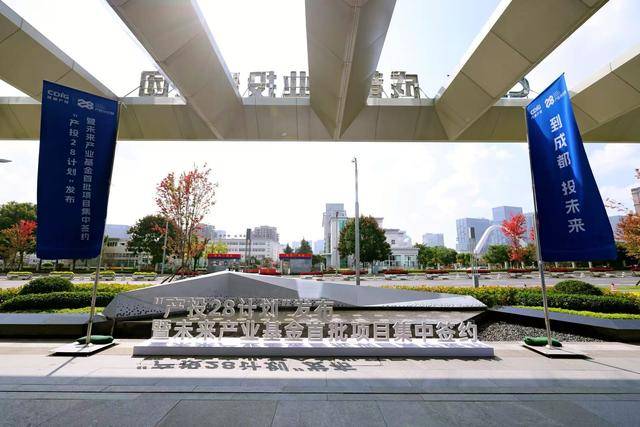
Core Insights - The 20th Central Committee of the Communist Party emphasizes the need to optimize traditional industries and cultivate emerging and future industries, with a focus on future industry development [1] - Chengdu has launched a billion-level future industry fund, with the first batch of projects signed totaling nearly 500 million yuan, covering key sectors such as artificial intelligence, semiconductors, and humanoid robots [1][3] Group 1: Future Industry Fund - The future industry venture capital fund, part of the billion-level future industry fund, officially started on October 17, with an initial scale exceeding 10 billion yuan [3] - The fund is managed by Chengdu Chuangtou Group, responsible for due diligence, investment decisions, and post-investment management, ensuring professional and market-oriented operations [3] Group 2: "Chengdu Investment 28 Plan" - The "Chengdu Investment 28 Plan" is designed to focus on future industries, aiming to cultivate a robust entrepreneurial ecosystem [5] - The plan encompasses a full lifecycle cultivation system from seed stage to IPO, utilizing a dual approach of direct investment and sub-funds to maximize investment opportunities [6] Group 3: Industry Ecosystem and Collaboration - The "Investment Chengdu" future industry investment alliance has been established to connect various resources, including government, research institutions, and financial capital, to enhance collaboration across the industry chain [7] - The next "Chengdu Investment 28 Plan" open day is scheduled for November 28, with project collection channels now open, encouraging entrepreneurs to participate [7]
毕马威重磅发布《大变局:基建与交通运输行业新兴趋势》
Sou Hu Cai Jing· 2025-10-27 02:40
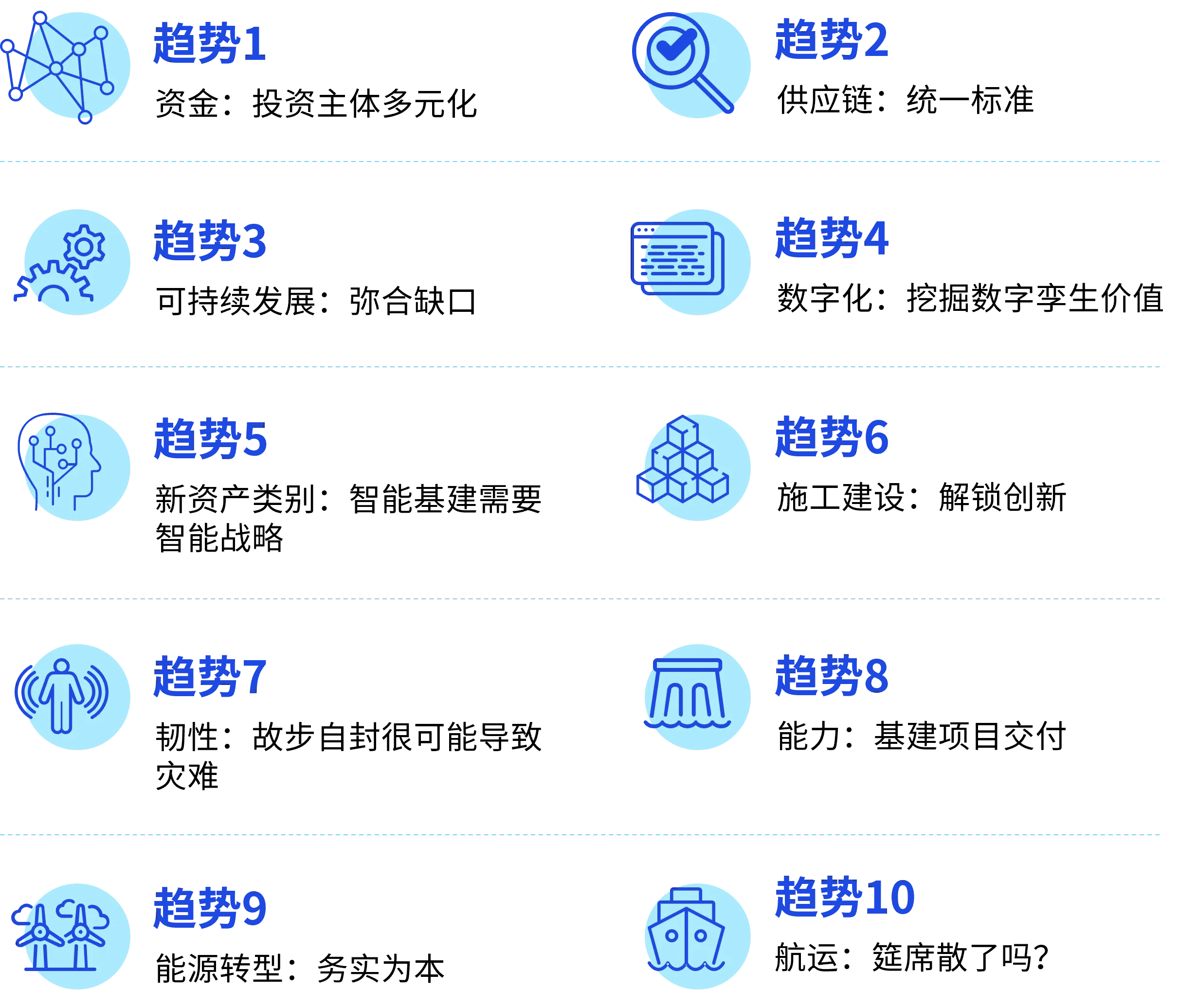
Core Insights - The report by KPMG titled "Transformations: Emerging Trends in Infrastructure and Transportation" analyzes significant changes facing the industry and provides forward-looking predictions for the next year [1] - The report is based on insights from ten senior leaders in the infrastructure sector, offering a deep understanding of the global shifts impacting the industry [1] Key Judgments - By 2025, rising public debt yields, withdrawal of bilateral investments, and a stronger dollar will intensify fiscal pressures, leading to fierce competition among countries for patient capital, making private investment and diversified investment entities crucial trends [6] - Governments will face increased funding costs due to rising public debt yields, while the retreat of bilateral investments and development aid will further weaken the fiscal capacity of emerging markets [7] - The demand for resilient infrastructure and modern services is expected to surge, with governments needing to meet public expectations to ensure social and economic stability [7] Predictions and Recommendations - Countries will compete for patient capital, with some emulating India's National Monetization Pipeline (NMP) to accelerate private investment in specific sectors [8] - Establishing clear asset listing channels with transparent regulatory frameworks will encourage innovation and reinvestment, providing reasonable returns for private investors [8] - Stakeholders must engage with citizens, national pension funds, and institutional investors to identify target assets and conduct due diligence [8] Key Developments in Supply Chain - By 2025, supply chains will face immense pressure due to trade wars and new tariff regulations, necessitating efficiency improvements and stricter evaluations of emissions [11] - The need for supply chain standardization will be recognized, although actual implementation will take time [10][12] - Companies will be compelled to enhance supply chain efficiency through collaboration with government and industry bodies [11] Sustainable Transformation - Governments and enterprises will begin to bridge the gap between actions and goals, ensuring daily operations align with long-term sustainability objectives [13][14] - Major regulations will drive sustainable transformations, with construction owners needing to understand material sources and carbon footprints [15] Digital Twin Technology - By 2025, digital twin technology will become a key tool for enhancing operational efficiency and decision-making due to decreasing costs and increasing demand for insights [16][17] - Companies that do not adopt digital twins will face scrutiny from stakeholders and competitive disadvantages [18] Dynamic Strategic Planning - Enterprises should transition from static annual plans to dynamic strategic planning methods, leveraging real-time data and advanced technologies to improve decision quality and efficiency [19][20] - This shift will enhance performance and profitability while providing significant benefits to all stakeholders [21] Construction Industry Pressures - Construction companies will face exponential growth pressures, particularly in energy and infrastructure sectors, but can leverage technology and AI to improve efficiency and profit margins [22][23] - Companies are advised to invest in technology, enhance supply chains, and adjust operational models to drive innovation [24] Infrastructure Asset Management - Infrastructure asset failures could lead to catastrophic consequences, necessitating comprehensive assessments to evaluate risks and develop operational resilience goals [26][27] - Companies should prioritize high-risk asset updates and protections to avoid future risks and costs [28] Supply Chain Management - Owners of public and private infrastructure investment portfolios will actively engage in supply chain management, establishing long-term relationships with suppliers to address delivery capacity and talent bottlenecks [29][30] - Digitalization and technology will enhance supply chain efficiency, enabling companies to prepare for future disruptions [31] Pragmatism in Financing - Pragmatism will drive companies to strengthen collaboration and develop hybrid financing models to enhance social and environmental project impacts [32][33] - Companies will focus on data capture and reporting to demonstrate project benefits, balancing environmental impact with economic practicality [34] Shipping Industry Adaptation - Shipping companies must adapt to rate fluctuations and sustainability pressures amid trade protectionism and supply chain disruptions [35][36] - Companies are encouraged to reconsider investment strategies, focusing on long-term effective areas and engaging in scenario planning [37]
中原证券晨会聚焦-20251027
Zhongyuan Securities· 2025-10-27 01:02
Core Insights - The report highlights the ongoing recovery in the A-share market, with structural opportunities emerging in various sectors, particularly technology and energy [14][15][16] - The report emphasizes the importance of long-term capital in enhancing market stability and supporting high-quality development in the capital market [11][12] Domestic Market Performance - The Shanghai Composite Index closed at 3,950.31, with a daily increase of 0.71%, while the Shenzhen Component Index rose by 2.02% to 13,289.18 [4] - The average price-to-earnings (P/E) ratios for the Shanghai Composite and ChiNext Index are 16.02 and 48.28, respectively, indicating a favorable environment for medium to long-term investments [13][15] International Market Performance - The Dow Jones Industrial Average closed at 30,772.79, down 0.67%, while the S&P 500 and Nasdaq also experienced declines of 0.45% and 0.15%, respectively [5] Industry Analysis - The report notes a significant decline in the media sector, with a 6.65% drop in the media index from September 29 to October 22, underperforming compared to the broader market indices [19] - The automotive industry achieved record production and sales figures in September, with production reaching 3.28 million vehicles and sales at 3.23 million, marking year-on-year increases of 17.15% and 14.86% respectively [24][25] - The new energy vehicle penetration rate reached 49.72% in September, reflecting strong growth in this segment [24] Technology and AI Developments - The report discusses advancements in AI applications, particularly the release of OpenAI's latest video generation model, which enhances the capabilities of AI in content creation [22] - The software industry in China saw a revenue increase of 12.6% year-on-year in the first eight months of 2025, indicating a robust growth trajectory [26] Investment Recommendations - The report suggests focusing on sectors such as gaming, which is expected to benefit from favorable policies and strong market demand, as well as the publishing sector, which offers stable returns due to its low volatility and high dividend yields [21][25] - In the automotive sector, the report recommends attention to companies that are well-positioned to benefit from the ongoing transition to smart and electric vehicles [25]

锚定新质生产力,构建“耐心资本,深圳并购重组三年行动方案剑指“20万亿元市值”
Hua Xia Shi Bao· 2025-10-24 13:36
Core Viewpoint - Shenzhen aims to enhance the quality of listed companies and achieve a total market capitalization of over 20 trillion yuan by the end of 2027, along with completing over 200 merger and acquisition (M&A) projects totaling over 100 billion yuan, and nurturing 20 companies with a market value of over 100 billion yuan [2][3]. Summary by Relevant Sections Strategic Focus - The action plan emphasizes strategic emerging industries such as integrated circuits, artificial intelligence, new energy, and biomedicine, supporting leading companies in conducting upstream and downstream M&A to strengthen supply chains and acquire quality unprofitable technology assets [3][4]. Key Tasks - The plan outlines several key tasks, including focusing on new productive forces for M&A, establishing a project database for M&A targets, expanding financing channels, and creating a supportive capital system for M&A activities [4][6]. Market Dynamics - The M&A landscape in Shenzhen is expected to evolve, with a focus on new productive forces leading to the formation of industry clusters centered around integrated circuits and biomedicine, while enhancing the resilience of the capital market [6][7]. Financing Solutions - To address funding challenges in M&A, the plan encourages the use of various financing methods, including cash, shares, and bonds, and promotes bank support through loans and guarantees [7][8]. Capital System Development - The establishment of a "patient capital" system is highlighted as crucial for activating the M&A market, with an emphasis on long-term investment performance evaluation and enhancing information disclosure to boost investor confidence [8].

专题研究报告:大力发展耐心资本,推动资本市场高质量发展
Zhongyuan Securities· 2025-10-24 02:54
Group 1: Concept and Importance of Patient Capital - Patient capital is defined as long-term investment capital with a high risk tolerance and not solely focused on short-term returns[6] - It acts as a "stabilizer" for high-quality development in capital markets by optimizing financing structures and increasing direct financing[6] - The continuous inflow of medium- and long-term funds can significantly reduce market turnover and volatility, guiding funds towards high ROE and strong cash flow enterprises[6] Group 2: International Experience and Policy Framework - The U.S. market has transitioned from retail to institutional dominance, with institutional investors holding approximately 43.35% of the market value, supporting long-term index growth[19] - Japan's market has shifted from a "bank-centered" structure to one dominated by foreign capital, with foreign investors holding over 30% of the market[27] - Since 2015, China has focused on cultivating patient capital through policies aimed at optimizing the capital market ecosystem and expanding the sources of long-term funds[38] Group 3: Current Challenges in China's Capital Market - China's investor structure is characterized by a dominance of individual investors, who account for approximately 38.95% of the market value, while institutional investors remain underrepresented[44] - The current supply gap for patient capital in China indicates a need to enhance the proportion and capabilities of institutional investors[72] - The proportion of long-term institutional investors, such as social security and insurance funds, is less than 10%, highlighting the need for structural improvement[72]
深化资本市场改革 为新质生产力注入更强动能
Zhong Guo Zheng Quan Bao· 2025-10-23 20:12
Core Viewpoint - The Fourth Plenary Session of the 20th Central Committee of the Communist Party of China emphasizes the need for the capital market to transform into an innovation factor aggregator and an industrial upgrade booster, aligning with the "15th Five-Year Plan" [1][2] Group 1: Institutional Reform - The capital market is undergoing institutional breakthroughs in key areas such as issuance, refinancing, and mergers and acquisitions, enhancing its adaptability to technological innovation [1] - The China Securities Regulatory Commission (CSRC) has expanded the listing standards to include more frontier technology sectors, supporting innovation [2] - The introduction of the "Six Merger Rules" has led to a significant increase in asset restructuring activities, with a 40% increase in total disclosures and a 150% increase in major restructurings year-on-year [2] Group 2: Financial Ecosystem - The bond market's "Technology Board" has issued over 1 trillion yuan in technology innovation bonds, becoming a crucial financing source for tech companies [3] - Private equity and venture capital funds have reached a management scale of 14.4 trillion yuan, with a significant focus on small and high-tech enterprises [3][4] - Government-led funds are increasingly leveraging their influence to attract more social capital into the tech innovation sector [4] Group 3: Product Innovation - Capital markets are expected to focus on product innovation to better meet the funding needs of technology companies, particularly those with long cycles and high risks [5] - New financial products, such as convertible bonds combined with technology options, are being developed to balance risk and return [5] Group 4: Global Connectivity - International financial institutions are noting a structural trend of capital inflow into China's stock market, indicating renewed global investor interest [6] - The CSRC aims to enhance cross-border investment facilitation, attracting more global capital to China [6][7] - The capital market is expected to deepen its interconnectivity with mature markets, with ongoing improvements in cross-border trading mechanisms [7]