
数字化转型

Search documents
“科技+绿色”双引擎驱动,解码马可波罗的战略突围路径
Cai Jing Wang· 2026-02-04 08:47
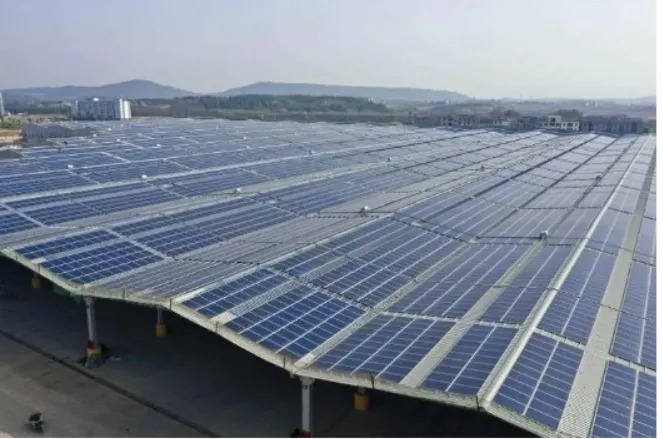
Core Viewpoint - The Chinese building materials industry is at a critical juncture for transformation and upgrading, with a focus on green materials and digitalization, as outlined in the "Building Materials Industry Stabilization and Growth Work Plan (2025-2026)" issued by six government departments [1][2]. Group 1: Industry Policy and Direction - The "Plan" aims to promote stable operation and structural optimization in the building materials industry, emphasizing digital transformation, green low-carbon upgrades, and the application of green materials [2]. - The plan addresses the need for improvement in green low-carbon and intelligent manufacturing levels within the industry, creating new growth opportunities for ceramic enterprises [2][3]. Group 2: Company Initiatives and Achievements - Marco Polo, as a leading enterprise in the domestic ceramic industry, has proactively implemented measures such as establishing national-level green factories and creating benchmarks for intelligent production [1][2]. - The company has adopted clean energy sources, such as natural gas, and has built rooftop photovoltaic power stations, aligning with the "Plan" to accelerate green low-carbon transformation [2][6]. Group 3: Technological Innovations and Sustainability - Marco Polo's production base in Jiangxi has integrated advanced technologies and clean energy, showcasing a model for intelligent manufacturing in the industry [3][4]. - The company has achieved significant milestones in resource conservation, including 100% recycling of industrial water and the use of advanced desulfurization technology to exceed national emission standards [7][8]. Group 4: Product Innovation and Market Positioning - The company has developed a range of innovative products that meet evolving consumer demands for personalized and artistic ceramic solutions, enhancing its competitive edge [9][10]. - Marco Polo's commitment to R&D is evident, with cumulative investments reaching 1.047 billion yuan from 2022 to the third quarter of 2025, resulting in numerous patents and industry-leading technologies [10][12]. Group 5: Cultural Integration and Brand Development - The establishment of the Dongguan Ceramic Museum has facilitated the integration of traditional Chinese culture with modern production techniques, enhancing brand value and consumer engagement [10][12]. - Marco Polo's cultural initiatives have led to the development of unique ceramic products that reflect artistic and cultural heritage, further solidifying its market position [10][12].

图数室|闭店1/6,宜家中国怎么了?
Xin Lang Cai Jing· 2026-02-04 08:25
宜家中国正在经历一场28年来最剧烈的震荡。2026年2月,这家曾被视为"中产标配"的北欧家居巨头, 一口气关闭了位于上海、广州、天津等地的7家门店,相当于其中国线下网络的六分之一。这一收缩动 作背后,是其连续四年下滑的在华营收——2024财年,宜家中国营收只有111.5亿元,同比下滑7.6%, 较2019年缩水近三成。 这不仅是业绩压力下的断腕求生,更折射出其与中国市场渐行渐远的深层困境。当中国住房交易重心转 向二手房、"旧改"需求崛起时,宜家仍依赖服务于新房装修的大型卖场模式;其数字化转型缓慢,线上 销售占比仅25.7%,远落后于本土品牌;更关键的是,在材质与价格的比拼中,宜家已被国产对手全面 碾压,性价比光环彻底褪色。 从引领生活方式到遭遇关店潮,宜家还有故事可以讲吗? 宜家正在经历一次史诗级震荡。 2026年2月2日,宜家正式停止上海宝山、广州番禺、天津中北、南通、徐州、宁波及哈尔滨共7家线下 门店的运营。这是自1998年宜家进入中国市场以来,最大规模的一次闭店。 据其他媒体报道,宜家方面给出的数据显示,截至目前,其在中国运营的线下触点累计为41个。此番关 闭7家,相当于一口气关了1/6。 在中国,宜家 ...

同兴智能公司:斩获双体系权威认证数字化转型迈上新台阶
Zhong Guo Neng Yuan Wang· 2026-02-04 07:06
Core Insights - Gansu Tongxing Intelligent Technology Development Co., Ltd. has successfully obtained dual certifications for the Integration of Informatization and Industrialization Management System and Digital Transformation Management System, marking a significant recognition of its capabilities in these areas [1][2] - The certifications are expected to enhance the company's market competitiveness and support its expansion in various sectors, including energy, government, and education [2] Group 1 - The dual certifications signify national-level recognition of the company's practices in the integration of informatization and industrialization, as well as standardized management in digital transformation [1] - The company has been focusing on technological innovation since its establishment, achieving breakthroughs in technology research and development, management optimization, and industrial application [1] - The successful certification reflects the company's commitment to standards and innovation, strengthening its technical barriers and market competitiveness [1] Group 2 - The certifications will assist the company in optimizing management processes and improving project delivery efficiency, thereby better meeting the diverse needs of its clients [2] - The company aims to use these certifications as a new starting point to deepen the integration of informatization and industrialization, accelerating its digital transformation process [2] - The company plans to increase R&D investment and promote the deep integration of technological and management innovation, positioning itself as a leader in technological innovation and a driving force in value creation [2]
行业聚焦:全球财务援助管理软件行业头部生产商市场份额及排名调查(附核心企业名单)
QYResearch· 2026-02-04 04:01
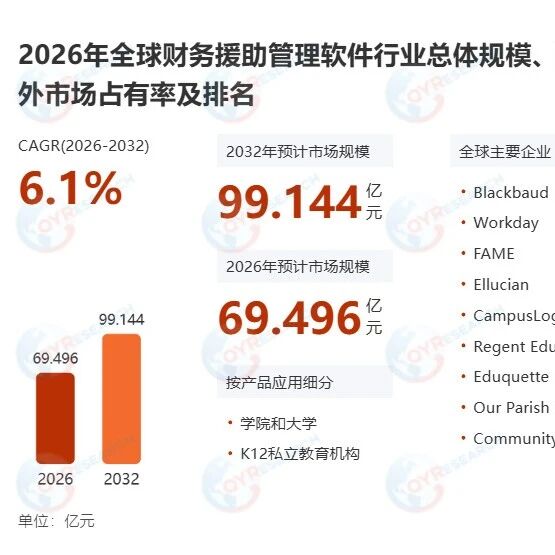
Core Viewpoint - The article discusses the growing importance and market trends of financial aid management software, highlighting its role in enhancing compliance, reducing costs, and improving the overall management of financial aid processes in educational institutions and public sectors [4][6]. Market Trends - The global financial aid management software market is projected to reach USD 960 million by 2032, with a compound annual growth rate (CAGR) of 6.2% over the coming years [6]. - The software is evolving from customized projects to platform-based services, with a significant focus on compliance auditing, fund traceability, and real-time monitoring [4][15]. - Cloud-based solutions currently dominate the market, accounting for approximately 54.0% of the total market share [8]. Market Drivers - The expansion of educational and social funding is driving the demand for specialized management software, as governments increase financial investments in education equity and social welfare [16]. - There is a rising need for compliance and transparency, prompting organizations to adopt information systems to mitigate compliance risks [16]. - The complexity of management and rising labor costs necessitate the shift from traditional manual systems to automated software solutions [16]. Market Challenges - The lengthy decision-making cycles and complex procurement processes of major clients, such as government and educational institutions, pose challenges for market expansion [17]. - High customization demands due to varying policies across regions increase development and implementation costs [17]. - Data security and privacy concerns are critical, as the software handles sensitive personal financial and identity information [17]. Key Players - Major players in the global financial aid management software market include Workday, Blackbaud, Unit4, Ellucian, and TADS, with the top five companies holding approximately 42.1% of the market share by 2025 [11]. Application Segments - Colleges and universities represent the primary demand source for financial aid management software, accounting for about 53.3% of the market share [12].
从“一份盒饭”到“一程风味” 东航西北分公司上线航延电子餐券服务
Zhong Guo Min Hang Wang· 2026-02-04 04:00
Core Viewpoint - Eastern Airlines Northwest Branch is advancing its digital transformation and enhancing service quality by launching the "Flight Delay Electronic Meal Voucher" service at Xi'an Xianyang International Airport, aiming to improve passenger experience during flight delays [1][5]. Group 1: Service Innovation - The "Flight Delay Electronic Meal Voucher" service addresses the shortcomings of traditional meal provisions during flight delays, which often lack variety and efficiency [1][4]. - The service was developed through collaboration with local and international food vendors, ensuring a diverse selection that caters to different tastes and preferences [2][4]. Group 2: Implementation Process - The project began in the second half of 2025 and involved extensive preparation, including qualification checks for partner vendors, pricing strategies, and technical integration of the electronic voucher system [3]. - A comprehensive training program was conducted for frontline staff to ensure they are well-equipped to manage the new service effectively [3][4]. Group 3: Customer-Centric Approach - The service allows passengers to receive meal vouchers quickly without the need for physical tickets or long queues, enhancing convenience during delays [4]. - The vouchers are valid for 12 hours, enabling passengers to choose meals from various participating vendors, thus personalizing their dining experience [4]. Group 4: Broader Service Enhancement Goals - The launch of the electronic meal voucher is part of a larger initiative by Eastern Airlines Northwest Branch to transition from basic service provision to a focus on quality and proactive customer service [5]. - The company emphasizes the integration of technology and personalized service to create a more enjoyable travel experience for passengers [5].

安伟走访调研重点企业时强调 优化企业发展环境激发市场主体活力 为郑州经济社会高质量发展注入强劲动能
Zheng Zhou Ri Bao· 2026-02-04 03:29
Group 1 - The provincial and municipal leadership emphasizes the importance of supporting enterprise development to enhance the economic and social growth of the city, aligning with the directives from the central government [1] - Anwei highlights the need for companies to increase R&D investment to maintain and expand their competitive advantages, particularly in the context of smart economy and society [1] - The construction of the Pang Donglai Group project in Zhengzhou is expected to boost consumer potential and strengthen domestic demand, with local authorities urged to provide comprehensive support for its completion [1] Group 2 - The new energy vehicle industry is identified as a key driver for high-quality development in the city, with specific support pledged for companies like Yutong and SAIC Motor to enhance their market presence [2] - Anwei encourages Yutong to continue its advancements in R&D and market expansion, reinforcing its status as a leading manufacturer in Zhengzhou [2] - At China Construction Seventh Engineering Division, there is a call for the company to innovate in urban renewal and infrastructure projects, contributing to the overall quality of life for residents [2]
新春走基层丨记者深入几百米井下 探秘智慧矿山建设
Xin Hua She· 2026-02-04 03:10
Group 1 - The construction of the Xian Mountain Iron Mine is taking place in challenging geological conditions, described as a "construction forbidden zone" due to complex folding, fractured zones, and aquifer interlayers, compounded by severe winter conditions [2] - The Xian Mountain Iron Mine is recognized as the largest single underground iron mine in the country, highlighting its significance in the mining industry [3] Group 2 - Advanced technologies such as IoT, AI, and digital twin are being integrated into mining operations, facilitating a transition from traditional mining methods to digital and intelligent practices [5] - The construction team is focused on creating a green circular system underground, aiming for waste material to be backfilled on-site and wastewater to be recycled, thus achieving a sustainable resource extraction process [5]


新洋丰:强科技 兴数字 重绿色
Zhong Guo Hua Gong Bao· 2026-02-04 02:29
Core Viewpoint - The chemical industry is at a critical stage of quality improvement and green transformation, driven by tightening arable land resources and the emphasis on green development, as outlined in the "Petrochemical Industry Steady Growth Work Plan (2025-2026)" [1] Group 1: Technological Innovation - The industry faces challenges such as low fertilizer utilization, soil degradation, and rising crop quality demands, necessitating technological innovation for fertilizer product upgrades [2] - The company aligns with the plan by focusing on technological innovation as a core driver, enhancing its R&D system and converting research results into market competitiveness [2] - Future R&D will focus on specialized fertilizers, controlled-release fertilizers, organic fertilizers, and water-soluble fertilizers, aiming to establish a green product system centered on functional fertilizers [2] Group 2: Digital Transformation - Digital transformation is identified as a key engine for improving quality and efficiency in the chemical industry [3] - The company is accelerating its digital upgrade, achieving significant results in production intelligence, with self-control rates exceeding 99% and stable operation rates also above 99% in its first digital transformation pilot [3] - The company plans to enhance its digital agriculture platform to provide data-driven fertilization and planting decisions for farmers, transitioning from "selling fertilizers" to "selling solutions" [3] Group 3: Sustainable Development - The plan encourages companies to promote the reduction, harmless treatment, and comprehensive utilization of solid waste, presenting an opportunity for industrial structure reshaping [4] - The company is advancing comprehensive utilization projects for by-products like phosphogypsum, establishing a closed-loop management system for resources, energy, products, and the environment [4] - The company has successfully implemented a phosphogypsum resource safety disposal project, demonstrating a replicable model for solid waste management [4] Group 4: Corporate Social Responsibility - The company is committed to strengthening its environmental management system, focusing on energy conservation and emission reduction, while actively participating in rural revitalization and ecological protection initiatives [5] - The company aims to implement the plan's requirements throughout its development lifecycle, ensuring continuous technological breakthroughs and green practices to support national food security strategies [5]

华北油田储气库群高效保供
Zhong Guo Neng Yuan Wang· 2026-02-04 01:55
Core Insights - The North China Oilfield gas storage cluster has efficiently completed its gas extraction tasks, achieving its production target 23 days ahead of schedule, ensuring stable energy supply during the winter season in the Beijing-Tianjin-Hebei region [1] - The gas storage cluster plays a crucial role as a core energy hub for peak shaving and emergency supply, capable of meeting the daily gas needs of over 35 million households during peak cold periods [1] - The gas storage capacity has significantly increased, with the Wen23 gas storage achieving nearly three times the gas extraction volume compared to the same period last year, becoming a key contributor to the cluster [1] Group 1 - The North China Oilfield has implemented differentiated gas extraction strategies tailored to the geological characteristics and operational pressures of each storage facility [2] - A new control center has been established to monitor parameters such as pressure, flow, and temperature in real-time, enhancing operational efficiency through automation [2] - The gas storage cluster has achieved over 4,700 days of continuous safe operation, emphasizing the importance of safety in production [2] Group 2 - The integration of green development concepts into the entire operational chain has been highlighted, with the operation of the first domestic megawatt-level natural gas pressure differential generator set, showcasing a synergy between energy supply and low-carbon transformation [3]
媒体行业2025年回顾与2026年展望:媒体行业整体平稳运行,将步入数字化转型的关键阶段
大公信用· 2026-02-04 00:45
Investment Rating - The media industry is rated as stable, with a focus on digital transformation in the upcoming years [1] Core Insights - The media industry is entering a critical phase of digital transformation, with a competitive landscape characterized by the concentration of traffic among major players and the struggle for survival among traditional media [1] - The demand structure of the media industry is undergoing a transformation due to the proliferation of digital technology and changing user habits, leading to a shift from passive consumption to active participation [12] Industry Supply Capacity Analysis - Traditional media, particularly book retail, experienced negative growth in 2025, with a retail market value decline of 2.24% and a sales value drop of 3.80% [2] - New media user base continues to expand, with internet users in China reaching 1.123 billion and an internet penetration rate of 79.7% by June 2025 [2] - The gaming market maintained growth, achieving a record revenue of 350.79 billion yuan in 2025, a year-on-year increase of 7.68% [3] Industry Demand Matching Capability Analysis - Content e-commerce surpassed platform e-commerce to become the largest retail channel in 2025, reflecting a shift to a "content-driven" phase in the book retail market [8] - Short videos and live streaming emerged as significant catalysts for consumer spending, with 45.9% of users making purchases influenced by these formats [9] - The number of micro-short dramas broadcasted on satellite channels increased significantly, with a total of 124 dramas aired in 2025, marking a 254.3% increase from the previous year [10] Industry Competitive Landscape Analysis - The media industry is experiencing a competitive environment where traffic is increasingly concentrated among major players, with ByteDance and Tencent dominating the market [16] - Traditional media is undergoing a challenging transformation, with leading traditional media outlets actively seeking breakthroughs in digitalization [16] Industry Credit Rating Analysis - The media industry's bond issuers are primarily concentrated in traditional media, with AAA ratings being predominant; the issuance scale of AA+ rated entities saw significant growth in 2025 [23] - The average credit spread for unsecured bonds in the media industry has remained relatively stable since the second quarter of 2025 [23] Industry Development Outlook - The media industry is expected to enter a critical phase of digital transformation, with a projected market recovery driven by the integration of artificial intelligence and the emergence of new business models [29] - Companies with strong cash flow and proactive engagement in AI technologies are likely to recover faster, while those relying on high leverage may face continued market pressure [29]