新旧动能转换

Search documents
中外资机构:中国资本市场迎来“慢牛”行情
天天基金网· 2025-09-01 05:45
Core Viewpoint - The article discusses the long-term investment outlook for A-shares and Hong Kong stocks, highlighting a shift towards a "slow bull" market driven by improved investor sentiment and fundamental economic changes in China [4][5]. Group 1: Market Outlook - A-shares and Hong Kong stocks have emerged from valuation lows, indicating a positive shift in investor expectations for the Chinese capital market [4]. - The current market rebound is not merely speculative but reflects sustainable changes in the Chinese economy, including stabilization and recovery, structural optimization, and improved corporate profitability [4][6]. - The participation in this valuation reassessment is primarily from international and domestic institutions, which are adopting more rational and long-term investment strategies [4]. Group 2: Economic Conditions - China's economy is showing a "steady progress" trend, supported by internal consumption recovery, industrial upgrades, and resilient external trade [8]. - The macroeconomic policy mix is effectively improving both internal and external demand, providing a solid foundation for achieving annual growth targets [8]. Group 3: Policy Expectations - Key areas of focus for future policies include proactive fiscal measures, continued moderate monetary easing, and breaking down barriers to enhance domestic market potential [9]. - The government is expected to prioritize the implementation of the 2025 fiscal budget and may slightly ease monetary policy to achieve around 5% growth [9]. Group 4: U.S. Monetary Policy - The Federal Reserve is likely to lower interest rates by 50 to 75 basis points this year, with a high probability of a 25 basis point cut in September [11]. - Market expectations for future rate cuts may be overly optimistic, as persistent inflation could limit the extent of subsequent reductions [11]. Group 5: Asset Allocation Strategies - There is a consensus on increasing allocations to non-dollar assets, such as gold, silver, real estate, and cryptocurrencies, as the dominance of the dollar is expected to weaken [10][14]. - Investors are advised to diversify their portfolios and adjust positions based on policy and asset valuation fluctuations [12][13].


新旧动能转换的资本“验证”时刻
Sou Hu Cai Jing· 2025-09-01 02:13
记者 欧阳晓红 欧阳晓红/文 跟不跟?科技板块成为市场主要驱动力,意味着什么? 当寒武纪加冕"股王",当市场成交额冲至3万亿时,有人惶恐不安,有人淡定从容。 与之匹配,科技板块成为中国资本市场的重要驱动力,亦暗示经济叙事转向"创新"新范式。有分析认为,这一转变包含三重深层逻辑: 今年以来,沪指涨幅超15%,深证成指涨幅达21.9%、创业板指涨幅达34.95%,特别是7月以来,A股赚钱效应不可谓不明显。 当下,资本市场、产业革命与金融政策的共振昭示:中国经济正在经历一场静默却壮观的新旧动能换轨之旅。新能源车渗透率已突破五成,创新药、人工智 能(AI)、机器人等前沿产业增速超30%,正在成为拉动经济增长的重要引擎。 反超时刻 2025年8月27日13时37分,上海证券交易所的电子屏闪出一条红色轨迹:寒武纪的股价摸高至1464.98元,超过贵州茅台的股价(1460元)。 七分钟后,寒武纪的股价回落,贵州茅台重归"王座",但市场的钟摆已经偏向了另一端。 8月28日,寒武纪的股价收于1587.91元,高出贵州茅台141元,终结了后者长达2785天的A股股价"王位"。 寒武纪连夜发布风险提示公告称,公司相较于7月28日收 ...

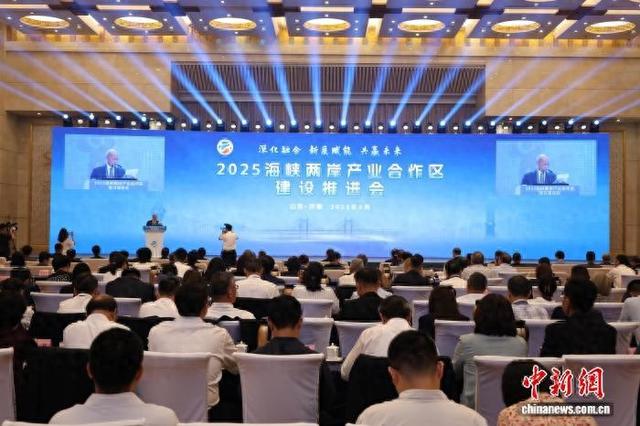
2025海峡两岸产业合作区建设推进会在济南举行 共商产业合作新路径
Zhong Guo Xin Wen Wang· 2025-08-31 12:29
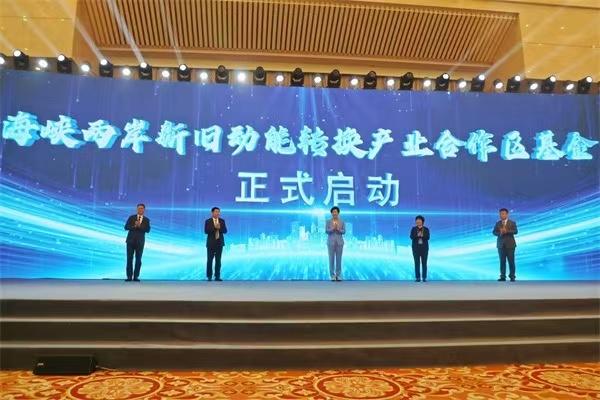
Group 1 - The 2025 Cross-Strait Industrial Cooperation Zone construction promotion meeting was held in Jinan, Shandong, with over 240 representatives from various associations, experts, and entrepreneurs discussing new paths for cross-strait industrial cooperation [1][3] - Jinan aims to accelerate the planning and construction of the only Cross-Strait Industrial Cooperation Zone themed on the transformation of old and new kinetic energy, enhancing exchanges and cooperation with Taiwan in various fields [3] - The cooperation zone is seen as a quality platform for both sides to share opportunities and seek development, with suggestions to deepen collaboration in high-end equipment manufacturing, new energy, biomedicine, and modern agriculture [3][4] Group 2 - The meeting highlighted the importance of establishing regular communication platforms for industrial matching between Shandong and Taiwan, focusing on complementary industries to achieve mutual benefits [3] - The Wangwang Group has invested a total of $440 million in two factories in Shandong, with projected output value of 3.87 billion RMB in 2024, indicating strong investment interest from Taiwanese companies [3] - Initiatives such as the launch of the Cross-Strait New and Old Kinetic Energy Conversion Industrial Cooperation Zone Fund and the establishment of mediation committees for Taiwan-related enterprises were introduced during the meeting [4]

中外资机构:中国资本市场迎来“慢牛”行情
中国基金报· 2025-08-31 12:19
Core Viewpoint - The Chinese capital market is entering a "slow bull" phase, with an increasing consensus on allocating more non-USD assets due to improving long-term investment expectations from both domestic and international investors [12][19]. Group 1: Market Outlook - A-shares and H-shares have emerged from valuation lows, reflecting improved long-term investment expectations in the Chinese capital market [13]. - The current market rebound is not driven by short-term speculation but by sustainable changes in the economy, such as stabilization, structural optimization, and improved corporate profitability [13][15]. - The Hong Kong stock market is expected to attract more overseas investment due to its high dividend yield and growth potential in sectors like artificial intelligence and innovative pharmaceuticals [14]. Group 2: Economic Assessment - The Chinese economy is showing a "steady progress" trend, supported by internal consumption recovery, industrial upgrades, and resilient external trade [17]. - The macroeconomic policy is effectively improving both internal and external demand, providing a solid foundation for achieving annual growth targets [17]. Group 3: Policy Expectations - Key areas of focus for future policies include proactive fiscal measures, continued moderate monetary easing, and breaking down barriers to enhance domestic market potential [18]. - The government is expected to prioritize the implementation of the 2025 fiscal budget and maintain a flexible monetary policy to achieve around 5% growth [18]. Group 4: Asset Allocation Strategy - There is a growing consensus to increase allocations to non-USD assets, such as gold, silver, real estate, and cryptocurrencies, as the dominance of the dollar is expected to weaken [19][23]. - Investors are advised to diversify their portfolios and adjust positions based on policy and asset valuation fluctuations, especially in light of uncertainties surrounding U.S. tariff policies [21][22]. - The rebalancing of global assets is accelerating, with a shift from over-allocated USD assets to local markets in Europe and Asia, which may support local asset valuations [23].

2025海峡两岸产业合作区建设推进会开幕
Qi Lu Wan Bao Wang· 2025-08-31 11:21
Group 1 - The 2025 Cross-Strait Industrial Cooperation Zone Construction Promotion Conference was held in Jinan, emphasizing the city's commitment to enhancing economic and cultural exchanges with Taiwan [1] - Jinan is accelerating the construction of the only national industrial cooperation zone themed on the transformation of old and new kinetic energy, which is seen as a new driving force for the city's development [1] - The conference included the launch of the Cross-Strait New and Old Kinetic Energy Conversion Industrial Cooperation Zone Fund and the establishment of various service centers aimed at facilitating cooperation [1][3] Group 2 - The event featured activities such as the Cross-Strait Industrial Cooperation Zone investment and financing matchmaking meeting and a youth entrepreneur salon, aimed at fostering connections between businesses from both sides [3]
2025年第一季度广东省经济分析报告
Sou Hu Cai Jing· 2025-08-31 10:48
Core Insights - Guangdong's economy in Q1 2025 shows a mixed landscape of challenges and highlights, with emerging industries like AI, robotics, and new energy vehicles driving growth despite external pressures and weak domestic demand [1][12]. Economic Overview - The overall economic performance of Guangdong is under pressure, with exports down 4.3% year-on-year, significantly lower than the previous year's decline of 12.7 percentage points [2][14]. - Fixed asset investment decreased by 8.4%, indicating a need for improved market confidence [2][14]. - Retail sales of consumer goods grew by 1.0% year-on-year, showing some recovery in certain sectors due to policy support [2][5]. Industrial Production - Industrial production is characterized by a "new vs. old" dynamic, with traditional sectors like textiles and furniture continuing to struggle, while emerging industries are experiencing rapid growth [3][17]. - Industrial robot production increased by 31.1%, and the output of civilian drones surged by 92.7% [3][17]. - The new energy vehicle sector saw a remarkable 50.9% increase in production, with BYD's sales reaching 1 million units, up 59.81% year-on-year [3][19]. Regional Development - Economic performance varies significantly across regions, with core cities in the Pearl River Delta like Shenzhen, Guangzhou, and Foshan showing weak industrial growth [4][22]. - Some cities like Huizhou and Meizhou have seen industrial growth due to advancements in electronics and traditional industries [4][22]. Investment and Consumption - Overall fixed asset investment fell by 8.4%, but industrial technology upgrades and automotive manufacturing investments showed positive trends [5][30]. - Foreign direct investment reached 23.31 billion yuan, up 5.9% year-on-year, indicating Guangdong's continued attractiveness to foreign investors [5][30]. - Consumer markets are showing signs of recovery, with policies like "trade-in" boosting sales in certain categories, although non-subsidized goods remain weak [5][31]. Foreign Trade - The trade environment is challenging, with U.S. tariffs impacting exports significantly, leading to a 5.9% decline in exports to the U.S. [6][14]. - Despite the overall decline, cities like Guangzhou and Dongguan have shown strong export performance in high-tech products [7][14]. Outlook - Looking ahead, external pressures may increase, but supportive policies and the continued growth of emerging industries are expected to provide a buffer [9][12]. - The implementation of new policies aimed at promoting AI and robotics is anticipated to sustain the momentum of emerging industries [9][12].


西北地区上半年GDP10强城市:榆林远超兰州,咸阳第6,西宁第9
Sou Hu Cai Jing· 2025-08-31 08:07
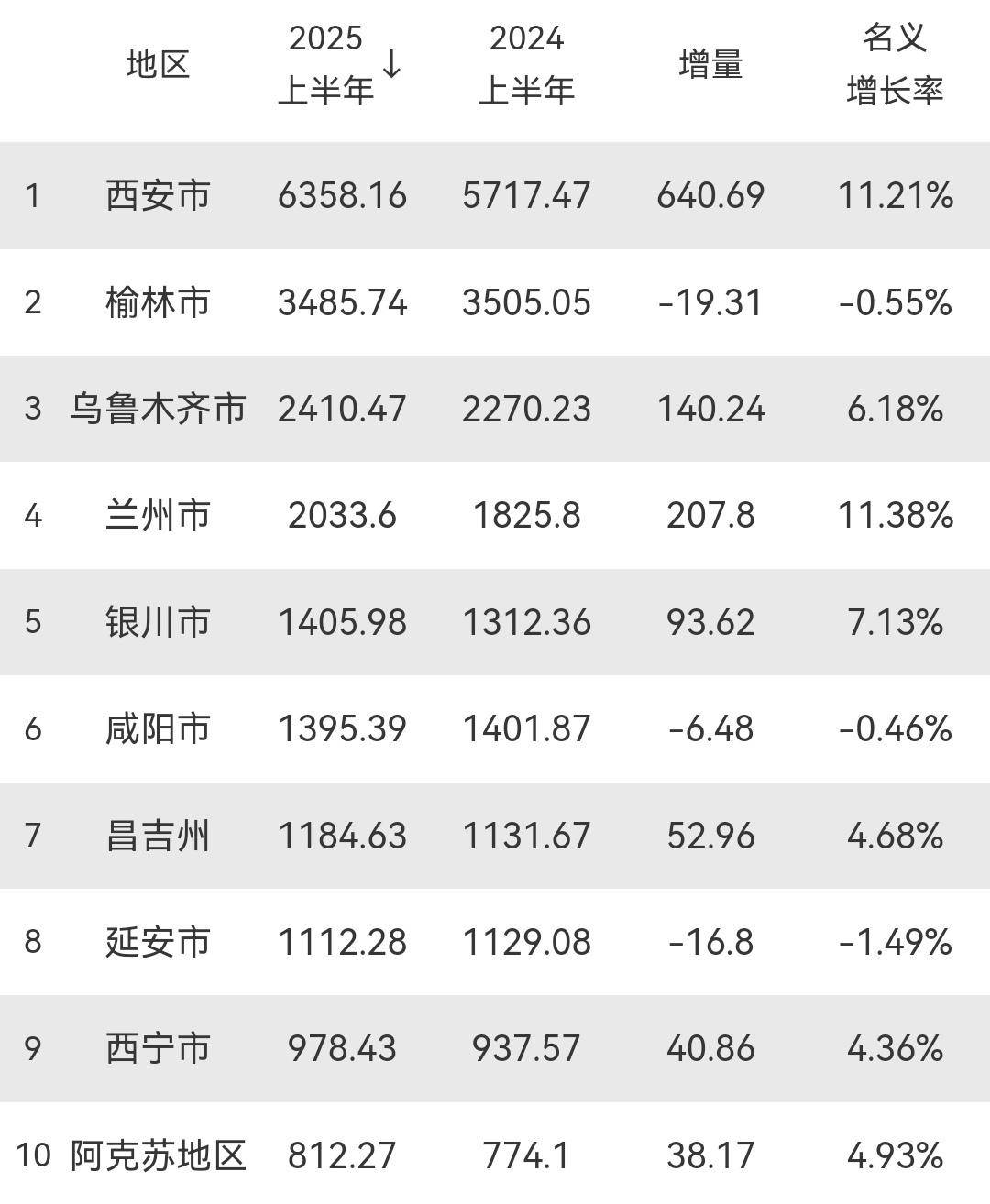
Core Insights - The economic landscape of Northwest China is undergoing significant changes in the first half of 2025, with Xi'an leading the way and notable shifts in rankings among cities like Yulin and Lanzhou [1][2]. Economic Performance - Xi'an has solidified its position as the economic leader in the region with a GDP of 635.816 billion, achieving a nominal growth rate of 11.21%, which is significantly higher than the regional average [2][4]. - Yulin has surpassed Lanzhou with a GDP of 348.574 billion, leading by over 1 billion, despite a slight nominal decline of 0.55% [3][4]. - Lanzhou, while crossing the 200 billion mark for the first time, has dropped to fourth place, facing challenges in transitioning its heavy industrial base [4][6]. Sectoral Insights - Yulin's nominal GDP growth is hindered by a 14% drop in coal prices, impacting industrial revenue, yet investments in 27 conversion projects contribute to 68% of its industrial output, indicating potential for energy structure optimization [3][4]. - Lanzhou's emerging industries, including equipment manufacturing and biomedicine, now account for 39% of its economic contribution, but the city still struggles with a heavy reliance on traditional industries [4][6]. Regional Dynamics - Urumqi remains a key player with a GDP of 241.047 billion, showcasing a notable economic increment of 140.24 million [6]. - Xianyang demonstrates resilience with a GDP of 139.539 billion, benefiting from growth in new sectors like semiconductors and photovoltaic glass [6]. - The economic threshold for the top ten cities in the region has risen to 81.2 billion, reflecting a competitive environment characterized by rapid advancements in provincial capitals and energy sector pressures [8]. Future Outlook - The future of Northwest China's economy hinges on effectively transforming its resource advantages into sustainable growth, necessitating collaboration and continuous innovation [10].
乐普医疗(300003):新旧动能转换,研发迎来收获期
Orient Securities· 2025-08-29 08:47
Investment Rating - The report maintains a "Buy" rating for the company with a target price of 20.52 CNY, based on a 38x PE ratio for 2025 [3][7]. Core Views - The company is experiencing a transitional phase with a focus on innovation in the medical device and pharmaceutical sectors, particularly in structural heart disease and AI-based monitoring solutions [10]. - The revenue forecast for 2025 has been adjusted to 6.683 billion CNY, reflecting a 9.5% year-on-year growth, while the earnings per share (EPS) estimates for 2025-2027 have been revised to 0.54, 0.69, and 0.85 CNY respectively [3][5]. Financial Summary - The company's revenue for 2023 is reported at 7,980 million CNY, with a significant decline of 24.8% year-on-year, followed by a projected recovery in 2025 with a revenue of 6,683 million CNY [5][12]. - The net profit attributable to the parent company for 2023 is 1,258 million CNY, down 42.9% year-on-year, with a forecasted recovery to 1,009 million CNY in 2025, representing a growth of 308.6% [5][12]. - The gross margin is expected to stabilize around 62.3% in 2025, with net profit margins improving to 15.1% [5][12]. - The company has shown a strong operational cash flow of 6.4 billion CNY in the first half of 2025, a 300.5% increase year-on-year, attributed to better cost management [10].

中经评论:从电力消费“图谱”看产业结构之变
Sou Hu Cai Jing· 2025-08-28 23:37
Core Insights - In July, China's total electricity consumption reached 1.02 trillion kWh, marking an 8.6% year-on-year increase and setting a global record for monthly electricity usage [1] - The growth in electricity consumption reflects significant changes in China's economic structure and growth dynamics, with the energy consumption increment during the 14th Five-Year Plan period being 1.5 times that of the 13th Five-Year Plan [1] Group 1: Electricity Consumption Trends - High temperatures significantly contributed to the increase in residential electricity usage, with urban and rural residential consumption rising by 18% year-on-year, and six provinces experiencing over 30% growth [1] - Industrial electricity consumption is recovering, with high-tech manufacturing and equipment manufacturing sectors showing a growth rate of 4.6%, surpassing the average manufacturing growth rate by 2.3 percentage points [2] - The electricity consumption of the new energy vehicle manufacturing sector grew by 25.7%, indicating a shift towards high-value-added industries [2] Group 2: Structural Changes in Energy Consumption - The optimization of industrial structure is evident in the electricity consumption patterns, with traditional high-energy-consuming industries showing stable growth while high-tech sectors lead the way [2] - The rapid growth of electricity consumption in digital economy infrastructures, such as data centers and 5G bases, highlights the diversification and resilience of China's economic structure [2] Group 3: Green Energy and Innovation - The proportion of non-fossil energy in electricity generation is steadily increasing, with wind and solar power growth exceeding the overall electricity consumption increase [3] - The demand for electricity from green low-carbon industries, such as new energy vehicles and photovoltaic sectors, is expected to grow significantly, with projections indicating a 34.3% increase in electricity consumption for new energy vehicle manufacturing in 2024 [3] Group 4: Future Outlook - The electricity consumption in China is expected to continue growing, driven by economic recovery and industrial upgrades, with an emphasis on improving the structure and quality of growth [4] - Understanding the changes in electricity consumption patterns is crucial for grasping the challenges and opportunities in the context of high-quality development [4]
改革成效未达预期,华熙生物业绩困局待解
Bei Jing Shang Bao· 2025-08-28 13:55
Core Viewpoint - Huaxi Biological is experiencing a significant decline in performance, with a notable drop in both revenue and profit in the first half of 2025, primarily due to the structural collapse of its core business in skin science innovation [1][3][4]. Financial Performance - In the first half of 2025, Huaxi Biological reported revenue of 2.261 billion yuan, a year-on-year decrease of 19.57%, and a net profit attributable to shareholders of 221 million yuan, down 35.38% [1][3]. - The company's revenue in Q2 2025 was 1.183 billion yuan, a decline of 18.44% year-on-year, while net profit for the same period was 119 million yuan, marking a 20.89% increase, indicating a potential turning point in profitability [3][4]. Core Business Challenges - The skin science innovation transformation business, previously known as functional skincare products, has seen a revenue decline of 33.97% in the first half of 2025, contributing to 40.36% of the company's main business revenue [3][4]. - The functional skincare business, which had previously driven growth, has seen its revenue shrink from 4.607 billion yuan in 2022 to 2.569 billion yuan in 2024, nearly halving its contribution to main business revenue [4]. Other Business Segments - Besides the core skincare business, Huaxi Biological's other two segments—raw materials and medical terminal businesses—also faced declines, with raw materials revenue at 626 million yuan (down 0.58%) and medical terminal revenue at 673 million yuan (down 9.44%) in the first half of 2025 [5][6]. Reform and Management Changes - The company has initiated a series of reforms since 2024, focusing on business process restructuring, organizational changes, and enhancing management efficiency, but these efforts have yet to yield significant results [6][7]. - In the first half of 2025, there were notable changes in the management structure, with 11 executives leaving and an increase in R&D personnel by 35, although management costs rose by 11.63% [6][7]. R&D Investment - Huaxi Biological increased its R&D expenditure to 231 million yuan in the first half of 2025, a 15.25% increase year-on-year, focusing on high-barrier products and medical terminal business [7]. - The company is currently undergoing a strategic upgrade, shifting its R&D focus towards glycoscience and cell biology, while maintaining that the decline in functional skincare products is not due to missing market opportunities [7].