
中长期资金入市

Search documents
深观察 掌管两万亿,兴银理财入市迎挑战,突破口在哪?
Nan Fang Du Shi Bao· 2025-05-13 07:21
Core Viewpoint - The introduction of the "Implementation Plan for Promoting Long-term Funds to Enter the Market" highlights the increasing importance of bank wealth management in the capital market, especially in the context of recent market volatility and the need for stable, long-term capital [2][3]. Group 1: Market Context - In early April, A-shares faced significant pressure due to external shocks, leading to a "Black Monday," prompting several wealth management companies to increase their equity asset holdings to support market stability [3]. - As of the end of 2024, the total investment assets of wealth management products reached 32.13 trillion, with equity assets accounting for only 0.83 trillion, representing a mere 2.58% of the total [3][4]. Group 2: Company Performance - As of the end of 2024, the two leading wealth management companies, China Merchants Bank Wealth Management and Xingyin Wealth Management, managed assets of 2.47 trillion and 2.16 trillion, respectively [3][4]. - The equity asset allocation for these companies was 718.2 billion (2.63%) for China Merchants Bank and 178 billion (0.73%) for Xingyin Wealth Management, indicating a significant under-allocation to equity assets compared to the industry average [3][4]. Group 3: Investment Strategy - Xingyin Wealth Management has diversified its product offerings to include various risk-return profiles for equity-linked wealth management products, aiming to adapt to the evolving market conditions [5]. - The company emphasizes the need to gradually guide clients towards a long-term investment mindset, as the current investor base primarily consists of risk-averse individuals [5]. Group 4: Product Insights - Xingyin Wealth Management announced a plan to purchase 50 million of its own equity-linked products, demonstrating confidence in the market despite recent volatility [6]. - The "Fuli Xingcheng Alpha Daily Open 1" product, which has a significant equity allocation of 45.4%, has shown a year-to-date annualized return of 21.73% since its inception [7][8]. Group 5: Future Outlook - The company plans to optimize its product portfolio based on market conditions and fundamental changes in companies, aiming to balance liquidity management with long-term investment strategies [10]. - The regulatory environment is also evolving, with the China Securities Regulatory Commission advocating for the attraction of more long-term capital into the market [9].


光大期货金融期货日报-20250513
Guang Da Qi Huo· 2025-05-13 05:14
光大期货金融期货日报 光大期货金融期货日报(2025 年 05 月 13 日) 一、研究观点 | 品种 | 点评 昨日,A 股市场涨幅明显,Wind 全 A 上涨 1.3%,成交额 1.34 万亿元。中证 | 观点 | | --- | --- | --- | | | 1000 指数上涨 1.4%,中证 500 指数上涨 1.26%,沪深 300 指数上涨 1.16%, | | | | 上证 50 指数上涨 0.69%。中美发布联合声明,为后续进一步贸易协商奠定良 | | | | 好开局,超过市场预期。近期三部门召开联合新闻发布会,央行宣布降准降 | | | | 息政策,降低企业负债端成本。金融监管总局强调将大力推动中长期资金入 | | | | 市,通过类平准基金的方式支持、稳定和活跃资本市场,具体措施包括鼓励 | | | 股指 | 保险资金加大入市力度、设立新的金融资产投资公司、支持汇金公司在必要 | 震荡 | | | 时增持股票指数基金等。证监会表示将优化主动权益类基金的收费模式,扭 | | | | 转基金公司"旱涝保收"的现象。内部政策发力是股指 2025 年的主线。财 | | | | 报方面,一季度,A ...
力促中长期资金加速入场!A股市场迎来哪些改变?
Sou Hu Cai Jing· 2025-05-13 03:41
Core Insights - The emphasis on "sustained stability and active capital markets" aims to accelerate the entry of medium- and long-term funds into the market [1] - Medium- and long-term funds are fundamentally changing the operational logic of A-shares, with a focus on stable returns and long investment horizons [2] Group 1: Market Structure Optimization - The influx of long-term funds is optimizing the market structure, reducing the dominance of retail investors and decreasing market volatility, with daily price fluctuations reduced by approximately 30% [3] - The proportion of institutional investors is increasing, leading to a decline in market turnover rates [3] Group 2: Changes in Fund Allocation Direction - There is a shift in fund allocation preferences, with insurance funds favoring stable cash flow sectors like finance, consumption, and utilities, while public funds are increasing investments in technology growth stocks [5] - Pensions are focusing on blue-chip stocks with stable earnings, promoting a transition from "hotspot trading" to value investing [5] - The technology sector is particularly benefiting from this trend, with a 5% increase in institutional holdings over the past six months [5] Group 3: Enhanced Market Stability - The characteristics of long-term funds provide a stabilizing effect during external shocks, as evidenced by a net inflow of over 200 billion yuan from domestic institutional funds during a period of significant foreign capital outflow [6] - This stabilizing role has contributed to a healthier "investment-type market," with annual volatility narrowing by 40% compared to previous years [6] Group 4: Future Outlook - The transition towards a more institutionalized market is gradual, with institutional funds still accounting for less than 40% of A-shares, compared to over 70% in mature markets [8] - Continued policy guidance and the expansion of medium- and long-term funds are expected to create a more rational and sustainable market environment [8] - Investment products like A500ETF and A50ETF are highlighted as effective tools for long-term investment in high-quality development trends in China's capital market [8]
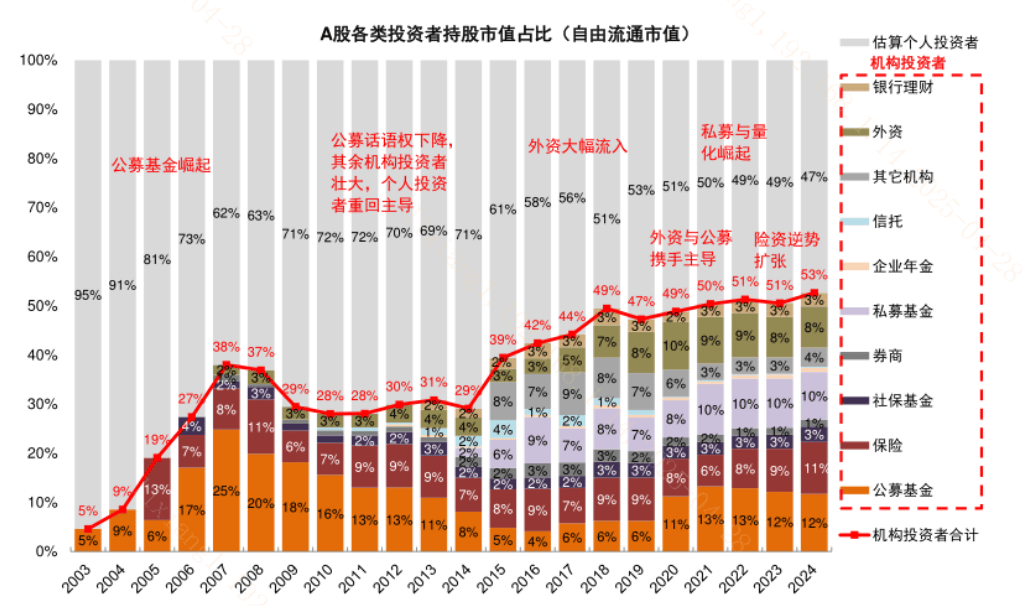
【西街观察】重长轻短重塑A股价值
Bei Jing Shang Bao· 2025-05-12 13:37
Group 1 - The regulatory authorities have been promoting the entry of long-term funds into the A-share market, leading to a decline in short-term speculative activities and a more stable market environment [1][2] - The proportion of long-term funds in the A-share market is increasing, which contributes to lower market volatility and a more rational investment atmosphere [1][2] - The previous dominance of short-term speculative trading, characterized by the "涨停板敢死队" (limit-up daredevils), is diminishing as the market shifts towards value investing and long-term capital [1][2] Group 2 - Institutional investors, such as social security funds and insurance capital, are increasingly investing in high-quality assets, driving the revaluation of performance stocks [2] - The number of stocks hitting daily limit-ups has significantly decreased, indicating a shift from speculative trading to a focus on steady growth stocks [2] - The current market environment is characterized by a transformation in listed companies towards new productive forces, with capital markets playing a crucial role in this transition [2][3] Group 3 - Technology innovation companies require long-term capital due to their high investment needs and operational uncertainties, emphasizing the importance of patient capital [3] - The shift towards long-term investment not only supports the transformation and upgrading of listed companies but also allows investors to share in the growth dividends of these enterprises [3]
沪市最大中证A500ETF龙头(563800)近22个交易日累计上涨超10%,近半年新增规模同类第一!
Xin Lang Cai Jing· 2025-05-12 07:51
Group 1 - The core viewpoint is that the CSI A500 Index and its leading ETF have shown strong performance, with significant increases in both price and trading volume, indicating a favorable investment environment [1][2] - As of May 12, 2025, the CSI A500 Index has risen by 1.26%, with notable stocks such as AVIC Chengfei and Anker Innovations experiencing substantial gains [1] - The CSI A500 ETF has seen a remarkable increase in scale, growing by 170.21 billion yuan in the past six months, and its share count has increased by 183.09 billion shares, leading the comparable funds [1] Group 2 - The CSI A500 Index represents a balanced mix of approximately 50% traditional value industries and 50% emerging growth industries, making it a valuable tool for investors in the A-share market [2] - The top ten weighted stocks in the CSI A500 Index account for 20.8% of the index, with major companies like Kweichow Moutai and CATL leading the list [2] - Analysts suggest that the market may continue to experience a recovery trend supported by favorable economic data and policy measures, with a focus on sectors such as AI, innovative pharmaceuticals, and new consumption [3]
中美就关税达成重要共识!中证A500ETF(159338)涨超1%,行业均衡、龙头荟萃,攻守兼备
Sou Hu Cai Jing· 2025-05-12 02:41
Group 1 - The core viewpoint of the news is that the recent high-level Sino-U.S. trade talks were constructive and resulted in important consensus and substantial progress, with both sides agreeing to establish a consultation mechanism [1] - The U.S. tariff policy remains unclear since President Trump announced tariff increases on April 2, which has significantly impacted global capital markets, suggesting that broad-based indices may be more suitable for the current market [1] - The recent implementation of policies aimed at stabilizing growth exceeded market expectations, with the government expressing concern for the capital market and providing clearer guidelines for long-term capital inflow [1] Group 2 - The new generation core broad-based index, the CSI A500, is highlighted as a potential key tool for incremental capital, with a recommendation to pay attention to the CSI A500 ETF (159338) [1] - The CSI A500 index represents a balanced mix of approximately 50% traditional value industries and 50% emerging growth industries, making it a quality tool for investors looking to allocate in the A-share market [2] - The CSI A500 ETF (159338) is noted for being the largest in its category, indicating strong investor interest and potential for growth [2]
凝心聚力 实干笃行丨一揽子稳市场“组合拳”持续发力 看亮眼“成绩单”→
Yang Shi Xin Wen· 2025-05-10 03:16
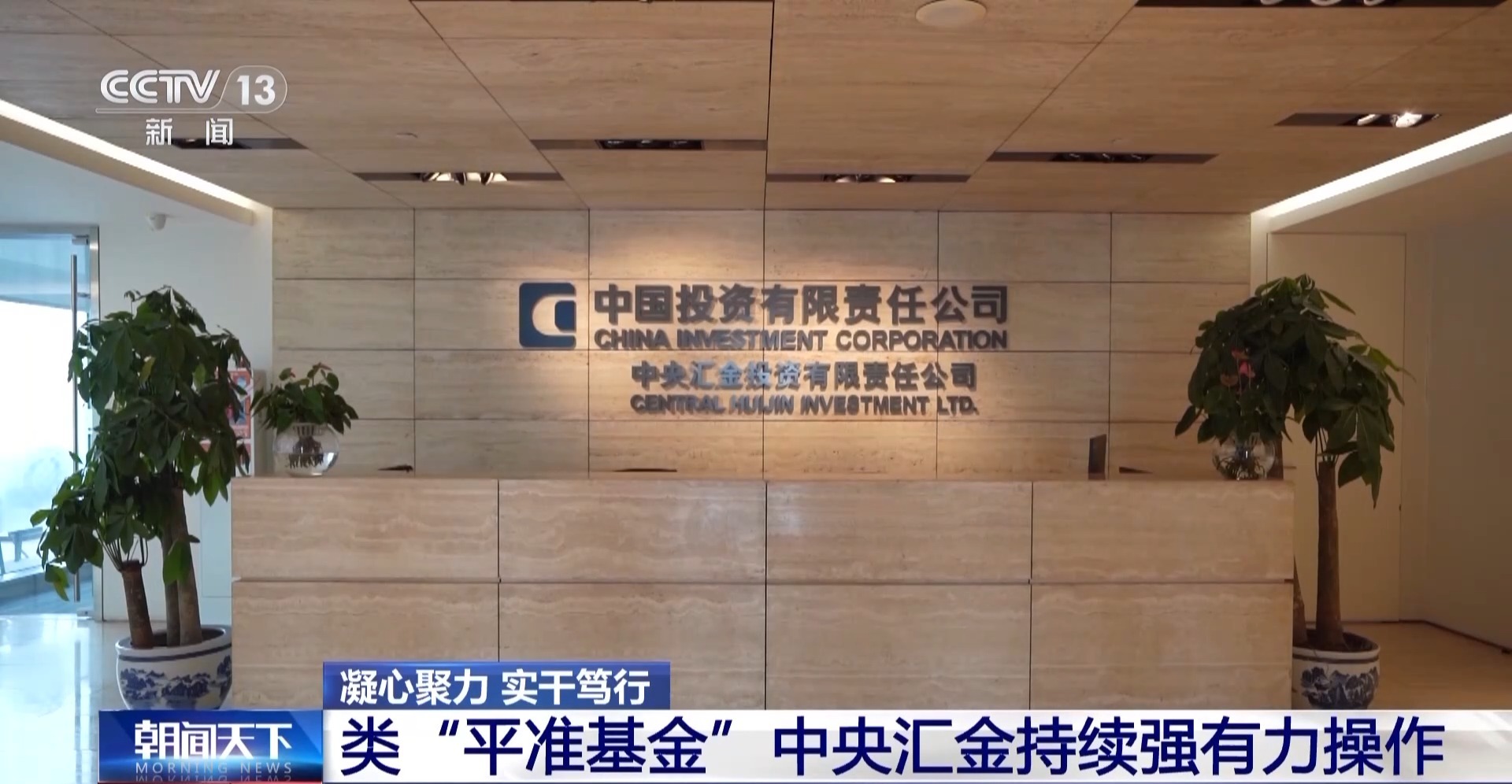
Group 1 - The central political bureau meeting emphasized the importance of stabilizing the market and maintaining a vibrant capital market, with the A-share market showing resilience and recovery after significant fluctuations [1][2] - Central Huijin, as a major strategic force in maintaining market stability, has actively increased its holdings in exchange-traded funds, demonstrating its commitment to supporting the capital market [6][10] - As of the end of Q1, Central Huijin's holdings in the top ten circulating shareholders of 165 listed companies amounted to 4.28 trillion yuan, with over 1 trillion yuan in index funds [4][6] Group 2 - Insurance funds have been increasing their investments in A-shares, with a total holding value growth of 5.42% compared to the end of last year, and significant increases in the banking and transportation sectors [11][12] - The National Financial Regulatory Administration has raised the upper limit for insurance funds' equity asset allocation, which is expected to enhance the role of insurance funds in stabilizing the capital market [14][16] - Policies supporting insurance funds' entry into the market are being continuously introduced, with over 220 billion yuan approved for long-term investment pilot programs this year [16] Group 3 - Public funds have actively signaled their confidence in the Chinese market by announcing self-purchases, with a total amount exceeding 500 million yuan since April [19][22] - The China Securities Regulatory Commission has launched a new action plan for the high-quality development of public funds, which aims to improve investor experience and encourage long-term investments in A-shares [26] - A-share companies have seen a significant increase in share buybacks, with a total buyback amount of 139.7 billion yuan in April, reflecting companies' confidence in their own stability [27][30] Group 4 - The People's Bank of China has optimized capital market support tools, extending the loan term for stock buyback financing from one year to three years, which is expected to enhance market stability [34]
平安证券:一揽子金融政策精准发力 向市场释放稳市场稳预期强信号
Zheng Quan Ri Bao Wang· 2025-05-09 09:55
Core Viewpoint - The announcement of a comprehensive financial policy package by the State Council aims to stabilize the market and expectations, providing strong signals for economic high-quality development and capital market certainty [1] Group 1: Financial Policy Overview - The financial policy package is a concrete implementation of the Central Political Bureau's meeting on April 25, focusing on enhancing market stability and liquidity [1] - The monetary policy is proactive, with specific measures for reserve requirement ratio (RRR) cuts and interest rate reductions to ensure ample liquidity [1] - The policy emphasizes expanding consumption, promoting technological innovation, stabilizing foreign trade, and supporting domestic demand while assisting enterprises in their transformation [1] Group 2: Capital Market Focus - The capital market policy highlights the importance of maintaining a stable and active market, reinforcing the commitment to market recovery [2] - Key areas of focus include strengthening market monitoring, supporting the Central Huijin's role as a "stabilization fund," and enhancing reforms in the Sci-Tech Innovation Board and the Growth Enterprise Market [2] - There is a strong push for increasing the participation of medium- and long-term funds in the market, with initiatives to promote the high-quality development of public funds [2] Group 3: Company Performance and Support - Nearly 90% of revenue for A-share listed companies comes from domestic markets, indicating stable operational performance [2] - Companies are diversifying their export markets and enhancing overseas production capacity, which is improving their export competitiveness [2] - The China Securities Regulatory Commission (CSRC) plans to increase support for listed companies significantly affected by external factors, enhancing regulatory flexibility in areas like equity pledges and refinancing [2]
A股七大资金主体面面观:谁在卖?
Tianfeng Securities· 2025-05-09 09:42
Group 1 - The report highlights that in April, the newly established equity public funds reached 57.048 billion units, an increase of 6.959 billion units compared to the previous month, marking a 94.59% percentile over the past three years [8][9][11] - The report indicates that the issuance of passive equity funds has significantly contributed to the market, with a new issuance of 45.095 billion units in April, up 7.390 billion units from the previous month [11][12] - The report notes that the net subscription of stock ETFs in April was 197.302 billion yuan, a substantial increase from the previous month, indicating a shift in investor sentiment towards equity markets [16][20] Group 2 - The report states that the average position of private equity funds fell to 56.56% in March, down 1.75 percentage points from February, reflecting a cautious sentiment among investors [30] - The report mentions that the monthly average trading volume of northbound funds decreased to 152.208 billion yuan in April, a decline of 18.98% from the previous month, indicating a cautious approach from foreign investors [32][37] - The report highlights that the total margin trading balance decreased by 6.89% in April, with a net outflow of 131.535 billion yuan, suggesting reduced trading activity and a shift towards risk aversion [34][36] Group 3 - The report indicates that insurance funds have reduced their equity investment risk factor by 10%, aiming to increase their investment in A-shares to 30% of new premiums starting in 2025 [44][48] - The report notes that the issuance of wealth management products in April was 5,993, with an increase of 22.06% in the number of products reaching maturity, reflecting a positive trend in the market [49][51] - The report states that the net reduction in industrial capital in April was significantly narrowed to 370 million yuan, indicating a potential stabilization in corporate investment behavior [34][38]
光大期货金融期货日报-20250509
Guang Da Qi Huo· 2025-05-09 07:48
1. Report Industry Investment Rating - No specific industry investment rating is provided in the report. 2. Core Viewpoints - **Stock Index Futures**: The index has support both up and down, and is expected to remain volatile in the short - term. The joint press conference of three departments announced policies such as RRR and interest rate cuts, promoting the entry of long - term funds into the market, which helps stabilize market confidence and lift stock market valuations. The revenue growth rate decline of A - share listed companies has narrowed for three consecutive quarters, and net profit has rebounded, but ROE is still at the bottoming - out stage. Sino - US tariff negotiations are ongoing, and the issue is not expected to be fully resolved in the short term [1]. - **Treasury Bond Futures**: The bond market is expected to run bearishly. The RRR and interest rate cuts have been implemented, and the bond market has priced in the expectations of weakening fundamentals and monetary policy efforts. The yield curve is expected to steepen again, with short - term bonds benefiting from the RRR and interest rate cuts and long - term bonds being relatively bearish under the background of rising risk appetite [2]. 3. Summary by Directory 3.1 Research Views - **Stock Index Futures**: The central bank announced RRR and interest rate cuts to relieve the pressure on commercial bank spreads and reduce the debt - side costs of enterprises. The financial regulatory authority will promote long - term funds to enter the market, which helps stabilize market confidence and enhance the allocation value of A - share assets. The CSRC will optimize the fee model of active equity funds. The revenue growth rate decline of A - share listed companies has narrowed for three consecutive quarters, and net profit has increased by about 4% year - on - year, but ROE is still at the bottoming - out stage. Sino - US tariff negotiations are ongoing [1]. - **Treasury Bond Futures**: On the previous trading day, the 30 - year, 10 - year, 5 - year, and 2 - year treasury bond futures main contracts rose by 0.26%, 0.17%, 0.16%, and 0.05% respectively. The central bank conducted 158.6 billion yuan of 7 - day reverse repurchase operations with the interest rate lowered to 1.4%. The DR001 and DR007 interest rates declined. The bond market is expected to run bearishly, and the yield curve is expected to steepen [1][2]. 3.2 Daily Price Changes - **Stock Index Futures**: On May 8, 2025, IH rose by 0.70%, IF by 0.82%, IC by 0.71%, and IM by 1.07%. Among stock indices, the Shanghai Composite 50 rose by 0.33%, the CSI 300 by 0.56%, the CSI 500 by 0.41%, and the CSI 1000 by 0.76% [3]. - **Treasury Bond Futures**: On May 8, 2025, TS rose by 0.05%, TF by 0.17%, T by 0.19%, and TL by 0.24% [3]. 3.3 Market News - The Fed FOMC statement and Chairman Powell's press conference indicated that the interest rate decision remained unchanged for the third consecutive time this year, and Powell reiterated that the Fed did not need to rush to cut interest rates [4]. - The National Development and Reform Commission will launch high - quality projects with a total investment scale of about 3 trillion yuan this year [4]. 3.4 Chart Analysis - **Stock Index Futures**: The report provides charts of the trends and basis of IH, IF, IM, and IC main contracts, as well as the trends of the Shanghai Composite 50, CSI 300, CSI 500, and CSI 1000 stock indices [6][7][10]. - **Treasury Bond Futures**: The report includes charts of the trends, basis, inter - period spreads, cross - variety spreads, and funding rates of treasury bond futures main contracts, as well as the yields of treasury bond cash bonds [13][15][17]. - **Exchange Rates**: The report presents charts of the central parity rates of the US dollar, euro against the RMB, forward exchange rates, the US dollar index, and exchange rates between major currencies [20][24][25].