
人民币国际化

Search documents
广州期货:美ISM服务业PMI上升 金银涨势暂歇
Jin Tou Wang· 2026-01-08 07:07
Macro Messages - The expectation of interest rate cuts by the Federal Reserve remains, with a combination of "easing expectations + weak dollar" continuing to support the recovery channel [1] - Increased risk aversion is noted due to factors such as U.S. debt expansion, de-dollarization, escalating geopolitical conflicts, and the reshaping of economic patterns, enhancing the strategic allocation value of gold [1] - Central bank gold purchases are seen as a necessary step for the internationalization of the Renminbi, with gold expected to remain a long-term asset allocation choice amid a damaged U.S. credit system and global monetary system restructuring [1] Institutional Views - The main contract performance shows that Shanghai gold fell by 0.31% to 1002.2, while Shanghai silver dropped by 2.99% to 19020; platinum decreased by 2.47% to 598.5, and palladium increased by 1.71% to 475.95 [1] - As of the end of December, China's gold reserves stood at 74.15 million ounces, an increase of 30,000 ounces, marking the 14th consecutive month of growth [1] - The U.S. ISM services PMI index rose by 1.8 points to 54.4 in December 2025, the highest level since October 2024, while the ADP employment figure increased by 41,000, below the expected increase of 47,000 [1]
华东师大吴信如:我国已过依赖本币贬值刺激出口的阶段
Sou Hu Cai Jing· 2026-01-08 07:06
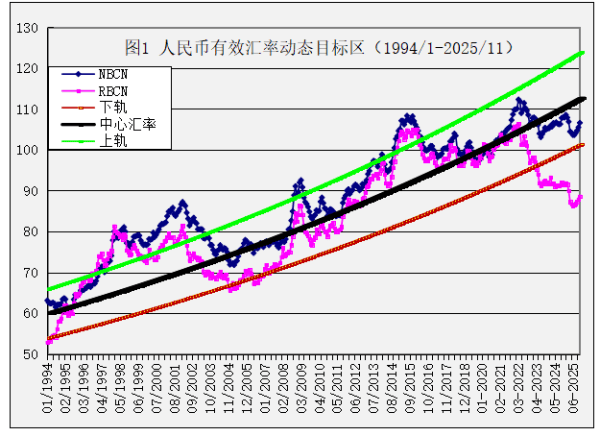
Core Viewpoint - The evaluation of the Renminbi (RMB) exchange rate should not be limited to its value against the US dollar but should consider a basket of currencies and the actual effective exchange rate, as the RMB's competitiveness is increasingly driven by industrial upgrades and import substitution rather than currency depreciation [1][4]. Group 1: RMB Exchange Rate Trends - The RMB has transitioned from a one-way appreciation to a two-way fluctuation since early 2014, with significant volatility observed post the "8-11 exchange rate reform" in 2015, where the RMB experienced fluctuations of 10%-15% [2]. - During the pandemic, the RMB depreciated to 7.19 against the USD but rebounded to around 6.3 in 2022 due to China's effective pandemic control and its role in the global supply chain [2]. - Over the past year, the RMB has shown an overall appreciation of approximately 5%, decreasing from a high of 7.4 to around 7.0 [2]. Group 2: Effective Exchange Rate Assessment - The RMB exchange rate index has shown a weakening trend, despite a 5% appreciation against the USD in the first half of the year, indicating that the nominal effective exchange rate is not the sole indicator of currency strength [3][4]. - The actual effective exchange rate (REER) is crucial for assessing export competitiveness, as it reflects the true value of the currency against a basket of currencies [3][4]. Group 3: Trade Competitiveness and Currency Management - China's export competitiveness has improved significantly over the past thirty years, with recent strong performance in the electric vehicle sector and enhanced import substitution capabilities, indicating a reduced reliance on currency depreciation for export stimulation [10]. - The RMB's nominal effective exchange rate has increased by 40% from 2005 to 2025, aligning closely with the projected annual appreciation rate of 2% based on the Balassa-Samuelson effect [6]. - The historical analysis shows that the RMB's effective exchange rate is currently undervalued by approximately 24%, primarily due to inflation differentials between China and Western countries [9]. Group 4: International Balance of Payments and Exchange Rate Dynamics - The relationship between the exchange rate and international balance of payments is bidirectional; while the exchange rate is influenced by the balance of payments, it also affects it [12]. - Recent trends indicate that changes in RMB exchange rate expectations have led to significant shifts in capital flows, with a surplus in currency conversion reflecting a positive outlook on the RMB's value [12].

彭博独家 | 2025年度彭博中国债券承销排行榜
彭博Bloomberg· 2026-01-08 06:06
Core Insights - The 2025 Bloomberg China Bond Underwriting Rankings have been released, highlighting market trends and key players in the bond market [4][5]. Group 1: Panda Bonds and Credit Bonds - As of December 31, 2025, the issuance of Panda bonds by foreign institutions in China reached 183.9 billion yuan, showing a decrease of 5.62% compared to the same period last year [6]. - The total issuance of credit bonds in China for 2025 was approximately 19.08 trillion yuan, reflecting a growth of about 6.85% year-on-year [8]. - New initiatives such as debt restructuring and the pilot program for company bond renewals are expected to enhance credit risk management and improve liquidity in the credit bond market [8]. Group 2: Rankings and Market Shares - Guotai Junan Securities topped the 2025 China Bond Rankings with a market share of 5.901%, followed closely by CITIC Securities at 5.792% and Bank of China at 5.122% [10]. - In the corporate bond rankings, Guotai Junan Securities led with a market share of 12.531%, followed by CITIC Securities at 12.319% and CITIC Construction Investment at 10.756% [10]. - In the offshore RMB bond market (excluding certificates of deposit), HSBC ranked first with a market share of 6.713%, while Bank of China and Orient Securities followed [10]. Group 3: Offshore Bond Market - The issuance of offshore bonds (excluding certificates of deposit) by Chinese enterprises exceeded 2.05 trillion yuan in 2025, marking a significant increase of approximately 42.17% year-on-year [18]. - The issuance of US dollar bonds by Chinese enterprises surpassed 164.3 billion USD (approximately 1.17 trillion yuan), reflecting a growth of about 62.25% compared to 2024 [18]. - The issuance of dim sum bonds reached 707.2 billion yuan, which is a year-on-year increase of about 9.61% [18]. Group 4: Market Trends and Future Outlook - The issuance of interbank certificates of deposit reached approximately 34.02 trillion yuan in 2025, up 6.54% from the previous year, driven by demand from banks and foreign investors [12]. - Local government bond issuance for 2025 was about 10.29 trillion yuan, an increase of approximately 5.26% year-on-year, with general bonds at 2.61 trillion yuan and special bonds at 7.68 trillion yuan [14]. - The yield spread between US dollar and RMB bonds is currently around 230 basis points, and further interest rate cuts by the Federal Reserve could narrow this spread, potentially boosting the issuance of Chinese dollar bonds [24].

锚定“十五五”新图景 外资“跟投”意愿明显丨“十五五”开局新气象
Sou Hu Cai Jing· 2026-01-08 04:57
当前,全球经济格局加速演变,准确理解中国宏观趋势与市场机遇尤为重要,国际金融机构正深入研 判"十五五"开局之年的发展路径与投资机会。 新年伊始,来自汇丰银行、渣打银行等多家国际金融机构的首席经济学家、投资策略总监接受了证券时 报记者的采访,多家机构不约而同地将"十五五"规划建议作为分析核心,从增长目标、政策重点、产业 动能到资产"跟投",系统勾勒出一幅以"内需主导、创新驱动、高水平开放"为关键词的中国经济新图 景。 保持中高速增长 向内需与创新要动力 对于2026年中国经济的增速设定,外资机构给出了贴近"潜在增长水平"的预测。 渣打银行大中华区及北亚首席经济学家丁爽预计,2026年的增长目标将设定在4.5%—5%,实际增速预 测为4.6%。"这一目标与潜在增长水平及2035年长期发展目标相匹配,也意味着增长模式将更侧重内需 主导与创新驱动。"丁爽指出。 汇丰银行环球投资研究大中华区首席经济学家刘晶认为,中国经济将继续推进结构性转型并保持合理增 长。他强调,在进出口更加趋于平衡的同时,包括消费和投资在内的国内需求将成为驱动增长的主要动 能。 "渣打银行自身也超配中国股票,预期定向的政策刺激,以及与人工智能主题相 ...

锚定“十五五”新图景 外资“跟投”意愿明显丨“十五五”开局新气象
证券时报· 2026-01-08 04:42
当前,全球经济格局加速演变,准确理解中国宏观趋势与市场机遇尤为重要,国际金 融机构正深入研判"十五五"开局之年的发展路径与投资机会。 新年伊始,来自汇丰银行、渣打银行等多家国际金融机构的首席经济学家、投资策略总监接受了 证券时报记者的采访,多家机构不约而同地将"十五五"规划建议作为分析核心,从增长目标、政 策重点、产业动能到资产"跟投",系统勾勒出一幅以"内需主导、创新驱动、高水平开放"为关键 词的中国经济新图景。 保持中高速增长 向内需与创新要动力 对于2026年中国经济的增速设定,外资机构给出了贴近"潜在增长水平"的预测。 渣打银行大中华区及北亚首席经济学家丁爽预计,2026年的增长目标将设定在4.5%—5%,实际 增速预测为4.6%。"这一目标与潜在增长水平及2035年长期发展目标相匹配,也意味着增长模式 将更侧重内需主导与创新驱动。"丁爽指出。 汇丰银行环球投资研究大中华区首席经济学家刘晶认为,中国经济将继续推进结构性转型并保持 合理增长。他强调,在进出口更加趋于平衡的同时,包括消费和投资在内的国内需求将成为驱动 增长的主要动能。 上述判断与"十五五"规划建议中"居民消费率明显提高"的目标高度契合。刘 ...

对话离岸金融研究专家景建国:我国离岸金融仍在“成长期”,海南封关带来新变量
Xin Lang Cai Jing· 2026-01-08 01:53
Core Viewpoint - The financial system plays a crucial role in stabilizing expectations, growth, and structure amid economic transformation and cyclical fluctuations, with a focus on how to better serve the real economy and enhance system resilience [1][12] Group 1: Offshore Financial Development - The Hainan Free Trade Port's full closure is a significant milestone for China's high-level opening-up, providing a testing ground for innovative financial practices such as offshore data asset trading and cross-border digital asset pledging [1][3][14] - China's offshore finance is still in a developmental stage and has not yet reached a mature state, facing challenges such as the disconnection of old and new growth drivers, insufficient integration between offshore and onshore markets, and a lack of foreign investment attractiveness [1][11][22] Group 2: Opportunities and Challenges - The offshore financial sector is at a new development window, with the continuous internationalization of the RMB driving innovation in offshore financial services, injecting new vitality into the market [2][23] - Key challenges include the slow transition between traditional and emerging business models, limited integration of offshore and onshore markets, insufficient foreign investment, and a mismatch between legislation and business development [11][22] Group 3: Role of Hainan in Offshore Finance - Hainan's full closure has laid the groundwork for financial innovation by gradually lowering comprehensive tax rates and enhancing cross-border capital flow facilitation [3][14] - The collaboration between Shanghai, Hong Kong, and Hainan is essential for forming a supportive offshore financial ecosystem, with each region playing distinct roles in innovation, liquidity supply, and financial experimentation [4][15] Group 4: Financial Ecosystem and EF Account - The EF account in Hainan has shown progress in financial development, but it is merely a tool; the overall financial policy design and the capabilities of local financial institutions are crucial for success [5][16] - A complete financial ecosystem is necessary for the Hainan Free Trade Port, emphasizing proactive financial service awareness and continuous improvement in service capabilities [6][17]
我国外储规模连续5个月站上3.3万亿美元
Sou Hu Cai Jing· 2026-01-08 01:11
Core Viewpoint - China's foreign exchange reserves have remained above $3.3 trillion for five consecutive months, with a significant increase of over $155.5 billion by the end of December 2025 compared to the previous year [1]. Group 1: Foreign Exchange Reserves - As of December 2025, China's foreign exchange reserves stood at $3357.9 billion, reflecting an increase of $11.5 billion from the end of November, representing a growth rate of 0.34% [1]. - The rise in foreign reserves is attributed to the impact of major economies' monetary policies and macroeconomic data, leading to a depreciation of the US dollar and fluctuations in global financial asset prices [2]. - The increase in reserves is also supported by a trade surplus that has surpassed $1 trillion, indicating a solid fundamental backing for the stability of foreign reserves [3]. Group 2: Gold Reserves - By the end of December 2025, China's official gold reserves reached 7.415 million ounces, marking the 14th consecutive month of increase, although the increment has been relatively low in recent months [4]. - The increase in gold reserves is seen as a strategic move to optimize the structure of foreign exchange reserves amid rising geopolitical tensions and a trend towards "de-dollarization" [4]. - The proportion of gold reserves in China's official international reserves is approximately 9.5%, significantly lower than the global average of around 15%, indicating room for further increases in gold holdings [4].
除了数字人民币计息,跨境支付系统也迎来变革,央行新规2月将落地
Xuan Gu Bao· 2026-01-08 01:05
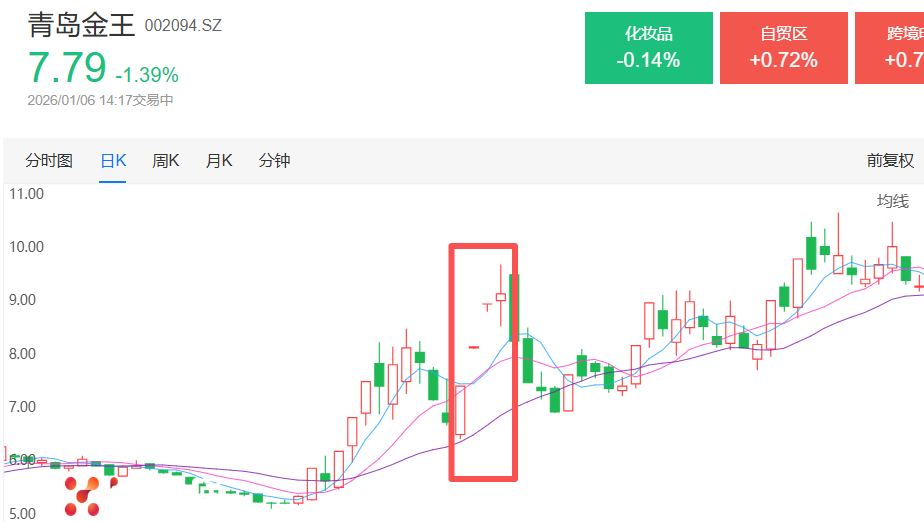
Group 1 - The revised "Rules for the Renminbi Cross-Border Payment System" will be implemented starting February 1, 2026, allowing for more flexible access conditions for system participants [1] - The CIPS system is a crucial financial market infrastructure in China, with a significant increase in cross-border payment volumes, reaching 90.91 trillion yuan in the first half of 2025 [1] - The changes in CIPS rules are expected to attract more global banks and payment institutions, enhancing the global coverage of the Renminbi cross-border payment infrastructure [1] Group 2 - The internationalization of the Renminbi is being advanced through projects like CIPS and mBridge, creating new growth opportunities for fintech companies [2] - Companies involved in cross-border payment services include Newland, New Guodu, and Lakala, which are key targets for investment [5] - Financial IT service providers such as Yuxin Technology, Zhongke Jincai, and others are also highlighted as important players in the cross-border payment ecosystem [6] Group 3 - Qingdao Jinwang and Hailian Jinhui saw significant stock price increases following the announcement of the action plan to enhance CIPS functionality and global network coverage [3] - Companies like Sifang Jingchuang and Xin'an Century are noted for their experience and technology in cross-border payment systems, including CIPS and digital currency solutions [6][7] - Highwei Technology and Jingbeifang have been involved in assisting clients with CIPS system integration and related projects [8][9]

2025年12月外储规模小幅上升 央行连续14个月增持黄金
Zhong Guo Zheng Quan Bao· 2026-01-07 23:31
国家外汇管理局1月7日发布的数据显示,截至2025年12月末,我国外汇储备规模为33579亿美元, 较11月末上升115亿美元,升幅为0.34%。 黄金储备占比提升 "2025年12月我国央行继续增持黄金储备3万盎司至7415万盎司,全年累计增持86万盎司。"管涛认 为,受量价推动影响,我国央行持有黄金储备余额占同期外汇储备余额的比重为9.51%,较上年末上升 3.54个百分点,继续刷新历史新高,但仍低于全球平均水平。 国家金融与发展实验室特聘高级研究员庞溟表示,伴随着人民币国际化进程提速,搭配一定规模的 黄金储备,也可以为"以人民币计价的黄金产品"奠定流动性基础,为稳慎推进人民币国际化创造有利条 件。 除上述因素外,民生银行首席经济学家温彬表示,2025年,我国资本市场表现优于全球整体,国际 机构对我国经济前景和人民币资产的信心进一步增强,境外证券资本流入规模保持在较高水平。我国经 济稳中向好势头不断巩固,为外汇储备规模保持基本稳定奠定了基础。 "2025年12月末,我国外汇储备规模较上年末大幅增加1555亿美元,连续五个月处于3.3万亿美元之 上,创2015年12月以来最高。"东方金诚首席宏观分析师王青表 ...
我国外汇储备规模 连续五个月站上3.3万亿美元
Xin Lang Cai Jing· 2026-01-07 21:21
Group 1 - As of December 2025, China's foreign exchange reserves reached $33,579 billion, an increase of $115 billion from the end of November, marking a rise of 0.34% and the highest level since December 2015 [1] - The increase in foreign exchange reserves is attributed to factors such as the decline in the US dollar index and fluctuations in global financial asset prices, with the dollar index falling by 1.1% to 98.3 in December 2025 [1] - China's trade surplus in goods exceeded $1 trillion for the first time in the first eleven months of 2025, indicating strong performance in the foreign trade sector [1] Group 2 - As of the end of 2025, China's gold reserves amounted to 7.415 million ounces, an increase of 30,000 ounces from the end of November, marking the 14th consecutive month of gold accumulation [2] - The proportion of gold reserves in China's official international reserves is approximately 9.5%, significantly lower than the global average of around 15% [2] - The central bank's strategy to increase gold reserves is seen as a move to enhance the credibility of the sovereign currency and support the gradual internationalization of the renminbi [2]