
平台经济

Search documents
三大平台“外卖大战”再升级 监管“反内卷”构筑竞争红线
Chang Jiang Shang Bao· 2025-07-13 23:30
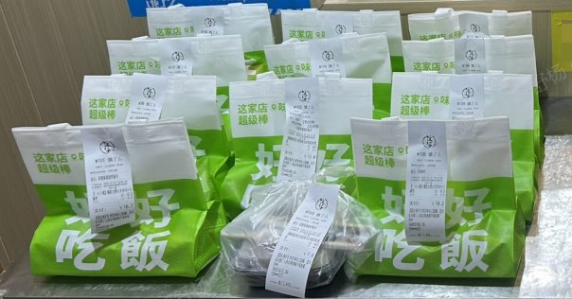
Core Viewpoint - The ongoing "takeaway war" among major platforms like Meituan, Taobao Flash Sale, and JD.com has intensified, with significant discounts and promotions attracting consumer attention and driving record order volumes [2][3][4][5]. Group 1: Market Dynamics - The "takeaway war" has seen platforms offering substantial discounts, with Meituan reporting over 1.5 billion daily orders as of July 12 [6]. - Taobao Flash Sale initiated a subsidy plan worth 500 billion yuan to stimulate consumption over the next 12 months [4]. - The competition has led to record-breaking order numbers, with Meituan achieving over 1.2 billion orders in a single day and Taobao Flash Sale exceeding 80 million orders [5][6]. Group 2: Regulatory Response - Regulatory bodies have expressed concerns over the intense competition, leading to discussions with major platforms to ensure fair competition and consumer protection [8]. - The market supervision authorities have emphasized compliance with laws such as the E-commerce Law and Food Safety Law to address issues like unfair competition and rider rights [8]. - Local governments have initiated special inspections in at least 20 provinces to tackle problems in the takeaway industry, including food safety and ghost deliveries [8]. Group 3: Industry Impact - The entry of JD.com into the market has disrupted the previous dominance of Meituan and Ele.me, resulting in a 15% decline in daily orders for these platforms [7]. - The competition has raised concerns about "involution" and the sustainability of business practices, with reports of riders facing challenges in income despite increased order volumes [7][8]. - The overall takeaway market in China is projected to exceed 1 trillion yuan, with user numbers surpassing 590 million by the end of 2024 [7].



二季度招聘需求环比增长5.7% 服务员、文员用人缺口大
Bei Jing Shang Bao· 2025-07-11 10:16
Group 1 - The "siphon effect" in first-tier cities remains strong, with Beijing leading in job application activity, followed by new first-tier cities like Chengdu and Chongqing showing high recruitment activity [1] - The most in-demand positions include service staff, sales specialists, clerks, beauticians, chefs, and general workers, indicating a growing employment potential in the service and manufacturing sectors due to rising service consumption and traditional industry transformation [1] - The rapid development of the platform economy is breaking traditional employment boundaries, providing job seekers with more flexible and diverse options, which is a significant driver of talent mobility across cities and industries [1] Group 2 - The delivery industry is focusing on the Yangtze River Delta cities, with job applications in Suzhou, Hangzhou, Shanghai, and Chongqing seeing a rise of over 5% [2] - The growth in the e-commerce sector and increased subsidies from delivery platforms have stimulated diverse consumer demands for instant delivery, leading to a continuous increase in related job requirements [2] - The average job application rate for driver positions in the top 15 cities increased by 8.1%, with cities like Hangzhou, Shanghai, Suzhou, Xi'an, and Chongqing experiencing over 10% growth, highlighting the appeal of flexible job opportunities in the ride-hailing sector [2]
58同城数据:服务业招聘供需两旺,新一线城市成就业“新引擎”
Jing Ji Wang· 2025-07-11 10:07
Core Insights - The job market is experiencing a significant increase in recruitment demand, particularly in the service sector, driven by government employment stabilization policies and a rebound in service consumption [1][2][3] Group 1: Recruitment Trends - In Q2 2025, there was a 5.7% month-on-month increase in enterprise recruitment demand, with a notable rise in resume submissions from job seekers [1] - The top five cities for recruitment demand were Chengdu, Beijing, Shanghai, Chongqing, and Shenzhen, with Chengdu, Chongqing, Dongguan, Changsha, and Tianjin showing significant month-on-month growth in recruitment demand [1] - The most in-demand positions included service staff, sales personnel, and various roles in the service and manufacturing sectors, reflecting the ongoing transformation and upgrading of traditional industries [2] Group 2: Job Seeker Mobility - The platform economy is facilitating a more flexible and diverse job market, enabling talent mobility across cities and industries [2] - In Q2 2025, the number of job seekers in the urban service sector increased by 3.2%, with cities like Beijing, Wuhan, Changsha, Zhengzhou, Dongguan, and Chengdu seeing over 5% growth in resume submissions [2] Group 3: Delivery and Driver Roles - The delivery industry is witnessing a surge in job seeker interest, particularly in the Yangtze River Delta cities, with a month-on-month increase of over 5% in job applications [3] - The average month-on-month increase in applications for driver positions in the top 15 cities was 8.1%, with cities like Hangzhou, Shanghai, Suzhou, Xi'an, and Chongqing exceeding 10% growth [3] Group 4: Future Outlook - The evolving job market is becoming more flexible and diverse, prompting companies like 58.com to enhance recruitment services and facilitate efficient connections between employers and job seekers [3]
李勇坚:短视频直播赋能就业创新 深度融合实体经济显成效
Jing Ji Wang· 2025-07-11 03:32
Core Insights - The seminar on "The Value Research of Douyin in Promoting High-Quality Full Employment" highlighted the significant role of the Douyin platform in job creation and employment services [1] Group 1: Employment Creation - Douyin's unique "goods find people" mechanism has successfully unlocked consumer potential, leading to approximately 30% of product consumption being driven by this innovative recommendation system, resulting in the creation of 300,000 new jobs [2] - The total number of online jobs created by Douyin reached 800,000, with a net increase of 100,000 jobs when combined with the jobs generated from increased consumption [2] Group 2: Employment Quality Improvement - As of October 2024, over 1,300 government accounts have been established on Douyin, with 73,600 live-streaming job fairs conducted, attracting 244,400 participating companies and providing a total of 3,480,900 job positions [3] - The live-streaming job fair model has improved recruitment efficiency by 37%, and job seekers' income levels have increased by an average of 10% compared to traditional recruitment methods [3] - Short video live-streaming has also enhanced training efficiency by 12%, providing a more convenient and effective way for blue-collar workers to improve their skills [3] Group 3: Employment Ecosystem Development - The rise of short video live-streaming platforms like Douyin has led to the emergence of over 20 new professions, creating a vast employment ecosystem encompassing content creation, logistics, and supply chain management [4] - The "Vitality 28" factory exemplifies this ecosystem, experiencing a 4-5 times increase in production and adding 245 new jobs within three months due to Douyin live-streaming, showcasing the revitalization effect on traditional businesses [4] - Future developments in short video live-streaming are expected to leverage artificial intelligence to enhance job matching efficiency and deepen integration with the real economy, continuously unlocking employment potential [4]
订单涨了、信心足了!淘宝闪购500亿补贴激活济南线下小店
Qi Lu Wan Bao Wang· 2025-07-10 06:25
天热没人进店?那就让骑手把饭送上门 位于槐萌区的八珍竹升面,是一家新开的广式清汤面馆。开店的是90后的创业者小浦,在广州工作过的 他,希望将健康的广式饮食引入到济南本地。 创业不易,对没做过餐饮的他更是如此。"我的门店上新有两个多月了,但刚开业没多久就赶上了高温 天气。夏天一热,堂食就掉下来了。中午有几个稀稀拉拉的客人,连房租、人力的成本都不够。" 夏日热潮下,烤肉香、火锅鲜、点心甜……济南一家家的街边门店,前台外卖机不断弹出外卖小票,商 家忙着准备热气腾腾的美食;而在另一端,写字楼的打工族和居民楼的年轻人,正忙着分享大额免单 券,"安排"自己一周外卖订单,足不出户享受全城美食。 一单单外卖,在炎炎夏日,串联起整个城市经济,让地道城市美食不在受限于物理距离,满足更多用户 的美食需求,生长出新的经济增量。 据悉,自淘宝闪购500亿补贴上线以来,在"大消费平台"战略加持下,城市服务消费被不断激活,商家 订单呈现爆发式增长,济南地区餐饮商家订单增长超100%,多个品类订单量实现翻番。在济南,一家 家餐饮小店店主用他们的故事,诠释着济南人的质朴厚道,更展现着涌动于城市中的旺盛消费活力。 都说"新人"入行总是要交些学费 ...
瞭望 | 平台调价监管须到位
Xin Hua She· 2025-07-07 08:10
Group 1 - The core issue is that a leading online travel platform's "price adjustment assistant" feature automatically scans competitor prices and enforces lower hotel room rates, negatively impacting merchants' operational efficiency and profitability [1] - The "price adjustment assistant" was designed to optimize pricing strategies through dynamic comparison, but excessive algorithmic control has turned it into a dominant force, squeezing merchants' profit margins [1] - Effective regulation is essential to prevent the abuse of platform power and to maintain market order, which includes establishing clear rules for price adjustments and merchant cooperation [1] Group 2 - The essence of platform economy is to empower businesses through data and technology, but if platforms misuse their power, algorithms can become monopolistic tools [2] - The phenomenon of platforms using technology to enhance market control is evident in practices like "big data killing familiarity" in e-commerce and "forced price adjustments" in online travel [2] - To foster a healthy ecosystem in platform economy, legal frameworks must be established to create rigid boundaries and ensure that technological innovation promotes healthy competition and market vitality [2]
港股的利空来了?
表舅是养基大户· 2025-07-06 13:33
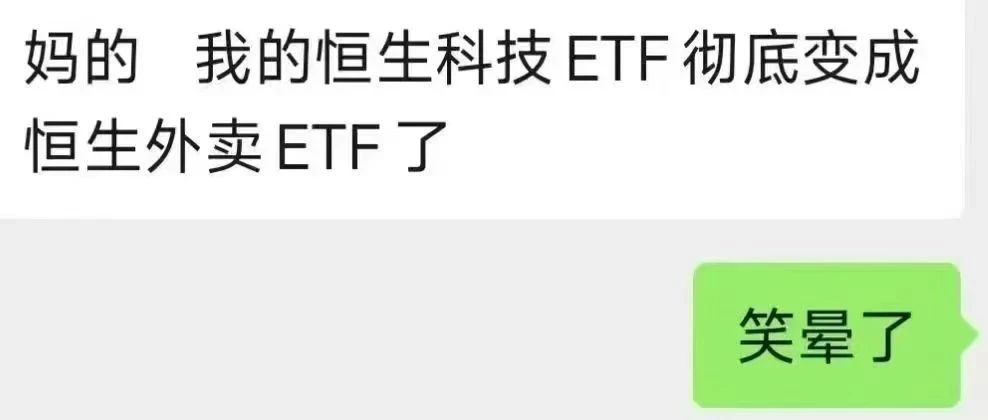
这个周末,不得不动笔码点字了,因为股和债,各有一个大事。 权益这边,周末, 外卖大战 如火如荼,各种补贴,各种零元购,家人们的冰箱都快塞不下了,而这,烧的都是股东们的钱,因此,下一步,港 股可能迎来真正的考验。 债券这边,因为债市科技板的"顶层设计"加持,比之前的基准做市信用债,可能规格更高的 科创债ETF ,下周就要开售了,很多都是只卖一天 ——而基准做市信用债ETF,三个多月,规模 已经 疯涨到突破1300亿,那么,科创债ETF,会怎么走,也值得关注。 就这两件事,依次聊聊。 ...... 1、外卖大战。 事情的背景,想必大家都清楚了,昨天,阿里发起了 "冲单日" ,发放大量满减优惠券,我自己也尝试刷了一下,确实部分情况下,可以实现"零 元购",而美团紧急跟进了同类优惠,甚至因为短期流量过大,导致服务器崩了一下,当日的 即时零售订单突破1.2亿单,其中餐饮占1亿单,创 历史峰值,大家一起见证历史了。 5月2日, 淘宝闪购 提前全国上线, 首日发放大量的满减大额券; 5月5日, 淘宝闪购宣布 日订单突破1000万单 ,占行业日均单量(8000万单)的1/8; 6月23日, 阿里组织架构调整,饿了么、飞猪并入 ...
巴西客商看好“中国制造”
Zhong Guo Xin Wen Wang· 2025-07-03 08:37
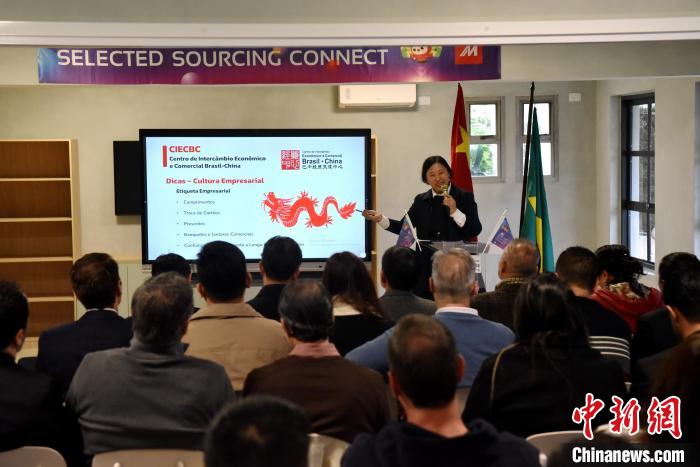
Group 1 - The core viewpoint of the article highlights the successful collaboration between Brazilian companies and Chinese platforms, particularly through the Made-in-China.com platform, which has facilitated trade and supply chain solutions in Brazil [1][2]. - The Made-in-China.com platform has gained significant trust from the Brazilian market, with over 50 Brazilian business elites participating in the forum, indicating a strong willingness for deep cooperation with Chinese suppliers [2]. - The forum emphasized the rapid development of China's platform economy, which has effectively addressed trade bottlenecks and enhanced transparency and security in cross-border transactions through systems like supplier on-site certification [5]. Group 2 - Brazilian companies are increasingly shifting their demands from basic supplies to technology collaboration, with cross-border e-commerce platforms playing a crucial role in resolving trust issues in international trade [6]. - The establishment of a high-level coordination committee and a local currency swap mechanism has led to a continuous increase in bilateral trade, showcasing the high degree of economic complementarity between China and Brazil [5]. - The Brazilian Guangdong Association and other community leaders expressed their commitment to using their networks to promote trade cooperation between China and Brazil, highlighting the growing demand for technical collaboration in various sectors [6].
打造新场景 AI催生平台经济新赛道
Xin Hua Cai Jing· 2025-07-02 04:46
Group 1: Platform Economy Transformation - The platform economy is undergoing a transformation across marketing, technology, and services, driven by digital transformation, multimodal scenarios, and the commercialization of new technologies [1] - The integration of AI with the platform economy is evolving towards customized and diversified scenarios, enhancing consumer experiences and creating new market opportunities [1] Group 2: E-commerce Growth and Innovations - China's e-commerce sector shows strong vitality, with online retail sales growing by 8.5% year-on-year from January to May 2025, significantly outpacing the growth of total retail sales [2] - E-commerce platforms are transitioning from mere transaction channels to ecosystem organizers, facilitating a more efficient traditional sales and service model [2] - Taobao's "Shourida" service has been fully opened, allowing local warehouses to meet instant delivery demands, and has been upgraded to "Shangou" to enhance instant retail offerings [2] Group 3: Restaurant Industry Dynamics - E-commerce platforms play a crucial role in the transformation of the restaurant industry, with online marketing models like takeout and new retail becoming significant revenue channels [3] - Meituan's 2024 financial report indicates over 65% growth in dine-in orders, continuing into Q1 2025, driven by local life services and instant retail scenarios [3] - Nearly 50% of restaurants report annual growth in takeout sales, showcasing the digitalization impact on the industry [3] Group 4: AI in Second-Hand Economy - The second-hand economy is becoming a key driver of domestic circulation, with AI technology addressing issues like information asymmetry and trust in transactions [4] - Turn's CEO highlighted the development of AI tools to enhance trust in second-hand transactions, aiming to create a new experience for users [4] - Aihuishou has introduced an AI-powered real-time pricing system for electronic products, improving price assessment accuracy and stimulating market activity [4] Group 5: AI Innovations in E-commerce - Xianyu plans to launch multiple AI products, including "smart publishing" and "AI model fitting," to enhance user experience and streamline the selling process [5][6] - AI algorithms are improving operational efficiency for stores, with a reported 102% increase in daily product listings and a reduction in sales time by half [6] - The integration of AI with augmented reality (AR) is enhancing consumer experiences by allowing virtual try-ons, reducing decision-making time and return rates [6]
乐见平台经济破“卷”重生
Jing Ji Ri Bao· 2025-07-01 22:10
Core Viewpoint - The recent revision of the Anti-Unfair Competition Law aims to curb "involutionary competition" in the platform economy, which has led to unsustainable low prices and compromised product quality [1][2][3] Group 1: Involutionary Competition - Involutionary competition is characterized by platforms engaging in price wars to attract users, resulting in reduced product quality and increased pressure on merchants [1][2] - The law prohibits platform operators from forcing merchants to sell products below cost, signaling a shift towards rational competition [2][3] Group 2: Sustainable Low Prices - Sustainable low prices in the health market should be achieved through legitimate means such as technological innovation, economies of scale, and supply chain optimization, ensuring reasonable profits for merchants and real benefits for consumers [1][3] - The revision of the law is not aimed at banning low prices but at eliminating the distortion of price signals caused by involutionary competition, allowing merchants to focus on improving product quality [3]