
贸易逆差

Search documents
【印度5月贸易逆差缩窄】6月16日讯,根据政府周一公布的数据,印度5月商品贸易逆差缩窄至218.8亿美元,低于分析师预估的250亿美元,也低于4月的264.2亿美元。数据显示,5月商品出口为387.3亿美元,进口为606.1亿美元。与此同时,印度贸易部长Sunil Barthwal表示,5月服务贸易顺差估计为146.5亿美元,服务出口增至323.9亿美元,进口增至171.4亿美元。
news flash· 2025-06-16 09:14
金十数据6月16日讯,根据政府周一公布的数据,印度5月商品贸易逆差缩窄至218.8亿美元,低于分析 师预估的250亿美元,也低于4月的264.2亿美元。数据显示,5月商品出口为387.3亿美元,进口为606.1 亿美元。与此同时,印度贸易部长Sunil Barthwal表示,5月服务贸易顺差估计为146.5亿美元,服务出口 增至323.9亿美元,进口增至171.4亿美元。 印度5月贸易逆差缩窄 ...
美国贸易逆差减半!特朗普关税有效了?
Sou Hu Cai Jing· 2025-06-15 10:21
Core Insights - Trump's tariff strategy has achieved its intended purpose, as evidenced by a significant reduction in the U.S. trade deficit in April 2023, which fell by 55.5% to $61.6 billion, marking the smallest trade deficit since September 2023 [1][4] - The reduction in the trade deficit was primarily driven by a historic 16% drop in imports, particularly in consumer goods and pharmaceuticals, while exports saw a slight increase of 3% [1][4] Trade Deficit Analysis - The April trade deficit's sharp decline is attributed to a record drop in imports, with consumer goods and pharmaceuticals being key contributors [4][5] - The decrease in imports in April followed a surge in March, where businesses stockpiled goods to avoid the impact of tariffs that took effect on April 2, leading to an unusually high trade deficit of $138.3 billion in March [6][8] Short-term Effects and Structural Issues - While tariffs have temporarily suppressed imports, this has resulted in a high trade deficit in March and potential inventory buildup that could hinder GDP growth in the second quarter [6][8] - Historical data indicates that during Trump's first term, trade tensions led to a 50% increase in the overall trade deficit compared to 2017, as companies found ways to circumvent tariffs through third-country trade [7][14] Economic Consequences - The U.S. labor market showed signs of fatigue in April, with initial jobless claims rising to 247,000, and manufacturing PMI contracting, suggesting that tariffs may contribute to inflationary pressures [8][14] - The fundamental issue of the U.S. trade deficit is rooted in savings-investment imbalance, with low savings rates and high consumption levels, making it difficult for tariffs alone to address the underlying economic structure [14][16] Long-term Outlook - The trade deficit with China is projected to reach $295.4 billion in 2024, indicating persistent reliance on Chinese supply chains despite tariff measures [14][16] - A comprehensive reduction in the U.S. trade deficit appears nearly impossible given the current economic structure, as high labor costs and weak industrial capacity limit the ability to produce domestically [17]

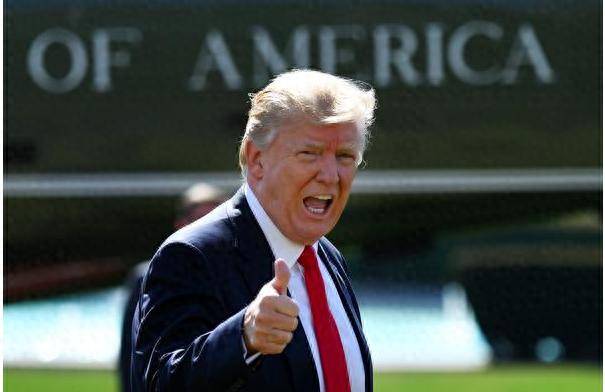
拿到稀土还没一周,欧盟突然提议制裁两家中国银行,理由竟是援俄
Sou Hu Cai Jing· 2025-06-14 11:40
Core Points - The European Union (EU) has proposed sanctions against two small Chinese banks, claiming they help Russia evade sanctions, which comes shortly after China's Minister Wang Wentao promised to facilitate rare earth exports to Europe [1][5][9] - This situation highlights the complex geopolitical dynamics, where the EU is caught between the need for Chinese resources and pressure from the United States [11][16] - China's response emphasizes the importance of mutual respect in international trade and questions the EU's double standards regarding trade with Russia [21][23] Group 1: EU's Sanctions and China's Response - The EU's sanctions target two small Chinese banks, marking the first time sanctions are directed at Chinese financial institutions [5][9] - China's Ministry of Foreign Affairs criticized the EU's actions, arguing that they violate international trade norms and questioning the EU's own trade relations with Russia [21][23] - The sanctions come at a time when China is attempting to strengthen ties with Europe through rare earth exports, which are crucial for various industries [3][5] Group 2: Geopolitical Context - The sanctions reflect the EU's struggle to balance its economic interests with the pressure from the US, particularly in light of recent high-level visits from French and German leaders to China [11][16] - The EU's actions may be seen as an attempt to appease the US while risking its own economic relationship with China, which is vital for accessing rare earth materials [16][30] - The ongoing geopolitical tensions suggest that the EU's strategy of trying to please both sides may ultimately lead to unfavorable outcomes for its own interests [35] Group 3: Economic Implications - The trade relationship between China and the EU is significant, with bilateral trade expected to approach $800 billion in 2024, indicating deep economic interdependence [25][28] - China's dominance in the rare earth market, controlling approximately 60% of global extraction and 85% of processing, makes it a critical player for European industries [23][25] - The potential for long-term repercussions on the EU's access to essential resources is evident, as any sanctions could disrupt supply chains and increase costs for European companies [25][30]


美国失业救济激增,招聘冷却无解,美联储按兵不动
Sou Hu Cai Jing· 2025-06-13 08:22
Economic Indicators - The number of people applying for unemployment benefits in the U.S. has surged to 1.956 million, the highest level in three and a half years, indicating a significant increase in unemployment and prolonged job searches [1] - Initial claims for unemployment benefits have also risen to 248,000, marking the highest level in nearly ten months, suggesting a deteriorating job market [1] Employment Market Concerns - Despite seemingly healthy non-farm payroll data in May, underlying issues such as low-wage job dominance, stagnant labor participation rates, and reduced working hours reveal vulnerabilities in the U.S. economy's sustainability [3] - The increase in repeat applicants for unemployment benefits highlights a growing challenge for American workers in finding suitable jobs, indicating a shift from voluntary unemployment to a lack of available positions [4] Federal Reserve's Stance - The Federal Reserve is likely to maintain its current interest rates without making any changes, reflecting a lack of decisive action in response to the employment market's instability [3] - The Fed's inaction may exacerbate market volatility, as consumer confidence could decline if the job market continues to weaken [3][6] Inflation and Economic Policy - Current inflation indicators, such as the producer price index, appear stable, but there are concerns that rising costs will eventually impact consumer prices, complicating monetary and fiscal policy responses [6] - The ongoing tariff policies are seen as a double-edged sword, failing to effectively address trade deficits while simultaneously undermining domestic employment and consumer confidence [6] Political Response and Market Sentiment - The political response to the emerging economic weakness has been slow, with both major parties focused on election preparations rather than addressing economic challenges, leading to a lack of effective policy signals [7] - Following the release of unemployment data, both the dollar and U.S. Treasury yields fell, indicating investor skepticism regarding the Fed's future policy direction amid a challenging economic landscape [9] Structural Economic Issues - The U.S. economy is facing a dangerous path characterized by policy confusion, economic stagnation, and market distrust, with potential long-term structural cracks that could lead to a systemic crisis [9][10] - The pressing question is not merely about inflation or monetary policy, but rather the sustainability of the American middle class in the face of these challenges [10]

波黑今年1-5月进出口总额超200亿马克
Shang Wu Bu Wang Zhan· 2025-06-11 15:57
Group 1 - Bosnia's total imports in the first five months of this year reached approximately 13 billion marks, an increase from 12.44 billion marks in the same period last year [1] - Exports during the same period amounted to 7.31 billion marks, up from 6.9 billion marks year-on-year, resulting in a trade deficit of 5.69 billion marks [1] - The total trade volume exceeded 20 billion marks, indicating significant growth in both imports and exports [1] Group 2 - The main imported goods included mineral fuels, oils, and distillation products (1.52 billion marks), machinery and parts (1.14 billion marks), and railway vehicles and parts (1.08 billion marks) [1] - The highest export categories were machinery and parts (590 million marks), furniture and related products (504.4 million marks), and mineral fuels and oils (489.6 million marks) [1] - Major import sources were Croatia, Serbia, Germany, Slovenia, Italy, and Austria, while key export destinations included Croatia, Germany, Serbia, Austria, Italy, and Montenegro [1] Group 3 - The growth in trade volume is attributed to inflation increasing the value of imports and exports, along with rising disposable income and consumption due to wage and remittance increases [2] - The first growth in EU industrial production in two years has also contributed to increased export demand [2] - This growth trend is expected to continue until the end of the year, barring any significant impacts from potential trade wars [2]
爱沙尼亚4月份货物进出口总额同比增长2%
Shang Wu Bu Wang Zhan· 2025-06-10 14:53
Group 1 - In April 2025, Estonia's total goods trade reached €3.46 billion, a year-on-year increase of 2% [1] - Exports amounted to €1.56 billion, up 2.6% year-on-year, while imports were €1.9 billion, increasing by 1.4% [1] - The trade deficit was €330 million, a decrease of €13 million compared to the same period last year [1] Group 2 - The largest export category in April 2025 was electrical equipment, accounting for 14.7% of total exports, with a year-on-year growth of 4% [1] - Agricultural products and food preparations made up 13.1% of exports, growing by 15% year-on-year [1] - The most imported goods were transportation equipment, which constituted 14.6% of total imports, with a year-on-year increase of 15% [1] Group 3 - In the first four months of 2025, Estonia's total goods trade reached €13.7 billion, a year-on-year increase of 10.7% [2] - Cumulative exports for this period were €6.26 billion, up 10.5% year-on-year, while imports totaled €7.44 billion, increasing by 11% [2] - The trade deficit for the first four months was €1.18 billion, an increase of €80 million compared to the same period last year [2]
中美经贸关系优势互补、共生共赢(钟声)
Ren Min Ri Bao· 2025-06-09 21:56
Group 1 - The core viewpoint emphasizes the importance of the first meeting of the China-U.S. economic and trade consultation mechanism in London, highlighting it as a significant opportunity for both parties to resolve differences through equal dialogue [1] - The article discusses the balanced benefits of China-U.S. trade relations, noting that the U.S. trade deficit with China is a result of structural issues in the U.S. economy and the comparative advantages of both countries [1][2] - It is mentioned that the U.S. service trade surplus with China is projected to reach $27.3 billion in 2024, indicating a significant advantage for the U.S. in the service sector [1] Group 2 - The article points out that the U.S. trade deficit with China, when calculated based on trade value added, would be significantly reduced, suggesting that China does not actively pursue a trade surplus [2] - It highlights that the U.S. trade deficit with China has decreased as a percentage of its total trade deficit, from 47.5% in 2018 to 24.6% in 2024, indicating a shift in the U.S. trade dynamics [2] - The article criticizes the U.S. for politicizing economic issues and implementing discriminatory measures against China, which hinder U.S. companies from capitalizing on market opportunities in China [2] Group 3 - China is actively promoting high-level openness and expanding imports, providing more opportunities for countries, including the U.S., through various trade exhibitions and initiatives [3] - The article asserts that the true nature of China-U.S. economic relations is one of complementary advantages and mutual benefits, advocating for the removal of artificial barriers to enhance cooperation [3] - It expresses optimism that through equal consultation and pragmatic cooperation, both countries can find mutually beneficial solutions that will contribute to global economic recovery and growth [3]
刚挂断中方电话,特朗普突然收到一则噩耗:1800万桶原油被拒之门外
Sou Hu Cai Jing· 2025-06-09 11:45
Core Viewpoint - The ongoing trade tensions between China and the United States have led to significant shifts in trade patterns, particularly in the oil sector, with China halting imports of U.S. crude oil for two consecutive months, resulting in the lowest U.S. crude oil export levels since 2020 [1][8]. Group 1: Trade Relations and Tariffs - The U.S.-China trade war began in 2018, initiated by the Trump administration's imposition of tariffs on $34 billion worth of Chinese goods, citing trade deficits and intellectual property concerns [1][3]. - China responded with tariffs ranging from 5% to 25% on U.S. products, significantly impacting U.S. agricultural exports, particularly soybeans [3]. - The trade conflict escalated with the U.S. targeting Chinese tech firms like Huawei, leading to further tariffs on $1.2 trillion and $1.8 trillion worth of Chinese goods [3][4]. Group 2: Economic Impact - The U.S. trade deficit has increased from $950.2 billion in 2018 to $1,211.75 billion in 2024, indicating that the tariffs have not achieved their intended goal of reducing the trade deficit [7]. - Over 90% of the tariff costs have been passed on to U.S. importers, downstream businesses, and consumers, leading to increased prices and living costs in the U.S. [7]. - Despite facing some export pressures, China has shown resilience by expanding domestic demand and diversifying trade partnerships, maintaining stable economic growth [7]. Group 3: Energy Sector Dynamics - The halt in U.S. crude oil imports by China is attributed to the U.S. tariff policies, which have diminished the price advantage of U.S. crude oil for China [8]. - The U.S. shale oil producers are projected to face losses of at least $10 billion due to the absence of the Chinese market, with U.S. crude oil exports dropping to 3.883 million barrels per day, a 4% decrease [8]. - China is actively seeking to diversify its energy imports, with agreements in place with Russia and Qatar to secure alternative oil and gas supplies [8]. Group 4: Global Economic Implications - The trade war has disrupted global supply chains, forcing multinational companies to reallocate resources and adjust production strategies, thereby increasing operational costs and risks [10]. - The unilateral actions by the U.S. have undermined the multilateral trade system, leading to slower progress in global trade negotiations and increasing trade disputes among nations [10]. - Some Southeast Asian countries have benefited from the trade war as they become alternative production bases for multinational companies, while those reliant on U.S.-China trade face economic slowdowns [10].

美国被拿捏,特朗普放低姿态,石破茂一步不让,不出意外又谈崩了
Sou Hu Cai Jing· 2025-06-09 04:27
Group 1 - The core focus of the US-Japan tariff negotiations is the trade deficit, with Japan's strong stance against making unprincipled concessions to the US [1] - Japan holds significant leverage in the negotiations due to its substantial holdings of US Treasury bonds, which could impact the US economy if sold off [1] - Japan's proposal includes a comprehensive cooperation plan targeting China in key areas such as rare earths, semiconductors, and liquefied natural gas [3][5] Group 2 - Japan aims to reduce the trade deficit with the US while aligning with US efforts to counter China's technological advancements [3] - The internal divisions within the US negotiation team complicate the discussions, with differing views among key officials [5] - The historical context of US-Japan relations shows a shift from a subordinate relationship to a more balanced negotiation dynamic, with Japan leveraging its economic position [8]
海外周报20250608:5月非农超预期带动降息预期进一步降温-20250608
Soochow Securities· 2025-06-08 08:57
证券研究报告·宏观报告·宏观周报 海外周报 20250608 5 月非农超预期带动降息预期进一步降温 2025 年 06 月 08 日 证券分析师 芦哲 执业证书:S0600524110003 luzhe@dwzq.com.cn 证券分析师 张佳炜 执业证书:S0600524120013 zhangjw@dwzq.com.cn 证券分析师 韦祎 执业证书:S0600525040002 weiy@dwzq.com.cn 研究助理 王茁 ◼ 5 月非农:新增就业与时薪略超预期令降息预期进一步降温,但数据细 节或暗示美国劳务市场"外强中干"。美国 5 月新增非农就业+13.9 万, 预期+12.6 万,前值由+17.7 万下修至+14.7 万,前两个月数据累计下修 9.5 万。失业率 4.2%,持平预期与前值。时薪环比+0.4%,预期+0.3%, 前值+0.2%。从结构上看,新增就业的主要贡献来自教育医保(+8.7 万) 和休闲餐旅(+4.8 万)。整体来看,5 月略超预期的新增就业和时薪令市 场交易美国经济不着陆,降息预期进一步降温,截至最新联邦基金期货 市场预期 9 月降息概率下降至 68.3%,到 25 年底 ...
