人民币升值

Search documents
创纪录,南向资金爆买
Zheng Quan Shi Bao· 2025-12-16 14:23
今年以来,港股在全球主要股市中表现突出,恒生指数等年内涨幅超过20%。不过,自10月中旬以来, 港股市场进入调整阶段,波动有所加大,11月整体呈现震荡走势,12月以来的调整幅度有所加大。 港股作为典型的离岸市场,其流动性受海外环境影响显著,而基本面则与内地经济紧密相连。相比基本 面,流动性对港股行情的影响更为直接和迅速,其中科技类资产对利率变化更为敏感。 除了流动性,估值优势、资产质量提升与市场生态重塑多重因素,也将促使港股估值修复。多家券商机 构展望2026年港股行情时指出,随着港股基本面触底反弹,叠加其依旧显著的估值折价,港股市场在 2026年将迎来第二轮估值修复以及业绩进一步复苏的行情。 南向资金创纪录流入 中信证券也表示,考虑到理财和货基等产品收益率持续下滑,而今年以来中国资产的"赚钱效应"愈发显 著,居民"存款搬家"现象或将持续。特别考虑到港股的低配情况,预计南向资金将持续增配港股,尤其 散户资金有较大的增配空间。 回购热情升温 与南向资金涌入相呼应的是,港股市场回购热情出现升温。 Wind数据显示,截至2025年12月15日,港股上市公司今年以来的回购金额为1693.45亿港元,相比2024 年2 ...
人民币温和升值牵动货币市场连锁反应
Sou Hu Cai Jing· 2025-12-16 14:10
升值逻辑:内外因素共振下的必然选择 人民币此次温和走强并非孤立现象,而是全球货币政策分化、国内经济基本面稳固与季节性需求叠加的结果。从外部环境看,美联储12月11日宣布将联邦基 金利率下调25个基点至3.5%-3.75%,这是其年内第三次降息,直接引发美元指数持续下行——截至12月16日,美元指数已从100关口跌破至98.1784,非美货 币普遍迎来升值窗口,人民币顺势承接这一趋势。 内部支撑同样坚实。11月国家统计局数据显示,全国规模以上工业增加值同比增长4.8%,服务业生产指数增长4.2%,社会消费品零售总额达43898亿元,经 济延续稳中有进态势,为汇率提供了基本面托底。叠加年底企业结汇需求集中释放,前期累积的外汇敞口加速平仓,进一步助推人民币季节性走强。业内专 家指出,这种"美元走弱+结汇升温"的双重驱动,构成了本轮升值的核心逻辑,且与中美利差走势无直接关联——12月以来10年期美债收益率上升17个基 点,中美利差倒挂幅度反而扩大,更凸显人民币升值的独立性。 市场共振:流动性格局与利率生态的双重重塑 文 | 人民币杂志 大河 2025年12月的外汇市场上,人民币以"温和而坚定"的姿态引发全球关注。12 ...

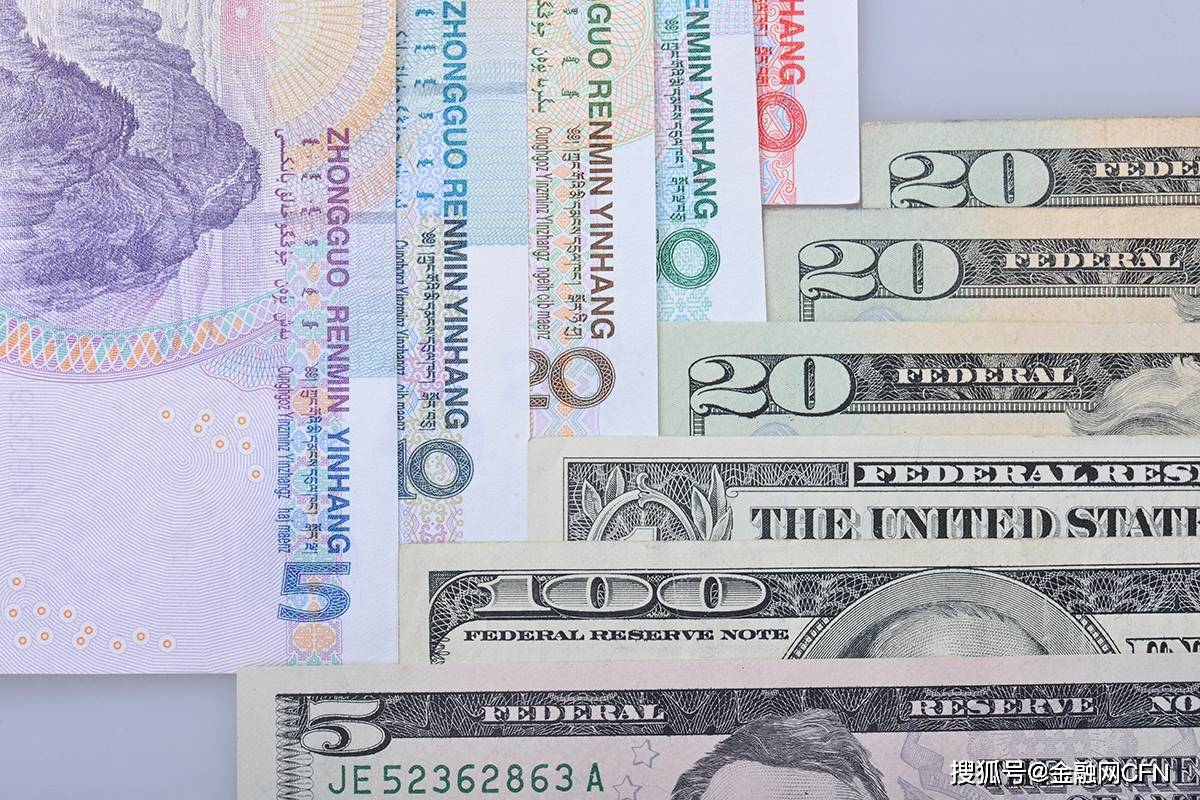
中美关税大调整!美联储降息175基点,2026亚太货币要集体升值
Sou Hu Cai Jing· 2025-12-16 12:50
Core Viewpoint - The recent appreciation of the Renminbi (RMB) against the US dollar has sparked discussions about the possibility of the RMB breaking the 7.0 mark by 2026, driven by three main factors and two significant concerns [1]. Group 1: External Monetary Policy - The direct driver of the RMB's recent appreciation is the global shift in monetary policy, highlighted by the Federal Reserve's decision to cut interest rates by 25 basis points on December 11, bringing the federal funds rate to 3.50%-3.75%, with a total reduction of 175 basis points in this cycle [4]. - The Fed's indication of further rate cuts in early 2026 has led to a weakening of the US dollar, with the dollar index recently falling below 100, marking a year-to-date low [4]. - UBS's Chief Investment Officer for Greater China noted that the continued rate cuts by the Fed will result in the US dollar underperforming against G10 currencies, with an expected 2%-3% appreciation for Asia-Pacific currencies [6]. Group 2: Internal Policy Support - The core support for the RMB's appreciation comes from ongoing domestic policy efforts and improvements in economic fundamentals, with the Central Economic Work Conference emphasizing the need to maintain stability in the RMB exchange rate [10]. - The People's Bank of China (PBOC) has injected liquidity into the market through a 600 billion yuan reverse repurchase operation on December 15, marking the seventh consecutive month of such actions [12]. - Economic indicators show a recovery, with the manufacturing PMI returning to expansion at 50.7 and retail sales growing by 4.8% year-on-year, indicating a clear recovery in domestic demand [10]. Group 3: Market Dynamics and Predictions - The expectation of RMB appreciation has led to increased overseas investment in RMB assets, with northbound capital ETF transactions reaching 3.271 billion yuan on December 15, despite a slight decrease from the previous period [14]. - The concentration of corporate demand for currency exchange at year-end has further strengthened the RMB, with a 12% increase in foreign exchange transaction volume on December 8 [16]. - Market experts generally hold optimistic views on the RMB breaking the 7.0 mark by 2026, with predictions ranging from 6.9 to 6.5 by the end of 2026, although some analysts remain cautious about the pace of appreciation [17][20].
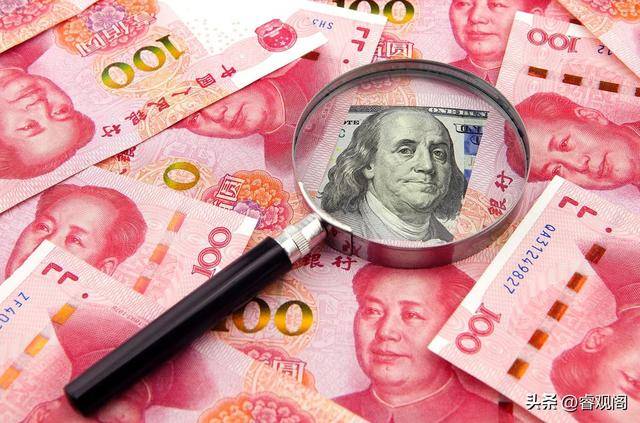
前11月外贸出口超预期强劲,人民币中间价陡峭升值
Sou Hu Cai Jing· 2025-12-16 11:38
Group 1 - The core viewpoint of the articles indicates that the Chinese yuan is experiencing a significant appreciation against the US dollar, driven by strong trade surpluses and favorable economic conditions [2][3][4] - The yuan's exchange rate has seen a steep decline, with the midpoint rate against the dollar dropping to 7.0602, a decrease of 54 basis points, and a total decline of 157 basis points since the beginning of the month [2] - China's trade surplus for November increased by 5.9% year-on-year, pushing the cumulative surplus for the first 11 months of the year to over $1 trillion, marking a historical first [2][3] Group 2 - The export structure has shifted significantly, with mechanical and electrical products accounting for 60.9% of total exports, and notable growth in integrated circuits (25.6%) and automobiles (17.6%) [3] - Despite a 20% decline in exports to the US due to tariffs, other regions have compensated for this drop, with ASEAN becoming the largest trading partner, growing by 8.5% [3] - The Chinese economy is benefiting from a strong export performance, which is crucial for supporting the yuan's appreciation, even amid domestic demand challenges [2][3] Group 3 - The yuan's appreciation is also influenced by US monetary policy, with expectations of further interest rate cuts by the Federal Reserve, which would likely lead to a weaker dollar [5][6][7] - The potential candidates for the Federal Reserve chair, both advocating for lower interest rates, suggest a continued dovish stance that could further impact the dollar's strength [6][7] - The Chinese central bank is expected to maintain a moderately loose monetary policy, which, combined with a narrowing interest rate differential with the US, is favorable for the yuan [5]
人民币强势升值创新高!年内破7可期?
Bei Jing Shang Bao· 2025-12-16 11:17
人民币近期升值势头强劲。12月16日,在岸人民币对美元汇率最高来到7.0417,创下2024年10月来新高;离岸人民币对美元汇率升破 7.04,最高报7.0374,同样触及阶段性高点。这已是人民币汇率连续两日刷新"纪录"。 底在结汇需求与外部因素叠加下,汇率存在阶段性、短暂突破7.0关口的可能性,但预计年内汇率中枢将围绕7.0关口双向波动、稳中 偏强运行,出现单边行情的概率不高。市场的理性预期将从"能否破7"转向"如何在合理区间内实现动态平衡"。 12月以来,人民币连续升破7.07、7.05多个关口,月初至今涨幅接近0.5%。中国外汇交易中心12月12日更新的数据显示,CFETS人民 币汇率指数报97.71,按周涨0.06,BIS货币篮子人民币汇率指数报104.28,SDR货币篮子人民币汇率指数报92.19。 谈及近期人民币对美元汇率连续上行的原因,东方金诚首席宏观分析师王青表示,首先是12月11日美联储降息前后,美元指数持续下 行,跌破100,这带动包括人民币在内的非美货币普遍出现一个升值过程。其次,年底临近,企业结汇需求增加,也会带动人民币季 节性走强;特别近期人民币持续走强后,前期累积的结汇需求有可能在 ...

持续升值!人民币汇率升破7.04,后市怎么走?
Sou Hu Cai Jing· 2025-12-16 09:38
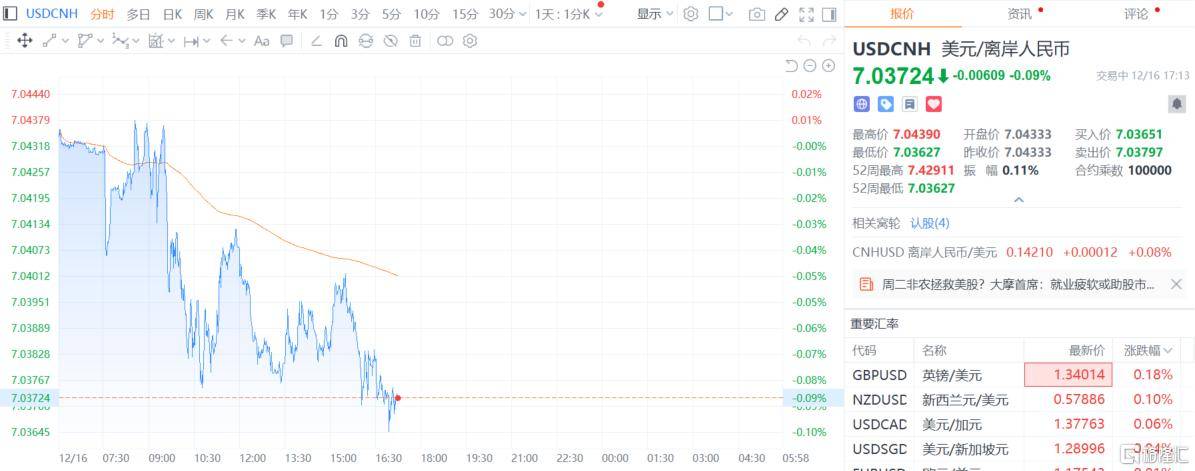
人民币再升值! 今日(12月16日),在岸、离岸人民币对美元汇率再次走强。 离岸人民币对美元汇率再次击穿7.04,盘中一度升至7.03627,创2024年10月以来新高,年内累计升4%;在岸人民币对美元汇率盘中最高升至7.0472,亦创 下2024年10月以来新高,年内累计升3.5%。 对于近期人民币对美元汇率连续上行,业内人士表示,是内外因素共振、市场与政策协同作用的结果,有三大推动因素。 一是美元走弱提供了外部窗口。美联储货币政策转向是关键外部因素。随着美国就业数据降温,美联储降息信号由模糊不定、争议分歧大逐渐变为大概率降 息,导致美元指数整体波动下降,如11月下降约0.3%,为非美货币创造了升值空间。 二是年底临近,企业结汇需求增加,也会带动人民币季节性走强;特别是近期人民币持续走强后,前期累积的结汇需求有可能在加速释放。 三是资产重估与信心修复,国内资产吸引力提升。首先,今年以来中国A股的强劲表现,吸引了全球资本流入。外资增配中国股票等资产,直接增加了对人 民币的需求。其次,中国出口展现出超预期的韧性,贸易顺差为汇率提供了基本面支撑。同时,中美经贸关系趋于稳定,缓解了市场的紧张情绪,市场对国 内经济的 ...


亚太股市集体飘绿,北证50逆势涨超1%,金饰价格终结5连涨,人民币持续升值
21世纪经济报道· 2025-12-16 07:28
记者丨曾静娇 编辑丨刘雪莹 12月16日, 亚太主要股指延续跌势 ,日经225指数收跌超1%,韩国KOSPI指数收跌超2%,A股三大指数集 体飘绿,港股午后跌幅进一步扩大;黄金白银盘中跳水,现货铂金逆势飘红;人民币持续升值。 盘面上, 商业航天反复活跃 ,华菱线缆4连板,航天电子、通宇通讯2连板。 零售概念全天强势 ,百大集团 4连板,红旗连锁、广百股份双双2连板。智能驾驶概念逆势拉升,浙江世宝、索菱股份等股涨停。 【详情】 下跌方面,影视院线概念集体大跌,博纳影业2连跌停。 | 流版 | 成分 | 异动 | 资讯 | 相关基金 | 月度收益 | | --- | --- | --- | --- | --- | --- | | 名称 | | 现价 | | 涨跌幅 | 涨速 三 | | 天力复合 920576.BJ | | 81.88 | | 18.49% | 0.79% | | 云星宇 920806.BJ | | 14.89 | | 14.36% | 0.54% | | 机科股份 920579.BJ | | 25.61 | | 6.89% | 0.23% | | 奧迪威 920491.BJ | | 28.53 ...

美元兑人民币逼近7!历史上人民币升值周期股市大多上涨
Mei Ri Jing Ji Xin Wen· 2025-12-16 06:37
市场和行业上,港股相对A股弹性更大,成长相对涨幅更高。 华夏基金也从"日历效应"维度分析,恒生科技每年一季度的表现普遍较好,当前下跌风险提前释放后, 给了岁末年初重新入场、布局2026年的契机。 港股成长风格相关ETF: 12月16日,离岸人民币兑美元汇率一度升至7.04,创2024年10月4日以来新高;在岸人民币兑美元汇率 盘中最高升至7.04,创2024年10月8日以来新高。 与人民币升值形成鲜明对比的是,近期港股市场连续调整,调整幅度也大于A股。综合研究机构观点, 外部流动性的压制或是港股调整的主要原因。 一方面,虽然美联储如期降息25bp,但提前开启扩表,美债收益率近期呈现上升迹象;另一方面,市场 担忧日本央行将于12月19日重启加息周期,配合大规模经济刺激计划,进一步推升日债收益率并引发资 本回流担忧。 不过,华泰证券此前指出:自汇改以来,人民币经历了9轮升值周期,期间股市大多上涨。 恒生科技指数ETF(513180.SH)跟踪恒生科技指数规模最大的ETF 恒生互联网ETF(513330.SH)持有人户数最多的港股类ETF 港股通科技ETF基金(159101.SZ)覆盖最广泛的港股科技细分行业,包含 ...
人民币一夜飙破7.05!创14个月最高,换1万美元立省3000,现在上车晚不晚?
Sou Hu Cai Jing· 2025-12-16 06:07
Core Viewpoint - The recent appreciation of the Renminbi (RMB) against the US dollar is driven by a combination of factors including the Federal Reserve's interest rate cuts, strong export performance, and policy measures aimed at stabilizing exchange rate expectations. Group 1: Drivers of RMB Appreciation - The Federal Reserve's recent interest rate cut of 25 basis points has led to a decline in the US dollar index, which fell below 100, marking a new low since September 2024 [3]. - China's export data exceeded expectations, with a year-on-year growth of 5.7% in November, resulting in a trade surplus of $111.68 billion, which has increased demand for RMB as companies engage in year-end currency settlement [3][4]. - The People's Bank of China (PBOC) has intervened by adjusting the central parity rate to manage expectations and prevent one-sided appreciation, while state-owned banks have purchased US dollars to balance market supply and demand [4]. Group 2: Future Exchange Rate Outlook - In the short term (1-3 months), the RMB is expected to experience two-way fluctuations, with a low probability of breaking below 7.0, supported by year-end corporate settlements and continued expectations of Fed rate cuts [5]. - However, the official signals to stabilize the exchange rate and potential rebounds in the US dollar index may act as suppressive factors [5]. - Institutions like CITIC Securities predict that the RMB will struggle to break 7.0 for the year, while Morgan Stanley forecasts a potential rise to 6.7-6.95 by the end of 2026 [6]. Group 3: Currency Exchange Strategies - For individuals with rigid currency needs, a phased approach to currency exchange is recommended to mitigate risks associated with exchange rate fluctuations [8]. - Investors are advised to use hedging strategies such as forward contracts to lock in future exchange rates, particularly for those with stable dollar income [8]. - Dollar holders should consider diversifying their asset allocation by converting some dollars into Hong Kong stocks, US stocks, or gold ETFs to reduce currency risk [10].

人民币持续升值,港股为何创下本轮调整新低?
第一财经· 2025-12-16 05:53
2025.12. 16 本文字数:1165,阅读时长大约2分钟 作者 | 第一财经 李隽 人民币持续升值,美元兑人民币已经逼近7的整数关口,然而以前人民币升值最受益的港股却出现了 持续调整。 12月16日上午,恒生指数再跌1.91%,成交1071亿港元,中午报收25139点,第四季度累计调整超 过2000点,也跌破了10月和11月的低点,创出本轮调整新低。 对于背后原因,有业内人士分析认为,2025年港股一度涨幅比较高,本来就有一定调整需求;另一 方面,受南向资金调仓、美联储"鹰派降息"后美债利率回升、地缘政治等因素影响,加上12月19日 日本央行是否加息依然不确定,有投资者担忧市场受到冲击。 12月16日,离岸美元兑人民币汇率破7.04,最新报7.038。 光大证券国际策略师伍礼贤表示,港股近期调整主要源于年内累计涨幅较大,临近年末资金入场意愿 不足。此外,地缘政治因素对市场情绪形成压制,市场对明年全球经济前景有一定分歧。技术面来 看,投资者要关注25000点整数关口支撑,若失守或进一步下探;日本央行的加息预期,会影响日元 套利交易平仓,科技股走弱等,都对区域市场形成压力。 博大资本国际行政总裁温天纳指出, ...