中等收入陷阱

Search documents
观点丨刘青:中国式现代化进程中的开放与技术进步
Sou Hu Cai Jing· 2025-10-13 08:53
Core Viewpoint - The essence of economic development lies in technological progress and the development of new productive forces, emphasizing that "good openness" should promote technological advancement rather than merely static welfare improvements from resource reallocation [1]. Group 1: Mechanisms of Open Economy Promoting Technological Progress - International trade provides markets for technology and products, facilitating the realization of innovation benefits [2]. - Product trade leads to cross-industry technology spillovers and collaborative innovation, enhancing technological progress in trading countries [2]. - Multinational corporations contribute to technology transfer and spillover effects in host countries through investments and R&D centers [2]. - Increased market competition from economic openness can drive firms to innovate and advance technology [2]. - The flow of international capital and talent can alleviate financing and human capital constraints, enhancing knowledge dissemination and innovation [2]. Group 2: Principles of "Technology Progress-Oriented Openness" - "Technology progress-oriented openness" aims for dynamic and sustainable growth benefits, contrasting with traditional theories that focus on static welfare improvements [4]. - Technological progress can manifest in various dimensions, including efficiency improvements, new product development, and organizational restructuring [5]. - Sources of technological progress include both external (international diffusion, technology transfer) and internal (independent innovation) factors, necessitating a comprehensive approach to openness [5]. - Different countries at various development stages should focus on different aspects of openness to optimize technological progress [6]. - Continuous investment in human capital and R&D is crucial for leveraging external technology sources and fostering independent innovation [6]. Group 3: Balancing Openness and Technological Progress - Institutional mechanisms are needed to incentivize ongoing technological and industrial upgrades, preventing stagnation after initial static gains [7]. - There can be conflicts between expanding openness and promoting domestic technological progress, requiring careful policy design to balance both [7]. - The goal of technological progress is to achieve industrial upgrades and further innovation, rather than self-sufficiency or reduced specialization [8]. Group 4: Current Context and Future Directions - China's economic development has reached a new critical stage, necessitating a focus on seizing opportunities from the current technological revolution [9]. - High-quality development is essential, with new productive forces driven by innovation being a key focus [9]. - The relationship between openness and technological progress must be understood within the context of globalization to effectively promote innovation [10]. - The book "Technology Progress-Oriented Openness" explores the impact of openness on technological progress and new productive forces in the context of China's modernization [11].


世界银行呼吁泰国进行经济结构调整
Shang Wu Bu Wang Zhan· 2025-10-11 16:29
Core Insights - The World Bank urges Thailand to adopt new development strategies to escape the middle-income trap and achieve high-income status by 2037 [1][2] - Thailand's traditional economic growth engines have stagnated for over a decade, leading to a GDP growth of only about 2% in 2025, which is below the required annual growth rate of 5% [1][2] Development Strategies - The World Bank recommends that Thailand leverage its strategic location in Southeast Asia, robust digital infrastructure, and international reputation for high-quality products [2] - Five key development areas are suggested: digital services, advanced green manufacturing, agricultural industry, sustainable and health tourism, and creative economy [2] Competitiveness Enhancement - Thailand must enhance three types of competitiveness: green competitiveness, digital competitiveness, and service competitiveness [2] - The country should capitalize on global trends by implementing green low-carbon policies, achieving digital transformation, establishing itself as the "world kitchen," leading in digital services, and developing high-value-added service industries [2] Upcoming Events - Thailand will host the International Monetary Fund and World Bank Group's annual meeting in October 2026, the first time since 1991, attracting global investors and large enterprises to discuss challenges and opportunities [2]
郑永年:未来十年大湾区有望成为世界最大经济中心
Zhong Guo Xin Wen Wang· 2025-09-29 10:19
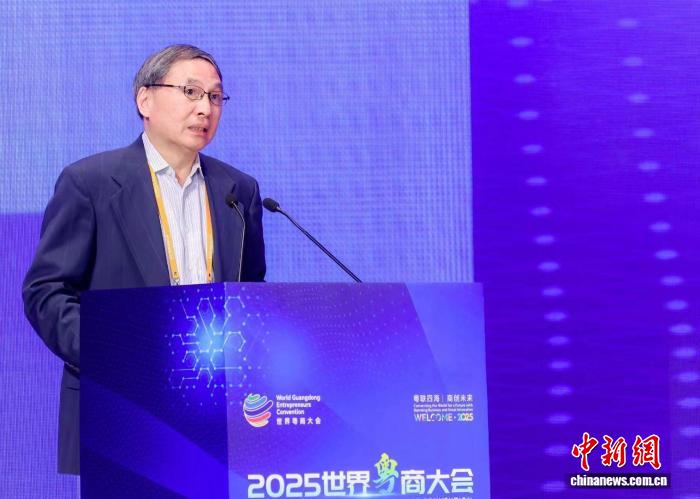
郑永年:未来十年大湾区有望成为世界最大经济中心 中新网广州9月29日电 (记者 孙秋霞 郭军)2025世界粤商大会29日在广州开幕,香港中文大学(深圳)公共 政策学院院长郑永年在主旨演讲时表示,未来十年内,粤港澳大湾区有望成为世界上最大经济中心和科 创中心。 图为香港中文大学(深圳)公共政策学院院长郑永年。广东省工商联供图 郑永年指出,他的研究团队通过多年研究提出科技进步的"三驾马车":一是拥有大批具有基础科研能力 的大学或机构,二是拥有大批有能力把基础科研转化成应用技术的企业,三是需要强大的金融服 务。"我们观察到粤港澳大湾区具备这三个条件。"郑永年称。 郑永年表示,粤港澳大湾区的融合发展加上体制机制改革,预计在未来十年内,大湾区有望成为世界最 大的经济中心和科创中心,广大粤商一定要抓住这个发展大机遇。(完) 来源:中国新闻网 编辑:王永乐 广告等商务合作,请点击这里 本文为转载内容,授权事宜请联系原著作权人 中新经纬版权所有,未经书面授权,任何单位及个人不得转载、摘编或以其它方式使用。 关注中新经纬微信公众号(微信搜索"中新经纬"或"jwview"),看更多精彩财经资讯。 郑永年表示,从历史上看,第二次世 ...
被美国人连续收割三次?阿根廷是如何从发达国家沦落的
Sou Hu Cai Jing· 2025-09-29 05:31
Core Insights - Argentina, once one of the wealthiest countries in the world, is now trapped in a middle-income trap with rampant inflation, high unemployment, and rapid currency devaluation [4] - The Argentine central bank raised the benchmark interest rate by 950 basis points to a historic high of 69.5%, but due to hyperinflation, the real purchasing power of savings is significantly diminished [4][6] - The economic crisis in Argentina can be traced back to the 1970s when the government heavily borrowed, leading to a debt crisis exacerbated by the U.S. Federal Reserve's tightening policies in the early 1980s [4][6] Historical Context - In the 1970s, Argentina's external debt surged from $25 billion to $75 billion within four years, primarily used for subsidies and infrastructure with little return on investment [4] - The 1982 debt default led to the intervention of the International Monetary Fund (IMF), which imposed austerity measures that facilitated the extraction of Argentine assets by Wall Street [4][6] - The 1989 economic reforms under President Menem, which pegged the peso to the dollar, initially reduced inflation but ignored the cyclical nature of the dollar [4][6] Recent Developments - By 1999, Argentina's unemployment rate reached 18%, and government debt ballooned to $150 billion, culminating in a second debt default in 2002 [6] - The government’s decision to lift foreign exchange controls post-2015 has led to an annual inflation rate of 80%, with the high benchmark interest rate seen as a deceptive measure [6] - Argentina's decline from a prosperous nation to a serial defaulter serves as a cautionary tale for other developing countries regarding the fragility of economic sovereignty under the dollar-dominated system [6]

21书评︱后发经济体弯道超车的三条路径
2 1 Shi Ji Jing Ji Bao Dao· 2025-09-24 04:57
Group 1 - The core argument of the article emphasizes the challenges faced by latecomer economies in achieving leapfrog development, highlighting the need for innovative strategies to overcome obstacles such as capability failure and scale failure [2][4][6] - The author identifies three viable "bends" or strategies for latecomer economies to achieve leapfrog development, which include promoting imitation innovation under relaxed intellectual property protection, engaging with global value chains, and focusing on short-cycle high-tech sectors before transitioning to long-cycle industries [4][5][6] - The concept of "crossing over" is defined as the final stage of catching up, allowing latecomer economies to bypass existing intellectual property and enter new technological fields, which can be achieved through both inter-industry and intra-industry transitions [6][7] Group 2 - The article discusses the importance of a comprehensive theory of economic catch-up that integrates the sequence of "late entry → bend strategy → leapfrog development," which is crucial for overcoming the identified failures and barriers [7] - The author presents three paradoxes that underpin the catch-up theory: "different paths lead to the same goal," "bends are faster than straight roads," and "only well-prepared firms can attempt to leap," emphasizing the need for unique strategies to surpass leading economies [8]

财新周刊-第34期2025
2025-09-06 07:23
Summary of Key Points from Conference Call Industry or Company Involved - The discussion primarily revolves around the **Chinese consumer market** and **Vietnamese manufacturing sector**, particularly focusing on the implications of policies aimed at boosting consumption and the migration of Chinese companies to Vietnam for manufacturing. Core Points and Arguments 1. **Government Policies to Boost Consumption** The Chinese government is implementing policies to stimulate consumption, including a 1% fiscal subsidy for personal consumption loans starting September 1, 2023, aimed at enhancing domestic demand and supporting economic recovery [3][4][5] 2. **Focus on Service Consumption** Service consumption is becoming a significant part of household spending, contributing 63% to the growth of consumer spending in 2024. The government has introduced 20 key tasks to promote high-quality service consumption [6][7] 3. **Consumer Loan Subsidies** The introduction of loan subsidies for service sectors such as dining, health, and tourism is expected to further enhance service consumption, which is closely linked to improving living standards [7][8] 4. **Income as a Driver of Consumption** Disposable income is crucial for sustaining consumer spending. Government subsidies and welfare programs are designed to increase disposable income and consumer confidence, thereby promoting consumption [8][9] 5. **Challenges in Vietnam's Manufacturing Sector** Vietnamese manufacturing is experiencing rising costs due to an influx of Chinese companies establishing operations there. The average monthly wage in Vietnam is now comparable to that in some Chinese provinces, leading to concerns about the sustainability of Vietnam's manufacturing cost advantages [17][25][26] 6. **Supply Chain Dynamics** Many Chinese companies are relocating to Vietnam to avoid tariffs and take advantage of lower production costs. However, the reliance on Chinese supply chains remains high, with many components still imported from China [21][32] 7. **Rising Land and Labor Costs** The rapid increase in land prices and labor costs in Vietnam is raising concerns about the long-term viability of manufacturing there. Companies that do not own land are facing significant rental costs, which can account for a third of their operating expenses [24][25] 8. **Shift in Workforce Dynamics** The labor market in Vietnam is tightening, with companies struggling to attract and retain workers. This has led to a trend of automation as companies seek to reduce reliance on human labor [25][28] 9. **Vietnam's Economic Growth Potential** Vietnam's population and GDP growth present significant opportunities for market expansion. The country is seen as a potential consumer market for Chinese products in the future [38] 10. **Trade Relations and Tariff Implications** The evolving trade relations between the U.S. and Vietnam, including tariffs, are creating uncertainty for companies operating in Vietnam. The U.S. has imposed a 20% tariff on Vietnamese goods, which is still lower than the tariffs on Chinese imports [27][36] Other Important but Possibly Overlooked Content - The interdependence of income, employment, and consumption is emphasized, highlighting the need for continuous improvement in employment conditions to sustain consumer spending [9] - The potential risks of Vietnam falling into a "middle-income trap" due to rising costs and insufficient high-end manufacturing capabilities are noted [35] - The cultural differences in workforce management between Chinese and Vietnamese workers are discussed, indicating that management styles need to adapt to local expectations for better employee engagement [28][30] This summary encapsulates the key insights from the conference call, focusing on the implications of government policies, consumer behavior, and the evolving landscape of manufacturing in Vietnam.

拐点:新生代正在推动中国从“储蓄型”进入“消费型”社会 | 泉果探照灯
Sou Hu Cai Jing· 2025-09-01 05:56
Group 1 - The global perception of China is improving, especially among high-income countries, with positive comments reaching a six-year high [3] - The younger generation under 35 in various countries, particularly in the U.S., is developing a more favorable view of China [3] - The rise of cultural influencers, such as the rapper "IShowSpeed," is reshaping Western youth's perception of China, showcasing its blend of ancient culture and futuristic technology [3][5] Group 2 - The economic impact of the younger generation's consumption habits is significant, indicating a shift from savings to consumption in China's economic structure [6][14] - The aging population is not necessarily a negative factor for economic growth; studies show that aging countries can become wealthier by adopting automation and new technologies [8][9] - The key to addressing challenges posed by aging is to focus on developing suitable skills and matching them with job opportunities [10][11] Group 3 - The younger generation's consumption culture is distinct from previous generations, characterized by a willingness to spend on experiences and a blend of local and Western influences [12][13] - The shift in consumption patterns is creating new economic drivers, emphasizing the importance of understanding and capitalizing on these trends [16][33] - The high savings rate in China, while often viewed negatively, has its advantages, allowing the country to avoid reliance on foreign debt for growth [18][19] Group 4 - China's unique growth model, which emphasizes efficiency and productivity improvements, challenges traditional Western economic theories [18][19] - The concept of "total factor productivity" (TFP) is crucial for understanding China's economic growth, as it highlights the importance of efficiency over mere capital investment [20][24] - China's ability to navigate the "middle-income trap" is supported by its advancements in technology and productivity, allowing for continued growth despite rising wages [26][33] Group 5 - The competitive environment in China fosters a culture of innovation and resilience, particularly in response to external pressures such as trade restrictions [27][28] - The educational system in China promotes a strong work ethic and competition, which drives individuals to strive for success [31][33] - The long-term cultural values in China, such as patience and strategic planning, complement the fast-paced competitive landscape, creating a unique economic environment [33]

Robotaxi的“新游戏”已然启幕
Hua Er Jie Jian Wen· 2025-08-28 12:01
Core Insights - The emergence of Robotaxi in Wuhan signifies a transformative shift in the autonomous driving industry, moving from a costly venture to a potentially profitable business model [2][3] - Baidu's announcement of achieving profitability on a per-vehicle basis in Wuhan marks a significant milestone for the industry, indicating a transition from a long history of losses to a viable economic model [2][3] Industry Developments - The cost of operating an autonomous vehicle is projected to drop below 300,000 RMB by the second half of 2025, with half of this cost attributed to the vehicle itself and the other half to the autonomous driving suite [3] - The price of key sensors, such as LiDAR, has decreased significantly, from around 5,000 RMB in 2022 to approximately 1,300 RMB today, facilitating the profitability of Robotaxi operations [3] - Major players in the industry are planning to scale their fleets to over a thousand vehicles by the end of 2025, indicating a push towards mass deployment [3] Market Potential - UBS forecasts that by the early 2030s, first-tier cities in China could have a fleet of 300,000 Robotaxis, with national demand potentially reaching 4 million vehicles, creating a new industry worth approximately $183 billion [4] - The competition in the Robotaxi sector is not limited to China, as global tech giants like Waymo, Cruise, and Tesla are also vying for dominance, indicating a broader strategic contest over future urban infrastructure and transportation standards [7] Data and Policy Support - The success of Robotaxi is heavily reliant on data accumulation, with China having a unique advantage due to its early commercialization efforts, allowing for rapid data collection and model optimization [4][5] - Recent regulatory changes, including new laws in Beijing and mutual recognition of testing permits in cities like Shenzhen and Guangzhou, have reduced testing costs and time for companies [5][6] - The Chinese government is balancing the promotion of new technologies with the need to collaborate with traditional taxi companies, creating a conducive environment for the growth of Robotaxi [6] Future Implications - The evolution of Robotaxi is expected to reshape societal structures, as reduced transportation costs and increased automation could redefine urban living and commuting patterns [6][7] - The competition in the Robotaxi space is not just about replacing drivers but also about the broader implications for future city life and transportation systems [6][7]

去印尼造锂电池,先自建港口与机场?
高工锂电· 2025-08-19 11:33
Core Viewpoint - Indonesia's nickel industry is experiencing a profound internal contradiction, with nickel exports surpassing coal for the first time, marking a peak in the country's mineral downstream integration strategy initiated in 2014. However, the world's largest nickel producer, Tsingshan Holding, has paused some nickel smelting lines due to global oversupply and profit pressure, indicating structural risks in Indonesia's nickel-centric industrial strategy [2][3][4][5]. Group 1: Nickel Industry Dynamics - In H1 2025, Indonesia's nickel export value reached $16.5 billion, exceeding coal's $14.4 billion, making nickel the largest export commodity [3]. - The success of Indonesia's nickel industry, driven by a decade-long integration strategy, has led to a saturation point in value growth, prompting the government to accelerate a complex industrial transformation towards a complete new energy industry chain [4][6]. - The government plans to reduce nickel ore production quotas from 272 million tons to 150 million tons by 2025 to stabilize prices and encourage investment in high-value products like nickel hydroxide and nickel sulfate [16]. Group 2: Manufacturing and Economic Transition - Indonesia's manufacturing sector has been underperforming, contributing only 19% to employment in 2023, significantly lower than manufacturing-led countries like Vietnam, raising concerns about falling into a "middle-income trap" [9][10]. - The "Making Indonesia 4.0" strategy aims to increase manufacturing's GDP contribution from under 20% to 25% by 2030, focusing on automotive, electronics, chemicals, textiles, and food and beverage sectors [11]. - The strategy seeks to replicate and upgrade the successful model established in the nickel industry, leveraging Indonesia's resource advantages to attract foreign investment in downstream processing [12][14]. Group 3: Electric Vehicle Market Growth - The electric vehicle market in Indonesia is experiencing explosive growth, with domestic EV sales soaring by 215.2% in H1 2025, and BYD leading with a market share of nearly 39% [23][24]. - The government aims to have 1.3 million electric two-wheelers on the road by 2030, contributing 5-8 GWh of battery demand annually [28]. - The RUPTL plan outlines a target of adding 10.3 GW of battery storage capacity, creating a significant market for energy storage solutions [29]. Group 4: Infrastructure and Investment Challenges - Indonesia's aging infrastructure poses significant challenges, with the national grid unable to effectively absorb renewable energy from remote areas, necessitating the construction of nearly 48,000 kilometers of new transmission lines [37]. - The unique "Indonesian model" requires companies bringing foreign capital to also build infrastructure, leading to high upfront capital expenditures and creating barriers for smaller participants [38]. - The establishment of the INA sovereign wealth fund is seen as a key player in reducing project risks for foreign investments, signaling a shift towards a more favorable financing environment for emerging industries [39]. Group 5: ESG Considerations and Future Outlook - Indonesia's green energy transition heavily relies on high-carbon coal power, raising significant ESG risks that could impact product marketability in regions with strict carbon footprint regulations [46]. - Collaborative projects, such as the one between Greeenme and Vale, aim to establish environmentally friendly nickel processing facilities, aligning with global ESG standards [47]. - Despite challenges, Indonesia is on track to create a complete lithium battery ecosystem, encompassing upstream resource extraction, midstream material refining, and downstream battery manufacturing, positioning itself as a critical player in the global battery industry [40][49].



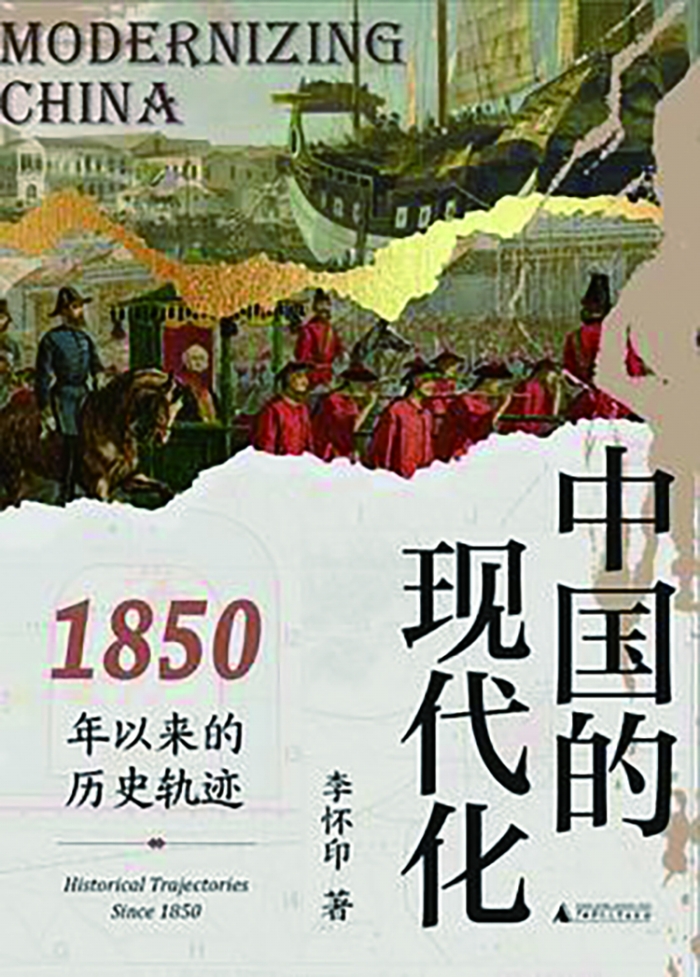
中国现代化的求索之路 ——读《中国的现代化:1850年以来的历史轨迹》
Shang Hai Zheng Quan Bao· 2025-08-17 17:59
Core Viewpoint - The book "China's Modernization: Historical Trajectory Since 1850" by Li Huayin outlines the historical journey of China's modernization, starting from the Opium War in 1842, and categorizes it into five stages: challenge, preparation, initiation, rapid growth, and maturity [4][10]. Group 1: Historical Context - The Qing Dynasty's defeat in the First Opium War marked the beginning of China's modern awakening, with intellectuals like Wei Yuan advocating for learning from the West to strengthen the nation [4][5]. - The closed-door policy of the Ming and Qing dynasties led to a significant disconnection between China and global developments, which was only addressed post-Opium War as some scholars began to establish national industries [5][6]. Group 2: Modernization Definition - Modernization is defined as a comprehensive transformation process encompassing industrialization, urbanization, secularization, and democratization, rather than merely industrialization or globalization [6][8]. - The author emphasizes that high GDP does not equate to modernization, using oil-rich Middle Eastern countries as examples of economic wealth without industrial independence [5][6]. Group 3: Economic Development - Post-1949, China focused on establishing a robust industrial base despite limited fiscal resources, leading to a diverse modern industrial foundation [10][11]. - The introduction of the household responsibility system significantly increased agricultural productivity and released surplus labor, contributing to China's unique labor advantage [11]. Group 4: Future Projections - China's GDP grew from $156 in 1978 to $12,500 in 2021, with a total GDP of $17.7 trillion, positioning it as the second-largest economy globally [12]. - The author predicts that if China maintains a 5% growth rate, per capita GDP could reach around $20,000 by 2035 [12][13]. - The book argues that China's modernization path is distinct from smaller nations, emphasizing the need for self-reliance and the development of high-end industries to avoid the "middle-income trap" [12][13].