供应链能力

Search documents
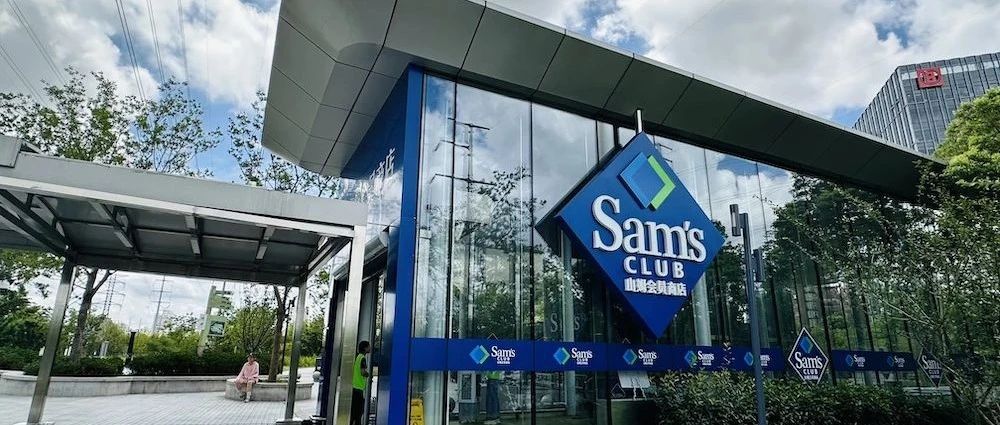
山姆员工表示好丽友、卫龙等大众化商品皆已下架
第一财经· 2025-07-22 12:38
Core Viewpoint - The article discusses the recent controversy surrounding Sam's Club due to the removal of certain popular mass-market products, which has led to customer dissatisfaction. The core issue revolves around the need for unique and high-value products in membership stores to justify membership fees [1][3]. Group 1: Membership Store Dynamics - Membership stores like Sam's Club have gained popularity as consumers seek unique and high-value products, especially after years of homogenized offerings from standard supermarkets and hypermarkets [3]. - Historically, membership stores were not mainstream in China due to low acceptance of paid membership systems, but they have now become favored by consumers due to their distinctive product offerings [3][4]. - Sam's Club previously had around 70% of its products as differentiated non-local items, which attracted many consumers [3]. Group 2: Supply Chain and Competition - Sam's Club and Costco possess strong supply chain capabilities, allowing them to manage a limited SKU count of around 4,000, which is one-third of that of hypermarkets, leading to higher sales efficiency [4]. - The rise in popularity of membership stores has attracted numerous competitors, intensifying the competition for supply chain resources and product differentiation [4][5]. - Many new entrants in the membership store market tend to replicate successful products from established players like Sam's Club and Costco, which dilutes the uniqueness of Sam's offerings [4][5]. Group 3: Product Strategy and Market Adaptation - The removal of mass-market products from Sam's Club is not expected to significantly impact the business, as the overall SKU count remains high and product adjustments are a common practice [6][7]. - The real challenge for membership stores lies in maintaining product differentiation and competing with online retailers for customer attention [7]. - To address these challenges, membership stores need to accelerate the iteration of unique products and enhance their online presence to capture more customers [7].

便利店加速“超市化”
3 6 Ke· 2025-07-15 02:07
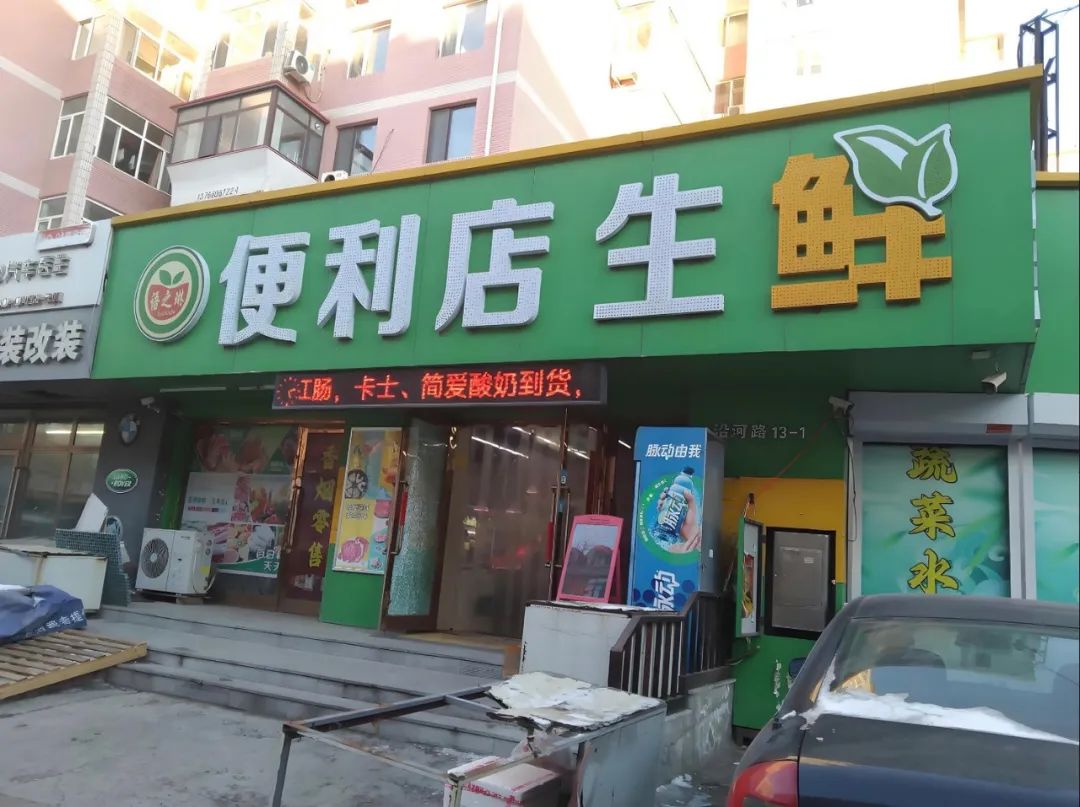
Core Insights - The convenience store industry is undergoing a transformation from being mere "supply stations" to more comprehensive "community supermarkets" as consumer habits shift towards home cooking and diverse shopping needs [1][3][6] Group 1: Industry Trends - Convenience stores are expanding their physical space and product offerings to include fresh produce, frozen foods, and ready-to-eat meals, reflecting a trend towards "supermarketization" [3][5] - The introduction of new store formats, such as the "SIP store" by 7-11 in Japan, showcases a significant increase in store size and SKU variety, with the new store being 1.8 times larger than standard locations and offering 5,300 SKUs [3][11] - Competitors like Lawson and GS25 are also adapting by increasing their fresh and frozen food selections, indicating a broader industry shift towards meeting family-oriented shopping needs [5][11] Group 2: Consumer Behavior - There is a notable change in consumer demand, with shoppers now seeking a wider range of products in a single visit, challenging the traditional convenience store model [7][9] - Consumers are increasingly asking for fresh produce and frozen foods, which puts pressure on smaller stores that previously focused on snacks and beverages [7][9] - The boundaries between convenience stores, supermarkets, and community stores are blurring, as consumers prioritize the ability to fulfill their shopping needs over the specific store type [14][16] Group 3: Operational Challenges - The shift towards larger stores and diverse product offerings is driven by the need to enhance customer spending per visit and improve store efficiency, especially as rental and operational costs rise [9][11] - Supply chain capabilities are becoming a core competitive advantage, enabling larger chains to offer a wider variety of products at competitive prices [18] - Smaller stores face challenges in sourcing fresh products and managing inventory, which can hinder their ability to compete with larger retailers [13][18] Group 4: Competitive Landscape - New retail formats, such as My Basket, are emerging as significant competitors, focusing on low-cost fresh produce and community integration, which can divert traffic from traditional convenience stores [11][13] - The competitive landscape is evolving, with non-traditional competitors posing a growing threat to established convenience store brands [18] - The industry's response to these challenges includes expanding store sizes and enhancing product offerings to retain customer loyalty and market share [19]
康耐特光学(02276):传统业务产品结构改善,智能眼镜配套方案持续落地
Xinda Securities· 2025-07-08 12:14
Investment Rating - The investment rating for 康耐特光学 (2276.HK) is not explicitly stated in the provided content, but the report indicates a positive outlook based on profit growth and market position. Core Viewpoints - The company is expected to achieve a year-on-year growth of at least 30% in net profit for the first half of 2025, with a profit amounting to at least 271 million yuan. The growth rate of profit is anticipated to outperform revenue growth [1]. - 康耐特光学 is a leading player in the global lens market, with expectations for steady growth in standardized lenses and rapid growth in high-refractive and functional lenses, indicating an ongoing optimization of product structure and upward movement in pricing and profitability [1]. - The global smart glasses market is experiencing significant growth, with a projected shipment increase of 42.5% year-on-year in 2025. The company is expected to accelerate partnerships in the smart glasses sector, positioning itself as a core supplier of customized lenses for leading domestic brands [2]. - The company has diversified its overseas market presence, with limited impact from tariffs due to a low revenue share from the U.S. market and a robust supply chain. The Japan project is expected to enhance production capacity significantly [3]. Summary by Relevant Sections Financial Performance - For 2024, total revenue is projected at 2,061 million yuan, with a year-on-year growth rate of 17%. The net profit attributable to the parent company is expected to be 428 million yuan, reflecting a growth rate of 31% [3]. - The company forecasts net profits of 558 million yuan in 2025, 671 million yuan in 2026, and 806 million yuan in 2027, with corresponding P/E ratios of 30.9X, 25.7X, and 21.4X respectively [3]. Market Trends - The smart glasses market is projected to see a shipment of 1,451.8 million units in 2025, with significant contributions from audio and audio-capturing glasses, indicating a robust demand for innovative eyewear solutions [2]. - Major tech companies are launching new products in the smart glasses space, which is expected to further stimulate market growth and opportunities for 康耐特光学 [2]. Operational Insights - The company is actively expanding its client base and enhancing its supply chain capabilities, which is expected to lead to a rapid increase in collaborative projects in the smart glasses sector [2]. - The anticipated production increase from the Japan project is expected to cover the North American market effectively, enhancing the company's competitive position [3].
董宇辉新账号上线,主播格局又变,直播电商战场转向实体经济
Nan Fang Du Shi Bao· 2025-07-07 06:55
Group 1 - The core viewpoint of the articles indicates that the MCN industry is shifting from a traffic-driven economy to a supply chain-driven economy, highlighting the importance of supply chain capabilities for survival and competitiveness [1][3][4] - Major MCNs are increasingly focusing on building their own brands and reducing reliance on top influencers, as seen with companies like Oriental Selection and Yao Wang [4][5][6] - The trend of relocating headquarters to areas with strong supply chain capabilities, such as the return of Xin Xuan Group to Guangzhou, emphasizes the need for proximity to manufacturing and logistics [2][3] Group 2 - The establishment of new brands, such as the sanitary napkin brand launched by Yao Wang, reflects a strategic move towards integrating supply chain management with brand development [4][5] - The introduction of self-operated apps and private domain e-commerce strategies by various MCNs indicates a shift towards direct consumer engagement and brand loyalty [17][18][19] - The exploration of new markets, including AI integration and overseas expansion, represents a significant opportunity for growth in the evolving landscape of the live commerce industry [20][21][22][23]

柠檬涨价,奶茶店主慌了?我发现真相并非如此
3 6 Ke· 2025-06-29 04:03
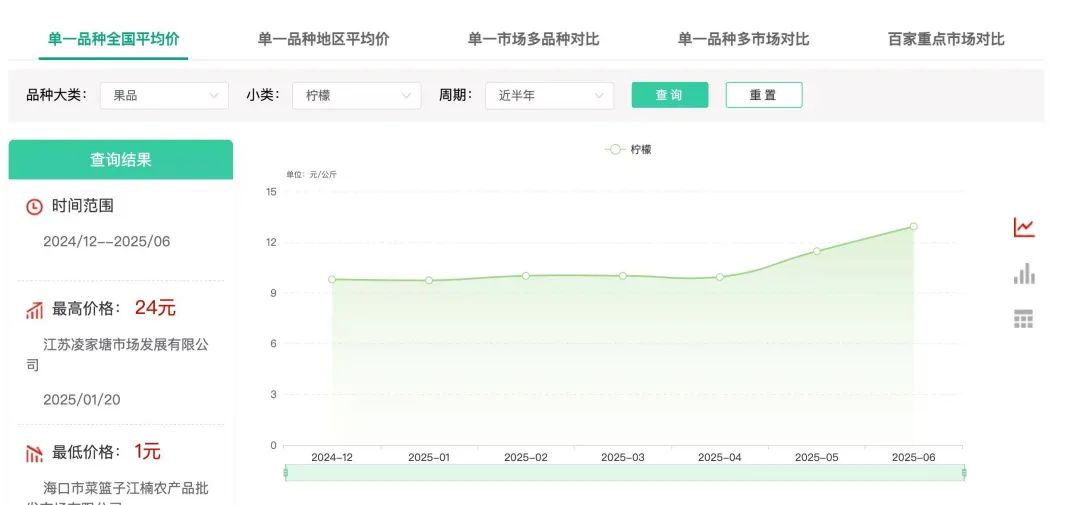
Core Viewpoint - The rising lemon prices are causing concern in the tea beverage industry, which heavily relies on lemons as a key ingredient for summer drinks, leading to questions about profitability and supply chain stability [1][5]. Price Trends - Lemon prices have increased from an average of 9.94 yuan per kilogram in April to 12.92 yuan in June, marking a 30% rise [2]. - Extreme price claims, such as lemons selling for 30 yuan each, are largely exaggerated and do not reflect the overall market situation [2]. Supply Chain Factors - The price increase is attributed to multiple factors, including reduced production due to drought conditions in key growing regions and export disruptions from traditional suppliers like Turkey [2]. - Major tea brands, such as Mixue and others, are heavily investing in lemon-based products, indicating a strong demand despite rising costs [4]. Impact on Profitability - The cost increase of lemons is manageable within the overall cost structure of tea beverages, as the impact on the total cost of a cup of lemon water remains relatively low [8][10]. - Even with lemons priced at 15 yuan per kilogram, the overall profitability of lemon drinks is not severely threatened due to the inclusion of other ingredients and the strategic pricing of beverages [8][10]. Supply Chain Resilience - Companies with established supply chains, like Mixue, are less affected by price fluctuations due to their direct procurement strategies and long-term contracts with suppliers [12][15]. - Mixue's procurement practices allow it to maintain lower costs compared to market prices, which helps in keeping consumer prices stable [11][15]. Agricultural Innovations - The modernization of agricultural practices, such as the introduction of advanced irrigation and monitoring systems, has improved the efficiency and yield of lemon production, further supporting supply chain stability [17]. - These innovations contribute to a significant reduction in production costs, enhancing the competitive edge of companies that adopt them [17][18]. Industry Outlook - The lemon price surge highlights the importance of supply chain capabilities in the tea beverage industry, suggesting that companies with robust supply chains will be better positioned to handle market volatility [12][18]. - The ongoing trend of introducing lemon-based products reflects a broader strategy to capitalize on the growing health beverage market, benefiting both consumers and the lemon industry in the long run [18].
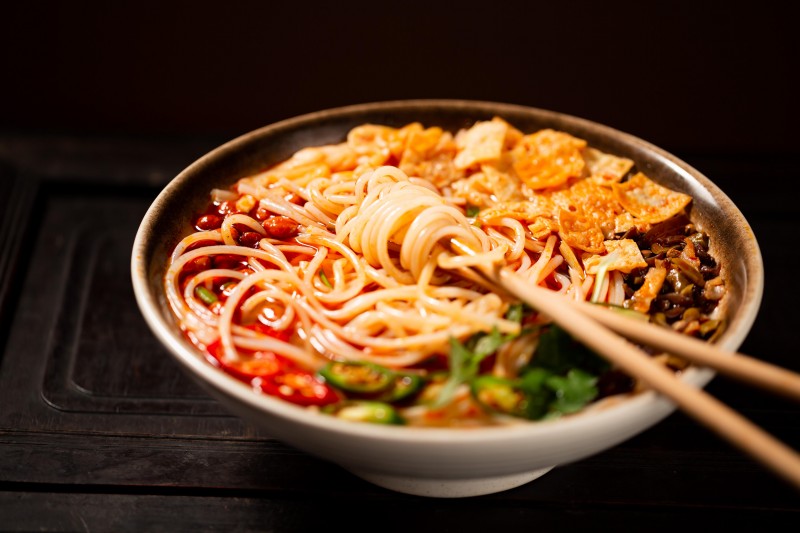
千亿米粉赛道加速整合 微念集团日均出货超百吨成“米粉王”
Cai Fu Zai Xian· 2025-06-24 03:37
Industry Overview - The rice noodle industry is experiencing a growth phase, with over 300,000 rice noodle shops in China by April 2024 and a market size exceeding 70 billion yuan in 2023 [1][3] - The industry is characterized by a fragmented competitive market, with 77.7% of rice noodle brands having 10 or fewer stores, indicating a diverse range of standards, flavors, and quality [3] Key Players - Micro念 Group, known as the "Rice Noodle King," leads the market with an average daily shipment of over 100 tons, primarily focusing on the production of snail rice noodles [3][4] - Micro念 operates several brands, including the instant food brand Li Ziqi and the rice noodle supply chain service brand Xingnong Weinian, providing bulk raw materials to offline outlets [3] Industry Standards - The Ministry of Industry and Information Technology approved the highest industry standards for rice noodles, which will be implemented on May 1, 2026, marking a significant step towards standardization and scale in the local specialty rice noodle industry [4] - The new standards include water-boiled rice noodles, filling a gap in the industry and promoting the development of local specialty rice noodles [4] Market Dynamics - The continuous improvement of industry standards is expected to accelerate a new round of market reshuffling, with supply chain and production technology becoming key competitive factors [4][5] - The ability of leading companies like Micro念 to maintain stable product quality and robust supply chains will be crucial for building competitive advantages in the market [5]
京东集团:第一季度收入3011亿元
第一财经· 2025-05-13 10:53
Core Viewpoint - JD Group reported strong performance in Q1 2025, with revenue and profit growth driven by improved consumer sentiment and enhanced supply chain capabilities [2] Group 1: Financial Performance - In Q1 2025, JD Group's revenue reached 301.1 billion yuan, a year-on-year increase of 15.8% [1] - Net profit attributable to ordinary shareholders was 10.9 billion yuan, up from 7.1 billion yuan in the same period last year [1] - Product revenue increased by 16.2%, while service revenue rose by 14% compared to Q1 2024 [1] Group 2: User Growth - The number of active users in Q1 showed double-digit year-on-year growth for six consecutive quarters, exceeding 20% [1] - The number of transactions and order volume from third-party merchants also maintained double-digit year-on-year growth [1] Group 3: Expenditure - Marketing expenses rose from 9.3 billion yuan in Q1 2024 to 10.5 billion yuan in Q1 2025, an increase of 13.9% [1] - Marketing expenses accounted for 3.5% of revenue in Q1 2025, slightly down from 3.6% in Q1 2024 [1] - R&D expenses increased from 4 billion yuan in Q1 2024 to 4.6 billion yuan in Q1 2025, a 14.6% increase [1] - R&D expenses represented 1.5% of revenue in Q1 2025, down from 1.6% in Q1 2024 [1]
小商品城:全球数贸中心计划于10月实现市场板块开业
news flash· 2025-05-13 10:30
小商品城(600415.SH)发布投资者关系活动记录表,2025年一季度义支付平台跨境支付GMV为12.02亿美 金,同比增长40%以上,整体增长趋势良好。2025年公司将重点推进全球数贸中心建设,计划于10月实 现市场板块开业,为强化数字化履约与供应链能力,公司将加速Chinagoods平台智能化升级,AI应用覆 盖商家超3万户,通过"义支付"平台实现跨境支付60亿美元。 ...

2025 CHINASHOP 「野性消费」新食饮闭门论坛
Sou Hu Cai Jing· 2025-05-13 07:26
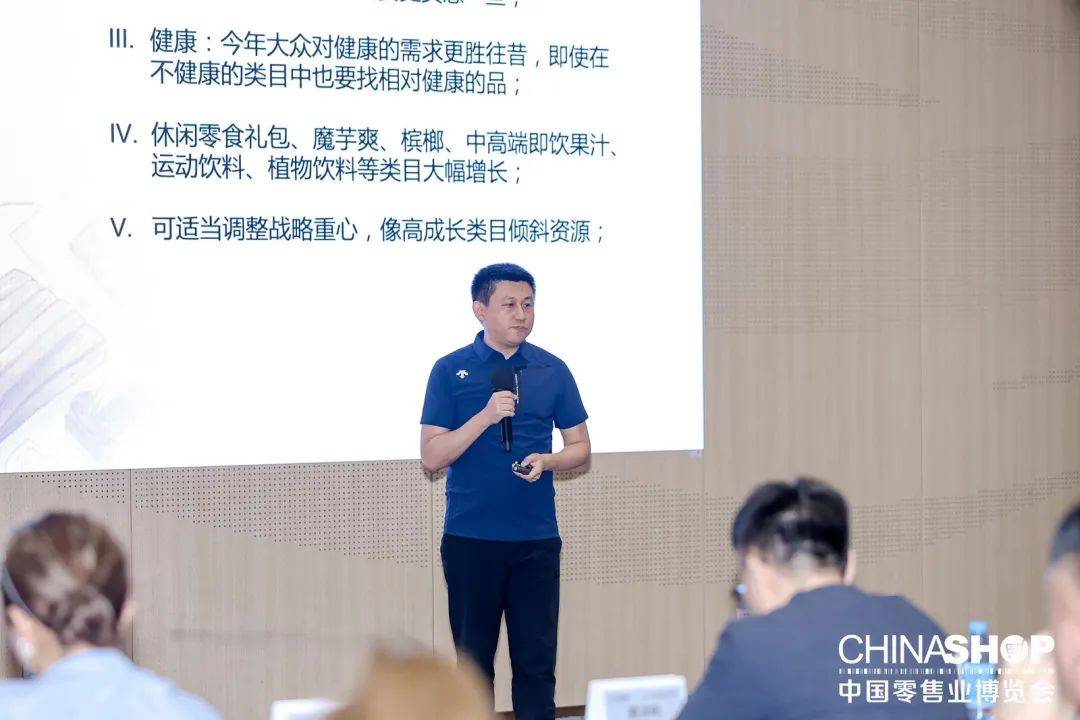
Core Insights - The article discusses the evolving consumer demand in the food and beverage industry, emphasizing the importance of emotional value and the shift towards "wild consumption" as a response to changing consumer preferences [2][3][23]. Group 1: Industry Trends - The food and beverage industry is facing challenges such as declining consumer confidence and falling sales in offline formats, yet certain segments like healthy snacks are experiencing growth [3][5]. - Health trends are prominent, with non-fried snack categories like rice cakes gaining popularity, while traditional puffed snacks decline [3][5]. - The beverage sector is also shifting towards health and functionality, with significant growth in high-end health products and functional drinks like electrolyte water [5][9]. Group 2: Supply Chain Importance - The competition in the food and beverage sector is increasingly centered around supply chain efficiency rather than just product innovation [7][9]. - Companies like Mixue Ice City demonstrate the critical role of a robust global supply chain in achieving cost-effective, high-quality products [7][9]. - The future of competition will focus on "technology + green" as key drivers for supply chain upgrades, emphasizing the need for brands to transition from marketing-driven to supply chain-driven models [9]. Group 3: New Retail Trends - Discount retail channels are emerging as a new growth engine in the food and beverage industry, particularly in lower-tier cities where consumers seek high-quality products at lower prices [11][13]. - The penetration rate of discount retail in China is only 3.8%, indicating significant growth potential compared to the global average of 12.6% [13]. - Young consumers are reshaping retail logic with their desire for high cost-performance products, leading to a shift in how brands approach consumer engagement [11][13]. Group 4: Brand Innovation and Strategy - Brands like Lebai and Shenghetang are focusing on health-oriented innovations, such as using rare sugars in their products to meet consumer demand for healthier options [15][19]. - The concept of "long-termism" is emphasized, where brands aim for sustainable growth through continuous innovation rather than short-term trends [15][19]. - Companies are encouraged to leverage cultural elements and traditional products to enhance their global competitiveness, as seen with Shenghetang's focus on traditional Chinese herbal products [19][21]. Group 5: Consumer Engagement and Emotional Value - Brands are urged to shift from traditional competition based on product features to creating emotional value for consumers [23][27]. - The focus on emotional engagement is seen as essential for brands to differentiate themselves in a crowded market, with successful examples highlighting the importance of understanding consumer needs [23][27]. - The discussion emphasizes that the future of competition will revolve around brands that can effectively connect with consumers on an emotional level [23][27].