
供给侧结构性改革

Search documents
提振内需要多维发力久久为功
Zheng Quan Ri Bao· 2026-01-20 16:18
Core Viewpoint - The Chinese government aims to strengthen domestic demand by focusing macroeconomic policies on enhancing the domestic circulation and expanding domestic demand [1] Group 1: Strengthening Consumer Capacity - The foundation for boosting domestic demand lies in solidifying the "capacity base" for consumer spending, which is driven by real income growth and improved social security [3] - The 2025 Central Economic Work Conference emphasizes the need to implement a plan for increasing urban and rural residents' income, which will enhance consumer capacity [3] - To effectively implement the income increase plan, it is essential to stabilize employment, optimize income distribution, and reform the income distribution system to narrow income gaps [3] Group 2: Supply-Demand Alignment - Achieving precise alignment between supply and demand is crucial for boosting domestic demand, focusing on supply-side structural reforms to match high-quality supply with consumption upgrades [4] - In the goods consumption sector, companies are encouraged to increase innovation and shift from "scale expansion" to "quality enhancement" to meet personalized and green consumption demands [4] - In the service consumption sector, breaking down barriers in areas like culture, tourism, and healthcare is necessary, alongside leveraging technology for digital upgrades in services [4] Group 3: Dual Empowerment of Consumption and Investment - A symbiotic relationship between consumption and investment is essential for a smooth and sustainable domestic demand cycle, where consumption drives investment and investment solidifies consumption [5] - Directing funds towards major technological infrastructure and urban renewal can enhance the hardware support for consumption upgrades [5] - Encouraging private investment in sectors like artificial intelligence and green energy is vital for expanding domestic demand [5] Conclusion - Focusing on people's livelihoods and high-quality development is key to unlocking consumer potential and ensuring stable economic growth in China [6]
市监总局:我国检测机构确立“四字”发展趋势
仪器信息网· 2026-01-20 09:06
Core Viewpoint - The article highlights the trend of "reducing quantity and increasing quality" in China's inspection and testing industry, emphasizing the need for industry consolidation and quality improvement [1][2]. Group 1: Industry Trends - The State Administration for Market Regulation indicates that large-scale inspection and testing institutions, which account for approximately 15% of the total number, contribute over 80% of the industry's revenue, showcasing a clear trend towards industry concentration [1]. - A dynamic management approach of "entry and exit" is being implemented, which includes a three-year action plan for quality improvement and optimization of national quality inspection centers [1]. Group 2: Strategic Focus Areas - The article stresses the importance of enhancing industrial chain collaborative innovation, moving away from traditional isolated operations to a "quality strong chain" initiative, particularly in cutting-edge fields like "professional chips" [1]. - There is a push for regional innovation hubs, promoting technological co-construction and resource sharing in areas like Beijing-Tianjin-Hebei, Yangtze River Delta, and Pearl River Delta, aiming to create inspection and testing service clusters that drive high-quality regional economic development [1]. Group 3: Future Outlook - By 2026, the State Administration for Market Regulation plans to accelerate the construction of an inspection and testing industry layout that aligns with a modern industrial system, focusing on deepening supply-side structural reforms [2].


我国检验检测机构确立“量减质升”发展趋势
Ren Min Ri Bao· 2026-01-20 05:54
Core Viewpoint - The National Market Supervision Administration of China has announced a trend of "reducing quantity and increasing quality" in the inspection and testing industry, highlighting a more concentrated development with large-scale institutions contributing over 80% of the industry's revenue despite only accounting for about 15% of the total number of institutions [1]. Group 1: Industry Development Trends - The industry is experiencing a dynamic management approach characterized by "entry and exit," with the initiation of a three-year action plan aimed at optimizing the quality of national quality inspection centers [1]. - The government is combining effective market mechanisms with proactive governance to accelerate the elimination of small, weak institutions, ensuring high entry standards to safeguard institutional quality [1]. Group 2: Focus on Strategic Industries - Resources are being directed towards strategic emerging industries such as new energy, new materials, and low-altitude economy, enhancing the value of national-level platforms [1]. - The industry is shifting from a traditional solitary approach to a collaborative model, emphasizing the "quality strong chain" initiative, particularly in cutting-edge fields like "professional chips" [1]. Group 3: Regional Innovation and Economic Development - There is a push for technological co-construction and resource sharing in key regions such as Beijing-Tianjin-Hebei, Yangtze River Delta, and Pearl River Delta, aiming to create inspection and testing service clusters that act as growth poles for regional economic development [1]. - By 2026, the focus will be on deepening supply-side structural reforms to accelerate the establishment of an inspection and testing industry layout that aligns with a modern industrial system [1].
钢铁行业周度更新报告:铁矿库存创历史新高-20260119
GUOTAI HAITONG SECURITIES· 2026-01-19 12:32
Investment Rating - The report maintains an "Overweight" rating for the steel industry [6]. Core Insights - Demand is expected to gradually stabilize, while supply-side constraints are anticipated to continue, leading to a potential recovery in the steel industry's fundamentals [3][4]. - The report highlights that despite a long period of micro-profitability in the industry, market-driven supply adjustments have begun, which could accelerate the industry's upward progress if supply policies are implemented [3][4]. Summary by Sections Steel Market Overview - The apparent consumption of five major steel products was 8.2612 million tons, a decrease of 1.77% week-on-week but an increase of 4.33% year-on-year [6][20]. - Total steel inventory was 12.47 million tons, down 0.55% week-on-week, maintaining a low level [6][12]. - The average profit margin for rebar was 199.4 CNY/ton, down 15.2 CNY/ton from the previous week [6][41]. Production and Capacity Utilization - The operating rate of blast furnaces in 247 steel mills was 78.84%, a decrease of 0.47 percentage points from the previous week [6][29]. - The capacity utilization rate for these mills was 85.48%, down 0.56 percentage points week-on-week [6][29]. - The total steel production was 8.1921 million tons, a slight increase of 0.08% week-on-week [6][40]. Raw Materials - Iron ore inventory at ports reached 165.55 million tons, an increase of 1.72% week-on-week, marking a historical high [6][52]. - The spot price of iron ore remained unchanged, while futures prices decreased slightly [6][48]. - The total shipment volume of the four major iron ore producers decreased, with Brazil's shipments down 7.37% and Australia's down 2.29% [6][53][61]. Investment Recommendations - The report recommends focusing on companies with leading technology and product structures, such as Baosteel and Hualing Steel, as well as low-cost firms like Fangda Special Steel and New Steel [6]. - It also highlights the potential of upstream resource companies like Hebei Resources and Erdos, which may benefit from a recovery in demand [6].





静音车厢扩容,感受民生与发展的双向奔赴
Zhong Guo Jing Ji Wang· 2026-01-19 08:12
Core Viewpoint - The expansion of the "silent carriage" service on trains is a response to the public's demand for a better travel experience, reflecting the government's commitment to improving transportation quality and service diversity [1][2][3] Group 1: Service Expansion - Starting from February 1, the "silent carriage" service will be extended to include "D" and "G" series trains, increasing the total number of trains offering this service to over 8,000 nationwide [1] - The initiative began with pilot programs on the Beijing-Shanghai and Chengdu-Chongqing high-speed rail lines in 2020 and has now been expanded to cover major train types [1] Group 2: Economic Implications - The promotion of "silent carriages" is expected to enhance the attractiveness of high-speed rail travel, leading to a steady increase in passenger volume and stimulating related industries such as tourism and consumption along the routes [2] - This differentiated service model represents a practical application of supply-side structural reforms in the transportation sector, aiming to improve the competitiveness of the railway industry and transition from scale expansion to quality and efficiency [2] Group 3: Social and Governance Aspects - The implementation of "silent carriages" reflects an improvement in social civility and national governance capabilities, fostering a public space governance model based on mutual compliance and shared maintenance [2] - The initiative aligns with national policies advocating for civilized travel and the construction of a harmonious society, enhancing public service satisfaction and cultivating a new social ethos [2][3]
上海十五五规划解读之一:新型消费扩内需
GUOTAI HAITONG SECURITIES· 2026-01-19 07:34
Group 1: Economic Development Focus - Consumption is positioned as the core of Shanghai's economic development for the next five years[5] - The construction of an international consumption center is the primary goal in the "15th Five-Year Plan" for Shanghai[6] - Shanghai's development may serve as a model for other regions in transforming their economic growth strategies[5] Group 2: Key Initiatives for Consumption - The plan emphasizes a combination of demand-side consumption enhancement and supply-side structural reforms[6] - Shanghai aims to optimize the consumption environment targeting inbound, senior, and youth demographics[7] - The focus will be on developing new consumption types such as smart consumption, emotional consumption, and experiential consumption[8] Group 3: Risks and Considerations - There are inherent risks in the capital market and potential uncertainties in future policies[9]
五年内或消失两万座,加油站多元化求生?
中国能源报· 2026-01-18 23:34
Core Viewpoint - The industry is undergoing a profound supply-side structural reform, leading to a more streamlined, efficient, and community-connected modern energy service network, rather than a decline [1][16]. Industry Restructuring and Location Differences - By the end of 2025, the number of gas stations in China is projected to decrease to approximately 110,000, a 7.5% drop from the peak in 2021, with a compound annual growth rate of -2.11% over the past five years [3][5]. - The reduction in gas stations is driven by stringent regulatory compliance and the rise of new energy sources, marking the end of an era focused on scale expansion [3][9]. - The gas station industry is dominated by two major players, China Petroleum and China National Petroleum, which control nearly 70% of fuel sales through strategic location placements [6]. Compliance Regulation and Electrification Trends - The reduction in gas stations is a result of dual pressures: tightening regulatory compliance and the energy consumption revolution, which is reshaping traditional business models [9][12]. - By 2025, over 15% of gas stations are expected to add charging facilities, reflecting the shift towards electric vehicles, which are projected to exceed a 50% market penetration rate [12][14]. Comprehensive Energy Services and Diversification - The ongoing reduction of gas stations is viewed as market optimization, with high-value stations entering the market while low-efficiency stations exit [14]. - The transformation of gas stations from mere fuel distributors to diversified energy and lifestyle service providers is underway, enhancing customer engagement and service offerings [14][15]. - Digital tools are increasingly utilized for precise marketing and inventory management, helping to bridge operational gaps between large groups and independent stations [15].
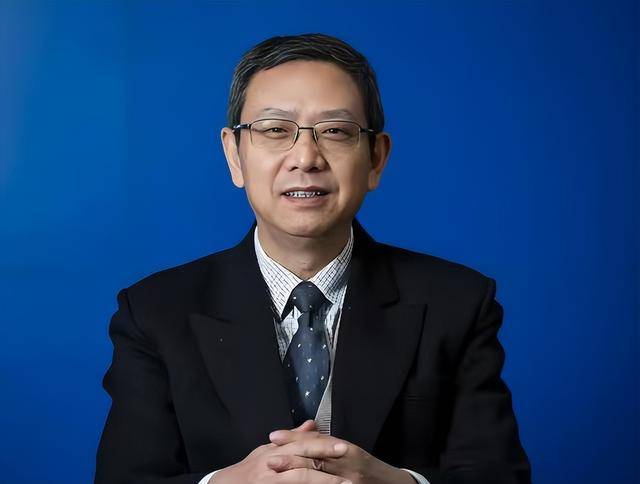
【高端访谈】专访经济学家、华夏新供给经济学研究院创始院长贾康:政府有效投资是提振消费的重要动力之一
Sou Hu Cai Jing· 2026-01-14 12:46
Core Viewpoint - The article emphasizes the implementation of a more proactive fiscal policy in 2026, aimed at stimulating domestic demand and supporting high-quality economic development as part of the "14th Five-Year Plan" [1][3]. Fiscal Policy Expansion - The term "more proactive" indicates an increase in the expansionary fiscal policy, with a focus on maintaining a high deficit rate, which was over 4% last year, and matching borrowing scales to cover the deficit [4][10]. - The coordination between fiscal and monetary policies is crucial, with fiscal policy playing a significant role in structural adjustments while monetary policy focuses on total demand management [4][10]. Key Areas for Fiscal Investment - Fiscal policy will prioritize areas such as industrial upgrading, technological self-reliance, and social welfare to enhance high-quality development [5][6]. - Specific measures include tax incentives, special funds, and support for critical sectors like semiconductors and aerospace to address "bottleneck" issues [5][6]. Enhancing Domestic Demand - The government aims to better coordinate supply-side structural reforms with domestic demand expansion, focusing on boosting consumption and improving investment efficiency [7][8]. - Effective investment is essential for job creation, particularly in the private sector, which has seen a decline in investment activity [8][9]. Social Security and Consumer Confidence - Strengthening the social security system is vital to alleviate public concerns regarding healthcare, education, and housing, thereby encouraging consumer spending [9]. - Specific measures to stimulate consumption include subsidies for replacing old products and local governments issuing consumption vouchers [9]. Coordination of Fiscal and Monetary Policies - The article discusses the importance of aligning fiscal and monetary policies, particularly during economic downturns, where fiscal policy is more effective in driving growth [10][11]. - The current approach involves a "double easing" strategy, combining proactive fiscal measures with moderately loose monetary policies to enhance liquidity and support economic recovery [11]. Innovation and Productivity - Developing new quality productivity is essential for high-quality growth, requiring a focus on institutional innovation alongside technological advancements [12][13]. - Fiscal support is necessary for original innovation, particularly in the early stages of research and development, to mitigate risks and encourage private sector participation [14][15].
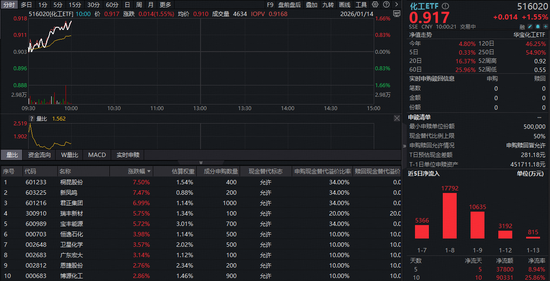
化工板块全线猛攻!龙头股飙涨超7%,化工ETF(516020)直线拉升,近10日吸金超9亿元!
Xin Lang Cai Jing· 2026-01-14 02:10
Group 1 - The chemical sector continues to show strong performance, with the chemical ETF (516020) rising by 1.55% as of the latest report [1][7] - Key stocks in the sector include Tongkun Co. and New Fengming, both of which have surged over 7%, while Junzheng Group increased by over 6% [1][7] - Recent inflows into the chemical ETF have been significant, with a net subscription of 378 million yuan over the past five trading days and over 900 million yuan in the last ten days [1][8] Group 2 - The National Development and Reform Commission has highlighted the need for structural reforms in traditional industries, including steel and petrochemicals, to improve supply-demand balance and product structure [3][9] - Guotai Junan Securities suggests that the large chemical industry is likely to be revalued, as the current profitability does not match its industry position, indicating potential for recovery [3][9] - The chemical ETF (516020) has been included in the Stock Connect program, which is expected to attract new capital and enhance liquidity [4][11] Group 3 - The chemical ETF tracks a specialized index covering various themes, with nearly 50% of its holdings in large-cap leading stocks like Wanhua Chemical and Salt Lake Potash [4][11] - Investors can also access the chemical sector through the chemical ETF linked funds, which provide an efficient way to invest in this sector [4][11]



深刻把握“五个必须” 推动“十五五”良好开局
Ren Min Ri Bao· 2026-01-13 00:35
Group 1 - The core viewpoint emphasizes the necessity of fully tapping into economic potential, combining policy support with reform innovation, ensuring effective governance while allowing market flexibility, integrating investments in both physical and human capital, and honing internal capabilities to face external challenges [1][6][20]. Group 2 - Fully tapping into economic potential is crucial for solidifying the material foundation of Chinese-style modernization, leveraging the country's multiple advantages to foster new growth points and high-quality development [2][3]. - China, as the world's second-largest economy, benefits from a vast market that ensures internal circulation, a robust innovation ecosystem, and a strong industrial supply chain, positioning it as a key player in the global economic landscape [3][4]. - The Chinese economy has shown resilience against external shocks, maintaining its status as a major contributor to global economic growth, supported by a large consumer market and a complete industrial system [4][21]. Group 3 - The approach of combining policy support with reform innovation is essential for addressing the intertwined cyclical, structural, and institutional issues in the economy, ensuring effective macroeconomic governance [7][9]. - This dual approach has been proven effective in navigating complex domestic and international environments, enhancing macroeconomic stability while promoting structural reforms [8][10]. Group 4 - Achieving a balance between market freedom and government regulation is vital for enhancing economic governance and ensuring high-quality development [12][13]. - The focus should be on creating a fair competitive environment while allowing market forces to allocate resources efficiently, thus fostering a dynamic economic order [14][15]. Group 5 - Investments should be closely integrated between physical assets and human capital, with a shift towards enhancing human development as the economy matures [16][18]. - There is significant room for improvement in both physical and human capital investments, with current levels lagging behind developed countries, indicating potential growth areas [17][19]. Group 6 - The emphasis on internal capabilities is crucial for responding to external challenges, with a focus on maintaining strategic determination and leveraging the advantages of a large economy [20][22]. - Historical resilience against external shocks has been demonstrated, with strategies to shift towards domestic demand and innovation driving economic stability and growth [21][23].