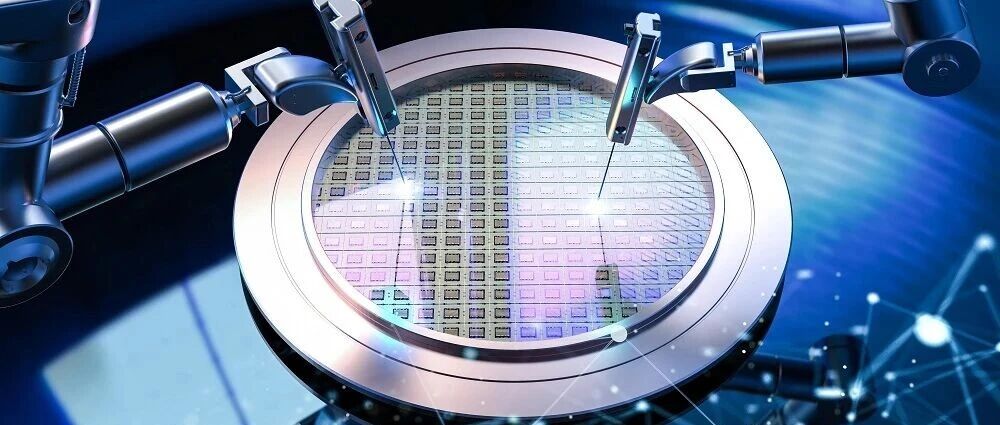
先进制程

Search documents
中微公司(688012):首次覆盖报告:刻技精深,沉积致远:先进工艺演进驱动产品放量
Shanghai Aijian Securities· 2025-12-08 09:18
Investment Rating - The report initiates coverage with a "Buy" rating for the company [3] Core Insights - The company is expected to benefit significantly from the ongoing advancements in semiconductor manufacturing processes, particularly in etching and deposition technologies, which are crucial for the production of advanced logic and 3D NAND devices [5][57] - The projected net profits for the company from 2025 to 2027 are estimated to be 21.81 billion, 31.59 billion, and 42.79 billion yuan, reflecting year-on-year growth rates of 35.0%, 44.8%, and 35.5% respectively [3][4] Financial Data and Profit Forecast - Total revenue is projected to grow from 6,263.51 million yuan in 2023 to 20,631.26 million yuan in 2027, with a compound annual growth rate (CAGR) of 41.3% [4][22] - The company's gross margin is expected to stabilize as the thin film deposition segment matures, contributing to overall profitability [31][63] - The company’s return on equity (ROE) is forecasted to improve from 10.02% in 2023 to 14.57% in 2027 [4] Industry Overview - The global semiconductor equipment market is anticipated to grow from 125.5 billion USD in 2024 to 159.9 billion USD in 2026, with a CAGR of approximately 9.1% [40] - The Chinese semiconductor equipment market is projected to expand from 49.1 billion USD in 2024 to 66.2 billion USD in 2027, driven by domestic wafer fab expansions and local replacements [40] Company Positioning - The company is recognized as a leading supplier of front-end semiconductor equipment in China, with a strong focus on etching and deposition technologies [8][18] - The company has established a comprehensive product line that includes advanced etching systems capable of supporting production from 65nm to 5nm nodes and beyond [5][8] - The company is positioned to capture structural growth opportunities in the semiconductor equipment market due to its technological depth and successful customer validations [57]

三星4nm良率达70%! 成功拿下大单!
国芯网· 2025-12-08 04:53
国芯网[原:中国半导体论坛] 振兴国产半导体产业! 不拘中国、 放眼世界 ! 关注 世界半导体论坛 ↓ ↓ ↓ 12月8日消息,据韩媒报道,三星电子近日获得美国AI芯片初创公司Tsavorite的订单,将采用其4nm制程工艺为后者代工AI芯片,订单金额超过1亿美元。 Tsavorite的AI芯片被设计为"全功能处理单元",旨在成为下一代AI芯片。其特点在于将CPU、GPU与DRAM集成于单一芯片,并能根据不同市场与应用需 求,在功耗、性能与扩展性上进行灵活配置。 今年11月,该公司已宣布获得来自全球财富500强企业、主权云服务商及系统集成商等客户超过1亿美元的预购订单。 报道指出,三星电子持续推进4nm工艺的良率提升,近期已提高至60%-70%水平,重新增强了市场竞争力。今年10月,三星还成功获得了特斯拉自动驾驶 芯片"AI5"的代工订单。 随着市场对3nm及2nm等先进制程的需求增长,三星可能为4nm工艺提供更具竞争力的定价策略,从而进一步巩固其市场地位。与此同时,三星正在加速 推进3nm与2nm工艺的良率改善。据最新消息,其首款采用2nm GAA技术的芯片组Exynos 2600良率已达50%,未来特斯拉 ...

2026年半导体用八氟环戊烯(C5F8)行业市场调查与投资建议分析
Sou Hu Cai Jing· 2025-12-01 02:54
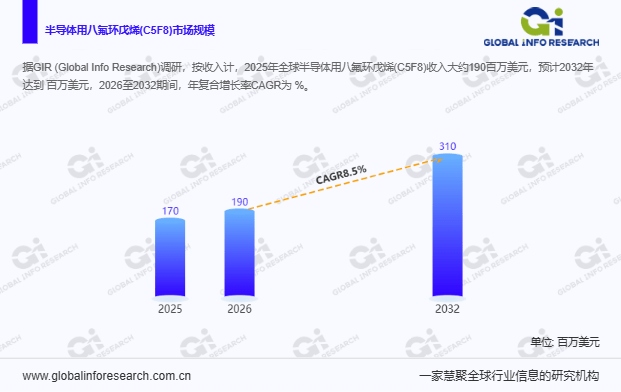
在半导体行业向先进制程持续突破的进程中,电子特种气体作为芯片制造的 "关键材料基石",其性能 与供应稳定性直接影响制程精度与产业安全。其中,八氟环戊烯(C5F8)凭借优异的刻蚀性能与环保 特性,成为 14 纳米及以下先进集成电路制造中的核心蚀刻气体。基于最新市场调研,我们从产品本 质、市场规模、竞争格局到发展趋势,全面解析这一细分领域的现状与潜力。 什么是半导体用八氟环戊烯(C5F8)? 八氟环戊烯(化学式 C₅F₈,CAS 号 559-40-0)是一种不饱和全氟烯烃类有机氟化合物,常温常压下呈 无色气体状,具有不易燃、沸点低(约 27℃)、纯度高、高热稳定性等特性。作为含氟电子特种气体 的重要品类,它最核心的应用场景是半导体行业的等离子蚀刻工艺 —— 尤其在先进集成电路(IC)制 造中,针对高深宽比结构(如 FinFET、3D NAND 存储单元)的刻蚀需求,能实现高精度、高选择性的 加工效果。 与传统含氟蚀刻气体(如 CF₄、C₂F₆)相比,它的优势显著:不仅能将硅基底与光刻胶的选择比提升至 15:1 以上,实现 0.1 微米级线宽的精确控制,还能形成 88° 垂直侧壁角度的各向异性刻蚀,同时减少 67% ...
Intel偷塔英伟达,比Google狠多了,直接挖角台积电核心人物
Tai Mei Ti A P P· 2025-11-29 08:15
Core Viewpoint - Nvidia is facing significant challenges due to increased competition and potential threats to its business model, particularly from Google and Intel, which could undermine its high profit margins and market dominance [1][2]. Group 1: Nvidia's Current Challenges - Nvidia's crisis began with major investors like Masayoshi Son reducing their stakes, leading to a public dispute over its financial performance and valuation [1]. - The company's high profit margins are under threat from Google's aggressive push with its TPU technology, which is now being offered to clients for on-premises deployment, potentially eroding Nvidia's market share [1]. - The departure of TSMC's senior vice president, who joined Intel, raises concerns about the stability of Nvidia's supply chain and its reliance on TSMC for advanced manufacturing processes [2][5]. Group 2: Impact of Key Personnel Movements - The former TSMC executive, who has extensive experience in advanced process technology, is now tasked with enhancing Intel's manufacturing capabilities, which could shift the competitive landscape [3][4]. - Intel's response to TSMC's legal actions indicates a strategic move to position itself as a viable alternative in the semiconductor manufacturing space, potentially impacting Nvidia's pricing power [5][7]. Group 3: Long-term Implications for Nvidia - The ongoing legal battle and personnel shifts may accelerate the emergence of a second top-tier foundry, which could diminish Nvidia's exclusive advantages in advanced manufacturing [6][8]. - If Intel successfully narrows the technological gap, Nvidia may lose its ability to leverage its manufacturing dominance to justify its high valuation and profit margins [7][8]. - The market's perception of the long-term stability of the Nvidia-TSMC partnership is changing, suggesting that Nvidia's competitive edge may not be as secure as previously thought [8].


1.4nm争霸战,打响
3 6 Ke· 2025-11-28 03:45
Core Insights - The global semiconductor industry is engaged in a strategic competition centered around the establishment of 2nm wafer fabs, seen as a critical threshold for AI computing sovereignty in the AI era [1][18][25] - TSMC plans to expand its 2nm production capacity in Taiwan from seven to ten fabs, with significant investments in overseas projects in the US, Japan, and Germany [2][3][19] - Intel is positioning itself with its 18A process technology, backed by national capital, to compete directly with TSMC's 2nm offerings [4][8][19] - Samsung is ramping up its 2nm production capabilities, achieving a yield of 55-60% and securing significant contracts, including a long-term deal with Tesla [9][10][19] - Japan's Rapidus is also entering the 2nm race, supported by government initiatives, aiming to establish local production capabilities [12][16][19] TSMC's Strategy - TSMC's plan includes ten 2nm fabs in Taiwan, with an estimated cost of approximately NT$300 billion (US$80-100 billion) per fab, totaling around NT$900 billion for the additional three fabs [2][19] - The company emphasizes that advanced processes will primarily serve top-tier clients, particularly in AI and high-end computing sectors [2][3] - TSMC's strategy is a response to both the surging demand for AI chips and competitive pressures from rivals like Intel and Samsung [3][19] Intel's Positioning - Intel's 18A process is designed to compete with TSMC's 2nm technology, with recent reports indicating improvements in yield and production stability [4][6][19] - The company aims to establish itself as a significant foundry player, focusing on collaboration with design partners to enhance its manufacturing capabilities [8][19] Samsung's Developments - Samsung's 2nm process yield has improved significantly, and the company plans to increase its production capacity by 163% by the end of next year [9][10] - The company has secured a major contract with Tesla for AI chip production, which is expected to enhance its standing in the US market [9][10][19] Rapidus and Japan's Strategy - Rapidus is working on establishing 2nm production capabilities with government support, aiming to start mass production by the second half of the 2027 fiscal year [12][16] - The company is also planning to develop 1.4nm products, indicating a long-term commitment to advanced semiconductor manufacturing in Japan [16][19] Market Dynamics - The competition for 2nm fabs is driven by the need for higher transistor density and lower power consumption to support AI applications [18][19] - The establishment of these fabs is not only a corporate decision but also a reflection of national industrial policies, with significant government backing for companies like Intel and Rapidus [19][25] - The high capital expenditure required for 2nm fabs necessitates partnerships with key clients and government subsidies to mitigate financial risks [18][19] Conclusion - The race to build 2nm fabs represents a pivotal moment in the semiconductor industry, with implications for technological leadership, market dynamics, and geopolitical considerations [25] - Companies that successfully navigate this high-capital, high-risk environment will be well-positioned to influence the future of semiconductor manufacturing and AI capabilities [25]
迎在华四十周年节点 英特尔详阐Intel 18A最新进程
Zhong Guo Jing Ying Bao· 2025-11-28 00:04
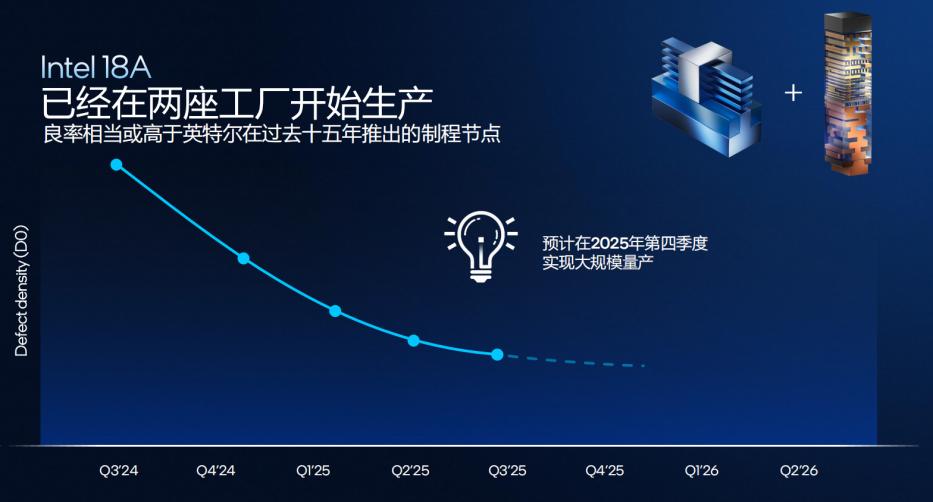
Core Insights - The global semiconductor industry is entering a critical phase with the countdown to the mass production of 2nm technology, intensifying competition among major players like Intel, TSMC, and Samsung [1][7] - Intel has unveiled its Intel 18A advanced process technology, which is positioned to compete with TSMC and Samsung's 2nm offerings, aiming to regain its leadership in process technology [1][4] Group 1: Intel 18A Technology - Intel 18A, equivalent to 1.8nm, will be utilized in the next-generation AI PC platform, Panther Lake, leveraging two key technologies: RibbonFET and PowerVia [1][2] - RibbonFET technology enhances control over current flow, significantly reducing leakage, while PowerVia addresses internal chip congestion by relocating power delivery to the back of the chip [2][3] - Intel 18A demonstrates impressive efficiency metrics, with over 15% performance improvement at the same power consumption, and over 25% power reduction for the same performance, alongside a 30% increase in transistor density [3] Group 2: Panther Lake and Future Developments - Panther Lake, based on Intel 18A, is set to enhance multi-core performance by 50% and graphics performance by over 40%, with an AI computing power of 180 TOPS [4][5] - The first Panther Lake processors are currently in production, with an official launch planned for January at CES [5] Group 3: Competitive Landscape - The competition in advanced semiconductor processes is primarily among TSMC, Samsung, and Intel, with TSMC currently leading in 2nm technology with a yield rate of 60%-65% [7][8] - Samsung faces challenges with its 3nm process yield, which is between 20%-40%, impacting its ability to secure major clients [7][8] - Intel's 18A process, while not yet matching TSMC's capacity, has a potential advantage in power efficiency due to its unique PowerVia technology, which could attract high-performance computing and mobile device markets [8] Group 4: AI Ecosystem Development - Intel aims to build a comprehensive AI ecosystem leveraging the Intel 18A process, transitioning PCs from AI-enhanced to AI-native platforms [9] - The Panther Lake platform integrates CPU, GPU, and NPU architectures, supporting advanced AI models and enhancing performance metrics significantly [9] - Intel emphasizes collaboration with local Chinese software ecosystems to optimize AI applications and improve performance across various use cases [10]
魏哲家:先进制程不够用,还是不够
半导体行业观察· 2025-11-24 01:34
Core Viewpoint - TSMC's leadership, including Chairman Wei Zhejia and former Chairman Liu Dedin, received the Robert N. Noyce Award, highlighting the company's pivotal role in the semiconductor industry and its advancements in manufacturing technology, particularly in response to the growing demand for AI capabilities [1][3][4]. Group 1: Award Recognition - TSMC's Wei Zhejia and Liu Dedin were honored with the Robert N. Noyce Award, the highest accolade in the semiconductor industry, during a ceremony in San Jose, California [3][4]. - This award is a recognition of TSMC's long-term contributions to advanced processes, packaging, and manufacturing ecosystems, marking a significant achievement for the company [1][5]. - The award ceremony featured notable figures from the semiconductor and AI industries, symbolizing the core strength of the AI chip supply chain [1][2]. Group 2: Industry Impact and Demand - Wei Zhejia emphasized that the current production capacity of TSMC is insufficient, stating that it is approximately three times below the expected demand from major clients [2]. - The demand for advanced processes is driven by AI, with Wei's remarks indicating a strong and growing need for semiconductor manufacturing capabilities [2][3]. - TSMC's advancements from 7nm to the upcoming 2nm process nodes illustrate its commitment to innovation and its foundational role in the AI era [1][5].
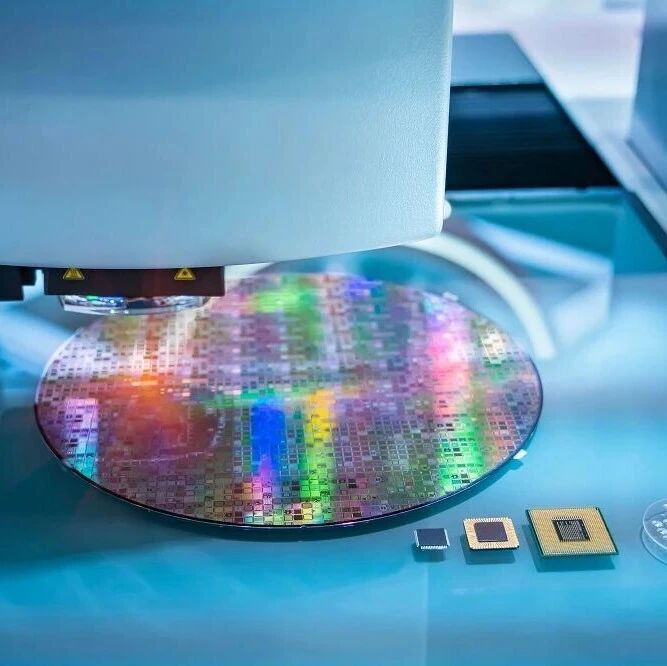
赛微电子(300456.SZ):芯东来光刻机业务属于成熟制程 不涉及先进制程
智通财经网· 2025-11-21 13:53
Group 1 - The company, Saiwei Electronics, announced that its stock price has deviated by over 30% in cumulative closing price over three consecutive trading days, indicating abnormal trading fluctuations [1] - Swedish Silex has convened a board meeting to discuss its IPO plans, with a preliminary timeline established; however, details regarding valuation, equity structure, financing scale, and future plans remain uncertain and contingent on subsequent developments [1] - The company holds a 45.24% stake in Swedish Silex, and any arrangements regarding this stake will be considered in light of the company's overall strategic development and Silex's plans, which also carry uncertainties [1] Group 2 - The company's subsidiary, Silex Microsystems Technology (Beijing) Co., Ltd., has received a purchase order for a MEMS-OCS product after passing customer validation, initiating small-batch trial production of 8-inch wafers [2] - As of the announcement date, the MEMS-OCS chips have not yet entered mass production, and the company cannot accurately predict the timeline or potential order volume from small-batch production to mass production, indicating inherent uncertainties [2] - The company plans to purchase a stake in Beijing Chip East Semiconductor Technology Co., Ltd. for no more than 60 million yuan; however, the transaction has not yet been finalized, and the mature process of Chip East's lithography business may limit its immediate impact on reducing supply risks and increasing domestic equipment application [2]

先进制程扩产叠加国产化替代风口,半导体激光设备大有可为
半导体行业观察· 2025-11-21 00:58
Group 1: Overview of Semiconductor Laser Equipment - Laser technology is widely used in consumer electronics, automotive manufacturing, new energy, and semiconductor industries due to its high energy density and adaptability to materials [2] - The demand for semiconductor laser processing equipment is expected to grow as industries seek lightweight, precise, and intelligent solutions [2] - Domestic manufacturers are making technological breakthroughs and improving cost control, gradually closing the gap with international leaders [2] Group 2: Types of Semiconductor Laser Equipment - Semiconductor laser annealing equipment is crucial for repairing lattice damage in semiconductor wafers and enhancing device performance [3] - Laser material modification equipment alters the surface structure and properties of materials, with applications in 3D NAND chip manufacturing [4] - Laser scribing equipment is used to cut semiconductor chips from wafers, impacting packaging quality and production costs [7] - Laser debonding equipment enables low-stress separation processes without chemicals, crucial for advanced packaging applications [8] - Laser marking equipment is utilized for labeling silicon wafers and chips, facilitating tracking and identification [9] - Other laser processing equipment includes laser trimming, glue removal, and laser drilling, which are essential in various semiconductor manufacturing stages [10] Group 3: Semiconductor Market Situation - The global semiconductor market is projected to reach $627.2 billion in 2024, driven by AI computing demand and recovering memory chip prices [14] - The semiconductor manufacturing equipment market is expected to grow to $125.5 billion by 2025, with significant contributions from advanced logic and memory applications [16] - China's semiconductor market is anticipated to reach $186.5 billion in 2024, accounting for 31.9% of the global market, driven by domestic demand and policy support [21] Group 4: Domestic Semiconductor Equipment Market - The domestic semiconductor equipment market is expected to grow significantly, with a projected market size of approximately 289.9 billion yuan by 2025 [23] - The demand for laser equipment in wafer manufacturing is expected to rise due to the expansion of domestic production lines and the adoption of advanced processes [40] - The growth of AI applications is driving the demand for advanced packaging equipment in China, with the packaging equipment market expected to reach 17.396 billion yuan by 2025 [29] Group 5: Key Domestic Companies - LaiPu Technology focuses on semiconductor laser equipment and has a market share of 16% in laser thermal processing equipment, with over 90% in advanced 3D NAND and DRAM laser equipment [56] - Huagong Laser specializes in laser intelligent equipment and has developed solutions covering the entire semiconductor manufacturing process [57] - Shanghai Microelectronics is emerging in the laser annealing equipment market, particularly in ultra-thin silicon wafer applications [58] - Dazhong Laser has a strong presence in various semiconductor segments, including traditional packaging and advanced processes [59] - Beijing Huazhuo Precision Technology is recognized for its high-quality laser annealing equipment and precision control technology [60]