
全球流动性宽松

Search documents
全球贵金属市场波澜壮阔 2025年金银铂齐创新高
Xin Lang Cai Jing· 2025-12-31 09:49
Group 1 - The global precious metals market experienced a historic bull market in 2025, with silver and platinum showing annual gains exceeding 170% [1][21][28] - Gold, silver, and platinum prices all broke historical peaks, driven by strong upward momentum and a combination of supply-demand fundamentals and capital rotation [1][21][28] - The report suggests that investors should be cautious as precious metal prices have reached historic highs, recommending gradual participation after significant price corrections in January 2026 [1][21][28] Group 2 - In 2025, the overall precious metals market exhibited a broad upward trend, with silver and platinum significantly outperforming gold, reflecting dual drivers of supply-demand fundamentals and capital rotation [21][28] - The price statistics for precious metals at the end of 2025 show substantial increases, with SHFE gold rising by 58.27%, COMEX gold by 65.57%, SHFE silver by 125.85%, and COMEX silver by 142.44% [22][23][24] - December 2025 saw an acceleration in precious metal prices, particularly for silver and platinum, which experienced explosive growth, highlighting the resonance of market sentiment and supply-demand gaps [25][28] Group 3 - The core reasons for the significant price increases in precious metals in 2025 include global liquidity easing, tight supply-demand dynamics, rising geopolitical risks, and market sentiment [28][29][30] - The expectation of a shift in the Federal Reserve's monetary policy, with anticipated interest rate cuts, has increased the attractiveness of non-yielding assets like gold, silver, and platinum [28][29] - Structural supply shortages in platinum and silver, driven by production constraints and high demand in industrial applications, have led to price elasticities that exceed those of gold [30][31] Group 4 - The trend of central banks accumulating gold and the move towards de-dollarization have provided structural support for gold prices, with global central banks purchasing over 1,000 tons of gold annually [30][31] - Geopolitical tensions, including conflicts in Venezuela and the Middle East, have fueled safe-haven demand for precious metals, further driving prices upward [31][32] - Market sentiment has shifted towards a "buy the rise" mentality, exacerbating price volatility and leading to speculative inflows that have amplified price increases for silver and platinum [32][33] Group 5 - The outlook for January 2026 indicates a likely continuation of high volatility in the precious metals market, with potential for differentiated performance among various metals [33][34] - Gold is expected to experience high volatility around the $4,500 per ounce mark, with potential upward movement if economic data supports further rate cuts [34] - Silver is anticipated to maintain high elasticity but faces increased risk of correction due to prior significant price increases, with expected trading in the $60-$85 per ounce range [35][36]


2025年港股收官 恒指年涨幅27.77% “深港指数”领涨全球
Mei Ri Jing Ji Xin Wen· 2025-12-31 07:15
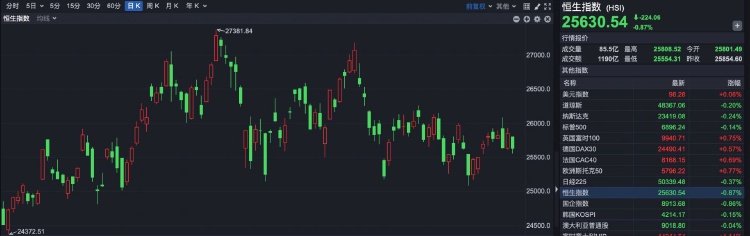
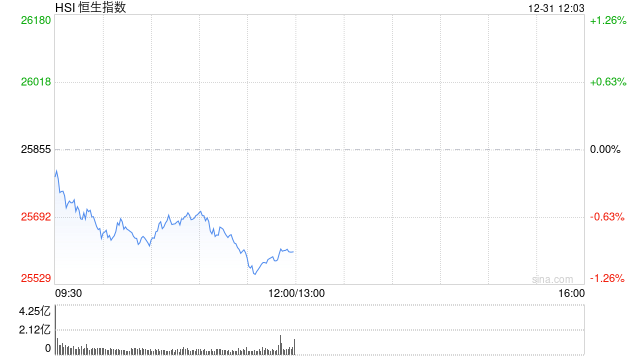
Core Viewpoint - The Hong Kong stock market experienced a mixed performance in 2025, with the Hang Seng Index achieving a year-to-date increase of 27.77%, making it the second-best performer globally after the Shenzhen Composite Index, which rose by 30% [5][6]. Group 1: Market Performance - The Hang Seng Index closed at 25,630.54 points, down 224.06 points or 0.87% on the last trading day of the year [1]. - The Hang Seng Tech Index closed at 5,514.98 points, down 62.40 points or 1.12% [3]. - In 2025, the Hang Seng Index recorded a cumulative increase of 27.77%, while the Hang Seng Tech Index also saw a two-year consecutive rise with a 23.45% increase [5]. Group 2: Sector Performance - The gold and precious metals sector showed remarkable performance, with Zhenfeng Gold (HK01815) increasing over 1200% and Lingbao Gold (HK03330) rising over 570% throughout the year [5]. - The semiconductor sector also performed well, with Huahong Semiconductor (HK01347) up over 240% and SMIC (HK00981) up over 120% [5]. - The brokerage sector saw Guotai Junan International increase by over 140% [5]. - The biopharmaceutical sector was active, with Yaojie Ankang rising over 770% [5]. - Conversely, the real estate and education sectors underperformed due to industry adjustments [5]. Group 3: Market Trends and Outlook - The market showed a subdued performance on the last trading day due to holiday factors, with mixed results among tech stocks and a notable decline in automotive stocks [7]. - In 2025, the Hong Kong market is expected to see a significant influx of southbound capital, with net purchases exceeding 1.4 trillion HKD, and cumulative net purchases surpassing 5 trillion HKD [7]. - Looking ahead to 2026, the industry anticipates a favorable environment for global liquidity, with potential improvements in the profitability of Hong Kong-listed companies driven by policies promoting technological innovation and domestic demand [9].

岁末收官镍价狂飙!2025最后一天沪镍创年内新高,印尼减产引爆2026市场变局?
Xin Lang Cai Jing· 2025-12-31 06:32
价格走势趋势分析(以下数据来源长江有色金属网) 沪镍主力合约盘中涨超4%,最高触及135570元/吨,创3月下旬以来新高,为全年交易画上强势句号。 与此同时,电池级硫酸镍同步温和跟涨,中间价28050元/吨,在产业链复苏预期中稳步修复。这场岁末 狂欢的背后,是印尼减产政策的强力催化,更是全球镍市供需格局重构的序幕拉开,2026年镍价将迎来 怎样的变局? 从冰点到沸点:政策"惊雷"与宏观暖风的共振 镍价在12月上演的"V型"深蹲起跳,是多重时空因素叠加的结果。前半月的阴跌,反映了市场在"美联 储降息"与"中国稳增长"等宏观利好兑现前的观望,以及对镍自身高库存、弱需求的现实担忧。真正的 转折点始于12月17日。这一天,发生了两件决定当月镍市命运的大事: 首先是宏观层面的"发令枪":美联储如期降息,全球流动性宽松的闸门正式开启,叠加中国经济数据回 暖,为大宗商品提供了系统性向上的金融环境。 更具爆炸性的是产业层面的"核弹":印尼镍矿商协会(APNI)释放信号,政府计划在2026年将镍矿生 产配额大幅削减约34%。这一消息在12月31日得到进一步强化,印尼能矿部释放了明确的政策收紧信 号。印尼供应着全球近半壁江山的镍 ...
港股2025年收官:恒指累计涨近28% 恒生科技指数累涨超23% 黄金板块年内涨幅亮眼
Xin Lang Cai Jing· 2025-12-31 04:04
12月31日消息,港股2025年最后半个交易日,三大指数低开低走,截至收盘,恒生指数跌0.96%,报 25606.37点,恒生科技指数跌1.24%,国企指数跌0.95%。今日港股盘面上,科网股跌多涨少,百度涨超 1%,网易跌超3%,京东、美团、阿里巴巴、快手跌超1%;汽车股高开低走,零跑汽车跌超2%;半导 体板块回调,中芯国际跌超1%;航空股涨幅居前,南方航空涨超4%;影视股活跃,大麦娱乐涨超5%。 | 初始 代码 | | 名称 | . | 最新 | 涨幅% ↓ | 年初至今涨幅% | | --- | --- | --- | --- | --- | --- | --- | | 1 | HSCEI | 恒生国企指数 | | 8905.74 | -0.95 | 22.17 | | 2 | મંદા | 恒生指数 | 1 | 25606.37 | -0.96 | 27.65 | | 3 | HSTECH | 恒生科技指数 | | 5509.26 | -1.24 | 23.30 | 从年线看,恒指全年涨27.65%,恒生科技指数全年涨23.30%,国企指数涨22.17%。年内黄金及有色金 属板块涨幅亮眼,珠峰黄金全年 ...
三重红利加持,中企境外上市正当时
Sou Hu Cai Jing· 2025-12-31 03:05
如今全球化资本市场深度融合,中国企业境外上市已不是新鲜事,但近期多重积极信号的叠加,让这一 领域再度成为市场焦点。 从央行、外管局联合出台的资金管理新规,到国家创业投资引导基金的精准赋能,再到国际舆论对中国 经济前景的普遍看好,中企境外上市正迎来政策、资本、市场的三重红利。 再谈到国际舆论对中国经济发展前景的积极预期,尤其是在科技、消费、医疗健康等领域,优质中企正 成为全球投资者眼中的"香饽饽"。 这种积极的舆论导向,直接转化为市场红利,分析认为,国际投资者对中国经济的乐观预期,提升了中 企在境外资本市场的估值认可度,降低了融资成本。同时,美联储进入降息通道等全球流动性宽松因 素,让更多企业有机会借助全球资本实现跨越式发展。 在政策、资本、舆论的多重利好下,企业境外上市的路径选择也更加多元,其中美国OTC市场凭借其独 特优势,成为越来越多中企的优选。相较于纳斯达克、纽交所等主流交易所严苛的盈利要求和高门槛, 美国OTC市场以其包容性和灵活性,精准匹配了成长期企业的发展需求。 当前中企境外上市正处于前所未有的利好窗口期。对于企业而言,应牢牢把握政策机遇,借助引导基金 的支持,充分利用国际市场的积极氛围,结合自身 ...
【视频】美联储降息对全球金融市场影响几何?
Sou Hu Cai Jing· 2025-12-30 05:07
Core Viewpoint - The Federal Reserve's interest rate cuts typically lead to global liquidity easing, a weaker dollar, stronger non-dollar currencies, and increased global risk appetite, but the overall impact depends on the pace of rate cuts and the economic fundamentals of various countries [1] Group 1 - The discussion involves insights from Hu Jie, a professor at Shanghai Jiao Tong University's Shanghai Advanced Institute of Finance and a former senior economist at the Federal Reserve [1] - The potential effects of the Federal Reserve's rate cuts on global financial markets are explored [1]
兴证策略张启尧团队:近期涨价链梳理与展望
Xin Lang Cai Jing· 2025-12-29 12:17
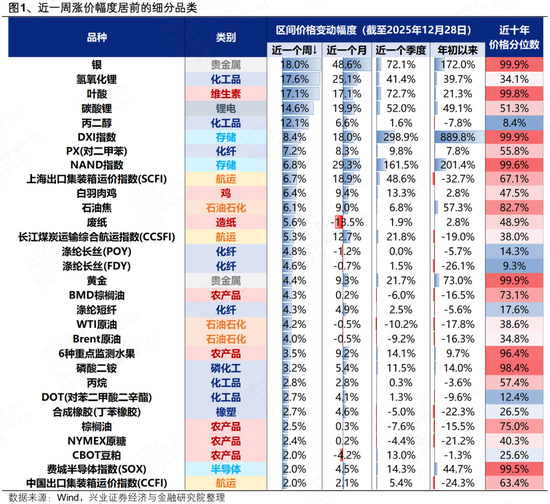
Core Viewpoint - The recent price increase chain in the capital market is primarily focused on non-ferrous metals, petrochemicals, certain chemicals, shipping, storage, and some agricultural products, driven by global liquidity easing and domestic PPI recovery [1][2]. Price Increase Drivers - Global liquidity easing and geopolitical risk sentiment are driving the price increases in non-ferrous metals, including silver and gold [2]. - Trends in AI and the new energy industry are translating into physical consumption, particularly in storage and lithium batteries (lithium hydroxide, lithium carbonate) [2]. - Supply disruptions (e.g., U.S. military blockade of Venezuelan oil) and geopolitical concerns (e.g., escalating Middle East tensions) are pushing oil prices higher, affecting petroleum coke, crude oil, and palm oil [2]. - Seasonal factors are contributing to supply-demand mismatches, including a decrease in terminal operating rates leading to tighter supply of chemicals (e.g., ethylene glycol, chemical fibers), pre-holiday shipping surges, year-end "export rush," and increased winter electricity demand affecting shipping indices [2]. Price Change Data - Significant price changes have been observed in various commodities, with the DXI index showing an increase of 889.8% year-to-date, and the DRAM index increasing by 366.3% [3][11]. - Other notable increases include: - Wafer: 256Gb TLC at 336.6% - Wafer: 512Gb TLC at 295.0% - Gold at 73.0% - Oil products at 57.3% [3][11]. Seasonal Outlook - The first quarter is typically a favorable time for price increases, especially as it transitions into the "golden March and silver April" peak construction season, with policy implementations expected after the March Two Sessions [4][12]. - Historical data suggests that the first quarter is a critical verification window for whether the PPI can stabilize and rise, as previous inflation cycles have shown accelerated PPI increases during this period [6][14].
南华期货铅产业周报:虚强实弱-20251228
Nan Hua Qi Huo· 2025-12-28 13:02
南华期货铅产业周报 ——虚强实弱 傅小燕 (投资咨询证号:Z0002675) 交易咨询业务资格:证监许可【2011】1290号 2025年12月28日 第一章 核心矛盾及策略建议 1.1 核心矛盾 当前铅价的强势并非源自铅自身供需的内生驱动,而是宏观"强预期"与白银等副产品溢价在微观库存 低位上的投机性共振。宏观层面,海外市场正处于"圣诞避险"与"交易2026年宽松"的甜蜜期,国内则 在"十五五"规划纲要的政策强心针下,不仅地产止稳预期升温,新基建逻辑更是带动有色板块整体估值上 移,铅作为板块内的低估值品种被动跟涨。然而,剥离宏观滤镜回归产业现实,供需两端正在出现显著 的"剪刀差"背离:供应端随着环保扰动消退及冶炼利润修复,再生铅周度开工率已回升至45.4%,原生铅 检修恢复亦带来边际增量;反观需求端,正值2025年岁末关账节点,下游电池厂处于典型的"去库盘点"垃 圾时间,采购意愿降至冰点。值得注意的是,尽管供需边际走弱,但极低的社会库存(五地仅1.79万吨)成 为了多头最后的堡垒,这种"低库存+强宏观"的组合掩盖了现货成交的寡淡。因此,短期铅价的定价权已暂 时移交至宏观资金与白银情绪手中,基本面供需的实质性 ...

“妖镍”再起?印尼配额新变数引爆镍市新行情 后市剑指何方?
Xin Lang Cai Jing· 2025-12-23 04:36
Core Viewpoint - Nickel prices are experiencing a significant upward trend, influenced by improved macro sentiment and short-term supply-demand changes [1] Group 1: Price Trends - As of December 23, 2025, the spot market price for 1 nickel ranges from 122,700 to 128,900 yuan/ton, with an average of 125,800 yuan/ton, reflecting an increase of 3,850 yuan/ton from the previous day [1] - The futures market shows even stronger performance, with the main contract for nickel on the Shanghai Futures Exchange rising by over 3% during trading [1] - LME nickel prices also saw a significant increase in overnight trading, leading gains in the base metals sector [1] Group 2: Supply and Demand Dynamics - The global nickel market is undergoing profound changes in supply and demand structures due to the green transition and industrial chain restructuring [2] - Indonesia's policy adjustments are a core variable affecting supply, with changes in quota approval and new capacity thresholds continuing to disrupt medium to long-term supply expectations [2] - Demand from the stainless steel industry remains cautious due to terminal consumption and industry profit constraints, while the anticipated growth in the new energy battery sector is showing seasonal slowdowns [2] Group 3: Industry Chain Analysis - Nickel ore price fluctuations directly impact the cost curves of various smelting paths, with integrated resource-smelting companies enjoying significant cost advantages [3] - Nickel iron prices show some resilience at low points, indicating a tight balance in the spot market, while nickel sulfate prices are under pressure due to a slowdown in downstream demand [3] - The overall industry chain is currently in a state of "weak supply and demand, dynamic balance" [3] Group 4: Strategic Adjustments by Leading Companies - Leading companies are actively adjusting strategies in response to the current industry environment, with some implementing planned production cuts or line maintenance due to short-term profit pressures [4] - Companies are accelerating the development of high-value projects such as high-grade nickel and nickel sulfate, pushing the industry structure towards deeper processing [4] - Market focus is heavily concentrated on Indonesian policy developments, particularly regarding the recent reduction in domestic benchmark prices for nickel ore [4][5] Group 5: Short-term Price Outlook - Nickel prices are expected to maintain a strong oscillating pattern in the short term, with a core range of 122,000 to 130,000 yuan/ton [6] - The main logic behind this outlook includes macro sentiment support, limited supply elasticity due to policy uncertainties in major producing countries, and resilient demand from stainless steel [6] - Key factors for future price movements include the execution of Indonesian policies, recovery in stainless steel consumption, and the evolution of inventory replenishment in the new energy supply chain [6]
A股放量四连阳 沪指重返3900点
Xin Lang Cai Jing· 2025-12-22 17:14
Group 1 - The A-share market indices collectively strengthened on Monday, with the Shanghai Composite Index rising by 0.69% to close at 3917.36 points, the Shenzhen Component Index increasing by 1.47% to 13332.73 points, and the ChiNext Index gaining 2.23% to 3191.98 points [1] - The trading volume in the Shanghai and Shenzhen markets reached 186.19 billion yuan, an increase of 136 billion yuan compared to the previous trading day, with nearly 3000 stocks rising and over a hundred stocks hitting the daily limit [1] - The core driver behind the four consecutive days of index gains is the significant alleviation of global liquidity concerns, particularly following the release of the November core CPI data in the U.S., which rose by 2.6% year-on-year, the lowest since 2021, leading to increased bets on earlier interest rate cuts in 2026 [1] Group 2 - The market's expectations for the year-end rally are bolstered by multiple factors, including a stabilization and strengthening of the RMB exchange rate, which reduces systemic outflow pressure from foreign capital, and the traditional influx of insurance funds at the beginning of the year [2] - However, the market remains in a trend adjustment phase following the previous high of 4034 points, and whether the recent volume increase can lead to a valid breakout is still under observation [2] - The macroeconomic landscape is complex, with external demand facing rhythmic disturbances but maintaining its trend, while fixed asset investment, a key economic stabilizer in recent years, shows signs of declining pressure [2] Group 3 - The four consecutive days of market gains and increased trading volume enhance year-end expectations, but it is essential to remain calm and critically assess the situation [3] - The essence of the year-end rally is a balance between improved external liquidity and internal economic pressures, as well as between policy expectations and the realities of the economic fundamentals [3] - Investors are advised to maintain clarity amidst the rotation of market hotspots, anchoring their strategies on certain industrial trends and adopting flexible approaches to navigate the volatile year-end market [3]