
区域合作

Search documents
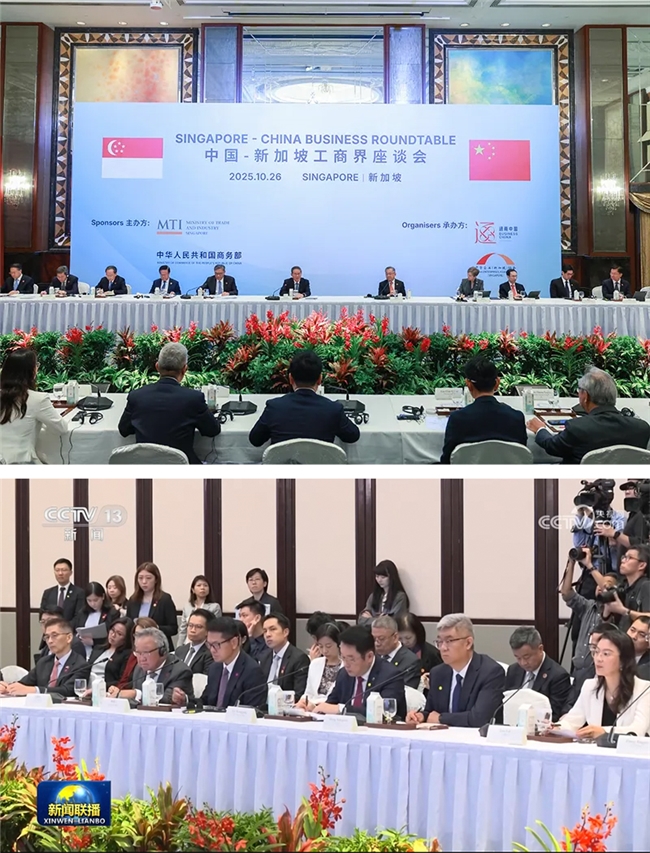
文远知行受邀出席中新工商界座谈会,汇报新加坡自动驾驶成果
Jin Tou Wang· 2025-10-28 01:08
Core Insights - The meeting held in Singapore on October 26 showcased the achievements of the autonomous driving technology company, WeRide, as a representative of China, highlighting its progress in the international market [1][3]. Group 1: Company Developments - WeRide's Vice President, Luo Lin, emphasized that the company's development in Singapore represents a significant milestone for China's autonomous driving technology going global, integrating technological innovation with regional cooperation and sustainable development [3][4]. - Since establishing its regional headquarters in Singapore in 2022, WeRide has viewed the city-state as a strategic hub for Southeast Asia, receiving long-term support from the Singaporean government [4]. - The company has achieved several milestones, including the regular operation of its autonomous minibuses and plans for fully unmanned operations by July 2025, making it the first autonomous vehicle in Southeast Asia without a safety driver [6]. Group 2: Strategic Partnerships and Future Plans - WeRide has secured a strategic investment commitment from Grab, a leading Southeast Asian mobility platform, to jointly launch the first consumer-facing autonomous ride-hailing service, Ai.R, by August 2025 [6]. - The company has also successfully operated autonomous sanitation vehicles in key areas such as Marina Bay and the Marina Bay Arts Centre [6]. - WeRide's founder and CEO, Dr. Han Xu, has been invited to join Singapore's Autonomous Vehicle Advisory Committee, contributing to the formulation of the country's autonomous driving policies and operational standards [6]. Group 3: Bilateral Relations and Economic Cooperation - Singapore's Deputy Prime Minister, Janil Puthucheary, highlighted the strong foundation and close cooperation between China and Singapore, emphasizing mutual respect and benefits in expanding trade and investment [8]. - The two countries aim to enhance collaboration in emerging fields such as digital and green economies, leveraging the 35th anniversary of diplomatic relations as an opportunity for growth [8]. - WeRide plans to use Singapore as a key base for international cooperation, deepening collaboration with the Singaporean government and industry partners to promote the large-scale application and commercialization of autonomous driving technology in Southeast Asia [8].


2025民营企业助力南疆发展推进会在新疆和田召开
Zhong Guo Xin Wen Wang· 2025-10-21 06:08
Group 1 - The 2025 Private Enterprises Supporting Southern Xinjiang Development Conference was held in Hotan, Xinjiang, focusing on policy, funding, technology, market, and talent to promote private enterprises settling in Southern Xinjiang [1] - Since the launch of the project promotion conference in Beijing, 145 projects have been implemented in Southern Xinjiang, covering various sectors such as energy, textiles, equipment manufacturing, real estate development, and agricultural product processing, with a total investment of 48.82 billion yuan [1] - The continuous investment from private enterprises is injecting momentum into the high-quality development of Southern Xinjiang, supported by local policies and resource advantages [1] Group 2 - Tianjin Green Landscape Ecological Construction Co., Ltd. plans to leverage its technological advantages in ecological landscape and smart devices to promote new cultural tourism products in Hotan [2] - Hainan Yifeng Construction Engineering Co., Ltd. aims to introduce advanced clean energy technology and funding to support new energy projects in Hotan, facilitating green transformation and sustainable development in Southern Xinjiang [2] - The conference serves as a platform for private enterprises to exchange and cooperate, promoting industrial integration and resource sharing to steadily enhance the local economy [2]
全球经贸规则加速重构,中企下一步在哪里?
Guo Ji Jin Rong Bao· 2025-10-20 14:21
Group 1: Global Economic Trends - The global financial and trade landscape is undergoing profound restructuring, characterized by weak recovery, geopolitical conflicts, and trade protectionism, with new technologies and green transformation driving change [1] - Future opportunities are concentrated in digital economy, green finance, regional cooperation, and the rise of emerging markets [1] Group 2: Infrastructure and Sustainable Development - The New Development Bank has significantly enhanced local currency financing capabilities to support infrastructure and sustainable development in global south countries [2] - Focus will continue on climate financing and diversified cooperation to promote inclusive growth in global south nations [2] Group 3: Supply Chain Management - Supply chain management is crucial for companies going abroad, encompassing all stages from raw materials to end consumers, and is essential for competitive advantage [2] - Understanding the complexities of supply chains and enhancing strategic planning are vital for companies to navigate uncertain environments [2] Group 4: Export Strategies and Compliance - Key steps for Chinese companies going abroad include understanding origin rules, which directly affect tariff treatment and compliance [3] - Companies should systematically plan global supply chains and origin layouts to mitigate risks and ensure compliance with international policies [3] Group 5: Cross-Border Payment Systems - The transformation of cross-border payment systems is driven by digital technology and institutional innovation, enhancing transaction efficiency and security [4] - China is advancing cross-border payment from infrastructure connectivity to institutional rule recognition, supporting the internationalization of the Renminbi [4] Group 6: Investment in Southeast Asia - Southeast Asia presents high growth potential for Chinese investments, serving as a critical supply chain conduit amid international trade disputes [5] - Investment risks in Southeast Asia include political and policy risks, complex legal environments, and operational challenges, necessitating thorough due diligence and local partnerships [5]
中国运回大量黄金,与东盟签署重要协议,美加税100%,要变天了?
Sou Hu Cai Jing· 2025-10-20 10:44
Group 1 - The recent escalation in US-China trade tensions resembles previous conflicts, with the US imposing significant tariffs on Chinese goods, including a proposed 100% tariff on all imports from China starting November 1 [1][3][4] - The US debt ceiling has been raised to $41.1 trillion, with a federal deficit exceeding $1.8 trillion, raising concerns about potential default risks if debts cannot be refinanced [3][4] - China's response includes increasing gold reserves and enhancing regional cooperation, such as upgrading trade agreements with ASEAN to mitigate risks from US tariffs [5][7][8] Group 2 - The US tariffs are expected to significantly increase costs for American ports, particularly for equipment imported from China, which could lead to higher logistics costs and delays in modernization [4][11] - China is diversifying its trade relationships, reducing tariffs for the EU and other regions, and focusing on regional trade agreements to lessen reliance on the US market [5][8][11] - The trade conflict has implications for global supply chains, prompting a shift towards regional cooperation and alternative currency settlements to reduce dependence on the US dollar [8][11] Group 3 - The technology sector is also affected, with the US extending chip export bans to Huawei and other companies, indicating a strategic focus on limiting China's technological advancements [9][11] - The overall trade friction suggests a potential shift in the global economic landscape, with supply chains being restructured and increased regional collaboration [11]

【咸阳】泰州签署多领域对口协作协议
Shan Xi Ri Bao· 2025-10-08 22:33
Core Points - The signing of a series of cooperation framework agreements between Xi'an City and Taizhou City will significantly promote deep collaboration in industries, culture, tourism, and sports, creating a new pattern of regional cooperation that emphasizes complementary advantages and mutual benefits, injecting new momentum into the high-quality economic and social development of both cities [2] Group 1: Agreements and Initiatives - Xi'an and Taizhou will enhance communication and cooperation among commercial circulation enterprises, encouraging cross-regional investment, mergers, and chain operations to jointly explore markets [1] - A total of 200,000 yuan in "sister city consumption vouchers" will be jointly launched, covering sectors such as dining, accommodation, and shopping [1] - Both cities will establish a regular exchange and visitation mechanism in the cultural and tourism sectors, promoting mutual publicity and enhancing cooperation among cultural and tourism enterprises [1] Group 2: Tourism and Cultural Exchange - From now until the end of the year, all paid scenic spots in Xi'an will waive the first entrance fee for visitors from Taizhou, while all state-owned A-level scenic spots in Taizhou will offer the same free policy for visitors from Xi'an [1] - There will be joint efforts in the sports sector to host mass and comprehensive events, strengthen youth training, and build talent bases [1] Group 3: Industry Collaboration - Xi'an Jingwei Fu Tea Co., Ltd. and Taizhou Early Tea Group Co., Ltd. have reached a strategic cooperation to jointly develop a series of "Early Tea Fu Drink" products [1] - A display area and tasting experience zone for Xi'an Fu Tea will be set up in Taizhou's early tea shops, exploring a new model of industry integration that promotes tea and food together [1]
牛津经济学家:科创将长期支撑中国增长
2 1 Shi Ji Jing Ji Bao Dao· 2025-10-04 00:49
Core Insights - The resilience of Asian economies amidst global economic uncertainty is highlighted, with optimism for growth in several Asian economies due to supportive government policies and regional cooperation mitigating the impact of U.S. protectionism [1][5][6] Group 1: Economic Performance and Factors - Many Asian economies have shown strong performance this year, partly due to the "pre-order" effect from U.S. tariff policies, which has bolstered exports [1][5] - The growth momentum for some Asian economies is expected to remain optimistic in the coming quarters, supported by government policies and deepening regional cooperation [1][5] - The manufacturing sector in China, which constitutes about one-quarter of its GDP, is crucial for long-term growth through productivity enhancement via technological innovation [3][4] Group 2: Regional Cooperation and Trade Agreements - The Regional Comprehensive Economic Partnership (RCEP) is facilitating regional trade and could provide an additional GDP gain of about 2% for member economies if trade commitments are upheld [6][7] - Regional cooperation is seen as a core driver for sustained economic growth in Asia, potentially offsetting some negative impacts from U.S. trade protectionism [6][7] Group 3: Future Outlook and Investment Climate - The recent 25 basis point rate cut by the Federal Reserve is expected to positively influence capital flows into emerging Asian markets, enhancing investor sentiment [8] - Despite challenges from external trade environments, Asian economies are likely to focus on regional trade strategies and internal demand transformation for long-term growth [9] - Countries like China and South Korea are anticipated to benefit from ongoing technological advancements, supporting their long-term economic growth [9]

牛津经济学家:科创将长期支撑中国增长
21世纪经济报道· 2025-10-04 00:40
Core Viewpoint - The resilience of the Asian economy amidst global uncertainty is attributed to supportive government policies and the deepening of regional cooperation, which can mitigate the negative impacts of U.S. protectionist policies [1][5][7]. Group 1: Economic Performance and Outlook - Many Asian economies have shown strong performance this year, partly due to the "pre-order" effect caused by U.S. tariff policies, which has supported exports [1][5]. - The growth momentum for several Asian economies is expected to remain optimistic in the coming quarters, driven by supportive government measures and the positive impact of regional cooperation [1][5][7]. - Despite potential slight slowdowns in growth due to diminishing "pre-order" effects, proactive government measures are anticipated to cushion the impact [5][7]. Group 2: Role of Technology and Innovation - Technological innovation is crucial for enhancing productivity in China, with a focus on upgrading the manufacturing sector, which constitutes about 25% of the GDP [3][4]. - The Chinese government is expected to continue investing in advanced technologies like artificial intelligence, which will significantly contribute to long-term economic growth [4][6]. Group 3: Regional Cooperation and Trade Agreements - The Regional Comprehensive Economic Partnership (RCEP) is seen as a significant driver for regional trade and economic cooperation, potentially yielding an additional 2% GDP gain for member economies if trade commitments are upheld [7]. - The shift towards regionalization in trade agreements is expected to strengthen the resilience of Asian economies against global trade fluctuations [7]. Group 4: Impact of U.S. Monetary Policy - The recent 25 basis point rate cut by the Federal Reserve is viewed positively for Asian markets, as it narrows the interest rate differential and encourages capital inflows [8]. - The anticipated depreciation of the U.S. dollar may further enhance investor sentiment in Asian markets [8]. Group 5: Long-term Growth Drivers and Challenges - Asian economies face challenges due to their reliance on export-driven growth models amidst changing trade policies, prompting a potential shift towards regional trade strategies and domestic demand [9]. - Countries like China and South Korea are expected to benefit from ongoing technological advancements, providing a solid foundation for long-term growth despite a challenging global trade environment [9].

“韩中两国应进行面向未来的合作”
Ren Min Ri Bao· 2025-10-01 22:11
Group 1 - The core viewpoint emphasizes the necessity of understanding China for making accurate judgments, as articulated by Lee Hee-yul, the honorary director of the Sungkyun Institute of Chinese Studies in South Korea [2] - Lee Hee-yul founded the Sungkyun Institute of Chinese Studies in 2012 to broaden the understanding of China among the South Korean public, with publications like "Sungkyun China Observation" serving as important resources [2] - Over the past 30 years, Lee has visited China hundreds of times and believes that China can achieve development results in 2-3 years that other countries may take around 10 years to accomplish, attributing this to China's "condensed growth" [2] Group 2 - Lee has published numerous works on China, including the "China Handbook," which is used as a textbook in several prestigious South Korean universities for Chinese regional studies, earning him the 15th Special Contribution Award from the Chinese Book Awards [3] - The latest revision of the "China Handbook" systematically outlines China's developments in political, economic, diplomatic, and social fields [3] - Lee noted that China has become one of the largest consumer markets globally, with robots gradually replacing human labor in many factories, indicating a significant shift from the past "world factory" image [3] Group 3 - The South Korean government aims to rank among the top three AI powerhouses globally by 2030, highlighting the importance of future-oriented cooperation between South Korea and China [4] - Lee emphasizes the growing importance of free trade, multilateralism, and regional cooperation, advocating for an updated understanding of China among South Korean policymakers [4]

“韩中两国应进行面向未来的合作” ——访韩国成均中国研究所名誉所长李熙玉
Ren Min Ri Bao· 2025-10-01 22:03
Group 1 - The core viewpoint emphasizes the necessity of understanding China for making accurate judgments, as stated by Lee Hee-yul, honorary director of the Sungkyun Institute of Chinese Studies in South Korea [1] - Lee Hee-yul founded the Sungkyun Institute of Chinese Studies in 2012 to broaden the understanding of China among the South Korean public, publishing materials like "Sungkyun China Observations" [1][2] - Over the past 30 years, Lee has visited China hundreds of times and believes that China can achieve development results in 2-3 years that other countries may take around 10 years to accomplish, attributing this to China's unique development path [1] Group 2 - Lee has published numerous works on China, including the "China Handbook," which is used as a textbook in several prestigious South Korean universities, and recently released its third revised edition, detailing China's political, economic, diplomatic, and social developments [2] - Lee noted that China has become one of the largest consumer markets globally and highlighted the rapid advancements in high-tech industries such as communication, big data, and artificial intelligence, driven by the Chinese government's long-term strategic planning [2] - The South Korean government aims to rank among the top three AI powerhouses by 2030, and Lee advocates for future-oriented cooperation between South Korea and China, emphasizing the importance of updating perceptions of China [3]
专访牛津亚太首席经济学家卢姿蕙:科创将长期支撑中国增长
2 1 Shi Ji Jing Ji Bao Dao· 2025-09-30 23:11
Core Insights - Asian economies demonstrate resilience amid global economic uncertainty, with several countries showing strong performance due to the "pre-order" effect from U.S. tariff policies, which has bolstered exports [1][3] - Optimism for growth in certain Asian economies over the next few quarters is supported by government policies and deeper regional cooperation that can mitigate the negative impacts of U.S. protectionism [1][3] - Technological advancement and innovation are crucial for enhancing productivity in China, which has a significant manufacturing base contributing to long-term economic growth [1][2] Economic Performance - Many Asian economies, including India and Southeast Asian nations, are expected to maintain healthy growth momentum despite challenges posed by U.S. tariffs [3] - The "pre-order" phenomenon, where Western consumers purchase more Asian goods to avoid higher future tariffs, has supported many Asian manufacturers and exporters [3] - Future demand may experience slight deceleration as the impact of pre-orders wanes, but proactive government measures are anticipated to cushion potential slowdowns [3] Regional Cooperation - The Regional Comprehensive Economic Partnership (RCEP) and other free trade agreements are enhancing regional economic cooperation, which is seen as a core driver for sustained growth in the Asia-Pacific region [5] - Studies suggest that RCEP members could gain approximately 2% of GDP in additional benefits if trade commitments are upheld, potentially offsetting some impacts of rising U.S. tariffs [5] Technological Innovation - The focus on technological innovation is expected to continue, with governments likely to allocate more resources to enhance productivity and long-term economic growth [2][7] - Countries like China and South Korea are positioned to benefit from ongoing technological advancements, providing a solid foundation for future growth [7] Capital Flows and Market Sentiment - The recent 25 basis point rate cut by the Federal Reserve is expected to positively influence capital flows into emerging Asian markets, as it narrows the interest rate differential with the U.S. [6] - The anticipated weakening of the U.S. dollar may further support investor sentiment in the region, contributing to stock market gains [6]