
多元化

Search documents
中国重汽的“变”与“不变”
Xin Lang Cai Jing· 2025-12-19 12:49
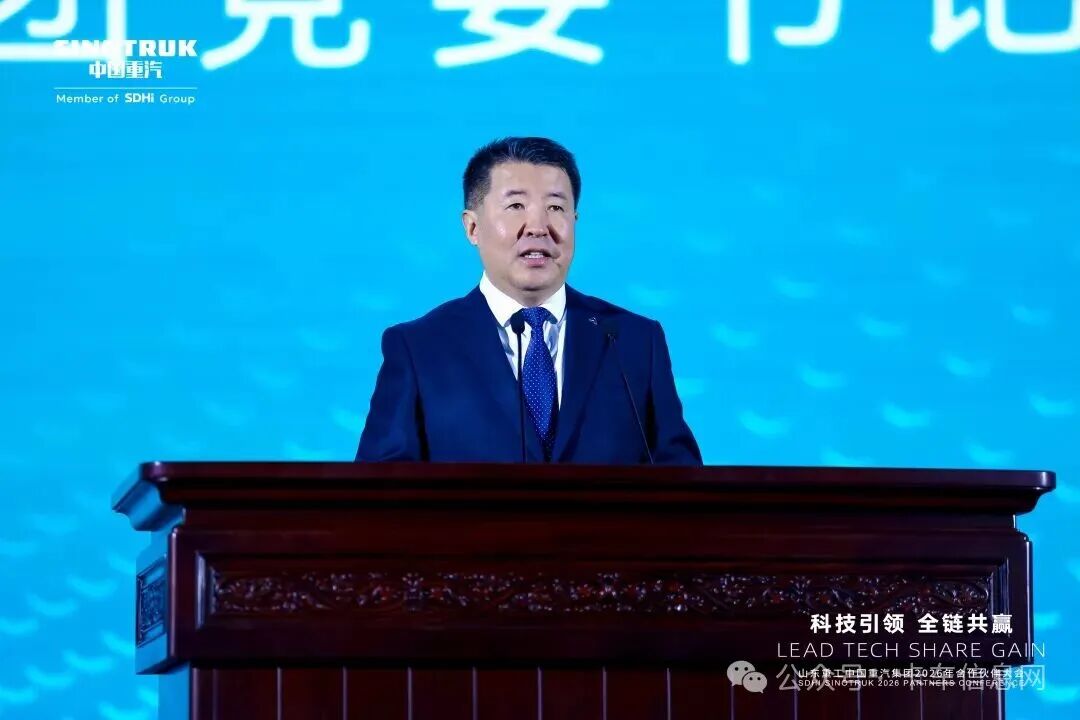
在2026年合作伙伴大会上,中国重汽交出了一份2025年营收突破2250亿元,并正式提出"到2030年,实现汇总营收4000亿元、整车销量80万辆的宏伟蓝 图。" 面对行业变革,中国重汽如何通过战略升级、模式创新引领发展?又如何在转型中坚守对合作伙伴的共赢承诺? 笔者将从中国重汽集团党委书记、董事长刘正涛与总经理刘伟的发言中,剖析中国重汽在"变"与"不变"中构建共赢生态的发展路径。 变的魄力 六大战略,重汽迈向系统性重构 "2025年,中国重汽重卡销量预计突破30万辆,连续四年位居中国第一,更是中国品牌首次位居全球重卡销量榜首。"中国重汽集团党委书记、董事长刘正 涛用一组数据宣告了中国商用车行业的历史性突破。 中国重汽集团党委书记、董事长刘正涛 变的不仅是规模,更是增长逻辑。中国重汽集团总经理刘伟指出,2025年中国重汽的成功源于"三个转变"——产品结构向高端升级、营销从渠道管理转向 渠道赋能、业务从单一销售延伸至全生命周期服务。这推动国内重卡销量同比增长33%,轻卡增长29%,新能源重卡销量达2.8万辆,出口连续21年位居重 卡行业首位。 中国重汽集团总经理刘伟 面向2030年,中国重汽的"变"更加系统化。 ...


锚定2030全新目标 中国重汽以五大核心竞争力成就企业高速发展
Zhong Zheng Wang· 2025-12-19 11:13
Core Viewpoint - China National Heavy Duty Truck Group is advancing towards its 2030 goal of achieving a total revenue of 400 billion yuan and vehicle sales exceeding 800,000 units, driven by a clear strategic blueprint, solid core competencies, and strong execution capabilities [1][6] Group 1: Core Competencies - The company has established five core competencies that serve as a solid foundation for its rapid development and sustained leadership in the commercial vehicle industry [1][6] - Technological self-control is the core of these competencies, with the company achieving independent control over key components such as engines and transmissions, and leading the industry with an engine thermal efficiency exceeding 50% [1][6] - In the new energy sector, the company is fully engaged in three major technological routes: pure electric, hybrid, and hydrogen fuel cells, supported by a comprehensive independent R&D system [1][6] - The company plans to establish a top-tier R&D team of over 8,000 people in the next five years to enhance its technological advantages [1] Group 2: Differentiated Advantages - The company has a complete industrial chain from key components to vehicle manufacturing, ensuring supply chain stability and optimizing costs through production line synergy and data interconnectivity [2] - China National Heavy Duty Truck Group has built a global marketing and service network, with over 480 heavy truck networks and 300 light truck networks in China, and exports to over 150 countries, maintaining a dominant position in the heavy truck export market [2] - The company has a rigorous quality control system that prioritizes product quality, ensuring reliability and stability through comprehensive process management [2] Group 3: Transformation Paths - The company is pursuing six transformation paths to achieve its ambitious 2030 goals, with green transformation as a core growth engine, focusing on a full range of new energy products [3] - Digital transformation is reshaping industry value, with the company advancing from L2-level assisted driving to high-level autonomous driving, aiming for over 55% market share in high-level intelligent driving systems by 2025 [3] - The company is transitioning to a service-oriented model, enhancing user lifetime value by moving beyond traditional product sales [3] - Internationalization is expanding growth potential, with a strategy to export a full range of products and establish overseas R&D and production centers [3] - Diversification is enriching growth trajectories by solidifying its core commercial vehicle business while expanding into intelligent equipment and related industries [4] - High-end transformation is aimed at improving profitability by shifting from price competition to value competition [4] Group 4: Market Growth Expectations - The management predicts continued growth in the commercial vehicle market, supported by technological changes, upgraded market demand, and industry structural adjustments [6] - The company is well-positioned to navigate industry cycles while continuously opening up growth opportunities, supported by increased R&D investment and deepening globalization [6] - With ongoing breakthroughs in new energy business scale, the company is expected to deliver on its performance growth commitments, providing long-term stable returns for the capital market [6]
中国重汽重卡年产销30万辆背后的智造跃迁
Xin Lang Cai Jing· 2025-12-19 09:38
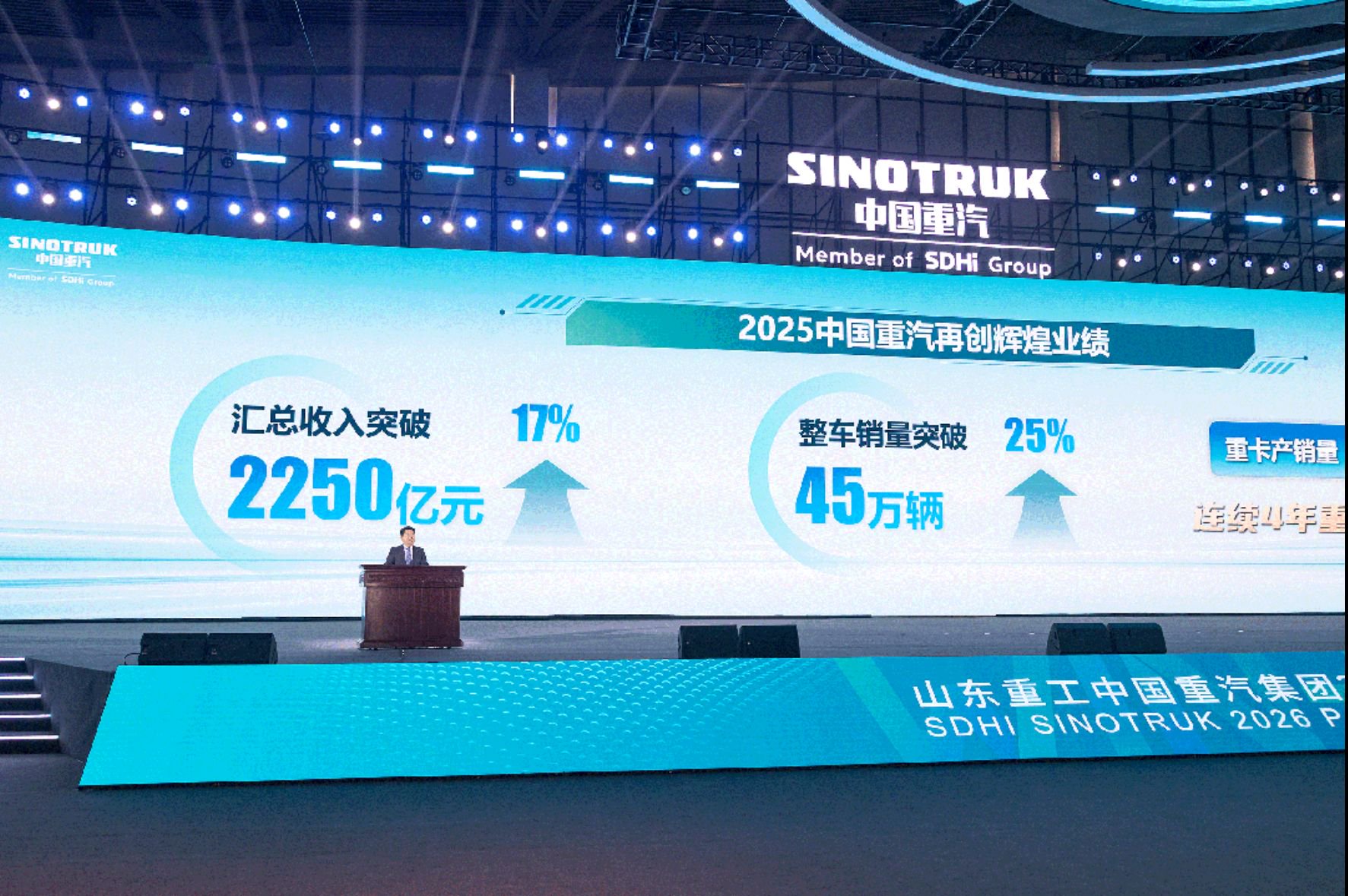
Core Insights - In 2025, China's commercial vehicle industry achieved a historic breakthrough, with China National Heavy Duty Truck Group (CNHTC) surpassing 300,000 heavy truck sales, marking its fourth consecutive year as the domestic industry leader and its first time ranking first globally in heavy truck sales [1][3] Group 1: Financial Performance - CNHTC's total revenue is expected to exceed 225 billion yuan, representing a 17% year-on-year increase, while total vehicle sales are projected to surpass 450,000 units, reflecting a 25% growth [3] - In the domestic market, heavy truck sales are expected to reach 150,000 units, a 33% increase, while light truck sales are projected at 120,000 units, up 29% [3] - The company has shown remarkable growth in the new energy sector, with expected sales increases of 230% for new energy heavy trucks and 390% for light trucks [3] Group 2: Export Performance - CNHTC exported over 150,000 heavy trucks this year, marking an 11% increase and maintaining its position as the top exporter of heavy trucks in China for 21 consecutive years [4] - In September, the company set a new record for monthly exports, exceeding 15,000 units [4] - The company has diversified its export product categories, with after-market parts sales increasing by 53% [4] Group 3: Competitive Advantage - CNHTC has developed a robust core competitiveness system, highlighted by the launch of the "Xiao Zhong 1.0" intelligent service system, which utilizes advanced AI technology to enhance customer service across the vehicle lifecycle [6] - The introduction of L2+ intelligent driving assistance technology improves operational efficiency, reducing labor costs by 20%-50% and increasing vehicle utilization by 20% [6] - The company has achieved a daily production capacity of 1,300 vehicles, ensuring high-quality and timely delivery to customers [6] Group 4: Future Development Plans - CNHTC aims to achieve a total revenue of over 400 billion yuan and vehicle sales exceeding 800,000 units by 2030, supported by a commitment to R&D and the "Talent Plan" [8] - The company will focus on six strategic directions: product, channel, policy, brand, service, and ecosystem, to maintain its leadership in commercial vehicle sales and market share [8] - The chairman emphasized that reaching the top is just the beginning, and the company is committed to high-quality development in the commercial vehicle industry [8]
山东重工中国重汽集团2026年合作伙伴大会在济南举办
Zhong Zheng Wang· 2025-12-19 07:00
Core Insights - The Shandong Heavy Industry China National Heavy Duty Truck Group held its 2026 Partner Conference in Jinan, focusing on "Technology Leading All-Chain Win-Win" [1] - The company recognized outstanding partners for their contributions in 2025, projecting a total revenue of 225 billion yuan, a 17% year-on-year increase, and vehicle sales exceeding 450,000 units, a 25% increase [1] - The company aims to achieve a total vehicle sales target of 800,000 units and a consolidated revenue of over 400 billion yuan by 2030, emphasizing a strategic transformation towards green, digital, and international development [2] Group 1 - The conference featured over 3,000 partners and highlighted the company's achievements in 2025, including a record production and sales of heavy trucks exceeding 300,000 units [1] - The company reported a significant increase in domestic market performance, with heavy truck sales expected to rise by 33% to 150,000 units and light truck sales by 29% to 120,000 units [1] - The company introduced the "Xiao Zhong 1.0" high-level intelligent service system, which utilizes AI technology for various operational needs, enhancing the vehicle lifecycle management [2] Group 2 - In terms of exports, the company achieved a historic milestone with heavy truck exports exceeding 150,000 units, an 11% increase, maintaining its position as the top exporter for 21 consecutive years [2] - The company expanded its export product categories, with light truck exports increasing by 161% and aftermarket parts sales rising by 53% [2] - The conference showcased over 200 commercial vehicle products and components, demonstrating the company's technological strength and innovation [3]
再设立全新目标 中国重汽全系列商用车2030年要实现销售80万辆 | 头条
第一商用车网· 2025-12-19 02:11
Core Viewpoint - China National Heavy Duty Truck Group aims to achieve a total commercial vehicle sales target of 800,000 units and an export target of 300,000 units by 2030, with specific sales goals for 2026 set at 340,000 units domestically, including 170,000 heavy trucks and 150,000 light trucks [1][12]. Group 1: 2025 Achievements - In 2025, China National Heavy Duty Truck's heavy truck production and sales exceeded 300,000 units, maintaining its position as the leading heavy truck manufacturer in China for four consecutive years and becoming the world's number one heavy truck brand [3]. - The company expects a total revenue of over 225 billion yuan in 2025, representing a 17% year-on-year increase, with total vehicle sales projected to surpass 450,000 units, a 25% increase from the previous year [4][10]. Group 2: Export Performance - Heavy truck exports are projected to exceed 150,000 units in 2025, marking an 11% year-on-year growth, while light truck exports saw a significant increase of 161% [4]. - The company has established a strong export presence, accounting for a substantial share of China's heavy truck exports for 21 consecutive years [4]. Group 3: Technological and Strategic Developments - China National Heavy Duty Truck has invested approximately 3 billion yuan annually in R&D, supported by national-level research centers and a workforce of over 3,000 R&D personnel [6][9]. - The company is focusing on six major transformations: green, digital, service-oriented, international, diversified, and high-end, aiming to lead in high-end commercial vehicle products [10][12]. Group 4: Future Goals and Market Outlook - For 2026, the company anticipates a stable demand in the commercial vehicle market, with a total market capacity of 800,000 heavy trucks and 700,000 light trucks [14]. - To achieve its sales target of 340,000 units in 2026, the company plans to invest over 3.4 billion yuan in product upgrades and enhance its supply chain collaboration [14].
泸州银行:让金融活水“精准滴灌”,服务温度“暖到心田”
Jin Rong Jie· 2025-12-18 05:44
Core Insights - The banking industry is evolving from a "one-size-fits-all" service model to a more precise and diversified approach, with Luzhou Bank leading the way in innovative financial services that cater to specific needs [1] Group 1: Targeted Services for Specific Professions - Luzhou Bank has identified the unique needs of teachers, launching a dual-track service model that combines online convenience with offline engagement, creating a dedicated service channel for educators [2] - The bank has also reached out to healthcare workers by providing thoughtful gestures and personalized financial consultations, enhancing the human touch in financial services [3] Group 2: Expanding Service Reach - Luzhou Bank is extending its tailored services to various groups, including court staff, by actively listening to their financial service challenges and offering personalized consultations [4] - The bank has innovatively combined social interaction with financial education for retired individuals, creating engaging events that provide practical financial information while fostering community [4] Group 3: Commitment to Customer-Centric Approach - Luzhou Bank is committed to continuously optimizing its service system to deliver high-quality financial resources effectively across different societal levels, maintaining a customer-centric service philosophy [4]
研判2025!中国热塑性聚酰胺行业产业链图谱、发展现状、细分市场、企业布局及未来发展趋势分析:多领域需求共振发力,行业规模有望突破266亿元[图]
Chan Ye Xin Xi Wang· 2025-12-16 01:04
Core Insights - The thermoplastic polyamide (PA) industry in China is experiencing simultaneous scale expansion and structural upgrades, with a focus on high-performance applications and recycling technology [1][11] - PA6 is entering a rational growth cycle, with capacity expansion and downstream demand creating a positive interaction, while PA66 is facing challenges in supply-demand balance after overcoming key raw material issues [1][11] - The industry is expected to focus on high-temperature, bio-based, and other high-end products, while consolidating raw material independence and promoting integrated supply chains [1][11] Industry Overview - Thermoplastic polyamide, commonly known as nylon, is a versatile engineering plastic with excellent mechanical properties and adaptability for various industrial applications [2][3] - The industry is characterized by a shift from large-scale manufacturing to breakthroughs in core technologies and high-value downstream applications [5][11] Market Dynamics - The overall market for thermoplastic composites in China is projected to reach approximately 64 billion yuan by 2024, with PA materials holding about 38% market share [11] - The PA6 segment has seen capacity grow from approximately 5.4 million tons to 7.858 million tons from 2020 to 2024, with a compound annual growth rate (CAGR) of 10% [11][12] - PA66 production capacity is expected to increase from 560,000 tons to 1.27 million tons during the same period, with a CAGR of 23.2% [12] Key Players - Major companies in the thermoplastic polyamide sector include Wanhua Chemical, Shenyang Chemical, and Jinhai Technology, among others [2] - Foreign companies like BASF maintain a strong presence in high-end markets, while domestic firms are accelerating their competitive positioning through technological advancements [14] Future Trends - The industry is expected to advance in three main directions: technological upgrades, supply chain collaboration, and application expansion [15] - There is a growing emphasis on high-performance and sustainable products, with a focus on bio-based polyamides and recycling technologies [15][16] - New application areas are emerging, particularly in the automotive sector, electronics, and low-altitude economy, which will drive demand for customized and functional products [17][18]






告别“无红绿灯行车” 家族信托立规进行时
Zhong Guo Zheng Quan Bao· 2025-12-15 20:19
Core Insights - The family trust sector in China is poised for regulatory standardization, addressing issues like will invalidation and asset isolation, which have arisen during the peak of wealth transfer between generations [1] - The China Trustee Association has drafted a consultation document for family trust business guidelines, which is expected to clarify industry boundaries and alleviate "inheritance anxiety" [1][2] Regulatory Framework - The consultation document establishes clear entry and operational standards, linking business qualifications to regulatory ratings, requiring trust companies to suspend new family trust business if they do not meet minimum ratings [2] - Trust companies must employ at least five dedicated personnel with over three years of relevant experience to manage family trusts, promoting a workforce with financial, tax, and legal expertise [2] Investment Threshold and Market Dynamics - A minimum investment threshold of 10 million yuan is proposed, emphasizing the core attributes of "wealth protection and inheritance," which aims to eliminate borderline practices in personal account management [2] - The document aims to address industry pain points related to publicity and fees, allowing for public promotion of family trust definitions and functions [2][3] Fee Structure and Competition - The consultation document emphasizes a principle of price-quality alignment, prohibiting unfair competition practices like low-price undercutting, and provides a specific fee calculation formula to curb harmful price wars [3] - This shift from price competition to value competition is expected to enhance service quality and reduce the risk of trust invalidation for clients [3] Market Size and Client Concerns - As of the end of 2024, the family trust sector's total scale is reported to be 643.58 billion yuan, with many families hesitant to engage due to frequent inheritance disputes and a lack of public trust [4] - Client misconceptions about family trusts being mere financial products rather than long-term services pose significant challenges for trust professionals [4] Industry Challenges - The industry faces compliance risks, particularly with cross-border asset allocation under the Common Reporting Standard (CRS) and anti-avoidance rules, alongside doubts about the effectiveness of trust structures [5] - A new trend in client acquisition involves using insurance trusts as an entry point, allowing clients to experience trust functions before transitioning to family trusts [5] Future Outlook - The family trust industry is expected to enter a phase of "compliance, professionalism, and diversification," with increasing demand for personalized services from high-net-worth individuals [7] - The focus for clients will shift from fee rates to the ability of trust companies to address complex issues like equity inheritance and tax planning, as the core value of trusts transitions from "asset concealment" to "transparent governance" [7]
东风商用车2026合作伙伴大会在渝举行
Yang Shi Wang· 2025-12-12 10:21
Core Insights - Dongfeng Commercial Vehicle Company held its 2026 Partner Conference in Chongqing, focusing on the theme "Defining the Track, Aggregating Strength, and Joining Hands for a New Journey" with over a thousand representatives from dealers, suppliers, service providers, and industry clients participating to review achievements from 2025 and plan for 2026 [1][3] Group 1: Strategic Goals and Development Plans - The company aims to achieve a total sales target of 176,000 units for 2026, focusing on "sales scale growth" and "profitability enhancement" as core objectives [3] - Dongfeng Commercial Vehicle will concentrate on key trends in the commercial vehicle industry, including electrification, intelligence, internationalization, and diversification, while enhancing product leadership and accelerating overseas expansion [3][10] - The company plans to establish a new cooperative system characterized by "ecological symbiosis, value co-creation, and risk sharing" with partners, forming a community of strategy, interests, and responsibilities [3] Group 2: Product Development and Innovation - The new modular global platform introduced by the company is compatible with five major regulatory systems and covers 28 key countries and regions, supporting internal combustion engines, pure electric, hybrid, and hydrogen fuel cell technologies [6] - A total of 214 new models will be launched in 2026, covering four major categories: traction, cargo, engineering, and special vehicles, with various energy forms including fuel, gas, pure electric, and hybrid [6][7] - The company showcased 57 new models at the conference, with 46 models from the headquarters and 23 each from traditional and new energy products [7] Group 3: Marketing and Collaboration Strategies - The marketing strategy for 2026 will focus on a "New Three-Dimensional Value Marketing System," which includes value creation, digital marketing, and service upgrades [7] - The company will deepen value chain collaboration by focusing on new product development, quality improvement, and supply chain security [7] - The conference marked the beginning of a new phase of collaboration between Dongfeng Commercial Vehicle and its partners, emphasizing the commitment to high-quality development in the commercial vehicle sector [10]


特朗普下令SEC审查代理咨询机构规则
Ge Long Hui A P P· 2025-12-12 00:55
Core Viewpoint - The article discusses President Trump's executive order aimed at limiting the influence of proxy advisory firms, which is part of a broader effort to weaken the impact of third-party entities on corporate decision-making [1] Group 1: Executive Order Details - The executive order was issued on Thursday and instructs the SEC chairman to review rules and regulations related to proxy advisory firms [1] - The order emphasizes the consideration of revising or rescinding rules, regulations, guidance documents, announcements, and memoranda that are inconsistent with the order's objectives [1] Group 2: Focus Areas - The review will particularly focus on aspects related to "Diversity, Equity, and Inclusion (DEI)" and "Environmental, Social, and Governance (ESG)" policies [1]