多资产多策略

Search documents
32万亿银行理财资产重构
Jing Ji Guan Cha Wang· 2025-11-02 10:22
Core Viewpoint - The banking wealth management industry is undergoing a transformation towards "multi-asset multi-strategy" approaches to cope with low interest rates, asset scarcity, and high market volatility, aiming to enhance returns and manage risks effectively [4][5][10]. Industry Trends - As of the end of Q3 2025, the total scale of bank wealth management reached 32.13 trillion yuan, with over 80% of funds still allocated to fixed-income assets, highlighting the need for diversification [4]. - The negative effects of the low-interest-rate environment have become apparent, with the performance benchmark for newly issued fixed-income products dropping from over 4% at the end of 2021 to approximately 2.4% by September 2023 [4]. Strategic Shifts - The industry consensus is shifting from "asset-driven" to "strategy-combination-driven" approaches, emphasizing the need for diversified asset allocation to enhance returns and reduce risks [5][10]. - Banks are increasingly incorporating alternative assets such as REITs, gold, and overseas investments into their portfolios to achieve a more robust multi-asset strategy [10][12]. Challenges in Implementation - The transition to a multi-asset strategy is not straightforward, as banks face challenges in aligning investment styles between newly recruited equity managers and existing risk management frameworks [7][8]. - Conflicts often arise between investment teams and risk management departments regarding the timing of profit-taking and risk exposure, complicating the implementation of multi-asset strategies [8][9]. Internal Management and Technology - The shift towards multi-asset strategies necessitates a comprehensive overhaul of internal management processes, including trading links, risk control, information disclosure, and compliance operations [13][14]. - The need for automation and advanced technologies like AI is emphasized to manage the complexities of multi-asset investment strategies and ensure compliance with regulatory requirements [13][14]. Risk Management Evolution - A new risk control model is being developed to adapt to the multi-asset strategy, focusing on the individual risk characteristics of different assets and their interactions [14][15]. - The industry is moving towards a more systematic approach to risk management, emphasizing the balance between low risk and high returns [14][15].


从“固收为王”到“多资产多策略” 32万亿银行理财资产重构
经济观察报· 2025-11-02 05:08
Core Viewpoint - The banking wealth management sector is undergoing a transformation towards a "multi-asset, multi-strategy" approach to address challenges posed by low interest rates, asset scarcity, and market volatility, necessitating a comprehensive restructuring of investment strategies, asset acquisition, trading processes, risk control, product disclosure, and compliance operations [2][4][5]. Group 1: Industry Challenges and Transformation - The banking wealth management industry is facing significant challenges due to the low interest rate environment, which has led to a decline in the returns of fixed-income assets, impacting the overall performance of wealth management products [4][5]. - As of the end of Q3 2023, the total scale of bank wealth management reached 32.13 trillion yuan, with over 80% of funds still allocated to fixed-income assets, highlighting the need for diversification [4]. - The transition to a "multi-asset, multi-strategy" model is seen as essential for creating stable and attractive returns in the current market landscape [4][5]. Group 2: Implementation of Multi-Asset Strategies - Banks are actively expanding their investment teams to include equity investments, quantitative strategies, and alternative assets such as REITs and gold, aiming to enhance returns and mitigate risks [2][11]. - The integration of diverse asset classes requires a shift from traditional fixed-income strategies to a more dynamic approach that emphasizes risk management and performance consistency [5][11]. - The challenges of aligning investment styles between new hires from brokerage firms and the conservative investment philosophy of bank wealth management teams have led to difficulties in achieving cohesive strategies [8][9]. Group 3: Internal Management and Risk Control - The shift to a "multi-asset, multi-strategy" framework necessitates a complete overhaul of internal management processes, including trading links, risk control iterations, information disclosure, and compliance operations [14][15]. - The complexity of managing diverse investment strategies requires advanced technology solutions, such as AI and automation, to enhance operational efficiency and ensure compliance with regulatory requirements [15][16]. - A new risk control model is being developed to adapt to the multi-asset environment, focusing on the unique risk characteristics of different assets and strategies while ensuring low correlation among them to achieve better risk diversification [16][17].
银行理财三季度规模破32万亿 行业竞合中探路“收益确定性”
2 1 Shi Ji Jing Ji Bao Dao· 2025-10-23 13:20
Core Insights - The banking wealth management market has shown steady growth, reaching a scale of 32.13 trillion yuan, with wealth management companies solidifying their dominant position [1][2] - The industry faces challenges and needs to transform its asset allocation logic to seek "certainty of returns" amid uncertainties [1][3] Market Overview - As of the end of Q3 2025, there are 4.39 million existing wealth management products, a year-on-year increase of 10.01%, with a total scale surpassing 32 trillion yuan, reflecting a 9.42% year-on-year growth [1] - Wealth management companies dominate the market with 3.06 million products and a scale of 29.28 trillion yuan, accounting for 91.13% of the total market [1][2] Product Structure and Asset Allocation - Fixed income products remain the mainstream, with a scale of 31.21 trillion yuan, representing 97.14% of the market, showing a slight increase of 0.05 percentage points year-on-year [2] - The asset allocation is primarily in fixed income, with bonds, cash, and bank deposits making up 40.4%, 27.5%, and 13.1% of total investment assets, respectively [2] - The industry’s leverage ratio has decreased to 106.65%, down 0.84 percentage points year-on-year, indicating effective risk management [2] Support for the Real Economy - The wealth management industry has supported the real economy with approximately 21 trillion yuan through investments in bonds, non-standardized debt, and unlisted equity [2] - In alignment with national strategies, 77 ESG-themed wealth management products were issued in Q3, raising over 20 billion yuan, with a total scale nearing 300 billion yuan [2] Investor Engagement - In the first three quarters of 2025, wealth management products generated a total return of 568.9 billion yuan for investors, with Q3 alone contributing 179.2 billion yuan [3] - The number of investors holding wealth management products reached 139 million, a year-on-year increase of 12.70% [3] Industry Challenges - The industry is entering a competitive era where bank wealth management, public funds, and insurance asset management all exceed 30 trillion yuan, leading to the need for a transformation in asset allocation logic [3][4] - Key challenges include the need for a paradigm shift in asset allocation due to a "low interest rate, high volatility, and asset scarcity" environment [4] - Differentiated positioning in the reallocation of household wealth is crucial, as the growth rates of insurance and public funds have outpaced wealth management [4] Future Transformation Directions - The industry must build a factory-like, industrialized management system that aligns with client risk-return needs [5] - Solutions should address three core issues: transforming vague investment strategies into precise guidelines, upgrading operations to standardized processes, and creating a human-centered multi-strategy system [6][7]
低利率倒逼银行理财转型 海外配置与多元策略成破局关键
Hua Xia Shi Bao· 2025-10-23 00:03
Core Insights - The banking wealth management industry is actively seeking overseas asset allocation to address the challenges posed by a low interest rate environment, as domestic fixed-income product performance benchmarks have dropped from over 4% at the end of 2021 to approximately 2.4% [1][3] Group 1: Low Interest Rate Environment - The one-year fixed deposit rate has fallen below 1% for the first time this year, while the three-year fixed deposit rate has entered the "1" era, indicating a significant decline in interest rates [3] - Various fixed-income asset yields are at historical lows, with the 10-year government bond yield slightly rising but still at a low level compared to historical data [3] Group 2: Cross-Border Investment - Cross-border investment is viewed as a crucial strategy for enhancing product yields in a low interest rate environment, providing diversified options for wealth management products [4] - Multiple channels for cross-border investment include mutual recognition funds, QDII funds, bond connect, and Hong Kong stock connect, allowing for a broader selection of high-cost performance investment targets [4][5] Group 3: Asset Allocation Strategies - The industry is shifting from a primarily fixed-income asset allocation structure to a multi-asset and multi-strategy approach to mitigate risks and enhance returns [3][4] - Companies are expanding asset categories to include low-correlation assets such as gold, options, REITs, and cross-border assets to reduce product net value volatility and achieve absolute returns [5][8] Group 4: Changing Wealth Structure - The total savings of Chinese residents increased from 93 trillion yuan at the end of 2020 to 162 trillion yuan by June 2025, with per capita savings exceeding 115,000 yuan [7] - The proportion of real estate in residents' wealth has decreased from 54.6% in 2020 to 48.7% in 2024, while financial assets have increased to 47.6% [7] Group 5: Industry Trends and Challenges - The traditional profit model of relying on "interest income + leverage" is becoming unsustainable, prompting a need for innovation and research in technology to capture excess returns [8] - The banking wealth management industry has surpassed 32 trillion yuan in scale, with a focus on differentiated positioning and strategy-driven asset management to enhance product performance stability [8][9]
3000亿规模启示:一个好的理财产品线是怎样形成的?
聪明投资者· 2025-10-11 03:51
Core Viewpoint - The bond market is experiencing significant volatility, making it challenging for investors, particularly in the context of a broader economic environment that does not support a bear market [2][8]. Group 1: Market Conditions - The yield on ten-year government bonds has fluctuated between 1.85% and 1.9%, indicating a rebound in bond market yields before the holiday [2]. - Factors such as the stock-bond seesaw effect and recent changes in public fund redemption policies have contributed to the volatility in the bond market [2]. - Despite the challenges, the fundamental and monetary policy outlook suggests that the bond market is not entering a bear phase, contrasting with the anticipated bull market in 2024 [2]. Group 2: Company Performance - 招银理财 has successfully surpassed a management scale of 300 billion yuan for its "全+福" multi-strategy series [3][4]. - The company has developed an eight-strategy system within the "全+福" product line, which has seen its scale grow significantly over three years [7]. Group 3: Investment Strategies - 招银理财 emphasizes professional differentiation and has created a product that combines bond assets with high-dividend equities, achieving returns of 3.18% over six months and 4.79% over one year [8]. - The investment team has established a high-probability method for predicting bond market trends, indicating a more optimistic short-term outlook for high-grade credit bonds [8]. - The performance benchmark for their products includes a mix of bond indices, high-dividend equity indices, and gold, showcasing a diversified investment approach [9]. Group 4: Product Development - 招银理财 has adopted a "white-box" strategy for transparency, allowing clients to understand the reasons behind product fluctuations [15]. - The company has shifted towards daily open products to enhance liquidity and reduce the likelihood of clients selling at a loss [15]. - The 安盈优选 product has demonstrated a high probability of profitability, with over 95% of investors achieving positive returns when holding for the full investment period [16]. Group 5: Industry Trends - The asset management industry is evolving towards a model of industrialized product manufacturing, focusing on platform capabilities and diversified strategies to meet changing investor demands [19]. - 招银理财 employs a "big platform, small team" approach, creating specialized investment teams to enhance strategy richness and execution [20]. - The company aims to provide systematic, risk-return defined solutions, ensuring a high probability of client profitability [20].

海外富人的首选,多资产多策略私募到底是什么?
雪球· 2025-09-23 08:41
Core Viewpoint - The article discusses the growing preference among high-net-worth investors for multi-asset multi-strategy hedge funds, contrasting this with the general trend of retail investors favoring index funds for passive returns [5][12]. Group 1: Multi-Asset Multi-Strategy Hedge Funds - High-net-worth investors are increasingly attracted to hedge funds that employ multi-asset multi-strategy approaches, as exemplified by notable funds like Bridgewater Associates, Millennium Management, and Citadel, which manage assets of approximately $150 billion, $64 billion, and $62 billion respectively [5][6]. - The shift towards multi-asset multi-strategy investing began in the 1950s and has evolved significantly, especially after the financial crises of 2000-2008, which highlighted the need for diversified strategies to mitigate risks [7][9][10]. - The performance of top hedge funds in 2024 showcases the effectiveness of macro and multi-strategy approaches, with funds like Discovery and PointState achieving returns of 52.0% and 47.9% respectively [11]. Group 2: Investment Goals and Risk Management - High-net-worth investors have shifted their investment goals towards seeking stable returns in uncertain markets, rather than attempting to predict market movements [12]. - The concept of risk parity has evolved to encompass not just asset risk but also the parallel use of multiple strategies, aiming for absolute alpha [12]. - For wealthy individuals, preserving capital is often prioritized over achieving high returns, as the cost of potential losses is significantly higher than the value of gains [13]. Group 3: Characteristics of Multi-Asset Multi-Strategy - Multi-asset multi-strategy investing involves allocating funds across various asset classes with low correlation to achieve returns across different market cycles [14][16]. - This approach is seen as a more effective wealth management tool in the context of shifting savings patterns among residents [15]. - The dynamic nature of markets necessitates a move away from single-asset strategies, with multi-asset multi-strategy trading providing a means to achieve stable absolute returns [20]. Group 4: Market Dynamics and Asset Performance - The article highlights the volatility of various asset classes over the past decade, indicating that no single asset has consistently performed well, emphasizing the need for diversified strategies [17]. - Different economic cycles favor different asset classes, such as stocks during recovery, commodities during overheating, and high-quality bonds during recessions, aligning with the classic investment theory of the Merrill Lynch clock [21]. - Multi-strategy approaches allow for risk diversification and complementary returns, adapting to various market conditions and mitigating the risks associated with single-strategy investments [22]. Group 5: Future Outlook and Considerations - The future of multi-asset multi-strategy investing in China appears promising, with significant growth potential, although investors must be discerning in selecting genuine strategies that deliver stable profits [22][23]. - It is crucial to evaluate whether a strategy genuinely incorporates both multi-asset and multi-strategy elements, as some may only superficially meet these criteria [23]. - The complexity of multi-asset multi-strategy trading necessitates robust research and management capabilities from fund managers to ensure effective execution [23].

兴银理财汪圣明:推进资管与财富融合、投研平台化与产品化结合
2 1 Shi Ji Jing Ji Bao Dao· 2025-09-11 10:17
Core Insights - The banking wealth management industry is undergoing significant changes, with a clear shift in market leadership towards more market-oriented joint-stock banks, leading to a pronounced Matthew effect [1] - Xingyin Wealth Management has consistently ranked among the top players in the industry, being recognized in the "2025 Global Asset Management 500" list, currently positioned 90th globally and 8th in China [1] - The company emphasizes a transition from resource-driven growth to capability-driven growth, focusing on enhancing adaptability through ecosystem collaboration, product system restructuring, and multi-asset strategy platform development [1][4] Industry Development - The wealth management industry is transitioning from a focus on real estate and government platforms to a new triangle of technology, industry, and finance, facilitating a shift in residents' wealth allocation towards financial assets [5] - The industry is moving towards standardization, regulation, and transparency, which supports the growth of residents' property income and meets the direct financing needs of the real economy [5] Strategic Positioning - Xingyin Wealth Management's strategic development is guided by a "365" transformation strategy, focusing on suitability, marketability, and adaptability, while implementing six major restructurings and five capability enhancements [4] - The company aims to build a first-class asset management institution, with a clear understanding of industry development logic and future strategic positioning [4] Capability Building - The company plans to enhance its capabilities in four key areas: customer demand insight and product innovation, large asset allocation management and multi-strategy application, customer service system construction, and digital transformation with AI [6][7] - The focus on customer needs requires a shift from fixed income to multi-asset strategies, optimizing customer experience and creating value [6] Product Innovation - Product innovation is essential for the company, with a focus on aligning product creation with customer needs and ensuring effective lifecycle management [8] - The company has developed a product blueprint "8+3" and has successfully launched several product lines that cater to varying customer demands, emphasizing sustainable income generation [9][10] Channel Development - Xingyin Wealth Management has established a comprehensive channel coverage and is focused on deepening collaboration with banks to enhance the effectiveness of wealth management services [12] - The company recognizes the importance of adapting to regulatory changes and market dynamics to ensure effective customer engagement and product delivery [12][13] Research and Investment Framework - The investment research framework of Xingyin Wealth Management is structured around a "234N" model, emphasizing both self-directed and outsourced investment strategies [15] - The company is enhancing its research capabilities by establishing agile teams and promoting collaboration across departments to improve decision-making and investment performance [17][18]

华夏理财董事长苑志宏:“理财工厂”走向投销一体化 突破能力圈筑基下个五年计划
Zhong Guo Zheng Quan Bao· 2025-09-05 00:50
Core Viewpoint - The company is transitioning towards an integrated sales and investment model, aiming to enhance operational efficiency and market competitiveness while preparing for the next five-year plan [1][2]. Group 1: Company Growth and Strategy - The company achieved a significant milestone by surpassing 1 trillion yuan in asset management, marking the end of its first five-year phase and the beginning of a new strategic journey [1]. - The company emphasizes a market-oriented development approach, with 60% of its sales coming from external channels, the highest in the market [1][2]. - The "investment-sales integration" reform has improved the efficiency of the entire process from channel demand to customer service [1][2]. Group 2: Market Environment and Challenges - The company recognizes the accelerating development of the asset management industry and the shift of funds from bank deposits to wealth management products due to declining deposit rates [3][4]. - The company faces challenges in maintaining product stability and differentiating its offerings in a market where product styles are becoming increasingly homogeneous [3][4]. Group 3: Investment Strategy and Product Development - The company is focusing on enhancing its investment capabilities, particularly in equity investments, by recruiting talent and adjusting internal mechanisms to support this shift [6][9]. - The company aims to increase the supply of medium to long-term products and innovate product functionalities to enhance customer engagement and retention [5][6]. - The company is also working on building a systematic equity investment research framework to improve its investment decision-making process [6][9]. Group 4: Future Outlook and Innovations - The company plans to invest more resources in technology finance, aiming to create a robust capability system around core industries and improve its project selection process [9]. - The company is shifting from a passive response to a proactive approach in the asset management industry, focusing on product design and customer service [4][5].
山证资管李宏宇:注重投资者回报是大资管行业的“第一性”
2 1 Shi Ji Jing Ji Bao Dao· 2025-08-20 12:13
Core Insights - The current trend in the asset management industry is a shift towards passive investment, driven by changes in the investor structure and the need for high-quality development in public funds [3][4][5] - The rapid increase in institutional investors' share in the stock market, now exceeding 50%, indicates that index curves are increasingly shaped by institutional participants, making it more challenging for fund managers to outperform benchmarks [3][4] - The industry is witnessing a need for differentiation and ecological integration to rebuild core competitiveness in a low-interest-rate environment, with a focus on multi-asset and multi-strategy approaches [7][10] Investor Structure Changes - The rise of passive investment is significantly influenced by the rapid transformation of the investor structure, with institutional investors now holding a majority stake in the market [3][4] - Fund managers face increasing difficulty in outperforming benchmarks due to the competitive landscape created by institutional investors [3][4] Passive Investment Development - The acceleration of passive investment is a response to the maturation of the market, where not all active fund managers can consistently rank highly, necessitating a shift towards passive strategies [4] - Companies are facing tough decisions regarding their participation in the passive investment market, as missing out could mean losing a significant share of the equity market [4] Fund Manager Optimization - The implementation of the "High-Quality Development Action Plan" by the China Securities Regulatory Commission aims to reform the assessment mechanisms for fund managers, promoting a more efficient and professional workforce [5][6] - The transition towards high-quality development is expected to optimize the fund manager pool and extend their career longevity through clearer operational standards [6][9] Multi-Asset and Multi-Strategy Approaches - To meet the evolving demands of investors in a low-interest-rate environment, companies are encouraged to adopt multi-asset and multi-strategy investment models [7][10] - The focus on investor returns as a primary objective will reshape the industry, with firms that provide diverse wealth enhancement solutions gaining greater respect and recognition [7][10] Recommendations for Asset Management Firms - Each asset management category and firm should cultivate a sense of mission to enhance their competitive edge in the market [8] - Companies are advised to innovate continuously and learn from each other to develop effective strategies that cater to investor needs [10]

重磅会议,信号巨大!低利率时代,如何破局
2 1 Shi Ji Jing Ji Bao Dao· 2025-08-17 02:38
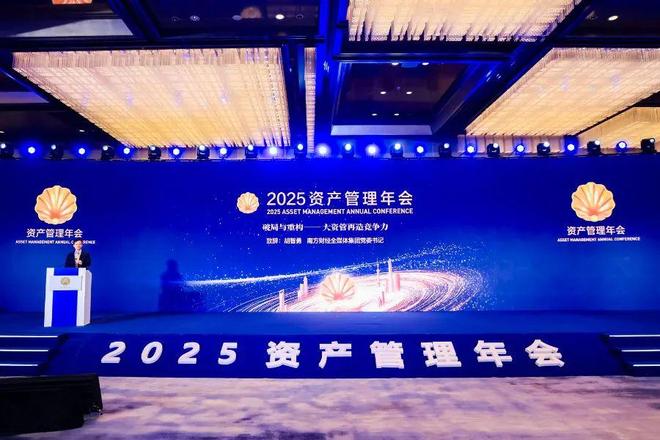
Core Viewpoint - The asset management industry is facing a transformative era characterized by the need to break old path dependencies and reconstruct core competitiveness, emphasizing a return to long-term value creation for clients and a more open ecosystem [3]. Group 1: Conference Overview - The "2025 Asset Management Annual Conference" was held in Shanghai, focusing on themes such as multi-asset allocation and new trends in asset management under the rise of passive investment [1]. - The conference featured a main forum and two parallel thematic forums, attracting nearly a thousand industry professionals and notable speakers [1][3]. Group 2: Key Insights from Speakers - Liu Shijun, former Deputy Director of the Economic Committee of the National Committee of the Chinese People's Political Consultative Conference, suggested that policies should focus on increasing consumer spending as a proportion of GDP to stabilize growth [5]. - Li Yang from the Chinese Academy of Social Sciences emphasized the need for financial institutions to transform in response to the challenges posed by a low-interest-rate environment, advocating for the development of financial services and asset management [7]. Group 3: Discussions on Asset Management Strategies - The main forum discussed how asset management institutions can rebuild competitiveness, with a consensus on enhancing research and customer service capabilities as critical factors [9]. - The conference highlighted the importance of "product + service" in providing comprehensive financial services from asset allocation to wealth management [9]. Group 4: Trends in Investment Strategies - The rise of ETFs as a significant tool for multi-asset and multi-strategy investment was noted, with the ETF market evolving into a new infrastructure for asset allocation [13][14]. - The low-interest-rate environment has led many asset management firms to adopt multi-asset and multi-strategy approaches, leveraging the advantages of ETFs for liquidity and low transaction costs [14].