
技术迭代

Search documents
“技术升级+生态共建”赋能中国重汽传统能源业务高质量发展,传统能源市场仍有增长空间
Da Zhong Ri Bao· 2025-12-22 10:03
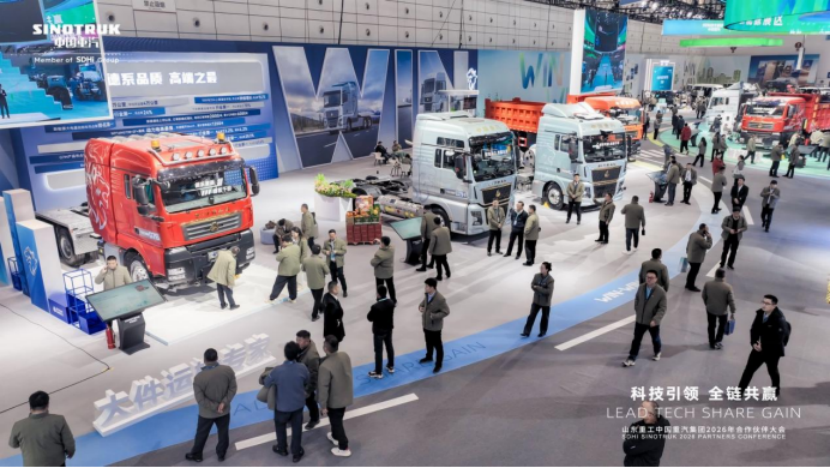
Core Insights - The traditional energy commercial vehicle sector still holds approximately 70% of the domestic market share, indicating that its foundation remains strong despite the acceleration of the new energy transition and deep industry restructuring [1] - China National Heavy Duty Truck Group (CNHTC) is not passively shrinking its traditional energy business but is strategically adjusting to achieve high-quality development through technological upgrades and ecosystem building [1][8] Technological Advancements - CNHTC is leveraging its national-level technology center and nearly a century of automotive experience to upgrade traditional energy products towards high efficiency and low carbon emissions [2] - The new generation of heavy-duty truck platforms features 307 patents, reducing drag coefficient to 0.45 and fuel consumption by 12%, ensuring the products remain at the forefront of industry efficiency and reliability [2] - The company is actively integrating new technologies with traditional energy products, with L2-level intelligent driving systems widely adopted in the sector, and aims for sales of high-level intelligent driving systems to reach 1,500 units by 2025, capturing over 40% of the domestic market [2] Ecosystem Development - In response to increasing market concentration, CNHTC is transitioning from a single product supplier to a comprehensive solution provider, offering a full lifecycle service system that enhances customer loyalty and market competitiveness [5] - The company is focusing on providing optimal Total Cost of Ownership (TCO) solutions through services covering purchase, usage, maintenance, and replacement [5] Market Expansion - Traditional energy commercial vehicles are not merely competing for existing market share; they remain irreplaceable in long-haul and complex operational scenarios, ensuring their core market position [6] - CNHTC has developed a comprehensive product matrix for traditional energy vehicles targeting specific scenarios like engineering construction and long-distance logistics, further solidifying its market leadership [6] - The overseas market is identified as a key growth engine for traditional energy business, with CNHTC exporting to over 150 countries and regions, achieving a record monthly export of 15,000 heavy-duty trucks by September 2025, and projecting an annual export of over 150,000 units, a year-on-year increase of 11% [6][8]


王琳:欧盟松绑“燃油车禁令”,对我们意味着什么
Huan Qiu Wang Zi Xun· 2025-12-21 22:53
Group 1 - The European Commission has adjusted the "fuel vehicle ban," allowing new registrations of internal combustion engine vehicles after 2035, relaxing the previous "zero emissions" standard [1] - The new regulation changes the carbon dioxide emission reduction target from 100% to 90%, allowing hybrid vehicles, range-extended electric vehicles, and even traditional fuel vehicles to be sold in the EU [1] - This policy adjustment is a response to various pressures, particularly from Germany, where the automotive industry is a key economic pillar, and aims to provide a more flexible and cost-effective transition path for manufacturers [1][2] Group 2 - The policy change has sparked intense debate within Europe, with supporters arguing it offers consumers more choices and gives manufacturers more time to transition to electric vehicles, while opponents believe it undermines climate goals by prolonging the market life of fuel vehicles [2] - For China, the relaxation of the ban provides a buffer period for automotive powerhouses like Germany, but may also lead to a long-term disadvantage in the global electric vehicle race, as battery technology continues to advance rapidly [3] - The new regulations require the use of environmentally friendly steel in vehicle production, which may favor local European steel over that from China and Turkey, while also promoting the development of local battery factories and supply chains [3][4] Group 3 - The adjustment of the fuel vehicle ban presents an opportunity for China to expand its market and strengthen its technological advantages, emphasizing the importance of continuous technological iteration and optimized industrial layout during this critical period [4]
iRobot破产重组背后:代工厂转向品牌商有利有弊
Zhong Guo Jing Ying Bao· 2025-12-19 20:15
Core Viewpoint - iRobot Corporation has filed for Chapter 11 bankruptcy protection, entering a restructuring agreement with its main creditor, Picea, which will acquire 100% of iRobot's equity through a court-supervised process, leading to the company's delisting from NASDAQ and total loss for common stockholders [2][3][5]. Financial Performance - For the first three quarters of fiscal year 2025, iRobot reported revenues of $375 million, a year-over-year decline of 17.5%, and a net loss of $130 million, down 90% from the previous year [2]. - The company has only $24.8 million in cash and equivalents, with total liabilities reaching $508 million and shareholders' equity at -$26.8 million, indicating a negative cash flow of $104 million [2][3]. Reasons for Bankruptcy - The bankruptcy is attributed to intensified market competition, rising costs, and a lack of innovation, particularly as Chinese brands have rapidly gained market share with high-cost performance products [3][4]. - iRobot's asset-liability ratio has been as high as 105% over the past five years, indicating insolvency, with revenues projected to drop from $1.183 billion in 2022 to $682 million in 2024 [3][4]. - The failed acquisition by Amazon for approximately $1.7 billion, which was blocked by regulatory scrutiny, directly contributed to iRobot's financial distress [4][5]. Impact of Acquisition by Picea - The acquisition by Picea represents a significant shift for the company, providing a pathway for debt restructuring and business continuity while marking Picea's transition from a manufacturing leader to a global brand operator [6][7]. - This acquisition is expected to leverage Picea's supply chain efficiencies and technological capabilities to revitalize iRobot's product innovation and market competitiveness, particularly in emerging markets [6][7]. Market Dynamics - The global market for robotic vacuums is experiencing growth, with a reported 18.7% increase in shipments year-over-year, while iRobot's market share has fallen to 7.9%, pushing it out of the top five global players [5][10]. - Chinese brands dominate the market, with companies like Roborock and Ecovacs leading in sales, benefiting from cost advantages, rapid innovation cycles, and effective localization strategies [10][11]. Industry Insights - The rise of Chinese robotic vacuum manufacturers highlights the need for iRobot and similar companies to enhance their technological innovation and brand positioning to remain competitive in a rapidly evolving market [10][11]. - The bankruptcy of iRobot signifies a pivotal moment in the robotic vacuum industry, emphasizing the importance of adapting to market changes and consumer demands for enhanced product features and affordability [11].

科迈罗 总经理 章少坤:新能源浪潮下科迈罗Pack设备四大生态构建
起点锂电· 2025-12-19 12:17
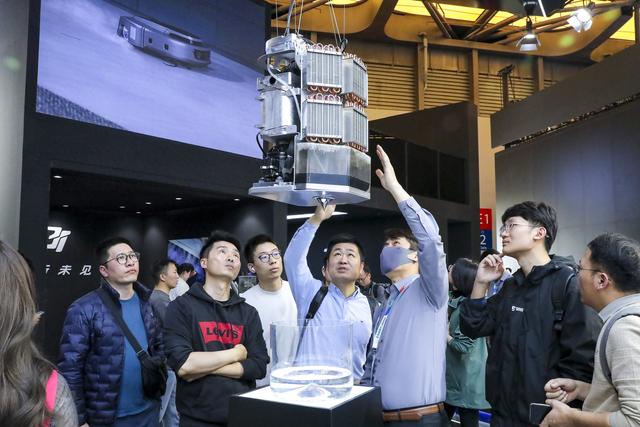
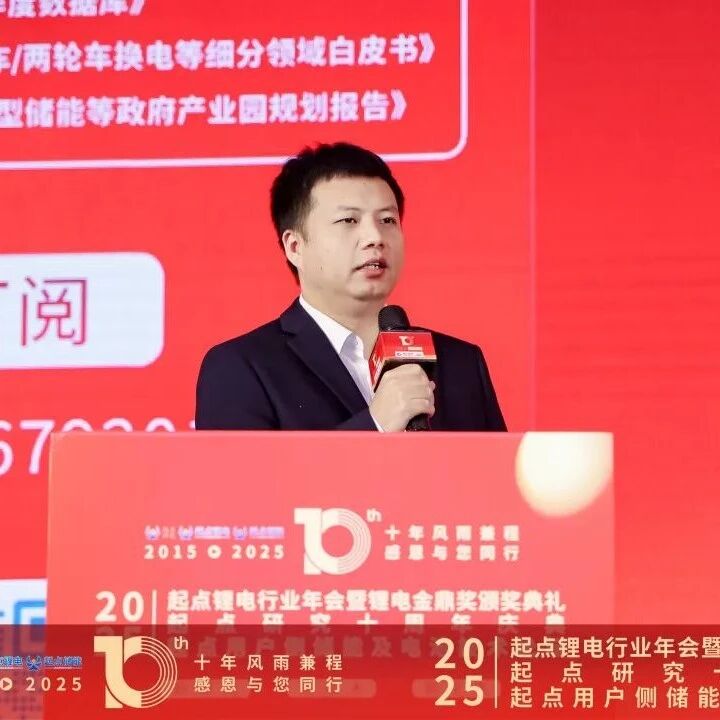
Core Viewpoint - The article discusses the advancements and innovations in the energy storage battery industry, particularly focusing on the rapid technological iterations and the importance of efficient production and supply chain management to capture market opportunities [1][5]. Group 1: Event Overview - The 2025 User-Side Energy Storage and Battery Technology Forum was held on December 19, 2025, in Shenzhen, with over 800 attendees focusing on commercial energy storage, portable storage, and safety challenges [1]. - The event included the 10th Annual Lithium Battery Industry Conference and the 10th Anniversary Celebration of the Initiation Research Institute [1]. Group 2: Technological Innovations - The rapid iteration of technology in the energy storage sector necessitates quick responses and the introduction of innovative technologies to address industry pain points [5]. - The company has established a leading response mechanism, reducing planning and design to production time to just 7 days, which is 40% faster than the industry average [5]. Group 3: Production Efficiency - The traditional custom production line has a long delivery cycle of 4-5 months, which can lead to missed market opportunities; the company aims for a 30-day rapid delivery benchmark [6]. - The company employs modular standard design and open architecture for equipment, allowing for easy adjustments and upgrades, thus protecting customer investment and significantly lowering future modification costs [6]. Group 4: Cost Management - The company has developed a comprehensive supply chain management system, maintaining a core component inventory rate of 50%, which allows for high-quality equipment at a total cost of ownership that is 15-20% lower than competitors [6]. - The company emphasizes the importance of non-standardized designs and the risks associated with technological changes that can lead to high upgrade costs and low investment returns [6]. Group 5: Market Positioning - The company has delivered over 200 production lines and has established a global presence, particularly in Southeast Asia, with a focus on two-wheeled and three-wheeled vehicles [10]. - The company has collaborated with local partners to integrate production lines with regional industrial chains, ensuring localized service and support [10]. Group 6: Future Outlook - The company plans to leverage China's full industrial chain supply advantages and aims to expand globally with a focus on customized and modular solutions for energy storage applications [11]. - The future strategy includes a comprehensive service model that encompasses the entire supply chain from cell production to end-user applications, indicating a significant market potential beyond the trillion-dollar scale [11].
华西证券最新研判:消费板块迎政策红利窗口期,这三大主线或成资金新宠
Sou Hu Cai Jing· 2025-12-17 01:09
12月17日,华西证券最新研报指出,当前A股市场正经历结构性切换,在科技板块轮动动能减弱背景 下,消费板块"高低切换"逻辑有望成为跨年行情核心主线。研报建议投资者重点关注三大方向:政策驱 动的消费升级、超跌红利资产修复以及新能源产业链的长期价值。 随着12月市场对科技股追高意愿降温,资金开始寻找新突破口。11月社会消费品零售总额增速放缓至 3.9%,但中央经济工作会议明确将"坚持内需主导"列为2026年首要任务,引发市场对消费刺激政策加码 的强烈预期。华西证券认为,白酒(贵州茅台、五粮液)、家电(美的集团、格力电器)、汽车(比亚 迪、长城汽车)等低位消费蓝筹存在估值修复空间,而跨境电商(小商品城、华凯易佰)等新兴消费领 域或受益政策红利。 尽管11月21日板块集体下挫后尚未完全修复,但华西证券强调,光伏(隆基绿能、TCL中环)、储能 (宁德时代、阳光电源)、新能源汽车等细分领域的基本面支撑依然扎实。随着行业产能出清加速和技 术迭代推进,具备全球竞争力的龙头企业有望率先受益,建议重点关注技术壁垒较高的电池环节和智能 化转型领先的整车企业。 研报提出"核心资产+弹性标的"组合策略:消费板块以食品饮料、家电为底仓, ...

安达科技20251211
2025-12-12 02:19
Summary of the Conference Call for Anda Technology Company Overview - **Company**: Anda Technology - **Industry**: Lithium Iron Phosphate (LFP) Battery Materials - **Market Position**: Major producer of lithium iron phosphate cathode materials, with a market capitalization of 4.2 billion yuan, and a component of the North Exchange 50 index [6][30] Key Points and Arguments Industry Dynamics - The North Exchange's specialized index and related ETFs are expected to attract more investors and enhance market ecology [2] - The overall lithium iron phosphate industry is recovering, driven by increased energy storage demand, with Anda Technology's capacity utilization exceeding 95% [6][14] Financial Performance - In the first three quarters of 2025, Anda Technology reported revenue of 2.273 billion yuan, a year-on-year increase of 109% [4][14] - Projected net profits for 2025 to 2027 are -304 million yuan, 46 million yuan, and 303 million yuan, respectively, with corresponding EPS of -0.51 yuan, 0.08 yuan, and 0.51 yuan [4][28] - Current stock price corresponds to a PE ratio of 14.3 times for 2027 [4][28] Product Development and Market Strategy - Anda Technology focuses on high-end products, including the fourth-generation high-pressure dense lithium iron phosphate products B9P and B9, which have begun mass shipments [2][8][10] - The company is expanding its production capacity, with a project under construction that will add 240,000 tons per year, increasing total capacity to 390,000 tons per year [2][8][15] Competitive Advantages - Anda Technology benefits from its location in Guizhou, which provides access to phosphate resources and low energy costs [2][12] - The company is extending its upstream operations with a precursor project of 300,000 tons per year, expected to start production in Q3 2026 [2][12] Strategic Partnerships - Strategic partnership with BYD, which is also a significant shareholder, enhances R&D capabilities and product development [4][12][18] Risks and Challenges - Risks include structural overcapacity in the industry, fluctuations in raw material prices, and high customer concentration [16][29] - The company is actively seeking to diversify its customer base and expand into overseas markets to mitigate these risks [16][29] Future Outlook - Short-term catalysts for profit recovery include strong price increase expectations for lithium iron phosphate materials and robust demand from the energy storage and electric vehicle markets [7][8] - Long-term growth is supported by technology iteration, market share expansion through capacity growth, and integrated supply chain advantages [9][30] Conclusion - Anda Technology is positioned for significant growth in the lithium iron phosphate market, with a focus on high-end products and strategic partnerships. Despite facing risks, the company's proactive strategies and market dynamics suggest a positive outlook for future performance [30][31]
趋势研判!2025年中国汽车减速器行业产业链全景、市场运行现状、企业布局及未来发展趋势分析:产业整合加速集聚,智能适配引领转型[图]
Chan Ye Xin Xi Wang· 2025-12-12 01:08
Core Insights - The automotive reducer industry in China has established a complete and closely coordinated industrial chain, with upstream focusing on raw materials and core components, midstream dominated by international giants like BorgWarner, and local companies like Jingzhu Technology and Shuanghuan Transmission gaining significant market share in mainstream and new energy segments [1][6][10] - The market is experiencing steady growth, closely tied to the explosive growth of the automotive industry, particularly in new energy vehicles (NEVs), with local companies making rapid advancements through technological breakthroughs [1][9][10] - Future developments in the industry will focus on deep technological iterations, industry consolidation, and ecological collaboration, with products evolving towards high-speed, low-noise, lightweight, and integrated designs [1][10][14] Industry Overview - Automotive reducers are key components in the automotive transmission system, responsible for reducing speed and increasing torque to provide suitable driving power [2][3] - The industry is characterized by a tight integration of upstream and downstream sectors, with a strong emphasis on localization and integration [6][9] Market Dynamics - The demand for automotive reducers is driven by the rapid growth of the passenger vehicle market, particularly electric and hybrid models, which require lightweight and high-efficiency products [6][7] - In the commercial vehicle sector, the demand for reducers is focused on heavy load and high reliability, with structural upgrades driven by the rise of automatic transmissions and new energy vehicles [7][9] Competitive Landscape - The competitive landscape is marked by a clear stratification, with international giants dominating the high-end market while local companies rapidly rise in the mid-range and NEV segments [10][11] - Key players include Shuanghuan Transmission, Jingzhu Technology, and others, who are establishing themselves as core suppliers for NEV gears [10][12] Future Trends - The industry is expected to evolve along three main directions: technological iteration focusing on precision and integration, industry consolidation with a focus on high-end breakthroughs by local brands, and ecological collaboration emphasizing standardization and cross-industry integration [10][14] - The adoption of advanced materials and manufacturing techniques will drive the development of high-speed, low-noise, and lightweight reducers, with a significant shift towards integrated electric drive systems [12][13]


锐评|贸易顺差首超万亿美元,靠的不是运气
Sou Hu Cai Jing· 2025-12-11 23:24
海关总署公布了今年前11个月的外贸数据,2025年我国货物贸易顺差首次突破1万亿美元大关,创历史 新高。这一数字不仅是量的跨越,更是质的宣言。在外部环境风高浪急、脱钩断链噪音不绝于耳的背景 下,中国外贸非但没有如某些西方观察者预言般"断崖式下跌",反而逆势上扬、稳中有进。 这一历史性成绩的取得,不是偶然的运气,而是全球市场规律与中国产业韧性共同作用的必然结果。 还需要厘清一个常被忽视的事实:顺差数字背后,是一个高度交织的全球产业网络。中国在服务贸易领 域长期存在逆差,在农产品、矿产品等领域也普遍是进口大于出口的净买家。这种有进有出的格局表 明,中国更加深度嵌入了全球价值链,既从中受益,也为世界提供了广阔的市场和稳定的供给。 (二) 如果说几十年前的顺差更多依靠以量取胜的汗水经济,那么今天的突破,则更清晰地标注了中国产业由 大变强的升级轨迹。万亿美元顺差不是单一产品的偶然冲高,而是产业体系能力长期积累后的一次集中 呈现。 细看这份顺差的结构变化,质量和技术含量同步提升,整体附加值持续攀升。以电动汽车、锂电池、太 阳能电池为代表的"新三样",正在从增长亮点走向关键支撑。它们的意义不止在于出口规模的扩张,更 在于中 ...

一“芯”难求 + 全球抢单 中国锂电产业链开启新一轮“价值跃迁”
Shang Hai Zheng Quan Bao· 2025-12-10 17:57
Core Viewpoint - The lithium battery industry is experiencing significant price increases and supply chain adjustments due to rising raw material costs and strong demand, particularly in the energy storage and electric vehicle sectors [3][4][5]. Industry Trends - Dejia Energy announced a 15% price increase for its battery products starting December 16 due to rising production costs from upstream raw materials [3]. - Contemporary Amperex Technology Co., Ltd. (CATL) and other leading companies are securing long-term agreements to lock in upstream capacity and supply chains, emphasizing the importance of capacity acquisition for future growth [3][4]. - The lithium battery supply chain is currently characterized by a "full production and sales" state, with companies like Penghui Energy and Tianji Co. reporting strong demand and rising prices for their products [4]. Market Demand - Global power battery installation reached 811.7 GWh in the first three quarters of this year, a 34.7% increase from the previous year, while the energy storage market saw a 90.7% year-on-year growth [5]. - The rapid growth in renewable energy installations and the expansion of AI data centers are driving increased demand for energy storage solutions [5]. Long-term Contracts - The industry is witnessing a surge in long-term contracts, with significant agreements such as a 10-year strategic partnership between Haibosi and CATL for a minimum of 200 GWh of procurement [6]. - Other notable contracts include a collaboration between Hicharge Energy and CRRC Zhuzhou Electric Locomotive Research Institute for at least 120 GWh of energy storage products [6]. Price Dynamics - The price of battery-grade lithium carbonate has surged to 92,750 RMB per ton, a 23% increase from the previous month, while the price of lithium hexafluorophosphate has exceeded 180,000 RMB per ton [4]. - The tight supply and high demand have led to longer delivery times, with some companies reporting that delivery schedules extend into the first half of next year [4]. Technological Advancements - The industry is undergoing a "quality upgrade" driven by technological advancements, with companies like CATL launching fifth-generation lithium iron phosphate batteries that improve energy density and cycle life [9][10]. - High-density lithium iron phosphate products are becoming a focus, with expectations that their market share will increase significantly by 2026 [9]. Capacity Expansion - Companies are accelerating capacity expansion to meet growing demand, with Fulin Precision Engineering planning to invest 4 billion RMB to build a new production line for lithium iron phosphate [8]. - Dragon Power Technology is also raising funds to expand production capacity in response to customer needs [8]. Globalization Efforts - Leading companies are pursuing global expansion strategies, with firms like Hunan YN planning production capacity in Spain and Dragon Power Technology nearing full production at its Indonesian facility [10]. - The industry is shifting from scale competition to value competition, aiming for high-quality development as new products are launched and recycling systems are improved [10].





扩产来不及、不扩产跟不上,动力电池产能告急下进退两难
Zhong Guo Qi Che Bao Wang· 2025-12-08 09:19
Core Insights - The Chinese electric vehicle (EV) market is experiencing a "battle for battery supply" as companies rush to secure battery resources ahead of a significant tax policy change set to take effect on January 1, 2026 [2][3] - The impending reduction of the EV purchase tax from full exemption to a 50% reduction has triggered a surge in demand, leading to a scramble among automakers to lock in battery supplies [3][4] - The rapid growth in EV demand is creating a mismatch with battery production capacity, exacerbated by structural issues within the battery industry [2][5] Demand Surge - The demand for EVs has surged due to the impending tax policy change, with automakers offering purchase tax guarantees to customers to stimulate sales [3][4] - In the first ten months of 2025, China's EV production and sales reached 13.015 million and 12.943 million units, respectively, both showing over 30% year-on-year growth [4] - The domestic battery installation volume reached 84.1 GWh in October 2025, marking a 10.7% month-on-month increase and a 42.1% year-on-year increase [4] Supply Constraints - Battery production capacity is lagging behind demand, with a typical production line taking 18 months to become operational, and high investment costs of 150-200 million yuan per GWh [5] - The supply chain is further strained by rising prices of key raw materials like lithium carbonate, which increased by 20% year-on-year to 93,900 yuan per ton as of December 3, 2025 [5][10] - The current supply-demand mismatch is characterized as a structural issue rather than an absolute shortage, with experts predicting a return to more rational demand levels post-policy implementation [6] Technological Advancements - The battery industry is undergoing rapid technological innovation, with advancements in lithium iron phosphate and nickel-rich batteries posing challenges to existing production capacities [7][8] - The shift towards new battery technologies creates risks for production investments, as companies must adapt to avoid obsolescence [8] - The market is increasingly concentrated, with the top five battery manufacturers holding an 81.8% market share, indicating a decline in capacity utilization among smaller firms [8] Resource Allocation Challenges - The explosive growth of the energy storage sector is diverting battery production capacity, as both energy storage and EV batteries share similar technological resources [9][10] - Companies are prioritizing energy storage orders due to higher profit margins, which complicates the balance between energy storage and EV battery production [10] - The Chinese government is taking steps to regulate competition in the battery industry to promote high-quality development and address capacity allocation issues [10] International Market Dynamics - While the Chinese market faces battery supply shortages, the U.S. market is experiencing a contraction in battery projects due to concerns over oversupply and insufficient demand [11][12] - The disparity between the two markets is attributed to different stages of industry development, with China in a growth phase and the U.S. still in a cultivation phase [12] - Chinese battery companies are positioned to leverage their technological and cost advantages to expand into international markets, particularly in regions experiencing rapid EV growth [12]


