抗通胀

Search documents
货币的轮回-百年黄金史复盘
2026-01-12 01:41
Summary of Key Points from the Conference Call Industry Overview - The discussion revolves around the **gold market** and its historical context, particularly focusing on the dynamics of gold as a safe-haven asset during periods of economic uncertainty and inflation concerns [1][2]. Core Insights and Arguments - **Demand for Gold**: The demand for gold as a safe-haven asset significantly increases during times of global economic and political uncertainty, outperforming risk assets like stocks [1][2]. - **Historical Context**: Historical bull markets in gold have been driven by global political, economic, and technological cycles. The gold standard provided monetary stability, while the collapse of the Bretton Woods system shifted gold's role to an inflation hedge [1][2]. - **End Signals for Gold Price Uptrends**: Indicators that a gold price uptrend may be ending include effective control of high inflation, reduced risk aversion, emergence of new economic growth drivers, and changes in macroeconomic indicators and policies [1][5][6]. - **Gold ETF Impact**: The introduction of gold ETFs has enhanced the flexibility and accessibility of gold in asset allocation, lowering investment barriers and significantly increasing liquidity and investment functionality [1][8][9]. - **Market Reactions to Crises**: During the subprime mortgage crisis and the European debt crisis, heightened risk aversion and low-interest environments led to rapid increases in gold prices, with central banks becoming net buyers [1][10]. Important but Overlooked Content - **Historical Bull Markets**: Key periods that propelled gold bull markets include the 19th-century gold standard, the Bretton Woods system (1944-1971), and the high inflation environment of the 1970s, where gold prices surged significantly [1][4]. - **Third Bull Market Characteristics**: The current bull market, which began in 2018, has seen a twofold increase in gold prices, driven by factors such as U.S.-China trade tensions, global health crises, and a trend towards de-dollarization, with central banks increasing gold purchases [1][12]. - **Gold Price Trends (2012-2022)**: From 2012 to 2022, gold prices experienced a bear market due to rising real interest rates, contrasting with previous bull markets where gold prices were inversely related to real rates [1][11]. This summary encapsulates the key points discussed in the conference call regarding the gold market, its historical significance, and the factors influencing its price dynamics.
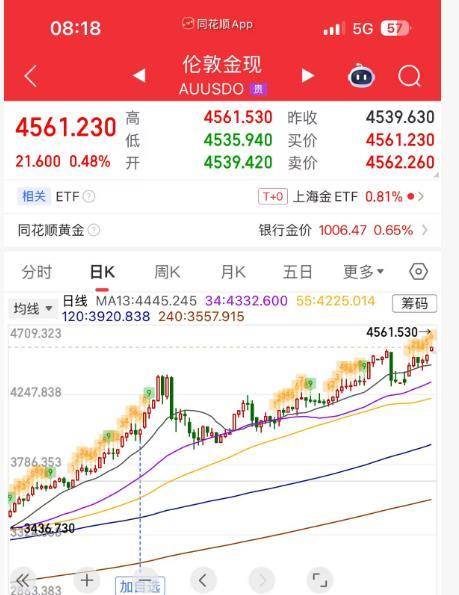
又双叒叕创新高了!现货黄金周一涨至4561美元,时隔两周再度创下历史新高
Sou Hu Cai Jing· 2026-01-12 00:39
Core Viewpoint - The price of spot gold reached a historical high of $4,561, influenced by tensions in U.S.-Iran relations, the situation in Iran, and U.S. economic data [1] Group 1: Market Influences - The Iranian government declared three days of national mourning for those who died in the struggle against the U.S. and Israel, amidst rising prices and currency devaluation leading to protests and unrest [3] - European leaders criticized the U.S. for its threatening remarks regarding Greenland, a Danish territory, which has heightened geopolitical tensions [3] Group 2: Gold Price Dynamics - Gold prices typically have an inverse relationship with the U.S. dollar; as the dollar depreciates, gold prices rise to maintain value balance [4] - The expectation of continued interest rate cuts by the Federal Reserve supports gold's investment appeal, especially as other financial assets yield lower returns [4] - Gold's intrinsic value as a hedge against inflation is emphasized due to significant fiscal imbalances in the U.S. and Europe, raising concerns about long-term inflation [4] - Ongoing international tensions, including the Russia-Ukraine conflict and U.S.-Iran relations, further drive demand for gold as a risk hedge [4]

OEXN:白银波动加剧
Xin Lang Cai Jing· 2026-01-09 11:48
Core Viewpoint - The global silver market is at a critical turning point due to extremely low inventory levels, leading to price volatility that exceeds historical averages. The scarcity of silver has pushed its price into a highly sensitive range, where any capital flow can trigger significant market fluctuations [1][4]. Group 1: Inventory and Price Sensitivity - The weak inventory situation has set the stage for a potential "short squeeze," where a rapid increase in investor demand could lead to exponential price rebounds, while tightening signals could result in equally severe price corrections [1][4]. - Recent price instability is attributed more to regional supply bottlenecks and inventory mismatches rather than a global shortage of physical silver. A significant amount of silver has been transferred from London vaults to U.S. storage due to macro trade policies and potential tariff risks, distorting the pricing mechanism [1][4]. Group 2: Market Drivers - The surge in silver prices since 2025 has been driven by expectations of Federal Reserve interest rate cuts, diversification of assets, and safe-haven buying. However, the inventory squeeze in the London market has amplified the effects of these factors [2][5]. - In a normal market environment, a weekly net demand fluctuation of about 1,000 metric tons would typically increase silver prices by around 2%. In the current low inventory context, this price sensitivity has escalated to 7%, indicating a "high leverage" state in the silver market [2][5]. Group 3: Institutional Holdings and Future Outlook - Despite multiple recent peaks in silver prices, institutional investor enthusiasm has not yet reached its peak, with current silver ETF holdings still below the historical highs of 2021. As major global central banks enter a rate-cutting cycle, silver's appeal as an inflation hedge and asset diversification tool is expected to grow [2][5]. - If investor holdings continue to approach historical peaks alongside the fragile inventory system, silver prices may seek new highs in the coming quarters [2][5]. Group 4: Supply Chain and Policy Challenges - Institutional restrictions on silver exports in certain countries have fragmented the market, creating significant barriers to global flow and leading to a trend of "fragmentation" in the silver market. This structural shift from a "global shared inventory pool" to "isolated regional inventories" has weakened market liquidity [3][6]. - Policy ambiguities may result in long-term inventory retention in specific regions. Even if future trade environments become clearer, the speed of silver returning to traditional trading centers may not be as rapid as expected, potentially prolonging the tight inventory situation in London [3][6].

2026年格隆汇“下注中国”十大核心资产之黄金ETF(518880)
格隆汇APP· 2026-01-09 08:33
Core Insights - The article highlights that the Gold ETF (518880) has been selected as a core asset in the physical asset category for the 2026 "Betting on China" list, reflecting its significance in the current investment landscape [2][3]. Selection Logic and Analysis - In 2025, global financial market volatility increased, leading to a historic bull market for gold, with London spot gold prices rising over 67% to exceed $4,400 per ounce, marking it as the best-performing asset class globally [3]. - The demand for gold as a "credit hedge tool" has intensified due to the emphasis on asset safety and wealth preservation in the 14th Five-Year Plan, showcasing gold's triple attributes of anti-inflation, risk aversion, and asset allocation [3]. - The domestic Gold ETF market surged from 73 billion yuan to 236.1 billion yuan in 2025, a 223% increase, effectively meeting market demand for risk aversion and asset allocation [3]. Competitive Barriers - The unique asset attributes of gold create an irreplaceable advantage, as it is the only asset class that combines commodity, financial, and currency properties, making it a core tool for hedging credit risk [7]. - Gold ETFs offer superior liquidity and convenience, with an average daily trading volume exceeding 5 billion yuan in 2025, allowing investors to enter and exit the market quickly [7]. - The management fee for Gold ETFs is generally below 0.5%, significantly lower than that of actively managed funds and physical gold, reducing the entry barrier for investors [7]. Supply and Demand Dynamics - Global gold reserves are limited to 59,000 tons, with current mining rates only sustainable for 19 years, providing long-term support for gold prices [8]. - In 2025, central banks net purchased 244 tons of gold, continuing a trend of over 1,000 tons for four consecutive years, driven by both central bank purchases and investment demand [8]. Industry Trends - The ongoing global liquidity easing cycle, initiated by the Federal Reserve in September 2025, is expected to continue into 2026, significantly lowering the opportunity cost of holding gold [11]. - Geopolitical uncertainties, such as the ongoing Russia-Ukraine conflict and rising tensions in the Middle East, have increased demand for gold as a safe-haven asset [11]. - The demand for gold is further supported by the need for risk diversification among investors, as gold has a low correlation with stocks and bonds, making it an effective stabilizer in investment portfolios [12]. Investment Value Analysis - Gold's anti-inflation property serves as a hedge against currency depreciation, with a projected inflation rate of 4.5% in the U.S. for 2025, making gold a classic tool for preserving asset value [14]. - Gold's unique characteristics make it a "ultimate safe asset" in extreme scenarios, outperforming other safe-haven assets during market turmoil [14]. - Including Gold ETFs in investment portfolios can enhance overall returns, especially during economic downturns, where average returns on gold have been significantly higher than domestic stocks and bonds [15]. 2026 Investment Outlook - The core logic supporting gold's price increase—liquidity easing, weakened dollar credit, central bank purchases, and geopolitical risks—remains unchanged for 2026, suggesting a continued upward trend in gold prices [16]. - Predictions indicate that COMEX gold prices may reach between $4,750 and $4,900 per ounce in 2026, with potential to challenge $5,200 per ounce [16]. - The Gold ETF (518880) is positioned to benefit directly from rising gold prices, offering substantial asset appreciation opportunities for investors [16]. Conclusion - The Gold ETF (518880) is recognized as a composite core asset that transcends ordinary investment categories, providing hedging against inflation, risk aversion, and asset optimization [19]. - Investing in Gold ETFs represents a strategic opportunity to capitalize on the ongoing trends of global liquidity easing, credit system restructuring, and asset allocation upgrades in 2026 [19].
1月6日,金价要变天了,风暴将至,投资该怎么准备
Sou Hu Cai Jing· 2026-01-08 16:33
Group 1 - The core viewpoint of the article highlights the surge in gold prices driven by geopolitical tensions and macroeconomic factors, leading to increased demand for gold as a safe-haven asset [1][3][12] - The macroeconomic environment is influenced by the Federal Reserve signaling potential interest rate cuts, which has led to a decline in the dollar and a decrease in the opportunity cost of holding gold, further fueling its appeal amid rising inflation concerns [3][5] - Major financial institutions like Goldman Sachs and Citigroup are bullish on gold, projecting prices to reach between $2,500 and $3,000, indicating a strong market sentiment despite the inherent risks of such high expectations [5][14] Group 2 - The technical aspects of the gold market show that ETF holdings have not surged significantly, suggesting that the price increase is driven more by short-term speculative trading rather than long-term investment [7][10] - For ordinary investors, it is advised to maintain rationality and not get swept up in the current excitement; a recommended allocation of 5% to 15% in gold, either through physical gold or ETFs, is suggested for long-term stability [8][10] - The article emphasizes the importance of discernment in the current market, urging investors to differentiate between genuine long-term investment signals and short-term speculative trends, as market sentiment can be fragile and easily influenced [12][14][15]
ZFX山海证券:白银25年长周期趋势未改
Xin Lang Cai Jing· 2025-12-31 16:41
Core Viewpoint - The silver market has shown remarkable explosive growth by the end of 2025, becoming a focal point in global asset allocation, with a significant annual increase of 160% [1][3] Group 1: Price Movement and Market Structure - Despite experiencing a sharp 9% fluctuation after reaching a historical high of $84 per ounce, silver has maintained a strong position at the $72 mark, indicating a revaluation of its strategic value amid high macroeconomic uncertainty [1][3] - A logarithmic perspective reveals that silver is in a sustained 25-year compound growth channel, suggesting that current trends are more stable than they appear on linear charts [4] Group 2: Supply and Demand Dynamics - The demand for physical silver has reached a multi-year peak, with global demand surpassing 1.24 billion ounces in 2025, while the supply gap remains high at 200 to 230 million ounces [2][4] - Stricter trade restrictions on major refined silver exporters starting January may lead to a potential supply reduction of up to 30%, exacerbating physical premiums in key trading centers like London and India [2][4] Group 3: Strategic Outlook - The likelihood of major importing countries imposing high tariffs remains low, and any trade restrictions on large silver bars could severely impact OTC market liquidity, which is not conducive to global industrial recovery [5] - The ongoing trend of de-dollarization and current industrial demand suggests that silver's medium to long-term upward momentum remains strong, with its value as an inflation hedge and industrial raw material becoming more pronounced by 2026 [5]
永赢基金王乾:关注黄金、铜、能源金属与战略性矿产的配置价值
Zhong Zheng Wang· 2025-12-30 13:38
Core Viewpoint - In the context of a restructuring global monetary system and frequent geopolitical disturbances, tangible assets are seen as a viable option to hedge against uncertainties [1] Group 1: Macroeconomic Environment - The current macroeconomic landscape is characterized by "high inflation expectations, high deficits, and low inventories" [1] - The allocation value of resource products is highlighted by their "irreplaceable physical credit" and "anti-inflation properties" [1] Group 2: Investment Opportunities - Gold is identified as a core anchor in the restructuring of the global monetary system, with central banks continuing to increase the proportion of gold in their foreign exchange reserves [1] - Copper is noted for its role as an electrical metal, with a potential supply-demand gap expected to persist over the next 3-5 years due to the demand from AI data centers and power grid upgrades [1] - Energy metals and strategic minerals such as lithium, cobalt, and certain rare metals are emphasized, with the explosive growth in the downstream energy storage industry driving lithium demand beyond expectations [1]
金银期价大幅下探,发生了什么?
Zheng Quan Ri Bao Zhi Sheng· 2025-12-30 03:46
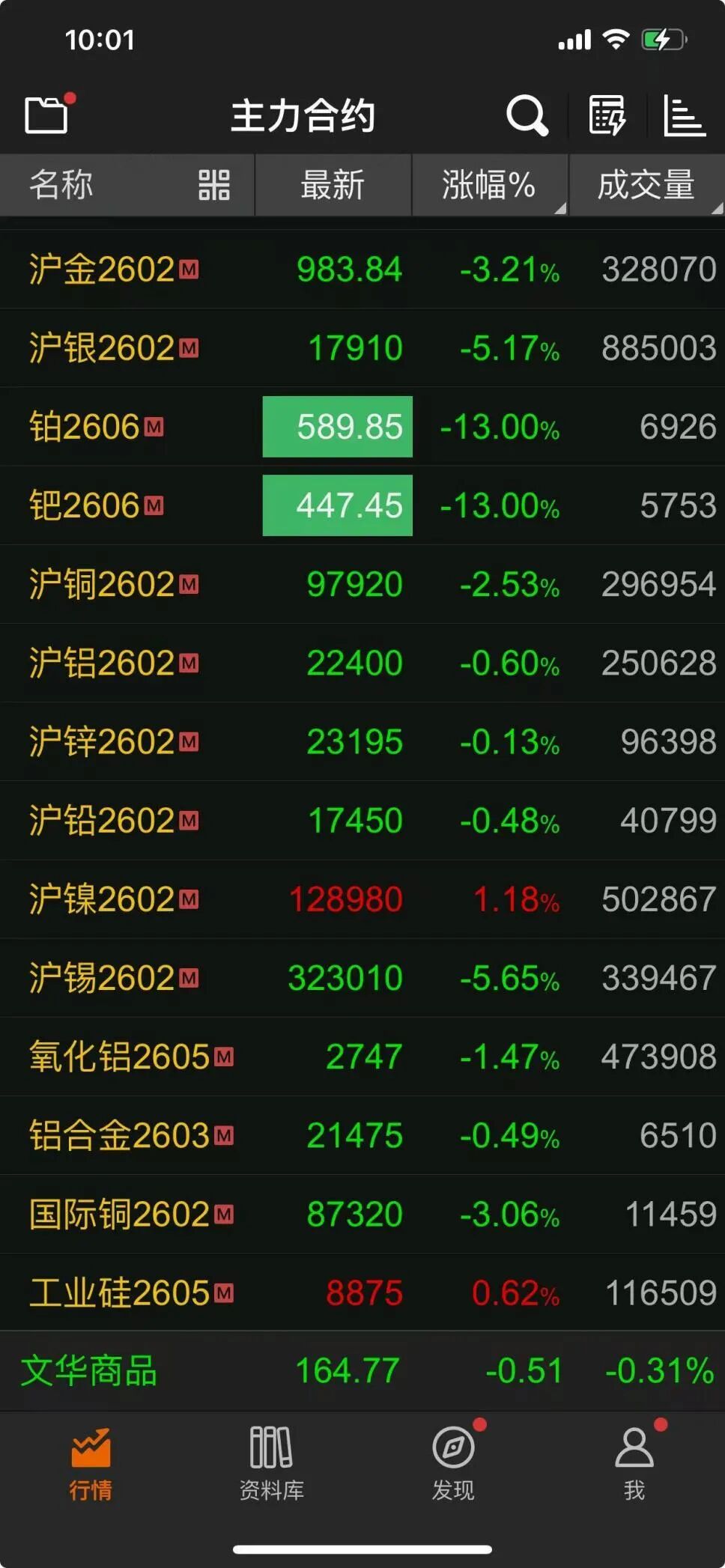
Core Viewpoint - The domestic futures market for metals experienced significant declines, particularly in precious metals like silver and gold, with major contracts hitting their daily limit down, indicating a lack of substantial support for the bullish fundamentals [1][4]. Group 1: Market Performance - On December 30, the metal sector opened lower, with notable declines in Shanghai silver and gold, and platinum and palladium futures hitting their daily limit down [1]. - The main contracts for Shanghai gold and silver reported declines of over 3% and 5% respectively, while platinum and palladium futures saw a drop of 13% [3]. - Other metals such as copper, aluminum, zinc, lead, and tin also experienced varying degrees of decline, with tin futures dropping over 5% [3]. Group 2: Analyst Insights - Analysts noted that recent volatility in the metal sector, particularly in precious metals, is attributed to a lack of supportive fundamentals and potential profit-taking by investors [1][4]. - Despite expectations of a more accommodative monetary policy from the Federal Reserve and geopolitical risks supporting precious metals, the rapid price increases have led to accumulated risks in related contracts [4]. - The overall sentiment in the precious metals market has been positive due to tight fundamentals for silver and platinum, but there is a need for caution as profit-taking may lead to short-term adjustments in prices [4].
金融+工业“双轮驱动” 伦敦银呈现强势前景
Jin Tou Wang· 2025-12-26 06:29
Group 1 - The core viewpoint is that the silver market is experiencing a dual drive from financial attributes and industrial demand, leading to a fluctuating upward trend in silver prices [1] - Silver has both monetary and investment properties, historically serving as an important currency function and currently acting as an inflation hedge reserve asset [1] - The global silver consumption structure for 2024 is projected to have industrial demand at 59%, jewelry at 18%, and coins and bars at 16%, with photovoltaic demand accounting for 197.6 million ounces, approximately 17% of total demand [1] Group 2 - Silver is a critical component in photovoltaic cells, directly affecting the efficiency of energy conversion and the long-term reliability of components [1] - The current mainstream PERC solar cells require about 80 milligrams of silver per piece, while the more promising N-type TOPCon cells require up to 130 milligrams [1] - Short-term market analysis indicates a need to be cautious of potential pullback risks, particularly around the key resistance area of $65.88, which may serve as a turning point for the market [2]
国际金价“疯涨”破纪录,普通人买黄金是稳赚还是血亏?
Sou Hu Cai Jing· 2025-12-26 00:49
Core Viewpoint - The recent surge in gold prices has raised questions about whether ordinary individuals can still invest in gold amidst these high prices, highlighting gold's role as a stable asset in uncertain economic times [3][5]. Group 1: Gold Price Trends - International gold prices have reached new highs, with COMEX gold surpassing $4,500 per ounce, reflecting a 70% increase since the beginning of the year [3][4]. - Domestic gold prices have also seen significant increases, rising over 60% from approximately 600 yuan per gram to over 900-1,000 yuan [4]. - The market has recorded over 30 historical highs in 2024 and more than 50 in 2025, indicating a strong upward trend in gold prices [4]. Group 2: Investment Considerations - Gold is recognized for its dual stability as both a physical asset and a value store, making it a globally accepted "store of value" [5][8]. - Unlike fiat currencies, gold is not subject to devaluation from government actions or corporate failures, providing a hedge against inflation and crises [5][8]. - The current high prices of gold may signal a risk accumulation, as market sentiment can lead to speculative bubbles, which could result in significant corrections if underlying economic conditions change [8][11]. Group 3: Strategic Positioning - For most individuals, gold should be viewed as a stabilizer within an asset portfolio rather than a tool for short-term profit [9]. - Proper asset allocation involving gold can reduce overall portfolio volatility and enhance risk management [9]. - The strategy should focus on long-term investment, with opportunities to buy during price corrections rather than chasing short-term highs [9][11].