智能体AI

Search documents
破10000000!史上最快
Zhong Guo Ji Jin Bao· 2025-11-24 04:22
Core Insights - The rapid download success of Alibaba's "Qwen App" indicates a significant shift in the AI application market in China, marking a new phase for major tech companies in consumer-facing AI applications [1][2] Group 1: Market Performance - Alibaba's "Qwen App" achieved over 10 million downloads in its first week of public testing, ranking in the top three of the Apple App Store's free chart, showcasing strong market interest [1] - The app's performance is attributed to Alibaba's long-term technological capabilities and clear product positioning [2] Group 2: Technological Foundation - The underlying technology of "Qwen App" is based on Alibaba's Qwen model, which has gained significant traction globally, with over 600 million downloads since its launch in 2023 [2] - Industry leaders, including NVIDIA's CEO Jensen Huang and Airbnb's CEO Brian Chesky, have publicly recognized the Qwen model's performance, with Chesky stating that Airbnb relies heavily on Qwen due to its superior speed and quality compared to OpenAI's models [2] Group 3: Product Strategy - "Qwen App" is positioned as a personal AI assistant that can chat and perform tasks, emphasizing its practical value in a crowded AI application market [2] - Future development plans for "Qwen App" focus on building "Agentic AI" capabilities, aiming to create an assistant that can understand complex instructions and collaborate across different scenarios [2] Group 4: Integration and Ecosystem - Alibaba plans to deeply integrate "Qwen App" with its core business ecosystems, including e-commerce, maps, and local services, to enhance user experience and create a competitive advantage [3] - The initial download success of "Qwen App" signifies a successful first step in Alibaba's consumer strategy, with the next challenge being to convert downloads into active users and achieve seamless integration with its vast commercial ecosystem [3]

破10000000!史上最快
中国基金报· 2025-11-24 04:09
Core Insights - The article highlights the rapid transition of China's artificial intelligence industry from technology research and development to market application, exemplified by Alibaba's "Qwen App" achieving over 10 million downloads in its first week of public testing [1][2]. Group 1: Market Performance - Alibaba's "Qwen App" reached over 10 million downloads within the first week of its public testing, indicating strong market interest and positioning in the AI application sector [1]. - The app quickly entered the top three of the Apple App Store's free downloads chart, showcasing its market traction [1]. Group 2: Technological Foundation - The underlying technology of "Qwen App" is based on Alibaba's Qwen model, which has gained significant traction globally, with over 600 million downloads since its open-source launch in 2023 [2]. - The Qwen model has received endorsements from industry leaders, including NVIDIA's CEO Jensen Huang and Airbnb's CEO Brian Chesky, further establishing its credibility in the market [2]. Group 3: Product Positioning - "Qwen App" is strategically positioned as a "chatting and task-performing personal AI assistant," emphasizing its practical value in a crowded AI application landscape [2]. - The app's focus on simplicity, professionalism, and problem-solving capabilities has been key in attracting users [2]. Group 4: Future Development Plans - Alibaba plans to enhance "Qwen App" by building "Agentic AI" capabilities, aiming to create an intelligent assistant that can understand complex commands and perform tasks across various scenarios [3]. - The integration of "Qwen App" with Alibaba's core business ecosystems, such as e-commerce and local services, is intended to create a seamless digital service chain, enhancing user experience [3]. Group 5: Competitive Landscape - The initial download success of "Qwen App" marks a significant step in Alibaba's consumer-facing strategy, with future challenges focusing on converting downloads into active users and achieving seamless integration with its extensive business ecosystem [4]. - The competition in the AI application market is expected to increasingly revolve around the combined strengths of technology, product, and ecosystem [4].

金融机构为何卡位“AI超级入口”?对话平安集团CTO王晓航
2 1 Shi Ji Jing Ji Bao Dao· 2025-11-22 05:53
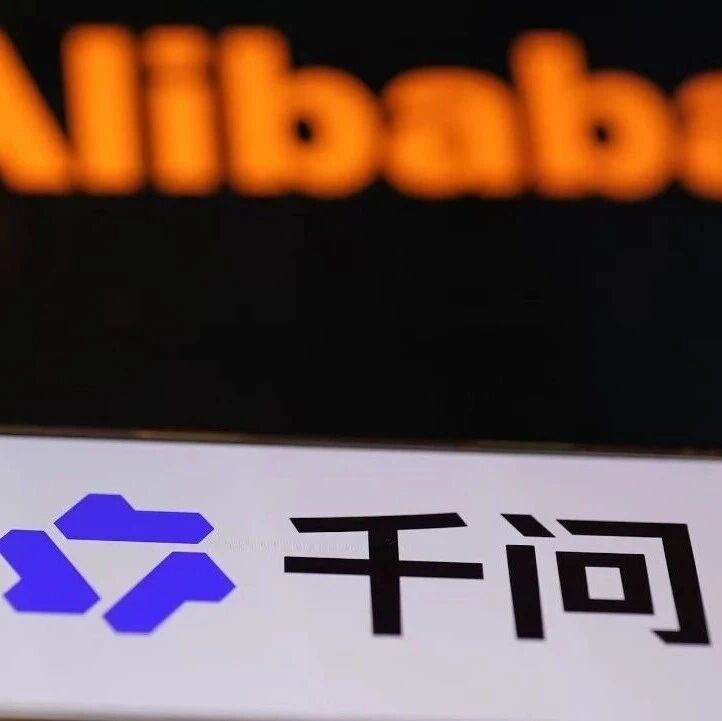
Core Insights - The core focus of the article is on Ping An Group's introduction of its "AI Super Customer Service," which aims to create a unified AI entry point for various services, enhancing user experience and accessibility in financial, medical, and elderly care sectors [1][2]. Group 1: AI Service Development - Ping An's shift from internal efficiency to consumer-facing AI products is driven by advancements in AI technology, making professional services more feasible [2][3]. - Three key trends in AI development are identified: continuous model intelligence improvement, expansion of AI capabilities into physical spaces, and the transformation of AI into collaborative partners in work and learning environments [2][3]. Group 2: AI Service Features - The "AI Service Entrance" differs from traditional app-based one-stop service platforms by providing a comprehensive "butler-like experience" that is not limited to a specific application format [4][5]. - The "Super Customer Service" integrates over 500 online and offline services, allowing for quick resolutions to user inquiries and needs, such as roadside assistance and health consultations [5][6]. Group 3: Technical Challenges and Solutions - Key challenges include digitizing all services, ensuring collaboration between AI and human experts in complex fields like finance and healthcare, and addressing compliance and safety issues [7][8]. - Solutions involve leveraging high-quality training data, continuous learning from real business interactions, and developing a robust compliance framework to ensure AI operates within defined boundaries [8][10].

当AI走向“解决问题”:平安如何打造“超级有用”的智能体?
Tai Mei Ti A P P· 2025-11-21 11:08
Core Insights - The article highlights the emergence of "AI Super Customer Service" by Ping An, showcasing a shift towards AI that not only understands and expresses but also plans and executes tasks, marking 2025 as the "Year of Intelligent Agents" [2][3] - Ping An's AI strategy focuses on practical applications in finance, healthcare, and elderly care, aiming to provide quick and effective solutions rather than just information exchange [3][4] Group 1: AI Service Matrix - Ping An has introduced a comprehensive AI service matrix, including AI Super Customer Service, AI Family Doctor, and AI Elderly Care Manager, to enhance user experience and service efficiency [2][4] - The transition from a "one-stop service platform" to an "AI concierge experience" reflects a paradigm shift where AI evolves from a passive responder to an active problem-solver [5][6] Group 2: Technological Advancements - The article discusses three foundational technological transformations enabling this shift: expansion of boundaries, intelligent leaps, and role redefinition of AI as a responsible partner rather than just a tool [5][6] - Ping An has digitized over 500 online and offline services, allowing the AI to understand, match, schedule, and execute tasks effectively [6][11] Group 3: Human-Machine Collaboration - In critical sectors like finance and healthcare, Ping An emphasizes a "human-machine collaboration" model, where AI assists in standard tasks while human experts retain decision-making authority [9][10] - The AI Family Doctor system exemplifies this collaboration, efficiently triaging patients and connecting them with specialists when necessary [10][11] Group 4: Productivity Transformation - The integration of AI is transforming productivity within Ping An, with a significant portion of customer service tasks now handled by AI, leading to cost optimization and improved service standards [13][14] - This shift is prompting a re-evaluation of organizational structures, moving from a reliance on human labor to leveraging computational power for enhanced efficiency [14][15] Group 5: Accessibility of Services - Ping An's AI initiatives aim to democratize access to high-quality financial, healthcare, and elderly care services for its 250 million customers, addressing the issue of professional scarcity [15]
英伟达(NVDA.O)FY26Q3跟踪报告:Q3营收及Q4指引均超预期,公司表示未见明显AI泡沫
CMS· 2025-11-20 11:16
Investment Rating - The report maintains a "Buy" recommendation for NVIDIA and its related industry chain companies, highlighting potential investment opportunities in server hardware components and domestic computing power manufacturers [9]. Core Insights - NVIDIA reported a record revenue of $57 billion for FY26Q3, representing a year-over-year increase of 62% and a quarter-over-quarter increase of 22%, exceeding expectations [1][14]. - The data center segment showed strong growth, with revenue reaching $51.215 billion, up 66.4% year-over-year and 24.6% quarter-over-quarter, driven by the transition to accelerated computing and generative AI [2][15]. - The company expects continued high growth in FY26Q4, with a revenue guidance midpoint of $65 billion, reflecting a year-over-year increase of 65.3% and a quarter-over-quarter increase of 14% [3][36]. - NVIDIA's Blackwell platform momentum is strong, with the GB300 product contributing significantly to revenue, and the AI ecosystem is rapidly expanding without signs of a bubble [4][37]. Summary by Sections Financial Performance - FY26Q3 revenue was $57 billion, with a non-GAAP gross margin of 73.6%, slightly below the previous year but above guidance [1][33]. - The operating expenses increased by 11% quarter-over-quarter, primarily due to rising costs in infrastructure and employee compensation [1][33]. Data Center Growth - Data center revenue reached $51.215 billion, with a significant contribution from the GB300 product, which accounted for about two-thirds of Blackwell's total revenue [2][20]. - The network products segment saw a revenue increase of 164.5% year-over-year, driven by advancements in NVLink and Spectrum-X technologies [2][22]. Future Outlook - The guidance for FY26Q4 indicates a revenue midpoint of $65 billion and a gross margin of approximately 75%, reflecting ongoing strong demand for the Blackwell architecture [3][36]. - The company anticipates that the global AI infrastructure market will reach $3 trillion to $4 trillion by the end of the decade, positioning NVIDIA as a key partner in this growth [15][41]. Market Dynamics - The report emphasizes the ongoing transition from traditional machine learning to generative AI, which is expected to drive significant capital expenditures in the cloud service provider sector, projected at $600 billion [16][38]. - NVIDIA's CUDA platform is highlighted as a critical enabler for this transition, supporting a wide range of applications across various industries [37][40].
黄仁勋反击“AI泡沫论”!我们看到的和AI泡沫截然相反,公司订单能见度达5000亿美元,Rubin明年下半年推出(电话会全文)
美股IPO· 2025-11-20 02:41
Core Viewpoint - Nvidia's CEO Jensen Huang aims to counter the AI bubble narrative, asserting that the AI technology revolution is not only ongoing but expanding into broader fields [1][3][4]. Group 1: AI Technology Revolution - Huang emphasizes that the current landscape is characterized by three fundamental platform transformations: the shift from CPU to GPU accelerated computing, the transition from traditional machine learning to generative AI, and the rise of agentic AI [6][12][15]. - The company has a revenue visibility of $500 billion from its next-generation chip platforms, Blackwell and Rubin, with demand continuing to exceed expectations [7][16]. - Nvidia's Q3 revenue reached a record $57 billion, a 62% year-over-year increase, driven by strong demand in the data center segment [28][29]. Group 2: Market Confidence and Performance Guidance - Nvidia provided a strong Q4 revenue guidance of $65 billion, significantly above market expectations, despite not assuming any revenue from Chinese data center computing [8][23]. - The management's firm stance and optimistic guidance serve to restore investor confidence in the long-term growth potential of AI [4][8]. Group 3: Strategic Partnerships and New Clients - Nvidia announced a deep technical partnership with AI model company Anthropic, marking its first adoption of Nvidia's architecture with an initial compute commitment of up to 1 gigawatt [9][21]. - The company is also assisting OpenAI in building at least 10 gigawatts of AI data centers, indicating a significant scale-up in computational capacity [24][38]. Group 4: Supply Chain and Production Challenges - Nvidia acknowledges supply chain constraints, particularly in packaging and energy, as major challenges to growth, but asserts that these issues are manageable [11][17][19]. - The company is actively working to enhance supply chain resilience through partnerships and local manufacturing initiatives [41]. Group 5: Financial Performance and Future Outlook - Nvidia's data center revenue reached a record $51 billion in Q3, reflecting a 66% year-over-year growth, with GPU utilization at saturation levels [16][29]. - The company anticipates continued strong demand for its products, driven by the ongoing transition to accelerated computing and generative AI [30][64].


知情人士:阿里巴巴将在千问APP中逐步增加智能体AI功能
Xin Lang Cai Jing· 2025-11-13 08:13
Core Insights - Alibaba has secretly launched the "Qianwen" project, creating a personal AI assistant app named Qianwen, which directly competes with ChatGPT [1] - The company plans to gradually integrate agentic-AI features into the app over the coming months, enhancing shopping functionalities on platforms like Taobao [1] - The ultimate goal is to develop Qianwen into a fully functional AI agent, with plans for global expansion through an overseas version [1] - Over 100 developers have been mobilized from various departments to support this initiative, in response to CEO Wu Yongming's announcement of additional AI investments in September [1]
知情人士:阿里巴巴将在千问APP中逐步增加智能体AI(agentic-AI)功能
Zheng Quan Shi Bao Wang· 2025-11-13 07:58
Core Insights - Alibaba has secretly launched the "Qianwen" project, developing a personal AI assistant app named Qianwen, aimed to compete directly with ChatGPT [1] - The company plans to gradually integrate agentic-AI features into the app over the coming months, enhancing shopping functionalities on its platforms, including the main Taobao market [1] - The ultimate goal is to create a fully functional AI agent, with plans for global expansion through an overseas version of the app [1] - Over 100 developers have been mobilized from various departments as part of this initiative, responding to CEO Wu Yongming's announcement of additional AI investments in September [1]
张亚勤院士:AI五大新趋势,物理智能快速演进,2035年机器人数量或比人多
机器人圈· 2025-10-20 09:16
Core Insights - The rapid development of the AI industry is accelerating iterations across various sectors, presenting significant industrial opportunities [3] - The scale of the AI industry is projected to be at least 100 times larger than the previous generation, indicating substantial growth potential [5] Group 1: Trends in AI Development - The first major trend is the transition from discriminative AI to generative AI, now evolving towards agent-based AI, with task lengths doubling and accuracy exceeding 50% in the past seven months [7] - The second trend indicates a slowdown in the scaling law during the pre-training phase, with more focus shifting to post-training stages like reasoning and agent applications, while reasoning costs have decreased by 10 times [7] - The third trend highlights the rapid advancement of physical and biological intelligence, particularly in the intelligent driving sector, with expectations for 10% of vehicles to have L4 capabilities by 2030 [7] Group 2: AI Risks and Industry Structure - The emergence of agent-based AI has significantly increased AI risks, necessitating greater attention from global enterprises and governments [8] - The fifth trend reveals a new industrial structure characterized by foundational large models, vertical models, and edge models, with expectations for 8-10 foundational large models globally by 2026, including 3-4 from China and the same from the U.S. [8] - The future is anticipated to favor open-source models, with a projected ratio of 4:1 between open-source and closed-source models [8]
苹果前CEO:OpenAI是苹果数十年来的首个真正竞争对手
Sou Hu Cai Jing· 2025-10-13 02:33
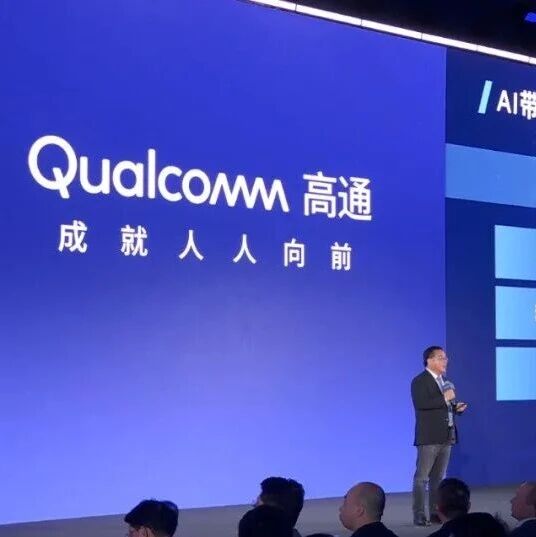
Core Insights - John Sculley, former CEO of Apple, stated that OpenAI represents the first significant competitor Apple has faced in decades in the AI era [2][3] - Sculley highlighted that Apple has historically not excelled in AI and is currently lagging behind competitors like OpenAI, Google, Amazon, and Meta in terms of product updates [4] Transition to the Agent Era - Sculley emphasized the need for Apple to transition from the "app era" to the "agent era," where tasks can be completed autonomously by intelligent agents [5] - He noted that the next CEO of Apple will need to facilitate this transition, as intelligent agents can automate burdensome tasks for knowledge workers [5] Subscription Business Model - Sculley mentioned that the subscription model offers a superior business approach, which may become more prevalent as companies shift towards agent-based technologies [6] Collaboration with OpenAI - Jony Ive, former design chief at Apple, has recently joined OpenAI, which acquired his hardware startup for over $6 billion [7] - Sculley praised Ive's potential to integrate disruptive design philosophies into large language models at OpenAI, indicating a significant collaboration [7]