
民间投资

Search documents
张斌:以货币政策激发扩大内需的内生动力
Sou Hu Cai Jing· 2026-01-27 05:04
Core Viewpoint - The Chinese economy is in the early stages of recovery in 2025, with 2026 being a crucial year for sustaining this recovery through effective counter-cyclical policies, particularly in monetary policy [2][3]. Economic Indicators - In 2025, various financial indicators such as the stock market, RMB exchange rate, social financing growth, and corporate deposits showed significant improvement, indicating early signs of economic recovery [3]. - Corporate profits have halted a multi-year decline, and overall consumption and labor market conditions are stable [3]. Factors Driving Recovery - The recovery is primarily driven by three factors: 1. Support from counter-cyclical policies, especially increased government borrowing and spending [3]. 2. Successful navigation of the tariff war initiated by the U.S., which helped maintain export momentum [3]. 3. Price adjustments over previous years have provided support for market rebounds [3]. Weaknesses in Recovery - The foundation of the economic recovery is fragile, heavily reliant on fiscal borrowing and external demand, with insufficient internal growth drivers [3]. - Weak investment willingness from private enterprises and low consumer confidence in housing and spending are significant concerns [3]. Private Investment Concerns - From 2010 to 2021, the average return on assets for listed companies was 6.7%, while the average yield on 10-year government bonds was 3.4%, resulting in a consistent spread of 3.3% [4]. - However, from 2022 to 2025, the average return on assets dropped to 2.7%, and the yield on government bonds fell to 2.4%, narrowing the spread to only 0.3%, which negatively impacts private investment enthusiasm [4]. - The average growth rate of private fixed asset investment fell from 14.4% (2010-2021) to -1.2% (2022-2025) [4]. Housing Market Dynamics - The report indicates that the cost of buying a home has become less favorable compared to renting, with mortgage rates averaging 3.9% and second-hand home price growth at -4.8% from 2022 to 2025, leading to a buying cost of 8.7% [5]. - This unfavorable comparison has exerted downward pressure on housing prices [5]. Impact of Interest Rates - Interest rates significantly influence housing prices, with even minor reductions in rates having substantial effects on price increases [6]. - The decline in private investment has weakened overall spending growth, leading to slower income growth for residents, which adversely affects consumption [6]. Policy Recommendations - The report suggests maintaining necessary government borrowing and spending while emphasizing the importance of loose monetary policy in expanding domestic demand [7]. - Monetary policy should aim to improve expectations and optimize the budget constraints and incentives for both corporate investment and consumer spending [7]. - Achieving these changes requires a decisive stance from the central bank on inflation targets and a significant reduction in policy interest rates [7].

固定资产投资稳步增长,“压舱石”作用凸显
Xin Lang Cai Jing· 2026-01-26 23:12
Group 1 - The core viewpoint of the article highlights that Hebei province achieved a fixed asset investment growth rate of 6.1% in 2025, ranking third in the country, significantly outpacing the national average by 9.9 percentage points [1] - Effective investment is emphasized as a crucial stabilizing force for economic growth, with a notable increase in industrial investment by 15.5% and high-tech industry investment by 21.4% [1][2] - The article discusses the strategic use of various financial tools, including central budget investments and special bonds, to accelerate project construction and strengthen the dual driving force of government and private investment [1] Group 2 - Major projects have made a significant contribution, with investments in projects over 100 million yuan increasing by 9.6%, accounting for 70.6% of total investment, and projects over 1 billion yuan growing by 11.1%, contributing 72.8% to overall investment growth [5] - High-tech industry investments have seen a substantial increase, with a growth rate of 21.4%, contributing 24.4% to total fixed asset investment, driven by projects like the International Information Cloud Gathering Core Port [6] - The investment in Xiong'an New Area has remained stable, with a year-on-year growth of 14.0%, contributing 1.6 percentage points to the overall investment growth in the province [6]
宏观经济周报:经济结构优化接力赛-20260124
Guoxin Securities· 2026-01-24 14:46
Economic Performance - In 2025, China's GDP grew by 5.0% year-on-year, achieving the target of around 5%[1] - The GDP growth rate in Q4 2025 fell to 4.5%, marking a new low in recent years[1] - Monthly GDP growth rates for October to December were approximately 4.5%, 4.3%, and 4.7% respectively, indicating signs of recovery in December[1] Structural Changes - A notable shift occurred in the economic structure: the secondary industry (industrial and construction sectors) saw a decline, while the tertiary industry (services) experienced growth[1] - The acceleration of the service sector is expected to create more jobs and increase income, providing sustainable support for domestic demand[1] Policy Outlook for 2026 - The newly announced fiscal and financial policies focus on stimulating private investment, with four out of six specific policies aimed at supporting private investment[2] - The emphasis on private investment over government-led infrastructure projects signals a shift towards "investing in people" rather than "investing in things"[2] Risks and Challenges - The report highlights potential risks from overseas market volatility, which could introduce uncertainties into the economic outlook[2] - Domestic consumption remains weak, with significant declines in key indicators such as movie ticket sales (down 26.9%) and automobile sales (down 32.0%) compared to the previous year[21] Trade and External Factors - Port cargo throughput increased by 6.23% year-on-year, influenced by the timing of the Spring Festival[24] - Geopolitical risks are rising, potentially affecting global trade dynamics and pricing systems[25]
胡美林:2025年河南投资呈现5个特点 | 立方大家谈
Sou Hu Cai Jing· 2026-01-24 07:16
Core Viewpoint - Investment is a key driver of economic growth, with both short-term and long-term effects, emphasizing the importance of project construction for stabilizing growth and promoting development [2] Group 1: Investment Growth - In 2025, the province's fixed asset investment grew by 4.0% year-on-year, outperforming the national decline of 3.8% by 7.8 percentage points [3] - Industrial investment in the province maintained a double-digit growth rate, increasing by 13.3% in 2025, significantly higher than the overall investment growth rate of 9.3% [3] Group 2: Investment Structure - The province focused on industrial projects, with key industrial chain investments growing by 12.5%, contributing 84.3% to overall investment growth [3] - High-tech industry investments rose by 6.1%, exceeding the overall investment growth rate by 2.1 percentage points [3] - Investments in the production and supply of electricity, heat, gas, and water increased by 17.1%, while accommodation and catering investments grew by 13.8% [3] Group 3: Major Projects - In 2025, the province selected 1,037 key projects with a total investment of 3.1 trillion yuan, with annual investments exceeding 1 trillion yuan [4] - Significant projects such as the Super Fusion R&D Center and the Central International Exhibition Center were completed, contributing to an 8.0% growth in projects with investments over 100 million yuan [4] Group 4: Policy Support - The province secured over 100 billion yuan in policy funds, the highest in history, to support project investments [4] - Industrial equipment investment grew by 8.3% in 2025, driven by large-scale equipment renewal policies, contributing 0.5 percentage points to overall investment growth [4] Group 5: Private Investment - The province enhanced support for the private economy, resulting in a 5.9% increase in private investment, which contributed 3.5 percentage points to overall investment growth [5]
浙江衢州锚定“十五五”:以产业投资撬动民间投资活力
Xin Lang Cai Jing· 2026-01-23 08:34
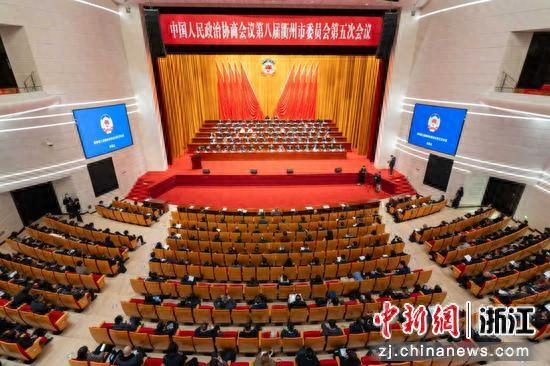
Core Viewpoint - Quzhou City aims to expand effective investment by focusing on industrial investment and stabilizing private investment, with a target of maintaining rapid growth in both sectors during the "14th Five-Year Plan" and into the "15th Five-Year Plan" [1][3]. Investment Data - During the "14th Five-Year Plan," Quzhou completed fixed asset investment of 564 billion yuan, with an average annual growth rate of 10.9%, ranking among the top in Zhejiang [1]. - Industrial investment accounted for approximately 298.9 billion yuan (53%), while private investment was about 237 billion yuan (42%) [1]. Industrial Strategy - Quzhou will focus on the "strong industry, prosperous industry" strategy, enhancing the quality and efficiency of industrial investment [3]. - Key manufacturing sectors include new materials and new energy, with plans to develop two trillion-yuan advanced manufacturing clusters and strengthen eight hundred-billion-yuan characteristic industrial clusters [3]. - The city plans to implement 396 manufacturing projects with an investment of 54.5 billion yuan by 2026 [3]. Project Planning - Quzhou has planned 1,687 major projects with an investment of 855.1 billion yuan during the "15th Five-Year Plan," with 850 industrial projects accounting for 60% of the total planned investment [4]. - The city aims to attract 300 industrial projects with an investment of over 1 billion yuan, targeting over 50 billion yuan in funds [4]. Investment Dynamics - Quzhou will enhance investment vitality through venture capital, policy reforms, and market-oriented reforms [4]. - The goal is to achieve a fund scale of over 120 billion yuan by 2026, leveraging over 220 billion yuan in social capital [4]. - The city plans to integrate various policies to reduce the burden on enterprises and capitalize on opportunities in infrastructure REITs [4].
民间投资何以重要
Xin Lang Cai Jing· 2026-01-23 06:32
Group 1 - The central government emphasizes the importance of stimulating private investment and increasing its proportion in the economy, as highlighted in the 20th Central Committee's Fourth Plenary Session and subsequent policy measures [1][3] - Private investment serves as a crucial indicator of economic activity, playing a significant role in stabilizing growth, employment, and expectations [3][4] - Since the reform and opening-up, private investment in China has grown from less than 15% of total investment in 1980 to over 50% in recent years, becoming a vital force in driving economic development [3][4] Group 2 - Private investment is characterized by flexibility, high risk tolerance, and strong innovation awareness, making it a key support for building a modern industrial system [4] - In 2025, private investment in high-tech industries, such as information services and professional technical services, saw year-on-year growth of 26.7% and 17.6% respectively, indicating a shift towards strategic emerging industries [4] - The manufacturing sector accounts for about 40% of total private investment, with significant growth in traditional industries driven by policies promoting intelligent, green, and integrated development [4] Group 3 - Private investment plays a crucial role in job creation, contributing to over 80% of urban employment in China, thus becoming a primary channel for employment [5] - The rise of new economic formats, such as online sales and logistics, has further amplified the employment effects of private investment [5] - In the public management and social security sectors, private investment grew by 31.9% year-on-year in 2025, highlighting its increasing role in meeting the growing needs of the population [5]
投资向新向质向绿,消费升级稳步加快!
Sou Hu Cai Jing· 2026-01-21 12:54
Investment and Consumption Overview - The core viewpoint emphasizes the dual drive of investment and consumption to stimulate domestic demand in Sichuan, with significant growth in both sectors in 2025 [1][5] Investment Highlights - In 2025, Sichuan's total social retail sales exceeded 2.9 trillion yuan, marking a 5.1% increase from the previous year, with an acceleration in growth rate by 0.9 percentage points [5] - Industrial investment grew by 8.2% year-on-year, accounting for 30.4% of total investment, an increase of 3 percentage points from the previous year [3] - Key sectors such as agriculture, mining, manufacturing, and electricity production saw notable investment growth rates of 5.9%, 41.9%, 4.6%, and 17.8% respectively [3] - Private investment showed a significant recovery, growing by 2.1% year-on-year, reversing a two-year decline, with private project investment increasing by 9% [3] Consumption Trends - The consumption of upgraded goods experienced rapid growth, with gold and jewelry sales increasing by 32.6% [4] - The rural market's potential is accelerating, with retail sales in rural areas growing by 6.1% due to improved infrastructure and logistics [8] - Online retail sales grew by 9.5%, with physical goods online retail accounting for 16.4% of total social retail sales, an increase of 0.1 percentage points from the previous year [8] - The "old-for-new" policy has positively impacted demand, with significant increases in retail sales of communication equipment and automobiles by 50.8% and 8.9% respectively [8]
财政部印发财政金融协同促内需一揽子政策
Sou Hu Cai Jing· 2026-01-21 11:08
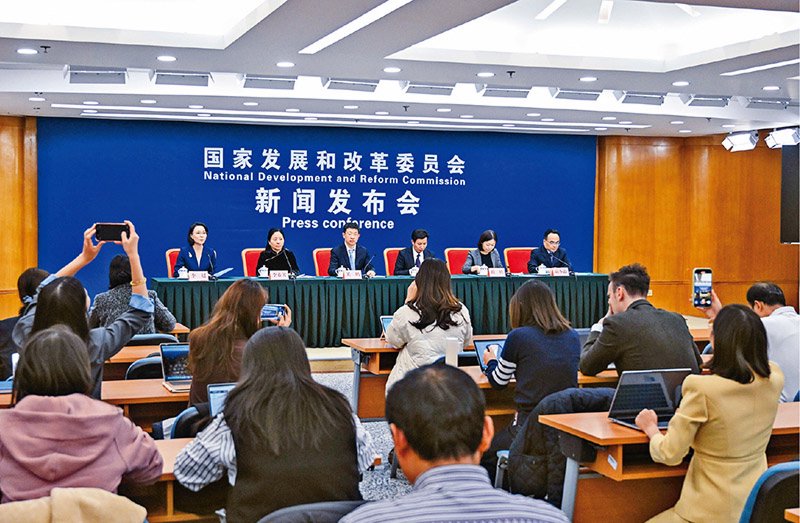
Core Viewpoint - The Ministry of Finance has introduced a comprehensive policy package aimed at promoting domestic demand through support for private investment and consumer spending, consisting of six specific measures. Group 1: Support for Small and Micro Enterprises - A loan interest subsidy policy for small and micro enterprises has been established, offering a 1.5% interest subsidy on eligible fixed asset loans for a maximum term of 2 years, with a loan cap of 50 million yuan and a maximum subsidy of 1.5 million yuan [5] - A special guarantee plan for private investment in small and micro enterprises has been set up, with a scale of 500 billion yuan over two years, increasing the guarantee coverage ratio to 40% and raising the individual guarantee limit from 10 million yuan to 20 million yuan [8] Group 2: Bond Risk Sharing Mechanism - A risk-sharing mechanism for bonds issued by private enterprises has been established, with the Ministry of Finance coordinating with the People's Bank of China to provide credit enhancement support for bond issuance by private enterprises and private equity investment institutions [10] Group 3: Equipment and Service Sector Support - The equipment renewal loan interest subsidy policy has been optimized to include loans for technology innovation and various new sectors, maintaining a 1.5% subsidy rate for a term of 2 years [12] - The service industry loan interest subsidy policy has been extended to the end of 2026, increasing the maximum subsidy per loan from 10,000 yuan to 100,000 yuan and adding support for digital, green, and retail sectors [14] Group 4: Consumer Loan Support - The personal consumption loan interest subsidy policy has been extended to the end of 2026, including credit card installment payments and removing restrictions on the consumption sector and individual loan subsidy caps [17] Group 5: Implementation and Future Steps - The Ministry of Finance plans to leverage the first quarter's consumption peak by coordinating central policies with local financial policies to maximize the benefits of the central fiscal policy and ensure rapid and effective implementation [19]

财政部及央行新闻发布会解读:财政金融协同,助力开门红
Shenwan Hongyuan Securities· 2026-01-21 11:04
Group 1: Policy Signals - The Ministry of Finance and the central bank are focusing on stimulating domestic demand, enhancing support for technological innovation, and activating private investment as key areas for policy collaboration[1] - Personal consumption loan interest subsidies have increased significantly, with the maximum subsidy per loan rising from 500 yuan to 3000 yuan, and credit card installment payments now included[1] - The central bank has lowered the interest rates on various structural monetary policy tools by 0.25 percentage points to guide financing costs down[1] Group 2: Addressing Key Issues - In 2025, new household loans dropped to 3600 billion yuan, a decrease of 22910 billion yuan from 2024, indicating a significant decline in consumer credit growth[2] - The overall credit growth rate fell to 6.4% in 2025, with a 1.0 percentage point decline attributed to the drop in household loans[2] - Fixed asset investment decreased by 3.8% in 2025, with equipment purchases showing a growth rate of 11.8%, highlighting the need for policy support to stabilize investment[3] Group 3: Expected Outcomes - Fiscal interest subsidies are expected to stabilize financial data and stimulate domestic demand, despite challenges in loan write-offs and low net interest margins for commercial banks[4] - The expansion of consumer loan interest subsidies is anticipated to support stable consumer spending, particularly in service consumption, as households shift their spending patterns[4] - New policy financial tools, if further enhanced, could provide an additional 1.5 percentage points in fiscal interest subsidies, thereby boosting investment in new infrastructure projects[4]
财政部及央行新闻发布会解读:财政金融协同,助力“开门红”
Shenwan Hongyuan Securities· 2026-01-21 10:07
Group 1: Policy Signals - The Ministry of Finance and the central bank are focusing on stimulating domestic demand, enhancing support for technological innovation, and activating private investment as key areas for policy collaboration[1] - Personal consumption loan interest subsidies have increased significantly, with the maximum subsidy per loan rising from 500 yuan to 3000 yuan, and credit card installment payments now included[1] - The central bank has lowered the interest rates on various structural monetary policy tools by 0.25 percentage points to guide financing costs down[1] Group 2: Addressing Key Issues - In 2025, new household loans dropped to 360 billion yuan, a decrease of 22,910 billion yuan from 2024, indicating a significant decline in consumer credit growth[2] - The overall credit growth rate fell to 6.4% in 2025, with a 1.0 percentage point decline attributed to the drop in household loans[2] - Fixed asset investment decreased by 3.8% in 2025, with equipment purchases being a major growth driver, increasing by 11.8%[3] Group 3: Expected Outcomes - Fiscal interest subsidies are expected to stabilize financial data and stimulate domestic demand, despite banks facing challenges in expanding loan volumes due to low net interest margins of 1.4%[4] - The expansion of consumer loan interest subsidies is anticipated to support stable consumer spending, particularly in service consumption, as households shift their spending patterns[4] - New policy financial tools, if further enhanced, could provide an additional 1.5 percentage points in fiscal interest subsidies, thereby boosting investment in new infrastructure projects[4]